Cultural Detective Blog
Home | Pages | Archives
Are Emoji the Newest World Language?
October 14, 2014 2:58 am
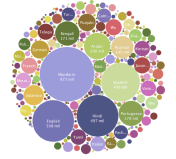 How many languages are there in the world? Do you know just how many have died off? Or will go extinct soon? How about this: do you know how to rescue those that are endangered? And what about new languages emerging in our world today? Are there any? If so, what are they? Do you know the world’s newest language? We put together this short quiz to get you thinking and test your knowledge.
When a language disappears, it often takes with it a great deal of the history of a community. It limits what scientists can learn about human cognition: fewer languages mean fewer data sets. Loss of a language too often means a loss of social and cultural identity, at least partially.
Much of the cultural, spiritual, and intellectual life of a people is experienced through language. This ranges from prayers, myths, ceremonies, poetry, oratory, and technical vocabulary to everyday greetings, leave- takings, conversational styles, humor, ways of speaking to children, and terms for habits, behaviors, and emotions. When a language is lost, all of this must be refashioned in the new language-with different words, sounds, and grammar- if it is to be kept at all. Frequently traditions are abruptly lost in the process and replaced by the cultural habits of the more powerful group. —The Linguistic Society
We’ve published here on this blog several instances of native peoples in the Americas breathing new life into their languages, cultures, ceremonies and traditions, and we’d very much like to encourage such efforts. If we all do our part, we can preserve, and help thrive, many of the endangered languages in our world. And what about new languages that are emerging? Some of them aren’t really “new,” they are just redefined. Here again from the Linguistic Society:
Consider the language formerly known as Serbo-Croatian, spoken over much of the territory of the former Yugoslavia and generally considered a single language with different local dialects and writing systems. Within this territory, Serbs (who are largely Orthodox) use a Cyrillic alphabet, while Croats (largely Roman Catholic) use the Latin alphabet. Within a period of only a few years after the breakup of Yugoslavia as a political entity, at least three new languages (Serbian, Croatian and Bosnian) had emerged, although the actual linguistic facts had not changed a bit.
Others, however, really are new. My guess is that the newest language in the world just might be emoji (絵文字), or the language of emoticons. “That’s not really a language!” you might be thinking. And, right now, I would agree. But there is a definite trend.
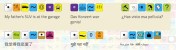
From iConji.com
- Emoji is one of the 260 languages into which Herman Melville’s Moby Dick has been translated.
- The iConji project aims to build a successful successor to Esperanto, a language that unites speakers of any language.
- The emoji narration of Beyoncé’s Drunk in Love (view video below) has had millions of viewers.
- The Unicode Consortium has standardized hundreds of emoticons, and
- Members of the Noun Project are working on a visual dictionary—an icon for every object—and they currently have 60,000. You can be part of history and upload your own icon!
History of Emoji Very cool to me is how emoticons came to exist. It’s all due to the low-context, difficult-to-decipher reality of digital communication. Virtual workers in the early 80s found it wise to start labeling jokes with smiles 🙂 so that others wouldn’t misunderstand them. Soon after the smiley face came the sad face 😦 and the wink ;-). Then, in 1999, NTT Docomo’s Kurita Shigetaka figured visual cues would improve the mobile phone experience. His initial efforts were inspired by manga, Japanese comics. These Japanese roots are why this language is called emoji: picture, 絵 (e), plus character, letter, or writing, 文字 (moji). We see Paleolithic cave drawings, Sumerian cuneiforms, and Egyptian hieroglyphics as languages, so hey, maybe emoji are, too. Do you speak emoji? I think this is also a generational culture difference; young people seem to speak it much more fluently than I. Guess I have some learning to do!
Posted by Dianne Hofner Saphiere
Categories: Commentary
Tags: Cultural Detective, Education and Training, emoji, emoticons, Intercultural Communication, intercultural competence, language, multicultural society, world languages
« Older Newer »
Leave a Reply
Mobile Site | Full Site
Get a free blog at WordPress.com Theme: WordPress Mobile Edition by Alex King.
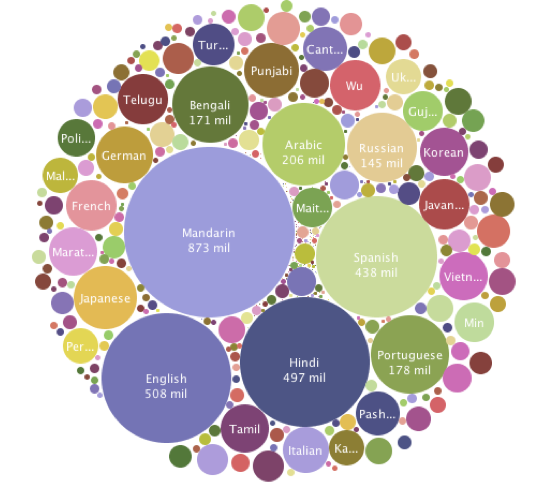 How many languages are there in the world? Do you know just how many have died off? Or will go extinct soon? How about this: do you know how to rescue those that are endangered? And what about new languages emerging in our world today? Are there any? If so, what are they? Do you know the world’s newest language? We put together this short quiz to get you thinking and test your knowledge.
EXCELLENT example of collaboration and the history of emoji: http://www.fastcompany.com/3037803/the-oral-history-of-the-poop-emoji-or-how-google-brought-poop-to-america
LikeLike
By Dianne Hofner Saphiere on December 9, 2014 at 7:24 pm
[…] Are Emoji the World’s Newest Language A world language quiz and Beyoncé video subtitled in emoji accompanied this post, published in October. […]
LikeLike
By 2014 Year in Review | Cultural Detective Blog on December 30, 2014 at 1:14 am