Unknown's avatar

About Kathryn Stillings

As editor of the Cultural Detective series, I have the pleasure of working with our wonderful international team, and, through each of them, gaining a glimpse of another worldview. It is an amazing opportunity to be able to learn from so many interesting people who share a common desire to further global understanding.

A Rainbow with a Streak of Gray: Demographic Trends in the United States

dreamstimecomp_39321275

Photo ©Dreamstime.com

“Demographic transformations are dramas in slow motion. America is in the midst of two right now. Our population is becoming majority non-white at the same time a record share is going gray. Each of these shifts would by itself be the defining demographic story of its era. The fact that both are unfolding simultaneously has generated big generation gaps that will put stress on our politics, families, pocketbooks, entitlement programs and social cohesion.”
—Paul Taylor, Pew Research Center

As a US American interested in diversity issues, I was intrigued by the recently released Pew Center report based on the book, The Next America, examining demographic changes taking place in the United States. Pew reports are well-researched, present interesting and useful data, and never fail to give me a different perspective on the world in which we live.

The United States is changing demographically faster than many of us realize. I remember a few years ago, when working for an educational institution that offered diversity courses, a city official from California called to say they needed help because the “minority” population was soon to be over 50%! Today, I rarely hear the term “minority,” and this study definitely shows why.

“In 1960, the population of the United States was 85% white; by 2060, it will be only 43% white. We were once a black and white country. Now, we’re a rainbow.”

Immigration is the main force behind this rainbow, according to the report. Large numbers of immigrants during the late 19th and early 20th century were from Europe; today only 12% are European. Since 1965, the USA has seen more than 40 million immigrants; about half are Hispanic and nearly three-in-ten are Asian.

As this shift in demographics has taken place, so have shifts in attitudes. According to Mark Lopez, Director of Hispanic Research at Pew, ““Intermarriage is playing a big role in changing some of our views of ethnicity.” Currently, 15% of marriages are between people who are not of the same race or ethnicity—that is, one out of six marriages. Talk about a “melting pot!”

As these marriages produce children, a new set of issues arises.  One example: categories of race and ethnicity on government forms are less likely to fit or be meaningful. What do you call yourself when you are confronted with choosing just one part of your interracial or interethnic (Blended Culture) identity?

This situation arose recently when my son (White) and his wife (African American/White) had to complete a form to enroll their three-year old son in pre-school. Although one-quarter African American, my grandson looks very White, like his dad. There was lengthy discussion about what race to choose: African American or White. There were no other options, available for them—they could only choose one “race”—and they were uncomfortable with either choice as it didn’t reflect his heritage accurately.

Not only is the USA becoming more ethnically and racially diverse, but our population is aging. According to the study’s author, “10,000 Baby Boomers a day will turn 65—every single day between now and the year 2030.” That’s a lot of old people!

Contrast their lives with that of the first generation of “digital natives”—people for whom the online world has always existed. Their experience is shaped in part by their technological comfort and ease, while many of the older generation struggle to simply use their cell phones.

However, more than a “digital divide” exists among the generations in the USA. Growing up in different times and having radically different experiences means that the generations don’t always see eye-to-eye on lifestyle, issues, or politics. Yet, these days, a record number of US Americans—over 50 million—live in multi-generational family households, according to the report.

While this may seem perfectly normal to some of our blog readers, it is a new reality in the US. In the past several years, a stigma became attached to returning home after moving out for school or a job. To many, an adult “boomerang” child returning home to live with their parents was “clearly” a failure or had problems of some sort. No longer! Due to the poor economy, it is now seen as quite practical to live together when one can’t find a job or has limited (or no) means. And, as much as they might like each other, differences in opinion can cause stress in a household.

“It is a challenge for our society how we navigate this change at a time when the young and old don’t look alike, don’t think alike, and don’t vote alike.”
—Paul Taylor, author  The Next America

Cultural Detective has tools to facilitate change by helping users to better understand some of the different cultures making up the USA today. First, however, as intercultural professionals worldwide know, before one can understand others, one needs to understand oneself.

Cultural Detective Self Discovery helps people discover their values, preferences, and the cultural influences driving their thinking and their actions, and explore their cultural identities. It can be used as a stand-alone exercise or as a powerful component in sessions focused on cultural awareness, diversity and self-development, or as a process to facilitate teambuilding and organizational synergies.

Cultural Detective Generational Harmony provides a glimpse into four distinct generations in the USA, each with differing experience, expectations, and lifestyle requirements. By understanding these distinctions, one can be better prepared to recognize and manage issues that may arise due to generational differences in the workplace, while at the same time meeting organizational demands and objectives.

Cultural Detective African American explores the complexities of African American culture in the USA today. It investigates the values and communication styles of this community in an effort to bridge cultural gaps and support more inclusive groups, communities, and workplaces.

Cultural Detective Latino/Hispanic introduces this heterogeneous, multiracial group residing in the United States, people with cultural, historical, and ethnic roots in countries of Latin America. Comprising the fastest-growing ethnic minority group in the United States, Latino/Hispanics now number over 50 million, and account for one-out-of-four public school students in the US.

Cultural Detective USA offers insight into some of the key values that are representative of the dominant societal norm, in large measure Protestant, Anglo-Saxon values. While there is a wealth of ethnic, racial and cultural diversity within the USA, one needs to be aware of the power of the dominant culture in influencing behavior, as well as the specific values of other cultural groups, when learning about the USA.

Cultural Detective Blended Culture investigates those who hold multiple frames of cultural reference within themselves. This may include such individuals as internationally assigned employees and their families, immigrants and refugees; those who have grown up as members of ethnic minority communities within a dominant culture; and people raised by parents of different cultural backgrounds.

Cultural Detective Bridging Cultures helps take cultural awareness and savvy to the next level by looking at how to develop effective bridging strategies for working across cultures. Recognizing that cultural understanding is essential but not enough, this packages focuses exclusively on connecting cultural similarities and bridging cultural differences effectively to reap the benefits of diversity.

Any of these packages sound interesting? Cultural Detective Self-Discovery and Cultural Detective Bridging Cultures are available for purchase through our website. The other packages mentioned are available for handy reference, 24/7, as part of Cultural Detective Online. What are you waiting for? Use Cultural Detective to investigate the cultures shaping the USA and our world, and Get A Clue!
Virtual Teaming

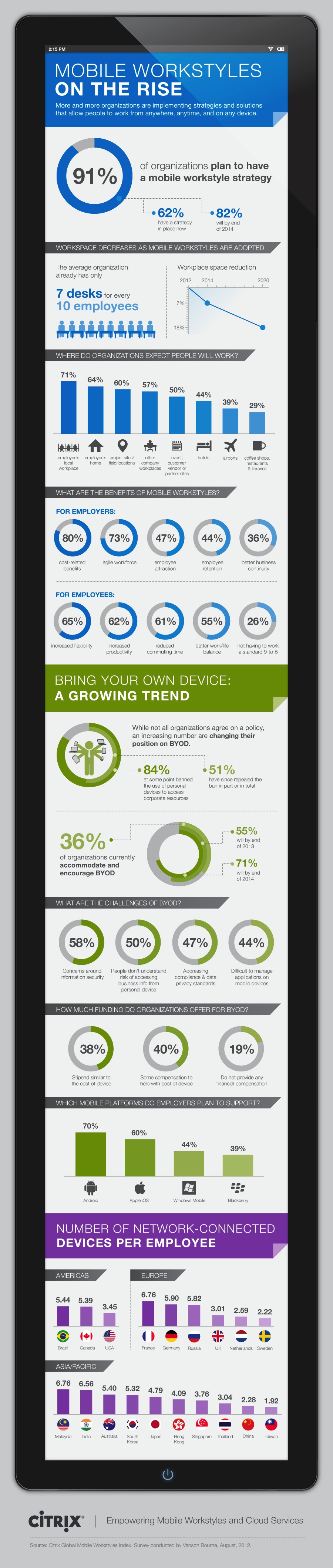
With mobile work styles on the rise, management styles need to change and adjust to the new reality. Along with the obvious benefits to employers and workers, there are significant drawbacks to a mobile work style—policies need to be modified, expectations made clear in different ways, and creating a cohesive work group becomes more difficult.

Any organization has its challenges in trying to shape a random collection of people into a “team” of some sort—whether it’s a small group engaged in a specific project, or the group spirit that often emerges from employees working together to accomplish desired results.

Citrix_Mobile_Infographic_v6_hannah

With a mobile work style, how do we achieve a sense of community, a sense of shared purpose that allows employees to perform at their best to achieve the overall goals of the company?

One answer is found in the Method and tools offered by the Cultural Detective series. Cultural Detective: Self-Discovery is designed to explore one’s own values—what makes each of us “tick.” This self-knowledge is the base upon which to build intercultural competence.

Cultural Detective: Bridging offers a way to look at conflicts and to move beyond a win/lose scenario to “bridge” differences to work more constructively together. Theory and practice are interwoven to provide concrete suggestions for learning to resolve difficult situations.

The Cultural Detective: Global Teamwork package is designed to assist both collocated and remote teams in meeting the five major challenges of teamwork in todays’ global environment. While many companies embracing mobile work styles are located in one geographical location, they wrestle with many of the same challenges as virtual teams working internationally. Cultural Detective: Global Teamwork provides insights, processes, and tools to meet these challenges.

And of course, no mobile work style would be complete without a subscription to Cultural Detective Online, the virtual intercultural coach that is available, anywhere anytime 24/7. So helpful to have a reference available before you email or talk to your new colleague from a culture different than your own! Do they value direct, straight-to-the point communication, or a more nuanced approach? Should you spend some time getting to know them personally, or just get directly to the business discussion?

Did you know you can set up groups within Cultural Detective Online so you can work virtually with employees to enhance their intercultural competence? Let us show you how! Join one of our free webinars to learn about the capacities of CD Online, and ask us how your organization can take advantage of group subscriptions to Cultural Detective Online.

How are You Celebrating Hispanic Heritage Month ?

national-hispanic-heritage-month(or do you even know it is happening now?)

September 15th to October 15th is National Hispanic Heritage Month in the USA.

I’ve always been interested in the application of intercultural communication concepts to domestic diversity issues. Perhaps this has to do with where I was living when I first learned about intercultural theory—a racially mixed neighborhood where people of good intentions occasionally had minor misunderstandings.

Working with the Cultural Detective: Latino/Hispanic package renewed my interest in the link between USA diversity and intercultural, specifically about Hispanic issues and how they impact USA society today. Latinos are a vital and dynamic part of the country, yet many in the USA do not know much about the underlying values that may influence Hispanic world views and behavior.

The Pew Research Center recently published an article in their FactTank, “5 facts about Hispanics for Hispanic Heritage Month.” It inspired me to prepare the following short quiz, to see how much you know about Latinos and Hispanics in the USA. Check your answers in the original article.

QUIZ

1. More than half of the USA’s Hispanics live in three states. Which three?
    • New York
    • Florida
    • New Mexico
    • Arizona
    • California
    • Alabama
    • Texas

Latinos are moving to all parts of the USA, and are no longer only living in the areas where they have more traditionally settled. A comprehensive report by the Pew Research Center, based on analysis of U.S. Census Bureau data, shows Hispanics residing in every state: Mapping the Latino Population, By State, County and City.

2. How much did the Latino population grow between 2000 and 2011?
    • 22%
    • 36.4%
    • 57%
    • 47.5%
    • 63.5%

Not only did the number of Hispanics grow tremendously between 2000 and 2011, Pew found that Hispanics account for more than half of the nation’s growth in the past decade. The human resource potential is enormous, and understanding the underlying values of this group will allow organizations and communities to be more inclusive and utilize these resources more effectively. Cultural Detective: Latino/ Hispanic explores the important core values that may guide behavior and influence decision-making among Hispanics.

3. The terms “Hispanic” and “Latino” embrace a wide variety of backgrounds. What percentage of Hispanics/Latinos trace their heritage to Mexico?
    • One-half
    • Two-thirds
    • Three-quarters
    • Seven-eights

In the USA, people who trace their heritage to over 20 nations consider themselves to be (or are considered by others as) of Hispanic origin. Statistical information on the largest groups are examined in the Pew report, Diverse Origins: The Nation’s 14 Largest Hispanic-Origin Groups.

4. Over the last decade, college enrollment has increased among Latino high school graduates. Can you match the correct percentage of USA high school graduates who enrolled in college in 2012 with their ethnicity?
    • Hispanics                                                  • 45%
    • African-Americans                                    • 49%
    • White Americans                                       • 47%

What are the current educational trends? Latinos now make up one-quarter of all public school students in the USA, the rate of Hispanics dropping out of high school continues to fall, and more young Latinos than ever are preparing to go to college. In fact, among recent high school grads, Hispanic college enrollment rate surpasses that of whites.

5. According to the USA Census bureau, how many of the nearly 52 million Hispanics (age 5 and older) speak Spanish at home?
    • 47 million
    • 35 million
    • 25 million

Spanish is the most frequently spoken language other than English in USA homes, and it is also spoken among non-Hispanics. Among Latinos, most agree it is important for future generations to learn Spanish as well as English, even though a growing share of Latinos get their news in English.

As part of Hispanic Heritage Month, let’s take a fresh look at our organizations and communities. Are structures and policies in place to facilitate the contributions of Hispanics? Do we respect a different point of view, and can we incorporate it to better our communities for all members? How can we get from “here” to “there”?

If you are looking for a resource that can be easily woven into existing training to learn about Latino/Hispanic culture, Cultural Detective: Latino/Hispanic is your answer! By exploring the core cultural values and using the Cultural Detective Method to analyze real-life situations, you can offer practical skills to build bridges within your workplace and community.

Have Difficult Economic Times Changed Our Values?

usa_purch

“The continued positive outlook—despite the hard times—is a measure of the resilience of American values. The Pew Research Center’s twenty-five-year tracking of American values finds little indication of deflation in the public’s basic confidence in the efficacy of hard work, the nature of personal success, and the nation’s capacity to solve its problems.”

Working with Cultural Detective over the years, I am always interested in the role values play in our lives. So I was eager to read a new working paper for the Council on Foreign Relations released by Pew Research Center pollsters Andrew Kohut and Michael Dimock, entitled Resilient American Values: Optimism in an Era of Growing Inequality and Economic Difficulty.

We in the USA are a nation of optimists. We believe that with hard work we will get ahead. “Unlike Europeans, they [US Americans] believe that they themselves, not larger forces in society, determine whether they will be successful in life.” And, in spite of the recent difficult economic times, US Americans continue to believe that it is through their own initiative they can and will succeed.

Although the economic situation in the US has changed radically in the last 25 years, research finds that this shift has not drastically changed our values. This research indicates that the core Cultural Detective: USA values of Self-reliance (It’s up to you) and Capitalism (Reach for the American Dream) are alive and well throughout all levels of US society.

However, what really caught my interest in the paper was the research that showed US Americans are upset not by rich people being “too rich,” nor by the widening economic gap between the rich and the poor, nor by the large drops in wealth and income among most in the last decade. To the contrary, US Americans are most concerned by the apparent unequal nature of the economic system, and a government ideologically paralyzed and unable to institute meaningful reform.

“During a time of prolonged economic hardship, Americans are clearly upset about a perceived lack of fairness. What the public wants is not a war on the rich, but rather more fairness in public policy, and policies that promote opportunity.”

Sounds to me like the results of this study also suggest that the CD: USA values of Equality (Level the playing field) and Law and Order (Play by the rules) remain an integral part of the society. We want the same opportunity to work hard and get ahead as everyone else—even those with far more money and power than we ourselves have. While there is great diversity in our ranks, perhaps this study has once again shown us what unites us as US Americans.

We invite you to take a look at this study—it is full of interesting information about US values and attitudes. We’d love to hear how you see your cultural values playing out in difficult economic times.