Eating with One’s Hands: Cause to Lose One’s Children?

Members of the Cultural Detective community are united in a common purpose: to spread respect, understanding and justice through collaboration in our world. I am so, so lucky to be able to work, each and every day, with such passionate and diversely talented people.

Yesterday was a wonderful day. We held the second in a successful series of two FOLEs (Facilitated Online Learning Events) with a globally dispersed group of movers and shakers; launched a MUCH-anticipated new package (CD Bridging Cultures); got out a blog post and a newsletter; and finished the admin area on our upcoming Cultural Detective Online subscription service. But, I was tired, and feeling rather overwhelmed by all the technology I (have to) work with. I was wondering, as many of us do sometimes, if my efforts were really having a positive impact on the world.

Just then I opened a note from one of my colleagues, a sign language interpreter who is a “foodie.” She reminded me that, yes, every little bit we put out there positively (including via technology) has constructive ripple effects in our world. Bless you and your beautiful work, Anna! Keep reading to see her note and a terrific effect of a recent social networking link.

Here’s the note I received:
Hello dear Dianne,

I am excited to share with you a post and video I made inspired by a story on your Intercultural Competence Newsfeed. Do you remember the piece about:

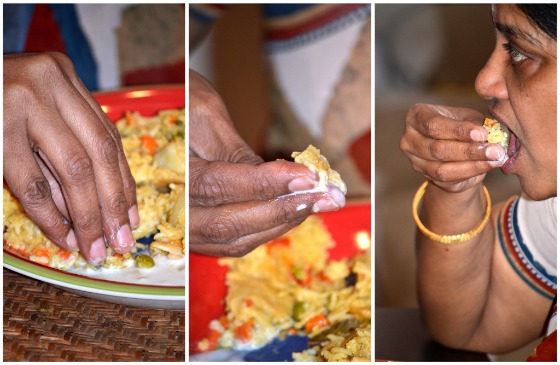
Norway authorities take away Indian couple’s children for feeding them by hand

My fascination with food and culture spurred me to write a post about different cultures who eat with their hands (including Indian, Ethiopian and Moroccan). And with the help of a friend, we shot a video of this lovely Moroccan gentleman I know giving me a lesson in eating with the hands.

I am hoping to make a series of such videos on cross-cultural food ways. Hopefully it can help build cross-cultural understanding and respect.

Thank you so much for all your wonderful work!

Anna Mindess
Co-author of Cultural Detective Deaf Culture
blog: East Bay Ethnic Eats

Below is the first video in her series, for those who don’t want to keep clicking. We’ve added it to our Cultural Detective YouTube channel as well.

Much-Anticipated New Release! Cultural Detective: Bridging Cultures

Cultural Detective Bridging Cultures coverIntercultural understanding is essential to working in a global world, though by itself it is simply not enough. There is a critical need beyond awareness of differences: an ability to generate and demonstrate effective, transformative, out-of-the-box solutions to challenging intercultural situations. Since 2004, the Cultural Detective series has successfully enabled people to do just that.

We are proud to announce the debut of our latest offering, Cultural Detective: Bridging Cultures. This new tool enables individuals, teams and organizations to purposefully strengthen mindsets and skills in order to leverage cultural differences as assets. It contains worksheets, exercises, tools, tips, and complete instructions. The learning package is authored by Kate Berardo.

Not every situation can be bridged, perhaps not every situation should be bridged, and the act of bridging, as many things in life, may involve an investment of time and energy. This new set of learning materials begins, therefore, by helping you distinguish whether “to bridge, or not to bridge.”

Cultural Detective: Bridging Cultures will enable you to understand how you tend to react when encountering cultural bridging opportunities, identify more effective strategies for bridging both in-the-moment and over time, and practice putting these skills into action. More specifically, you will:
  • Identify when a conversation is about to spiral up or down.
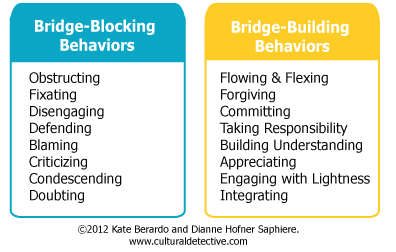
  • Identify “bridge builders” and “bridge blockers” to your successful intercultural communication.
  • Learn techniques for in the moment bridging of differences to ensure conversations spiral upward instead of downward.
  • Develop holistic strategies that consider influencing factors such as history, context, and structure of the interaction.
  • Learn how to expand, filter and test effective bridging solutions.
  • Develop high-impact, creative bridging solutions to both prepare for and repair intercultural relationships.
  • Practice, and receive feedback, on bridging strategies in situations that are real and relevant for you.
Cultural Detective: Bridging Cultures is organized around four main competencies that are essential to bridging cultural differences. They are:
  1. Self-Awareness: Being aware of the mindset you bring to challenging intercultural situations, and knowing both your strengths and blocks in turning such situations into bridging opportunities.
  2. Course Correction: Recognizing points in an interaction where misunderstanding or conflict starts to occur, and responding appropriately.
  3. Holistic Analysis: Being able to analyze complex intercultural situations in a detailed and holistic way that considers a variety of influencing factors, and, thereby, more effective solutions.
  4. Creative Solving: Learning skills and methods to generate “beyond the obvious” solutions to bridge intercultural differences.

While this is not to suggest these are all the skills needed to work effectively across cultures, these are often under-developed abilities that need to be strengthened to enable effective intercultural bridging, and, therefore, are the focus of this package.

SAMPLE EXERCISE

How about an exercise to get you started? The purpose of this activity is to learn what bridging and blocking look like for you, so you can hold a bridging mindset more often.

Let’s begin with some simple definitions.

Blocking Mindset:
  • Focused on own agenda
  • May become defensive or impatient
  • Unintentionally harming the relationship

Think about a challenging interaction in your own life (who, what, when, why) during which you held a blocking mindset. How did you feel? What did your blocking mindset look like? What behaviors did it entail? What outcomes did you achieve?

What do your reactions tell you about yourself and how you might improve your intercultural effectiveness?

Bridging Mindset:
  • Open and curious about others
  • Willingness to meet others more than half-way
  • Belief that others are NOT “out to get us” but that they have positive intentions

Think about a challenging interaction in your own life (who, what, when, why) during which you held a bridging mindset.  How did you feel? What did your bridging mindset look like? What behaviors did it entail? What outcomes did you achieve?

Learn more about Cultural Detective: Bridging Cultures; view a short video on the core Cultural Detective method, which a major software manufacturer credits with a 30% increase in customer support satisfaction; purchase small quantities of the package; or contact Kris Bibler about a site license.

Objection! – Talking with children about cultural stereotypes

“Oh no!!! Is my son really fighting the natives? Objection!” That was my thought recently when I saw my white first-grader playing a Lego video game whose content clearly perpetuated the age-old stereotype of the monolithic mass of vicious, “savage” brown-skinned “primitives” fighting the white heroic characters on a mission to find the proverbial pot of gold.

“This cannibal is a native of Pelegostos Island where his cannibal tribe believes Captain Jack is their god, trapped inside of a minifigure! He loyally serves Chief Jack – until he tries to serve him for dinner!” reads the description of the Lego character whose portrayal appalled me. Surely enough, the very ethnic group portrayed as cannibals in “Pirates of the Caribbean,” the Garinagu of Belize joined with the Kalinago (Caribs) of St Vincent, Dominica and Trinidad to send a protest letter to the executives of the Disney Corporation challenging their negative portrayal in the film, based on an ahistorical 17th century stereotype that is still very prevalent and harmful.

How to challenge destructive stereotypes present in the world around us and effectively address issues of race and racism were the topics discussed in the excellent and informative workshop I attended earlier this month in Seattle. “Talking with Children and Youth about Race,” taught by Dr. Caprice Hollins and co-facilitator Ilsa Govan of Cultures Connecting, offered the following tips I would argue work well in conversations with adults as well:
  • We don’t have to have all the answers.
  • Ask questions to see what the child is thinking and to get the child to think deeper (do not assume you know until you hear more).
  • We don’t have to be profound or “seize the moment,” as if it is the only one we have.
  • We don’t have to respond immediately. It’s okay to think, research, ask a trusted adult for input first before coming back to the conversation.
  • We can learn & explore with the kids.

Most importantly, SLOW THE CONVERSATION DOWN.

I came away from the workshop realizing that many of us, whether of color or white, are the first generation to have deep conversations about race with the younger generation, finding our way. It’s good to connect with others on a parallel journey.

Disney did not listen to the advocates from the Caribbean, but my six-year-old and I have already had a few of good conversations about problematic depictions of dark-skinned native people in the media and games. More discussions will follow.

Please share with us your stories about how you teach your kids, extended family and friends’ kids, about cultural stereotypes, via the comments section below.

Or, please share with us also your own story of intercultural effectiveness, via the form on this page.

Book Review: Transformational Diversity

Transformational Diversity: Why and how intercultural competencies can help organizations to survive and thrive, by Fiona Citkin and Lynda Spielman, SHRM, 2011. ISBN 978-1-586-44230-9

This book had me at the title. We all work with people different from us in gender, age, function, ethnicity, nationality, intellectual orientation or religious tradition, and many of us have also been involved in mergers and acquisitions that join two or more organizational cultures. We have a wealth of diverse human talent to draw upon to penetrate new markets and creatively solve problems, but how do we do so?

Books like this one, a compendium of the latest thinking along with sample designs and resources, are gifts. Such compendia guide the responsible practitioner through the maze of information available on the topic, sifting through to highlight for the reader what is most accurate or valuable, and ideally teach us where to turn for further learning. They help us take stock of where we are as a field, where we should be going, and the latest best practice for how to get there. This book does that in a no-nonsense, practical, and brief (131 pages before appendices and bibliography) manner.

The “new imperatives” that the authors cite are real and pressing. They include the need to:
  • Compete worldwide for the best talent,
  • Develop global workforce initiatives,
  • Coordinate all domestic efforts with an increasingly multicultural workforce,
  • Have diversity contribute more visibly to performance and the bottom line, and
  • Organize inclusion-oriented systematic education for all populations (p. 6).

Transformational Diversity aims to take diversity programming “beyond race and gender” (p. 1) to “more effectively enhance productivity and performance” (p. 3).  The authors tell us, “Transformational Diversity is a call for change in current diversity and inclusion programs, which in our experience seems [sic] to be struggling from fatigue and from challenges to produce measurable results,” (p. 5).

What does the book have going for it?

What most stood out for me is that they give voice, or, rather, print, to many of the things leading global D&I practitioners have been saying over the past decade. And this is valuable. Just a few examples include:
  1. The fact that organizations hire “diversity” and then proceed to erase it by teaching new hires to fit in (p. 10).
  2. The fact that so much diversity programming is U.S.-centric (p. 13), that U.S. diversity models have “historically been grounded in… government requirements and moral ground to redress past injustices and discrimination patterns” (p. 9), and that these rarely translate well overseas.
  3. That affinity groups have gravitated towards social and celebratory roles, when their real value is in education: “to make known any differences represented by the individuals within the groups so that the differences can be respected, and thus, accepted” (p. 76).
  4. The fact that understanding the dimensions of culture is not enough. “We do not have to choose between individual and group performance but instead make sure that the relationship between them becomes meaningful in the workplace” (p. 91).

The authors share numerous helpful examples and stories. They cite several research studies and reference statistics, another plus. Their approach is always practical, such as their three steps for rolling out Transformational Diversity (pp. 38-42) or their guidance for “Exporting U.S. Diversity Programs” (pp. 68-70). Many readers will find incredible value in the six programming templates (the authors call them “Archetypes”) the authors provide (Chapter 5).

Thus, there is incredible value in this book, and I highly recommend it for all of the above reasons. The authors do a commendable job communicating basic intercultural concepts to the diversity practitioner, with advice such as helping U.S. Americans to learn to see our biases (pp. 112-114).

What would I have liked to see in this book? Adding any of the below would have added volume and complexity, and one of the most terrific things about the book is its brevity and no-nonsense approach. But, with that qualifier, I felt many of the sample solutions were still heavily knowledge-focused rather than competence-building. This would seem to me a sign of the difficulty of breaking through to new paradigms from the old. The designs in the book are excellent, and with a bit more explanation they may center on skill development, but that fact did not show through as much as I would have liked.

Secondly, as an organizational development practitioner, I was very happy to read the authors’ cautions to embed change in the organization itself (p. 73). The importance of building organizational structures and systems to support Transformational Diversity seemed to me under-emphasized, however. The six Archetypes that the authors present, though they include one on coaching, seem to focus primarily on training. What about incorporating these new commitments and capacities into our hiring, promotion, and review processes, as well as into project management and other on-the-job activities? That is my bias, of course, and no book can do it all. This one is definitely worth the read.

Jam and Bread

Submitted by George Simons, http://www.diversophy.com

Being an interculturalist for most of my life, I should know better, however a few years ago we were having a potluck picnic to celebrate Easter and I called up a Peruvian friend who lived nearby to ask what she might bring. She volunteered to bring “jam and bread.” I thought this a little strange for an Easter holiday picnic, but of course said yes.

Meanwhile I shopped for the essentials, a honey baked ham, some good sweet potatoes, scallions, wine, etc.

When Sunday came along, I heard her pull into the driveway and went to the window wiping my hands from the cooking. I was just about to go out and help her when I saw her extract from the trunk (boot) of her car a ham identical to the one that I had warming in the oven — I quickly took it from the oven and hid it in the closet. So much for “JAM and bread.”

Thank you, George! Readers, please share your story via the form below, or in the comments. Thanks for helping us build a better world!

← Back

Thank you for your response. ✨

Type of Story You're Submitting

Link

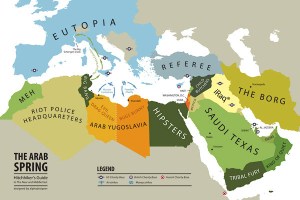
I see so many terrific ways to educate using these beautiful maps. What is the difference between a stereotype and a generalization, how do we use information to inform rather than to box people in, how might others see us or our team members (hopefully before they get to know us)…

And, as with any “loaded” tool, how do we get “beyond” or “use” the pitfalls, the errors, the hurt or misunderstanding tools such as these can cause?

Mapping Stereotypes – The Geography of Prejudice | Digg Topnews.

How would you use, and not use, these images?

Link

Remember Mao Zedong’s wife, Madame Mao, who had an acting career in Shanghai before becoming China’s first lady? Looks like that may be happening again.

Read the story and watch a few clips.

Announcing the New Cultural Detective Blog!

The Cultural Detective team is excited to announce that we have started a new blog! It is our hope that it will be a powerful venue for helping all of us to develop intercultural competence in ourselves, others, our organizations and communities.

Our intention is to consolidate here many of the activities that currently take place across multiple social networking platforms.

Please subscribe, as we will be sending some very exciting announcements in the next few days and weeks!!!!

Also, we are launching with two series of stories.
  • The first is called “Cultural DEFectives,” those mistakes that even the most experienced interculturalist makes. If you have a funny or insightful story you’d like to share, please upload it via the form on this page.
  • The second set of stories are called “Cultural EFFectives,” stories of success in living, working, and collaborating across cultures. If you have a success story you’d like to share, please upload it via the form on this page.

We invite you to submit your original articles, suggested links, etc. to blog@culturaldetective.com. Thank you for joining us to enhance respect, understanding, creativity and collaboration in this world of ours!

Cultural EFFectives

Cultural Detective‘s purpose is to build understanding, respect, equity and collaboration in our very multicultural world. The primary way in which we do this is by promoting intercultural competence: the ability to work and relate effectively and enjoyably across cultures.

But just what does intercultural competence look like? How does it happen? Where are the success stories? The journey is much easier if we know what we’re aiming for, if we have some examples to guide us.

Sharing such “cultural effectives,” or cross-cultural successes, can be a terrific way to help replicate such successes. Let’s all learn from each other, pass around the good news, the good ideas, the effective practices, and help make our world a better place. As our readers have told us:

Cultural Defective + Cultural Detective = Cultural Effective

Please share your story via the form below, or in the comments. Thanks for helping us build a better world!

← Back

Thank you for your response. ✨

Type of Story You're Submitting

Cultural DeFectives

As you know, Cultural Detective‘s aim is to build understanding, respect, equity and collaboration in our very multicultural world. The primary way in which we do this is by promoting intercultural competence: the ability to work and relate effectively and enjoyably across cultures. Intercultural competence is not a “state” at which we arrive; it is a journey of lifelong learning.

As we continue learning and growing, miscommunication is inevitably part of the process. Rather frequently, if truth be told, intercultural “experts” or “specialists” miscommunicate. We miscommunicate with our partners, children, friends and neighbors, so of course if we are working virtually with people we see infrequently we will miscommunicate! I remember a colleague telling me years ago that the fact that people can communicate at all is, indeed, rather miraculous.

Such “cultural defectives,” or cross-cultural mis-steps, can be therapeutic to share. They are fun, frequently funny, and help us bond. “Cultural defectives” also, importantly, put our differences on the table as something not to be afraid of, but rather to play with, to learn from, to talk about, and to treat with curiosity and respect.

The blog posts and comments in this section are shared with a good-natured spirit of learning, bonding, and trusting that we can be vulnerable with one another and, together, make our world a better place. As our readers have told us:

Cultural Defective + Cultural Detective = Cultural Effective

Please share your story via the form below, or in the comments. Thanks for helping us build a better world!

← Back

Thank you for your response. ✨

Type of Story You're Submitting