The Oxford Dictionary recently added “Mx” to their lexicon. Are you familiar with what it means?

A_TransGender-Symbol_Plain3_with_background-color_FFD9BF

Transgender symbol image ©ParaDox, used under Wikimedia Commons license

Growing up in the USA in the 1950s, as I did, it was “clearly understood” that there were two genders: boys and girls. So it never crossed my mind until I was much older that perhaps the binary world of gender was not so binary. And if one allows—even intellectually—for that possibility, you can begin to see how difficult daily life can be for transgender people, individuals who do not identify with the gender to which they were assigned at birth.

The more one thinks about it, the more complex being transgender becomes. Take a seemingly simple thing like filling out a standardized form: what do you do if you aren’t Miss, Mrs., Ms., or Mr.? This is the dilemma that opens Jacob Tobia’s recent piece in The Guardian, which I highly recommend. He writes of the difficulties of not having a gender-neutral option available in so many daily situations. As I read his article, I began to realize the privilege given to “cisgendered” individuals—those who identify with the gender they were assigned at birth.

Tobia writes:

Growing up, I assumed that the only way to have a gender-neutral title would be if I got a PhD and could make everyone call me “Dr”. For most of my life, I didn’t realize that there was another way out of the “Mr/Ms” dichotomy. That changed when, in my junior year of college, a favorite professor of mine introduced me to an artist named Justin Vivian Bond who used a gender-neutral term that I had never heard of before: “Mx.”

What?! Yup, that’s not a typo: the word is “Mx.” When I read this article, I thought everyone else must already know about it, since it is now included in OxfordDictionaries.com: “A title used before a person’s surname or full name by those who wish to avoid specifying their gender or by those who prefer not to identify themselves as male or female.”

Judging by the reaction of the few people I have mentioned it to, this term is not in universal usage, at least not in my tiny little corner of the world. However, it seems a great addition to the English language for those who do not self-identify with binary gender assignments.

“…on 28 August 2015…That day, OxfordDictionaries.com – created by the publishers of the Oxford English Dictionary – added Mx to the dictionary. Seemingly overnight, Mx went from an underground, somewhat obscure term, to an official part of the English language.”

Want to learn more about the challenges of being transgender? Watch this video with Jazz Jennings, a transgender youth. Want to learn how to be an ally to transgender people? Here are a few tips from Basic Rights Oregon. Want to understand some of the values that transgender individuals tend to share? Check out Cultural Detective LGBT (Lesbian, Gay, Bisexual, Transgender), now part of Cultural Detective Online.

Great Press Response to CD’s New Book!

JoeLurie600Cultural Detective is the proud publisher of a wonderful new book chock-full of stories of intercultural interaction from around the world—a book that contains loads of proverbs and insights to current events as well: Perception and Deception: A Mind-Opening Journey Across Cultures, authored by Joe Lurie.

Response from the press to the new book has been swift and highly positive.

  1. The first article came from the National Peace Corps Association. Joe has a fellowship endowed in his honor, one designed to enable returned Peace Corps volunteers to obtain their PhDs. Isn’t that terrific? So they used our book to encourage people to apply and further their education! Read more about Joe, the book and the fellowship in this terrific article.
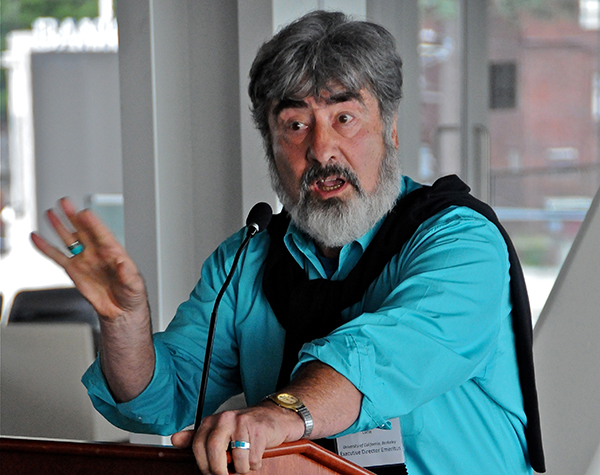
  2. University of California Berkeley profiled Perception and Deception in a public affairs news release, Former I-House director explores cross-cultural encounters in new book.
  3. Perception and Deception was also showcased recently in Psychology Today, in an article entitled, Do You Perceive Things the Way They Really Are?

Joe has been doing quite a few readings, and one that is open to the public is coming up on Tuesday, December 8, at the Commonwealth Club in San Francisco. He is an incredible storyteller, and it’s sure to be a lively audience, so don’t miss the opportunity!

Perception and Deception: A Mind-Opening Journey Across Cultures is available in print or ebook versions, via your local bookseller or amazon. Be sure to get your copy today! The book makes a wonderful gift.

What Will They Think of Me?

ImprovMannheim

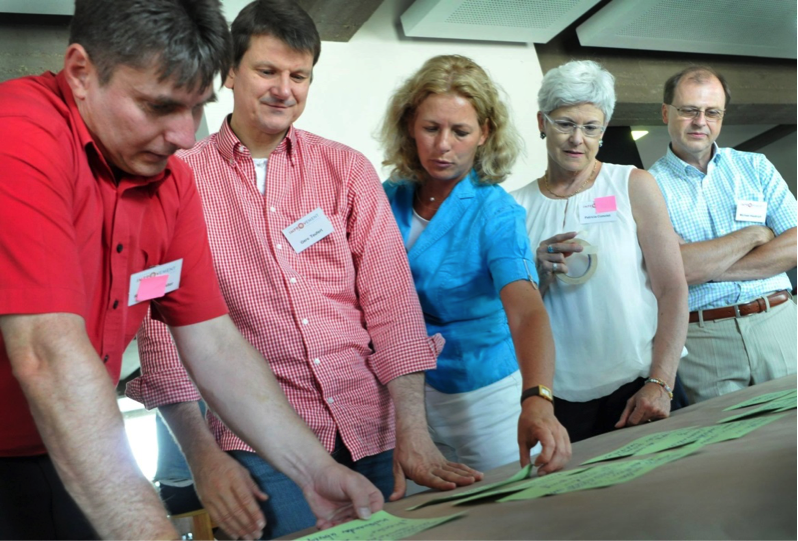
The International Improv Conference in Mannheim Germany June 2015

We are pleased to share with you today a guest blog post by Patricia Comolet; bio follows the post.

What is one of the main challenges of going into a new cultural situation? Of course—dealing with the unknown—and, often, the self-doubt that it can trigger:

OMG do I need to take off my shoes here? But I have a hole in my sock! What will they think of me?

In other situations, it could be defensive self-assertion that might be triggered:

It is clear that this situation requires someone here to take charge. As the new COO it is my job to step up to that challenge. I need to show that I know what I’m doing or what will they think of me?

Underneath the stress of adapting to an unknown situation or culture can be the insidious fear of judgment.

“Improv” is the art of improvisational theatre, and I find that building an “Improv mindset” is a unique way to prepare for a new office, new city, new country, and /or new culture. It offers a different and vibrant way to deal with the underlying question: What will they think of me?

Why is this so? In the world of Improv, the notion of judgment, with time and practice, fades. Instead, we learn a serendipitous mindset of responding, to the best of our ability, to whatever is presented. I believe that I can manage whatever shows up if I adapt some essential guidelines gained through Improv.

Through Improv exercises we can learn to give ourselves this initial moment to pause and open up to where we are and with whom we are interacting.

Want to try it? Get a partner who is open to learning.

  • Begin by simply looking at your partner to assess his/her current state. What’s going on for him/her? Take the time to assess the environment. What is happening around you? (Developing observational skills and emotional intelligence are two very fundamental intercultural competences, pivotal for any Cultural Detective.)
  • Then comes the basic improv approach: Yes, and. You respond to what has been proposed with a “yes, and.” However, this is not your run-of-the-mill “yes, I hear your thoughts, and here is my idea.” Rather, this is a most distinctive and committed “Yes, and I could add this to your thoughts.” Improv involves an upward spiraling “yes, and” with each participant focused on what they can add to the original proposition. You’ll find the “yes and” in the Cultural Detective list of A Dozen Best Practices for Enhancing Intercultural Excellence.

The magic happens in the process. Allowing ourselves to let go of our own approach or perspective long enough to hear and work with someone else’s provides the time and space necessary to really connect with others. The process builds bridges across divides.

It requires focused intention to step into the other person’s idea/culture/mindset, but once there, like Alice through the Looking Glass, there is a sort of wonder at what is possible. I found, in my improv training, a simmering excitement as I was caught up in the possibilities I could come up with—once I acknowledged the other’s vision of things.

By working with this technique we build acceptance and openness to new ideas. (More intercultural competences being honed here, right?)

Facts, feelings, and intentions are the raw material we have to work with. In the theatre, as in the world of cultural differences, it is the interpretations we assign to what we see and feel that trigger emotions within us. It is those emotions that influence our interpretations. By raising awareness of the power of the interpretations we unconsciously apply to unfamiliar situations, we can open a whole new way to experience what is going on around us. Improv provides a framework for considering other possible interpretations.

In the theatre, as in the world of cultural differences, it is the interpretations we assign to what we see and feel that trigger emotions within us.

Another valuable idea coming from the world of Improv is the simple notion of “make the other one look good.” No matter what is tossed at us during an Improv session, the spirit is to take what is and build on it positively, with the intention of making the other look good. Again, Cultural Detective’s “positive intent” parallels the philosophy of Improv.

Imagine what strength we would gain if we would approach new situations with the idea that it is up to us to make the other shine! What impact could such a positive sense of purpose have on us? How could it help us to adapt more enthusiastically to a new situation?

Improvisation has the benefit of being experiential learning that can help us truly assimilate the knowledge of a culture or people. This fits nicely into intercultural coaching, as cultural differences are easier to perceive when actually experienced. By playing with scenarios in a relaxed atmosphere, we can work through the specific challenges our clients are dealing with to help them experience a shift in their understanding—a shift to help fade the fear of “What will they think of me?

Improv techniques and Cultural Detective integrate easily together, with CD providing a framework in which to use the skills acquired through Improv to better communicate across cultures. Learning to let go of the idea that our approach is the only approach is part of what can be derived from utilizing the CD process. Cultural Detective Value Lenses help us to recognize that our interpretation of events is but one of many potential interpretations. And, the “yes, and” approach may help each person value and build on the diversity found within the interaction. If you haven’t yet, be sure to subscribe today.

PatriciaComoletOur guest author, Patricia Comolet, has a background in surgical nursing, and has worked and lived in seven countries on four continents, including work in Africa and India, honing her ability to get real results in difficult conditions. Currently, she focuses on coaching global and virtual team dynamics, integrating her skills developed during challenging work experiences with her coaching training. Patricia helps global teams to clarify their team dynamics and establish concrete objectives by promoting clear communication, creative problem solving, collective intelligence, and strong team identity. More information about her work can be found on her website: camcomcoaching.com

The Pulitzer’s of Diversity

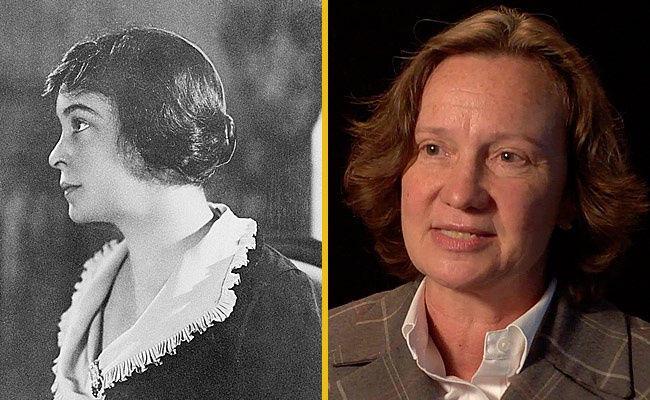
Edith Anisfield Wolf, Photo from the Cleveland Foundation

Edith Anisfield Wolf, photo from the Cleveland Foundation

Do you think you are well-read on world cultures? Do you occasionally wonder what one person can do to promote justice in this world of ours? Are you someone who thinks that it’s primarily people of color who recognize the vital importance of diversity on our planet? If so, think again and most definitely read on.

Edith Anisfield Wolf, born way back in 1889, was a poet, businesswoman and philanthropist from Cleveland who had a lifelong passion for social justice. The daughter of immigrants, Edith spoke four languages (English, French, German and Spanish) and used literature as a means to explore racial prejudice and celebrate human diversity.

In 1935 she created the Anisfield-Wolf Book Awards, to honor books that explore these very issues. That makes 2015 the Award’s 80th anniversary! Congratulations and thank you, Edith! Note how visionary that makes her—establishing this important Award 20 years before the U.S. Supreme Court’s landmark Brown v. Board of Education decision! Edith died in 1963, but her legacy lives on.

“The Anisfield-Wolf Book Awards recognize books that have made important contributions to our understanding of racism and our appreciation of the rich diversity of human cultures…Today it remains the only American book prize focusing on works that address racism and diversity. Past winners have presented the extraordinary art and culture of peoples around the world, explored human-rights violations, exposed the effects of racism on children, reflected on growing up biracial, and illuminated the dignity of people as they search for justice.”
—Anisfield-Wolf website

Over the past 80 years the Award has highlighted nearly 200 significant books, most of which I have not read. So I need to get going! For those of us who may be intimidated by such a long list, they also have a smaller list of 24 “Lifetime Achievement” books, or you can sort winners by year or according to the categories of fiction, non-fiction or poetry.

Again from the Award’s website: “The Cleveland Foundation, the world’s first community foundation, has administered the Anisfield-Wolf prize since 1963. Before then, the Saturday Review sponsored the awards. From the early 1960s until 1996, internationally renowned anthropologist and author Ashley Montagu chaired the awards jury. That panel of globally prominent scholars and writers has since been overseen by Henry Louis Gates Jr., the acclaimed scholar, lecturer, social critic, writer, and editor.”

Have you heard of this Award? Despite its prestigious history and huge contribution, and the fact that the Anisfield-Wolf’s cash prizes equal the Pulitzer’s, many people haven’t heard of it. Perhaps that’s due to how ahead of its time the Award was, though Karen Long, the Award’s manager, has another theory:

“[The] Anisfield-Wolf remains a relatively unknown honor. Awards manager Karen Long suspects she knows why. ‘Things that address race are considered, sometimes in the larger culture, as homework or broccoli or good for you.'” —USA’s National Public Radio

Cultural Detectives, I am thrilled to be on the journey to developing intercultural competence, respect, understanding, collaboration and justice with you. And, I’m feeling like we need to work together to make sure more people know about this incredible resource! Let’s start by watching the Awards via live feed this Thursday, September 10, at 6:00 pm Cleveland time (GMT-4), and by circulating this post widely to your networks.

The Blame Game

BlameVAcccountabilityBlame is one of the most powerful tools in the repertoire of a Cultural Defective. Do you want to diminish trust in a relationship? Cause irritation? Ensure that others do not want to help you succeed? Ruin a perfect opportunity for cross-cultural collaboration? Then blame is a good strategy.

In contrast, Cultural Detective advises you to “refuse to take offense”—a much smarter operating norm for Cultural Effectives. Has someone failed to inform you in a timely manner? Rather than blaming them for rudeness or unprofessionalism, it is more constructive to learn the intentions behind their (lack of) communication, explain your preferences, and together create a shared way forward—a “third culture.”

“Blame is the discharging of discomfort and pain. It has an inverse relationship with accountability.”
—Brené Brown

When others have a different cultural norm, mindset, or “common sense,” it is most productive and sanity-preserving to acknowledge and understand these differing “cultural senses”! Actively taking accountability for co-creating shared norms provides a way to work together more effectively. It also facilitates trust, while embedding as “normal” the processes and a mindsets to help solve future problems.

We are fans of Brené Brown, as many of you may be, too. The video below captures this basic concept of blame vs. accountability in her inimitably humorous and insightful style, albeit not in a cross-cultural context.

Are you looking to build intercultural competence, and learn a reliable process to transform blame into accountability? A subscription to Cultural Detective Online for you, your family, or team will help you accomplish just that!