Unknown's avatar

About Dianne Hofner Saphiere

There are loads of talented people in this gorgeous world of ours. We all have a unique contribution to make, and if we collaborate, I am confident we have all the pieces we need to solve any problem we face. I have been an intercultural organizational effectiveness consultant since 1979, working primarily with for-profit multinational corporations. I lived and worked in Japan in the late 70s through the 80s, and currently live in and work from México, where with a wonderful partner we've raised a bicultural, global-minded son. I have worked with organizations and people from over 100 nations in my career. What's your story?

Food Speaks in Many Tongues

Anna Mindess started it, Joe Lurie and I continued it, and now Anna comes back with more. What, you might ask? Food idioms!

By now you know that Anna, co-author of Cultural Detective Deaf Culture, writes a food blog called “Bay Area Bites.” Inspired by the aforementioned articles, her latest is called “Food Speaks in Many Tongues.” Specifically she shares with us a few French, English, German, Spanish, Danish, Turkish, Japanese, Russian, Cantonese, Farsi, Arabic, Hebrew, Yiddish, Italian, and American Sign Language food idioms.

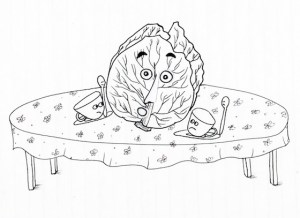
Illustrations are by Anna’s daughter, Lila Volkas.

Latino Growth in USA Signals Need for Change

Andrés Tapia has written an article for Diversity Executive, in which he outlines the need to adapt US business practices in order to attract, retain and make the most of Latino talent. In the article, he references (and gives you a sneak peak of) our upcoming Cultural Detective Latino/Hispanic.

Cultural Detective Online for Study Abroad

Quite a few of the world’s leading study abroad organizations rely on Cultural Detective. They tell us it’s invaluable to their students’ success. That’s why we are very excited to SOON be able to offer you the Cultural Detective product line as an integrated, online system rather than as stand-alone packages! And, better yet, it’s designed as a personal coach, encouraging your students and staff to track their goals, summarize and apply their learning, and upload, debrief and share with a teacher or counselor their daily life experiences (and the meaning they are making from them).

Be sure to stay tuned for our official launch. Or, enter to win a free subscription for you or your team!

If you are unable to view the video above (if you are on an iPad or other device that doesn’t play Flash), click here to view the video on YouTube. Please feel free to share this video with others who might be seeking a virtual intercultural coach. Thank you!

Endangered Languages Project

Experts estimate that only 50% of the languages that are alive today will be spoken by the year 2100. The disappearance of a language means the loss of valuable scientific and cultural information, comparable to the loss of a species. Tools for collaboration between world communities, scholars, organizations and concerned individuals can make a difference. Such is the raison d’être of the Endangered Languages Project, an online collaborative effort to protect global linguistic diversity.

The first thing I noticed on this site is the incredibly high quantity of red dots on the world map, each indicating a severely endangered language. The site enabled me quickly and easily to look up endangered languages in Mexico, where I live (the closest red dot to my home is the Seri language, one I’d never even heard of!). I also looked up the language that first interested me as a pre-teen in the southwestern USA: Navajo (it is labelled “at risk” and is currently a featured language on the site). Even in my adopted homeland of Japan, as I expected, the Ainu language is ranked “critically endangered.”

The languages included in the project and the information displayed about them are provided by the Catalogue of Endangered Languages (ELCat), produced by the University of Hawai’i at Manoa and The Institute for Language Information and Technology (The Linguist List) at Eastern Michigan University. The list of collaborators in the Alliance for Linguistic Diversity is indeed impressive. The project site is definitely worth using!

Watch Out! What a Values Lens is—and is Not!

Our users love Cultural Detective‘s Values Lenses. Many of them even call our toolset “Cultural Detective Lenses” rather than “the Cultural Detective Series.”

Customers tell us they use Values Lenses to:

  • Quickly build recognition that cultures are, indeed, different.
  • Establish credibility that these tools and their facilitation are effective.
  • Supplement—amplify and deepen—the analysis of a critical incident, or better understand a personal life event.
  • Reflect on ways in which they have become who they are by overlaying national, gender, generational, religious tradition or sexual orientation Lenses with Personal Lenses.
  • Contrast their “home culture” Lens with that of a new culture to predict where there might be synergy and resonance, as well as potential difficulties or challenges.
  • Learn to focus on the things that make a difference, to observe and respect deep culture, rather than becoming preoccupied with dos and don’ts.
  • Empower members of their organization to explain their culture(s) to others. Though they may not individually hold the values on the culture’s Lens, the Lens enables them to explain the larger society’s tendencies in ways that help newcomers to be successful.

All of this is fine and good, except that Values Lenses scare the bejeebers out of me!

Ever since publishing Ecotonos back in the early nineties, I’ve said that publishing a tool is like launching a child out into the world: products, like children, take on lives of their own. They do not always do what their parents or creators might have intended. Tools serve certain purposes and not others. Tools can be used expertly or misused.

Since Values Lenses can be such powerful tools, they can also be dangerous tools when misused. Thus the reason for this post. We want to make sure you understand how to use Values Lenses appropriately, and help us keep them from being used counterproductively.

So, what are Values Lenses? And what are they not?

  • Values Lenses summarize the top five to seven core values or general tendencies of a group of people, a culture. They do not apply to individuals within a culture, and the values have a complex influence on sub-cultures of the Lens culture.
  • They illustrate how members of a culture tend to see the world—looking out through the Lens, and how a culture tends to influence its members—like sun shining in through the colors of the Lens. It is important to remember it is “tend to,” not “always do.” Context is key.
  • They capture the ideal and actual aspects of a culture, intention and perception, positive and negative, yin and yang. A Lens both illustrates the values that members of a culture aspire to, and some ways in which the expression of those values might be negatively perceived by those who don’t share them. A Values Lens is a starting point for inquiry; it does not contain every value held by every member of a culture.
  • Values Lenses are tools for discovery and dialogue, clues that may give us an idea about what makes people tick. They are not yet another “box” into which to stereotype people!

Values Lenses can be extremely effective tools, and they are a key component of the Cultural Detective Method. Remember, however, that it is the process of using the Cultural Detective Worksheet that is fundamental to the Cultural Detective approach.

We’d love to hear your ideas and techniques for helping others learn through the use of Cultural Detective Values Lenses! Let us know how you are creatively applying Values Lenses in your life—personally and/or professionally.

Cultural Detective Online: Virtual Coach for Expats and Business Travelers

You’ve already told us Cultural Detective is fabulous. That it’s helped your team achieve its deliverables. That it’s rocketed your performance to new levels. That’s why we are very excited to SOON be able to offer you the Cultural Detective product line as an integrated, online system rather than as stand-alone packages! And, better yet, it’s designed as a personal coach, encouraging you to track your goals, apply your learning to your business objectives, and upload and debrief your own life experiences.

Be sure to stay tuned for our official launch. Or, enter to win a free subscription for you or your team!

If you are unable to view the video above (if you are on an iPad or other device that doesn’t play Flash), click here to view the video on YouTube. Please feel free to share this video with others who might be seeking a virtual intercultural coach. Thank you!

Diversity and Attrition in the Global Executive Suite

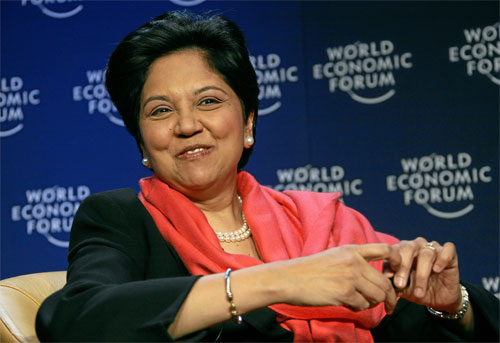
Image of Indra Krishnamoorthi Nooyi, PepsiCo CEO (NOT the subject of this post)

A major global corporation lost a 25-year senior executive at the prime of her career. She explained in her exit interview, “The corporate culture here is too parochial and I am tired of fighting it.”

How did the company lose such a gifted executive, at the point it could have most benefited from her contributions?

I will tell you a story that she shared with me, one that will hopefully provide a taste of how she felt during her career with this company. She shared the story with me at the conclusion of a two-day training course I had conducted, in which she had just participated.

“Dianne, I have so very much enjoyed this global management training you have facilitated for us. These are exactly the cross-cultural skills and mindsets needed in our world today! You are providing us tools and processes for acknowledging and using unique contributions, hearing the voice and perspectives of all involved. This type of training is so very different from diversity training,” she told me.

Well, I happen to be a fan of diversity training. I was troubled by her words, and wanted to understand what this obviously intelligent, wise woman did not like about it.

“Well, Dianne, in my experience diversity trainers go through the motions. They do activities and they often don’t know why. I’ll give you just one example. A year or so ago I was in a senior management diversity training. The facilitator asked us to stand in a line, side by side. He instructed us to take one step back if English was not our first language. A step back if our skin color was not white. He said to take another step back if we were not Christian. A step back if we had not attended a first-tier university. On and on he cited the categories, and I took so many steps back that I was the only person at the far side of the room, alone. There were several others in between, but I was visibly alone.”

“I thought to myself, ‘YES! THIS is what I’ve been trying to tell you all these years! This company forces me to do backbends and jump through hoops in order to succeed! I have to lose who I am to influence decision making. I have to communicate in a way I dislike in order to be heard! Let’s change this corporate culture to be more inclusive!’ Oh, Dianne, I was so excited by this powerful exercise!”

“But, do you know what happened? The President of the company looked at me standing there in the back of the room and said, ‘Look how inclusive we are. A dark-skinned woman, an Indian Jain, can become a senior director!’ I thought to myself, do you know how much harder than a man I have had to try to succeed? How much harder than a white skinned person? How much harder than a European or American? He seemed to have no idea of the price I’d had to pay for my promotions. He didn’t acknowledge my accomplishments or the super-human efforts of other minorities in our organization. Rather, he prided the company on its color-blindness! And worse yet, the trainer didn’t say anything! The exercise concluded, and we went on to the next activity! Rather than a learning moment, the activity only reinforced ignorance and legitimized discrimination! I was absolutely crushed and stunned.”

Such a loss for this corporation. Such a difficult decision for this woman to have had to make. It was also a challenging position for the trainer to have been in; hindsight is 20-20 regarding how the trainer could have handled the President’s comments, and debriefed the activity, more effectively.

Let me close by asking you this: Have we all taken the time today to empathize, to put ourselves in someone else’s shoes? Have we done our part to change dysfunctional systems? What have each of us learned today?

I look forward to your comments on this post. Thanks!

Linked to the My Global Life Link-Up at SmallPlanetStudio.

Global Edge: Terrific resource

Are you familiar with GlobalEdge? Funded in part by the USA Department of Education, the project provides free, centrally located international data from a variety of sources.

  • The Global Insights section includes data sortable by country, by 11 trade blocs, or by industry.
  • The Reference Desk includes a resource directory, online course modules, tutorials on international business, and a glossary of international business terms.
  • Their Knowledge Tools, my personal favorite, include tests of knowledge, economic rankings, a terrific “Database of International Business Statistics” to help you generate the custom reports you might need, an index to evaluate emerging markets, diagnostic tools to aid your business decisions, and a country comparison tool.

Many thanks to Cultural Detective facilitator Janet Graham, Baker University professor of international business, for highlighting this resource !

Can you read this?

No? Yes? If you can read the above, quick, tell me what it has to do with culture. If not….

Can you read the next one?

Yes? Perhaps this second one was easier for you? Why? Why is it we can read the above?

Our minds interpret a lot of things every day, constantly. They make sense of the world around us. They do this by recognizing patterns, putting information into templates that are familiar to us.

Obviously when we enter a new culture, the rules are different. The patterns are different, the templates unfamiliar. Our inability to make sense of what’s happening around us can cause us to feel disconcerted, maybe to lose confidence. Our past knowledge, from another place, can cause confusion. It can lead us to think we understand what we really don’t, to fail to see what is really there, or to miss important information.

There are so many interesting photos and images floating around social media networks. How many of them are you able to use to promote cross-cultural understanding, like the two above? Come on, share your favorites!

Reading key to the above images is below:

Este mensaje es para demostrar las
cosas tan increibles que puede
hacer nuestro cerebro. si logras
leer esto puedes sentirte
orgulloso de tu inteligencia, ya
que solo ciertas personas lo
logran. esto se debe a que el
hemisferio derecho del cerebro
asocia los simbolos parecidos a las
letras que conocemos normalmente
y asi logramos leer con facilidad.

This message
serves to prove how our minds
can do amazing things!
Impressive things!
In the beginning it was hard but now,
on this line your mind is reading
automatically without even
thinking about it. Be proud!
Only certain people can read this.

Grains of Sand and Cross-cultural Adjustment

Ever look at something and find it so beautiful or fascinating that it just sort of sticks with you? Perhaps it gives you a gut feeling that it speaks to something you’re working on? Then, maybe in the shower the next day, it hits you?

That’s what happened to me a while ago when our Intercultural Competence News Feed curated Dr. Gary Greenberg’s photos, taken through a microscope, of grains of sand.

While most of us normally think of grains of sand as looking fairly similar — tan or brown, some crystals, shiny — Gary’s photos show us that deep down, once we “get to know” the grains of sand, so to speak, each of them is quite unique! Now if that isn’t a metaphor for diversity, inclusion and cultural differences, what is?

We hope you’ll be pleased with the train of thought Dr. Greenberg’s gorgeous photos produced. We put together a PowerPoint on cross-cultural dynamics that you are most welcome to download and use. It hasn’t been polished and perfected like the grains of sand, but if you read the presenter notes, we are confident you’ll have fun customizing the ppt for your programs.

We all have favorite photos, metaphors, comics, and stories, or even video clips, that we love to use in teaching, training and coaching. If you have something you would be willing to share, please pass it on. We’ll be happy to get it out there for you and link through to your website or contact information. Together we can build a more respectful, understanding and collaborative world!