Migrants Moving History: Excellent Short Film

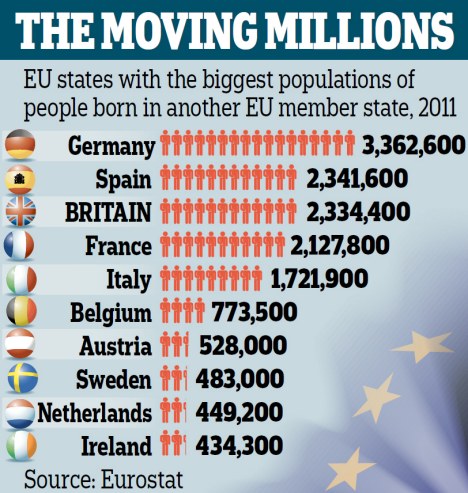
article-0-14067A2B000005DC-975_468x493

Image from the Daily Mail


“Europe faces an interesting set of immigration challenges and opportunities: Demographic pressures as many European societies age, a lively and at times tense policy and political debate over questions of identity and immigrant integration, and a unique policy environment that has knit 28 European countries together with regards to the management of outer borders, asylum, and other immigration-related topics.”
—Migration Policy Institute

Do you know that Germany has become the world’s second-largest destination for migrants, according to the OECD? Are you interested in the migrant experience? Multicultural identity? Do you work with people in transition? Are you particularly concerned with the challenges surrounding the changing demographics in Europe?  Have you considered what a future might look like if we weren’t quite so limited by nation-state thinking?

Then you definitely want to watch this terrific 23-minute movie, Migrants Moving History: Narratives of diversity in Europe, made with Hauptstadtkulturfonds out of Berlin. Even if you have seen it before, it is well worth your while. Though it was first aired back in 2008, the interviewees’ reflections on where they “belong,” on “betweenness,” on the differences between cultural and linguistic identity, and the benefits of multiculturalism, are thought-provoking; the video serves as a great starting point for discussion.

As one interviewee says, “Everyone gains from multiculturalism. We need an open discussion about how societies can better facilitate that.” It got me to thinking: which societies in the world proudly define themselves as immigrant societies, as multicultural? How did they get there? And how can we get more members of more societies thinking and feeling that way?

Let us know how you use Cultural Detective to make the most of multiculturalism where you live or work!

The Nasty (and Noble) Truth about Culture Shock

—And Ten Tips for Alleviating It (from our “Oldies but Goodies” series)
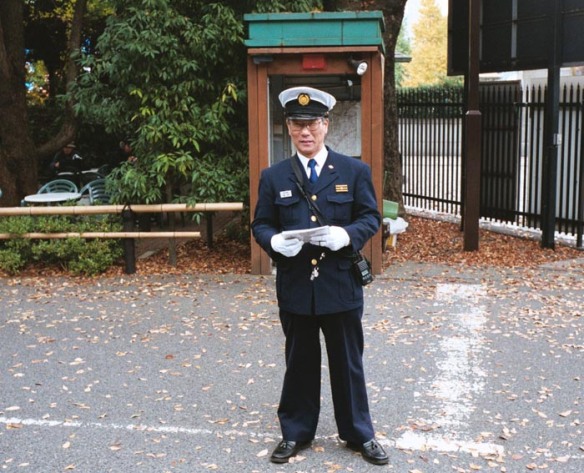
PolicemanThe Nasty Truth

I’ve behaved badly. It’s true, and I’m admitting it. Very publicly.

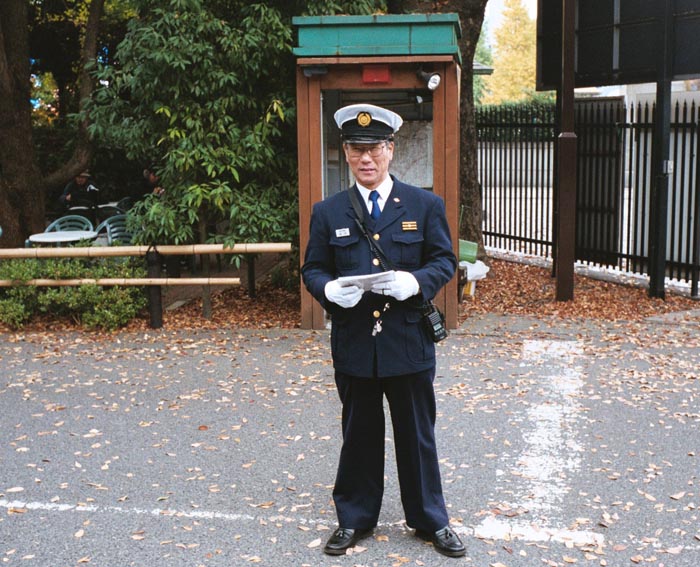
There was the time a police officer in Japan told me to move, and I stood my ground, passive-aggressively, staring him down, daring him to remove me.

There was the time at my son’s school here in Mexico, when I refused to go into a private office, insisting on talking (loudly) in the public lobby, because I was so very upset at the runaround the staff was giving me, and tired of being (privately) shut down.

Both of these were very culturally inappropriate. Heck, they were inappropriate by the standards of my birth culture! I behaved badly. I lost face. I upset others. I looked like a fool. I was ineffective. Why?

You could say these experiences reflect a lack of emotional maturity; despite my age I still have loads of growing to do. The case I’d like to make in this post, however, is that the stress of culture shock causes many people to do things we would never do in our home cultures, in a milieu with which we are intimately familiar and generally comfortable.

The Noble Truth

There are good things about this sort of “acting out.” Such meltdowns enable us to define and preserve our sense of self, identify our core values, realize how stressed we really are, so we can take care of ourselves and try to restore our equilibrium. Culture shock is also an indicator that we are indeed growing, stretching, challenging ourselves to get out of our comfort zone, and trying to adapt to new and different ways of being in the world. Thus, it is a highly worthwhile venture!

In the free download that accompanies this post, you will see a page titled, “Level of Acculturation.” This is one of those “Oldies but Goodies” that we occasionally release. Originally written back in 1989, the arrow on the page illustrates two polar extremes: the expat who makes great efforts not to acculturate, living instead much as s/he would at home; and on the other end, the expat who “goes native,” adapting to the local culture in every possible way. The key point of this piece of training material was to advise expats to try to strike a balance, to manage the polarity between the two extremes. It is important to maintain home-country connections for sanity and respite, and to build host-country connections in order to learn, grow, adapt, and fully experience one’s new home.

Please do not misunderstand me; I am most definitely not advocating behaving badly! I am, however, saying that such bad behavior happens all too frequently. The nasty truth is that inappropriate behavior, due at least in part to culture shock, is a fact of expat life that is all too often brushed under the rug. We refuse to talk about it. We may pretend it doesn’t happen, that it only happens to others, or we try to forget it did happen. We blame it on lack of competence. Of course we lack competence—we are learning and adapting to a culture that is new to us. And, it takes super-human levels of self esteem and emotional composure to navigate cultural adaptation without ever going over the edge, at least a bit.
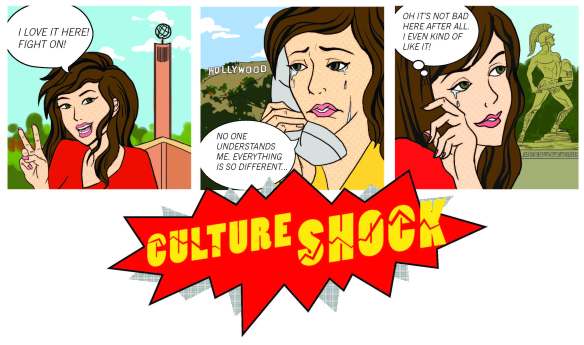
Photo credit: Shelley Xia, USC

Photo credit: Shelley Xia, USC

What Is Culture Shock?

Culture shock is a continual, gnawing sense that things are not quite right. It is more appropriately called “cultural fatigue” or “identity crisis”: we become confused about how to accomplish our goals, and thus we start to feel powerless, to question our abilities, and lose self-esteem.

Culture shock does not result from a specific event or series of events. It does not strike suddenly or have a single principal cause. It comes, instead, from the experience of encountering ways of doing, organizing, perceiving, or valuing things that are different from ours. On some levels, this threatens our basic, unconscious belief that our encultured customs, assumptions, values, and behaviors are “right.” Culture shock is cumulative, building up slowly from a series of small events that may be difficult to identify or recognize.

General fatigue and exhaustion, susceptibility to illness, moodiness, headaches or upset stomach, weight gain or loss, irritability, restlessness, withdrawal, hostility—all of these can be signs of culture shock. A more extensive list of such symptoms is in the free download, which you are most welcome to use as our gift to you. Our only request is that you, of course, maintain the copyright information and url on the materials.

One of my friends and mentors, Bob (L. Robert) Kohls, explained the causes of culture shock in his 1984 book, Survival Kit for Overseas Living:

  • Being cut off from the cultural cues and known patterns with which your are familiar, especially the subtle, indirect ways you normally have of expressing feelings. All the nuance and shades of meaning that you understand instinctively and use to make your life comprehensible are suddenly taken from you.
  • Living and/or working over an extended period of time in a situation that is ambiguous.
  • Having your own values (which you had heretofore considered as absolutes) brought into question—which yanks your moral rug out from under you.
  • Being continually put into positions in which you are expected to function with maximum skill and speed, but where the cultural “rules” have not been adequately explained.

The W-Curve and Stages of Cultural Adjustment

Culture shock has often been introduced over the decades by using a curved line representing experience over time, either a “U-Curve” or a “W-Curve”—a sample graphic entitled “Stages of Cultural Adjustment” is included in the download accompanying this post. The idea of such curves is that our emotions go up and down as we adapt to a new home. First, we adjust superficially: learning our way around town, learning how to shop, cook, socialize, etc. Then, at some point, we are confronted with values differences that challenge us on very deep levels: a new and cherished friend seems to stab us in the back, or a work project we were confident would succeed crashes and burns, and we may have no clue why. At this point many expats return home (often at one year to eighteen months into the sojourn, according to many trainers), while others navigate their way through the challenges of shock to attain some level of ongoing effectiveness and adjustment to their new home. The U-Curve and W-Curve can be helpful learning tools, but research repeatedly shows they do not reflect reality. Actual expat experience is not nearly so neat, nor tidy, nor linear.

Kate Berardo, co-author of Cultural Detective Self Discovery and Cultural Detective Bridging Cultures, did a review of the literature on this topic, and offers a process approach for managing culture shock, which Cultural Detective first published back in 2010. Be sure to check it out if you haven’t read it, and know that these traditional models have been debunked; continuing to use them should be an informed choice.

Factors Influencing the Degree of Culture Shock

Nobody is immune to culture shock. The degree of culture shock that individuals experience varies, and can be influenced by a number of factors such as:

  1. Pre-departure expectations: Are they realistic, or overly positive or negative?
  2. Degree of change in environment, customs, language and values.
  3. Degree of personal commitment to the move.
  4. Amount of knowledge about the host culture.
  5. Flexibility: How adaptable is the individual by nature or experience?
  6. Emotional stability.
  7. Level of emotional support in new environment.
  8. Economic security.
  9. Availability of mental health services and support groups.
  10. Availability of tension relievers: How accessible are recreational facilities? Is it possible to pursue hobbies or other interests?
  11. Availability of worthwhile work.
  12. Acceptance of different values and beliefs.
  13. Ability to tolerate ambiguity: Is the individual able to tolerate situations that are unpredictable, puzzling or frustrating?
  14. Ability to be a learner: Is the individual curious about the new environment and open to learning about it?

As interculturalists, and those who work with international sojourners, I think it’s time we face up to the nasty truth: culture shock is real—it happens. And, despite the toll it takes on our relationships and our dignity, it presents an opportunity for growth and learning that we should take advantage of.

In looking through the incidents in our Cultural Detective series, most of them represent people managing their work in the best way they know how. All parties in the story have good intentions, but due to cultural differences they miscommunicate or work at odds to one another. In a small minority of our critical incidents, however, we see someone who is suffering from culture shock. They do or say something that, most probably, they would never do under more comfortable or familiar circumstances. They are probably tired, due to linguistic and cultural fatigue. They have suffered repeated blows to their self confidence: the educated adult that they are only knows enough to act with a child’s effectiveness in the new culture.
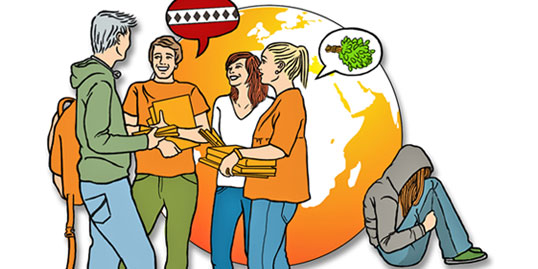
cultureshockTyttiBraysyHow Do We Manage Culture Shock?
And How Do We Deal With Those Going Through It?
(the key that’s never talked about)

Our goal is not to avoid difference and ambiguity, but, rather, to learn to bridge differences and harness them as assets. And, we want to help our colleagues, family members, employees and students while they are experiencing culture shock. How can we best do that? The free download accompanying this post provides you ten “Tips for Alleviating Culture Shock”, including such things as getting sufficient rest, reading in your native language, and cultivating a support network. Subscribing to and regularly using Cultural Detective Online will help you process your emotions and make sense of your experiences, using them as learning and development opportunities.

Another tool included in the download is a set of three worksheets on identity (“The Impact of Cross-Cultural Experience on Identity”). The first urges you to reflect on the identity you hold in various spheres of life and ways of being in your home culture(s). For example, how do you define your competence, what is your communication style, how does your occupation affect your identity, and how do you define and maintain your health? The second worksheet then asks you to reflect on how those same things might change when you relocate. The third sheet is useful for reflection before you finish your sojourn and return home. These worksheets are another tool for thinking about life transitions, differing contexts, workplaces and friendships, and how we and those around us change during our sojourns abroad.

Another key person in my early professional formation was Dr. Dean Barnlund. He taught me so much and, more importantly perhaps, inspired me. Dean focused on intercultural interaction and included art and photography in his approach, which resonated with me on so many levels. One very small piece of his work is a set of values continua that he assembled together with Kluckhohn and Morgan. I honestly can not remember if these were published in a book or shared with me in person, and my internet searches have not pointed me to their origin, either. I do know that I’ve always had their names on the bottom as originators of the tool, so the work comes from them. I see them as the precursors to the many dimensions of culture models in use in the intercultural field today. I used these continua for years to help teach people about basic cultural differences, to help expats reflect on what might be welcome changes for them, and what they might find challenging. I share it with you in the attached download (“Cultural Values Checklist”).

The final piece of material in the free download is “Culture as an Onion Skin.” I no longer use this metaphor, preferring instead the Personal Values Lens from the Cultural Detective Self Discovery. My chief concern with the onion-skin metaphor is that, when you peel back the many layers of an onion, nothing is left inside! If that lack of fit doesn’t bother you so much, the usefulness of the onion-skin worksheet is to help us think about our core values. What are the things that in life that are really important to me? I can note those that are near and dear, guarded closely, never to be negotiated, in the central portion of the onion. Then, I have other values that I still hold tightly, that are very important to me, but that are more amenable to situational variance. Those I can note on the outer layers of the onion.

Come on, be truthful now. Share with us one of your “I behaved badly” stories, and a bit about the journey you were on when it happened! Help us take the nasty truth out of the closet and into the light of day, so we can learn from it. Did the experience make you stronger? A better Cultural Detective? How did you learn to navigate your way through it?

cultureshockThis was reposted in the Velvet Ashes’ Culture Shock link-up. If the topic interests you, be sure to visit some of the other great posts, from other blogs, that are linked-up there.
The Mexican Crafts Artist, Pedro Ramirez

A guest blog post by Rossana Miranda Johnston, Tatyana Fertelmeyster and Carrie Cameron

During our recent Cultural Detective Tenth Anniversary meetings and celebrations in Mazatlán, Mexico, some of those attending used a free hour in the program to walk out into the community to conduct short ethnographic studies—to practice their detective skills. Below is a summary of what interested one group. Click here for a link to the instructions for this activity; you are most welcome to adapt them for your own purposes!

Just think how frequently we travel to very different places for work, and how often we don’t take the time to interact with the local people in ways that help us get to know them as people. The same can be said for the beautiful places we travel as tourists. Let’s make a point of practicing our Cultural Detective skills wherever we are, building cross-cultural respect, understanding, and friendship!

TF, CC, RMJ 1 With no specific destination in mind, our group wandered down the street and away from the hotel. Trying to avoid the “tourist traps,” we were delighted to visit a local Mexican crafts store, thanks to the discerning eyes of the Mexican member of our group.

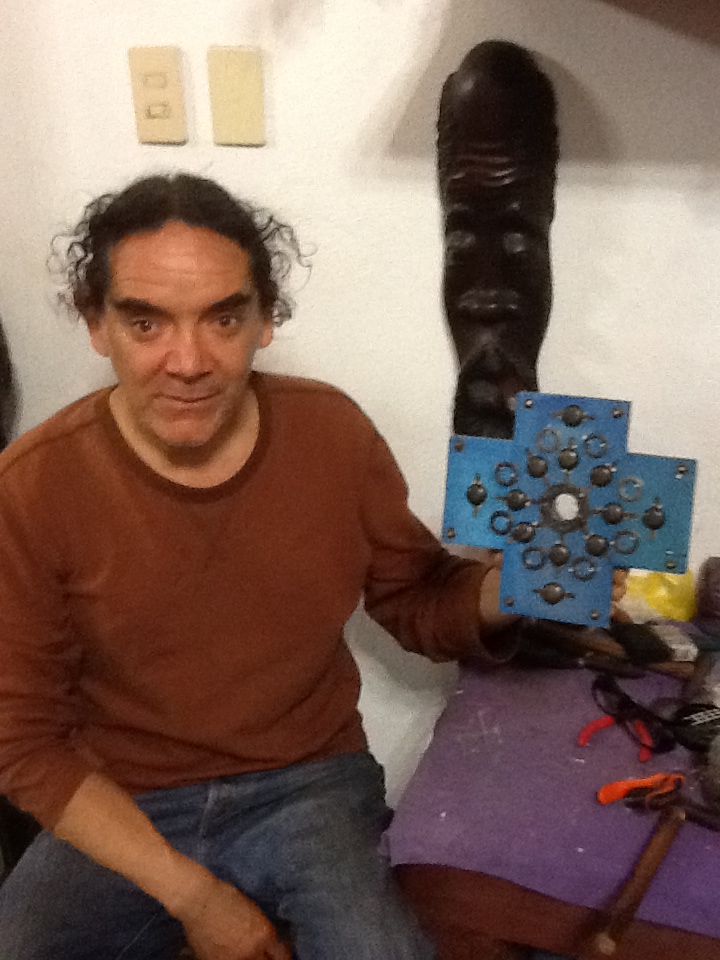
The store featured many types of handmade crafts, most of them displayed by the artist who was on-site working on his/her wares while waiting for a sale. Among the several craftspeople working, we found the artist in the photo, Pedro Ramirez—in a corner of the shop working on a new creation. We watched him as he worked and struck up a conversation.

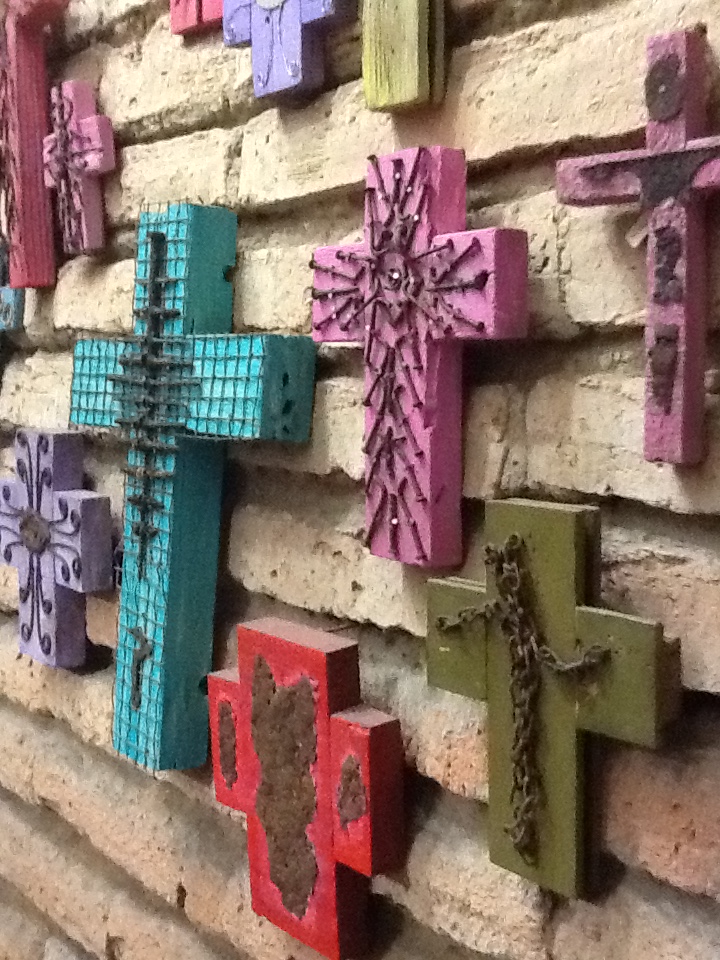
He told us, “Each piece takes several hours to a few days to be made. It depends on how complex or elaborate they are; each piece is unique.” Over the years, Pedro told us, he had tried making different items, but they didn’t always sell. Now he only makes crosses because they are popular and generally sell any time of the year. Perhaps this reflects the Mexican reverence for the Roman Catholic Church? Many tourists are probably Christian, and crosses are an easily transportable souvenir or gift item. TF, CC, RMJ 2

Pedro has been experimenting with different materials and hardware for the crosses, from old doors to windows and tables. Using mainly recycled materials has a few advantages. For one, raw materials are free—it does, however, take creativity and imagination to see what can be done with what others see as scrap or trash. In addition, using recycled materials appeals to tourists who appreciate seeing materials being reused in the form of art. For some, we surmise, this adds to the attraction and appeal of his crosses.

Pedro was warm, cordial and circular in his verbal description, demonstrating a common tendency in conversation in Mexico—Cantinflísmo (Affable circular communication) as he chatted with us. Our small group did have the advantage of a native Spanish speaker and another member who is fairly fluent. This allowed us to communicate easily and help put Pedro at ease. Once he understood our purpose, he talked more freely with us. He is proud of his work, dignified in his self-presentation, and seemed to exude a sense of Sentirse agusto (feeling good about someone or something). It seemed he was comfortable sharing information because he understood we respected his work and were genuinely interested. Our interaction with him was very pleasant, reflecting a low key effort to Caer bién—to be liked or to like others, being or finding someone pleasant—and it is an integral part of Sentirse agusto.

Meeting and talking with Pedro offered us a small glimpse into the life of an artist dependent on the tourist trade. He offered a good example of the creativity we saw in crafts and art in Mazatlan. Mr. Ramirez’ art and livelihood intertwines two salient Mexican cultural themes impacting personal economics: applying innovation/creativity to traditional religious symbols in order to create vibrant new decorative art pieces. We only wish we had more time to explore and enjoy the visual feast of goods in vibrant colors and rich textures we saw in the shops and among street vendors. Hasta la próxima, or “until next time!”

Film Review: Searching for Sugarman

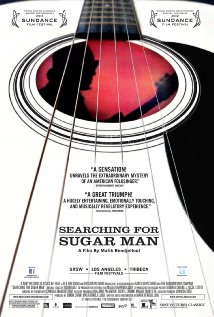
MV5BMjA5Nzc2NDUyN15BMl5BanBnXkFtZTcwNjQwMjc5Nw@@._V1_SY317_CR0,0,214,317_AL_It must be summer for me: two movie reviews in just a few weeks! Another really good movie, too, this one an Academy-award-winning documentary. If you love an amazing story that serendipitously weaves together continents, champions the underdog, and echoes the resonance of truth across cultures, Searching for Sugar Man is for you!

Sixto Rodriguez is the working-class son of Mexican immigrants to the USA. As an anti-establishment folk singer he published two albums in the 1970s about the marginalized poor of the inner city. The music is powerful and haunting, but his albums met with minimal success in the US, and Rodriguez was dropped from his record label.

Unknown to the Rodriguez family, several of his songs became anthems of the anti-apartheid movement (“the system is gonna fall soon, to an angry young tune”), especially among Afrikaners. Rodriguez became a platinum-selling hero in South Africa, supposedly more famous than Elvis Presley or the Rolling Stones. He was widely rumored to have committed suicide on stage—bestowing Rodriguez with a Jimi Hendrix-like aura—yet people knew nothing more about him than what they could glean from his album covers and liners.

In the mid-90s two men—record-store owner Stephen Segerman and music journalist Craig Bartholomew—decided to play detective and learn who Rodriguez was and what had become of him. They tried to contact his record label, but it had long ago gone out of business. They contacted the label’s owner, but he was of no help. They pored over the lyrics to Rodriguez’s songs, with not a lot of luck (they needed a cultural informant, as most any midwesterner or KISS fan could tell you that the lyrics from Can’t Get Away, “born in the troubled city in rock and roll USA,” refer to Detroit). Finally, they found the thread to unravel the story. This movie is the story of their quest.

SPOILER ALERT
It turns out they found Rodriguez alive and well in Detroit’s historic Woodbridge neighborhood, having earned a B.A. in philosophy and having worked for several decades in demolition and on production lines. He became politically active, running for city council, and has three daughters. Segerman and Bartholomew arrange for Rodriguez to visit South Africa for a sold-out series of tours, and the movie includes footage of the first of those tours.

Another interesting cross-cultural tidbit is that his youngest daughter, who accompanies Rodriguez on his first South African tour, falls in love and ends up living there.

The way in which Rodriguez’s words, from inner city Detroit, speak to those on another continent and in another hemisphere, is very powerful. What is most remarkable to me, however, is the dignity, peacefulness, and clarity of the man himself. Rodriguez seems content with the life he has led (we never witness him expressing regret for lost royalties or fame), and joyous and yet non-phased by his fame and success in South Africa. It makes me want to meet a man so fully rooted in and confident of who he is.

A Streetscape in Mazatlán

A guest blog post by Carrie Cameron

During our recent Cultural Detective Tenth Anniversary meetings and celebrations in Mazatlán, Mexico, some of those attending used a free hour in the program to walk out into the community to conduct short ethnographic studies—to practice their detective skills. Below is a summary of what interested one group.

Click here for a link to the instructions for this activity; you are most welcome to adapt them for your own purposes! Just think how frequently we travel to very different places for work, and how often we don’t take the time to interact with the local people in ways that help us get to know them as people. The same can be said for the beautiful places we travel as tourists. Let’s make a point of practicing our Cultural Detective skills wherever we are, building cross-cultural respect, understanding, and friendship!

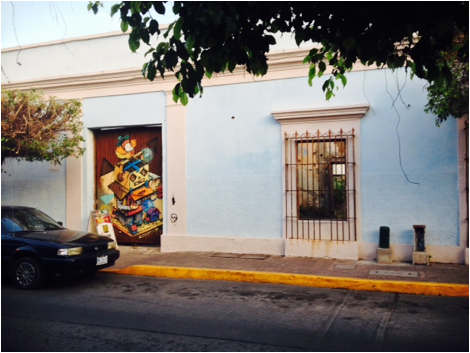
image002The two portals of this private building reflect traces of a couple of Mexican values, and provide a thought-provoking contrast. Located in the Centro Histórico district of Mazatlán, these differing window images on the same building grabbed my attention due to their stark contrast and my reaction to them.

In the eyes of many US Americans, the window on the right has an ornamental grate that is “obviously” there for self-protection. This may be due to the prevailing norm in most historically Anglo communities in the US, where the point is to organize the exteriors of houses, and the land surrounding them, for maximum street appeal—to look nice to the public. With this cultural lens, the iron grating over the window appears forbidding, almost like a jail gate.

Looking inside this window through the bars, however, one sees a lovely interior courtyard. With a different cultural lens, one can appreciate that the beauty is saved for the inhabitants inside rather than displayed outside for the passers-by. This tradition is, of course, very ancient and not specific to Mexico, but is alive and very visible in the Mexican environment. Earlier in the day, we had been on the top of a hotel looking down into the Centro Histórico, and were able to see many other lovely “hidden” gardens surrounded by buildings and/or walls.

In the photo above, the window space on the left, which has been plastered over, has a graffiti-style painting of a whimsical robot-like character, full of bright colors, dynamic angles, and high energy. These sudden and unexpected bursts of playful creativity, color, and often-humorous social commentary, seem to appear frequently on the Mazatlán streetscape.

The Mexican sense of design, decoration, ornamentation, adornment, and use of color and music appear to be a prevalent part of everyday life, even in the poorest neighborhoods or circumstances. On another level, such whimsical images as the one in the graffiti above often convey biting social commentary in an apparently lighthearted and ironic way. Other examples of this are the Día de los Muertos images and figurines, with charmingly dressed skeletons wearing flowered hats, jewelry, dancing shoes, etc.

Investigating Cultural Detective Mexico core values using this image provides many possibilities. The value of Tradición (Tradition) is evidenced in both the old window and the new graffiti. The stability and sense of history provided by the old window is a subtle reminder that the past had value, and remains as the base upon which to build—even to build expression of an artistic nature!

The bright colors of the graffiti echo the traditional colors of clothing, weaving, and handicrafts by many of the indigenous peoples of Mexico. So, in a sense, this newer form of artistic expression has a connection with the past, also.

Another core Mexican value reflected in the photo is that of Posición social (Social position). Peeking through the grate on the window into the garden, one can only imagine its original splendor. The family who built the home had to be of some means, and the house reflects their social position. And now, a street artist has seen the plastered-over window as a canvas on which to display his/her work, a statement of her/his position in society as an artist.

Of course, an interior garden may add to one’s ability to Sentirse agusto (feel good about someone or something) by providing a serene setting in contrast to the outside world. And dare we imagine that the artist also felt good about his/her creation—had a sense of Sentirse agusto upon completion of the work?

Film Review: Emperor

MV5BMjI4OTcwMTY3N15BMl5BanBnXkFtZTcwMTI1MzcxOQ@@._V1_SX214_AL_Our family watched a movie the other night that we all thoroughly enjoyed, and it as such an excellent cross-cultural film!

Emperor tells the supposedly true story of the USA’s decisions about whether or not to try (and hang) Emperor Hirohito after Japan’s surrender at the end of World War II. Since I have always referenced the post-war reconstruction of Japan as “best practice” in ending a war, restoring a nation, and building an alliance (a lay person’s opinion, as politics and the military are in no way my specialties), I found this film particularly enlightening. It is a joint US-Japan production.

Emperor was released in the USA in 2012 and in Japan in 2013, but somehow just made it to my attention here in Mexico. Thank goodness it did! It stars Matthew Fox as Brigadier General Bonner Fellers, a Japan expert, and Tommy Lee Jones as General Douglas MacArthur (Supreme Commander for the Allied Powers), along with a host of Japanese actors.

The film captures the emotional torment
of a person attempting to bridge two cultures:
how could he be truthful, gain and maintain credibility with
both Japanese and US Americans, remain true to himself,
and yet do the right thing?

Though there are quite a few Hollywood clichés, I absolutely loved the insight into Japanese culture that Fellers demonstrates in the movie—it’s a great example of practical application of culture-specific knowledge. The film captures very well the emotional torment of a person attempting to bridge two cultures, particularly in such a sensitive situation: how could he be truthful, gain and maintain credibility with both Japanese and US Americans, remain true to himself, and yet do the right thing? The movie shows some  of the post-war devastation of Japan, the dignity of its people, and the wisdom that, fortunately, prevailed.

I believe there is much to learn here, and I hope our US military will use this film as required viewing as part of its officer training. I so often talk about the need for expats to “manage up” rather than just “manage down,” and Emperor is a terrific case study of how one general did just that.

The movie also includes a bit of love story, as Fellers tries to rekindle his relationship with Aya, a foreign exchange student he originally met at Earlham College in Indiana. Emperor is based on Shiro Okamoto’s book, His Majesty’s Salvation.

It is interesting that the movie never points out that Fellers was a Quaker, something about his background that I imagine was key to his decision making and his style, or that he was the official liaison with the Imperial Household. It is also encouraging that even with so little knowledge of the culture, he was able to do so much good. That is assuming, of course, that the movie is in any way accurate.


SPOILER ALERT
My one complaint about the movie is that the closing credits note that Fellers was “demoted” from being a general. This, to me, is a classic misuse of a true statement. The filmmakers should either have added an explanation or omitted this statement entirely. Sharing it in its brevity misleads and implies negativity.

The fact is that after World War II the military reduced the ranks, cutting the titles of 212 generals, because it was no longer wartime and the military no longer had a need for so many generals. Fellers reverted to colonel, but retired with the brigadier general title.


A Rainbow with a Streak of Gray: Demographic Trends in the United States

dreamstimecomp_39321275

Photo ©Dreamstime.com

“Demographic transformations are dramas in slow motion. America is in the midst of two right now. Our population is becoming majority non-white at the same time a record share is going gray. Each of these shifts would by itself be the defining demographic story of its era. The fact that both are unfolding simultaneously has generated big generation gaps that will put stress on our politics, families, pocketbooks, entitlement programs and social cohesion.”
—Paul Taylor, Pew Research Center

As a US American interested in diversity issues, I was intrigued by the recently released Pew Center report based on the book, The Next America, examining demographic changes taking place in the United States. Pew reports are well-researched, present interesting and useful data, and never fail to give me a different perspective on the world in which we live.

The United States is changing demographically faster than many of us realize. I remember a few years ago, when working for an educational institution that offered diversity courses, a city official from California called to say they needed help because the “minority” population was soon to be over 50%! Today, I rarely hear the term “minority,” and this study definitely shows why.

“In 1960, the population of the United States was 85% white; by 2060, it will be only 43% white. We were once a black and white country. Now, we’re a rainbow.”

Immigration is the main force behind this rainbow, according to the report. Large numbers of immigrants during the late 19th and early 20th century were from Europe; today only 12% are European. Since 1965, the USA has seen more than 40 million immigrants; about half are Hispanic and nearly three-in-ten are Asian.

As this shift in demographics has taken place, so have shifts in attitudes. According to Mark Lopez, Director of Hispanic Research at Pew, ““Intermarriage is playing a big role in changing some of our views of ethnicity.” Currently, 15% of marriages are between people who are not of the same race or ethnicity—that is, one out of six marriages. Talk about a “melting pot!”

As these marriages produce children, a new set of issues arises.  One example: categories of race and ethnicity on government forms are less likely to fit or be meaningful. What do you call yourself when you are confronted with choosing just one part of your interracial or interethnic (Blended Culture) identity?

This situation arose recently when my son (White) and his wife (African American/White) had to complete a form to enroll their three-year old son in pre-school. Although one-quarter African American, my grandson looks very White, like his dad. There was lengthy discussion about what race to choose: African American or White. There were no other options, available for them—they could only choose one “race”—and they were uncomfortable with either choice as it didn’t reflect his heritage accurately.

Not only is the USA becoming more ethnically and racially diverse, but our population is aging. According to the study’s author, “10,000 Baby Boomers a day will turn 65—every single day between now and the year 2030.” That’s a lot of old people!

Contrast their lives with that of the first generation of “digital natives”—people for whom the online world has always existed. Their experience is shaped in part by their technological comfort and ease, while many of the older generation struggle to simply use their cell phones.

However, more than a “digital divide” exists among the generations in the USA. Growing up in different times and having radically different experiences means that the generations don’t always see eye-to-eye on lifestyle, issues, or politics. Yet, these days, a record number of US Americans—over 50 million—live in multi-generational family households, according to the report.

While this may seem perfectly normal to some of our blog readers, it is a new reality in the US. In the past several years, a stigma became attached to returning home after moving out for school or a job. To many, an adult “boomerang” child returning home to live with their parents was “clearly” a failure or had problems of some sort. No longer! Due to the poor economy, it is now seen as quite practical to live together when one can’t find a job or has limited (or no) means. And, as much as they might like each other, differences in opinion can cause stress in a household.

“It is a challenge for our society how we navigate this change at a time when the young and old don’t look alike, don’t think alike, and don’t vote alike.”
—Paul Taylor, author  The Next America

Cultural Detective has tools to facilitate change by helping users to better understand some of the different cultures making up the USA today. First, however, as intercultural professionals worldwide know, before one can understand others, one needs to understand oneself.

Cultural Detective Self Discovery helps people discover their values, preferences, and the cultural influences driving their thinking and their actions, and explore their cultural identities. It can be used as a stand-alone exercise or as a powerful component in sessions focused on cultural awareness, diversity and self-development, or as a process to facilitate teambuilding and organizational synergies.

Cultural Detective Generational Harmony provides a glimpse into four distinct generations in the USA, each with differing experience, expectations, and lifestyle requirements. By understanding these distinctions, one can be better prepared to recognize and manage issues that may arise due to generational differences in the workplace, while at the same time meeting organizational demands and objectives.

Cultural Detective African American explores the complexities of African American culture in the USA today. It investigates the values and communication styles of this community in an effort to bridge cultural gaps and support more inclusive groups, communities, and workplaces.

Cultural Detective Latino/Hispanic introduces this heterogeneous, multiracial group residing in the United States, people with cultural, historical, and ethnic roots in countries of Latin America. Comprising the fastest-growing ethnic minority group in the United States, Latino/Hispanics now number over 50 million, and account for one-out-of-four public school students in the US.

Cultural Detective USA offers insight into some of the key values that are representative of the dominant societal norm, in large measure Protestant, Anglo-Saxon values. While there is a wealth of ethnic, racial and cultural diversity within the USA, one needs to be aware of the power of the dominant culture in influencing behavior, as well as the specific values of other cultural groups, when learning about the USA.

Cultural Detective Blended Culture investigates those who hold multiple frames of cultural reference within themselves. This may include such individuals as internationally assigned employees and their families, immigrants and refugees; those who have grown up as members of ethnic minority communities within a dominant culture; and people raised by parents of different cultural backgrounds.

Cultural Detective Bridging Cultures helps take cultural awareness and savvy to the next level by looking at how to develop effective bridging strategies for working across cultures. Recognizing that cultural understanding is essential but not enough, this packages focuses exclusively on connecting cultural similarities and bridging cultural differences effectively to reap the benefits of diversity.

Any of these packages sound interesting? Cultural Detective Self-Discovery and Cultural Detective Bridging Cultures are available for purchase through our website. The other packages mentioned are available for handy reference, 24/7, as part of Cultural Detective Online. What are you waiting for? Use Cultural Detective to investigate the cultures shaping the USA and our world, and Get A Clue!

New Ways of Working Together: Technology, Innovation and Intercultural Collaboration for Africa

ngoFrThis is a guest blog post by Jolanda Tromp, co-author of Cultural Detective Global Teamwork.

In February 2014, n’GO magazine published a review of the Cultural Detective Method. For readers of n’GO not familiar with Cultural Detective, the article provided a way for them to learn about this unique intercultural-competence tool, grounded in developmental theory, yet simple to use and very practical.

n’GO magazine is free, published online in French and Dutch, and offers insights, reflections, examples, and tools around behavioral and relational aspects of intercultural contact. Its goal is to search for the truth behind prejudices and blockages, and provide positive alternatives by interviewing experts and academics. n’GO is produced by the Belgium NGO Echos Communications, which runs a variety of projects aimed at helping to redefine the Euro-African dialogue by showing that Africa participating in the world community is value-added. They work to demonstrate their belief that the Internet is a communication tool that can help strengthen the relationships between the actors in the North and South. They believe the Internet may change the course of action in the field of international cooperation.

This vision and effort is clearly part of many African progressives’ point-of-view, as witnessed by the young social innovator and blogger, Mac-Jordan Degadjan, blogging about African and Ghanaian technology and innovation:

“The world’s impression of Africa is hopelessly outdated. Africa’s technology and innovation boom is rapidly expanding. The penetration of the internet and mobile technology is radical and unprecedented. Across African cities, technology innovation hubs are mushrooming and playing a central role in the fledgling technological and entrepreneurial innovation scenes, all over the African continent.”

For the computer-savvy, Generation-Y Africans, Cultural Detective Online (CDO) can be a great resource, because it is accessible from anywhere as long as you can get onto the Internet. CDO combines 60 of the series’ culture-specific and topic-specific packages into one integrated and easy-to-use system, including access to over 400 critical incidents involving people from 90 cultures and spanning multiple industries and professional functions. Subscribers receive a personal virtual intercultural coach that is available anytime, anywhere, online.

Currently, the Cultural Detective series includes culture-specific packages on Cameroon (by Emmanuel Ngomsi), West Africa (by Emmanuel Ngomsi and Seidu Sofo), and South Africa (by Kathi Lyn Tarantal and Denise Hill).

Cultural Detective: West Africa looks at core values of the 14 countries and 250 million people of the region, ethnically heterogeneous and mixed with two other non-indigenous cultures, the French and the British. The critical incidents describe individuals from several different backgrounds including a Nigerian, a Senegalese, and a Ghanaian.

Cultural Detective: South Africa provides insight into this country that is both first world and third world. There are eleven official languages and a multi-coloured landscape of people. The values of these different groups are contrasting, and CD: South Africa explores both black and white cultural values. It contains critical incidents with individuals from several different cultural backgrounds, including an Afrikaner, a Northern Sotho, a Zulu South African, an Ndebele South African, and a Tsonga South African.

Clearly, the work of describing African cultural values has only just begun with the writing of these brave African pioneers. President Paul Kagame of Rwanda at the World Economic Forum, in Davos said: “The major problem I see is that Africa’s story is written from somewhere else and not by Africans themselves. That is why the rest of the world looks at Africa and Africans and wants to define us. They want to shape the perception about Africa. The best thing we can do for ourselves is own our problems, own our solutions and write our own story.”

The n’GO editor and journalist who authored the article about Cultural Detective, Sylvie Walraevens, is based in Waterloo, about 20 km south of Brussels, Belgium. She put out a call on the Internet for people to interview about the Cultural Detective Method in a LinkedIn forum. I replied, explaining that I am not an expert on African culture, but work as an online sparring partner and coach for Global Teamworkers and managers; I am in the Dutch section of the ISO Norm Committee for assessing the usefulness of an International Norm for International Business Collaborations; and a certified Cultural Detective facilitator.

We discussed the options via email and arranged to meet in Amsterdam for the interview. The interview went very smoothly in my favorite flex-workplace—the lobby of a 5-star hotel with WiFi, directly opposite Amsterdam central station. After the interview, we talked about the African economy and the fact that it is actually growing fast despite the global economic downturn.

We agreed to end the article with a call for African authors to chart their culture’s values and write about them in order to facilitate successful intercultural collaborations. Emmanuel Ngomsi, Sylvie Walreavens, myself, and—we are sure—many others, offer our assistance. We are curious to find out which African experts will take on the challenge of writing Cultural Detective packages on all the African cultures that have not been charted yet!

You can register for the n’Go newsletter here: [FR ] – [NL ] and read the article about Cultural Detective (French and Dutch only) here: [FR ] – [NL ]. For additional information about Cultural Detective Online, register for a free webinar and receive a complimentary 3-day trail subscription. For information about authoring a package, contact Cultural Detective.

Lack of Diversity Correlates with Religious Hostility

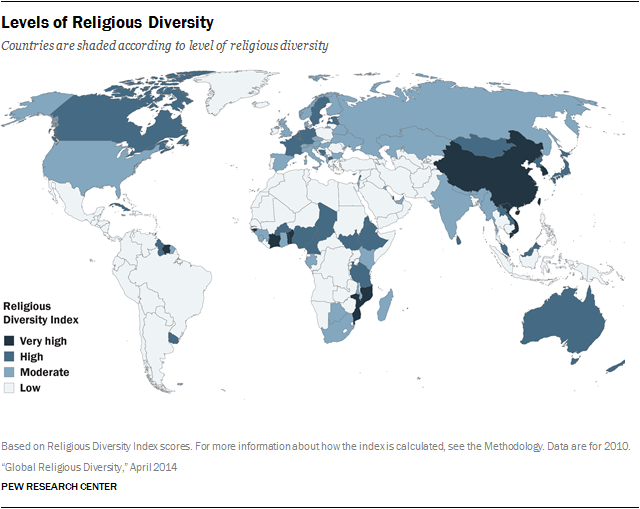
world-religious-diversityQuick! What is the most religiously diverse area of the world? Not the Middle East—it’s primarily Muslim, and not Latin America—it’s primarily Christian.

It is, of course, the Asia Pacific region, home to a great diversity of religious traditions including Islam and Christianity, as well as Buddhism, Hinduism, Confucianism, and loads more. This is just one interesting tidbit from a report on world religions released this week by the Pew Research Center.

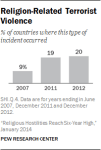
More noteworthy than this fact, however, is that some of the world’s least religiously diverse places are home to the highest rates of social violence involving religion. Of the five countries exhibiting the most religious violence:
  • Afghanistan and Somalia both rank in the bottom ten for religious diversity, with a “Religious Diversity Index” or RDI of 0.1.
  • Pakistan ranks as having “low diversity,” with an RDI of 0.8.
  • India (RDI 4.0) and Israel (RDI 4.5) are ranked as “moderately diverse.”

If diversity indeed correlates with lower violence, that is indeed good news for diversity and pluralism, and a desire to discourage violence and promote inclusion are good reasons to put Cultural Detective Islam and Cultural Detective Jewish Culture to good use! And please, help us create packages for other major world religions! Such tools are especially needed given that the Pew Research studies show huge increases in religious hostilities in nearly every world region.

increase in religious hostilities

How did this finding, correlating the lack of religious diversity and hostility, come about? In December 2012, Pew Research Center’s Forum on Religion and Public Life published a report entitled, “The Global Religious Landscape,” based on data gathered in 2010. It found, in part, that:

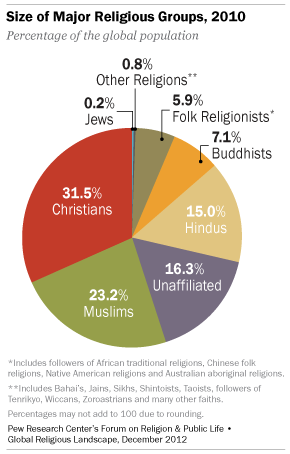
“Worldwide, more than eight-in-ten people identify with a religious group. A comprehensive demographic study of more than 230 countries and territories … estimates that there are 5.8 billion religiously affiliated adults and children around the globe, representing 84% of the 2010 world population of 6.9 billion.”

01_groupsThen, in January 2014 Pew published the results of another study in its article, “Religious Hostilities Reach Six-Year High.” It involved data on 198 countries:

“A third (33%) of the countries and territories in the study had high religious hostilities in 2012, up from 29% in 2011 and 20% as of mid-2007. Religious hostilities increased in every major region of the world except the Americas.”

socialHostilitiesJust this month, April 4, 2014, the Pew-Templeton Global Religious Futures project, which analyzes religious change and its impact on societies around the world, published further analysis that it conducted on the 2010 data. They produced a very interesting index that ranks each country by its level of religious diversity—its RDI, or “Religious Diversity Index.” RDI was calculated based on the percentage of each country’s population that belongs to the eight major religious groups defined by Pew. The closer a country comes to having equal shares of the eight groups, the higher its score on the 10-point index.

To quote from the report,

“In order to have data that were comparable across many countries, the study focused on five widely recognized world religions—Buddhism, Christianity, Hinduism, Islam and Judaism—that collectively account for roughly three-quarters of the world’s population. The remainder of the global population was consolidated into three additional groups: the religiously unaffiliated (those who say they are atheists, agnostics or nothing in particular); adherents of folk or traditional religions (including members of African traditional religions, Chinese folk religions, Native American religions and Australian aboriginal religions); and adherents of other religions (such as the Baha’i faith, Jainism, Shintoism, Sikhism, Taoism, Tenrikyo, Wicca and Zoroastrianism).”

This, of course, means that diversity within these larger religious sub-groups was not examined.

Linking the findings from phase two (social hostility) and phase three (religious diversity) shows the correlation between lack of religious diversity and social hostility.

I would emphasize that the link between lack of religious diversity and increased social violence does not appear to be a finding reported by Pew Research. Rather, it is an observation written by Emma Green in The Atlantic. The top five—and many others—of the most socially hostile countries do indeed have lower RDIs. However, there are countries with low religious diversity that also show low ratings for religious hostility: Namibia, Marshall Islands, Malta, Kiribati, Cambodia, Djibouti, Lesotho, and Grenada among them.

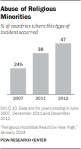
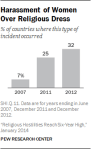
The research is definitely worth reading. The overall increase in religious hostility is driven by certain types of hostility, including abuse of religious minorities, harassment of women over religious dress, violence to enforce religious norms, mob violence related to religion, and religion-related terrorist violence. Click on any photo to enlarge.

Emma Green ends her article with an interesting thought:

“It may not be true everywhere, but these data suggest something remarkable: Religious pluralism can be, and often is, compatible with peaceful societies.”

What do you think? What is your experience? What successful efforts have you seen to bridge religious differences and increase tolerance and respect?

Our New Friend, Roquillo…

A guest blog post by Basma Ibrahim DeVries and Tuula Piispanen-Krabbe

During our recent Cultural Detective Tenth Anniversary meetings and celebrations in Mazatlán, Mexico, some of those attending used a free hour in the program to walk out into the community to conduct short ethnographic studies—to practice their detective skills. Below is a summary of what interested one group. Click here for a link to the instructions for this activity; you are most welcome to adapt them for your own purposes! Just think how frequently we travel to very different places for work, and how often we don’t take the time to interact with the local people in ways that help us get to know them as people. The same can be said for the beautiful places we travel as tourists. Let’s make a point of practicing our Cultural Detective skills wherever we are, building cross-cultural respect, understanding, and friendship!

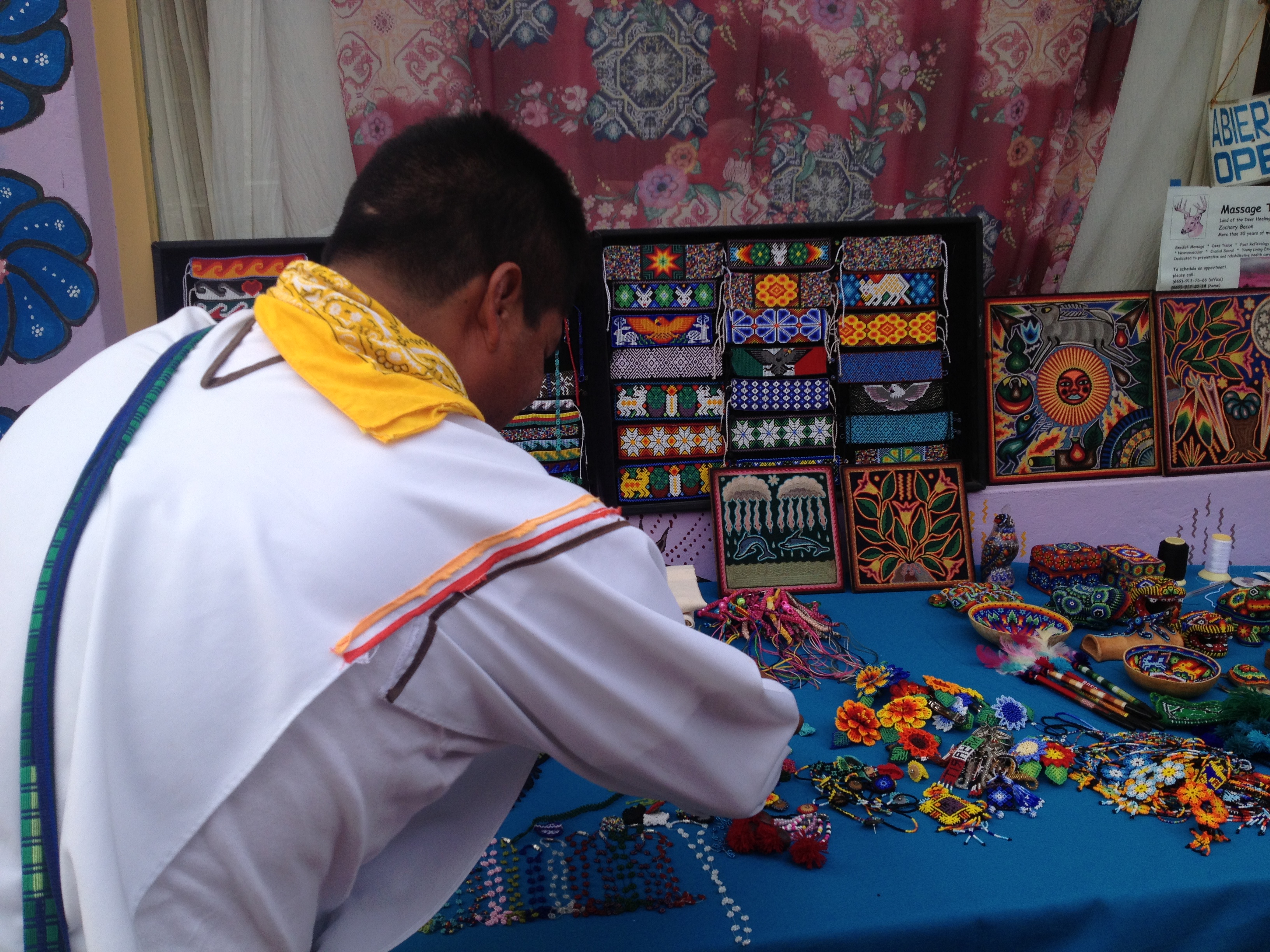
Rogelio 1It was a beautiful sunny morning as we set out to experience Mazatlán. Shortly into our walk, we turned down a side street, heading towards the beach. We were immediately attracted by vibrant colors and a handsomely dressed man. While most shops were not yet open for the day, he was diligently setting up his table of lovely beaded goods.

We approached his “table-shop” and began admiring the tiny-bead necklaces, bracelets, earrings, decorative boxes, bowls, and charms. Striking up a conversation, we learned that this artist and businessman, Roquillo, moved to the Mazatlán area two years ago after living in the mountains all his life. His description of life in the mountains sounded very communal and free of tourists and outside influence. He now lives on La Isla de la Piedra with his wife, Christiana; 4-year old daughter, Adrianne; 3-year old son, Damian; and 8-month old daughter, Lulu. We talked about how Basma’s two children are the same ages as his oldest and youngest.

Roquillo mainly sells his goods in Mazatlán, where he said it is busy most of the year. He told us that July and August are the slowest months—perhaps fewer tourists from colder areas come to Mazatlan in the summer? Roquillo also spends a couple months each year in Puerto Vallarta, where he said there are many cruise ships, making for good business there. We related his willingness to travel to sell his goods to a very strong value on providing for his family. Our guess is he may even send money back home to his extended family and community, though we failed to ask him that question.

Roquillo told us that his whole family is involved in making the beaded goods, and each contributes based on skill level. He said it takes about one day to make a pair of earrings or a necklace. One person can make two bracelets per day. His wife, Cristiana, also does embroidery, and he showed us some beautiful traditional children’s clothes that she had made. Basma was disappointed he didn’t have any sizes that would fit her children. However, she did purchase lovely jewelry for her nieces, and an iguana key chain for her nephew.

We thoroughly enjoyed meeting and talking with Roquillo—despite our less-than-stellar Spanish skills. We were impressed by how he emphasized the importance of the family involvement in the business and by his desire to keep this traditional beading craft alive and accessible to others. (Click on any photo to enlarge it or view them as a slideshow.)

Of course, the first Cultural Detective Mexico core value to stand out was that of Familia y relaciones (Family and relationships). As we had learned, in Mexico the family is generally the core network and main nucleus of affiliation and obligation. No wonder Roquillo was proud that they all worked together, each contributing according to his or her ability! And the sacrifices he made, including moving his family to the city, were decisions to support and better his family’s opportunities.

Tradición (Tradition) is also important to Roquillo, as evidenced by the fact he is proudly holding onto a craft from his village, and passing that knowledge along to his children. Traditions provide stability and help maintain cultural identity—a big challenge amid the rapid growth and change in Mexico today. Helping children understand and preserve their cultural heritage is not easy.

Roquillo’s amiable manner and gentle way of interacting may have reflected his value of Sentirse agusto (feeling good about someone or something). This feeling allows people to preserve their dignity, a self-image of worth, and pride. Caer bién (to be liked or to like others) means to be pleasant or to find someone pleasant, and it is part of Sentirse agusto. Roquillo was most cordial, answered our questions patiently as we struggled with our limited Spanish, and he even wanted a copy of the pictures we took of him. Sentirse agusto is also at the core of the great Mexican hosting tradition, with a strong value placed on making the guest (in this case, us) feel comfortable.

Roquillo is obviously a member of an indigenous group, most probably Huichól. No doubt, then, and as with each one of us, there are layers of cultural values beyond the Mexican national values that permeate the way he was brought up. We only wish we had had more time to visit with Roquillo, better Spanish language skills with which to do it, and that we would have thought of all the questions we were to be asked by our fellow authors upon our return!