Recent Upgrades to Cultural Detective Online Enable Even Better Collaboration

QuickViewLensesOur most recent update incorporates significant changes to the user incident sections and the group functionality, in direct response to feedback from CDO users, so please keep those ideas coming! At Cultural Detective, we are always working to improve our flagship product, Cultural Detective Online.

conference_calling_support_headerQuick View Lenses: A New Tab On The Main Menu Bar
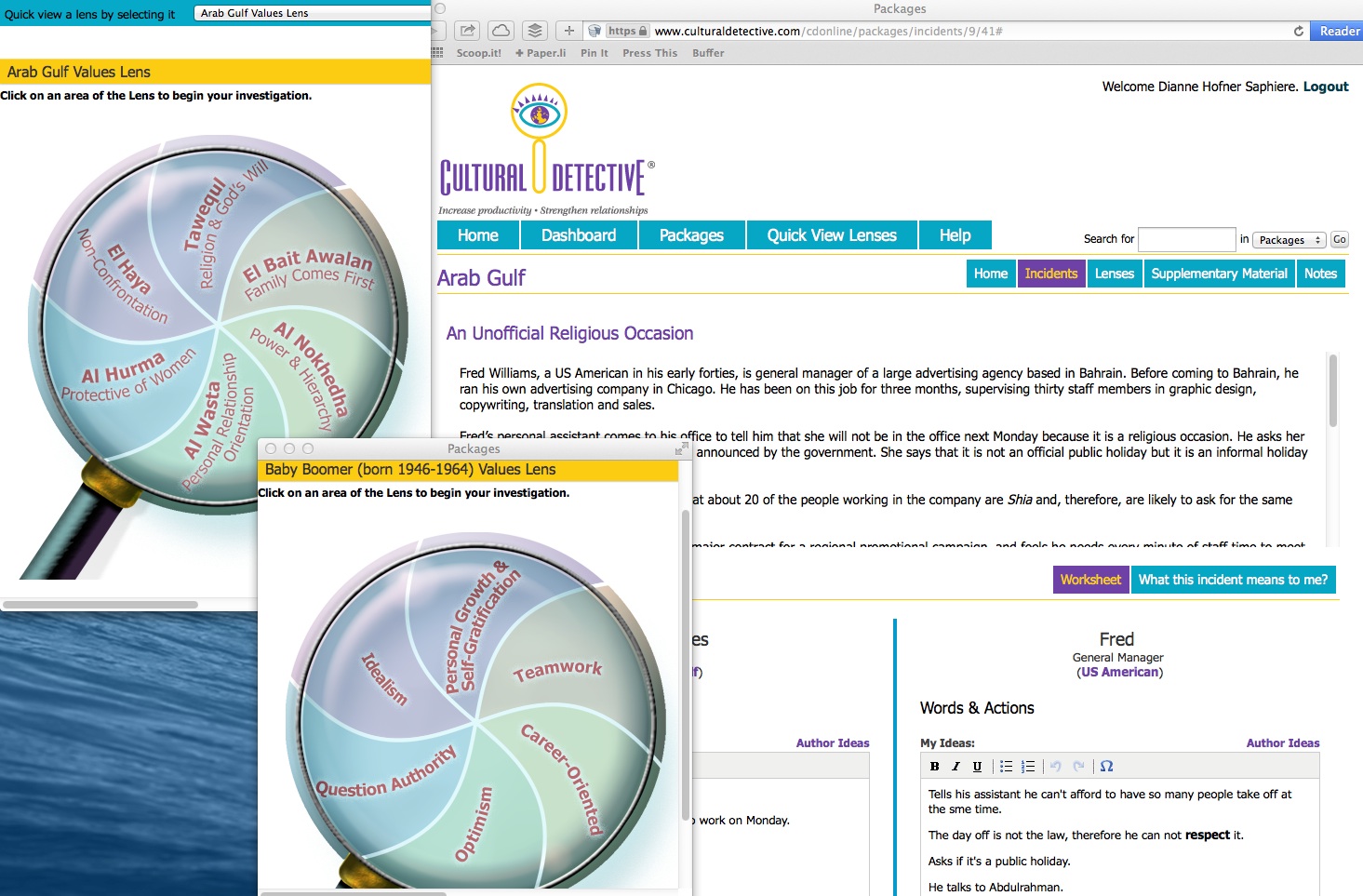
Maybe you are in a meeting, and you can just feel you are not quite connecting with the person sitting across from you, or the people on the other end of the conference call. Now you can quickly and easily open any of the Cultural Detective Values Lenses to use as clues in deciphering the dynamics of your conversation, and to help you bridge the communication gap!

The new Quick View Lenses tab is visible anytime you are logged into CD Online, located just to the right of the Package tab. Clicking on this tab will open a new browser window with a drop-down menu listing all Lenses in the CD Online system. Clicking on a Lens name will open that Values Lens in the new browser window.

Group Functionality: New Features
The real magic of cross-cultural collaboration is in using our differences as assets to innovate, create and solve problems—together.

You already know you can subscribe to Cultural Detective Online either as an individual user or as a group. A group may be a team that works together on a project, or a class of students. The group leader may be the team leader or the class instructor.

Collaborative Incidents and Debriefs
Group members have the option of sharing a critical incident they upload with the members of their group with one easy step. The Group Administrator will receive an email requesting approval of the incident for group-wide publication. After publication to the group, the incident creator’s name will be listed as having authored the incident.

A group member now is able to invite other group members to collaborate on an incident. This is a terrific new feature! Let’s say I’m working together with Ana on a project. I upload a story about my collaboration with Ana. She is now able to edit my incident draft, making sure it’s also accurate from her perspective. Then, together, we can debrief what happened: she gives me insight into her intentions, and I let her know what I was intending. Together, we enter interpersonal bridges—what each of us can do to reach out to the other while contributing our personal best, and systemic bridges—what our organization can do to support our efforts and encourage our intercultural success.

Group members can also create a Sample Debrief to aid other group members. The Sample Debrief will appear just like a Sample Debrief written by an author. Collaborators on an incident may also contribute to its debrief. We strongly recommend that group members create a Sample Debrief for each shared incident to aid fellow group members in their learning.

Our recent upgrade included MANY other great additions to the CD Online system. For just US$99/year, or US$150/two years, your individual subscription gives you access to the 60+ packages in our system, and permission to project its contents to your classes, trainees, or coaching clients. I can’t imagine where you can get better value for your investment!

Please join our 130 authors in putting this incredibly robust tool to good use, to build respect, understanding, inclusion and teamwork in your arenas of influence. Want to learn more about what Cultural Detective Online can do for you and your organization? Join us for our next free 90-minute webinar—click here to view the full schedule through the next few months.

We Are Not (Just) Our Nationality(ies)!

Who of us is a single story? As Chimamanda Adichie so eloquently told us, insisting on a single story is to “flatten” one’s experience. While I am USA born, it definitely irks me when those I know, often interculturalists, insist on defining me purely through that Lens. Yes, I am US American; I claim it. I have also lived overseas half my life; surely that has had no small influence on who I am today? I’m a woman, of a certain age, a mother, a friend. I’m in a committed relationship, I own a small business, I am an immigrant.

We are many things, and different aspects of our identities rise to the fore depending on the context. Shouldn’t intercultural competence enable us to get to know ourselves and others in the fullness of who we are? Two-and-a-half years ago I wrote a post on this blog about the many layers of our cultural identity.

Today, I am very proud to say that Cultural Detective Online makes it very easy to look at how real people interact in real situations, and to reflect on how our many cultures might be influencing us (or others) in a given interaction. Did I react that way because I’m a Mom? Because I’m a Baby Boomer? Or just because I’m me? Cultural Detective Online is a cross-cultural effectiveness tool that doesn’t reduce us to a single story, but rather encourages us to get to know ourselves and others as fully and wholly human. Take a look:

Remember, Values Lenses represent the core values of entire societies of millions of people; they are not intended to be used as yet another “box” into which to stereotype individuals. Try using a Values Lens to gather clues as to why someone may have responded in the the manner she or he did. Then, with perhaps a little more understanding about the other’s positive intent, you can engage in a more effective dialogue, and learn to collaborate more enjoyably and productively.

How do you use the multiple Lenses available to you within CD Online? How often do you upload stories from your everyday work or life, and purposefully learn from them? What creative things are you doing with Cultural Detective Online to further your intercultural competence? We would love to hear your experience!

A Design for Incorporating Cross-cultural Effectiveness into Existing Programs

arton235-88ad2Do you have an existing curriculum or training design and wish you could simply add a cross-cultural element to it? You probably don’t realize how easy and affordable it is to keep your existing objectives and design, while weaving in key cross-cultural dynamics using Cultural Detective. Below is a half-day design using Cultural Detective that works well in a variety of contexts with a variety of topics:

  • In business for global management, leadership across cultures, multicultural or international customer service, multicultural team effectiveness, negotiating across cultures, management and motivation, new hire orientation, expatriation (prior to departure, during the assignment, reentry).
  • In study abroad for students during orientation, their sojourn and reentry; orientations for host families; teamwork and community-building for students, receiving organizations, and host families.
  • For special purposes such as patient-care across cultures, multicultural spiritual communities, and neighborhood community building.

A Sample Half-Day Training Design Leveraging the Cultural Detective® Method

1. Objectives, introductions, agenda (of your chosen topic).

2. “What’s in it for me?” Present your topic in context; why is it important?

3. Skills for [workshop topic, e.g., leadership, teamwork, healthcare, sales, etc.] Across Cultures:

  • Tell a story or show a video of cross-cultural interaction in the context of the [workshop topic]. The playlists and videos on Cultural Detective‘s YouTube channel may give you some ideas.
  • Lead the participants through an analysis of the story (debrief) using the Cultural Detective Worksheet.
  • Once complete, ask participants what they learn from this approach (values, beliefs and “common sense” world view motivate behavior; world views are often different but all are “correct”; similar values can lead to different behavior; different values can motivate similar behavior; bridges must leverage similarities and shared objectives as well as differences/complementarities; bridges must be interpersonal and multidirectional but also organizational/systemic)
  • Summarize: What skills for [workshop topic] can we learn from this Cultural Detective (CD) approach?
  • Apply: How can participants use this CD approach in their daily work?

4. Culture-specific Skills for [workshop topic]

  • Introduce Values Lenses: what they are and aren’t; explain values and negative perceptions.
  • Introduce the Values Lens for each of the cultures in the story you told or the video clip you showed.
  • Ask participants if these values provide them further insight or deeper understanding of the incident. Do the Lenses provide any clues to help them add information to the CD Worksheet debrief? If not, fine. If yes, use that info.
  • Summarize: What skills for [workshop topic] can we learn by using Values Lenses? How can we use the Lens tools well? How should we never use the Lenses? (Lenses are guides to societal norms, and should never be used to stereotype or “box-in” individuals, but rather as clues for learning and dialogue.)
  • Apply: How could participants use Values Lenses in their daily work?

5. Knowing Oneself as a Cultural Being in the Context of [workshop topic]

  • Use a couple of the activities from Cultural Detective Self Discovery and guide participants to complete a Personal Values Lens
  • In pairs or threes, have participants share their Personal Lenses with one another
  • Have them discuss how they could best work together in the context of [workshop topic], to bring out the best in one another.
  • Summarize: What are some best practices for cross-cultural [workshop topic]? What have you learned?
  • Provide the Cultural Detective’s “A Dozen Best Practices for Cross-Cultural Effectiveness.”
  • Apply: What will you do to ensure you perform at your best in a cross-cultural [workshop topic] situation? To ensure you bring out the best in your team/clients/patients?

6. Summary and Application

  • Provide a list of skills for effective cross-cultural [workshop topic].
  • Ask participants what they have learned about themselves today as regards [workshop topic]?
  • What are the top 1-3 skills each participant wants to demonstrate to enhance their cross-cultural effectiveness at [workshop topic]?
  • How will they hold themselves accountable?

What cost does this add to your curriculum? If you are training 30 or more people, Cultural Detective Self Discovery licenses are just US$15 per participant. For Values Lenses, you can subscribe to Cultural Detective Online for less than $100 per year and project Lenses in a group training environment. The subscription price goes down for multiple users, to less than $30 per year per subscriber.

We hope you find this sample design useful, and that you will share with us your tried-and-true designs and curricula for integrating Cultural Detective into educational or training programs. We know you do terrific work, in such a broad variety of contexts, and your designs will no doubt stimulate others’ creativity and effectiveness. Together we can build a more equitable, just, respectful world in which we collaborate for a sustainable future!

Transforming Lives: Education as an Alternative to Violence

AUN “The youth in Nigeria are beginning to speak—some with violence.
They attract attention. But others are also speaking.
The question is, is anyone listening to this plea
for western education, for training, for reform, for help?”

—Margee Ensign, President, American University of Nigeria

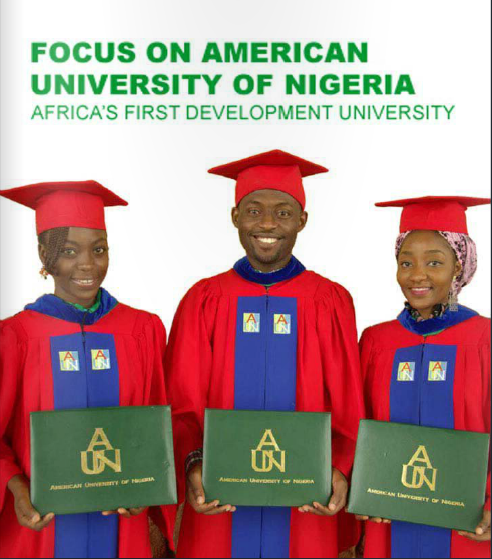
With all the grim news coming out of Nigeria these days, I thought you might want to hear about a little-known educational bright spot in the country: the unique programs offered at the American University of Nigeria, founded in Yola (capital of Adamwa state) in 2005 by the country’s former vice-president, Atiku Abubakar.

Despite Boko Haram’s year-long campaign of terror, including kidnapping over 300 girls from a school, murdering family members, burning villages, and displacing thousands of people, most families still desire an education for their girls and their boys, says Margee Ensign, President of AUN. And AUN provides it.

Both the university’s valedictorian and its graduating class speaker this year are women. The university is one of the leaders in the interfaith peace initiative. It has hired and trained more than 500 female and male security guards to protect the campus and its housing, offering each of them a free education. AUN facilities include a nursery school, primary and secondary school, in addition to the university itself. It recently dedicated a new library that has received international accolades for its efforts to create the finest e-library in Africa.

“Security comes not from our security force, but from our development and peace efforts,” Margee reports. In one of the poorest places on earth, AUN has a program to teach local women literacy and entrepreneurship skills, to enable them to generate income for their families. The university’s Peace Council has created 32 football and volleyball “unity teams” for young people to play in tournaments year-round. None of the young people have jobs, over half have dropped out of high school, and 10% have not even completed elementary school. Sports team members study a peace curriculum focused on building understanding and tolerance. The unity teams help ensure that these youth stay active and involved in their communities—making them less vulnerable to recruiting by terrorist groups like Boko Haram.

This kind of creative programming doesn’t happen by accident. Margee is a tough, dedicated, innovative, and tireless educator. Her extensive experience in administrative and faculty positions in universities in the USA (including Columbia University in New York, Tulane University in New Orleans, and the University of the Pacific, Stockton, California), and her interest and experience in international development in Africa, make her well-prepared to be president of AUN.

“I met with about 80 women in the [AUN entrepreneurship] program…They wanted to learn English, Nigeria’s official language, so that they could read to their children. In modern education, they knew, lay the only hope for the future.”

Margee relishes the challenges of working across cultures. She has embraced the local community culture, while building a university culture that retains important aspects of the US educational experience. After all, this is why parents are sending their children to college at AUN. She’s always recruiting—looking for people with just the right skills, willing to give their time and talent to join the international faculty and staff at AUN, a growing academic community in Nigeria.

The Cultural Detective Team believes it is possible to help make the world a better place through our actions. Yet, it isn’t always easy! Cultural Detective: Global Teamwork investigates some of the challenges involved in managing culturally diverse teams in today’s global environment, even if working in the same geographical location. What is the task? How do we form and maintain a high performing team? How do we manage the terrain or contexts in which team members work? How do we choose the right technology to support the team? How do time and space affect communication? Add culture to this mix, and it is even more complex! These are just the beginning of the challenges Margee faces each day—and she loves it!

All around the globe, dedicated, competent people are working to make a corner of the world a better place—often, not the corner of the world in which they were born and raised. Yet, they are motivated to share their skills in multiple arenas and diverse geographical locations. You probably know people that match this description—or are you one?! We’d be delighted to share their stories or yours with our readers!

With all the doom and gloom in the news, it is good to remind ourselves that generous people are doing wonderful things in difficult circumstances. A recent article written by Margee and published on the BBC.com website offers an often overlooked perspective on the area better known for the rampages of Boko Haram. We invite you to read Margee’s entire article here: “Nigerians defy terror to keep learning.”

Ecotonos: Simulación Intercultural en una Clase de Negociación en Colombia

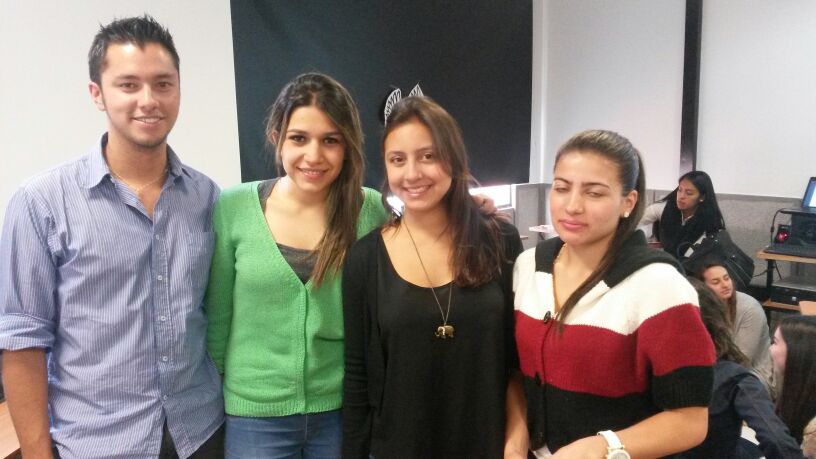
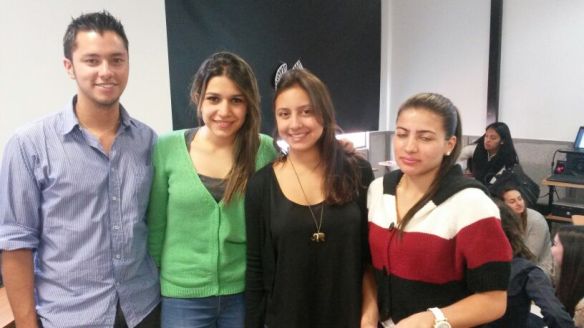
Sixth semester students (juniors) David, Lina, Gabriela and Ximena helped facilitate the simulation

Sixth semester students (juniors) David, Lina, Gabriela y Ximena helped facilitate the simulation

Ecotonos: An Intercultural Simulation in a Negotiation Class in Colombia

La Universidad Sergio Arboleda in Bogotá, Colombia, recently utilized Ecotonos: A Simulation for Collaborating Across Cultures for the third time in its International Negotiation class. The professor, Fernando Parrado, gave four of his experienced students the opportunity to act as co-facilitators, and they learned so much from the experience. Below is their report.

Translation to English by Dianne Hofner Saphiere follows the Spanish original.

AGUILAS

Las Águilas estaban conformadas por un grupo total de diez estudiantes, por lo que en primera estancia se repartieron las fichas de valores a cada uno de los integrantes. Los valores e acciones de las Águilas eran:

  • Tú crees que es grosero expresar tu propia opinión demasiado fuerte. Tú prefieres preguntar la opinión de los otros antes de afirmar la tuya y frecuentemente ilustras con ejemplos los puntos que los demás han dado.
  • Cuando una persona te dice algo que tú has escuchado antes, tú aplaudes. Miras sobre la cabeza de las personas cuando deseas demostrarles que estas en desacuerdo.
  • Para entender completamente que está diciendo alguien, tú interrumpes, aclaras y resumes.
  • Tú crees que todo se mueve a su propio ritmo y que el tiempo es artificial. No te das prisa con las decisiones o tareas sino que prefieres que esta se desenvuelva. Los relojes o tiempos de referencia te hacen sentir incómodo.
  • En discusiones tu estas más cómodo parado o sentado al menos a un brazo de distancia de las otras personas. El contacto físico es extremadamente incómodo para ti.

Después de entendidos y discutidos los comportamientos a seguir por las Águilas, se realiza la creación del mito por parte de todo el grupo. Los miembros fueron muy creativos y relacionaron los valores con el nombre del grupo (las Águilas), determinando así que se habían independizado hace poco tiempo, y que además su Dios era el águila, lo que determinaba su necesidad de espacio, no contacto físico, y comportamiento sumiso ante la opinión de los demás.

20140407_075252

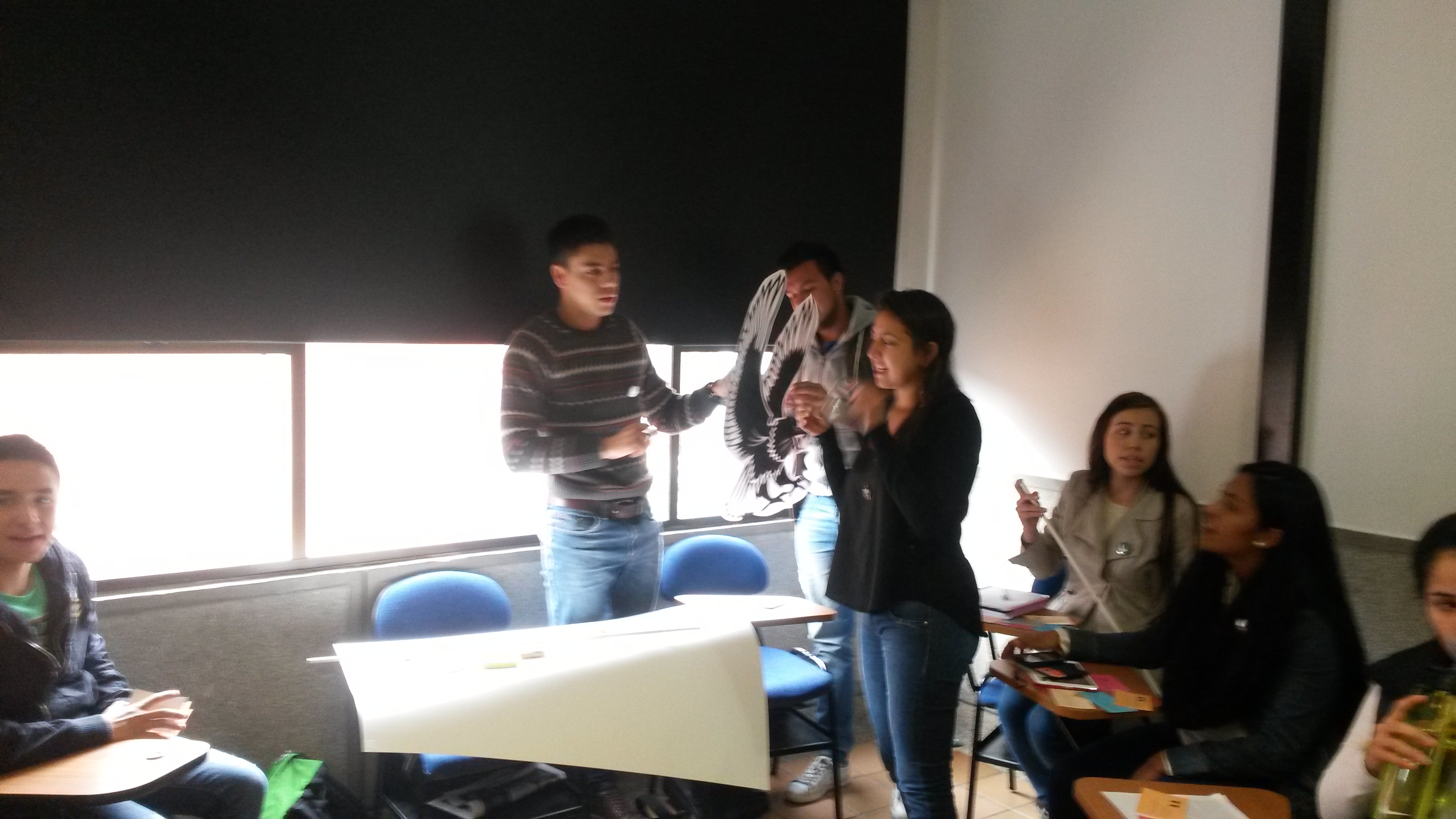
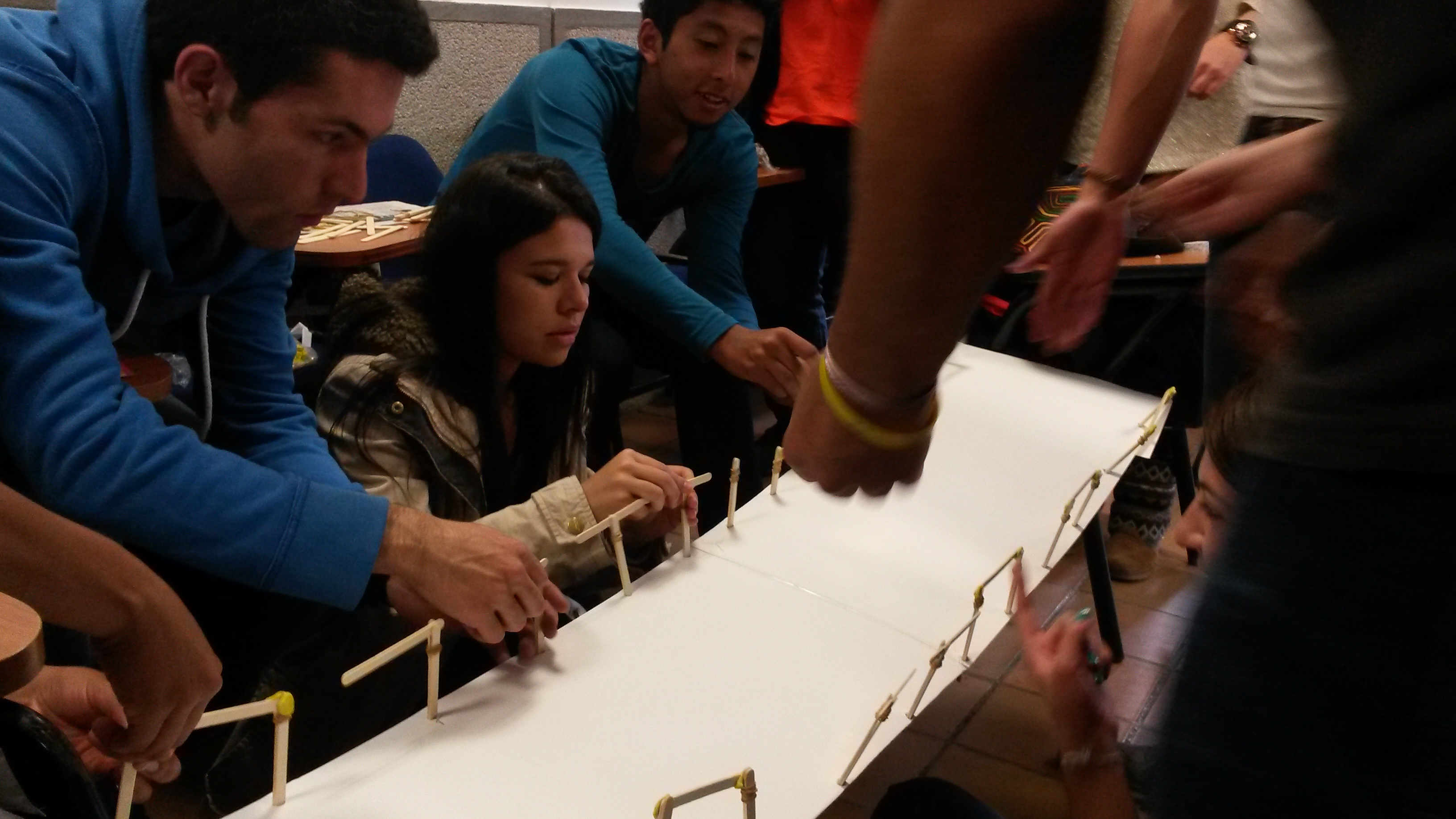
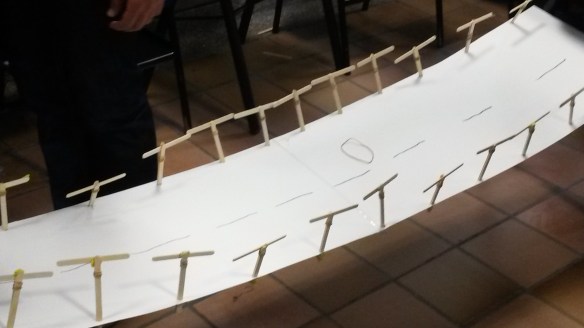
Posteriormente se inició la construcción de los puentes. Los miembros decidieron recurrir a otros recursos, además de los ya otorgados por los facilitadores, como sus sacos.

Luego se realizó la mezcla de los participantes. Las Águilas fueron determinadas a ser un Joint Venture, por lo que cinco participantes del grupo de los Zantes se unieron a las Águilas, de la misma manera que cinco integrantes se fueron a los Delfines y a los Zantes. Dado así el grupo quedo conformado por cinco Águilas y cinco Zantes. La cultura de los Zantes era absolutamente opuesta por lo que la continuación del puente fue un reto, mas sin embargo a pesar de las diferencias, todos participaron activamente y sacaron adelante el proyecto.

A continuación se realizó la presentación del mito por parte de uno de los participantes, y luego se realizó la retroalimentación de la cual el grupo tuvo las siguientes conclusiones:

Los elementos que ayudaron tener mayor efectividad y colaboración entre las dos culturas:

  • Ambas culturas saben escuchar.
  • Ambas culturas trabajan en grupo con un fin común.
  • A pesar de la diferencia cultural, había tolerancia lo que no genero conflictos, por lo que el trabajo en equipo fue flexible.

Los elementos que impidieron tener mayor efectividad y colaboración entre las dos culturas:

  • La cultura de las Águilas era muy flexible al tiempo, por lo cual el tiempo no fue aprovechado de manera efectiva. “El tiempo vale oro”.
  • La diferencia y falta de conocimiento del lenguaje verbal y corporal de cada una de las otras culturas
  • La diferencia en la afectividad y contacto físico por parte de cada una de las culturas

Las Águilas plantearon tres estrategias que hubieran ayudado a los grupos a entenderse mejor y utilizar las habilidades de cada uno de los miembros fueron:

  • Tener un contacto previo con la otra cultura, para entender y comprender los diferentes comportamientos.
  • Reemplazar el lenguaje corporal por lenguaje verbal, para lograr un mayor entendimiento.
  • Tener clara la tarea a realizar para poder planificar y realizar de manera correcta.
  • Implementar la división del trabajo.

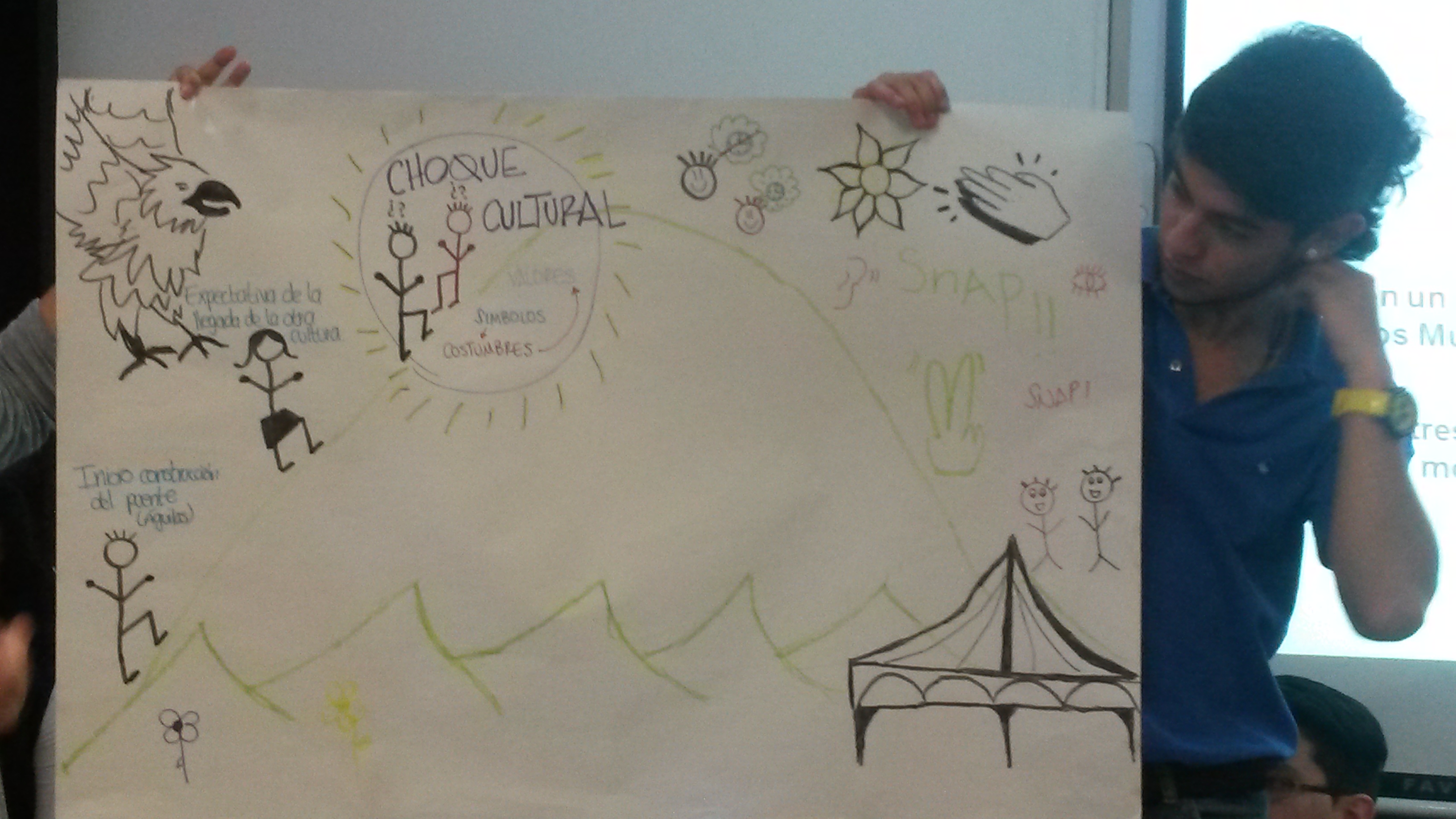
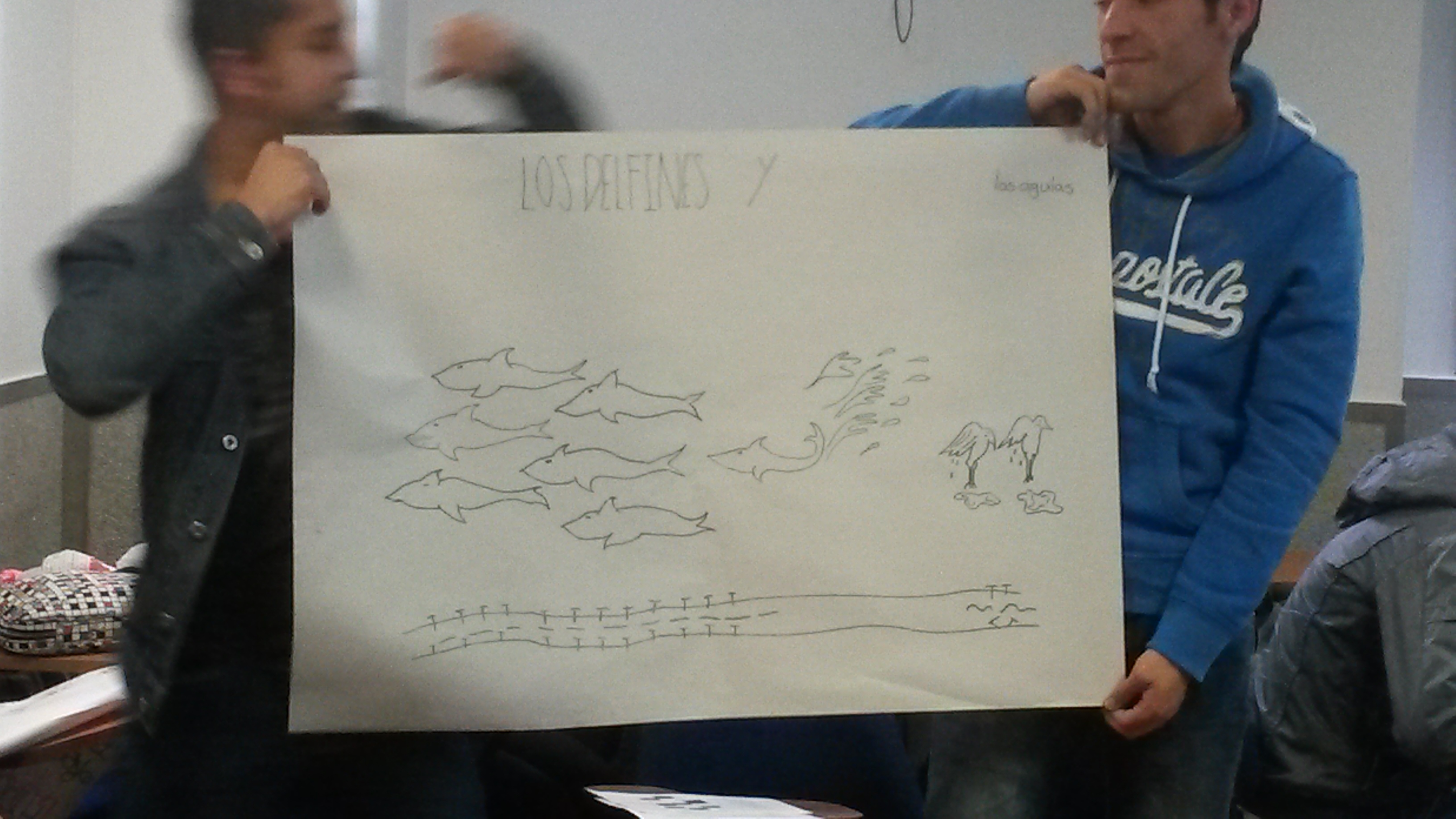
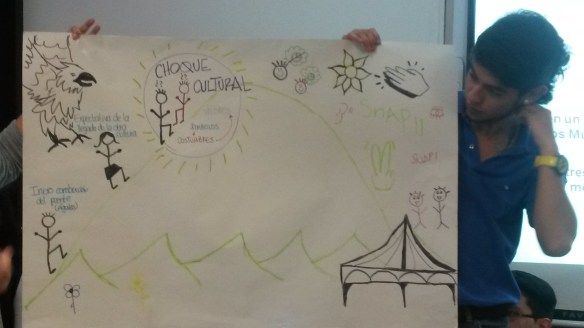
Por último el grupo realizo el siguiente mapa de procesos para evidenciar el proceso vivido.
20140407_093659

DELFINES

La personalidad de los Delfines los describe como una cultura apartada que no les gusta tener contacto con otras culturas, aparte de esto siempre quieren tener siempre la razón motivo por el cual cuando van a comunicarse con otros es más difícil llegar a un acuerdo, en el trabajo se evidencio cuando hubo cambios de culturas que era complicado llegar a aportar algo a esta cultura.

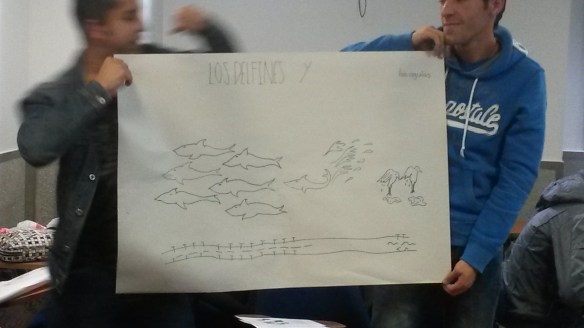
Los Delfines estaban armando su puente, todos los integrantes tenían un cargo y así fueron armando su puente, todos se entendían bien y cuando no estaban de acuerdo lo hablaban y rápidamente llegaban a un acuerdo para beneficiarse todos, entre la cultura nunca hubo un problema o discusiones por las decisiones tomadas.

20140407_083401

Cuando las dos Águilas intervinieron este grupo para continuar armando el puente pero como había mayoría de Delfines se evidencio que las Águilas quedaron de lado discriminadas, ya que los Delfines no les gusta tener interacción con otras culturas, es claro que cuando hay una mayoría vs minoría siempre la mayoría va a tomar las decisiones y la minoría va a tener que adaptarse a estas decisiones.

En el momento en el que a los grupos se les puso a mirar las fortalezas y debilidades de la interacción con otras culturas los Delfines se dieron cuenta que las fortalezas que esto trajo para armar el puente fue que tanto las Águilas como los Delfines tenían un tiempo flexible el cual hizo que ninguno tuviera un choque ahí, también los Delfines debieron reconocer el trabajo de otra cultura que quiso intervenir para ayudarlos y por ultimo tuvieron que tener respeto y tolerancia hacia las Águilas, no hay mejor comunicación que saber hablar pero más importante es saber escuchar.
20140407_094511

Las debilidades que los Delfines encontraron al interactuar con las dos Águilas que llegaron al grupo fue que había falta de comunicación ya que las dos culturas se comunicaban de forma diferente, además se notaba un impedimento entre las dos culturas ya que la distancia era muy notable. Sin embargo, pudieron armar el puente y al finalizar el logro fue compartido entre Águilas y Delfines.
20140407_085533

ZANTES

En el juego de simulación intercultural el grupo tres era el grupo de los Zantes, el cual estaba conformado por diez integrantes.

La primera actividad que se realizo fue escoger algunas cartas de reglas culturales y con estas se creó una nueva cultura con las acciones dados, para ello tenían que crear un mito explicando cómo nació la cultura. Las que escogimos fueron las de color naranja las cuales representan los gestos y el contacto con los ojos (hacer sonar nuestros dedos y mirar fijamente), azul clara que eran los estilos de escucha (sabían escuchar y hablan cuando el otro terminaba), el color rosado representa contacto (se caracterizaban los Zantes porque les gustaba el contacto con los demás), realizaban gestos mientras hablan para ayudar a los otros a entender, y por ultimo estaba la carta beige que era la orientación al tiempo (eran muy rigurosos con el tiempo, para ellos este valía oro). En el desarrollo de esta primera actividad se pudo notar que dentro del grupo había integrantes con personalidades muy distintas, ya que algunos estaban muy concentrados en el juego y muy participativos, mientras que otros miembros del grupo solo estaban escuchando y no aportaban ideas sino al contrario hacen lo que otros compañeros decían. Con el tiempo todos los integrantes empezaron a practicar sus características culturales respectivas y finalmente para esta actividad trabajaron muy bien porque todos se familiarizaron con sus valores (que eran iguales) por lo cual no existió ningún conflicto.

20140407_084830

La segunda actividad que se realizo fue la de crear un puente con unos materiales que los monitores suministramos al grupo, el puente debía ser innovador y confortable. Al comenzar el puente el grupo trabajo muy bien ya que todos se escuchaban y trabajaban efectivamente para poder realizar un buen trabajo, a cada instante se percibían los valores del grupo porque constantemente los estaban practicando y utilizando para realizar su trabajo. Cuando ya tenían la mitad del puente el grupo fue dividido y a los Zantes llegaron integrantes de los Delfines y de las Águilas, con los cuales se pudo evidenciar el impacto cultural de estos nuevos integrantes ya que tenían características totalmente distintas, algunos llegaron a ser ofensivos, aplaudían constantemente, no les gustaba el contacto, todos tenían sus características culturales muy marcadas y distintas lo cual produjo que se crearan conflictos. Cuando los miembros de los Delfines y de las Águilas intervinieron en la creación del puente se pudo notar que en un principio cambiaron drásticamente la estructura del puente, construyeron algo totalmente distinto a lo que habían realizado los Zantes, pero con el tiempo esta estructura se volvía a acoplar un poco a lo que fue la de los Zantes y el grupo multicultural pudo crear un excelente puente. Los jugadores pudieron comprender el impacto que la cultura tiene en cada una de sus vidas.

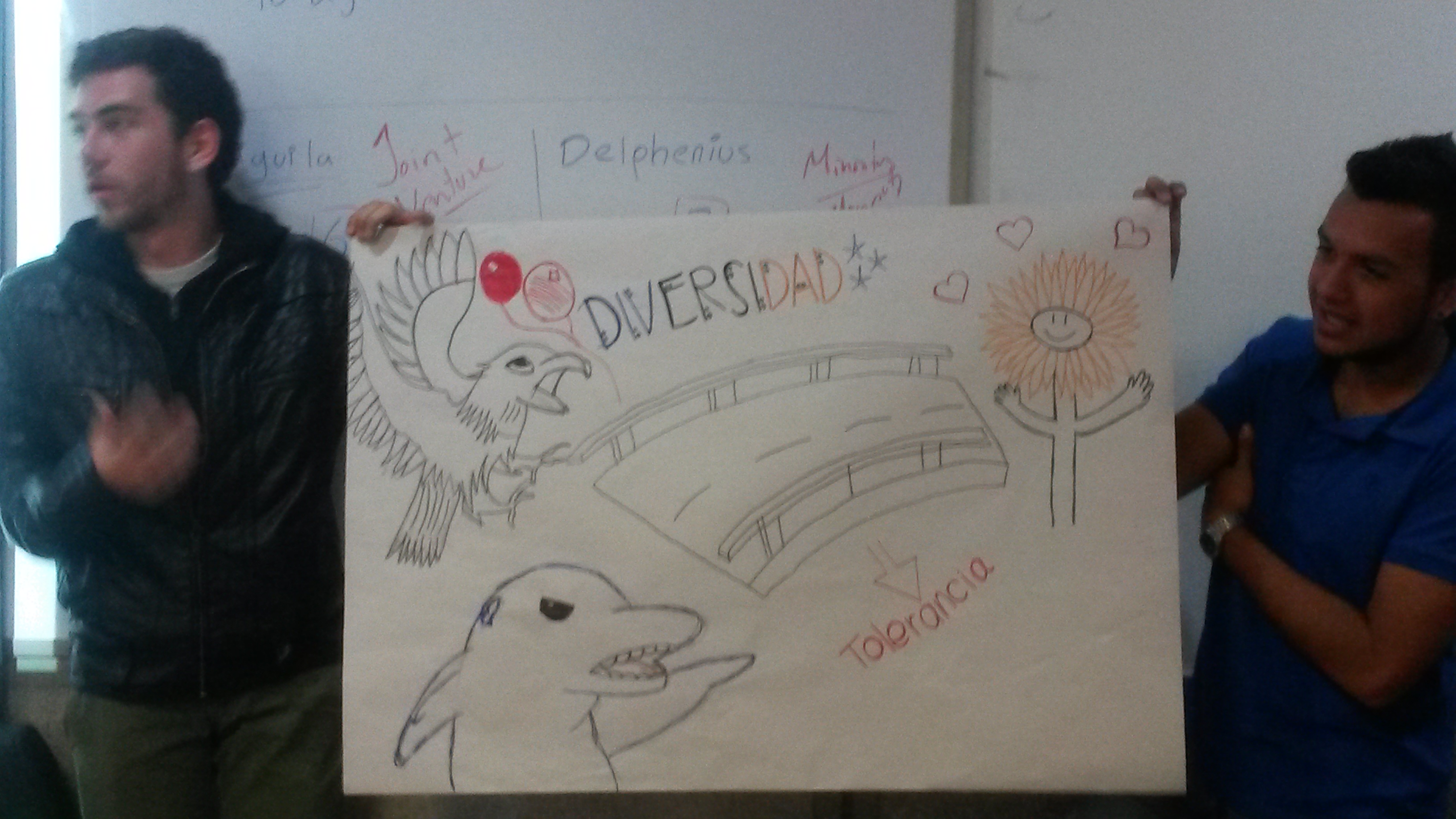
Los juegos anteriores permitieron comprender al grupo el impacto que tiene la cultura, por esto es indispensable que a la hora de negociar se conozca y además se entienda la cultura con la que se va a negociar para tener la capacidad de resolver problemas y para trabajar de manera efectiva. Y finalmente la conclusión más importante es que hay que aprender a manejar nuestras conductas y valores a la hora de negociar con personas que tengan diferencias culturales.

20140407_095110

CONCLUSIÓN

En conclusión esta actividad a los 4 monitores fue muy productiva. Entendimos las diferencias culturales con unas simples actividades que nos dan un ejemplo de cómo serian una negociación o trabajo en equipo con miembros de otros países, nos enseño como escuchar y ser de mente abierta siempre para la negociación aprender lo mejor del otro y siempre respetar a los demás.

AGUILAS

The Aguilas were a group of ten students, each given rule cards. The values and actions on the Aguila cards were:

  • You believe it is rude to express your opinions too strongly. You prefer to question others’ opinions before sharing your own, and you frequently affirm the points others have made by offering examples.
  • When someone tells you something you’ve heard before, you clap. You look above the person’s head when you wish to demonstrate disagreement.
  • To understand more fully what someone is saying, you interrupt, clarify and summarize.
  • You believe that things move according to their own rhythm, and that time is artificial. You don’t hurry decisions or tasks and rather prefer that they unfold. Clocks and references to time make you uncomfortable.
  • In discussions you are more comfortable standing or sitting at least an arm’s length away from others. Physical contact is extremely uncomfortable for you.

After discussing and understanding the behaviors to follow, the Aguilas created their myth. The members were very creative and related their values with the name of the group, determining that they became independent fairly recently, and that their god was the eagle, which determined their need for space, no physical contact, and submissiveness to the opinions of others.

Next they began the construction of the bridge. The members decided to use other resources in addition to those provided by the facilitators.

After building for a while, participants were mixed. Five Aguilas left to join the Delfins and the Zantes. The remaining Aguilas were joined by five Zante participants, forming a Joint Venture group of five Zanteans and five Aguilas. The culture of the Zantes was absolutely opposite to that of the Aguilas, so the joint bridge building was quite a challenge. Despite the differences, however, everyone participated actively and took the project forward.

Upon concluding the simulation the participants presented their creation myth, and then conducted a debriefing discussion that led to the following conclusions:

The elements that helped the mixed group of two cultures to be more effective and collaborative were:

  • Each culture’s members knew how to listen.
  • Members of both cultures worked in groups to a common purpose.
  • Despite the cultural differences, there was tolerance, and participants did not generate conflict, so the group work was flexible.

The elements that impeded effectiveness and collaboration between the two cultures were:

  • The Aguila culture was very flexible with time, which meant that time was not used in an effective manner. “Time is gold.”
  • Differences in and lack of knowledge of verbal and body language of the different culture
  • Difference in affection and physical contact in each of the cultures

Group members came up with three strategies that would have helped them understand each other better and utilize the abilities of each of the members of the mixed culture:

  • Have previous contact with the other culture, in order to understand the different behaviors.
  • Replace body language with verbal language, in order to have better understanding.
  • Keep the task clearly in mind in order to plan and perform it correctly.
  • Implement a division of labor.

Finally, the group created the following process map illustrating the process they experienced:

DELFINUS

The personality of the Delfins can be described as that of a secluded culture that doesn’t like to have contact with other cultures. Apart from this, they always want to be right when they communicate with others, making it difficult to come to an agreement. This was evident in the work: when there was a change of cultures it was difficult to contribute anything to this culture.

The Delfins were assembling their bridge, all of its members had their job and were working to build the bridge, and everyone understood each other well. When they disagreed they spoke and quickly reached an agreement that would benefit everyone. Within the culture there was not a problem or discussion of the decisions made.

When the two Aguilas joined the group to continue assembling the bridge, since there were a majority of Delfins, you could see the Aguilas were a bit left out and discriminated against, as Delfins don’t like to interact with other cultures. It was clear that with the majority and minority in this group, the majority made decisions and the minority had to adapt itself to those decisions.

When the group members reflected on their strengths and weaknesses interacting with other cultures, the Delfins realized that the strengths for building the bridge included that both the Aguilas and the Delfins had a flexible sense of time, so there was no problem there. Also, the Delfins needed to acknowledge the work of the other culture, to have respect and tolerance for the Aguilas and realize that they wanted to help, that there is no better way to communicate than to know how to speak but even more to know how to listen.

The weaknesses that the Delfins encountered when interacting with the two Aguilas who arrived to the group were that there was a lack of communication due to the fact that the two cultures communicated in a different form, in addition another impediment between the two cultures was that the distance was very notable. Nevertheless, they were able to build the bridge and the accomplishment was shared between the Aguilas and the Delfins.

ZANTES

In the intercultural simulation, the third group was the Zantes, composed of ten members.

The first activity was to choose cultural rule cards to create a new culture with the actions described on them. In order to do that, the members needed to use the rules to author a myth about how the culture was born. The rules chosen included the orange color—gestures and eye contact (snap one’s fingers and stare), light blue — listening style (listen closely and speak only when the other has finished), pink—representing touch (this characterized the Zantes because they loved touching others), gesticulating while talking in order to help others understand, and the last was the beige card—time orientation (very rigorous with time, as time is golden). During this first activity it was noteworthy that there were members of the group with very distinct personalities. Some concentrated on the game and were very participatory, others in the group were only listening and rather than contribute ideas they did what the others said. With time the group members began practicing their cultural characteristics and finally they worked together very well, because everyone was familiar with their values (they were all equal) and there was no conflict.

The second activity the group realized was to create a bridge with some materials that the facilitators gave the group. The bridge needed to be innovative and aesthetically pleasing. When beginning the bridge the group worked very well together; everyone listened to one another and they worked effectively to complete the work. At each moment one could perceive the values of the group because they were constantly practicing and utilizing them during their work. When they already had half the bridge built, the group was divided and some Delfins and Aguilas joined the Zantes. At this point the cultural impact was evident; some arrived offensively—they clapped constantly, they didn’t like touching others—everyone had cultural characteristics that were very marked and distinct and that created conflicts. When the members of the Delfins and the Aguilas joined the creation of the bridge, it was noted that at one point the structure of the bridge changed drastically; they constructed something completely distinct from what the Zantes had originally been building. However, with time the structure returned to something similar to what the Zantes had intended, and the multicultural group was able to create an excellent bridge. The players were able to understand the impact that culture has on each of their lives.

The simulation permitted group members to understand the impact of culture, and that it is indispensable to recognize and understand culture when negotiating, in order to be able to resolve problems and work in an effective manner. Finally, the most important conclusion is that we need to learn to manage our conduct and values when negotiating with people who are culturally different from us.

CONCLUSION

In conclusion, this activity was very productive for the four of us as co-facilitators. We understood cultural differences with these simple activities. It provided us an example of how a negotiation or teamwork could be with people from other countries. It taught us how to listen and to maintain an open mind during negotiations, to learn the best of the other and to always respect others.

Thank you very much for sharing your experiences with us, students! Any of our readers who are interested in Ecotonos, you can find more information or order the simulation by clicking here.

Using Cultural Detective Online in a College Class

BCCUNYhoriz_PMS288_PMS286A guest blog post by Dr. Elisabeth Gareis (Communication Studies, Baruch College, City University of New York)

With many colleges increasing their online course offerings, there is a great need for training tools that can be used as segments in online classes. Last fall, I was looking for such a tool for my graduate class in International Business Communication. In previous face-to-face renditions of the course, I had used Ecotonos with great success. When I couldn’t find a simulation game for online asynchronous settings, I decided to try the Cultural Detective Online (CDO).

One course assignment involves student groups investigating a country of their choice through readings and interviews, focusing on sub-topics such as oral and written communication, business customs, and business-related news events. In the end, the groups create webpages on their country, complete with narrated slideshows on each sub-topic.

Last fall, I assigned the CDO only for exploratory purposes. Before the students embarked on their adventure, I gave a screencast lecture on training tools, covering differences in type (e.g., simulations versus games), giving examples of specific ones (e.g., Barnga, Ecotonos, Diversophy), and discussing different uses (e.g., training versus coaching). The students had various levels of exposure to intercultural communication: some had overseas experience and others were new to the subject matter. None of them had used a training tool before.

Ellissa Corwin (COM 9656 Fall 2013)
The students all obtained a one-month subscription to explore CDO as an example of a training tool, and, at the same time, to get started on their country research. Their assignment was to view the video tutorials and then to complete the CDO package for their target country (i.e., to explore all sections, including the Lenses, proverbs/sayings, daily life examples, negative perceptions, and all incidents). In the end, they analyzed and discussed the experience. Here are some representative responses:

  • “The interface is easy to use.”
  • “The dashboard is a great way to orient the user at the start of their cultural investigation. It can be very helpful to write out what your aims are when doing research.”
  • “I think the Cultural Detective does a very good job of outlining primary Lenses. I particularly enjoyed the in-depth materials associated with each lens and learning from the interactions. I also appreciated that they include both positive and possibly negative perceptions of each trait.”
  • “I like how the Lenses are organized. I especially like the proverbs and daily-life examples.”
  • “I found it useful to begin learning about my group’s particular country and a good starting point for further research.”
  • “This type of in-the-moment skill-building practice really helps reinforce learning and build user confidence. The Cultural Detective also helped bring our textbook to life and clarify learning.”
  • “I liked the fact that all of the site’s sources are listed. This can really help someone who wants to dive deeper into a particular country.”
  • “Very organized and user friendly!”

Exploring the CDO gave the students insight into the world of intercultural training and coaching, and provided them with quality information on their target country. As it is self-paced, it is easily integrated into asynchronous online college classes.

I am using CDO again this semester, but this time a little differently. In addition to exploring the tool, students’ final presentations will include using their research findings (readings and interviews) to design an activity that is modeled after the incidents in CDO. In other words, each student will contribute an issue from his/her sub-topic to a scenario or dialogue, which will then be analyzed by other classmates. Not only will this better integrate CDO into the course, it will also allow students to directly apply their learning.

Cultural Detective Online is a great tool, and I recommend it highly. Students greatly enjoy their learning via the CDO.

A note from the Cultural Detective Team:

Please contact us if you’d like to learn how to integrate CDO into your classroom experience.

Coming soon—exciting new CDO functionality will allow members of a “group” (e.g., a class or a team) to collaboratively create critical incidents, which can be submitted to the group administrator (professor or team leader) for approval, and then shared with other group members for analysis and discussion.

Have you joined us for a free webinar to see how Cultural Detective Online can be integrated in your academic or business setting? We hold them twice a month—attendance is limited so register now: Cultural Detective Online Webinar


42% Fail in Overseas Assignments

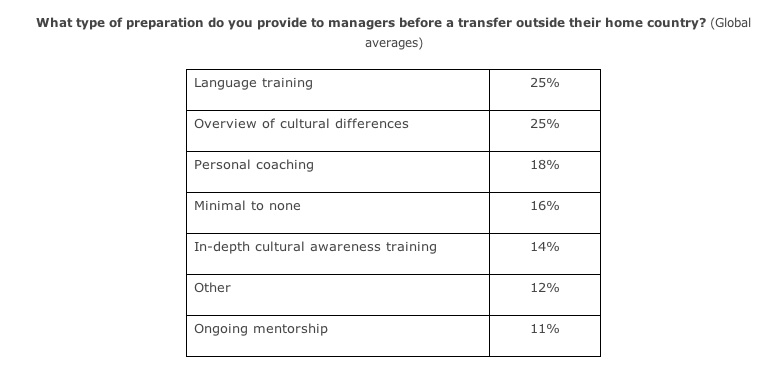
As many as two in five managers fail in their overseas assignments, according to a survey released by Right Management. A worldwide average of only 58% of international postings were judged to be successful by their organizations, with little variation across regions.

“This has to be one of the most disappointing findings of our survey,” said Bram Lowsky, Group Executive Vice President Americas at Right Management. “Given the investments being made in bringing along a new generation of leaders and their growing need to be able to think and operate globally, for 42% to fail when they’re sent abroad is hard to fathom. It’s also worth noting that the failure rate is more or less a constant whether it’s Asian, European or North American managers.”

The survey also found disparities in the preparation given expatriates before an assignment, said Lowsky.

Expat Prep

“A global average of 25% of organizations provides language training. However, the average drops to 18% for North American employers, while it’s closer to 33% among European, African and the Middle Eastern companies. Even harder to believe, an average of 16% of companies globally give minimal to no preparation at all, and for North American employers it’s 22% that do virtually nothing. No wonder so many managers don’t perform well outside their home country.”

We know readers of this blog are more savvy than that! There are enough challenges changing jobs within an organization, let alone the additional challenges when transferring to an unfamiliar culture. Smart organizations don’t just invest in training the person going on the international assignment; they invest in building strong relationships among the whole team—domestically and internationally. Learn how Cultural Detective Online can benefit your team by attending one of our free webinars. Or give us a call—we’d be happy to assist you in getting your team subscribed to Cultural Detective Online today!

Frogs, Caged Birds, Underwear and Camel Humps

Frogs, Caged Birds, Underwear & Camel HumpsWhat do these four things—frogs, birds, underwear and camel humps—possibly have in common with one another? In the hands of Cultural Detective certified facilitator Joe Lurie, quite a bit, actually. In this series of short video clips, Joe shares with us a couple of proverbs and a few stories on the power of perception. Watch below to learn why some of his Chinese students were utterly shocked…

The first clip is only a minute and a half long. It’s where Joe sets up his story:

Ah, the ability to see beyond our pond involves the ability to ALSO see and understand the pond we are in! An all too often forgotten reality in intercultural competence. How can we explain ourselves to others, or help others to adapt to our home, if we ourselves don’t understand the culture in which we live?

The second clip, three minutes long, tells you just why some of Joe’s Chinese students thought his behavior was so strange.

What do you think? What values show through in the way you do your laundry? In the way you view birds, frogs, and the rest of your world?

You can find these and all sorts of other videos on Cultural Detective‘s YouTube channel: www.youtube.com/CulturalDetective.

See Part 2 of this interview here.

La Supervisión de una Fuerza de Trabajo Multicultural

web2Un segundo video tomado del webinar “Desarrollando habilidades interculturales en  profesionales globales”, el 24 de Octubre 2013, en el cual cuento una historia de la gerencia de un equipo de trabajo intercultural. Es la historia de un mecánico Holandés que trabaja como jefe de equipo en un buque de perforación petrolera frente a las costas de Argentina. La falta de competencias interculturales requeridas conlleva la pérdida de tres empleados, mucho dinero, y la reputación de la empresa en el mercado. Desafortunadamente es una situación muy común—una que Cultural Detective te ayuda a evitar.

Por favor, cuéntanos tu historia…

Historia 1

Historia 3

We Have to Teach in Context!

Apple-butterfly

What we learn has to “fit” with what we know.
It has to be appropriate for where we live and work.
Part of learning is to apply the new to the old, integrating the two.

A client called us, saying they had hired a young woman with an MS in Intercultural Communication to design courseware for them. The objective of the courseware is to improve participants’ job performance, in this case, to make them more effective and efficient at servicing international customers.

“We had a lot of hope for intercultural communication training. But we’ve been doing it for nearly two years now, and we are very disappointed with the results. We have seen no bottom-line impact on performance.”

In reviewing the courseware, I found that it in many ways it was very savvy, but appeared to have been taken nearly verbatim from the woman’s graduate studies. The exercises and activities were designed for master’s students in intercultural communication, and had not been adapted for customer service representatives!

We heard from another client recently that had invested three years developing a curriculum to improve the intercultural competence of their global staff. A diverse group of their international employees attended professional development classes in intercultural communication, and an elite group at head office developed a standardized curriculum to be used worldwide. One of the main objectives of this effort is to be able to better resolve conflicts and misunderstandings more effectively.

So what’s the problem? Everyone loves the new curriculum. However, they leave the program feeling no better equipped to resolve conflicts. They love the tools they’ve learned, they enjoy the trainers, but they don’t know how to use the new tools and skills in a real situation!

THE PROBLEM IN BOTH SCENARIOS
What do these two scenarios have in common? In both cases, the training designer was replicating a graduate-level education course—designed for professionals—and repurpose it, as-is, for skill building. And that just doesn’t work! I’ve seen it far too often in recent years, and it’s a distinction we really need to make. Doctors graduate to practice medicine and to help their patients learn healthy lifestyles; they do not generally teach patients how to be doctors.

Professionals need skills they can use on the job, and that includes cross-cultural skills. But those skills must be taught in context, via application and practice in simulated and, eventually, real situations.

SOLUTION ONE
In the first case, Cultural Detective was added into the client’s existing customer service training. Leveraging pre-existing company-specific case studies and audio-visual scenarios, we used the Cultural Detective Worksheet and Values Lenses to supplement the debriefing. In this way, the need for intercultural skills became more evident and was linked to job success for the customer support engineers. In addition, all practice of cross-cultural skills was integrated with the practice of vital job skills.

We retained many of the exercises and activities included in the original, separate cross-cultural curriculum. However, we wove them into the customer service training to supplement, amplify, and deepen learning using the Cultural Detective Method. Once cross-cultural skills were grounded in the business at hand—the purposes of the employees’ work (customer service)—they made all the difference in the world.

This client reported to us a 30% increase in customer satisfaction that they directly attribute to Cultural Detective.

SOLUTION TWO
The second case is still in process. I very much admire the quality of the curriculum and the incredible coordination it has taken to get so many trainers in such diverse locations “up to speed” with the material. Yet, they are starting to realize that although the training has been well-received, staff is not able to use what they have learned once they are back on the job. Yet with so much investment, they don’t want to completely redesign. And they don’t want to be dependent on outside material.

I advised them to weave into their curriculum a simulated conflict scenario, one that could be worked on and revisited throughout the training. In this way they do not need to completely redo their superb design, and the training they have already provided will still be useful. The difference? The revised curriculum is grounded in their reality and will allow staff to practice cross-cultural skills in simulated situations. That way, when they return to work, they will know when and how to apply the cross-cultural skills and tools they have learned.

SAMPLE DESIGN
Let’s look at a typical training curriculum, and then look at how easy it is to weave Cultural Detective into the existing design. Let’s say on Day One they teach what is culture (Iceberg, observable behavior linked to underlying values) and D.I.E. (learn to Describe before we Interpret and then only with culturally appropriate information, to Evaluate). On Day Two, they teach intention/perception and cross-cultural adjustment (culture shock).

Instead, they might start Day One by introducing a case study involving an everyday challenge. Having introduced the context, trainers facilitate learning as planned in the original curriculum (Iceberg and D.I.E.—Description, Interpretation, Evaluation). After doing so, however, they return to the case study, the professional context, and explore: how do values apply to this case study? What are the Evaluations that I am making, based on what Descriptions? From there, it’s a very easy introduction to the Cultural Detective Method, which this client has already licensed and, therefore, is welcome to use.

On Day Two, intention/perception can be taught as part of the debrief of the Cultural Detective Worksheet for the case study. And, the same case study can be used to ground teaching around culturally-appropriate service or cultural adaptation. From there, as they facilitate the remainder of the designed curriculum, they can provide staff the opportunity to speak with the individuals in the case study, in a simulated environment, and to use CD Values Lenses and the CD Worksheet to help them better understand their own values and worldviews. Finally, staff can use the CD Worksheet Method to facilitate a resolution to the case study—harnessing the advantages of diversity rather than navigating around or ignoring them.

If you’ve licensed the CD Method, you know how versatile it is. But what you may not realize is that Cultural Detective doesn’t need to replace other methods. Often, if you put Cultural Detective at the core of what you are already doing, you’ll find the rest supplements it quite naturally.

Always remember, adults tend to learn best in context; they want to know why something is important to know or do. If adults learn to use and apply intercultural tools in situations that replicate real life, they’ll be much more likely to employ them when the need arises.