Layering Lenses: We are All Multicultural Individuals

“As an ethnic minority woman working in a large multinational firm, too often I feel like I have to learn only, to fit in. For the first time since I’ve worked here, I can now see, and explain, the unique and valuable perspective that I have to contribute as well!” she said, her face positively glowing.

The privilege of experiencing such affirming responses from Cultural Detective customers is part of what makes my job so incredibly worthwhile. This woman had just spent time creating her personal Values Lens, using Cultural Detective Self Discovery as well as a selection of Values Lenses from various other CD packages.

While the core of Cultural Detective is its process, which enables ongoing learning, collaboration and conflict resolution, the Lenses play an invaluable supporting role. As shown in the diagram above, one important role the Lenses can play is to help us realize that we are all unique, individual composites of the various cultures that have influenced and helped form us over our lifetimes. We are not “just” Chinese or Brazilian; we are much, much more than a single story, as Chimamanda Adichie so well told us.

In international cross-cultural work such as I’ve done over the past 34 years, too often people limit their definitions of “culture” to “nationality.” Culture goes way beyond nationality. Since by definition culture is the shared norms, values and behaviors of a group of people, culture can also include ethnicity, language group, physical ability or mobility, sexual orientation, or gender identity. More often than not, in my experience, while nationality(ies) tend to have a strong impact on our behavior, professional training, the culture of the organization to which the person belongs, the team culture, their socioeconomic level, generation, their faith or spirituality … all of these influence behavior as much as or more than national birth culture. It’s worthwhile for all of us to know ourselves in all the layers of our cultures: why we are the way we are, how we got to be who we are today. In this way we can better predict how we’ll respond, and better explain ourselves and our motivations to others, powerfully transforming collaboration.

People often ask me, where does personality end and culture begin? As a practitioner, my response is, “Does it really matter? Is there an objective, accurate answer?” We are all unique individuals and we are all also influenced by the multiple cultures in which we’ve grown up, been educated and trained, worked and lived. If we can keep our values and our goals clearly in mind, we can be flexible in our behavior and creative in our approaches, in order to perform at our highest and best in a broad variety of contexts.
Culture Change and Free Speech

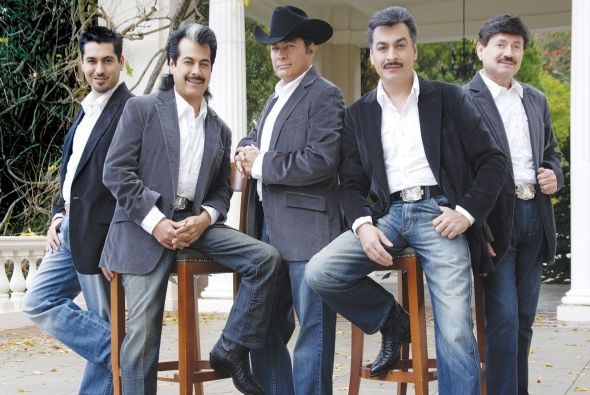
Los Tigres del Norte, one of my favorite (and one of the world’s most popular) bands, was banned yesterday from playing in the city of Chihuahua. They were banned because they played a very popular narco-corrido based on a soap opera and book, La Reina del Sur. The ban occurred not in some foreign place that might be unfamiliar with the band’s norteña music, but rather in a city that is steeped in norteña culture. The Mexican press, and most Mexican people, are upset about and vocal in objecting to this cavalier censorship.

A bit of background is in order. As has been well publicized worldwide, Mexico has been a sad battle route in the drug buying and the arms selling of its northern neighbor. Locally and similar to criminals worldwide, drug lords take over and strong arm mountain pueblos, also sometimes building schools or hospitals and taking care of people, thereby building loyalty and security for themselves.

Around this drug trade has grown a culture, which has closely mixed with the pre-existing norteña culture. That cultural mix includes a style of dress (one extreme is those tippy-toed guarachero boots), a unique vocabulary and style of speech, songs (narco-corridos are songs that glorify the life of the outlaw), and even a patron saint whose image, likeness and altars can be found in most any colonía (Jesús Malverde, so-called patron saint of the drug lords and lost causes).

Mexico is a large country, as is northern Mexico, and norteña culture as influenced by narco culture has a diversity within it. There is also spillover; many people who have nothing to do with the drug trade may build an altar to Malverde (unwed mothers may pray to him, for example, as might people who have lost their jobs) or have his face emblazoned on the window of their pickup truck. And, MANY of them listen to what can be called narco-corridos. The particular song for which my Tigres were banned, ironically, ends with the outlaw (a woman) being punished for her crimes.

I believe that most Cultural Detectives value free speech, and do not believe in censorship. It is interesting, though, that this ban occurred because Chihuahua city is trying to change its culture. It is trying to take the narco out of norteña, to stop the glamorization of criminal activity, to restore responsibility and good citizenship to its citizens.

It is personally ironic to me because last year, I posted on the Facebook page of another favorite band of mine, la Banda El Recodo, sharing with them my disappointment that they had released a song so far below the respect and esteem with which they are held by the public (the song talks about guns, arms, bulletproof vests; it encourages people to get drunk and shoot bullets into the air; the official video involves non-stop drinking, high-priced cars and watches, and ends with the lead singer pretending to shoot the viewer). In hindsight, was I censoring? I know my motivations were the same as those of the city of Chihuahua: El Recodo is at the top of their craft; people respect them. I love them, and I love Mexico. I wanted them to stand for and promote what is good about Mexico, help make it a better place, not glorify and feed the worst of our local culture.

What do you all think? We interculturalists work with culture change on a daily basis. Have you advocated censorship in your role? Have the opinions you’ve expressed served to censor another? What are your strategies for culture change?

Inside Egypt: Recent Gallup Poll Results

English: Derivative work of File:BlankMap-Worl...

Image via Wikipedia

We have all been captivated by the hope, strength, and commitment to democracy of participants in the Arab Spring. I’ve also long been a “fan” of Egypt, studying Arabic for two years while living in Tokyo, in hopes of relocating to that country (hasn’t happened yet). Thus, I was excited recently to be able to hear Mohamed Younis speak about Gallup’s research in Egypt.

Over the past decade I seem to quote more and more from Pew Research, so I was very happy to see that Gallup has made a major commitment to conduct 100% self-funded, independent polls regularly in 140 countries. This should provide invaluable data for the intercultural field.

The research on Egyptians’ opinions that Mohamed presented had been conducted just after the parliamentary elections, in December 2011. The top findings he shared with us included:
  • Despite recent challenges in the country’s transition, Egyptians are still optimistic that Mubarak’s overthrow will improve their lives.
  • There is overwhelming confidence in the transparency of the upcoming presidential elections and in participation — 86% of those polled plan to vote in the presidential election.
  • Most Egyptians believe SCAF will hand over power to a civilian government after the presidential elections.
  • Islamists and Liberals very much agree on the issues of most immediate concern for Egyptian households, including women’s rights and economic priorities such as inflation and jobs.
 Some other interesting statistics from the polling:
  • 63% of the Egyptians polled felt that protests and revolts in their country have been the result of an indigenous desire for change. Mohamed said he felt this reflected a “hyper-nationalism” and “hyper-distrust” of foreign intervention, which he said can also be seen in the fact that 46% of the Egyptians polled opposed NATO intervention in Libya (compared to just 18% who were in favor).
  • Our group of listeners was largely US American, so Mohamed shared that 41% of the Egyptians polled said closer relations between Egypt and the US would be a good thing. 40% said it would be a bad thing, for a fairly even split on the issue. His interpretation is that this split is closely related to the fact that 73% of the Egyptians they polled do not feel that the USA is genuine in supporting democracy (rather they support their allies and economic interests).
  • When asked “If drafting a constitution for a new country, which rights should be included?” the vast majority of those polled cited freedom of speech, freedom of religion, and women’s rights (ahead of others in the region). The people of Egypt are definitely envisioning a representative government.

During questions and answers, Mohamed told us how some of the Islamist parties had won seats because they had bankrolled local services such as providing burial services or pilgrimages to Mecca for those who couldn’t afford them. He did not feel the rise of these parties reflected a rise in Islamism per se, and definitely not in the desire for a theocracy.

When asked what foreign governments could do to support Egypt, the clear response was: trade not aid, due to the rising sense of independence, nationalism and regionalism he perceives.

Mohamed also talked about the need for education around democracy, and the fact that an overthrow of Mubarak is not in itself going to create jobs. He said many young Egyptians expect a government job, with high salary and a pension, but with 80 million people and much poverty, they can not expect what young people in Saudi might be able to expect.

When asked about the high price of gas sales to the Sinai, and the fact that many Egyptians blame the Camp David Accords, Mohamed responded that even though this has nothing to do with the peace accords, they are nonetheless blamed. Most Egyptians have no interest in re-engaging Israel.

When asked about security for the Coptic church, Mohamed reiterated that most Egyptians very much respect religious diversity, and that the decision to protect churches was not a government mandate but rather an organic, people-led effort.

If you’re interested in hearing Mohamed present the Gallup findings, they do have a video posted and you can also find a download of his slides. He mentioned there was also audio available on iTunes.

Please note that any errors in my report of the data and Mohamed’s comments are no doubt my own.

Other Gallup reports on related subjects available online:

International Women’s Day

Women hold up half the sky, according to Mao Tse-Tung. In many families and communities, women seem to hold up much more than half. And many times women do it for less pay, with less education, or from behind the scenes.

Today is International Women’s Day, and we at Cultural Detective would like to applaud women everywhere, thank them for raising us, for teaching us, and for collaborating with us.

The issues we highlight on March 8 vary by location. They can include access to clean water, education, or the right to vote; ending domestic violence and genital mutilation; advocating for equal pay, better child care, or peace. This year we would like to share with you a preview of an upcoming movie, entitled “Petals in the Dust: India’s Missing Girls,” which will explore the reasons behind “gendercide” in India, the killing of over 7000 baby girls each year. Thanks to Joe Lurie for sharing this with us. The movie is scheduled to be released in December.

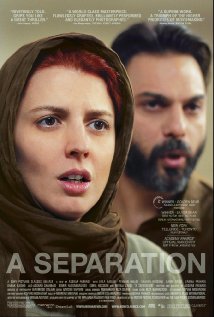
Movie Review: The Separation of Nader va Simin (Iran)

The media attention on Israel’s potential response to Iran’s nuclear activity has piqued my interest to learn a bit more about Iranian culture. Last week our family watched a most incredible film that I felt provided so much insight, so I asked my very good friend, Cultural Detective certified facilitator Pari Namazie, what she thought about what I had learned and seen.

I trust you’ll all enjoy her insights as much as I have. It would seem that this film could be an excellent learning tool for those working with Iranians.

Pari joon, thank you for sharing your insights with us!

They were proud moments for us Iranians when Asghar Farhadi received the Oscar for Best Foreign Film, as well as the Golden Globe and the Golden Bear of Berlinale, for his film A Separation (Jodaeiye Nader az Simin).

The film, which talks about a divorce between Nader and Simin, has two main underlying themes: responsibility and truth. Though one initially thinks the film is about a divorce case, Farhadi cleverly weaves many layers of Iranian society into his film, including power, religion, truth, gender, family, and social class. The points which stuck out most when I watched the film were:

The role of women: Iran is governed by Islamic law. The society is patriarchal and the laws between men and women unequal. Although the foreign media might portray Iranian women as weak and dominated by men, the reality of the matter was captured well in Farhadi’s film, which showed Simin wanting to leave Iran with her daughter, as she believed it was not an environment for a child to grow up in. When her husband refused to immigrate with her (due to his father’s condition), she then insisted on divorce and moved into her parents’ home. It also showed a more religious woman taking fate into her own hands looking for a job, despite the fact that in her family the breadwinner was undoubtedly her husband. Any one who has visited Iran will know the strength of character and conviction of its women.

Truth: The film beautifully portrayed the search for truth in the Iranian culture: from the court, to Termeh (the daughter) asking her father if he knew Razieh (the helper) was pregnant when he pushed her out of the house, to Razieh swearing on the Koran that Nader’s pushing her caused her miscarriage — if she swore on the Koran and it were untrue, then she would condemn her daughter’s future and fate. These behaviors show one of the strongest elements in Iranian culture: the search for truth.

Religion: Beautiful to see how Farhadi craftfully showed the secular and religious segments of society, how they came together respectful of one another, and yet also their existing tensions. Nader and Simin are more secular and Razieh and her family, religious. On one occasion Razieh called her religious authority to ask if it was permitted by Islam to work with an elderly old man, who was not related to her and where she would have to wash and change him.

Responsibility and Family: The relationship and responsibility towards family from the younger to the older generation. In the opening scene at the family court, Nader tells the judge that he cannot immigrate with Simin as he has an elderly father suffering with Alzheimer’s and can not leave him. Other scenes show Nader’s commitment to his father and his relationship with his daughter Termeh. Although he is under many pressures he still maintains his attentive concentration towards Termeh’s studies and taking care of his father, the two main priorities in his life.

Farhadi competently shows the different viewpoints of all the actors, without taking sides, and lets the audience reflect on the circumstances and situations. This film is a must-see if you have not yet!

Saudi and Its Treasure

Saudi Arabia absolutely deserves its renowned title, “the last forbidden kingdom in the world.”

There are virtually no tourists in the country. There is also no such a thing as a tourist visa. In order to get into the kingdom, I needed to have an invitation from a friend or a company. After a few months furiously networking, I still found no one who was bold enough to want to get involved. A colleague of mine kindly explained: “You don’t make friends with a Saudi through email. You need to have incredible luck to meet one first, then wait until you have eaten all their dates and your body has been swollen with their tea, then you may say you have a friend.”

However, I must say I do have some self-claimed friends from a Saudi forum. One of them, not sure of his nationality, has helped me generously up to a point where he asked me to send a photo so he could pick me up at the airport and (word by word) “…make sex together”. After many other dramas, I decided to contact the embassy and frankly told them my whole idea: “Sir, I would like to travel along the Islamic history route, from where Islam began, which is your country. And then I will follow its expansion path through three continents. Think Ibn Batutta! I want to show people that there is also a different Middle East than what is described in media. I’m a good person with good purpose. Please help!”

I started to email and call Saudi embassy in The Hague nine months before my journey began, without much luck. Then I decided to just knock on their door. The first man I talked with made me jump to my feet when he said this is an amazing project, and the embassy “has to” support me. I came back home, preparing a cover letter and all other documents as suggested. A month later, I got an appointment with the first secretary and was overwhelmed by the friendliness I received. I came home again to prepare a thick package of paper as suggested, even got to details such as who I plan to meet and where I plan to visit. Mr. Secretary promised to inform me if anything else is needed. He kindly asked for my patience as the papers would have to wait after the annual Hajj to be submitted to the Ministry of Culture. Three months later, he informed me that my application had been sent away.

Then I patiently waited for another three months…

And I am still waiting…

Now, let me tell you another story. When I was small, my father – a colonel in the North Vietnamese army – had in his room a small safe that nobody was allowed to touch, let alone to open it. My siblings and I used to stare at it for hours, arguing what it was inside. Our imagination ran wild, starting with all sorts of guns and weapons, or maybe poison. One day, I – by then five years old – stood up and seriously concluded that there must be a monster being kept in the safe. None of us ever thought of something beautiful, like a precious stone or similar treasure. Daddy would share it with us no doubt if it was a beautiful thing.

Years after, when my father got his cancer, in one of the last days of his life, he called me to his bed and gave me the secret that he had been keeping away from us for so long.

It is a bible. It is a small bible with a beautiful red leather case.

In another story, I will explain to you why the bible must be hidden in my family. For now, whenever I recall my childhood staring at father’s safe, letting the wild rumor and imagination consume my mind, I could not help a chuckle. It still surprises me how far from the truth our guess work had been.

My friends, don’t you think we have done enough guess work about Saudi?

—–

It’s nice to meet all of you here on the Cultural Detective blog! I am a proud member of this team, and co-author of Cultural Detective Vietnam. I am in the midst of a journey that traces the path of Islam, from its origins as it spread outward around our planet. You can follow my journey daily in Facebook or via my blog.

Yemen Revolution and the Quest for Patience

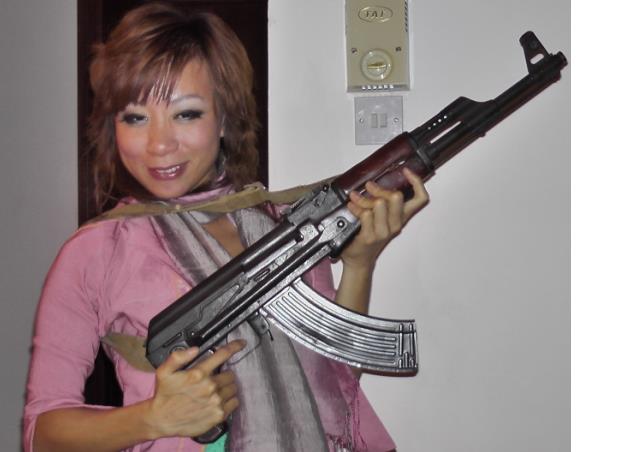
This photo was taken 30 minutes after the voting closed. Not a gunshot was heard in Sanaa. This rifle (though readily placed next to the desk of a media boss in Sanaa) was not needed.

I arrived in Yemen just 12 hours before the election. As a single female traveler, the airport police did not let me out until they could appoint a driver to take me to my friend’s house. Nobody left the airport untraceable.

The election has only one candidate, Mr Hadi, and it is interesting to see that this election aims at non-violence and a peaceful handover of power rather than genuine democracy. Many Yemeni activists told me that 5 other candidates were denied by the government. They were furious, of course.

However, looking at the turmoil that Yemen has been through, I can also see the reasons behind this seemingly undemocratic election. Being a very delicate and fragile country, Yemen needs stability and its people need to know that democracy goes steps by step. The country is like a patient after a big operation. He needs soft food and milk instead of steak.

I am happy for Yemen, that the country has moved one step away from dictatorship, being in a transition of moving forwards to a real democratic election in the near future. Democracy is a process, and it needs a lot of patience and dialogue.

It’s nice to meet all of you here on the Cultural Detective blog! I am a proud member of this team, and co-author of Cultural Detective Vietnam. I am in the midst of a journey that traces the path of Islam, from its origins as it spread outward around our planet. You can follow my journey daily in Facebook or via my blog.

Eating with One’s Hands: Cause to Lose One’s Children?

Members of the Cultural Detective community are united in a common purpose: to spread respect, understanding and justice through collaboration in our world. I am so, so lucky to be able to work, each and every day, with such passionate and diversely talented people.

Yesterday was a wonderful day. We held the second in a successful series of two FOLEs (Facilitated Online Learning Events) with a globally dispersed group of movers and shakers; launched a MUCH-anticipated new package (CD Bridging Cultures); got out a blog post and a newsletter; and finished the admin area on our upcoming Cultural Detective Online subscription service. But, I was tired, and feeling rather overwhelmed by all the technology I (have to) work with. I was wondering, as many of us do sometimes, if my efforts were really having a positive impact on the world.

Just then I opened a note from one of my colleagues, a sign language interpreter who is a “foodie.” She reminded me that, yes, every little bit we put out there positively (including via technology) has constructive ripple effects in our world. Bless you and your beautiful work, Anna! Keep reading to see her note and a terrific effect of a recent social networking link.

Here’s the note I received:
Hello dear Dianne,

I am excited to share with you a post and video I made inspired by a story on your Intercultural Competence Newsfeed. Do you remember the piece about:

Norway authorities take away Indian couple’s children for feeding them by hand

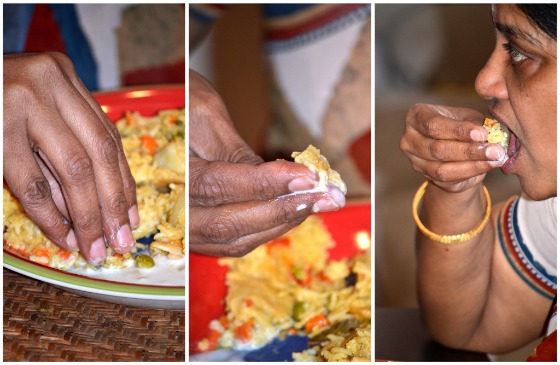
My fascination with food and culture spurred me to write a post about different cultures who eat with their hands (including Indian, Ethiopian and Moroccan). And with the help of a friend, we shot a video of this lovely Moroccan gentleman I know giving me a lesson in eating with the hands.

I am hoping to make a series of such videos on cross-cultural food ways. Hopefully it can help build cross-cultural understanding and respect.

Thank you so much for all your wonderful work!

Anna Mindess
Co-author of Cultural Detective Deaf Culture
blog: East Bay Ethnic Eats

Below is the first video in her series, for those who don’t want to keep clicking. We’ve added it to our Cultural Detective YouTube channel as well.

Much-Anticipated New Release! Cultural Detective: Bridging Cultures

Cultural Detective Bridging Cultures coverIntercultural understanding is essential to working in a global world, though by itself it is simply not enough. There is a critical need beyond awareness of differences: an ability to generate and demonstrate effective, transformative, out-of-the-box solutions to challenging intercultural situations. Since 2004, the Cultural Detective series has successfully enabled people to do just that.

We are proud to announce the debut of our latest offering, Cultural Detective: Bridging Cultures. This new tool enables individuals, teams and organizations to purposefully strengthen mindsets and skills in order to leverage cultural differences as assets. It contains worksheets, exercises, tools, tips, and complete instructions. The learning package is authored by Kate Berardo.

Not every situation can be bridged, perhaps not every situation should be bridged, and the act of bridging, as many things in life, may involve an investment of time and energy. This new set of learning materials begins, therefore, by helping you distinguish whether “to bridge, or not to bridge.”

Cultural Detective: Bridging Cultures will enable you to understand how you tend to react when encountering cultural bridging opportunities, identify more effective strategies for bridging both in-the-moment and over time, and practice putting these skills into action. More specifically, you will:
  • Identify when a conversation is about to spiral up or down.
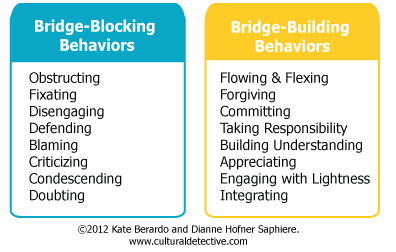
  • Identify “bridge builders” and “bridge blockers” to your successful intercultural communication.
  • Learn techniques for in the moment bridging of differences to ensure conversations spiral upward instead of downward.
  • Develop holistic strategies that consider influencing factors such as history, context, and structure of the interaction.
  • Learn how to expand, filter and test effective bridging solutions.
  • Develop high-impact, creative bridging solutions to both prepare for and repair intercultural relationships.
  • Practice, and receive feedback, on bridging strategies in situations that are real and relevant for you.
Cultural Detective: Bridging Cultures is organized around four main competencies that are essential to bridging cultural differences. They are:
  1. Self-Awareness: Being aware of the mindset you bring to challenging intercultural situations, and knowing both your strengths and blocks in turning such situations into bridging opportunities.
  2. Course Correction: Recognizing points in an interaction where misunderstanding or conflict starts to occur, and responding appropriately.
  3. Holistic Analysis: Being able to analyze complex intercultural situations in a detailed and holistic way that considers a variety of influencing factors, and, thereby, more effective solutions.
  4. Creative Solving: Learning skills and methods to generate “beyond the obvious” solutions to bridge intercultural differences.

While this is not to suggest these are all the skills needed to work effectively across cultures, these are often under-developed abilities that need to be strengthened to enable effective intercultural bridging, and, therefore, are the focus of this package.

SAMPLE EXERCISE

How about an exercise to get you started? The purpose of this activity is to learn what bridging and blocking look like for you, so you can hold a bridging mindset more often.

Let’s begin with some simple definitions.

Blocking Mindset:
  • Focused on own agenda
  • May become defensive or impatient
  • Unintentionally harming the relationship

Think about a challenging interaction in your own life (who, what, when, why) during which you held a blocking mindset. How did you feel? What did your blocking mindset look like? What behaviors did it entail? What outcomes did you achieve?

What do your reactions tell you about yourself and how you might improve your intercultural effectiveness?

Bridging Mindset:
  • Open and curious about others
  • Willingness to meet others more than half-way
  • Belief that others are NOT “out to get us” but that they have positive intentions

Think about a challenging interaction in your own life (who, what, when, why) during which you held a bridging mindset.  How did you feel? What did your bridging mindset look like? What behaviors did it entail? What outcomes did you achieve?

Learn more about Cultural Detective: Bridging Cultures; view a short video on the core Cultural Detective method, which a major software manufacturer credits with a 30% increase in customer support satisfaction; purchase small quantities of the package; or contact Kris Bibler about a site license.

Objection! – Talking with children about cultural stereotypes

“Oh no!!! Is my son really fighting the natives? Objection!” That was my thought recently when I saw my white first-grader playing a Lego video game whose content clearly perpetuated the age-old stereotype of the monolithic mass of vicious, “savage” brown-skinned “primitives” fighting the white heroic characters on a mission to find the proverbial pot of gold.

“This cannibal is a native of Pelegostos Island where his cannibal tribe believes Captain Jack is their god, trapped inside of a minifigure! He loyally serves Chief Jack – until he tries to serve him for dinner!” reads the description of the Lego character whose portrayal appalled me. Surely enough, the very ethnic group portrayed as cannibals in “Pirates of the Caribbean,” the Garinagu of Belize joined with the Kalinago (Caribs) of St Vincent, Dominica and Trinidad to send a protest letter to the executives of the Disney Corporation challenging their negative portrayal in the film, based on an ahistorical 17th century stereotype that is still very prevalent and harmful.

How to challenge destructive stereotypes present in the world around us and effectively address issues of race and racism were the topics discussed in the excellent and informative workshop I attended earlier this month in Seattle. “Talking with Children and Youth about Race,” taught by Dr. Caprice Hollins and co-facilitator Ilsa Govan of Cultures Connecting, offered the following tips I would argue work well in conversations with adults as well:
  • We don’t have to have all the answers.
  • Ask questions to see what the child is thinking and to get the child to think deeper (do not assume you know until you hear more).
  • We don’t have to be profound or “seize the moment,” as if it is the only one we have.
  • We don’t have to respond immediately. It’s okay to think, research, ask a trusted adult for input first before coming back to the conversation.
  • We can learn & explore with the kids.

Most importantly, SLOW THE CONVERSATION DOWN.

I came away from the workshop realizing that many of us, whether of color or white, are the first generation to have deep conversations about race with the younger generation, finding our way. It’s good to connect with others on a parallel journey.

Disney did not listen to the advocates from the Caribbean, but my six-year-old and I have already had a few of good conversations about problematic depictions of dark-skinned native people in the media and games. More discussions will follow.

Please share with us your stories about how you teach your kids, extended family and friends’ kids, about cultural stereotypes, via the comments section below.

Or, please share with us also your own story of intercultural effectiveness, via the form on this page.