Watch Out! What a Values Lens is—and is Not!

Our users love Cultural Detective‘s Values Lenses. Many of them even call our toolset “Cultural Detective Lenses” rather than “the Cultural Detective Series.”

Customers tell us they use Values Lenses to:

  • Quickly build recognition that cultures are, indeed, different.
  • Establish credibility that these tools and their facilitation are effective.
  • Supplement—amplify and deepen—the analysis of a critical incident, or better understand a personal life event.
  • Reflect on ways in which they have become who they are by overlaying national, gender, generational, religious tradition or sexual orientation Lenses with Personal Lenses.
  • Contrast their “home culture” Lens with that of a new culture to predict where there might be synergy and resonance, as well as potential difficulties or challenges.
  • Learn to focus on the things that make a difference, to observe and respect deep culture, rather than becoming preoccupied with dos and don’ts.
  • Empower members of their organization to explain their culture(s) to others. Though they may not individually hold the values on the culture’s Lens, the Lens enables them to explain the larger society’s tendencies in ways that help newcomers to be successful.

All of this is fine and good, except that Values Lenses scare the bejeebers out of me!

Ever since publishing Ecotonos back in the early nineties, I’ve said that publishing a tool is like launching a child out into the world: products, like children, take on lives of their own. They do not always do what their parents or creators might have intended. Tools serve certain purposes and not others. Tools can be used expertly or misused.

Since Values Lenses can be such powerful tools, they can also be dangerous tools when misused. Thus the reason for this post. We want to make sure you understand how to use Values Lenses appropriately, and help us keep them from being used counterproductively.

So, what are Values Lenses? And what are they not?

  • Values Lenses summarize the top five to seven core values or general tendencies of a group of people, a culture. They do not apply to individuals within a culture, and the values have a complex influence on sub-cultures of the Lens culture.
  • They illustrate how members of a culture tend to see the world—looking out through the Lens, and how a culture tends to influence its members—like sun shining in through the colors of the Lens. It is important to remember it is “tend to,” not “always do.” Context is key.
  • They capture the ideal and actual aspects of a culture, intention and perception, positive and negative, yin and yang. A Lens both illustrates the values that members of a culture aspire to, and some ways in which the expression of those values might be negatively perceived by those who don’t share them. A Values Lens is a starting point for inquiry; it does not contain every value held by every member of a culture.
  • Values Lenses are tools for discovery and dialogue, clues that may give us an idea about what makes people tick. They are not yet another “box” into which to stereotype people!

Values Lenses can be extremely effective tools, and they are a key component of the Cultural Detective Method. Remember, however, that it is the process of using the Cultural Detective Worksheet that is fundamental to the Cultural Detective approach.

We’d love to hear your ideas and techniques for helping others learn through the use of Cultural Detective Values Lenses! Let us know how you are creatively applying Values Lenses in your life—personally and/or professionally.

Global Edge: Terrific resource

Are you familiar with GlobalEdge? Funded in part by the USA Department of Education, the project provides free, centrally located international data from a variety of sources.

  • The Global Insights section includes data sortable by country, by 11 trade blocs, or by industry.
  • The Reference Desk includes a resource directory, online course modules, tutorials on international business, and a glossary of international business terms.
  • Their Knowledge Tools, my personal favorite, include tests of knowledge, economic rankings, a terrific “Database of International Business Statistics” to help you generate the custom reports you might need, an index to evaluate emerging markets, diagnostic tools to aid your business decisions, and a country comparison tool.

Many thanks to Cultural Detective facilitator Janet Graham, Baker University professor of international business, for highlighting this resource !

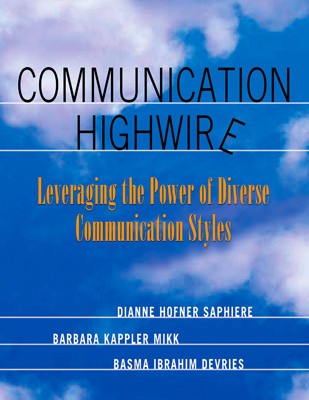
Book Review: Communication Highwire

by Dianne Hofner Saphiere, Barbara Kappler Mikk, and Basma Ibrahim DeVries
Intercultural Press, ©2005

Communication Highwire: Leveraging the Power of Diverse Communication Styles

Review written by Piper McNulty
Originally published in the The CATESOL Journal vol. 20.1

Communication Highwire, as the circus metaphor implies, explores the balancing act inherent in any intercultural interaction: how to remain true to oneself while exploring aspects of other styles, with a goal of achieving more effective communication.

After decades of teaching and training across, and about, cultural differences, these three authors have found that labels such as “direct,” “low context,” or “polychronic,” while providing initial insights, are not sufficient for their purposes, and that a more “robust, and dynamic” (p. xi) analysis framework is needed. In addition, unlike most books on intercultural interactions, Communication Highwire moves beyond appreciation of cultural difference to suggest ways to leverage diverse styles for improved communication across cultures.

Their model is additive, with a goal of expanding each individual’s communication-style repertoire. The book is divided into four sections: an introduction, five factors affecting communication style, a detailed breakdown of 16 specific styles, and an extensive collection of activities. The authors return throughout the book to the ongoing, often contentious relationship between two businessmen, Mike and Tanaka-san, who struggle to understand each other’s behaviors, articulate their own goals and preferences, try each other’s styles, and ultimately work together productively. Examples from many other cultures and contexts are also used to illustrate the concepts and strategies throughout the book, drawing on the authors’ extensive intercultural experience, both professional and personal.

Saphiere, Mikk, and DeVries explore communication across cultures from different client needs and perspectives, and they argue persuasively that successful communication requires a combination of styles. The best coauthored books present a mixture of ideas, experiences, and analysis and we are the richer for these authors’ extensive collaboration. Each chapter, and the themes that carry throughout the text, appear to be the result of extensive discussion, reflection, and collaboration. The book is full of engaging, highly readable examples, discussion prompts, and skills activities, which take the reader well beyond the obvious and the “common sense” of communication theory. Occasionally the sentences get a bit wordy, but the writing is clear and cogent throughout, and the authors do an excellent job of selectively substituting everyday terms where field-specific jargon could simply distract and frustrate the reader.

The book also stands out for its gentle reminders to consider multiple perspectives, to “hold…individual goals loosely enough to hear, accept and more fully understand each other’s goals” (p. 79). In addition, the analysis checklists are exceptionally thorough. For example, most intercultural communication (IC) texts simply state that in some cultures one should avoid eye contact with authority figures, yet we all know that eye-contact rules are not that simple.

These authors list four different descriptors of eye contact, and while such detailed analyses might seem more than the average ESL/EFL student needs, or can handle, adults in a second-culture context often struggle to adjust their communication behaviors to be more effective with their new interlocutors, and they are often very aware of fine nuances of style. Such students are usually more than ready to embrace this depth of analysis, because they want to understand why their interactions across cultures do not always go as intended.

Of particular interest to TESOL members will be the detailed analyses of functional language. Students trained to analyze miscommunication as these authors suggest will be at a significant advantage when discussing, negotiating, persuading, critiquing, or receiving feedback, skills that can come into play in academic contexts, the workplace, when renting an apartment, or opening a bank account. Also addressed are idea presentation, turn taking, expectations of communication process, use of emotion, permeability of new ideas, apologies, requests, praise and disagreement, feedback, and humor, among others. Language for describing details of both vocal characteristics and nonverbal behaviors are also provided. Making this global range of styles explicit is of great benefit to instructors and students alike.

The authors also emphasize that no individual will be predictably direct, or emotionally expressive, or quick to touch others in all contexts (to name just a few), but that communication styles are a situational tendency, providing a link between behavior and underlying intentions. To leverage our understanding of others’ styles, they present a four-step method: (a) reflecting, (b) analyzing, (c) discussing, and (d) deciding. While these steps might seem easy to carry out, discussing and deciding are not found in most IC literature, and the authors’ engaging analysis of the ongoing relationship between Mike and Tanaka-san helps instructors and clients develop their own version of the suggested analysis strategies.

The book is such a rich source of information and analysis tools to seem, at times, overwhelming, but the outline format and use of charts allow the reader to skim the chapters’ subtopics, selecting the specific communication styles or functions that are most applicable to their client/student population.

As for the activities, we have all read step-by-step instructions of skill-building activities and wondered whether we could achieve the outcomes promised by the author. Intercultural and diversity training can be particularly idiosyncratic and context specific, making it difficult for others to duplicate their success. However, the activities presented here are easy to envision, and the tips and suggested adaptations allay concerns that the exercises are too dependent on the original facilitator’s approach. In addition, the relatively large font, line spacing, and the wide margins leave plenty of room for underlining and notes.

Communication Highwire is an excellent resource for ESL/EFL instructors whether or not they use the activities in their own classrooms, as the tools provided may help them recognize where, and why, their own interactions with their clients, of any age or level, have gone awry, and what may be causing disconnects in their classrooms. The authors explore culturally different communication styles with depth, clarity, and insight.

Communication Highwire would be a useful supplement for teacher-training programs and a valuable addition to any ESL/EFL instructor or trainer’s library, no matter what the level or context of instruction.

Communication Highwire: Leveraging the Power of Diverse Communication Styles is a gem!

Book Review: Intercultural Communication, Globalization and Social Justice

by Kathryn Sorrells, Sage Publications, ©2013 ISBN 978-1-4129-2744-4

Intercultural Communication: Globalization and Social Justice provides fresh voice and much-needed current perspective on intercultural communication competence. Written as an undergraduate and graduate level text, as a 30+ year professional I also read it enthusiastically. From Sorrells’ debunking of racial color blindness (p. 62), to the commodification of culture (p. 190), to her closing call for global citizenship (p. 227), her keen intellect and passionate commitment to social justice is evident and unwavering throughout.

From the beginning the author makes clear the need to put intercultural communication in context and with a clear purpose:

“Regrettably, some of the most egregious injustices—exploitation of workers in homes, fields, and factories and violence perpetrated through racial profiling and ethnic cleansing—are performed within intercultural contexts and are enabled by intercultural communication.” (p. xiv)

…”the globalized context in which we live today makes ethnocentrism and ethnocentric approaches extremely problematic. The assumption that one’s own group is superior to others leads to negative evaluations of others and can result in dehumanization, legitimization of prejudices, discrimination, conflict and violence.” (p. 13)

“This text … provides a framework to create a more equitable and socially just world through communication.” (p. xiv)

By page 38, I knew I was in good hands, as Sorrells wove Amy Chua and her World on Fire into the intercultural mix, providing it as counterpoint to Francis Fukuyama’s The End of History and the Last Man.

The author appears to have challenged herself to address each topic, even the most familiar, through at least four lenses:
  • in what ways is the topic complex and contradictory,
  • how does the topic appear from micro, mess and macro views,
  • what are the local and global connections, and
  • how do the complexities and contradictions play out in our world today, particularly in terms of equity and justice?

Sorrells is an excellent teacher, providing rich yet succinct examples—unraveling the various interwoven threads of her stories to enable the reader to more clearly see each thread—while keeping the overall tapestry in mind. Her writing should energize and guide cadres of undergraduates, as well as professionals, to use intercultural communication theory and practice to bring more equity and justice to our world.

Sorrells covers the content you’d typically expect in a basic text on intercultural communication: nonverbal communication, context, dialogue, relationships, communication style, identity theory, use of space. What makes this book different is that she uses important current issues and topics to provide a fresh perspective and powerful, meaningful insight. She examines intercultural communication informed by topics such as power, hegemony, growing socio-economic inequities, the culture of capitalism, race, color-blindness, immigration, glocalization, hip-hop culture, appropriation, hybrid cultures, and online communication. She pulls from a variety of disciplines including feminist theory to address her topic. In the process, she introduced to this practitioner new ideas such as fragmegration (p. 131), culture jamming (p. 144) and polysemic space (p. 91).

The book begins by looking at why the intercultural field has not been able to settle on one definition of culture, tracing definitions of culture from anthropology, cultural studies, and globalization. The author next guides us through a much-needed review of the history of intercultural communication, doing so crisply and meaningfully. Revisiting the origins of the field may help us return to our collaborative purposes and away from the overly analytical comparative studies trends of today.

Each chapter concludes with discussion activities and questions, which for a trainer or coach will be invaluable. And they’ll make lesson planning for the classroom easy.

To enable students to navigate the complex intercultural spaces they inhabit, the author introduces a process of critical, reflective thinking and acting. She calls this “intercultural praxis.” Via six interrelated points of entry (inquiry, framing, positioning, dialogue, reflection, and action), “intercultural praxis uses our multifaceted identity positions and shifting access to privilege and power to develop our consciousness, imagine alternatives, and build alliances in our struggles for social responsibility and social justice.” (p. xvi)

Obviously the text is not intended for a basic-level reader of English! And, while this praxis model is definitely conceptually sound, it is far from easy to put into practice.

What were some of the points in this book that stood out for me? The concept of “positioning” is important:

… “how our geographic positioning is related to social and political positions. As you read these sentences, where are you positioned socioculturally? The globe we inhabit is stratified by socially constructed hierarchical categories based on culture, race, class, gender, nationality, religion, age, and physical abilities, among others. Like the lines of longitude and latitude that divide, map and position us geographically on the earth, these hierarchical categories position us socially, politically and materially in relation to each other and in relation to power.” (p. 18)

Sorrells explains that positioning “directs us to interrogate who can speak and who is silenced; whose language is spoken and whose language trivialized or denied; whose actions have the power to shape and impact others and whose actions are dismissed, unreported and marginalized.”

The author’s reference to modern-day anthropologists Jonathan Xavier Inda and Renato Rosaldo was also valuable. Their premise is that culture, in the context of globalization, has been “deterritorialized.” What this means is that “cultural subjects (people) and cultural objects (film, food, traditions, and ideas) are uprooted from their ‘situatedness’ in a particular physical, geographic location and reterritorialized, or relocated in new, multiple and varied geographic spaces,” (p. 43).

Hence, we find Hindi films and Amitabh Bachchan posters worldwide, with wildly different meanings attached. “Similarly, a person’s or group’s sense of identity, who migrates from Iran to Israel to the United States, for example, is reinscribed in new and different cultural contexts, altering, fusing, and sometimes transforming that identity.”

There were two very minor disappointments for me, amidst all the positives in this text. The first is that while this volume includes a great deal of content that other intercultural texts omit, Sorrells does not adequately address religion and its role in society today. The clash of religious and spiritual beliefs, the gaps between believers and non-believers, the judgments one to another, the fact that religion can provide access to power or motive for distrust, are important. Religion can divide or unite communities, nations, and continents. A chapter or at least a couple of pages devoted to the topic, as seen through Sorrells’ keen perspective, would be a valuable addition.

Second, while the book is overflowing with examples from all over the world, it is unnecessarily US-centered. Perhaps a US publisher wanted the book to sell to US universities, and thus preferred it be written that way. This could so easily have been a non-nation-centric book—with an even bigger market. It comes so very close that it seems a shame not to have gone the extra step.

Intercultural Communication: Globalization and Social Justice is a must-read for any intercultural professional or serious student of the field. And if you have the pleasure of teaching an intercultural communications class, this is a terrific new text.

Oldie but Goodie: Map of Key Cultural Differences

Intercultural communication is about how we can communicate effectively with one another. A frequent approach to improving intercultural communication is to develop our understanding of ourselves and of others. And probably the most common way of doing that is to teach about cultural differences, often referred to as the “dimensions of culture.”

There are many different versions of the dimensions of culture. I generally find them valuable as tools to help us compare cultures, or to cognitively learn about ourselves and others. And I also find they really limit us. While not intended this way, their use has a tendency to reify culture, to cause us to think about culture as a “thing” rather than a process. It’s why I’m such a fan of the Cultural Detective Worksheet: it’s a process for understanding self and others, for leveraging similarities and differences in order to collaborate in more innovative, rewarding, and satisfying ways.

Enough about that. This post is about cultural differences. In my training one of the ways I talk about cultural differences is to ask people to think of them as a map of the terrain, and to use them as a scanning tool. In a given interaction, which difference(s) got in the way? For example, was status important for her and not for me, and I just missed it? Was it a different sense of responsibility that really upset me? Maybe he likes to do several things at once, and I’m more one-thing-at-a-time? Was it the fact that I don’t think religion belongs in the workplace that caused him to think I’m not trustworthy?

That is how the map above came to be. It is a graphic summary of some of the cultural differences or dimensions, at least as I saw them back in 2008. It is available for you to use freely under a Creative Commons license. You can introduce the various cultural differences to your team and then, when you get mired in cross-cultural miscommunication, you can take out your map of differences and decipher just which dimension might be causing the problem. Or, maybe it’s something not even on the map.

Just click on the link above for a larger image, and to download the accompanying 11-page article entitled, “Detecting the Culprits of Miscommunication: Values, Actions and Beliefs.” Please feel free to copy and distribute, as long as you retain the copyright and source url.

I’m really interested to hear from you about how you use the dimensions of culture to promote effective interaction. What are your tools and techniques? Your dos and don’ts? And what do you think about this “map of the culprits of miscommunication” idea?

Designing and Implementing Global Diversity

The global scene is expanding and our world has become borderless. Designing and implementing programs for global audiences presents unusual challenges. Familiar activities may be culturally inappropriate, simulations may need revision, or inherent cultural biases may limit our impact.

This five-day workshop will address strategies for adapting programs for highly diverse audiences, and for designing culturally responsive design and instruction. The facilitators will share a learning framework that will help you assess the impact of culture on teaching and learning. You will learn about the success, the challenges, and the next steps for preparing and delivering culturally sensitive global diversity programs.

To be held July 23-27 in Portland, Oregon, as part of the Summer Institute for Intercultural Communication, the workshop is designed for intermediate and advanced designers, developers, and others launching or anticipating launch of a global diversity program within organizations, whether corporate, nonprofit, NGOs, or educational institutions.

In this session, you will:
  • Learn to adapt simulations, games, blended learning and social media for multiple purposes by tailoring design, delivery, and debriefing.
  • Explore multiple approaches to delivering global diversity.
  • Assess how cultural biases impact design and implementation.
  • Identify learning challenges in implementing programs across cultures.
  • Adapt instructional design for culturally diverse populations.
  • Apply new skills to deliver culturally sensitive and culturally adaptive instruction.

The Summer Institute for Intercultural Communication is one of the world’s premier professional development venues. Be sure to join us in beautiful Portland, Oregon this coming July.