One of the greatest benefits of working across cultures, aside from the terrific people, is the fabulous food we are privileged to enjoy. I’m sure most of you agree, as some of our food posts have proved to be popular entries on this blog:
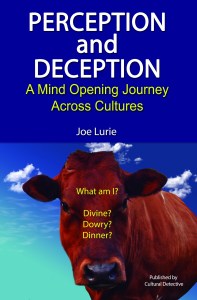
Differences in customs and etiquette can damage relationships; Perception and Deception provides stories from nearly 100 cultures. Be sure to order your copy today.
Once you’ve read it, remember that it is the underlying values we hold and the assumptions we make that are the differences that make a difference to productivity and satisfaction. Cultural Detective helps you learn on that deeper level, building understanding as well as strategies and skills for harnessing differences as assets. Get your subscription today!
“I challenge you to find anyone in the history of the world who was enslaved and who revolutionized the food, sex lives, religion, dance, music, and aesthetics of the people who enslaved them—like Africans in the Americas did. The man and woman who became enslaved enslaved the palates of those who enslaved them.”
—Michael W. Twitty, food historian
Michael Twitty is aspiring to be the first US Civil War-era Black chef in 150 years. To that end, since 2011 he has researched, written, and, amazingly, performed the day-to-day labor of an enslaved person. Why? “It’s my job, using imagination, body, archeology, ethnography, anything I can, to honor and restore dignity to my ancestors.”
It is important that we not only honor the ancestors but provide a lifeline to contemporary communities and people of color looking for a better life in the new economy, a way out of the health and chronic illness crisis, and a way to reduce the vast food deserts that plague many of our communities. To honor the food past and provide for the food future is “culinary justice.”
—from Michael’s website, Afroculinaria
All over the world, people have lost and are losing proprietorship of their ancestral traditions. As Michael explains, “Spam colonized Oceania, Korean traditions were usurped during the Japanese occupation, there was the pseudo-history of the Columbian Exchange, Native Americans probably exchanged recipes with immigrants as they shivered under small pox blankets and dodged musket balls.” Too many people have no claim over their own heritage, no access to a field of heirloom vegetables that their ancestors brought to a country or a continent.
Maybe you have heard about Michael Twitty. I had not until I read a post by colleague Missy Gluckmann from Melibee Global this morning. Learning from Michael has occupied my entire morning, and I can’t tell you how thrilled and how moved I am by his work and who he is! Bless you, Missy and Michael!
Readers of this blog know that we often write about food (1, 2, 3, 4, 5); it is central to the soul of a culture. We also frequently write about cultural appropriation (1, 2, 3), from fashion to symbols to traditions, how to avoid it, and how to extend power and privilege, credit and honor where they belong—to origins and originators—while also continuing to be generative. Heck, bridging and blending cultures is what Cultural Detective is all about! Building on others’ work while honoring it respectfully and justly is a difficult line to maintain, however, one that requires ongoing dialogue, learning, and adjustment. Living as a gringa in Mexico, I learn more about that “thin line” on a daily basis.
Here in Latin America, where colonization and the appropriation of historic lands remain modern-day concerns, and the switching from heritage to GMO crops breaks my heart and worries many for our future, Michael’s work provides a much-needed vocabulary and conceptual framework. According to Michael, “In a world where oppressed communities worldwide are struggling with food security and economic inequalities, advancing culinary justice is essential to a better and more sustainable future for the global community.”
How does he define some of his terms?
Culinary Injustice: “When the descendants of historically oppressed people have no sovereignty over their culinary traditions, and essentially go from a state of sustainable production and ownership to a state of dependency, mal- or under-nutrition and food injustice. It results in feelings of shame for being under history’s boot heel, and puts distance between our past, ourselves and our future. Culinary injustice places originators in a tertiary and passive rather than a primary and active role in the transformation of culinary traditions, and results in fortunes being made for others”—those who oppress, appropriate, or innovate unjustly.
Culinary Justice: “Respect for truth and honesty in telling the stories and traditions of the oppressed. Reconciliation not blame, hope not guilt, the power of working together not avoiding one another. Ensuring that children of color have access to the land, ecosystems, clean water and legal protections to grow the heirloom crops and heritage breed animals of their ancestors. This results in a greater connection to nature, spirit, and our ancestors. Culinary justice enables the oppressed to become entrepreneurs, producers and providers by using their unique cultural heritage, and lifts communities out of poverty.”
Bridging Cultures via Culinary Traditions
Michael himself is a Blended Culture person, both African-American and Jewish, among, no doubt, many other identities. How does he bridge cultures? Again, in his words, “Food is extremely culturally connected and inherently economic and political. It is a proving ground for racial reconciliation and healing and dialogue. The responsible exploration of the Southern food heritage demands that the cooks of colonial, federal era and antebellum kitchens and enslaved people’s cabins be honored for their unique role in giving the Southland her mother cuisine.”
Think about this a minute. Here’s a culinary historian who has dedicated his life to reclaiming the Black culinary heritage of the Americas, especially in the US South. How do you think he might feel about someone, like, say, Paula Deen, celebrity chef and doyenne of Southern comfort food, who, when you think about it, has made a fortune off adapting (or appropriating) African-American recipes and traditions? In fact, Michael named one of his projects “The Southern Discomfort Tour,” to help us redefine how we think about what is commonly referred to as “Southern comfort food.”
Again, in Michael’s words, “I invited Paula Deen to dinner, at a plantation, to engage her as a cousin, not a combatant. The Cooking Gene seeks to connect the whole of the Southern food family—with cousins near and far—by drawing all of us into the story of how we got here and where we are going. There is power in food traditions for bridging the pseudo-boundaries of race.”
Bravo!
Michael talks about “identity cooking,” which relates directly to the Blended Culture that we as Cultural Detectives talk about. He tells us, “Identity cooking isn’t about fusion; rather it’s how we construct complex identities and then express them through how we eat. Very few people in the modern West eat one cuisine or live within one culinary construct. Being Kosher/Soul is about melding the histories, tastes, flavors, and diasporic wisdom of being Black and being Jewish. Both cultures express many of their cultural and spiritual values through the plate, and Kosher/Soul is about that ongoing journey.”
He talks about the Americas as “a culinary cornucopia unknown anywhere else in the world, where foods from Africa, the Americas, Eurasia, the Middle East and Southeast Asia met. Cooks from modern-day Ghana, Angola and Nigeria perhaps exchanged recipes with each other in their new Afro-Creole pidgeon English,” and here, paraphrasing him, sharing with one another how they adapt their ingredient list to the plants and herbs available in the Americas, as well as the palates of their new owners. “What results is not like anything they have cooked before, but is the essential truth of all of the parts.”
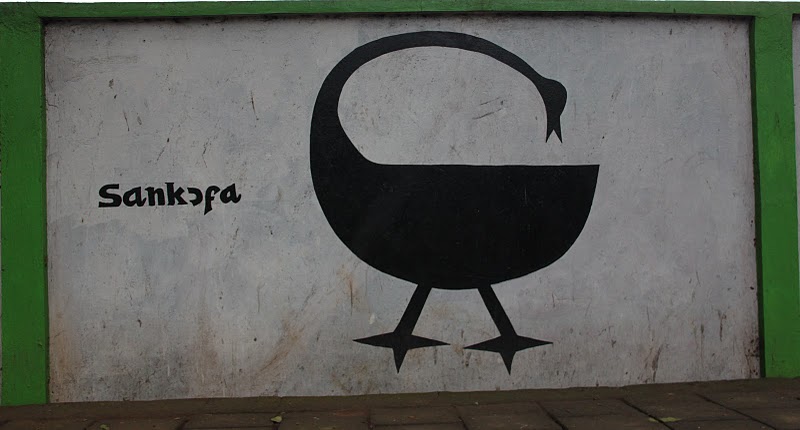
Remember when I told you that modern science is proving that memory is biological, that it crosses generations? Michael Twitty, with his one-man mission to reclaim African-American culinary heritage, recently found out through DNA testing that he his paternal ancestors were the Akan of modern-day Ghana. The Akan language, called Twi, has a word and an Adinkra symbol called sankofa. Sankofa means that we must go back and reclaim our past in order to move forward! You tell me Michael isn’t doing what his ancestors, and his genes, tell him needs to be done! Inside each of us, indeed, is a piece of the puzzle, an answer to the challenges facing our world!
The Akindra symbol for sankofa
Akindra bird symbol for sankofa
Personal Learning (or Reframing) Points
What are some of the key points I learned, or reframed, from Michael Twitty this morning? Most of the below is verbatim from Michael via his videos on the internet.
African slaves were not unskilled labor. They were brought to the Americas for their skills, to help build nations. They knew how to grow rice and cotton from West Africa, and brought it to the USA. We brought over 20 different African crops and animals to the Americas on slave ships. They brought their ability to cook. Post-slavery, they were the first generation of caterers in America, culinary aristocracy, cooking for the White House, embassies, highest society. Yet our children don’t know that!
“Yam yam” is a Wolof word, the word enslaved women used when caring for white children in the big house, encouraging them to eat her food. Look in the dictionary under “yummy”: “origin unknown”? Black people!
As new generations were born in the USA, kids’ palates changed. They don’t like guts, which of course contained the spirit, the soul, the essence of the animal that was sacrificed to feed us. We began to lose the mystical, the mythological, the metaphysical, and the magical… Those chitlins (small intestine): they contain the soul, that’s why it’s called soul food!
Enslaved cooks from Central West Africa used spirituals to time their cooking; there were no clocks. To roast the meat, bake the bread… they’d reference the number of times they could sing the song before the food would be done.
Rice in South Carolina made 10 out of the first 12 millionaires, all of whom were involved in the Declaration of Independence and the Constitution. It took only two seasons to make the rice planters of Charleston millionaires. Charleston Gold Rice sells for $14/bag today, yet not one black person owns a rice field in Charleston. That’s food injustice.
It’s important to respect and revive the culinary knowledge of the oppressed. It takes guts to insist that the chef act as a keeper of tradition, an advocate of memory, of ecological integrity, of ethnographic and historical respect, with contemporary awareness and a sense of urgency to acknowledge debt. Culinary reconciliation will lead to healing and a better life.
I’m sure you’d love to see Michael in action. Below is a video of an 18-minute presentation he gave to MAD, a Danish non-profit.
If you have heard Michael speak or, better yet, eaten some of his food, please let me know about your experience. Bless you, Michael Twitty! Thank you for helping make our world more respectful, equitable and just!
“We’re all coming to be like each other. While there’s some truth to that, it’s also truth that in coming together so rapidly—with technology, migration across borders—we are unprepared for the contact between people and cultures we know nothing about.”
Joe Lurie recently spoke to a sold-out crowd at the Commonwealth Club of California. In this two-minute excerpt from that presentation, Joe tells the sad story of a woman looking for a job who isn’t hired, at least in part, because of her name.
Job applicants with white names needed to send about 10 resumes to get one callback; those with African-American names needed to send around 15 resumes to get one callback. This would suggest either employer prejudice or employer perception that race signals lower productivity.
The book, Perception and Deception: A Mind Opening Journey Across Cultures, tells hundreds of stories like this one, in an effort to help the reader develop awareness and understanding, so they can then use Cultural Detective to build their skills and competence. If you haven’t yet read the book, be sure to order it now. Better yet, order a copy for Aunt Margret or your Cousin Vinny, too.
There are over 20 million refugees in our world, according to UNHCR. The AVERAGE length of time a refugee spends in a camp—in limbo, in transition, waiting—is 17 years; not months: YEARS!
Cultural Detective conducted a complimentary webinar on strategies for helping refugees and their receiving communities. It was conducted by Tatyana Fertelmeyster, herself a refugee, who has worked in refugee resettlement for several decades.
The webinar was so well received that we did a second one, for a different time zone. Then, SIETAR Austria and SIETAR Europa asked us to do a third. The next step will probably be a dialogue among seasoned practitioners. Interculturalists have crucial talent and resources to contribute to this crisis, and Cultural Detective is a tool that provides a remarkable service to both refugees themselves and their receiving communities.
There are several powerful learnings that participants take away from the ninety minutes. One is how complicated and confusing the entire resettlement process is. For example, there are so many different terms, which technically mean so many different things. The key component underlying the refugee experience is fear, and legally, refugees are those who travel across national boundaries. Those who are forced to relocate out of fear yet remain in their own countries are internally displaced.
Then there is the statelessness. Most refugees are forced to abandon their citizenship when they emigrate. Since, on average, they wait 17 years before finding a new home, that’s an awfully long time not to “belong” anywhere! Then there is the concept of time, of waiting, of living in limbo. If a child has been raised in a refugee camp, or an adult has lived in one for years, and now in a new home has to keep timely appointments and behave proactively, it’s a HUGE cultural shift we’re expecting. The countries that receive the most refugees are often not the countries in which the refugees will live long-term; they are transit countries. This means that the refugees go through waves of transition and re-acculturation.
There is the loss of everything that is familiar, everything the refugee knows and is comfortable with. They basically fall down Maslow’s hierarchy of needs, losing self-actualization, self-esteem, love and belonging, in the quest for survival and safety. In the new country refugees often need to learn a new language, a new culture and way of life, at a time when they are nursing the wounds of loss and at their lowest emotionally. Members of refugee families experience and respond to these intense emotions in a diversity of ways. Grandparents may not adjust to new ways; parents may be insulted by children who adopt new ways and seem disrespectful; children may resent or feel ashamed of parents who don’t understand or who have values different than those they’ve learned to adopt.
A second powerful take-away from the webinar is an empathy for the loss that refugees experience. Several participants reported tears and crying during one of the activities, saying they felt sad, lost, desperate, a fear of the unknown, anger, resistance, shock, feelings of depression. The refugee experience demands extremely high levels of resilience.
—
ACTIVITY So, what was this exercise?
Objective: To establish empathy for the refugee experience.
Instructions: On a piece of paper, draw two intersecting lines, one vertical and one horizontal, to form four quadrants. Yes, sort of like a Cultural Detective Worksheet.
In the upper left quadrant, list the names of the people who are your direct relatives: a legal spouse if you have one, and any minor-aged children.
In the upper right corner, list the names of those you love: adult children, parents, grandchildren, dear friends, cousins. List as many people as are dear to you.
In the lower left, list two to five small, portable things that are of value to you. These should be things the size of a book or so, something that fits into a pocket or a suitcase. They can have monetary or sentimental value, such as jewelry or photos.
Finally, in the lower right, list the things you love about your life now that are too large or too permanently installed to move with you. This might be your home, car, heirloom furniture; or maybe it’s your ancestral grave site, a favorite park or…
Take your time. When you are finished:
Take a good look at that last quadrant, the lower right. Put a big “X” through everything listed there. You won’t be able to take it with you. Let that sink in.
Next, look at the upper right. One by one, draw a line through each and every name on your list. Unless those people are able and lucky enough to travel with you, you may not ever be seeing them again. You’ll have to say goodbye to them. Take a moment. How does that feel?
Debrief: Share reactions and feelings, and apply to real life.
—
We realized that refugees are expected to be grateful for their new homes, which most of course are; but that at the same time they are mourning losses that are beyond normal mortal capacity. Tatyana shared with us her own experience. Even as a trained social worker, as a relocated refugee she experienced anger, resentment and jealousy of her host, the very person who was helping her, and to whom she was so very grateful. The emotions are complex, intense, illogical, and very real.
The world is so focused these days on what to do with refugees—who to accept, how to ensure safety and security—that we often do not focus on what to do after the refugees reach their new homes. All too often we hear the world “assimilate,” which interculturalists know is a far-from-optimal adaptation strategy. Assimilation happens because a society is not accepting of those who are different, yet a refugee very much wants to fit in and be accepted. In the process, refugees can be successful, but they lose themselves, their heritage, and the receiving society loses the benefit of the unique insights and experience the refugees bring.
What are other options? Tatyana walked us through John Berry’s Acculturation and Adjustment Strategies. Along the “x” or horizontal axis we have how accepting society is of those who are different. Along the “y” or vertical axis we have how open an individual refugee is to change.
From “Immigration, Acculturation and Adaptation,” in Applied Psychology: An International Review, 1997, 46.1, pp. 5-68.
The quadrant we of course want to avoid is Marginalization, which is where terrorism, both domestic and international, are born. This is where difference is not accepted by society, and the individual retreats internally, shutting down to and closing out from the outside world.
Separation is not an ideal adaptation strategy, either. While we may enjoy the good eats of a Chinatown or the salsa dancing of a Latino district of town, separation leads to segregation, pulling society apart and leaving its members vulnerable to discrimination.
We should of course aim for integration, which requires an openness on the part of society and on the part of the refugee or individual. Refugees learn, grow and change, as does society, transforming itself into a more innovative and inclusive community.
Tatyana used Cultural Detective Values Lenses to illustrate the worldview a refugee might start out with, the values required for successful adaptation, and what might be important to those of the receiving country. We can easily use the Cultural Detective Worksheet in Cultural Detective Online to analyze our interactions with refugees, or with those in our new home, and learn how to adjust in a more integrated, less marginalized, separate or assimilated manner.

 One of the greatest benefits of working across cultures, aside from the terrific people, is the fabulous food we are privileged to enjoy. I’m sure most of you agree, as some of our food posts have proved to be popular entries on this blog: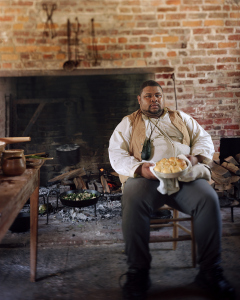

 There are over 20 million refugees in our world, according to UNHCR. The AVERAGE length of time a refugee spends in a camp—in limbo, in transition, waiting—is 17 years; not months: YEARS!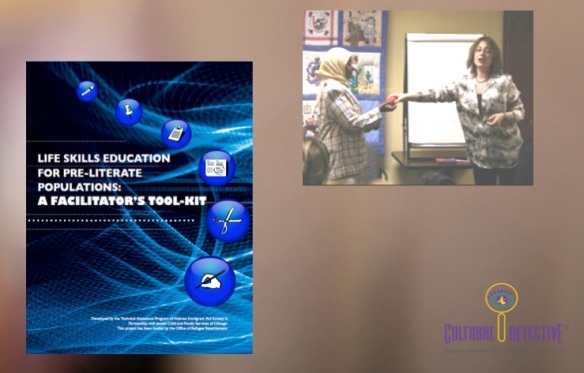
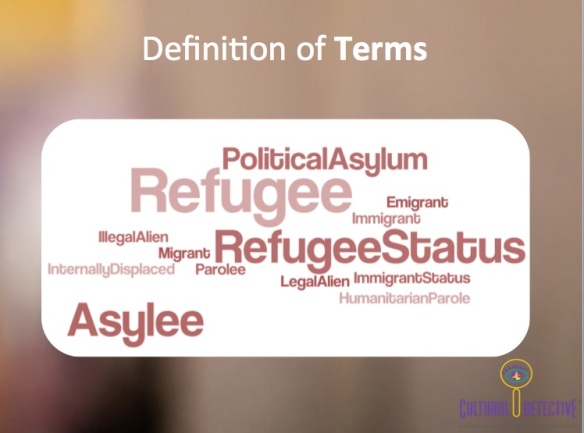 Then there is the statelessness. Most refugees are forced to abandon their citizenship when they emigrate. Since, on average, they wait 17 years before finding a new home, that’s an awfully long time not to “belong” anywhere! Then there is the concept of time, of waiting, of living in limbo. If a child has been raised in a refugee camp, or an adult has lived in one for years, and now in a new home has to keep timely appointments and behave proactively, it’s a HUGE cultural shift we’re expecting. The countries that receive the most refugees are often not the countries in which the refugees will live long-term; they are transit countries. This means that the refugees go through waves of transition and re-acculturation.
 ACTIVITY
 Cultural Detective Blog