Unknown's avatar

About Dianne Hofner Saphiere

There are loads of talented people in this gorgeous world of ours. We all have a unique contribution to make, and if we collaborate, I am confident we have all the pieces we need to solve any problem we face. I have been an intercultural organizational effectiveness consultant since 1979, working primarily with for-profit multinational corporations. I lived and worked in Japan in the late 70s through the 80s, and currently live in and work from México, where with a wonderful partner we've raised a bicultural, global-minded son. I have worked with organizations and people from over 100 nations in my career. What's your story?

Terrific Summertime Intercultural Movie: McFarland USA

MV5BMjMwNjY2Mjk5OV5BMl5BanBnXkFtZTgwODM2NTA0MzE@._V1_SX214_AL_Preparing to waste some time watching an in-flight movie as I flew to Europe from Mexico, I perked up considerably as soon as Los Tigres del Norte’s America came on. This film, McFarland USA, was not going to be a standard high school sports movie after all!

Todos son Americanos, sin importar el color
De América, yo soy, de América, yo soy

We are all Americans, no matter our color
I’m from America, I’m from America

The plot line:
Track coach Kevin Costner’s (Mr. White) temper has resulted in him and his family bouncing from one high school to another in a downward spiral of disenfranchisement from family and friends, as well as loss of self esteem and family cohesion. As the movie opens, Mr. White is forced to leave a (very white) school in Idaho for a very rural school in another part of the USA. His daughter’s first words as they pull into their new home? “Dad, are we in Mexico?” It turns out they’ve moved to the agricultural Central Valley of California. Living as a US expat in Mexico, their cultural confusion delighted my soul.

The initial culture shock:
Arriving tired and hungry, the White family heads to a restaurant in search of a burger. “We have tacos, tortas, burritos, quesadillas, tostadas…” recites the waitress. After several repetitions of the phrase, the family orders the only thing they apparently understand, tacos. They imagine their confusion has ended, but oh no… “Do you want asada, al pastor, chorizo, cabeza, lengua…?” While they are dumbfounded by the options, my family would be in heaven!

Low riders cruise the streets and Dad is scared he won’t be able to protect his family—bias incarnate. A rooster wakes them up at dawn, in stereotypical fashion, and a neighbor lady gives them one as a welcome gift. Dad finds a simpatico cultural informant in the local grocery store owner. They go from hating the Virgen de Guadalupe colorfully painted on their living room wall, to loving it.

Cultural adaptation:
Within a week of his arrival to their new home, Dad is fired from his position coaching football. His students’ reaction to the news? “Congratulations, Mr. White. They are treating you like a picker.”

A teacher now without a head coach position, Costner notices that many of the local kids run far distances as part of their daily lives—there isn’t any transportation other than one’s own two feet. He also realizes that the kids wake up early in the morning to help their parents pick crops, before they begin their second day later in the morning at school. The kids’ abilities impress the heck out of him; he is blown away that they have the stamina for both work and study, and disappointed when his students’ parents don’t support their kids’ after-school activities (they need the kids’ help in the fields).

Mr. White gets to know a couple of the local kids, and enlists their help to put together a cross-country running team. Part of his learning journey includes a day with the kids out picking in the fields where, as expected, Mr. White fails miserably.

The movie does an excellent job capturing Mexican values such as family, respect for elders, hard work, dealing with adversity, and joy in life. We watch with delight as Mr. White and his family learn invaluable life skills from their new neighbors and friends, and experience, for the first time in their lives, some of the joys of community and tradition.

The movie as a learning resource
McFarland USA is a predictable movie, rather stereotypical, but refreshing and timely. I found it a very worthwhile way to spend a couple of hours on an international flight, and would recommend it to you for summer viewing. I can definitely see using clips from this film in coaching, educational or training environments. Please let me know what you think.

Do you have a favorite cross-cultural movie, book or resource? Share with us your review!

How Our Thoughts Affect Our Performance: 3 Activities

Many of us wish we could perform with the focus, strength and skill of a professional athlete. To do so requires a strong connection between our minds and our bodies—some research shows only a 5% difference between imagining oneself performing and the performance itself!

In a session at the SIETAR Europa Congress in Valencia, Jenny Ebermann, who focuses on mindfulness and leadership, and Susan Salzbrenner, who works with international athletes, told us that even professional athletes struggle with disconnects between their minds and their bodies. While they tell themselves they can do anything, their bodies may be tight and small. Just like us weekend warriors, athletes need to learn to listen to their bodies, connect with their emotions, and have resilience in order to achieve optimal performance.

Jenny and Susan facilitated three activities that quickly and impressively demonstrated the power our thoughts have on our performance. I share those exercises with you here, in hopes that you’ll pass on what I learned from them, and help integrate the mind-body connection for intercultural competence. The three exercises were conducted standing in a circle.

  1. First, participants were asked to imagine a time in our lives when we felt small, diminished. We were instructed to feel that in our bodies and then turn with our backs to the circle, come our eyes, and back up. After a couple of minutes, we were stopped and quickly debriefed: How did that feel? What happened?
  2. Next, we were asked to imagine a time in our lives when we felt strong, like a champion. Again, we were instructed to turn our backs to the circle, close our eyes, and walk backwards. After a couple of minutes, we were stopped and quickly debriefed: How did that feel? What happened?
  3. Finally, we were instructed to be ourselves, and, standing on one edge of the circle, close our eyes and walk backwards to try to get to the other side of the circle. We conducted a quick debrief after this one as well. It rapidly and powerfully showed our personal tendencies and styles.

Most everyone attending the session seemed to find insightful learning from these three simple activities. For those of you interested in the neuroscientific aspect of this topic, below are two additional resources Susan provided for this article:

  1. Article on the benefits of visualization and motor imagery, and how they stimulate neural pathways that are also involved in actual motor activity.
  2. Study on cognitive motor processes

Both of these articles have incredible repercussions for users of Cultural Detective Online!

The session included a couple of other noteworthy points as well. The two presenters shared that the statistics-loving NBA has found that the more ethnically diverse a team is, the more successful it is. I found this interesting, since most intercultural research shows that it’s the effective management of a team that makes it successful, not the diversity in and of itself.

Their example was the San Antonio Spurs, whose coach, Gregg Popovich, has formed highly successful multicultural teams (including that of the “green card five” in the early 1990s), which, on paper have less talent than many far more successful teams. Susan mentioned how instead of the typical individualized, specialist training so popular in the NBA, Popovich engages his team in more team play time. Hmmm…perhaps it’s not just the diversity of a team, but the effective coaching and management of the diversity, that does make the difference.

Finally, there was talk about the interesting cultural patterns demonstrated in the Irish response to defeat in Euro 2012 (football/soccer). The video below begins with about six minutes left in the match and Ireland losing 4-0 to the favorite Spain. What usually happens when your favorite team is staring loss in the face? I’ll bet money you don’t usually react as do the Irish fans do here:

Report from the Field: Creating Models Worthy of Emulation

IMG_6315-640x480Many thanks to Benjamin Smith, Ph.D., linguist, intercultural consultant and trainer, and owner of Broad Imagination LLC, for this guest post.

“Recently, I was invited to lead a cultural sensitivity training for a company facing some key human resource challenges. I was given a little background information prior to my arrival, but stopped the director short as he was bringing me up-to-speed in our meeting, in order to be able to gather information during the needs assessment without preconceived notions.

The printed workbook and facilitator guide that I use to supplement my training is produced by Cultural Detective®, a company with decades of success in the intercultural field. I find that their philosophy dovetails well with mine in that they help me guide users through a process of understanding the “Lenses” through which they see the world.

To accomplish this objective, Cultural Detective® presents Values Lenses—for key cultures such as nationality, gender, spiritual tradition, age or generation, and sexual orientation—as well as Personal Values Lenses.

I feel blessed to have worked with such a remarkable group of individuals who are committed to improving their intercultural communication skills. One of the most important takeaways for me from the training was realizing that obtaining a better understanding of where we come from refines our assessment of others, and sheds a positive light on helping us accurately interpret others’ behavior.

Obtaining a better understanding of where we come from, refines our assessment of others and sheds a positive light on helping us accurately interpret others’ behavior.

My approach to the project included one-on-one interviews with each participant during and at the conclusion of the training. Thanks to valuable advice from more experienced interculturalists, the interviews enabled me to gather useful information—people often reveal things in private that they are reticent to share with a group. These insights informed the content and delivery of the training.

I deliberately engaged my strength of connectedness as I spoke with people individually. The interviews afforded me the opportunity to create a space where I could genuinely listen to participants and tailor the training to their concerns. I typically schedule a follow-up interview after the training to assess what learning has taken place.

In this intimate setting, prior to and after the training, I find that, while people are eager to talk about what everyone else is doing wrong, they are not so quick to admit their own faults. They often overemphasize their exhaustive efforts to resolve intercultural conflicts, and minimize the efforts of their colleagues.

Through appreciative inquiry and inductive listening, I can facilitate peoples’ ability to see the things they were not initially aware of, and shed light on areas where their efforts can be more effective, to gain traction and avoid spinning their wheels. These interviews are powerful supplements to the training itself, enabling participants to apply their learning and develop personal development plans.

I designed several activities for the group sessions during which participants would be able to showcase their cultures and articulate their Personal Values Lens—the glass through which they view the world, colored by the values they embrace.

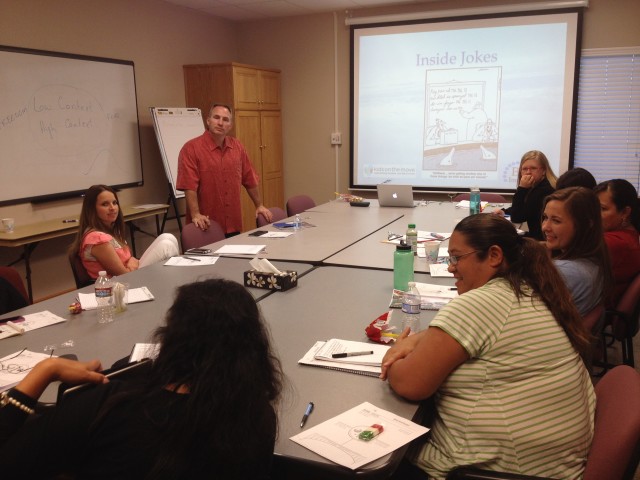
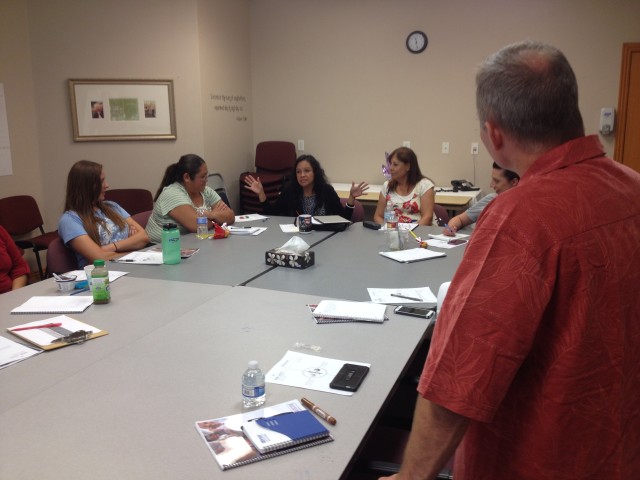
It was refreshing to see how people listened to and celebrated the cultural traditions shared by others through songs, recipes, and inside family jokes. There were several points when we analyzed family stories that had been passed through the generations, and examined the values those stories contain. It was amazing to see how participants recognized the uniqueness of each individual and what they had to share. It was also a great reminder of how anxious people are to be recognized for their contributions.

It was amazing to see how those present recognized the uniqueness of each individual and what they had to share. It was also a great reminder of how anxious people are to be recognized for their contributions.

Another facet of my company’s approach—Broad Imagination LLC—supported by the Cultural Detective® Model, consists of helping clients develop solutions themselves through a facilitated discussion. A Cultural Detective® session is not a passive chat that is forgotten when we all go home. It requires me, as a facilitator, to be present—to truly listen to and push participants for practical solutions. People tend to skirt difficult topics and slip into euphemisms or clichés as a way of avoiding the “elephant in the room.” I appreciated the courage of those who were willing to name their fears, explore them, and address them publicly.

IMG_6318-640x480Some “aha” moments for trainees in this session included:

  1. Common sense is not the same as cultural sense. What we may consider to be general knowledge or a logical conclusion is not shared by everyone. Knowing that different cultures have a unique perspective on any given cultural encounter helps us open our minds and make room for unexpected conclusions.
  2. All countries do not have the same value for “ethnic exoticness” and, therefore, respect. For example, in the USA, one may appreciate a Mexican flag being displayed in a cubicle, while the display of a Canadian flag might not earn the same appreciation. It is far more common that the more “exotic” and underrepresented the culture, the more interest we take in their displays of nationalism and pride.
  3. It doesn’t matter how much time someone has spent living among other cultures, biases persist and are hard to shake. It is one thing to spend time abroad, and another to make the effort to go outside our comfort zones to truly understand another’s cultural Lens.
  4. Language has a way of revealing lack of trust in an organization. When there is low trust, it does not matter what a person does, it can still touch off our sensibilities. Being offended that someone is speaking an unfamiliar language in our presence may cause us to bristle because we suspect that they are talking about us. It may not be that the language is threatening or that there are unsavory nonverbal cues, rather simply the fact that the language is spoken in a low-trust environment results in a negative spiral of lower trust.
  5. All we can really do is observe behavior. When we seek to explain why someone did something or what their motives were, we are venturing into judgment and assumptions. Assuming the best positive intent behind observed words and actions helps mitigate potential incorrect negative perceptions and opens our mind to collaborative solutions.

The Cultural Detective® Model emphasizes three core competencies: Subjective Culture (understanding ourselves); Cultural Literacy (our ability to understand others); and Building Cultural Bridges (the ability for two or more people to collaborate productively across cultures). These competencies are taught in a variety of ways, but I have found that when learners participate in this discovery of cultural identity through provocative discussions, they overcome their anxieties and find that the issues they once believed to be insurmountable obstacles are really stepping-stones to greater appreciation and collaboration.

I love the fact that this particular client’s mission focused on “creating a positive model.” That is precisely what intercultural training provides. The training that Broad Imagination aims to deliver, and which Cultural Detective® helped accomplish, created a model worthy of emulation, one that will serve as a touch stone for future positive intercultural encounters.

Armed with an appreciation for the rich and unique cultural heritage that each employee brings to the table (representing a plethora of values and cultural influences), participants can now implement specific strategies with their colleagues, and try new approaches to the same situations—with improved results, greater personal satisfaction and increased intercultural confidence.

What is Privilege?

Today a diversity and inclusion colleague I highly respect posted a link to an exercise in which participants line up side-by-side and then take a step back for each type of privilege they have not experienced in their lives. 35 types of privilege are listed in the article, and a short video about it is below. It’s a powerful exercise, filled with potentially transformative learning.

It’s also an exercise that I’ve had several successful people tell me over the years was a traumatic experience for them. Why? Because, experiential learning activities require proper debriefing! The woman in my story was actually told, when she was standing alone at the back of the room, “See how inclusive our company is? Even someone so lacking in privilege can be successful here!” Exactly the opposite of the desired outcome for the exercise!

The meaning we make of our experience is in the debriefing! It takes a skillful facilitator to speak up to a CEO, but ethics and learning require it be done.

Please join Daniel Yalowitz (vice-provost for graduate education at the SIT Graduate Institute) and me for a five-day session at the Summer Institute for Intercultural Communication, “Gaining Gaming Competence: The Meaning is in the Debriefing,” and/or a one-day session, “Gaming Agility: Getting More Out of Our Tools.”

We look forward to seeing you there, and to working with you to build inclusiveness, respect, collaboration and justice in our workplaces and communities!

Using the Body to Transform Conflict

Choreography of Resolution

Conflict happens. When different cultures and worldviews are involved, conflict can arise more frequently and, sometimes, more powerfully. It can also be more difficult to resolve or transform.

At the SIETAR USA Congress in Portland last October, Michelle LeBaron conducted a couple of exercises that I believe could be useful to some of our readers as we seek to create cross-cultural understanding, respect, and collaboration. The exercises very viscerally demonstrated how our thoughts, beliefs, and attitudes affect the way we hold and move our bodies, and that something so slight as a shift in our gaze can shift our perspective, opening us up to new experiences.

I have had the privilege of knowing Michelle for about twenty years, as we both teach on the faculty of the Summer Institute for Intercultural Communication. She is a specialist in cross-cultural conflict resolution who teaches at the University of British Columbia, and I greatly respect and enjoy her work.

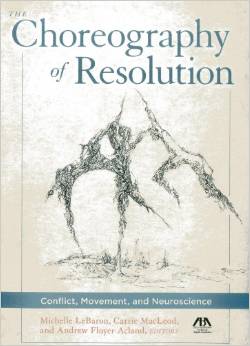
Michelle’s recent research focuses on how the arts can foster belonging and social cohesion across cultural and worldview differences. She is one of three authors of a new book, The Choreography of Resolution: Conflict, Movement and Neuroscience, that investigates how dance, movement and kinesthetic awareness can enhance people’s capacities to transform conflict.

Instructions for Michelle’s activities follow.

Setting up the Activities

How does my body communicate to me? Let’s spend some time learning about our body’s ways of messaging us.
  • When we are out of step, off center, or in resonance, our bodies get our attention.
  • Our bodies help us heal splits, they connect our thoughts and feelings.
  • Our bodies help us connect with others via touch and closeness, depending on our cultural common sense.
  • We have habits and patterns that can be helpful or destructive; our bodies can help us re-pattern our habits and keep our brains plastic.
Shift, conflict resolution, is a physical event.
  • Our bodies shift us personally and interpersonally—”let me step towards you,” “I could breathe more easily,” “a great weight was lifted,” “the knot in my shoulder released.”
  • When we are “right,” we become stiffer, tighter, more brittle. We need suppleness, to be able to see gradations instead of just black and white.
  • Movement helps us realize that small movements can make a big difference. The body can show us the value of incremental change vs. an epiphany, e.g., rarely do we resolve conflict by saying, “He was right!” “Win-win” outcomes are rare; “mostly ok-mostly ok” outcomes are much more common.
Exercises:
  1. Have a group of participants stand and move around the room freely. Instruct them to hold up their arms like a bird, bringing their hands forward just far enough so they can see both their hands. Have them drop their hands but keep that level of peripheral vision and walk around. After doing this for a few minutes, conduct a short debrief about how that felt; how their bodies felt; how they perceived the group.
  2. After doing this for a minute or two, instruct participants to (nonverbally) find a tiger and a horse from among the other participants, and to move around so that they keep the horse between themselves and the tiger. After doing this for a few minutes, instruct participants to derole, and conduct a short debrief about how that felt; how their bodies felt; how they perceived the group.
  3. As a third step, instruct the participants to (again nonverbally) find a new tiger and a lamb from among the other participants, and move around so that you keep yourself between the tiger and the lamb. After doing this for a few minutes, instruct participants to derole, and conduct a short debrief about how that felt; how their bodies felt; how they perceived the group.

Michelle has an article, available online, called Bodies at Work: Moving Towards Alchemy, that might be of interest. In it she says, “The single most neglected truism in mediation, whether virtual or in person, is that it does not happen without bodies. We mobilize to engage and reach toward understanding while literally standing our ground.”

The concepts and activities that Michelle presents combine very well with the activities in Cultural Detective Online. I trust you’ll put them to good use building intercultural respect, understanding and collaboration!

Cultural Detective at the Summer Institute for Intercultural Communication

SIIC 2015The 39th annual Summer Institute for Intercultural Communication (SIIC) offers professional development opportunities for people working in education, training, business, and consulting, in both international and domestic intercultural contexts. One of the premier gatherings of professionals in the field of intercultural communication, SIIC presents a unique opportunity to explore the field and network with others in a stimulating and supportive environment. Cultural Detective is proud to have long played a role in SIIC, and 2015 will be no exception. Sign up now as workshops are filling quickly!

The workshops below will all include Cultural Detective components; the Certification focuses exclusively on the Cultural Detective Method.

11. Gaining Gaming Competence: The Meaning Is in the Debriefing
Monday-Friday, July 13-17, 2015
Dianne Hofner Saphiere and Daniel Cantor Yalowitz

Psychologist George Kelly has suggested that learning isn’t being in the vicinity of an event, it’s the sense we make of it. If this is so, then experiential learning through games and simulations requires special knowledge and skills to derive the most significant learning. This experiential workshop focuses on current best practices and theories for creating, facilitating, and debriefing meaningful intercultural games, activities, and simulations. We will emphasize the critical importance of debriefing, including the ethics of appropriate responses in challenging situations and a variety of successful strategies that you can use in diverse intercultural settings.

Redundancía and Demonstration of Cultural Detective Online
Tuesday July 14, 2015, Evening Session 7-9 pm
Dianne Hofner Saphiere

Redundancía is one of the most powerful nine-minute learning games you will ever play. It builds empathy for non-fluent speakers, helps develop listening and communication skills, and captures the dynamics of power in conversation. It is a tool that can be used in a broad variety of educational and training situations.

Cultural Detective® approaches cross-cultural collaboration as a process, not a set of dimensions. It looks at people as individuals affected by multiple layers of culture, including nationality, gender, generation, spiritual tradition, and sexual orientation.

After we play and debrief Redundancía, the facilitator will provide a short tour of the Cultural Detective® Online system.

3. Facilitating Intercultural Competence: Experiential Methods and Tools
Monday-Friday, July 13-17, 2015

Basma Ibrahim DeVries and Tatyana Fertelmeyster

One of the main challenges for trainers and educators is finding meaningful methods and tools to develop intercultural competence. Actively engaging with conceptually grounded and widely used approaches to intercultural communication competence, such as communication styles, conflict styles, learning styles, the Cultural Detective®, and Personal Leadership®, this workshop will equip you with creative methods for training and coaching for both culture-general and culture-specific contexts. We will focus on effective group dynamics, co-facilitation, adaptation, and strategic management of participants’ and clients’ needs, as well as the creation of your own activities. You can expect to be creatively, experientially, and reflectively engaged.

Cultural Detective® Facilitator Certification Workshop
Saturday and Sunday, July 18-19, 2015

Cultural Detective® is a core method for developing intercultural understanding, productivity, and effectiveness. It serves as a powerful design backbone for courseware, coaching, and teambuilding, or as a stand-alone tool for conflict resolution, learning and dialogue. A few advantages of the facilitator certification workshop include increased ability to:
  • Use Cultural Detective® as a backbone to design, reinforcing learning from a variety of activities and experiences in a coherent developmental spiral
  • Develop competence in a broad variety of international, cross-cultural situations
  • Foster collaboration and ongoing process improvement in organizations by using a consistent method and vocabulary in multiple locations

H. Gaming Agility: Getting More Out of Our Tools
Saturday July 18, 2015

Dianne Hofner Saphiere and Daniel Cantor Yalowitz

During this highly experiential workshop we will participate in a number of different intercultural simulations and games, and then re-introduce, conduct, debrief, or modify them for varying purposes. The day will be fast-paced and high energy. There will be much work in small groups, and participants will take turns facilitating the large group. We will emphasize the critical importance of debriefing and the ethics of proper debriefing, as we illustrate that using different questions and methods can make a single activity produce learning that is applicable to a diversity of purposes. Come ready to engage!

Ecotonos: A Simulation for Collaborating Across Cultures
Tuesday July 21, 2015, Evening Session 7-9 pm
Dianne Hofner Saphiere

The Intercultural Communication Institute now publishes this classic simulation on intercultural collaboration, teaming and decision making. Be sure it’s part of your repertoire!

Powerful and extremely adaptable, Ecotonos breaks the usual stereotypes and barriers. Participants improve their skills and strategies for multicultural collaboration and teamwork.

Ecotonos can be used multiple times with the same people by selecting a new problem and different variables, with each replay offering new and different cross-cultural perspectives.

38. Training Methods for Exploring Identity 
Thursday and Friday, July 23-24, 2015
Tatyana Fertelmeyster

Self-exploration is the most vital learning for anybody who wants to guide others in their identity work. You can expect to be engaged in two days of self-discovery processes, from icebreakers to individual and team exercises, which can be used to explore identity. We will examine different ways to set up and integrate identity exercises into programs that resonate with various work groups, and discuss both the ethical and practical considerations we need to keep in mind when doing identity work. We will address why identity work is essential in intercultural training, leadership development, and team building.

“On the Road with Migrants” Game

IMG_3100World Refugee Day is June 20th, and I am honored to be able to share with you a powerful new game available free-of-charge to help raise awareness and understanding of the refugee and migrant experience.

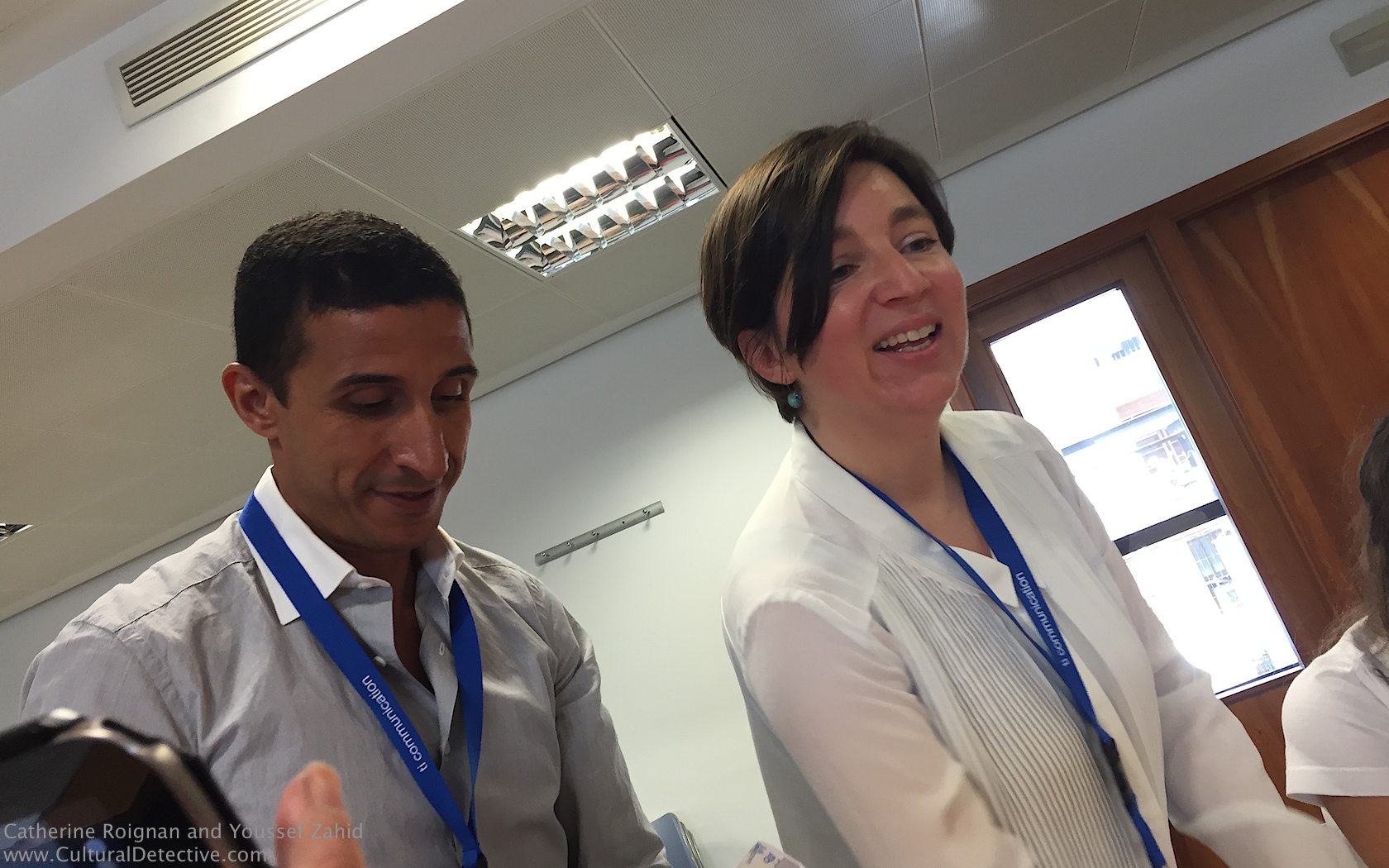
Catherine Roignan, co-author of Cultural Detective Morocco, conducted the game at the recent SIETAR Europa conference in Valencia, and it was my favorite session of the conference. Many people in the room had tears running down their cheeks, and in the days following we found ourselves often talking about the experience we’d shared.

The game is called On the Road with Migrants, and it was created by Caritas France, the Association des Cités du Secours Catholique or ACSC. At the conference we had only a brief 15-20 minutes to play, but it was remarkable!

Groups of us gathered at tables with game boards showing different continents of the world, including Africa, the Americas, Asia, and Europe. Each player had a pawn representing an immigrant, who was identified by name and story. We threw dice, drew cards and moved our pawns around the board according to the instructions on the cards and the dice.

Kudos to Caritas France for their brilliant work on this! It is a terrific game!

The materials are available for download free-of-charge; you print out the cards and boards, and add dice and pawns—1 die and 4 pawns (one color for each of four characters) per continent/board. Our SIETAR Europa group helped with the English translation—this is collaboration with a purpose!

Learn more and download the game in French, English, Portuguese or German: En route avec les migrants. I am leading a team that is translating the game into Spanish.

Please, share with us your resources and ideas for commemorating World Refugee Day and for building empathy for the migrant experience in this world of ours.

Development or Displacement?

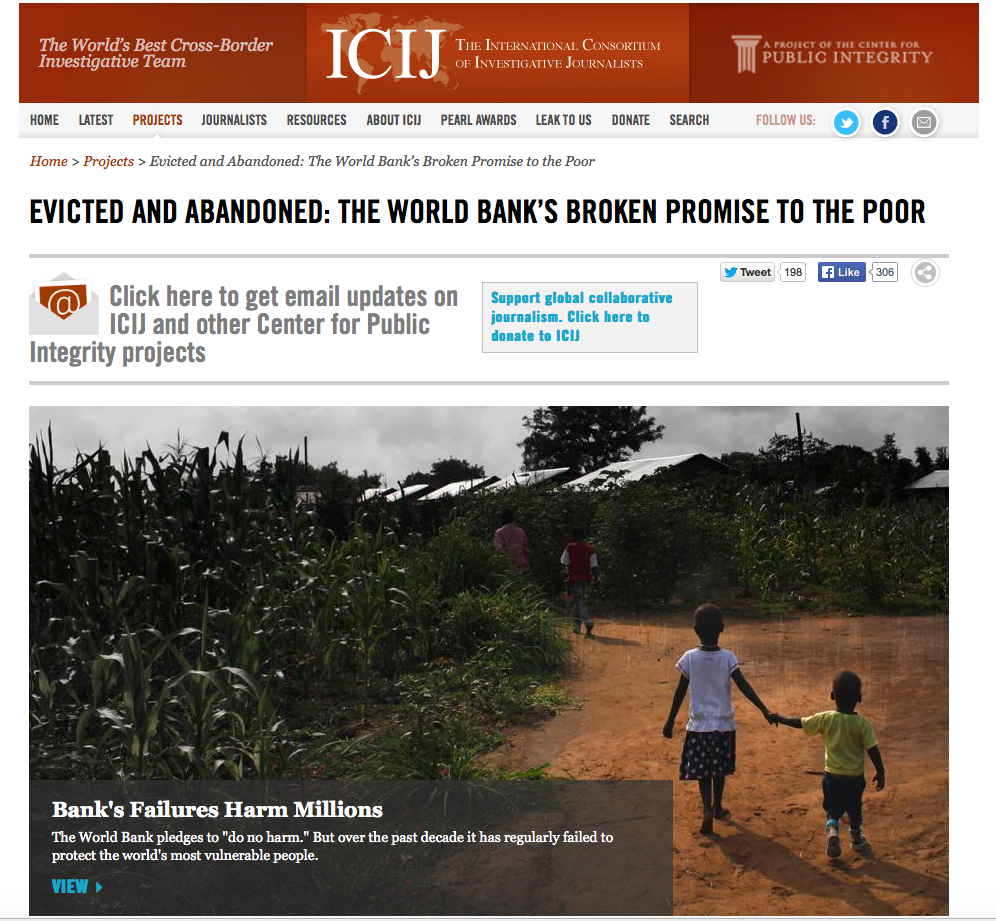
ICIJFormed at the end of World War II to help develop countries torn by war and poverty, the World Bank is dedicated to improving the lives of the world’s poorest: to getting them clean drinking water, housing, food, and basic services like electric power. It is a challenging and complicated mission.

The Bank loans $65 billion annually for what have become increasingly large, high-profile projects such as dams, pipelines, and power plants. Projects of this magnitude can displace whole communities and wreak havoc on the natural environment. Sometimes providing water or energy to a city can drastically reduce the quality of life of rural farmers and fishermen. While the Bank has a clear policy of “do no harm” to people or the environment, all too often the Bank’s projects do negatively impact the environment and the lives of the very people the Bank was designed to help.

“Over the last decade, projects funded by the World Bank have physically or economically displaced anestimated 3.4 million people, forcing them from their homes, taking their land or damaging their livelihoods.”
International Consortium of Investigative Journalists (ICIJ)

Complaints about the World Bank are nothing new; protests have taken place throughout much of my adulthood. Just a couple of weeks ago the International Consortium of Investigative Journalists added data to fuel the fire when it released the results of a year-long research project involving more than 50 journalists from 21 countries. They analyzed thousands of WorldBank records, interviewed hundreds of people, and conducted on-the-ground investigations in Albania, Brazil, Ethiopia, Ghana, Guatemala, Honduras, India, Kenya, Kosovo, Nigeria, Peru, Serbia, South Sudan, and Uganda. They titled the report, “Evicted and Abandoned: The World Bank’s broken promise to the poor.”

The report states that the World Bank has “regularly failed to enforce its rules, with devastating consequences for some of the poorest and most vulnerable people on the planet.” The most common hardship suffered by those in the path of “progress” is lost or diminished income. Forced relocations involve millions; they can rip apart kinship networks and increase the risk of illness and disease. Resettled populations are more likely to suffer unemployment and hunger, and mortality rates are higher.

“From 2009 to 2013, World Bank Group lenders pumped $50 billion into projects graded the highest risk for ‘irreversible or unprecedented’ social or environmental impacts — more than twice as much as the previous five-year span.”
International Consortium of Investigative Journalists (ICIJ)

What causes such a well-intentioned mission to go awry? When the Bank is filled with so many people who are dedicated to serving others and making the world a better place, why do the systems become dysfunctional?

  1. Bias is a human reality, and partnership is tricky. All too often, well-intentioned efforts to serve result in the world’s poorest and most historically oppressed suffering even more. Partly that is because we don’t validate what local communities know, and lenders want “experts” in the lead on projects. No matter how committed the Bank might be to partnering with local communities, bias runs deep and it’s an enormous challenge to be sure the expertise, experience, concerns and insight of all involved are heard and valued. It is a reality ripe for Cultural Detective and other intercultural tools, wouldn’t you say?
  2. Greed and glitz, blind capitalism, and the appeal to ego (and to continued funding) of the big, dazzling projects. Major infrastructure projects look good on a dossier or resumé, and they help ensure that member states will pony up the money to support the Bank’s efforts. According to the Evicted and Abandoned report, a 2012 internal audit found that projects in the Bank’s pipeline triggered the Bank’s resettlement policy 40 percent of the time—twice as often as projects the Bank had already completed.
  3. The gap between international funders and national and local governments. The Bank negotiates with those in leadership positions, who themselves may not only have the welfare of the people at heart. Or, there may be different leaders who control different regions or areas, and who consider an agreement with the national government not worth the paper on which it’s printed. Cultural Detective West Africa includes a critical incident on this very topic of negotiating with national governments when it’s local chieftains who control the territory.
  4. Corruption. Corruption can exist at all levels, including soldiers who have been known to beat, rape, and murder in the course of forced evictions. The Huffington Post reports: “’There was often no intent on the part of the governments to comply—and there was often no intent on the part of the bank’s management to enforce,’ said Navin Rai, a former World Bank official who oversaw the bank’s protections for indigenous peoples from 2000 to 2012. ‘That was how the game was played.’” While there are cultural variations in whether we hire those we know and trust or whether we have public, transparent job calls, there is a line beyond which corruption must be called corruption. For example, relocating poor villagers without restitution so that your son-in-law can own an elite oceanside resort is clearly not true leadership. The Cultural Detective series has some powerful critical incidents about the effects of cronyism and how to honor preferential treatment for family, while also ethically honoring one’s goals, as well as incidents dealing with bribery and other ethical issues (Cultural Detective Global Business Ethics).
  5. The world stage is shifting. There are new development banks on the world scene, competitors to the World Bank, that often don’t have the same social standards. Many say that this is leading to ever-lower standards, and disregard for the people and environments that “development” seeks to serve.
  6. Changing a large dysfunctional system is far from easy, no matter how well-intentioned even a top leader is. I’ve seen this in many of my clients over the years, and in a few corporations I’ve worked in as well. Many felt hope when Jim Yong Kim took over as president of the World Bank in 2012. A Korean-American physician known for his work fighting AIDS in Africa, Kim Yong became the first World Bank president whose background wasn’t in finance or politics. Twenty years earlier, Kim Yong had joined protests calling for a shutdown of the World Bank and accusing it of valuing economic growth over assistance to the poor. Despite expected improvements, “an internal survey conducted last year by bank auditors showed that 77 percent of employees responsible for enforcing the bank’s safeguards said they think that management ‘does not value’ their work. The bank released the survey in March, at the same time that it admitted to poor oversight of its resettlement policy,” according to the Huffington Post article. A 2014 World Bank internal review found that in 60 percent of sampled cases, Bank staffers failed to document what happened to people after they were forced from their land or homes, and 70 percent of the cases sampled lacked required information about whether anyone had complained and whether complaints were resolved.

In my opinion we need the World Bank, just as we need the United Nations. For all their foibles and failures as human-run entities, their missions are crucially important. Incorporating cross-cultural best practices into the manner in which projects are managed, meetings are conducted, and decisions are made is a critical first step. Developing intercultural competence in the Bank’s staff and local partners in an ongoing, sustained manner, can make a major contribution to preventing the devastating downsides of development projects.

Sikh Captain America

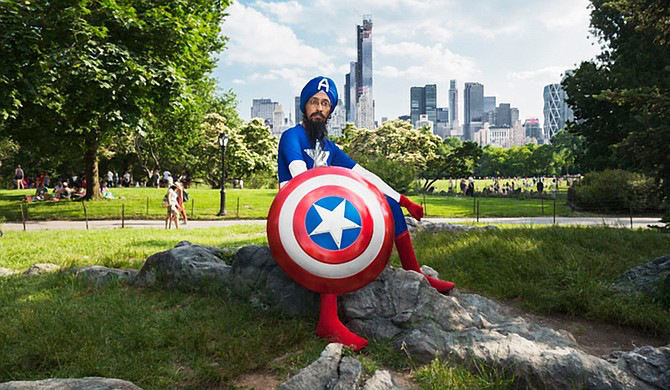
Vishavjit Singh in Central Park NYC as Sikh Captain America, photo by Fiona Aboud

Vishavjit Singh in Central Park NYC as Sikh Captain America, photo by Fiona Aboud

I recently came across the best “Cultural Effective” (yes, that’s a play on “detective”) I’ve seen in a long time! He has my deepest respect, and he has me rolling on the floor laughing, as well.

I found him via an article that had a photo of a skinny, long-bearded Sikh man posing as—wait for it—Captain America! He had his shield, tights, and turban on, and was ready to fight for justice. Of course it got my attention. I absolutely loved it! The article was an interview with Vishavjit Singh, an engineer, writer, educator, activist, costume player, and the artist behind the terrific series, SikhToons.com.

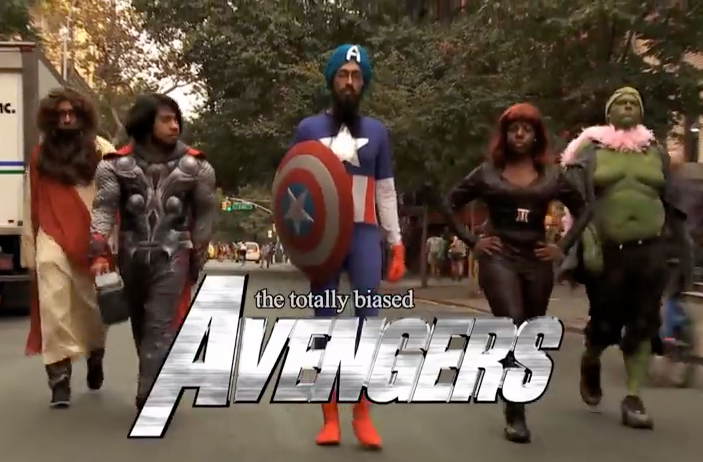
totally biased avengersIf you think Sikh Captain America sounds interesting, how about a complete set of Totally Biased Avengers, fighting for justice and equity in our world? They are the brainchild of the talents over at Totally Biased, and include Asian Thor, Black Black Widow, Gay Hulk, and brown Jesus Christ. You readers know that Cultural Detective is awfully cool and helpful, but these Avengers may have us beat, lol. Do yourself a favor and watch the video below. But be careful, you will laugh out loud.

Getting back to Sikh Captain America, however, you have got to check him out. He, er, rather, his alter-ego, Vishavjit, is doing wonderful work in the world! Take a look at his terrific flip book on turbans, for example. Visit his website or follow him on social media to see his latest cartoons and other ventures. I especially appreciate how he teaches people to respond to bias respectfully, rather than sinking to the same level of ignorance or, worse, anger. He demonstrates patience, intelligence, empathy, humor, and both visual and verbal communication skills—definitely a superhero combination!

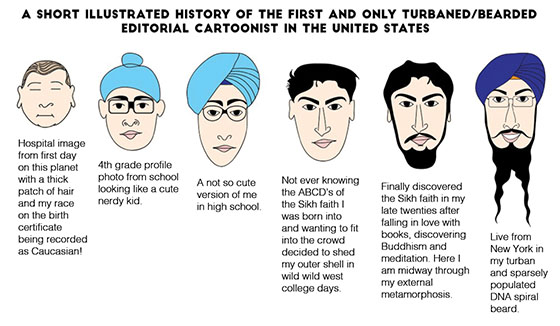
Vishavjit made a cartoon explaining the road he followed to get to where he is today. Those of us interested in the pathways to reconciling Blended Culture identity will no doubt resonate with it. The lightness yet levity with which he operates in the world is especially impressive when you consider he survived the civil unrest that resulted in the deaths of so many Sikhs in India.Autbiography_Perspectives_DA_edit

Way to go, Vishavjit!!!! Bless you! It is a pleasure to be with you on a journey to build intercultural respect, understanding, and justice in our world. And you seem to be having so much fun doing it!

This post is part of the #MyGlobalLife linkup.

Culture and Memory are Biological: New Research

Mateo Zareba 1970People raised in some cultures learn that memory transcends generations, that it is passed on to our descendants—carried on a cellular level. I’ve always intuitively felt this was true and wise, even though in the culture in which I was raised (German-American), I was told that such beliefs were charming but fantastical. Then, here comes scientific research showing that yet another “old wives’ tale” is, in fact, true.

Edward T. Hall, author of some of the earliest books on intercultural communication, had a strong interest in ethology (the study of animal behavior in its natural setting, and sometimes with attention to evolution) and Paul Maclean’s theory of our evolutionary, triune brain. In the words of Dr. John C. Condon, who was a friend of Hall for many years and is currently authoring a new book on him titled, It Goes Without Saying, “Ned wrote in unpublished papers about the connection between culture and biology. He gave considerable attention to culture and communication as embodied and involving all of the senses, and thought other anthropologists gave too much attention to the cognitive aspects.” So many recent scientific discoveries indeed seem to be proving Hall correct! One of those is in the field of epigenetics.

Epigenetics

The fairly new field of behavioral epigenetics offers some interesting advanced insights into what makes us who we are. Epigenetic research shows that tendencies such as preferred smells or tastes, fears and abilities, strengths and resiliencies, weaknesses and deficits—turn out to be not only socially acquired, but also potentially biologically inherited. This means that “culture” and cultural tendencies may be not just communal, but also biological.

The field of epigenetics began, in part, with a simple question in the mind of Michael Meaney: “I’ve always been interested in what makes people different from each other. The way we act, the way we behave—some people are optimistic, some are pessimistic. What produces that variation? Evolution selects the variance that is most successful, but what produces the grist for the mill?”

Decades of research led to the finding that both positive and negative experiences—trauma, love and support—in our own or our recent ancestors’ pasts, leave molecular scars on epigenetic matter that is attached to our DNA. Without a mutation to the DNA code itself, the attached methyl groups cause long-term, heritable change in gene function.

dna2-e1391648749304

Meaney and Szyf had proved something incredible. Call it postnatal inheritance: With no changes to their genetic code, the baby rats nonetheless gained genetic attachments due solely to their upbringing.”
—Dan Hurley, Discover

Such findings give credence to those who say they still experience the pain of genocide or slavery generations later. It also shows us why grandchildren may inherit their grandmother’s sunny disposition. And, it provides us as interculturalists yet another reason to heal ourselves and our communities: if we can foster understanding, respect, justice, and collaboration, perhaps we can prevent these heritable negatives, and, rather, pass stronger, more positive traits down through the generations.

Research is showing that epigenetic changes to genes active in certain regions of the brain underlie our emotional and intellectual intelligence—our tendency to be calm or fearful, our ability to learn or to forget. It would follow then that if we can truly develop intercultural competence in our communities, we can pass on the epigenetic inheritance that will create communities of emotionally resilient people with the intelligence to solve problems such as hunger and homelessness.

A fuller explanation of the science behind this is explained in this three-page paper in Discover magazine. One thing is for sure, this field of study has a long way to go. What started with rats has slowly moved into the study of human behavior. The full benefits of this incredible research may not be seen in my lifetime, but feel confident that generations that follow will be the true benefactors.

Interdisciplinary Teamwork

Of further interest to me as an interculturalist is the fact that this groundbreaking research came about as the result of specialists working in an interdisciplinary team—specialists who had to overcome significant bias and elitism in order to truly hear one another.

A colleague thought that the work of Michael Meaney, a neurobiologist, might significantly dovetail with the work of Moshe Szyf, a molecular biologist and geneticist. Even though both gentlemen worked at McGill University, they only met each other after traveling to Madrid in 1992.

To those of us who aren’t scientists, these two men seem to work in similar fields; they are both biologists, right? Should be easy enough to collaborate? No, their two disciplines are apparently two very different cultures! As Szyf reported to Dan Hurley in an interview for Discover magazine: “[Meaney’s work] sounded like voodoo at first. For a molecular biologist, anything that didn’t have a clear molecular pathway was not serious science.”

The two scientists overcame their biases and stereotypes, and twelve years later they published a landmark paper, “Epigenetic programming by maternal behavior,” in the June 2004 edition of the journal Nature Neuroscience. God bless the nameless colleague who saw the connection between their work!