Layering Lenses: We are All Multicultural Individuals

“As an ethnic minority woman working in a large multinational firm, too often I feel like I have to learn only, to fit in. For the first time since I’ve worked here, I can now see, and explain, the unique and valuable perspective that I have to contribute as well!” she said, her face positively glowing.

The privilege of experiencing such affirming responses from Cultural Detective customers is part of what makes my job so incredibly worthwhile. This woman had just spent time creating her personal Values Lens, using Cultural Detective Self Discovery as well as a selection of Values Lenses from various other CD packages.

While the core of Cultural Detective is its process, which enables ongoing learning, collaboration and conflict resolution, the Lenses play an invaluable supporting role. As shown in the diagram above, one important role the Lenses can play is to help us realize that we are all unique, individual composites of the various cultures that have influenced and helped form us over our lifetimes. We are not “just” Chinese or Brazilian; we are much, much more than a single story, as Chimamanda Adichie so well told us.

In international cross-cultural work such as I’ve done over the past 34 years, too often people limit their definitions of “culture” to “nationality.” Culture goes way beyond nationality. Since by definition culture is the shared norms, values and behaviors of a group of people, culture can also include ethnicity, language group, physical ability or mobility, sexual orientation, or gender identity. More often than not, in my experience, while nationality(ies) tend to have a strong impact on our behavior, professional training, the culture of the organization to which the person belongs, the team culture, their socioeconomic level, generation, their faith or spirituality … all of these influence behavior as much as or more than national birth culture. It’s worthwhile for all of us to know ourselves in all the layers of our cultures: why we are the way we are, how we got to be who we are today. In this way we can better predict how we’ll respond, and better explain ourselves and our motivations to others, powerfully transforming collaboration.

People often ask me, where does personality end and culture begin? As a practitioner, my response is, “Does it really matter? Is there an objective, accurate answer?” We are all unique individuals and we are all also influenced by the multiple cultures in which we’ve grown up, been educated and trained, worked and lived. If we can keep our values and our goals clearly in mind, we can be flexible in our behavior and creative in our approaches, in order to perform at our highest and best in a broad variety of contexts.

More Than A Cross-Cultural Development Tool

As many of you may know, the Cultural Detective Team periodically facilitates online learning events which have been designed to help new users learn or seasoned users refresh their skills around working with the Cultural Detective Method and Values Lenses.

I recently had a follow-up conversation with one of our new users, whose organization is getting ready to expand overseas to Australia. Because I often co-facilitate the online learning events, I always find it enlightening to speak with some of our new CD users and online participants to get their perspective and gauge our facilitation success by their understanding of how to work with the CD Method. It really energized me to hear this particular client’s feedback so I wanted to share!

He said he was really excited by the multiple ways he realized his organization could use the CD Method for growth, in addition to his initial hope of using it to aid global expansion. Needless to say, as he continued to clarify his meaning: by discussing how CD is really an excellent business communications tool that can be incorporated into ongoing associate training regardless of cross-cultural work, and that CD provides a superb process for coaching as well — by the end of our call I was really grinning !

It always feels good when the messages we are trying to send make it effectively across the virtual training waves, but when they are taken to another level and creatively applied to the organizational needs, the time we spend educating is worth it’s weight in gold!

Inside Egypt: Recent Gallup Poll Results

English: Derivative work of File:BlankMap-Worl...

Image via Wikipedia

We have all been captivated by the hope, strength, and commitment to democracy of participants in the Arab Spring. I’ve also long been a “fan” of Egypt, studying Arabic for two years while living in Tokyo, in hopes of relocating to that country (hasn’t happened yet). Thus, I was excited recently to be able to hear Mohamed Younis speak about Gallup’s research in Egypt.

Over the past decade I seem to quote more and more from Pew Research, so I was very happy to see that Gallup has made a major commitment to conduct 100% self-funded, independent polls regularly in 140 countries. This should provide invaluable data for the intercultural field.

The research on Egyptians’ opinions that Mohamed presented had been conducted just after the parliamentary elections, in December 2011. The top findings he shared with us included:
  • Despite recent challenges in the country’s transition, Egyptians are still optimistic that Mubarak’s overthrow will improve their lives.
  • There is overwhelming confidence in the transparency of the upcoming presidential elections and in participation — 86% of those polled plan to vote in the presidential election.
  • Most Egyptians believe SCAF will hand over power to a civilian government after the presidential elections.
  • Islamists and Liberals very much agree on the issues of most immediate concern for Egyptian households, including women’s rights and economic priorities such as inflation and jobs.
 Some other interesting statistics from the polling:
  • 63% of the Egyptians polled felt that protests and revolts in their country have been the result of an indigenous desire for change. Mohamed said he felt this reflected a “hyper-nationalism” and “hyper-distrust” of foreign intervention, which he said can also be seen in the fact that 46% of the Egyptians polled opposed NATO intervention in Libya (compared to just 18% who were in favor).
  • Our group of listeners was largely US American, so Mohamed shared that 41% of the Egyptians polled said closer relations between Egypt and the US would be a good thing. 40% said it would be a bad thing, for a fairly even split on the issue. His interpretation is that this split is closely related to the fact that 73% of the Egyptians they polled do not feel that the USA is genuine in supporting democracy (rather they support their allies and economic interests).
  • When asked “If drafting a constitution for a new country, which rights should be included?” the vast majority of those polled cited freedom of speech, freedom of religion, and women’s rights (ahead of others in the region). The people of Egypt are definitely envisioning a representative government.

During questions and answers, Mohamed told us how some of the Islamist parties had won seats because they had bankrolled local services such as providing burial services or pilgrimages to Mecca for those who couldn’t afford them. He did not feel the rise of these parties reflected a rise in Islamism per se, and definitely not in the desire for a theocracy.

When asked what foreign governments could do to support Egypt, the clear response was: trade not aid, due to the rising sense of independence, nationalism and regionalism he perceives.

Mohamed also talked about the need for education around democracy, and the fact that an overthrow of Mubarak is not in itself going to create jobs. He said many young Egyptians expect a government job, with high salary and a pension, but with 80 million people and much poverty, they can not expect what young people in Saudi might be able to expect.

When asked about the high price of gas sales to the Sinai, and the fact that many Egyptians blame the Camp David Accords, Mohamed responded that even though this has nothing to do with the peace accords, they are nonetheless blamed. Most Egyptians have no interest in re-engaging Israel.

When asked about security for the Coptic church, Mohamed reiterated that most Egyptians very much respect religious diversity, and that the decision to protect churches was not a government mandate but rather an organic, people-led effort.

If you’re interested in hearing Mohamed present the Gallup findings, they do have a video posted and you can also find a download of his slides. He mentioned there was also audio available on iTunes.

Please note that any errors in my report of the data and Mohamed’s comments are no doubt my own.

Other Gallup reports on related subjects available online:

Link

This year’s theme is “Leadership Across the Great Divides: Bridging Cultures, Contexts, and Complexities.”

A great theme for Cultural Detectives to contribute their expertise and share this wonderful tool to leaders globally! If you are interested in contributing you’ll need to act fast as call for proposals will close March 15th!

The 14th Annual International Leadership Association Conference will be held in Denver, October 24-27, 2012.

The ILA seeks proposal submissions that represent the best contemporary thinking about leadership from a diverse range of leadership scholars, practitioners, educators, program directors, consultants, students, and other leaders and leadership professionals. I know there are MANY of you out there that fit this description!

I invite you to visit this section of the ILA website to learn more and to submit.

Link

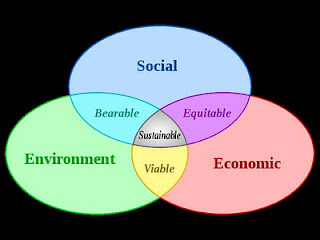
Our whole raison d’être at Cultural Detective is to help build a more inclusive, just and sustainable world.

One of the many wonderful team members we have helping us do that is Cultural Detective India co-author Madhukar Shukla. He teaches and promotes social entrepreneurship in a myriad of ways, and recently did a terrific blog post that I thought you might enjoy, on seven ways to incorporate sustainability into management education.

Please, share with us your thoughts and stories about how you help build a more sustainable and just world.

Much-Anticipated New Release! Cultural Detective: Bridging Cultures

Cultural Detective Bridging Cultures coverIntercultural understanding is essential to working in a global world, though by itself it is simply not enough. There is a critical need beyond awareness of differences: an ability to generate and demonstrate effective, transformative, out-of-the-box solutions to challenging intercultural situations. Since 2004, the Cultural Detective series has successfully enabled people to do just that.

We are proud to announce the debut of our latest offering, Cultural Detective: Bridging Cultures. This new tool enables individuals, teams and organizations to purposefully strengthen mindsets and skills in order to leverage cultural differences as assets. It contains worksheets, exercises, tools, tips, and complete instructions. The learning package is authored by Kate Berardo.

Not every situation can be bridged, perhaps not every situation should be bridged, and the act of bridging, as many things in life, may involve an investment of time and energy. This new set of learning materials begins, therefore, by helping you distinguish whether “to bridge, or not to bridge.”

Cultural Detective: Bridging Cultures will enable you to understand how you tend to react when encountering cultural bridging opportunities, identify more effective strategies for bridging both in-the-moment and over time, and practice putting these skills into action. More specifically, you will:
  • Identify when a conversation is about to spiral up or down.
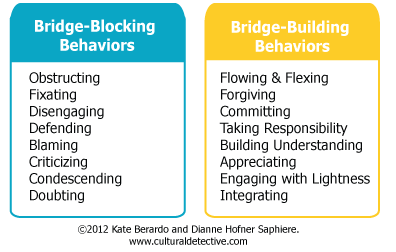
  • Identify “bridge builders” and “bridge blockers” to your successful intercultural communication.
  • Learn techniques for in the moment bridging of differences to ensure conversations spiral upward instead of downward.
  • Develop holistic strategies that consider influencing factors such as history, context, and structure of the interaction.
  • Learn how to expand, filter and test effective bridging solutions.
  • Develop high-impact, creative bridging solutions to both prepare for and repair intercultural relationships.
  • Practice, and receive feedback, on bridging strategies in situations that are real and relevant for you.
Cultural Detective: Bridging Cultures is organized around four main competencies that are essential to bridging cultural differences. They are:
  1. Self-Awareness: Being aware of the mindset you bring to challenging intercultural situations, and knowing both your strengths and blocks in turning such situations into bridging opportunities.
  2. Course Correction: Recognizing points in an interaction where misunderstanding or conflict starts to occur, and responding appropriately.
  3. Holistic Analysis: Being able to analyze complex intercultural situations in a detailed and holistic way that considers a variety of influencing factors, and, thereby, more effective solutions.
  4. Creative Solving: Learning skills and methods to generate “beyond the obvious” solutions to bridge intercultural differences.

While this is not to suggest these are all the skills needed to work effectively across cultures, these are often under-developed abilities that need to be strengthened to enable effective intercultural bridging, and, therefore, are the focus of this package.

SAMPLE EXERCISE

How about an exercise to get you started? The purpose of this activity is to learn what bridging and blocking look like for you, so you can hold a bridging mindset more often.

Let’s begin with some simple definitions.

Blocking Mindset:
  • Focused on own agenda
  • May become defensive or impatient
  • Unintentionally harming the relationship

Think about a challenging interaction in your own life (who, what, when, why) during which you held a blocking mindset. How did you feel? What did your blocking mindset look like? What behaviors did it entail? What outcomes did you achieve?

What do your reactions tell you about yourself and how you might improve your intercultural effectiveness?

Bridging Mindset:
  • Open and curious about others
  • Willingness to meet others more than half-way
  • Belief that others are NOT “out to get us” but that they have positive intentions

Think about a challenging interaction in your own life (who, what, when, why) during which you held a bridging mindset.  How did you feel? What did your bridging mindset look like? What behaviors did it entail? What outcomes did you achieve?

Learn more about Cultural Detective: Bridging Cultures; view a short video on the core Cultural Detective method, which a major software manufacturer credits with a 30% increase in customer support satisfaction; purchase small quantities of the package; or contact Kris Bibler about a site license.