We Are Not (Just) Our Nationality(ies)!

Who of us is a single story? As Chimamanda Adichie so eloquently told us, insisting on a single story is to “flatten” one’s experience. While I am USA born, it definitely irks me when those I know, often interculturalists, insist on defining me purely through that Lens. Yes, I am US American; I claim it. I have also lived overseas half my life; surely that has had no small influence on who I am today? I’m a woman, of a certain age, a mother, a friend. I’m in a committed relationship, I own a small business, I am an immigrant.

We are many things, and different aspects of our identities rise to the fore depending on the context. Shouldn’t intercultural competence enable us to get to know ourselves and others in the fullness of who we are? Two-and-a-half years ago I wrote a post on this blog about the many layers of our cultural identity.

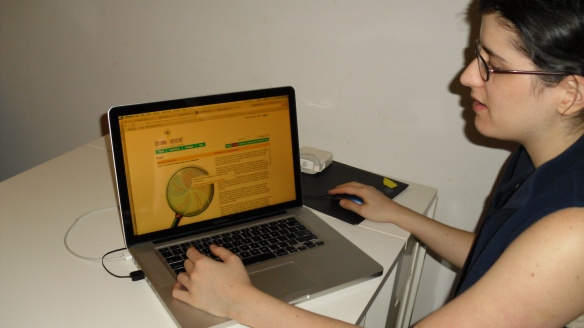
Today, I am very proud to say that Cultural Detective Online makes it very easy to look at how real people interact in real situations, and to reflect on how our many cultures might be influencing us (or others) in a given interaction. Did I react that way because I’m a Mom? Because I’m a Baby Boomer? Or just because I’m me? Cultural Detective Online is a cross-cultural effectiveness tool that doesn’t reduce us to a single story, but rather encourages us to get to know ourselves and others as fully and wholly human. Take a look:

Remember, Values Lenses represent the core values of entire societies of millions of people; they are not intended to be used as yet another “box” into which to stereotype individuals. Try using a Values Lens to gather clues as to why someone may have responded in the the manner she or he did. Then, with perhaps a little more understanding about the other’s positive intent, you can engage in a more effective dialogue, and learn to collaborate more enjoyably and productively.

How do you use the multiple Lenses available to you within CD Online? How often do you upload stories from your everyday work or life, and purposefully learn from them? What creative things are you doing with Cultural Detective Online to further your intercultural competence? We would love to hear your experience!

A Design for Incorporating Cross-cultural Effectiveness into Existing Programs

arton235-88ad2Do you have an existing curriculum or training design and wish you could simply add a cross-cultural element to it? You probably don’t realize how easy and affordable it is to keep your existing objectives and design, while weaving in key cross-cultural dynamics using Cultural Detective. Below is a half-day design using Cultural Detective that works well in a variety of contexts with a variety of topics:

  • In business for global management, leadership across cultures, multicultural or international customer service, multicultural team effectiveness, negotiating across cultures, management and motivation, new hire orientation, expatriation (prior to departure, during the assignment, reentry).
  • In study abroad for students during orientation, their sojourn and reentry; orientations for host families; teamwork and community-building for students, receiving organizations, and host families.
  • For special purposes such as patient-care across cultures, multicultural spiritual communities, and neighborhood community building.

A Sample Half-Day Training Design Leveraging the Cultural Detective® Method

1. Objectives, introductions, agenda (of your chosen topic).

2. “What’s in it for me?” Present your topic in context; why is it important?

3. Skills for [workshop topic, e.g., leadership, teamwork, healthcare, sales, etc.] Across Cultures:

  • Tell a story or show a video of cross-cultural interaction in the context of the [workshop topic]. The playlists and videos on Cultural Detective‘s YouTube channel may give you some ideas.
  • Lead the participants through an analysis of the story (debrief) using the Cultural Detective Worksheet.
  • Once complete, ask participants what they learn from this approach (values, beliefs and “common sense” world view motivate behavior; world views are often different but all are “correct”; similar values can lead to different behavior; different values can motivate similar behavior; bridges must leverage similarities and shared objectives as well as differences/complementarities; bridges must be interpersonal and multidirectional but also organizational/systemic)
  • Summarize: What skills for [workshop topic] can we learn from this Cultural Detective (CD) approach?
  • Apply: How can participants use this CD approach in their daily work?

4. Culture-specific Skills for [workshop topic]

  • Introduce Values Lenses: what they are and aren’t; explain values and negative perceptions.
  • Introduce the Values Lens for each of the cultures in the story you told or the video clip you showed.
  • Ask participants if these values provide them further insight or deeper understanding of the incident. Do the Lenses provide any clues to help them add information to the CD Worksheet debrief? If not, fine. If yes, use that info.
  • Summarize: What skills for [workshop topic] can we learn by using Values Lenses? How can we use the Lens tools well? How should we never use the Lenses? (Lenses are guides to societal norms, and should never be used to stereotype or “box-in” individuals, but rather as clues for learning and dialogue.)
  • Apply: How could participants use Values Lenses in their daily work?

5. Knowing Oneself as a Cultural Being in the Context of [workshop topic]

  • Use a couple of the activities from Cultural Detective Self Discovery and guide participants to complete a Personal Values Lens
  • In pairs or threes, have participants share their Personal Lenses with one another
  • Have them discuss how they could best work together in the context of [workshop topic], to bring out the best in one another.
  • Summarize: What are some best practices for cross-cultural [workshop topic]? What have you learned?
  • Provide the Cultural Detective’s “A Dozen Best Practices for Cross-Cultural Effectiveness.”
  • Apply: What will you do to ensure you perform at your best in a cross-cultural [workshop topic] situation? To ensure you bring out the best in your team/clients/patients?

6. Summary and Application

  • Provide a list of skills for effective cross-cultural [workshop topic].
  • Ask participants what they have learned about themselves today as regards [workshop topic]?
  • What are the top 1-3 skills each participant wants to demonstrate to enhance their cross-cultural effectiveness at [workshop topic]?
  • How will they hold themselves accountable?

What cost does this add to your curriculum? If you are training 30 or more people, Cultural Detective Self Discovery licenses are just US$15 per participant. For Values Lenses, you can subscribe to Cultural Detective Online for less than $100 per year and project Lenses in a group training environment. The subscription price goes down for multiple users, to less than $30 per year per subscriber.

We hope you find this sample design useful, and that you will share with us your tried-and-true designs and curricula for integrating Cultural Detective into educational or training programs. We know you do terrific work, in such a broad variety of contexts, and your designs will no doubt stimulate others’ creativity and effectiveness. Together we can build a more equitable, just, respectful world in which we collaborate for a sustainable future!

Transforming Lives: Education as an Alternative to Violence

AUN “The youth in Nigeria are beginning to speak—some with violence.
They attract attention. But others are also speaking.
The question is, is anyone listening to this plea
for western education, for training, for reform, for help?”

—Margee Ensign, President, American University of Nigeria

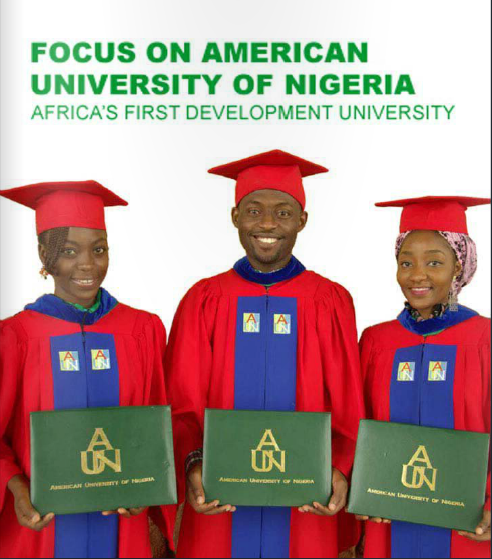
With all the grim news coming out of Nigeria these days, I thought you might want to hear about a little-known educational bright spot in the country: the unique programs offered at the American University of Nigeria, founded in Yola (capital of Adamwa state) in 2005 by the country’s former vice-president, Atiku Abubakar.

Despite Boko Haram’s year-long campaign of terror, including kidnapping over 300 girls from a school, murdering family members, burning villages, and displacing thousands of people, most families still desire an education for their girls and their boys, says Margee Ensign, President of AUN. And AUN provides it.

Both the university’s valedictorian and its graduating class speaker this year are women. The university is one of the leaders in the interfaith peace initiative. It has hired and trained more than 500 female and male security guards to protect the campus and its housing, offering each of them a free education. AUN facilities include a nursery school, primary and secondary school, in addition to the university itself. It recently dedicated a new library that has received international accolades for its efforts to create the finest e-library in Africa.

“Security comes not from our security force, but from our development and peace efforts,” Margee reports. In one of the poorest places on earth, AUN has a program to teach local women literacy and entrepreneurship skills, to enable them to generate income for their families. The university’s Peace Council has created 32 football and volleyball “unity teams” for young people to play in tournaments year-round. None of the young people have jobs, over half have dropped out of high school, and 10% have not even completed elementary school. Sports team members study a peace curriculum focused on building understanding and tolerance. The unity teams help ensure that these youth stay active and involved in their communities—making them less vulnerable to recruiting by terrorist groups like Boko Haram.

This kind of creative programming doesn’t happen by accident. Margee is a tough, dedicated, innovative, and tireless educator. Her extensive experience in administrative and faculty positions in universities in the USA (including Columbia University in New York, Tulane University in New Orleans, and the University of the Pacific, Stockton, California), and her interest and experience in international development in Africa, make her well-prepared to be president of AUN.

“I met with about 80 women in the [AUN entrepreneurship] program…They wanted to learn English, Nigeria’s official language, so that they could read to their children. In modern education, they knew, lay the only hope for the future.”

Margee relishes the challenges of working across cultures. She has embraced the local community culture, while building a university culture that retains important aspects of the US educational experience. After all, this is why parents are sending their children to college at AUN. She’s always recruiting—looking for people with just the right skills, willing to give their time and talent to join the international faculty and staff at AUN, a growing academic community in Nigeria.

The Cultural Detective Team believes it is possible to help make the world a better place through our actions. Yet, it isn’t always easy! Cultural Detective: Global Teamwork investigates some of the challenges involved in managing culturally diverse teams in today’s global environment, even if working in the same geographical location. What is the task? How do we form and maintain a high performing team? How do we manage the terrain or contexts in which team members work? How do we choose the right technology to support the team? How do time and space affect communication? Add culture to this mix, and it is even more complex! These are just the beginning of the challenges Margee faces each day—and she loves it!

All around the globe, dedicated, competent people are working to make a corner of the world a better place—often, not the corner of the world in which they were born and raised. Yet, they are motivated to share their skills in multiple arenas and diverse geographical locations. You probably know people that match this description—or are you one?! We’d be delighted to share their stories or yours with our readers!

With all the doom and gloom in the news, it is good to remind ourselves that generous people are doing wonderful things in difficult circumstances. A recent article written by Margee and published on the BBC.com website offers an often overlooked perspective on the area better known for the rampages of Boko Haram. We invite you to read Margee’s entire article here: “Nigerians defy terror to keep learning.”

World Day for Cultural Diversity

unlogoMay 21st is World Day for Cultural Diversity for Dialogue and Development. It is a day on which we are all encouraged to do one thing to promote diversity and inclusion in our spheres of influence.

What one thing will you do today? Please share!

As for me, besides publishing this blog post, today I’ll be working on designs for two different workshops, one on identity and authenticity in our blended culture world, and the second on strategic development of inclusive organizations. I will be finishing up the editing on a second chapter of a book on cultural differences, and talking to professionals about conducting webinars to promote diversity, inclusion and cross-cultural collaboration. Last night I attended a book signing for a new novel centered around immigration, published by a dear friend of mine. Who knows what else this day might bring?

“Our cultural diversity is a stimulator of creativity. Investing in this creativity can transform societies. It is our responsibility to develop education and intercultural skills in young people to sustain the diversity of our world and to learn to live together in the diversity of our languages, cultures and religions, to bring about change.”
—Irina Bokova, Director-General of UNESCO

Please do share what one thing you’re doing today to promote inclusion, collaboration and justice in our world! Thanks for being on the journey with me and our terrific Cultural Detective team!

Strong, Strategic Global Leadership

leadershipCompanies today need to be good at whatever their main business is, but they also need to be quickly adaptable to change. And, these days, they need to adhere to a strict set of ethical standards that are demanded by an increasingly informed and diverse customer base. Such a tough bundle of abilities requires strong, strategic leadership.

I recently came across an interesting infographic from New England College’s School of Graduate and Professional Studies, and thought you would like to see it. The graphic summarizes the findings of six different studies—from McKinsey, Deloitte, LRN, the Center for Creative Leadership, and Harvard—saying that companies are seeking:
  • Simultaneous growth, cost reduction and increased innovation.
  • Better alignment of organizational values and operational behavior.
  • To create environments in which employees are comfortable voicing their opinions and ideas—inclusive spaces.

The graphic illustrates the four leadership skills needed to achieve these too-often elusive goals. To view the infographic in larger format click here, then click on the image that opens.

1391539920-you-good-leader-infographic

Leadership Skill #1: Ethical Leadership

Interestingly, the top skill identified is ethical leadership—studies correlate business success to ethical initiatives. Aligning organizational values with operational behavior, and ensuring ethical practice across the organization, is all the more challenging given the international nature of business today. Add in the diversity of the worldviews and “cultural sense” of the mobile workforces of this millennium, and things become even more complex.

Let’s face it, employees in different geographies, from different cultural backgrounds, view the concept of “ethical” differently. They operationalize corporate values differently. Cultural Detective Global Business Ethics (CD GBE) is a perfect tool to aid organizations in achieving the alignment that’s needed. The package is designed to help leadership think through the cross-cultural permutations—the ways members of different cultures may operationalize organizational values and ethics—and develop strategy to build alignment.

CD GBE can also be used to help train staff worldwide, so they know how your organizational values translate into everyday operations. It can help open the dialogue among all levels of the organization to ensure your values are understood and implemented consistently—and with local appropriateness.

Leadership Skill #2: Use Your Power Wisely

Power is a leadership trait no matter where in the world you work, whether that power is real or perceived. In certain locations power may be based on title or position in the hierarchy. In others it is based on expertise—but does this mean a person is perceived powerful due to credentials and education, or to skills and experience? The Values Lenses and critical incidents in every Cultural Detective package can help you and your organization learn to project and perceive power wisely, no matter where or with whom you work.

Another key aspect of power resides in the relationships we build, the influence we have on others. Whom we trust, whom we allow to sway us, is perhaps one of the most culturally determined aspects of our lives.

Do we trust the person who speaks plainly (who could be perceived by some as rude or uneducated), or the person who speaks diplomatically (and could be perceived as “brown-nosing” or unprincipled)? Are we swayed by the person who tries to convince us via logic and argument, by someone who shows us by example, or by the person who enthusiastically invites us to use a new service? Again, the Cultural Detective series will help leaders and a global workforce better understand and navigate such differences.

Leadership Skill #3: Manage Crises

The Chinese characters for “crisis” remind us it can be a danger or an opportunity. Leaders can convert crisis into opportunity by knowing themselves and being solidly grounded in their values. A well-rooted tree will sway in the wind and not become uprooted. Cultural Detective Self Discovery is the perfect tool to enable leaders to clarify their personal core values, and to reconcile them with organizational values, the values of the various cultures in which they do business, and the values of other members of their team. Leaders will be better able to manage crises; to anticipate their reactions so they can wisely choose, in the moment, how to respond; and to be better able to explain their actions to others who may not share or enact their values in the same way. Try it out with a pilot group of your leaders, and you will be amazed by the results.

Leadership Skill #4: Cultivate Change

Change is cultivated by providing opportunities for employees to practice what they’ve learned. Cultural Detective Online (CD Online) enables you to provide just that opportunity—teach a skill, then encourage your employees actively practice it for several weeks, using the CD Online system for reflection and learning. Several weeks of on-the-job practice leads to employee retention, and provides a practical method to resolve employee conflicts and encourage understanding.

Change is also effected by leaders realizing that workers’ motivations may be different than theirs. Research in the graphic supports this idea. And, that is the core Cultural Detective process, as you’ve by now surmised—perspective taking. There are two specific packages in the series, as well, to aid in this regard—Cultural Detective Global Diversity and Inclusion, and Cultural Detective Global Teamwork. Wonderfully, both are included in the very reasonably priced (less than US$100/year for access to 60 packages) CD Online.

What are you waiting for? Are you a strong, strategic global leader? Do you want to help others to be? Learn how to use Cultural Detective Online by joining one of our free webinars or get your subscription now!


Are You Nice???

Woman-Holding-Gift-Wrapped-in-Yellow460x300

This is a guest blog post by Carrie Cameron, co-author of Cultural Detective Russia.

Take the following quiz:

  1. Someone surprises you with a beautifully wrapped gift. You’re so appreciative! You…
    1. Tear it open enthusiastically and express great admiration for the object, whatever it is, and thank the giver.
    2. Accept the gift, warmly thank the giver for his or her thoughtfulness, and put the unwrapped gift, whatever it is, on the table behind you.
  2. You’re seated on the airplane next to someone of the same gender who looks nice. You…
    1. Strike up a friendly conversation.
    2. Quietly mind your own business.
  3. You’re at a reception where few people know one another. You…
    1. Approach someone, extend your hand, and introduce yourself.
    2. Find the host who will then make an introduction for you.
  4. A member of your office staff comes in one day looking upset, maybe they’ve even been crying. You…
    1. Approach them in the break room and say, “Are you okay?? Did something happen to you?”
    2. Pretend you don’t notice so they won’t feel embarrassed.

If you tended towards the “A” answers above, your cultural style might be one of “expressive” politeness. If you had more “B” answers, your cultural style may be one of “reserved” politeness. This dimension of culture was introduced by social scientists Penelope Brown and Stephen Levinson, who termed these differences “positive” and “negative” politeness. (To avoid any confusion about the original terms, we use here the terms “expressive” and “reserved,” respectively.)

“Politeness strategies” are the customs, often unnoticed or unconscious, by which we express favorable attitudes toward others. But it is important to remember that not every culture uses the same strategies to do this.

Expressive-politeness cultures generally show good intentions by reaching out actively to others. They have a tendency to reveal emotions before knowing whether the approach is acceptable or not to the other person. Reserved-politeness cultures tend to show good intentions by never imposing themselves on another without first knowing the other person’s attitude.

Both of these cultural styles are polite, but they are different ways of demonstrating it. The same behavior that may be considered polite in one culture could be considered rude in another culture. Remember those examples in the quiz above?

Some cultures traditionally thought of as reserved are British, German, and Japanese, while characteristics of expressive cultures are found in US American culture (especially Southern and African American cultures), Australian, Mexican, and Italian. Which style resonates with you most?

It’s important to remember that not all expressive cultures are alike, and not all reserved cultures are alike. While each culture is unique in how it shows politeness, knowing something about this dynamic can help people be more accepting of unfamiliar styles. It may also help individuals become more aware of how their own behaviors and actions may appear to others. This additional cultural self-awareness allows the opportunity to adjust one’s behavior to actually be polite—from the viewpoint of someone culturally different from oneself.

Check out some of the critical incidents in Cultural Detective Online to see the cultural variations of politeness in action, and learn to navigate them more effectively. Use Cultural Detective Self Discovery to clarify your own values and styles, and develop a better ability to explain yourself to those who are different.

Brown, Penelope and Stephen C. Levinson. 1987. Politeness: Some universals in language usage. Cambridge: Cambridge University Press. ISBN 978-0-521-31355-1

Transgender Hijras Promote Traffic Safety

Long live the hijras! I love this public service announcement, on so many levels! Just had to share.

A Rainbow with a Streak of Gray: Demographic Trends in the United States

dreamstimecomp_39321275

Photo ©Dreamstime.com

“Demographic transformations are dramas in slow motion. America is in the midst of two right now. Our population is becoming majority non-white at the same time a record share is going gray. Each of these shifts would by itself be the defining demographic story of its era. The fact that both are unfolding simultaneously has generated big generation gaps that will put stress on our politics, families, pocketbooks, entitlement programs and social cohesion.”
—Paul Taylor, Pew Research Center

As a US American interested in diversity issues, I was intrigued by the recently released Pew Center report based on the book, The Next America, examining demographic changes taking place in the United States. Pew reports are well-researched, present interesting and useful data, and never fail to give me a different perspective on the world in which we live.

The United States is changing demographically faster than many of us realize. I remember a few years ago, when working for an educational institution that offered diversity courses, a city official from California called to say they needed help because the “minority” population was soon to be over 50%! Today, I rarely hear the term “minority,” and this study definitely shows why.

“In 1960, the population of the United States was 85% white; by 2060, it will be only 43% white. We were once a black and white country. Now, we’re a rainbow.”

Immigration is the main force behind this rainbow, according to the report. Large numbers of immigrants during the late 19th and early 20th century were from Europe; today only 12% are European. Since 1965, the USA has seen more than 40 million immigrants; about half are Hispanic and nearly three-in-ten are Asian.

As this shift in demographics has taken place, so have shifts in attitudes. According to Mark Lopez, Director of Hispanic Research at Pew, ““Intermarriage is playing a big role in changing some of our views of ethnicity.” Currently, 15% of marriages are between people who are not of the same race or ethnicity—that is, one out of six marriages. Talk about a “melting pot!”

As these marriages produce children, a new set of issues arises.  One example: categories of race and ethnicity on government forms are less likely to fit or be meaningful. What do you call yourself when you are confronted with choosing just one part of your interracial or interethnic (Blended Culture) identity?

This situation arose recently when my son (White) and his wife (African American/White) had to complete a form to enroll their three-year old son in pre-school. Although one-quarter African American, my grandson looks very White, like his dad. There was lengthy discussion about what race to choose: African American or White. There were no other options, available for them—they could only choose one “race”—and they were uncomfortable with either choice as it didn’t reflect his heritage accurately.

Not only is the USA becoming more ethnically and racially diverse, but our population is aging. According to the study’s author, “10,000 Baby Boomers a day will turn 65—every single day between now and the year 2030.” That’s a lot of old people!

Contrast their lives with that of the first generation of “digital natives”—people for whom the online world has always existed. Their experience is shaped in part by their technological comfort and ease, while many of the older generation struggle to simply use their cell phones.

However, more than a “digital divide” exists among the generations in the USA. Growing up in different times and having radically different experiences means that the generations don’t always see eye-to-eye on lifestyle, issues, or politics. Yet, these days, a record number of US Americans—over 50 million—live in multi-generational family households, according to the report.

While this may seem perfectly normal to some of our blog readers, it is a new reality in the US. In the past several years, a stigma became attached to returning home after moving out for school or a job. To many, an adult “boomerang” child returning home to live with their parents was “clearly” a failure or had problems of some sort. No longer! Due to the poor economy, it is now seen as quite practical to live together when one can’t find a job or has limited (or no) means. And, as much as they might like each other, differences in opinion can cause stress in a household.

“It is a challenge for our society how we navigate this change at a time when the young and old don’t look alike, don’t think alike, and don’t vote alike.”
—Paul Taylor, author  The Next America

Cultural Detective has tools to facilitate change by helping users to better understand some of the different cultures making up the USA today. First, however, as intercultural professionals worldwide know, before one can understand others, one needs to understand oneself.

Cultural Detective Self Discovery helps people discover their values, preferences, and the cultural influences driving their thinking and their actions, and explore their cultural identities. It can be used as a stand-alone exercise or as a powerful component in sessions focused on cultural awareness, diversity and self-development, or as a process to facilitate teambuilding and organizational synergies.

Cultural Detective Generational Harmony provides a glimpse into four distinct generations in the USA, each with differing experience, expectations, and lifestyle requirements. By understanding these distinctions, one can be better prepared to recognize and manage issues that may arise due to generational differences in the workplace, while at the same time meeting organizational demands and objectives.

Cultural Detective African American explores the complexities of African American culture in the USA today. It investigates the values and communication styles of this community in an effort to bridge cultural gaps and support more inclusive groups, communities, and workplaces.

Cultural Detective Latino/Hispanic introduces this heterogeneous, multiracial group residing in the United States, people with cultural, historical, and ethnic roots in countries of Latin America. Comprising the fastest-growing ethnic minority group in the United States, Latino/Hispanics now number over 50 million, and account for one-out-of-four public school students in the US.

Cultural Detective USA offers insight into some of the key values that are representative of the dominant societal norm, in large measure Protestant, Anglo-Saxon values. While there is a wealth of ethnic, racial and cultural diversity within the USA, one needs to be aware of the power of the dominant culture in influencing behavior, as well as the specific values of other cultural groups, when learning about the USA.

Cultural Detective Blended Culture investigates those who hold multiple frames of cultural reference within themselves. This may include such individuals as internationally assigned employees and their families, immigrants and refugees; those who have grown up as members of ethnic minority communities within a dominant culture; and people raised by parents of different cultural backgrounds.

Cultural Detective Bridging Cultures helps take cultural awareness and savvy to the next level by looking at how to develop effective bridging strategies for working across cultures. Recognizing that cultural understanding is essential but not enough, this packages focuses exclusively on connecting cultural similarities and bridging cultural differences effectively to reap the benefits of diversity.

Any of these packages sound interesting? Cultural Detective Self-Discovery and Cultural Detective Bridging Cultures are available for purchase through our website. The other packages mentioned are available for handy reference, 24/7, as part of Cultural Detective Online. What are you waiting for? Use Cultural Detective to investigate the cultures shaping the USA and our world, and Get A Clue!

New Ways of Working Together: Technology, Innovation and Intercultural Collaboration for Africa

ngoFrThis is a guest blog post by Jolanda Tromp, co-author of Cultural Detective Global Teamwork.

In February 2014, n’GO magazine published a review of the Cultural Detective Method. For readers of n’GO not familiar with Cultural Detective, the article provided a way for them to learn about this unique intercultural-competence tool, grounded in developmental theory, yet simple to use and very practical.

n’GO magazine is free, published online in French and Dutch, and offers insights, reflections, examples, and tools around behavioral and relational aspects of intercultural contact. Its goal is to search for the truth behind prejudices and blockages, and provide positive alternatives by interviewing experts and academics. n’GO is produced by the Belgium NGO Echos Communications, which runs a variety of projects aimed at helping to redefine the Euro-African dialogue by showing that Africa participating in the world community is value-added. They work to demonstrate their belief that the Internet is a communication tool that can help strengthen the relationships between the actors in the North and South. They believe the Internet may change the course of action in the field of international cooperation.

This vision and effort is clearly part of many African progressives’ point-of-view, as witnessed by the young social innovator and blogger, Mac-Jordan Degadjan, blogging about African and Ghanaian technology and innovation:

“The world’s impression of Africa is hopelessly outdated. Africa’s technology and innovation boom is rapidly expanding. The penetration of the internet and mobile technology is radical and unprecedented. Across African cities, technology innovation hubs are mushrooming and playing a central role in the fledgling technological and entrepreneurial innovation scenes, all over the African continent.”

For the computer-savvy, Generation-Y Africans, Cultural Detective Online (CDO) can be a great resource, because it is accessible from anywhere as long as you can get onto the Internet. CDO combines 60 of the series’ culture-specific and topic-specific packages into one integrated and easy-to-use system, including access to over 400 critical incidents involving people from 90 cultures and spanning multiple industries and professional functions. Subscribers receive a personal virtual intercultural coach that is available anytime, anywhere, online.

Currently, the Cultural Detective series includes culture-specific packages on Cameroon (by Emmanuel Ngomsi), West Africa (by Emmanuel Ngomsi and Seidu Sofo), and South Africa (by Kathi Lyn Tarantal and Denise Hill).

Cultural Detective: West Africa looks at core values of the 14 countries and 250 million people of the region, ethnically heterogeneous and mixed with two other non-indigenous cultures, the French and the British. The critical incidents describe individuals from several different backgrounds including a Nigerian, a Senegalese, and a Ghanaian.

Cultural Detective: South Africa provides insight into this country that is both first world and third world. There are eleven official languages and a multi-coloured landscape of people. The values of these different groups are contrasting, and CD: South Africa explores both black and white cultural values. It contains critical incidents with individuals from several different cultural backgrounds, including an Afrikaner, a Northern Sotho, a Zulu South African, an Ndebele South African, and a Tsonga South African.

Clearly, the work of describing African cultural values has only just begun with the writing of these brave African pioneers. President Paul Kagame of Rwanda at the World Economic Forum, in Davos said: “The major problem I see is that Africa’s story is written from somewhere else and not by Africans themselves. That is why the rest of the world looks at Africa and Africans and wants to define us. They want to shape the perception about Africa. The best thing we can do for ourselves is own our problems, own our solutions and write our own story.”

The n’GO editor and journalist who authored the article about Cultural Detective, Sylvie Walraevens, is based in Waterloo, about 20 km south of Brussels, Belgium. She put out a call on the Internet for people to interview about the Cultural Detective Method in a LinkedIn forum. I replied, explaining that I am not an expert on African culture, but work as an online sparring partner and coach for Global Teamworkers and managers; I am in the Dutch section of the ISO Norm Committee for assessing the usefulness of an International Norm for International Business Collaborations; and a certified Cultural Detective facilitator.

We discussed the options via email and arranged to meet in Amsterdam for the interview. The interview went very smoothly in my favorite flex-workplace—the lobby of a 5-star hotel with WiFi, directly opposite Amsterdam central station. After the interview, we talked about the African economy and the fact that it is actually growing fast despite the global economic downturn.

We agreed to end the article with a call for African authors to chart their culture’s values and write about them in order to facilitate successful intercultural collaborations. Emmanuel Ngomsi, Sylvie Walreavens, myself, and—we are sure—many others, offer our assistance. We are curious to find out which African experts will take on the challenge of writing Cultural Detective packages on all the African cultures that have not been charted yet!

You can register for the n’Go newsletter here: [FR ] – [NL ] and read the article about Cultural Detective (French and Dutch only) here: [FR ] – [NL ]. For additional information about Cultural Detective Online, register for a free webinar and receive a complimentary 3-day trail subscription. For information about authoring a package, contact Cultural Detective.

Using Cultural Detective Online in a College Class

BCCUNYhoriz_PMS288_PMS286A guest blog post by Dr. Elisabeth Gareis (Communication Studies, Baruch College, City University of New York)

With many colleges increasing their online course offerings, there is a great need for training tools that can be used as segments in online classes. Last fall, I was looking for such a tool for my graduate class in International Business Communication. In previous face-to-face renditions of the course, I had used Ecotonos with great success. When I couldn’t find a simulation game for online asynchronous settings, I decided to try the Cultural Detective Online (CDO).

One course assignment involves student groups investigating a country of their choice through readings and interviews, focusing on sub-topics such as oral and written communication, business customs, and business-related news events. In the end, the groups create webpages on their country, complete with narrated slideshows on each sub-topic.

Last fall, I assigned the CDO only for exploratory purposes. Before the students embarked on their adventure, I gave a screencast lecture on training tools, covering differences in type (e.g., simulations versus games), giving examples of specific ones (e.g., Barnga, Ecotonos, Diversophy), and discussing different uses (e.g., training versus coaching). The students had various levels of exposure to intercultural communication: some had overseas experience and others were new to the subject matter. None of them had used a training tool before.

Ellissa Corwin (COM 9656 Fall 2013)
The students all obtained a one-month subscription to explore CDO as an example of a training tool, and, at the same time, to get started on their country research. Their assignment was to view the video tutorials and then to complete the CDO package for their target country (i.e., to explore all sections, including the Lenses, proverbs/sayings, daily life examples, negative perceptions, and all incidents). In the end, they analyzed and discussed the experience. Here are some representative responses:

  • “The interface is easy to use.”
  • “The dashboard is a great way to orient the user at the start of their cultural investigation. It can be very helpful to write out what your aims are when doing research.”
  • “I think the Cultural Detective does a very good job of outlining primary Lenses. I particularly enjoyed the in-depth materials associated with each lens and learning from the interactions. I also appreciated that they include both positive and possibly negative perceptions of each trait.”
  • “I like how the Lenses are organized. I especially like the proverbs and daily-life examples.”
  • “I found it useful to begin learning about my group’s particular country and a good starting point for further research.”
  • “This type of in-the-moment skill-building practice really helps reinforce learning and build user confidence. The Cultural Detective also helped bring our textbook to life and clarify learning.”
  • “I liked the fact that all of the site’s sources are listed. This can really help someone who wants to dive deeper into a particular country.”
  • “Very organized and user friendly!”

Exploring the CDO gave the students insight into the world of intercultural training and coaching, and provided them with quality information on their target country. As it is self-paced, it is easily integrated into asynchronous online college classes.

I am using CDO again this semester, but this time a little differently. In addition to exploring the tool, students’ final presentations will include using their research findings (readings and interviews) to design an activity that is modeled after the incidents in CDO. In other words, each student will contribute an issue from his/her sub-topic to a scenario or dialogue, which will then be analyzed by other classmates. Not only will this better integrate CDO into the course, it will also allow students to directly apply their learning.

Cultural Detective Online is a great tool, and I recommend it highly. Students greatly enjoy their learning via the CDO.

A note from the Cultural Detective Team:

Please contact us if you’d like to learn how to integrate CDO into your classroom experience.

Coming soon—exciting new CDO functionality will allow members of a “group” (e.g., a class or a team) to collaboratively create critical incidents, which can be submitted to the group administrator (professor or team leader) for approval, and then shared with other group members for analysis and discussion.

Have you joined us for a free webinar to see how Cultural Detective Online can be integrated in your academic or business setting? We hold them twice a month—attendance is limited so register now: Cultural Detective Online Webinar