A New Tool and a New Mashup on Gender Relations

Global Gender Intelligence Assessment and Cultural Detective Women and Men
Guest post by Donna M. Stringer

Using these two instruments in combination could have ground-breaking results in the area of gender relationships in the working environment (and beyond). And if we can improve gender relations, it would be nothing less than a global revolution!

ggia_full_logoThe Global Gender Intelligence Assessment is a new online tool created by Barbara Annis and Alan Richter. It is an outstanding resource that measures gender attitudes and competence in the areas of Insight (Head), Inclusion (Heart) and Adaptation (Hands). These three constructs are combined with scores for Self, Others and World, giving you a 3 x 3 grid of nine gender-related competencies—each with interpretation and developmental suggestions. There are two versions of the assessment: one for general staff and one for leaders.

The most useful aspects of this assessment are the Interpretations and Personal Action Planning sections. These areas offer detailed, practical, and “doable” suggestions for building competencies. Many assessments provide “Developmental” suggestions that are so general that they read like “can’t we just get along.” The GGIA developmental options are different. They are well thought out and so varied that individuals from a wide range of cultural perspectives can find culturally effective and appropriate ideas to implement.

The assessment is also affordable at $11-$15/per person depending on numbers purchased. For further information contact Alan Richter.

coverWomenMenCulture Detective: Women and Men is, of course, not a new tool—it  was developed as the first non-national Cultural Detective package in 2007 and revised in 2010. One of the many advantages of CD programs is that they help people understand culture and their own responses to cultural differences. Exposing people to CDs is a developmental process: it is non-judgmental and allows participants to see the world through a different lens, shift perspectives, and identify ways to bridge the differences that might otherwise create conflict or mis-understanding. CDs take a general understanding and problem solving approach that allows cultural differences to be seen as interesting issues to “solve.” The Cultural Detective Women and Men allows people to explore gender differences in a manner that is fun but not personal. Once individuals are able to approach gender in this manner, they are ready for the next step: examining their own individual gender competencies.

Gender MUThe Gender Mashup!

As a developmental process, it would work beautifully to use the GGIA as a follow-up to the CD Women and Men. Having experienced a non-judgmental process of understanding and considering both one’s own and the “other” gender, and identifying bridging behaviors, most individuals would now be ready to complete an assessment that allows them an interpretation of their responses followed by outstanding strategies for personal development suggestions.

Regardless of one’s occupation, organization, or country, gender is a primary diversity characteristic—and one that virtually everyone encounters in life. As I have traveled and worked around the globe, virtually every organization has gender as a diversity and inclusion issue. Using these two instruments in combination could have ground-breaking results in the area of gender relationships in the working environment (and beyond)—and if we can improve gender relations, it would be nothing less than a global revolution!

Written by Donna M. Stringer, Ph.D.

Film Review: Machuca

Machuca movie posterHow about watching a terrific film from Chile? Our local rental place had a closeout a few weeks ago, and one of the DVDs we happened upon was Machuca, a 2004 film by Andrés Wood. What a terrific find!

I am often asked about status and class in Latin America by those who come from more egalitarian societies. Navigating class differences has been one of our greatest challenges living in México; neither life in the US, Spain, nor Japan equipped us for the expected and often desired separateness here. While a period piece, Machuca viscerally illustrates the class differences and tensions of the era, and I would recommend it as a worthwhile resource.

Machuca takes place in Chile during the final years of Salvador Allende’s government — the first Marxist ever to be elected head of a democracy — and ends about the time of General Augusto Pinochet’s military coup d’état. Taking place during this period of heightened civil unrest, this is fundamentally a story about the friendship of two boys: Gonzalo and Pedro, who come from opposite sides of the river and opposite ends of society. Thus, we get a micro and a macro-level taste of class tension.

Gonzalo is a “junior,” the son of a wealthy family who attends St. Patrick’s, an elite Catholic boys’ school. He is frequently forced to accompany his mother during her afternoon trysts. Pedro (Machuca) lives in a shanty town, and is the son of the woman who cleans house for Gonzalo’s family. Pedro is one of a group of “scholarship students” that the head priest has invited to St. Patrick’s in an attempt to create a bit of equity in society.

The movie shows how difficult it is for these new students to integrate, and there is a memorable bullying scene in which Gonzalo defends Pedro. We gain insight into the home lives of both boys, proving of course that richer or poorer, life is not all roses.

The backdrop to the main story is, of course, a Chile in turmoil. Gonzalo’s own parents seem to come down on opposite sides of the issue, his mother content as a socialite, his father at least to some degree believing in the need for increased equity. The street demonstration scenes capture the anger, the power, and the fear of the time.

We witness the backlash of the parents at school to the priest’s “communist” tendencies, because he attempts to integrate groups they feel best remain separate. We glimpse the resourcefulness of Pedro’s “uncle,” who makes a living selling flags to both sides: the Marxists and the traditionalists. We hear about land redistribution and industry nationalization through radio broadcasts and posters in the streets. In movies like Machuca, stories about young friends trying to make sense of the world around them, there is usually a girl. In this case, she is the girl with whom both boys learn how to kiss. And she is most definitely and passionately a socialist.

Watching this film you will learn a lot about Chilean history, the ingrained status in Latin America, and the difficulty in bridging rich and poor and vice versa. If you’re anything like the members of my family, you’ll be talking about it for days afterwards. I’d urge you to get out your copy of Cultural Detective Chile, particularly the Chilean Values Lens, to aid your discussions of the movie. Enjoy! And please, let me know what you think!

Using Social Media to Rebrand Culture

What's the story...?

What’s the story…?

This is the sixth in a series. (#1#2#3#4 and #5 are here.)

Stories can be made to say what we want them to say. I went shopping this evening and, at the checkout, the cashier, seeing the bandage on my nose, asked what happened to me. To her horror, I explained it this way: “A couple days ago, I had an encounter with a young man, who had me held down and cut me with the blade that he had in his hand.”

Her reaction naturally changed to one of amusement and empathy, the moment I mentioned that the young man in question was my surgeon, and the immobilization was being strapped to the operating table! There is no untruth in the first story, but the discourse it calls forth depends on who the listener is, and evokes a substantially different discourse with the omission or addition of a few details. Had I told the same to my policeman neighbor, I’m sure a different automatic discourse would have sprung up for him, and he would have started to ask different questions, though, knowing him, I am sure he would have had a hearty, guys-will-be-guys laugh at the end. The key to the ultimate meaning of stories is intentionality. I was taking advantage of my strange appearance to lighten my pain and have a little fun. Understanding intentionality is the key to cultural competence, not just recognizing difference and learning to adapt behaviors to the situation.

How can new media be used to shape discourse and create culture?
We are forever telling stories, in old as well as new media. So, let’s move on from the question we discussed last time about what messages new-media themselves may bear. Let’s turn our attention to the second question, namely, how we use these media, deliberately or unconsciously to create, change or maintain certain forms of discourse as cultural building blocks. Can, for example, the interactivity of social media play an important role in reshaping cultural discourse and cultural identity? What has been done, accomplished, what is being done to create the stories that articulate today’s and tomorrow’s cultural realities?

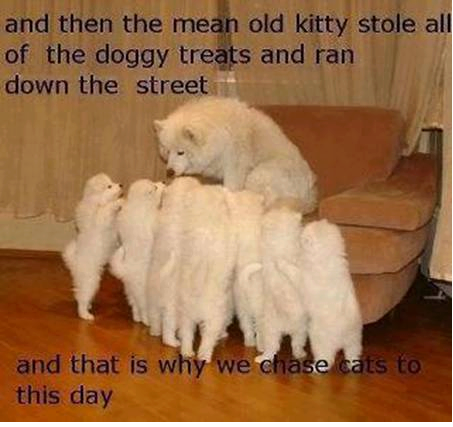
Creating stories to do this is not new. We’ve created identity stories throughout history and we do it all the time. Recently a friend of mine sent me a photograph of mother dog instructing seven puppies, with a story which ends: “…and then the mean old kitty stole all of the doggie treats and ran down the street, and that is why we chase cats to this day.”

mean-kitty

This doggy story is humorous, because it is so true. Patriots and dictators, oppressors and the oppressed each create their own story, not only of who they are but of how they are defined in reaction to others, usually seen as “the bad guys.” They expect mothers and teachers to pass it on. In the USA, when the Berlin wall came tumbling down and the Communist bloc shrank, after a brief period of euphoria, we started to need a real enemy to feel good about ourselves. There had to be some bad guys, some rustlers out there. Though it is not essential, identity myths pick up currency by emphasizing superiority, whether racial, moral, military or cultural as well as by identifying outside threats.

Branding a Nation
Nonetheless, to discuss what is being done, or what we might do with contemporary media in this respect, it might be instructive to look at a classical case of rebranding, not of a product, but of a nation, something that occurred at a time when mass media could largely be described in two words: newspaper and radio.

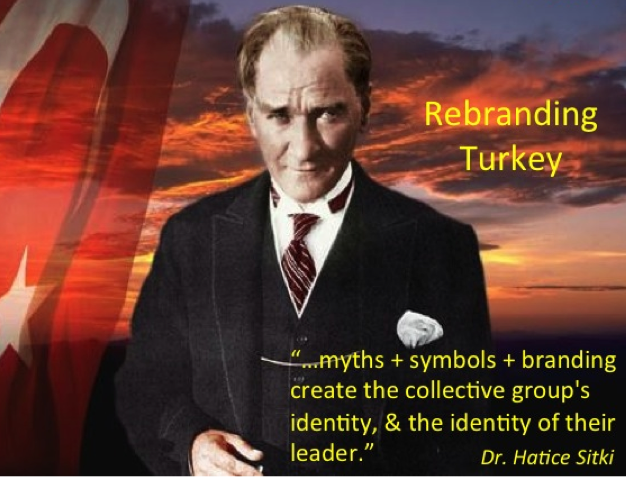
Dr. Hatice Sitki, a colleague in Australia, has done impressive work on the marketing and branding of national identity. If you think marketing is not relevant to cultural identity, think again. The whole idea of marketing is to create a discourse, which people take as their reality, a discourse that usually deals with them, sometimes with them as citizens, but more often today as consumers. Using a national example can tell us about commercial branding as well. What Hatice did was study the mythology, the brand, the discourse of Turkish identity, and connect it to the search for European identity, a topic that has been surfacing from time to time since the creation of the European Union—usually in times of stress, like the current financial crisis.

The most interesting part of Hatice’s work was the description of how Kemal Ataturk (literally so renamed as “Father of the Turks) selected from the myths the stories of origins and heroes that existed in Ottoman lore, and recombined them, rephrased them into a discourse, which gave a “real” national identity to Turks. There had been a tribal identity, an ethnic identity for Turks before this, but in the Ottoman Empire there was no sense of a specific Turkish nationality or citizenship. One belonged to the Empire. It was just that way.

So Hatice took a look at the marketing of identity not only historically, but also in terms of the future potential of marketing to the EU. She went on to explore how some of the current myths could be rebranded, so that the discourse about Turkey not being really European might be shifted, even integrated with the myths and discourse of European identity. After all, if one really looks at the Ottoman Empire in European history, it’s played a powerful role. It was frequently an ally of European countries against each other. World War I was only the tragic final act in this drama. Yet today Europeans are struggling with, “Can it be a part of Europe? “Can it join the European Union?” European resistance to the idea, among other factors, seems to be fueling a return to stronger Islamic identity after three quarters of a century of existence as a proud secular republic in the Islamic world.

attaturk

When I first explored ideas about the flow of culture in a webinar addressed to a study group of the Project Management Institute, one of the participants from India remarked, “I think there’s a hidden morale in this presentation. At the PMI we need to understand the cultural difference, find common ground for all stakeholders to work as one.” How true, because if we think about image of the river, it’s carrying, integrating all these different waters, from all their different sources into one powerful flow toward the sea, and if we think of ourselves as collaborators in an organization, the diversity that our colleagues bring, whether personal, ethnic, or wherever it originates, as a resource.

The metaphor of the river is valid for understanding organizations as well as for exploring group and individual identity. Training multicultural teams to work in global environments, many of whom work almost entirely virtually, requires not only constant exploration of cultural discourse but efforts to shape a “third culture,” the agreed set of discourses by which team members will collaborate. Cultural Detective: Global Teamwork is an example of a tool that was developed by a virtual team to help teams identify and meet the key challenges of virtual collaboration. While such teams often have their own platforms, it is not uncommon for members to use social media to explore and solidify their connections with each other. In an academic context, it happens not infrequently that while students are provided with online tools by the university, many will eschew these for Facebook and other social media when they actually get down to working together on a common project, creating their group culture together on such sites. While we tend to think of deep culture as enduring and resurgent, we should not turn a blind eye to the functional but transitory cultures that are easily built as well as dismantled by new media tools. Even here it is a matter of sharing and shared discourse. If anything, impermanence may be a hallmark of much digital culture where the object of new media utterances is not to “build a monument more lasting than bronze” (Horace, Ode 3.30) but to learn habits that enrich the everyday with timely discourse for what we do to best meet our needs.

The river of discourse is a rich, rich resource. We need to know how to tap into its fullness. If not, the likelihood is what I described toward the end of the Culture’s Flow poem. It will flood over us, wash us away. I often think of colonialism and now rampant globalization as the human, cultural equivalent of burning down the rain forests. Most of us only see the destruction of environments from afar, but at the micro level what is going on is the extermination of species or discourse that will not return, resources that might play, in fact, very important roles in our well being.

We know that humans have created some very dangerous, even genocidal cultures, discourse about others that enables us to kill them en masse. Yet these realities and their consequences stem from our constructed discourse. Once we realize that we are enmeshed in all of these worlds of discourse, it asks us, how can we look at this, how should we look at what’s real, and, what’s really real may be simply our capacity to recognize different discourses for what they are, stories created in time to serve a purpose, hopefully to serve a good purpose, hopefully to help us succeed and survive in our environment. But so many of them have been dangerous; have been deadly, so it’s about getting the point that realities are ours to create.

What do new media bring to this challenge? A great freedom to question. Unparalleled contact with the diversity of others. A great liberty to seek out new discourses of identity. A vast universe of opportunities in which to discover, engage and enroll kindred souls. A limitless playground for new ideas and a place to grow up, space for our discourses to be questioned, to be reshaped, and to be created in unprecedented ways. The opportunity to create a critical mass of discourse that might just change some of the seemingly endless games we have been playing. The tools are there to shape our primitive discourses in ways that will humanely and constructively prevail. This will not happen by itself, nor will the media per se deliver this message. Rather it is we, the storytellers and our intentions, that will make a difference. Do new media guarantee change? Certainly, but not without risks. It is up to us, to our intentionality and our ability to share it that will determine the direction and results of that change.

This post originally appeared in the blog of the Center for Intercultural New Media Research and is provided with the assistance of its editor Anastacia Kurylo.

Entre Dios y Alá

(English follows Spanish)

Si pudiera resumir las noticias de las últimas dos semanas, podría sin duda mencionar dos nombres: Benedicto XVI y Hugo Chávez.

El primero desafió toda una organización, un sistema, una tradición. Hoy que escribo esta nota los noticieros hablan del humo blanco saliendo de la Capilla Sixtina que anuncie que hay un nuevo Papa. No me alcanzo a imaginar todos los cambios organizacionales a los que se enfrenta la Iglesia Católica para adaptarse a este nuevo cambio de innegable impacto mundial.

Por otro lado, tenemos la muerte del presidente de Venezuela Hugo Chávez. Los análisis políticos por supuesto han sido los protagonistas de su partida. Pero no podemos dejar de lado ese aspecto que nos une en este espacio de comunicación.

En medio de la sobre-exposición de la noticia en los medios, incluyendo detalles de su vida, su gobierno, sus frases célebres, visitas a países socialistas etc, está una noticia que este lado del mundo apenas menciona.

La foto del presidente de Irán, Mahmud Ahmadineyad, expresando sus condolencias a la madre del presidente Chávez ha causado no menos que indignación en su país y los países que siguen los preceptos islámicos.

Lo que para nosotros puede parecer normal, entendible y simplemente humano al brindar consuelo en un abrazo a alguien que vive el dolor profundo del duelo, en otra latitud no es más que el irrespeto a lo que ordena su ley, la cual indica que no debe haber contacto físico entre un hombre y una mujer si no es de su círculo cercano.

No siempre podemos entonces actuar como actúan otros, es decir a la tierra que vamos hacer lo que vemos. No siempre podemos adaptarnos a otro entorno, a pesar que podamos sentir la inclinación natural a ello.

Las culturas abiertas podríamos describirlas como permeables a otras culturas, donde son fácilmente identificables y permitidos otros valores, costumbres, tradiciones siempre y cuando prevalezca el interés común sobre el particular. Por el contrario, las culturas cerradas son herméticas y poco o nada tolerantes a las demás. El caso que enfrenta al presidente Ahmadineyad es una muestra clara, y atizado además, por comparar al presidente Chávez con Jesucristo.

Se unen de nuevo alrededor de Dios, de nuestras creencias religiosas los dos hechos noticiosos que mantienen en vilo al mundo entero.

Católicos y no católicos pendientes del Vaticano. Entre tanto el mundo Islámico levantando su voz de protesta por un hecho a todas luces, para ellos totalmente inadmisible hasta para un jefe de Estado.

Entre Dios y Alá, entre Dios y Dios. Hasta la próxima.

Between God and Allah, translation by Dianne Hofner Saphiere

If I were to summarize the news of the last two weeks, I could without doubt mention two names: Benedict XVI and Hugo Chávez.

The first challenged an entire organization, a system, a tradition. Today as I write this note there is news in the white smoke coming out of the Sistine Chapel announcing that there is a new Pope.  I can’t begin to imagine all the organizational changes that confront the Catholic Church as it adapts to this new change of undeniable worldwide impact.

On the other hand, we have the death of Hugo Chávez, the President of Venezuela. The political analyses have of course been the protagonists of his departure. But we can not ignore that aspect which unites us in this communication space. Amid the over-exposure of the news media, including the details of his life, his government, his famous phrases, and his visits to socialist countries, etc., lies a story that this side of the world barely mentioned.

This photo of Iranian President Mahmoud Ahmadinejad, expressing his condolences to the mother of President Chávez, has caused no minor indignation in his country and in the countries of the world that follow Islamic principles. What to us may seem normal, understandable, and simply the human act of providing comfort with a hug to someone living the deep pain of grief, in another latitude is nothing more than disrespect to the order of law, which indicates there should be no physical contact between a man and a woman not within the same inner circle.

We cannot always behave as others do, that is to say, doing what we see in the land to which we travel. We cannot always adapt ourselves to another environment, although we might feel the natural inclination to do so.

Open cultures could be described as permeable to other cultures, those in which other values, customs, and traditions are easily identifiable and permitted as long as the common interest in the matter is maintained. By contrast, closed cultures are hermetic, and not so tolerant of others. The case facing President Ahmadinejad is a clear case in point, further stoked by comparisons of Hugo Chávez with Jesus Christ.

Our religious beliefs join again around God, in the two big news items that have captivated the world. Catholics and non-Catholics watching the Vatican. The Muslim world raising its voice in protest to an act committed openly, which for them is completely inadmissible for a Head of State.

Between God and Allah, between God and God. See you soon!

Cantemos las mañanitas

(English follows the Spanish)
Para muchos de nosotros los que hemos pasado alguna temporada de nuestra vida en un punto geográfico de América Latina, escuchar Las mañanitas nos hace brincar el corazón. Las hemos tomado prestadas de la tierra azteca, de México lindo y querido y nos hemos apropiado de más de una versión para celebrar el día de cumpleaños.

Pues bien, cantemos hoy Las mañanitas al unísono para este blog y el proyecto que Cultural Detective ha emprendido con el fin de llevarnos de la mano en el camino de la interculturalidad. En uno de sus versos dice  “despierta mi bien despierta, mira que ya amaneció, ya los pajaritos cantan la luna ya se ocultó”.

(Una versión con un personaje italiano que conocí como argentino, el Topo Gigio)

Que salga el sol entonces para todos y podamos seguir enriqueciendo este espacio, este encuentro de mundos, ideas, sabores y colores. Que podamos entretodos establecer el entendimiento de las mentes que puedan traer juntos a los pueblos.

Felicidades Dianne, Felicidades Cultural Detective.

Let’s Sing Happy Birthday

For many of us who have passed a portion of our lives in the geographic area that is Latin America, hearing “Las Mañanitas” brings joy to our hearts. We have received the song on loan from the land of the Aztecs, from “Mexico beautiful and beloved,” and we have appropriated more than one version of it to celebrate our birthdays.

So, today, we sing Las Mañanitas in unison for this blog and for the Cultural Detective project, which has been undertaken to promote our journey towards interculturalism. In one of the song’s verses it says, “Wake up my dear, wake up, look what has risen, the birds are already singing and the moon has disappeared.”

The above video is a version of the song with Topo Gigio, an Italian personality that I thought was an Argentino.

I trust the sun will come out for everyone, and that we can continue enriching this space, this meeting of worlds, ideas, flavors and colors. I hope that together we can establish an understanding of the minds that brings people of all communities together.

Congratulations, Dianne, congratulations Cultural Detective.

Oldie but Goodie: Comprehensive Expatriate Support System

Expat-Flow

Moving overseas is an exciting yet stressful time for all involved: the person transitioning to a new position, the expat’s family who is relocating, and the organization—both the office dealing with the loss of a valued employee, and the receiving organization. We all know there are a myriad of details involved in preparing someone to work abroad, but where to start and what to include?

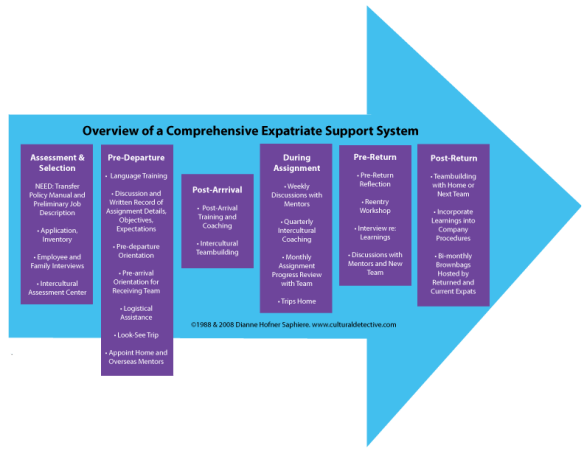
Years ago, when Cultural Detective Online was not yet a glimmer in anyone’s dreams, I put together the above guide for a client. You are most welcome to use it if it can be of assistance (click through to view a larger version), though I ask that you retain the copyright and url of the original.

I was proud to work with that client. They valued their international assignees, desiring that the employee and the relocating family become stronger from international assignment, and that both the receiving organization and the organization as a whole learn and grow. They thus asked me to “map” a process to help make that happen.

Today, Cultural Detective Online is an excellent tool to use with expatriates, relocating families, and receiving teams and organizations, at each stage of the relocation process. It offers a process as well as information at your fingertips — anytime, anywhere — to help build bridges across cultures, to help each of us better understand those we work with, and to get to know ourselves better.

“The Cultural Detective Online product is a sound investment for my work as an intercultural and relocation coach. I suggest to my clients to get a subscription for themselves.”
—Maartje Goodeve, Nascence Coaching, BC, Canada

How might you update the process in the graphic above? How could you use Cultural Detective Online in combination with other tools, approaches and your own facilitation to enhance expatriate performance?

Intercultural Work—Stuck in its own past? (#1 in a series)

GSportrait

Dr. George Simons has long been researching the stories that make us who we are. In this series of blog posts he will be leading us in an examination of critical challenges that can lead us toward a fresh vision of culture. We will explore how we come to terms with our inner and shared identities and learn about how we construct the realities that shape our now and our future world.

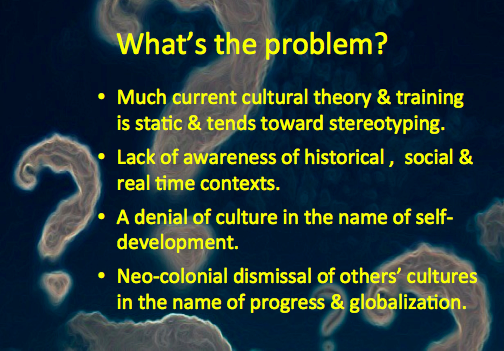
Despite a tide swell in intercultural communication and worldwide immersion in social media, the current field of intercultural communication itself seems static. This blog post articulates five ways in which the field appears to be moving too slowly for the world around it.

1. Essentialism
The word used for the kind of intercultural intervention that leads in the direction of stereotyping is called “essentialism.” One tends to assume that a certain person must inevitably share certain cultural characteristics or behaviors if they come from a particular group, ethnicity or culture. Saying that I am from the USA or that I am German or Nigerian makes a whole mess of things stick to me as stereotypes. Of course, we do have cultural characteristics, but who has them, to what degree as well as when, how and where they’ll be expressed is what we don’t know, and is what we need to learn about each other as we work together. Moreover, we belong to multiple cultural circles that may define us in variable, even contradictory ways. Interculturalists loudly condemn stereotyping but seem less adept at escaping from delivering cultural information.

There may be benefits to identifying with a group despite or in some cases because of the stereotypes, though all too easily an identity is painfully imposed on us. A little story to illustrate this. Nordstrom is a big department store in Los Angeles, in the San Fernando Valley. A young woman in my class at Loyola—let’s call her Yuko—told me how, when working there, a woman making a purchase asked, “Honey, where are you from?” (Yuko had identifiably Asian features in her face). The young woman said, “Oh I’m from right here in the Valley. The woman went on, “But where did your parents come from?” Yuko answered, “Oh, they came from the Valley, too.” The woman persisted, “But where did your grandparents come from?” Yuko answered, “Oh, they weren’t from the Valley, they were from Fresno [another California town].” In fact, Yuko’s Japanese-American family predated the many European immigrants that came at the end of the 19th and first half of the 20th century. Essentialism looks at “difference” as “not belonging.” Yuko suffered this kind of pain repeatedly just because she didn’t look like “everybody else.”

2. Ignoring context
A lack of awareness of the social and particularly historical contexts is another way the intercultural thinking and practice can remain static. A lot of people’s feelings about those different from themselves is not simply a matter of their looking or sounding different, and may be anchored in a story of things that happened in the past. Remember, for example, when Yugoslavia disintegrated into smaller states, how politics called into popular sentiment old memories of “what they did to us” 50 years ago, 500 years ago, 1000 years ago, and so on. These memories live in a culture and affect how we react to individuals in other groups. This is to say nothing of social context, particularly now. Since the financial crisis, we’ve been struggling, in a more conscious way than most of us have done in our lifetimes, with those who have and those who have not. This also provides subtext for our communication with each other.

Questions

©George Simons, blog.culturaldetective.com

3. Cultural denial
A lot of people I work with, particularly many younger people today, have or are encouraged to have an attitude that expresses itself as, “I don’t have a culture,” or “I’m a global person, a global citizen.” This suggests that prioritizing individualism, so strongly promoted in the West, makes it in a way shameful to be connected to our past, to have identifiable roots. This is true not simply of third culture kids (TCK’s), some of whom have been jetsetters while in the womb, but of others, and seems to be part of the educational process. All too many people, and not exclusively the young, have suffered by or are fearful of being labeled, of being stereotyped, as we mentioned above, or they feel a need to disassociate with what feels like the oppression of their origins, their family, religious faith or local context. Having cultural features seems a liability to them, a restriction of freedom. Inability to address this inclination is another point of stasis in intercultural work.

4. Implicit colonialism
An even bigger issue is a kind of lingering sense of better-than-thou-ness, and noblesse-oblige do-goodism that results in a kind of hidden chauvinism, a myopic view of other cultures that too easily infects intercultural efforts and holds them back. Part of this involves interculturalists’ need to come to grips with colonial history and its enduring effects in political and economic terms , not just hand wringing. We are fully aware of having a long history of European colonialism and US colonialism that doesn’t take other people’s cultural and environmental ownership seriously. So we come to enlighten them, to bring them progress, to bring globalization, of course to sell them our products. The need for cultural savvy makes it an important commodity today and this situation begs us to take a larger view. But even more important for intercultural professionals are discovery, exploration and treatment of the psychological residue of colonial thinking in themselves. Failing this, it is hard to imagine our efforts moving forward in the ways we like to think that we intend.

5. Dyadic dimensional thinking
Traditionally, in the boilerplate of the intercultural profession, we studied values in what are called “dimensions.” This was our starting point, something for which we are very grateful to the original researchers, people like Geert Hofstede and Edward Hall. In their observations and studies they raised questions and classified the answers. For example, they identified people as more or less “individualistic” or “collective,” “masculine” or “feminine,” “direct or indirect,” according to how people in different cultures reported their likely behavior given similar situations. Their work made us aware of the fact that there were areas of life in which different people had different ways. Yet, on the other hand, the resulting value labels were a product of Western academic mentality, an attempt to understand other people on our own terms rather than on theirs. This may have been the key to the antechamber of understanding, but leaves us standing in front of a second locked door.

In sum, five road blocks, often in combination with each other, that challenge intercultural thinking and practice. Will social media change our static habits? Perhaps so, because they regularly confront us with evidence from around the world, literally at our fingertips, that may challenge these notions. Yet confirmation bias, our ability to see only what we know or expect to see and make otherness fit into it, is likely to be operative in the online world as well. What think you?

This post originally appeared in the blog of the Center for Intercultural New Media Research and is provided with the assistance of its editor Anastacia Kurylo.


Cultural Detective African-American Now Available!

coverAfAmThe Cultural Detective team is very pleased to announce the release of one of our most requested and highly anticipated packages — Cultural Detective African American! It is now available both in Cultural Detective Online and via site license.

Cultural Detective® African American explores the complexities of the culture and examines the values and communication styles of this community in an effort to bridge cultural gaps and support more inclusive groups, communities, and workplaces. It joins other domestic diversity packages in the series, including Cultural Detective Generational Harmony, Cultural Detective Women and Men, Cultural Detective LGBT, and the soon-to-be-released, Cultural Detective Latino/Hispanic.

Below, a message from package co-author Kelli McLoud Schingen:

ALI 1I facilitated an Advanced Leadership Institute for the Southwestern Black Student Leadership Conference January 17-20th, and thought that this would be the perfect place to pilot the Cultural Detective African American package that I co-authored with Patricia M. Coleman. There were 25 male and female upper-level students from universities all over the U.S., prepared for an intensive three-day workshop with me on leadership skills and cultural self-awareness. I spent the first day building trust and laying the foundation for the weekend. I facilitated activities that took the students on an exploration of their leadership styles, emotional intelligence, personality types and finally, cultural self-awareness.

ALI 2On the last day I Introduced the Cultural Detective, the purpose and intent of it, and the extensive research and in-depth process that Patricia and I went through to develop the tool. Understandably, the students met the tool with a great deal of suspicion. To say they were skeptical would be a gross understatement. I implored the students to stay with me and trust the process. The students started by working on the critical incidents in the package. I then asked the small groups to present on their findings. They were surprised that there was so much to consider and really convinced that the only valid perspective was the perspective and values of the African American “character” in the incident. I spent a great deal of time sharing how we view things through our own cultural lens, and then I unveiled the African American Values Lens. It didn’t take long for the students to be sold on the process and the values as I walked them through the positive and negative interpretations of each value. They seemed to be having fun and were fully engaged. Many of them commented just how grateful they were to FINALLY have words to describe their feelings, experiences, and cultural norms that they’ve inherited. They laughed at themselves and each other as they peeled back the onion of culture, and were grateful for the opportunity to explore cultural difference in this way. When I asked if they felt that the tool was an authentic representation of African American values they said, “Absolutely Ms. Kelli!”  Then I thought, “I guess we’re ready for launch.”

SIETAR Florida will honor Black History Month 2013 with a dialogue entitled, “Am I Black or African American?” via teleconference.  Featuring co-authors of Cultural Detective African American, Kelli McLoud-Schingen, Immediate Past President of SIETAR USA, and Patricia Coleman, President of SIETAR Florida. Please join us on Wednesday February 13, 2013 at 13h Miami time (1pm EST/12 CST/11MST/10PST).
Please RSVP by February 11th.

Access the event via conference line:

Dial-in Number: (559) 726-1000
Participant Access Code: 857895


Two Values Lens Stories

©Cultural Detective, from Cultural Detective Self Discovery

©Cultural Detective, from Cultural Detective Self Discovery

The beauty of Cultural Detective Values Lenses?

A colleague was just telling me this morning that he had a class of students from France and Italy, and one Thai woman. The students had worked with Cultural Detective Self Discovery; they had reflected on their personal values and history, and created personal Values Lenses.

Next my colleague had walked through the French Values Lens with the class, and asked them to compare their personal Lenses with the national Lens, the country in which all of the students were residing and studying. The French students perceived a lot of resonance with their national culture, and the foreign students identified their experience in France as well.

Next my friend walked through the Italian Values Lens, and got the same reaction.

Finally, when he went to the Thai Values Lens, he realized he knew next to nothing about Thais, and that he couldn’t even pronounce the words on the Lens. Thus, he elected to ask the Thai student, blindsiding her or putting her on the spot if you will — he asked her to come up and introduce the class to the Thai Values Lens, which she had only just seen in that moment!

This Thai participant led the other students, and the professor, on a journey into Thai culture that took their breath away! She shared examples of Thai behavior and their meaning that built the other students’, and the teacher’s, respect for who she is and where she comes from.

Such can be the power of a Values Lens. It is not a stereotype. It captures the central tendency, the norm, of a group of people, in terms people can identify with. Thus, it is usually quite easy for a representative of the culture to introduce the values in a Values Lens, using stories from everyday life in that culture.

Second example, much shorter:

So many people nowadays tell us they are global nomads, TCKs, Blended Culture people. And they are. And, this does not mean that they don’t have a culture; it means they have more cultural strands woven into their identity than perhaps the average person!

The second story involves one young woman, who insisted she was nothing like her national culture. She was an individual, a global citizen: culture-less, in a way. In looking at her national culture Values Lens, she exclaimed out loud during class, “Oh my God! I AM Slovak!”

The goal of Cultural Detective Values Lenses as tools is to facilitate dialogue and understanding, both understanding of self and others, and thus enable collaboration that brings out the best of each of us. Please help us make that happen, by sharing your tips, techniques, and designs, and by encouraging best practice.

Our Culture on the Firing Line

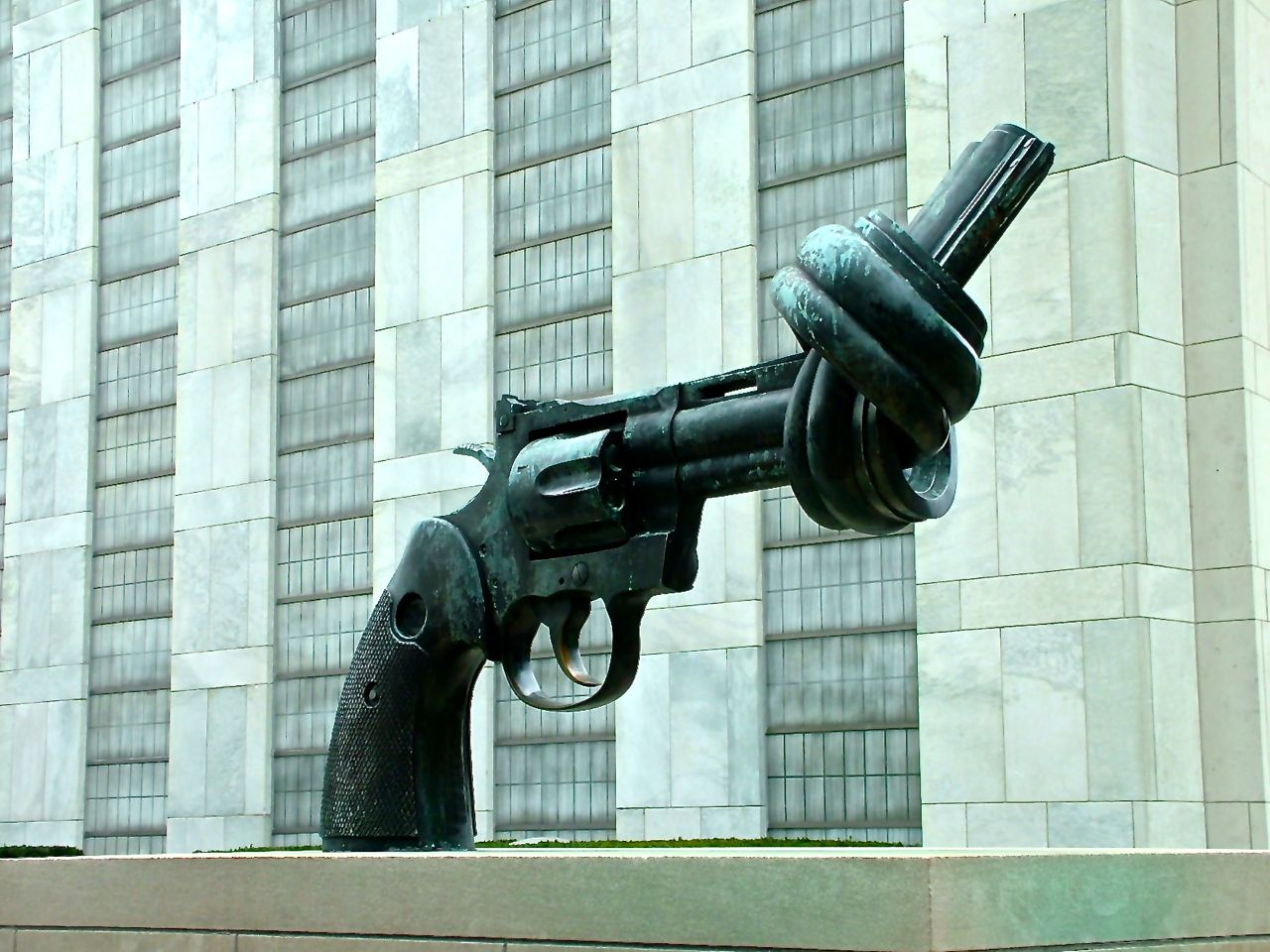
UN gun sculptureWe are very pleased to be able to share with you another guest post by the insightful and talented Joe Lurie, Executive Director Emeritus, University of California Berkeley’s International House. Sadly, the topic is again, or still, timely. We published his first post on this subject, “Language Under the Gun,” in February of 2011. Let us work to change the culture of anger and violence by this time next year!

As introduction to the piece, allow me to share with you Joe’s message, urging me to publish his post sooner rather than later: “If it can be published earlier, given the ‘heat people  are packing’ now in the current ‘ballistic’ and ‘explosive’ reactions to Obama’s proposals, that would be more likely to ‘hit the bull’s-eye’ in the current environment.”

With only 5% of the world’s population, US Americans now possess about 50% of the world’s guns. Is it any wonder then that mass shootings in the US have skyrocketed in the last decade? And in the wake of the grotesque massacre in Sandy Hook, gun sales have spiked dramatically. No wonder that sales of kids’ bullet-proof backpacks have soared, or that our culture more than ever is drenched in the language of guns!

As I watch left and right wing politicians and pundits “up in arms” on TV, battling in a “cross-fire” of blame, each side looking for a “smoking gun” to explain or cast blame for horrifying gun-related catastrophes, I’ve become increasingly aware of how our culture’s preoccupations with guns are reflected even during innocent “shooting the breeze” conversations.

We often value the “straight shooter,” yet we are wary of those who “shoot their mouths off,” and those who “shoot from the hip” or glibly end an argument with a “parting shot.” We caution colleagues to avoid “shooting themselves in the foot,” and counsel them not to “shoot the messenger.”

Without suspecting what drives our language, we are “blown away” by adorable photos of loved ones. At the movies, many audiences are thrilled by “shoot- em-up,”  “double barreled action” scenes, or are excited by car chases where actors “gun” their engines.

I often ask friends to “shoot me” an email and I’ve encouraged job seekers to give an interview their “best shot” and “stick to their guns” during salary discussions. And if a job is offered, I might congratulate them for doing a “bang up” job.

In sensitive business negotiations, I’ve advised patience, urging clients to “trouble shoot” solutions, but to avoid “jumping the gun” and to be aware of “loaded” questions. To get the biggest “bang for the buck,” I’ve recommended bringing the “big guns” to the table. We look for “silver bullet” solutions, hoping for “bulletproof” results. And when success is in sight, we say: “You’re on target,” or “you’re going great guns!”

We encourage entrepreneurial risk taking, even if the project doesn’t have a “shot in hell.” Just “fire away” when you make that “killer” presentation, and if your idea is “shot down,” don’t be “gun shy.” Just “bite the bullet” and go at it again, with “guns blazing.” Don’t be afraid to “shoot for the moon,” even if it looks like a “shot in the dark.”

Having worked as a university executive with students from more than 80 countries, I’ve noticed that students from abroad are struck by the violent language in our songs and films, and they hear it bleeding into our political discourse. Many have asked me in amazement why it is even necessary to state that guns and ammunition are banned from university residence halls. Yet, “son of a gun,” 26 colleges in three states permit guns on college campuses. And gun liberalization legislation for colleges is in the “cross hairs” in at least nine more states.

I’ve heard staff and students alike stressed by an approaching deadline, instinctively describing themselves as being “under the gun.” Sometimes my colleagues have described emotional co-workers as “loose cannons” or having “hair trigger” personalities. And when a student has gone off “half cocked,” psychologists have advised employees to “keep their powders dry” and to review “bullet point” guidelines for handling volatile personalities.

In the same way that the US is flooded with millions of guns (there are 90 guns per one hundred Americans), so our newscasts — “sure as shootin’ ” — are exploding almost nightly with murder stories, reflecting the newsroom mantra: “If it bleeds, it leads.”

When the local story becomes a national tragedy, there is “new ammunition” for both gun control supporters and opponents of fire arm bans in such places as elementary schools, day care centers, churches, or even the neighborhood bar!

The world of guns has had our rhetoric in its sights for a very long time. And our wounded language — now more than ever with a gun to its head — is telling us that our culture is on the firing line.

Joe Lurie, Executive Director Emeritus at the University of California’s International House, is currently a cross-cultural communications consultant, university instructor and Cultural Detective certified facilitator. Contact Joe via email or LinkedIn.

This post builds on Joe’s February 2011 piece, “Language Under the Gun.”