Mashing-it-Up in Hong Kong: International Schools

By Barbara Schaetti, co-author of Cultural Detective Blended Culture
Reposted from Personal Leadership May 2012 Newsletter

International educators have historically assumed that K-12 international schools are, by default serving multinational and multicultural expatriate communities, providing students with experiences that result in intercultural competence. But are international schools truly teaching students to make meaning of their unique cultural experiences or, when it happens, is it more by good-fortune than by design?

I recently had the honor of being invited to HKISpresent a series of half-, one-, and two-day programs, at the Student Services Summit sponsored by the Hong Kong International School (HKIS). HKIS is among the top tier of K-12 international schools worldwide, and enjoys a well-deserved reputation as a premium institution. Although it was my first time at HKIS, working with and at the School had a quality of home-coming for me: I grew up attending international schools in West Africa and South East Asia, and consulted extensively with international schools throughout Europe and South Asia in the 1990’s. Although each international school varies from the next, the culturally diverse environment they typically offer is very much home territory for me.

And so what a joy to be asked to facilitate a two-day program for international educators titled Deepening Intercultural Competence: Developing an Intercultural Practice. Participants were international educators from across Asia and beyond, mainly developmental guidance counselors (with a couple of administrators too), who share a common passion for preparing their students to participate successfully in a globalized world. They were very ready for a professional development program focused on strengthening their own abilities to role model moment-to-moment intercultural practice.

I centered our time together on The MashUp: A Professional Toolkit for Developing Intercultural Competence. The MashUp (MU) is a natural and powerful combination of two leading processes in the development of intercultural competence: Cultural Detective (CD) and Personal Leadership (PL). Where PL provides a process to disentangle from automatic judgments, emotions, and physical sensations, and to open to the unique possibilities of the present moment, CD provides a process for deconstructing the intercultural dynamics at play, considering the values, beliefs and personal cultural sense that may be motivating people’s words and actions, and developing cultural bridges to close the gap. As an integration of the two, the MashUp offers a proven and exceptionally effective way to successfully strengthen intercultural competence in individuals, in teams, and across organizations.

In Hong Kong, the MashUp was very well received by participants who immediately saw its relevance and practical service to the daily situations they encounter – as international educators and as expatriates themselves. As one person put it:

“How thrilled I am to have experienced these past 2 days – I feel excited and energized, ready to begin a new journey! This has been everything I had hoped it would be, and more. I am leaving today with great ideas to enrich my practice, and steps to move towards this goal. I also believe that I have a group of colleagues who have a similar mindset and interest in adding value to their practice.”

I too left the session inspired. These international HK BAYeducators are ready to intentionally provide their students (no longer simply to trust to good-fortune) with the role-modeling, orientations, and practices that develop intercultural competence. And if that’s true of the educators in my session, then we can know it’s true of many more!

You have two opportunities to learn more about this developmental MashUp of PL and CD.

  1. The first opportunity will be live and in-person at the Summer Institute for Intercultural Communication, July 16-20. Developing Intercultural Competence: An Integrated Practice will be conducted by Dianne Hofner Saphiere and myself, Barbara F. Schaetti.
  2. The second opportunity will be a blended learning course to be held September-December 2012. Developmental Intercultural Competence: Cultural Detective, Personal Leadership, and the DMIS, a transformative professional development course is an avant garde blended learning course focuses on how best to use the MashUp to support the development of intercultural sensitivity as illustrated by the DMIS (Developmental Model of Intercultural Sensitivity). This course will be conducted by Dianne, Heather Robinson, and me.
The Holy Land is Here: On the importance of reorienting the nomadic mind

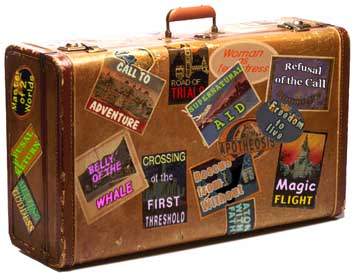
You could say my Mama was a modern-day pioneer. She packed up one suitcase for the three of us — for herself and her two young daughters — and traveled West for the opportunity to reinvent herself, escaping totalitarianism through the seemingly impenetrable Iron Curtain. That was a quarter of a century ago. Still, after so many years, a mother myself, I have yet to truly commune with the place where I live, feeling no tangible connection to the land here.

Why so disconnected? This land seems foreign and not yet part of my “cellular memory” shaped by centuries of Central European living. It is not where my ancestors are buried. In my life, I’ve moved too many times to count, skirting the land, speeding along its slippery surface as if it were ice. Like the original pioneers, and a great many modern-day transplants and migrants, I have internalized the frontier as a state of mind, to paraphrase Native American activist Winona LaDuke. She faults our society’s culture of transience, our belief that a greener pasture lies somewhere else, calling it a psychosis, for disconnecting us from our responsibility to place.

Writer and Mayan shaman Martin Prechtel explains the underlying cause of the westward migration and transient nature of our society as the modern culture’s inability to feed the spirit world from which we come, and our failure to mourn our ancestors which includes acknowledging the damage they have done to this world. He says:

“If this world were a tree, then the other world would be the roots — the part of the plant we can’t see, but that puts the sap into the tree’s veins. The other world feeds this tangible world — the world that can feel pain, that can eat and drink, that can fail; the world that goes around in cycles; the world where we die. The other world is what makes this world work. And the way we help the other world continue is by feeding it with our beauty. All human beings come from the other world, but we forget it a few months after we’re born. This amnesia occurs because we are dazzled by the beauty and physicality of this world. We spend the rest of our lives putting back together our memories of the other world, enough to serve the greater good and to teach the new amnesiacs — the children — how to remember.”

This rings so deeply true for me I weep when I think about it. I live in a new country, a land where I’ve inherited other ancestors’ pain, and I struggle with how to honor it so that I can develop a personal connection and a sense of responsibility to this place. From studying history, I know the magnitude of pain my current life is built on is unfathomable. Between 1774, the year Europeans first arrived on the Northwest Coast, and 1874, an estimated 80 percent of the indigenous population had been decimated by European diseases, including smallpox and measles. According to University of Washington’s Center for the Study of the Pacific Northwest, across the US, “a rough estimate holds that Old World diseases depopulated native societies by about 90% within the first century of contact.”

And the assault on native tribes and the earth continues. In the Pacific Northwest, for instance, as little as three percent of old growth forest is what may be left.

“The question is: how do we respond to that destruction?” Prechtel says. “If we respond as we do in modern culture, by ignoring the spiritual debt that we create just by living, then that debt will come back to bite us, hard.”

In fact, we will literally be — and already have been — haunted by the ghosts of our ancestors if we continue not paying homage to them. “Ghosts will actually chase you,” is how Prechtel describes our predicament. “And they always chase you toward the setting sun. That’s why all the great migrations of the past several thousand years have been to the west: because people are running away from the ghosts. The people stop and try to live in a new place for a while, but the ghosts always catch up with them and create enormous wars and pain and problems, which feed the hungry hordes of ghosts. Then the people continue on, always moving, never truly at home. Now we have an entire culture based on our fleeing or being devoured by ghosts.”

He suggests that one way to honor our predecessors and repay the spiritual debt “is simply by missing the dead. . . as (expressed by) a loud, beautiful wail, a song, or a piece of art that’s given as a gift to the spirits.” If we don’t do this, we are “poisoning the future
with violence” against other beings and the earth itself because we then have no understanding of home.

Prechtel’s insight, I believe, is the answer to healing and to reconnecting us to our past and the earth. In order to “be at home in a place, to live in a place well,” we must do the following, he says. “We first have to understand where we are; we’ve got to look at our surroundings. Second, we’ve got to know our own histories. Third, we’ve got to feed our ancestors’ ghosts” by grieving. We do this by using the gifts we have been given by the spirits to make beauty.”

As global nomads, globetrotters or migrants with no deep commitment to one place we inhabit and its history, we could be doomed. As LaDuke urges, our mantra should be “the Holy Land is here, not somewhere else.”

Cultural Differences in Dining Etiquette Again Get a Child in Trouble

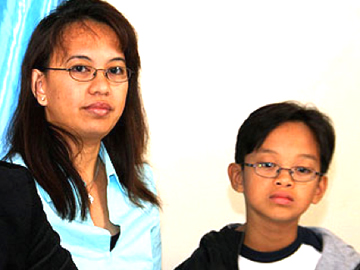
Recently another sad story about dining etiquette across cultures has been in the news.* This time it involves cultural differences over how to use a spoon and fork, and involves a Filipino family living in Canada. Fortunately this child, Luc Cagadoc, was not removed from his family, but his mother, Maria-Theresa Gallardo,  explains that the school’s reprimands for Luc eating in a typically Filipino way have negatively affected his self-esteem as well as his performance in school. She won her case before the Quebec Human Rights Tribunal (the judge ordered the school district  to pay the family $17,000 in damages), though the case is now in appeals.

Once again, a terrific Cultural Detective has filmed a video about how Filipinos eat with a fork and spoon in combination. This was evidently the behavior that led Luc’s school lunch monitor to conclude that he “ate like a pig and should learn to eat like other Canadians.”

Thank goodness Luc’s Blended Culture mother responded very constructively. She says, “We’ve been travelling around. I’ve been showing him different ways of eating, and saying there’s nothing wrong with what he’s doing.” Unfortunately, she says, her son can’t shake off the incident. “I think it’s going to last him a lifetime to remember what happened in that experience that he had.”

Have you ever gotten in trouble for “poor” dining etiquette that was due to cultural differences? Come on, share your story!

* Earlier we reported to you about an Indian family living in Norway, whose children were removed from the family home. One of the reasons cited was that the children ate with their hands. In response to that post, one of our authors made a terrific video about how to eat with one’s hands. Eating with one’s hands is, of course, the norm and custom in many cultures.

Spiritual Traditions, Passover and Easter Greetings

Throughout my life I have felt strongly that most of the world’s spiritual traditions, paths and practices share a great deal in common. Of course they have significant differences, and in understanding those differences we come to appreciate the true beauty of each. At their core are perhaps some messages hugely important to all of us and the well-being of our world.

Please allow me to wish those of you who practice a blessed Easter and a blessed Passover, Pesach Same’ach. I would like to take this opportunity to share with everyone a prayer and hymn which I sing in my heart frequently during my travels, whether I’m journeying through daily life or through the world at large. While it is a Christian hymn, I believe it carries a message that resonates with many of us who embrace interculturalism and diversity.

First in Spanish, as I most often hear it and think it living here in Mexico, then in English. The words are from Saint Francis of Asisi.

Hazme instrumento de tu paz,
donde haya odio lleve yo tu amor,
donde haya injuria tu perdón Señor,
donde haya duda fe en ti.

Hazme instrumento de tu paz,
que lleve tu esperanza por doquier,
donde haya oscuridad lleve tu luz,
donde haya pena tu gozo Señor.

Maestro, ayúdame a nunca buscar
querer ser consolado sino consolar,
ser comprendido sino comprender,
ser amado sino yo amar.

Hazme instrumento de tu paz,
es perdonando que nos das perdón,
es dando a todos que tú nos das,
y muriendo es que volvemos a nacer.

O Maestro hazme un instrumento de tu paz.

Make me a channel of your peace,
Where there is hatred let me bring you love,
Where there is injury your healing power,
Where there is doubt true faith in you.

Make me a channel of your peace,
Where there’s despair in life let me bring hope,
Where there is darkness only light,
Where there is sadness ever joy.

O Master, grant that I may never seek
So much to be consolded as to  console,
To be understood as to understand,
To be loved as to love with all my soul.

Make me a channel of your peace,
It is in pardoning that we are pardoned,
In giving to all that we receive,
And in dying that we’re born to eternal life.

O Master… Make me a channel of your peace.

Please, share with some of your favorite prayers, meditations and blessings, with a bit of context so that we might learn, won’t you? Another of my childhood favorites comes from the Navajo tradition, but I will save that for another time.

What time should we meet?

This cross-cultural dating mishap (in response to this post, and building on this thread) is a true story submitted by Erin in Sydney:

I have many cultural mis-step stories in general, but the only one date-wise I can think of is this one when I was living in Chile. (Warning: it’s not hugely funny or unique!)

First date: I turn up “on time” (Chilean time, e.g., 45 minutes late). He turns up on time (gringa time, at the agreed time). He was a bit peeved that I made him wait so long.

Second date: I turn up on time (gringa time). He turns up on time (Chilean time). This time I had to wait nearly an hour.

We ended up pololeando (a Chilean word meaning “dating”) … though the timing thing was always an issue.

Thank you, Erin. Everyone, we are eager to hear a few of your “mis-steps!” It is our belief that sharing our Cultural DeFectives with others can even the playing field a bit, showing that intercultural competence is a lifelong enjoyable learning journey rather than a static state.

Mixed (&) nuts? A cross-cultural parenting perspective

A Czech and a Jamaican walk into a…. relationship. And BAM! There we have it — my reality in a nutshell. Building my relatively new multiracial, multicultural blended family has been quite the ride: challenging, but worth all the energy, inspiration and personal transformation that the experience has brought about.

The key to making things work has been clear, open and respectful communication and a willingness to self-examine and adjust, while staying authentic and standing one’s ground about the key values that must remain uncompromised. As my sweetie and I say, if he and I can’t work through our differences, how can we ever expect the rest of the world to do the same?

In our case, in addition to the divergent racial realities we experience in this society (he as a black male, and I as a white female), the contrast between our upbringings and home community cultural values is quite vast. Our parenting styles mirror those which guided each of us, and they are nearly polar opposite! The parenting of our children from previous relationships, in fact, has been the hottest point of contention.

My style veers towards the permissive side of the spectrum which gives the child the time and freedom to construct his own internal moral compass experientially through empathy (of course, not totally without guidance). This parenting tendency reflects how I was brought up and is, in a way, indicative of the degree of the privilege, which has applied to me since childhood, to be generally relatively safe, and sheltered from strife.

My partner’s parenting method is authoritarian, bent on instilling strong discipline and ethic as a means to survive and thrive in a sometimes harsh world. His is a form of tough, protective love, “a strict and clearly defined” style, as he calls it. You could see how these vastly different philosophies could drive us nuts, but we are on a journey together, determined to respect one another and find meeting places somewhere in the middle. In fact, an interesting pattern is developing where we, the parents, are adopting a little of each other’s tactics as we evaluate which are useful for our particular circumstances. In short, we are really mixing it up in the mixing bowl that our family is.

What I am most excited about is that we are learning from each other and drawing on not only the richness of what was passed down to each one of us, but also from each other’s worlds. My hope is that this, for our children, rather than confuse, will open new doors and encourage new ways of seeing the world and interacting with the people in it.

Miscommunication: Too Much Cultural Sensitivity!

This cross-cultural dating mishap (in response to this post) is a true story from UC Berkeley’s International House, submitted by Joe Lurie:

A German male student and a Guatemalan female student have agreed to go out on an evening date beginning at 8pm. Both wishing to make a good impression, decide to leverage their cross-cultural skills and sensitivity when dealing with approaches to time. The German fellow, normally stereotypically monochronic — 8 means perhaps five to eight — arrives at 8:45 only to find the anxious, somewhat distressed Guatemalan woman saying, “Where have you been? I have been ready since 7:50  as I wanted to be sensitive to your cultural clock.”

Adopting each other’s styles provoked an amusing disconnect — but in this case, not serious. They are married today!

Thank you, Joe! Reminds me how often I used to bow in Japan when my colleagues would simultaneously stick out their arms in anticipation of a handshake.

Layering Lenses: We are All Multicultural Individuals

“As an ethnic minority woman working in a large multinational firm, too often I feel like I have to learn only, to fit in. For the first time since I’ve worked here, I can now see, and explain, the unique and valuable perspective that I have to contribute as well!” she said, her face positively glowing.

The privilege of experiencing such affirming responses from Cultural Detective customers is part of what makes my job so incredibly worthwhile. This woman had just spent time creating her personal Values Lens, using Cultural Detective Self Discovery as well as a selection of Values Lenses from various other CD packages.

While the core of Cultural Detective is its process, which enables ongoing learning, collaboration and conflict resolution, the Lenses play an invaluable supporting role. As shown in the diagram above, one important role the Lenses can play is to help us realize that we are all unique, individual composites of the various cultures that have influenced and helped form us over our lifetimes. We are not “just” Chinese or Brazilian; we are much, much more than a single story, as Chimamanda Adichie so well told us.

In international cross-cultural work such as I’ve done over the past 34 years, too often people limit their definitions of “culture” to “nationality.” Culture goes way beyond nationality. Since by definition culture is the shared norms, values and behaviors of a group of people, culture can also include ethnicity, language group, physical ability or mobility, sexual orientation, or gender identity. More often than not, in my experience, while nationality(ies) tend to have a strong impact on our behavior, professional training, the culture of the organization to which the person belongs, the team culture, their socioeconomic level, generation, their faith or spirituality … all of these influence behavior as much as or more than national birth culture. It’s worthwhile for all of us to know ourselves in all the layers of our cultures: why we are the way we are, how we got to be who we are today. In this way we can better predict how we’ll respond, and better explain ourselves and our motivations to others, powerfully transforming collaboration.

People often ask me, where does personality end and culture begin? As a practitioner, my response is, “Does it really matter? Is there an objective, accurate answer?” We are all unique individuals and we are all also influenced by the multiple cultures in which we’ve grown up, been educated and trained, worked and lived. If we can keep our values and our goals clearly in mind, we can be flexible in our behavior and creative in our approaches, in order to perform at our highest and best in a broad variety of contexts.

More Than A Cross-Cultural Development Tool

As many of you may know, the Cultural Detective Team periodically facilitates online learning events which have been designed to help new users learn or seasoned users refresh their skills around working with the Cultural Detective Method and Values Lenses.

I recently had a follow-up conversation with one of our new users, whose organization is getting ready to expand overseas to Australia. Because I often co-facilitate the online learning events, I always find it enlightening to speak with some of our new CD users and online participants to get their perspective and gauge our facilitation success by their understanding of how to work with the CD Method. It really energized me to hear this particular client’s feedback so I wanted to share!

He said he was really excited by the multiple ways he realized his organization could use the CD Method for growth, in addition to his initial hope of using it to aid global expansion. Needless to say, as he continued to clarify his meaning: by discussing how CD is really an excellent business communications tool that can be incorporated into ongoing associate training regardless of cross-cultural work, and that CD provides a superb process for coaching as well — by the end of our call I was really grinning !

It always feels good when the messages we are trying to send make it effectively across the virtual training waves, but when they are taken to another level and creatively applied to the organizational needs, the time we spend educating is worth it’s weight in gold!

Culture Change and Free Speech

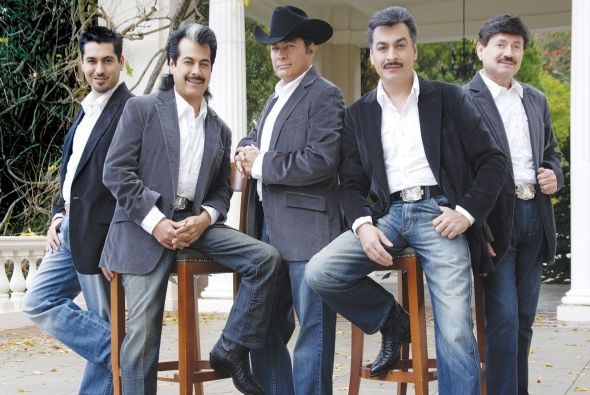
Los Tigres del Norte, one of my favorite (and one of the world’s most popular) bands, was banned yesterday from playing in the city of Chihuahua. They were banned because they played a very popular narco-corrido based on a soap opera and book, La Reina del Sur. The ban occurred not in some foreign place that might be unfamiliar with the band’s norteña music, but rather in a city that is steeped in norteña culture. The Mexican press, and most Mexican people, are upset about and vocal in objecting to this cavalier censorship.

A bit of background is in order. As has been well publicized worldwide, Mexico has been a sad battle route in the drug buying and the arms selling of its northern neighbor. Locally and similar to criminals worldwide, drug lords take over and strong arm mountain pueblos, also sometimes building schools or hospitals and taking care of people, thereby building loyalty and security for themselves.

Around this drug trade has grown a culture, which has closely mixed with the pre-existing norteña culture. That cultural mix includes a style of dress (one extreme is those tippy-toed guarachero boots), a unique vocabulary and style of speech, songs (narco-corridos are songs that glorify the life of the outlaw), and even a patron saint whose image, likeness and altars can be found in most any colonía (Jesús Malverde, so-called patron saint of the drug lords and lost causes).

Mexico is a large country, as is northern Mexico, and norteña culture as influenced by narco culture has a diversity within it. There is also spillover; many people who have nothing to do with the drug trade may build an altar to Malverde (unwed mothers may pray to him, for example, as might people who have lost their jobs) or have his face emblazoned on the window of their pickup truck. And, MANY of them listen to what can be called narco-corridos. The particular song for which my Tigres were banned, ironically, ends with the outlaw (a woman) being punished for her crimes.

I believe that most Cultural Detectives value free speech, and do not believe in censorship. It is interesting, though, that this ban occurred because Chihuahua city is trying to change its culture. It is trying to take the narco out of norteña, to stop the glamorization of criminal activity, to restore responsibility and good citizenship to its citizens.

It is personally ironic to me because last year, I posted on the Facebook page of another favorite band of mine, la Banda El Recodo, sharing with them my disappointment that they had released a song so far below the respect and esteem with which they are held by the public (the song talks about guns, arms, bulletproof vests; it encourages people to get drunk and shoot bullets into the air; the official video involves non-stop drinking, high-priced cars and watches, and ends with the lead singer pretending to shoot the viewer). In hindsight, was I censoring? I know my motivations were the same as those of the city of Chihuahua: El Recodo is at the top of their craft; people respect them. I love them, and I love Mexico. I wanted them to stand for and promote what is good about Mexico, help make it a better place, not glorify and feed the worst of our local culture.

What do you all think? We interculturalists work with culture change on a daily basis. Have you advocated censorship in your role? Have the opinions you’ve expressed served to censor another? What are your strategies for culture change?