 Eight Words of the Year from Other Countries
Great, short, fun, informative re-post. Thank you, Mental Floss!
Which words do you know? Which ones would you add?


Eight Words of the Year from Other Countries
Great, short, fun, informative re-post. Thank you, Mental Floss!
Which words do you know? Which ones would you add?
 Do you want to promote intercultural competence in your organization or industry? Are you looking for some guidance? A blueprint? A success story? If so, do I have a “Cultural Effective” for you!
Just over a year ago, friend and colleague Stella Ting Toomey and I had the distinct pleasure of attending the American Evaluation Association‘s annual conference as invited speakers. There I was pleased to witness a commitment to responsible inclusiveness that was truly state of the art.
Six years of diligent work by a task force and other concerned individuals had resulted in a theoretically sound and practical Public Statement on Cultural Competence in Evaluation (AEA 2011, Fairhaven, MA USA).
There is so much about this public statement that stands out for me, not least of which is a definition of culture that is at least on a par with the best of what I’ve seen come out of the intercultural communication field!
Culture can be defined as the shared experiences of people, including their languages, values, customs, beliefs, and mores. It also includes worldviews, ways of knowing, and ways of communicating. Culturally significant factors encompass, but are not limited to, race/ethnicity, religion, social class, language, disability, sexual orientation, age, and gender. Contextual dimensions such as geographic region and socioeconomic circumstances are also essential to shaping culture.
…
Culture is dynamic, fluid, and reciprocal. That is, culture shapes the behaviors and worldviews of its members and, in turn, culture is shaped by the behavior, attitudes, and worldview of its members. Elements of culture are passed on from generation to generation, but culture also changes from one generation to the next.
Culture not only influences members of groups, it also delineates boundaries and influences patterns of interaction among them. Evaluators frequently work across these boundaries.
I remember my excitement the last couple of times a book has been published with “intercultural competence” in the title. If I am truly honest, I will admit to you that I’ve been disappointed. Amidst good work and steps forward, the books I’ve reviewed rehash a lot of what I feel is old and tired or, even, counter-productive to good practice. But this AEA statement! How do they define intercultural competence? For me it’s spot on — both theoretically sound and skillfully applied!
Cultural competence is not a state at which one arrives; rather, it is a process of learning, unlearning, and relearning. It is a sensibility cultivated throughout a lifetime. Cultural competence requires awareness of self, reflection on one’s own cultural position, awareness of others’ positions, and the ability to interact genuinely and respectfully with others. Culturally competent evaluators refrain from assuming they fully understand the perspectives of stakeholders whose backgrounds differ from their own.
Cultural competence is defined in relation to a specific context or location, such as geography, nationality, and history. Competence in one context is no assurance of competence in another. The culturally competent evaluator (or evaluation team) must have specific knowledge of the people and place in which the evaluation is being conducted—including local history and culturally determined mores, values, and ways of knowing.
The culturally competent evaluator draws upon a wide range of evaluation theories and methods to design and carry out an evaluation that is optimally matched to the context. In constructing a model or theory of how the evaluand operates, the evaluator reflects the diverse values and perspectives of key stakeholder groups.
It is tailor-made for a Cultural Detective: process-based lifelong learning (CD Worksheet); knowledge of self and others and the ability to bridge (3 fundamental CD capacities); situation-specific, contextually grounded effectiveness (CD Critical Incidents); grounding practice in theory (pulling salient theoretical teaching from practical experience); and acknowledging people as complex amalgams of the influences of multiple cultural influences (layering Lenses).
The AEA statement includes the following content:
The Role of Culture and Cultural Competence in Quality Evaluation
Why Cultural Competence in Evaluation Is Important
Essential Practices for Cultural Competence
The AEA’s blog and their annual conference include lots of project examples and discussions about how to conduct culturally responsible evaluation, through which I’ve witnessed honest dialogue about successes and difficulties. Intercultural competence in evaluation has definitely become an organization-wide effort and an ongoing process for the AEA membership.
The work of the task force continues through today, as they do their best to develop cultural competence in evaluation via education and training, within and outside the AEA, as well as by sharing the public statement and what they have learned via the process they’ve engaged. I am proud to have had a very small role in their extensive process, and pleased to be able to help share it so that others can leverage their work.
Kudos to Dr. Melvin Hall, Cindy Crusto, the American Evaluation Association, and all of those involved in this terrific effort! I know they join me in hoping that their efforts might help you further yours. I will close with an excerpt from their closing:
Evaluators have the power to make a difference, not only directly to program stakeholders but also indirectly to the general public. This is consistent with the Guiding Principle that obliges evaluators to consider the public interest and good in the work they do. In a diverse and complex society, cultural competence is central to making a difference.
Cultural competence connects with and complements existing knowledge and skills in the field. It offers both opportunities and challenges for evaluators. Cultural competence presents evaluators with new horizons for learning, opportunities for renewal, and the potential to deepen understanding of one’s own work in all contexts. Cultural competence challenges evaluators to deepen their self awareness and sensitivity in terms of their own cultures and those of others.
Many evaluators are actively exploring the terrain of cultural competence. They are expanding the boundaries of what it means to respond to cultural diversity in authentic and respectful ways. This statement invites new conversations and connections to advance this sensitive and exciting work.

Welcome to the New Year — at least for those of you following the Gregorian calendar! Are you ready? Is your organization poised and equipped to make significant positive contributions to this planet of ours? Do you have organizational traditions to kick-off the new year and encourage employees to strive towards new goals?
Most cultures of the world have very special traditions for sending out the old year and bringing in the new one. In Mexico where I live women wear special undergarments on New Year’s Eve — either red for love or yellow for gold or money — symbolizing what they most want to receive in the year ahead. Those who would like to travel carry a suitcase out into the street and around the block.
In Japan where I lived previously, the end of the year is a time to clean the house, purging it of things from the past that are no longer needed. We cook osechi foods, the beautiful make-ahead kinds of delicacies that will feed family and visitors through the first few days of the new year, and allow everyone — including the cook — to enjoy a respite.
What are your traditions for saying goodbye to the past year and greeting the future? Do you make resolutions, set goals, or make plans to learn something new?
My absolute favorite New Year’s was spent with good friends nearly two decades ago. On New Year’s Eve, we wrote down the hurts we’d experienced, the negative habits or memories we continued to carry and wanted to get rid of, the qualities about ourselves that no longer served us, the visions of ourselves, others or our businesses that were not constructive. We made a big bonfire, and we had a field day burning these no-longer-wanted items. Oh how liberating it was! We all felt so light, so energized!
On New Year’s morning we woke before sunrise. We had written, on paper we’d folded into origami boats, the qualities we wanted to receive and nurture in the new year. The positive habits and qualities we wanted to cultivate, relationships and moments we wanted to consciously treasure, and healthy visions of ourselves, others and our businesses that we wanted to hold close. We launched these items into the ocean, setting them into motion.
The beginning of a year is a good time to reflect on our cross-cultural successes (Cultural Effectives) as well as to learn from our mistakes and misunderstandings (Cultural Defectives) and decide what kind of year we want in 2013. Back in October we published a post about intercultural fitness. In November we reiterated why such fitness is so important, why organizations need intercultural fitness.
Maybe reading these posts has helped you to decide what to throw in the fire and what to set out into the water? If your fire is full of cultural missteps and your boat contains a desire to expand your intercultural competence, maybe it’s time you took action!
Cultural Detective wants to encourage you to get fit, too — interculturally fit! Much like committing to an exercise plan or a sensible nutrition plan, committing to prioritizing intercultural competence in the coming year will serve us well personally, in our families, as well as in our work lives. Also, just like a gym, it can be fun. We can spend as much time as we like and we might meet some really interesting people.
The new year is full of special offers for gym memberships, exercise classes, and diet programs — ways to encourage you to get fit in 2013. Just as gyms and diet programs offer incentives this time of year, the Cultural Detective Online intercultural competence gym is offering complimentary three-day subscriptions to help get you focused and motivated!
Here is how to get yours:
We hope you will take advantage of this special offer to learn how Cultural Detective Online can assist you at home and abroad, with colleagues and friends, in your community and in your organization! Feel free to share this offer with those you care about — we think the world could benefit from a little more intercultural competence on everyone’s part!
Best wishes for a peaceful year ahead from the Cultural Detective team!
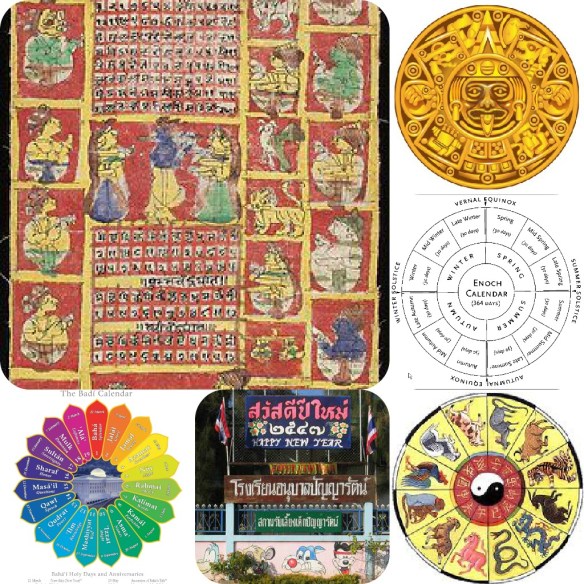
Our greetings are sincere; we wish the best for our colleagues, partners, and friends. Intent is important. However, even the most sincere greetings, when unaccompanied by a broader mindset of cross-cultural awareness, can come out sounding neocolonialist, disrespectful or just plain ignorant.
Most non-Chinese know that Chinese New Year often happens in February and is based on a lunar calendar. Many non-Jews are aware that Rosh HaShanah is the Jewish new year, and that it usually occurs around September. But what about other nations, cultures and traditions: when do they celebrate their new year? And how can we demonstrate cross-cultural sensitivity when we wish to express appropriate New Year’s greetings?
The first step is to recognize our own Lens, our own cultural filters. A “happy new year” greeting focused on January 1, 2013 is based on the Gregorian calendar, use of which was ordered by Pope Gregory XIII in 1592. Even Protestant Europe was slow to adopt this calendar, but over the centuries it has gained widespread use to become today’s de facto international standard. Most countries in the world now use it as their sole civil calendar, with exceptions including Saudi Arabia, Iran and Afghanistan. Countries that use another official calendar alongside the Gregorian include India and Israel. To detach the Gregorian calendar a bit from its Roman Catholic roots, it is also called the civil calendar or Common Era (CE) calendar.
Having a recognized international standard is a major change. Thirty-five years ago, when I first started working with a telex machine in Japan, I had to convert dynastic dates to CE dates as part of my daily tasks (I also used a HUGE kanji typewriter that provided me a daily physical workout, prior to the advent of word processing). Now, the general acceptance of the CE calendar is a sign of how much cultures that did not traditionally use the Gregorian calendar have adapted in order to more easily collaborate. Of course, another point of view is that this adaptation shows the success of the Christian colonialists imposing their standard on the rest of the world.
Either way, there is a great need for those of us comfortable with the Common Era calendar to learn a bit about other world calendars, to gain a basic knowledge about and be able to communicate respect for them. Thus, the second step in building cross-cultural competence is to develop our curiosity and knowledge about world calendars.
While the CE calendar is in popular use, alongside it and sometimes instead of it people around the world use solar calendars, lunar calendars, lunar-solar calendars, arithmetic and astronomical calendars. You may see dates you don’t recognize in newspapers when you travel, or in official government or religious documents. Non-Gregorian dating is commonly used to determine holy days, holidays and festivals in many of the world’s traditions. These local, regional, and religious calendars are frequently used to report birth and death dates, and major life and world events. It can get confusing for the international traveler or global nomad, not to mention the unwitting blogger or small business person with an Internet site! There are seven billion people on our planet, and according to my quick calculations, fewer than 10% have primarily used a Gregorian calendar for even most of my lifetime.
How can we navigate the multitude of calendars in our world? Surely we can not be expected to understand or be fluent in all of them. How can we show sensitivity, respect, and a bit of knowledge, rather than arrogance, ignorance, or insult? The third step is to bridge the differences — to understand and learn to work with our partner’s or customer’s traditional calendar.
6 Tips for Partnering with People Who Use
Calendars Different from Yours
While far from a complete list, I did some research to produce a bit of a guide (below) to some of the world’s calendars in current use. Please note any corrections in the “Comments,” and we will edit as needed. Thank you!
Additional Resources:
Two handy calendar converters:
Readers, we look forward to hearing you tell us about your New Year’s. What greetings do you prefer, and when? How do you celebrate?
Whichever calendar you prefer, the Cultural Detective team wishes you all success, health, and joy!
 I’ve recently heard from several colleagues and client organizations who are engaged in partnerships designed to harness the strength of complementary skills, experience and thinking. Their purpose is to enter new markets, build the business, and create innovative approaches that can only come from an interdisciplinary approach.
The great thing is that they recognize and have committed to the creative power of diversity! They know that research shows that diversity of thought leads to innovation. The trouble is that each of them has encountered frustration and, in some cases, regret: the partnership is not as easy as they’d hoped, they haven’t found their “sweet spot” of collaboration, new customers are not pounding down their doors. They talk over and past each other, they have differing goals and strategies, they feel their partner lacks respect for them. In short, the very reason they are partnering in the first place — to leverage their complementary expertise — is getting in the way of successful collaboration.
What to do? “Come on, Dianne,” they tell me. “You do this collaboration thing for a living. Give us some tips. What are we doing wrong?” Well, instead, how about starting with what you are doing right?
Tip #1: Remind yourself what motivated you to partner in the first place. What skills, experience, contributions or contacts does your partner bring to the table that you want to access? Have you spent focused time listening and learning from your partner, how they do things, how they see things, discovering what about their perspective is unique and can add value to your own? And vice-versa?
Tip #2: Affirm the strengths you see in your partner. Too often we get caught in a blame game, or we get so busy we don’t take the time we should to actually communicate our hopes and appreciation. We take it for granted that our partners know we value them, and why. Speak up purposefully and let them know!
Tip #3: Be honest about the challenges. Collaborating with partners whose worldview is different from our own means that we have to speak a different language, translate our common sense to theirs. Such efforts can get tiring, even irritating. And, when we don’t understand, or worse, misunderstand what our partners are saying or doing, that impatience and frustration show through. Pretending the challenge isn’t there usually is not the answer; it makes the white elephant in the room grow ever more looming. Rather, put your differences out there, on the table for discussion.
Tip #4: Agree on rules for the game. You have partnered precisely because you are different; you are experts in separate arenas, and of course you do things differently. A successful joint effort needs to bring out the best, rather than the worst, in each of its partners. There is a need, therefore, to talk purposefully about HOW you communicate: how you can disagree without offending, how you can make decisions in which all partners feel heard and valued. Such game rules should be revisited and updated regularly. Ten minutes talking about how we communicate can shoot productivity forward. We’ve all been in meetings where we focused on task and drove one another nuts, getting nowhere.
Tip #5: Diverge then converge. And repeat. Diverge by listening to one another. Converge by summarizing what you heard. Diverge by gathering data, doing research, discussing the matters on which you disagree. Get to the point where the convergence emerges: you see the trends in the data, you get to the heart of the matter — exploring the disagreement leads you to a core truth and a path forward. I can not emphasize this last point enough. In thirty plus years leading international teams, team leaders inevitably come to me saying, “we are never going to get agreement. The team is all over the place.” Experience shows, repeatedly, that if you listen to understand, summarize the key points, a path forward that incorporates the diverse perspectives, skills and experience presents itself. It takes a little faith and a bit of letting go. Then the magic begins.
Bonus Tip #6: Know when to get out. Not all matches are made in heaven; not all collaborations are worth the effort. Do your homework before entering a partnership, and be brave enough to make the call when it’s no longer a fit. Of course, filtering out cultural differences to be sure it’s really not a fit is key. But beating your head against the wall and getting yourself into all sorts of contortions trying to make something work is not good for anyone.
 We tend to get a lot of phone calls asking us to recommend a cross-cultural assessment instrument. Usually I ask what seems to me a very logical question: “What is it you are trying to assess?” I am then often shocked to hear that the caller is not able to answer my question!
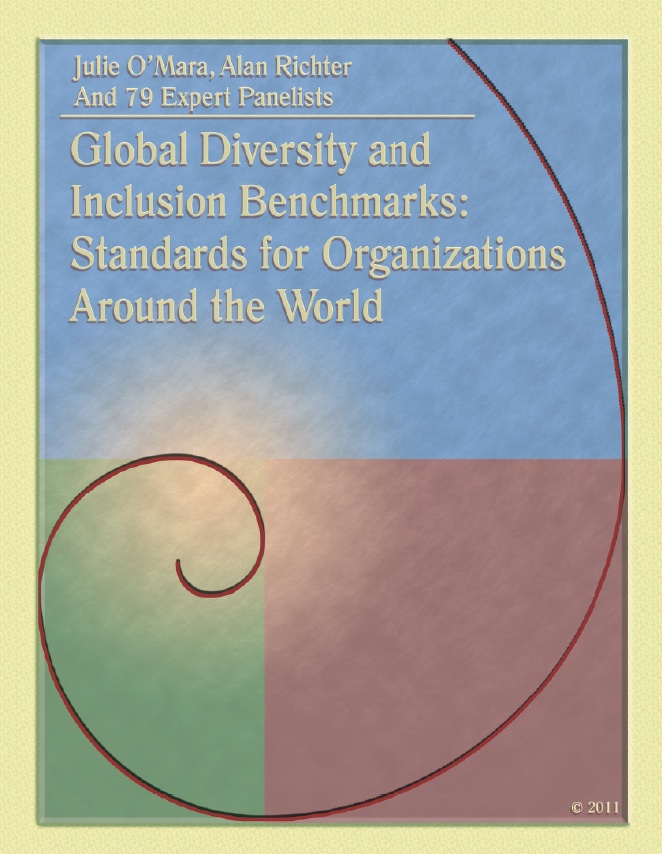
As an organizational effectiveness practitioner I am concerned with individual and interpersonal effectiveness as well as that of the overall organization. We all live and work within systems, and if that system rewards and encourages us NOT to be cross-culturally competent, we are going to nurse burnout if we try to demonstrate and develop that skill. Organizational systems and structures need to support and reinforce individual and interpersonal competence. That is why “Global Diversity and Inclusion Benchmarks: Standards for Organizations Around the World” is one of my favorite assessment tools.
Written by Cultural Detective Global Diversity and Inclusion co-author Alan Richter, along with the very talented Julie O’Mara, the tool is available for use free of charge, though the authors ask that you submit a written request for permission (julie@omaraassoc.com or alanrichter@qedconsulting.com).
 Newly updated in 2011, the 32-page booklet is based on a core model of 13 categories arranged into four key areas: Foundational Factors, Internal Abilities, External Benchmarks, and Bridging Competencies (you can already imagine how well this blends with a Cultural Detective approach!). The assessment instrument involves rating the organization at one of five levels for each of the 13 categories. Thus, it is very easy to use and educates as it assesses.
The GDI Benchmarks are based on extensive contributions from 79 experts around the world, and were developed from groundbreaking research in the early 1990s. Please contact Julie or Alan to learn more. And please share with us your organization’s progress with these benchmarks as you use Cultural Detective!
 Reprint from SIETAR India Newsletter, November 2012
Written by Sunita Nichani
The topic of cultural dimensions (individualism vs. collectivism, monochrone and polychrone) is almost de rigeur in intercultural training workshops. Most of these models remain quite theoretical in the minds of our Indian participants.
As I watched the Bollywood film “English Vinglish,” I saw some great examples of these dimensions being acted out, and am delighted that some of these scenes can be used to illustrate these dimensions in a way that will resonate with Indian audiences. Please note that like with most films that portray another culture through the eyes of a foreigner, some of the situations and characters might seem a bit exaggerated or even culturally inaccurate. However, the film has many select scenes that would be a great resource for intercultural trainers looking for ways to connect theory and application. So read on!
This film by Gauri Shinde is a heart-warming tale of how an Indian housewife, played by Sreedevi, discovers her hidden potential after landing in the US and learning the English language. The film can be used for a variety of training objectives: questioning existing stereotypes, ethnocentrism, or how the film accurately or inaccurately depicts cultural differences.
Being part of a collectivist culture, Sreedevi puts her family’s needs before her own and her individual efforts are often unrecognized or even mocked by her family at home. She is an excellent cook and in India she sells her speciality “ladoos” (an Indian dessert) during weddings and other festivals. During her first English language class in the United States, her English instructor asks her what she does (individualist orientation) and Sreedevi, not used to talking about her individual accomplishments, sheepishly confesses that she sells “ladoos.” Her English instructor provides her with the term “entrepreneur,” and her face lights up at this definition of her individual identity. This theme is quite recurrent in the movie and can be used in discussions on how to leverage the best of both individualism and collectivism. For example, after having discovered the joys of individualism such as “me time,” personal development, and individual accomplishment, Sreedevi does not bail out on collectivism. On the contrary, she explains the core philosophy of collectivism in her speech at the wedding of her niece.
Yet another dimension is beautifully illustrated in the scene where Sreedevi orders a cup of coffee in New York for the first time. To see the differences between monochronic and polychronic attitudes. I encourage you to watch the film!
—
Thank you for this great review, Sunita, Cultural Detective extraordinaire and current President of SIETAR India.
We would like to encourage all of you to purchase early-bird registration before December 9th for the SIETAR India 2013 conference, “From Internationalization to Intercultural Competence.” It will take place in Mumbai on the 2-3 of February.
 The Cultural Detective team is very grateful to all of you in this community for the terrific work you do to help make our world a more inclusive, respectful, equitable, sustainable and collaborative place.
Today is Thanksgiving Day in the United States, and while our team members are based all over the world and the holiday isn’t celebrated here in Mexico where I live, it seems a good occasion on which to formally thank you all for accompanying us on this journey!
We wish you energy, clarity, wisdom and joy as you pursue our shared yet often challenging goals.
 Nearly every organization these days, even the smallest and most local, works with diverse customers, team members, vendors, and service providers. A corner grocery store serves people from different age groups, ethnicities, and spiritual traditions. So, which holiday greetings should the grocery store use, if any, so as not to offend or exclude? Why do some of the regular customers talk only to male employees? Could the store increase profits or attract new customers if it started offering halal meats or Latino grocery items?
What about the graphic designer who puts up a website or Facebook page designed to attract local clients, only to find that the first inquiries come in from overseas? The mere fact that you have an online presence can mean you offer your products and services worldwide. And what about the free clinic that finds itself dealing with patient care issues of recent immigrants from places halfway across the planet? Or disaster relief agencies attempting to coordinate aid from around the world, getting it to the places it needs to be, quickly?
Cross-cultural competence is a needed skill for all of us, and it helps improve our family and social lives as well as our work lives. But amidst all the competing priorities for our time and attention, how can we develop such competence? To most of us, going back to school or even taking a few days off work for a class isn’t doable. And besides, like physical fitness, cultural fitness requires ongoing, structured practice, not just one trip to a training room.
If only there were an online cross-cultural coach available to us anytime, anywhere, at low cost. One that didn’t make us memorize lists of dos and don’ts, that didn’t promote stereotypes but rather encouraged dialogue and critical thinking. An online coach that would provide a process for recognizing cultural differences, helping us to understand and leverage them as assets rather than as roadblocks. Better yet, an online coach that could help us make sense of our everyday experiences, learning how to transform obstacles into opportunities, and frustration into innovation. A tool we could navigate freely, according to our needs and interests, not some online talking heads or narrated slide show. A tool that would be available on our time — when and where we want it…
I am very excited to be able to share with you just such a solution, yours free for three days, no strings attached. It is a brand new online system based on the proven Cultural Detective Method used by governments, NGOs and for-profit organizations around the world.
Free 3-day trial to Cultural Detective Online!
“Cultural Detective is directly responsible for a 30% increase in our customer satisfaction ratings.”
“Cultural Detective sped up my learning curve; it allowed me to become a part of the team and have an impact on the business more quickly.”
“I have received kudos from my managers and the Vice President for having chosen the Cultural Detective. But the kudos should really go to you. Cultural Detective is a rock solid methodology.”
Pass this offer around; the 3-day-free trial offer is good from now through December 31, 2012.
To redeem:
Enter your learning goals, explore 50+ fully integrated packages including full Values Lenses and 400 Critical Incidents, or upload and debrief your own real-life situations. Your customers, partners and employees, even your family members, will notice the difference!
Improve your ability to understand and collaborate across cultures, and help your friends, family members and colleagues to do the same! Let’s create a more inclusive, creative, collaborative and productive world out there! Get a clue!
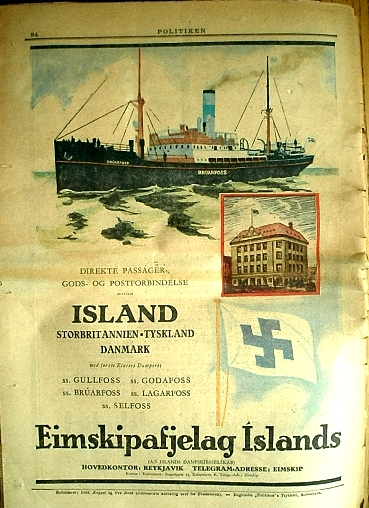
Photo credit to Vilhjálmur Örn Vilhjálmsson, https://fornleifur.blog.is
Used with permission.
The power of social media and online networking just keeps amazing me. Since starting this blog we’ve had soooo many great examples of how you all build on one another’s work and generously share with each other! It is our privilege to hold space here that helps do that.
You will remember our recent post entitled, More Cultural Appropriation: The Swastika? Well, a good friend and respected colleague of mine read it and said, “You know, Dianne, the swastika held a prominent place on a huge building, home to a major Icelandic shipping company, for decades. It’s gone now, though.” As we talked about it, she told me she’d used that story, with quite a few pictures, in a powerpoint slide presentation that she developed with a colleague.
With Thorunn and her co-presenter Avrora’s generosity of spirit, we are privileged to share with you a gift to all Cultural Detectives from them. Their slides summarize the swastika’s history, and include photos of its use in Bulgaria, Greece, Iceland, Native America, and Tibet, as well as the Nazi version. Thorunn and Avrora help you pull learning from these photos with slides explaining culture, judgments, and symbols.
Download their powerpoint slides here. And please let us know how you put them to use!
As an aside, I’d share with you that I recently met an incredibly interesting woman who is Indian and Austrian. Her stories about personal and family conflicts and learning around the swastika were really something to hear! Hopefully I might convince her to share some of them with you in a future guest post.
 Cultural Detective Blog