Entre Dios y Alá

(English follows Spanish)

Si pudiera resumir las noticias de las últimas dos semanas, podría sin duda mencionar dos nombres: Benedicto XVI y Hugo Chávez.

El primero desafió toda una organización, un sistema, una tradición. Hoy que escribo esta nota los noticieros hablan del humo blanco saliendo de la Capilla Sixtina que anuncie que hay un nuevo Papa. No me alcanzo a imaginar todos los cambios organizacionales a los que se enfrenta la Iglesia Católica para adaptarse a este nuevo cambio de innegable impacto mundial.

Por otro lado, tenemos la muerte del presidente de Venezuela Hugo Chávez. Los análisis políticos por supuesto han sido los protagonistas de su partida. Pero no podemos dejar de lado ese aspecto que nos une en este espacio de comunicación.

En medio de la sobre-exposición de la noticia en los medios, incluyendo detalles de su vida, su gobierno, sus frases célebres, visitas a países socialistas etc, está una noticia que este lado del mundo apenas menciona.

La foto del presidente de Irán, Mahmud Ahmadineyad, expresando sus condolencias a la madre del presidente Chávez ha causado no menos que indignación en su país y los países que siguen los preceptos islámicos.

Lo que para nosotros puede parecer normal, entendible y simplemente humano al brindar consuelo en un abrazo a alguien que vive el dolor profundo del duelo, en otra latitud no es más que el irrespeto a lo que ordena su ley, la cual indica que no debe haber contacto físico entre un hombre y una mujer si no es de su círculo cercano.

No siempre podemos entonces actuar como actúan otros, es decir a la tierra que vamos hacer lo que vemos. No siempre podemos adaptarnos a otro entorno, a pesar que podamos sentir la inclinación natural a ello.

Las culturas abiertas podríamos describirlas como permeables a otras culturas, donde son fácilmente identificables y permitidos otros valores, costumbres, tradiciones siempre y cuando prevalezca el interés común sobre el particular. Por el contrario, las culturas cerradas son herméticas y poco o nada tolerantes a las demás. El caso que enfrenta al presidente Ahmadineyad es una muestra clara, y atizado además, por comparar al presidente Chávez con Jesucristo.

Se unen de nuevo alrededor de Dios, de nuestras creencias religiosas los dos hechos noticiosos que mantienen en vilo al mundo entero.

Católicos y no católicos pendientes del Vaticano. Entre tanto el mundo Islámico levantando su voz de protesta por un hecho a todas luces, para ellos totalmente inadmisible hasta para un jefe de Estado.

Entre Dios y Alá, entre Dios y Dios. Hasta la próxima.

Between God and Allah, translation by Dianne Hofner Saphiere

If I were to summarize the news of the last two weeks, I could without doubt mention two names: Benedict XVI and Hugo Chávez.

The first challenged an entire organization, a system, a tradition. Today as I write this note there is news in the white smoke coming out of the Sistine Chapel announcing that there is a new Pope.  I can’t begin to imagine all the organizational changes that confront the Catholic Church as it adapts to this new change of undeniable worldwide impact.

On the other hand, we have the death of Hugo Chávez, the President of Venezuela. The political analyses have of course been the protagonists of his departure. But we can not ignore that aspect which unites us in this communication space. Amid the over-exposure of the news media, including the details of his life, his government, his famous phrases, and his visits to socialist countries, etc., lies a story that this side of the world barely mentioned.

This photo of Iranian President Mahmoud Ahmadinejad, expressing his condolences to the mother of President Chávez, has caused no minor indignation in his country and in the countries of the world that follow Islamic principles. What to us may seem normal, understandable, and simply the human act of providing comfort with a hug to someone living the deep pain of grief, in another latitude is nothing more than disrespect to the order of law, which indicates there should be no physical contact between a man and a woman not within the same inner circle.

We cannot always behave as others do, that is to say, doing what we see in the land to which we travel. We cannot always adapt ourselves to another environment, although we might feel the natural inclination to do so.

Open cultures could be described as permeable to other cultures, those in which other values, customs, and traditions are easily identifiable and permitted as long as the common interest in the matter is maintained. By contrast, closed cultures are hermetic, and not so tolerant of others. The case facing President Ahmadinejad is a clear case in point, further stoked by comparisons of Hugo Chávez with Jesus Christ.

Our religious beliefs join again around God, in the two big news items that have captivated the world. Catholics and non-Catholics watching the Vatican. The Muslim world raising its voice in protest to an act committed openly, which for them is completely inadmissible for a Head of State.

Between God and Allah, between God and God. See you soon!
Success? It’s All in How We Gauge It…

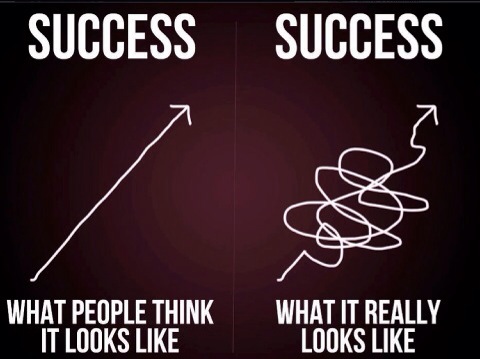
711079_3691916951303_1580871364_nThis is a story, or perhaps, more correctly, a cautionary tale, about a very successful expatriate and the highly respected, much-envied western company for which he worked. It is a story that made me think again about how we define success in our lives, and, in particular, how we define success in the global marketplace and success on an expatriate assignment.

The Company: The company is one of the very first to enter the Japanese market after World War II. It holds key patents on several important technologies, and invests decades establishing partnerships with Japan’s leading firms. It prides itself on hiring and promoting Japan’s best and brightest.

By the 1990s, it is the envy of other foreign-capitalized companies in Japan: it has a dominant market presence in its niche industries; long-established, trustworthy partnerships with major local players; and a stellar reputation for consistency, reliability and innovation. The president of the company is Japanese, and its management team is a strong and diverse mix of local and international executives who respect one another and leverage their expertise.

The Japan operation is a huge profit center, as well as the home of research and development breakthroughs leveraged by the company globally. They have strong cross-cultural programs in place for their staff worldwide, as well as for transferees and their receiving organizations.

The Expat: Our expat is intelligent, ambitious, and very capable. He has worked for the company for over 30 years, and is known as an excellent turn-around manager who had saved several manufacturing plants and regional operations, turning their losses into profits. Originally educated as an engineer, he is logical and methodical, and very good with numbers, graphs, and trends. Our expat is married with grown children and grandchildren, speaks a bit of French in addition to his native English, is well-travelled, but has never before lived overseas. This will be his last assignment prior to retirement.

The Situation: The global company, and most particularly home office, is experiencing economic hardship. A few expensive ventures have failed, and it is time to tighten belts, cut back, and save money across the board. Though the Japan operation is one of the most profitable worldwide, it is part of the overall organization and must join in company-wide budget cuts.

The expat is sent to Japan as the new CEO, and is told to cut millions from the annual budget. It is the first time in over a decade that the CEO of the Japan operation is a foreigner. The expat and his wife relocate to Tokyo, and quickly integrate into the local expat social scene. They love their new life in this amazing metropolis.

The Backlash: Local and existing expatriate management “cry foul.” They say it is a short-sighted decision to slash budgets in Japan when the operation is functioning smoothly and keeping others afloat. They say they are being punished for errors they did not cause, in which they were not involved. They warn that budget cuts will have long-lasting negative effects in the Japanese marketplace.

The new CEO explains that change always has its naysayers; people need to “get onboard or get off the ship.” “Tough times call for tough decisions.” “It’s a new day, a new world, a new economy.”

The cross-cultural consultant and existing management explain that the culture is different here, that the new CEO doesn’t yet understand Japan. Drastic changes have long-lasting effects that can’t be undone, can’t be apologized for. They urge him to send this message strongly to the home office, to push the decision back up. They say it’s his duty to make the home office aware of the repercussions of their top-down decision. They tell him that following instructions will mean the death of the Japan operation.

But the CEO has been down this road before. No one likes belt-tightening. No one likes budget cuts. He knows how to turn an operation around. He’s done it before. He doesn’t need people to “like” him. He knows they will respect him once they see the results he achieves. This is an once-in-a-lifetime opportunity, an incredible capstone to his career.

The Outcome: The expat succeeds, in stellar fashion. He fires people. He closes divisions of the company. He retires long-standing partnerships with important local players. He does exactly what he has been charged to do. And he furthers his career: after his two-year assignment he receives a huge bonus. He departs Japan to begin his retirement, riding the accolades of his success.

Home office is proud of their decision to send him; only an expat could have made these kinds of difficult decisions, taken these drastic measures. A local executive wouldn’t have been able to cut such long-standing local partnerships, couldn’t have bit the bullet to fire staff who had worked their whole careers building the company. It was a perfect decision. Money saved. Bottom line improved.

The Longer Term Outcome: Fast forward to four years after the expat’s departure. The highly successful, highly profitable business in Japan, with the enviable stellar reputation, closes down. Plants close. R&D facilities close. Offices throughout the country close.

Leading companies in the industry are no longer interested in partnering; once burned twice shy. After decades of trust building, smart business and shared success, how can they rely on a company that unilaterally decides to throw it all away to improve bottom-line at some far away home office? Why should they do business with a company that so clearly prioritizes home office needs over international success?

The company’s best and brightest have been hired by the competition. They are sour about their previous employer’s lack of loyalty and its short-sightedness. The company is no longer able to attract talented new hires. Who wants to work for a company that focuses on home office success, punishing those who succeed worldwide?

And today? The Japan operation, such an envied and respected company for over sixty years, is no longer. It was “over-milked,” bled dry. Not financially, but culturally, emotionally, trust-depleted.

So, how would you gauge success in this situation? Knowing what you know now, was the CEO successful? At the time everyone thought so. He achieved the immediate goal. What do you think would have happened had he done things differently? Is there a way the expat could have been successful in his goal and maintained trust? Does this mean that every leader needs special tools when completing an overseas assignment? What can we learn from this?

Please ponder those questions while you read the key takeaways from my point of view.

The Lessons:

  1. As expats, we must learn to distinguish between what we know and what we have to learn. We must ask for help. We must be willing to listen. We need to pause and make sure we understand the cultural context in which we are working.
  2. We must ensure that while we use our strengths, we also use “fresh eyes” to see what’s new and different this time. Not every problem can be approached in the same way it was successfully resolved the last time around, in a different country, with different people.
  3. We must be able to discern when to jump at an opportunity, and when to push a decision back up the chain of command. No person is an island. Even a CEO is part of the interconnected web of relationships, responsibilities, and decisions that make up an organization.
  4. As home office executives, we must be able to weigh our priorities, consciously and purposefully. We must think long-term, even when the short-term is jumping up and down in front of us. It is our job to anticipate the multiple impacts of a decision, and shape the process to benefit the organization.
  5. We must be able to hear the truth, from all perspectives, and separate the facts from the complaining. We need to set aside what we want to hear, what we are used to hearing, and be open not only to what is said, but the context and manner in which it is expressed. A cultural informant may help in “translating” the meaning of the message.
  6. As local management, we must learn to discern when we are accurately predicting the future and when we are just resisting change. These are usually questions to explore through dialogue and open-minded discovery. This can be a challenging process, depending on the cultural norms of local management.
  7. As a global team, we must have the tools to enable us to share, hear, and weigh information in order to make the best decisions, for both the short- and long-term. And it is important to remember that the choice and presentation of information is, to some extent culturally influenced. Without a process to truly understand shared information, team members essentially operate in the dark.
  8. A multinational company, it is wise to employ tools like Cultural Detective to help prepare and guide executives on international assignments. Culturally Effective companies recognize the need, and have found Cultural Detective and a trained facilitator can help prevent stories like this from becoming commonplace Cultural Defectives.

Linked to the My Global Life Link-Up at SmallPlanetStudio.com

Diversity and Attrition in the Global Executive Suite

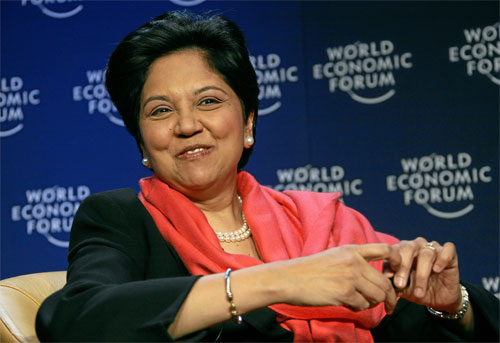
Image of Indra Krishnamoorthi Nooyi, PepsiCo CEO (NOT the subject of this post)

A major global corporation lost a 25-year senior executive at the prime of her career. She explained in her exit interview, “The corporate culture here is too parochial and I am tired of fighting it.”

How did the company lose such a gifted executive, at the point it could have most benefited from her contributions?

I will tell you a story that she shared with me, one that will hopefully provide a taste of how she felt during her career with this company. She shared the story with me at the conclusion of a two-day training course I had conducted, in which she had just participated.

“Dianne, I have so very much enjoyed this global management training you have facilitated for us. These are exactly the cross-cultural skills and mindsets needed in our world today! You are providing us tools and processes for acknowledging and using unique contributions, hearing the voice and perspectives of all involved. This type of training is so very different from diversity training,” she told me.

Well, I happen to be a fan of diversity training. I was troubled by her words, and wanted to understand what this obviously intelligent, wise woman did not like about it.

“Well, Dianne, in my experience diversity trainers go through the motions. They do activities and they often don’t know why. I’ll give you just one example. A year or so ago I was in a senior management diversity training. The facilitator asked us to stand in a line, side by side. He instructed us to take one step back if English was not our first language. A step back if our skin color was not white. He said to take another step back if we were not Christian. A step back if we had not attended a first-tier university. On and on he cited the categories, and I took so many steps back that I was the only person at the far side of the room, alone. There were several others in between, but I was visibly alone.”

“I thought to myself, ‘YES! THIS is what I’ve been trying to tell you all these years! This company forces me to do backbends and jump through hoops in order to succeed! I have to lose who I am to influence decision making. I have to communicate in a way I dislike in order to be heard! Let’s change this corporate culture to be more inclusive!’ Oh, Dianne, I was so excited by this powerful exercise!”

“But, do you know what happened? The President of the company looked at me standing there in the back of the room and said, ‘Look how inclusive we are. A dark-skinned woman, an Indian Jain, can become a senior director!’ I thought to myself, do you know how much harder than a man I have had to try to succeed? How much harder than a white skinned person? How much harder than a European or American? He seemed to have no idea of the price I’d had to pay for my promotions. He didn’t acknowledge my accomplishments or the super-human efforts of other minorities in our organization. Rather, he prided the company on its color-blindness! And worse yet, the trainer didn’t say anything! The exercise concluded, and we went on to the next activity! Rather than a learning moment, the activity only reinforced ignorance and legitimized discrimination! I was absolutely crushed and stunned.”

Such a loss for this corporation. Such a difficult decision for this woman to have had to make. It was also a challenging position for the trainer to have been in; hindsight is 20-20 regarding how the trainer could have handled the President’s comments, and debriefed the activity, more effectively.

Let me close by asking you this: Have we all taken the time today to empathize, to put ourselves in someone else’s shoes? Have we done our part to change dysfunctional systems? What have each of us learned today?

I look forward to your comments on this post. Thanks!

Linked to the My Global Life Link-Up at SmallPlanetStudio.

The Case of Who’s in Charge: Whose language will we speak?

Or: “How to lose a US$1 million investment in less than an hour.”

Cultural Detective and the Case of Who’s in Charge

This case takes place in one of the world’s largest companies. The company has recruited, at much expense, a leading Nigerian scientist to head up a project; he is perhaps the only person in the world with the unique knowledge base, experience and connections needed to see this major project through to fruition.

The company has gone to great expense to relocate the Nigerian project manager to western Europe, and to assemble a cross-functional team of the company’s leading professionals to aid with the project. The project is of huge significance for the company. The plan is that it will break new ground and shift the way such projects are implemented worldwide. There is much hope and excitement, as well as huge investment and anticipated return, riding on it.

The project manager, the Nigerian scientist, calls a meeting with three of his team members. All four people greet one another in English, shake hands, and sit at a table for the meeting. The project manager introduces the agenda, in English. After a few minutes the discussion seems to naturally shift from English into the local language, and continues for about 45 minutes.

At the conclusion of the meeting, the four gentlemen stand up, again shake hands, and shift back to English to congratulate one another. One of them says, “I think we have devised an excellent plan.”

The project manager replies, “Oh, yes? And what would that plan be?”

The three others appear puzzled. “The plan we just agreed to,” they say. “The plan we’ve been discussing.”

The Nigerian responds, “I didn’t understand a word you were saying. I don’t speak that language.”

“Why didn’t you say so?! We could have switched to English!!” The others’ mouths drop open in disbelief at this waste of time, and the scientist’s failure to speak up.

“I am the project manager. I called this meeting, and I started it in English. All our correspondence has been in English. You all changed the language. It is a power play. Your colonialist ways never seem to change.”

After this meeting, the project manager requested his removal from the project. It appeared this hugely anticipated effort was dead before it had even gotten going!

An orientation to cross-cultural collaboration, including work on understanding and learning to deal with issues of post-colonialism, may have prevented this rocky start. There are times when, once mistakes have been made, there is no rescue or remedy. Convincing these team members to give it another go, to get past their doubts and discuss ways of respectfully and productively working together, required skilled facilitation. The project manager was convinced that his team members were racist, and the team members were convinced the project manager was overly sensitive. Both thought the other arrogant.

What are some of the techniques you might use in such a scenario? How might you help the team members gain empathy for what the project manager was feeling? How might you equip them with the skills they need to demonstrate respect in such an environment? How might you help the project manager develop the skills he needs to manage team members effectively, given post-colonialist realities?

Link

Interesting article in Diversity Executive magazine about product naming problems in the global market, some good examples, and a link to an article on the value of intercultural competence.

Kudos to all our interpretation and translation colleagues!

What are you favorite “Cultural DeFective” examples? And your strategies for preventing them?

Why is Intercultural Competence Helpful? The Case of the Ion Exchange Resins

Is there a bottom-line business benefit to intercultural competence? As someone who has lived and breathed cross-cultural and intercultural business competency for well over thirty years, that question tends to elicit a chuckle in me. And today, the person on the phone who asked me that question reminded me of a story.

You see, just yesterday I received an invitation to an “OB-OL-kai” in Japan, a “get together of Old Boys and Old Ladies,” a reunion of a group of colleagues that I miss terribly and would love to party with, again, face to face. We went through a lot together. They are some of the most talented professionals I’ve had the pleasure of working with in my career. And a few members of that group were involved in the story I’m about to tell you:

Cultural Detective and the Case of the Ion Exchange Resins

We worked for a multinational business that globally sourced ion exchange resins. IERs are small beads used to separate, purify or decontaminate; they are used to make ultra-pure water, for example. Don’t worry about the technicalities; this story focuses on how the people worked together.

In this case, the IERs were produced in southern France, at a facility that was one of the absolute best in the world. My client imported the IERs to Japan, selling them primarily to the semiconductor manufacturing industry.

The Japanese customers had extremely high quality standards, and the French-produced IERs consistently met all the customer’s requirements. The product was well within spec. But, the Japanese customers were worried: occasionally the IERs they received from France would vary slightly in color. One shipment might arrive quite clear, the next shipment more yellow or orange. Always the specifications were met. The IERs functioned to their purpose. But the color varied.

“The color doesn’t matter,” the French vendor explained. “The color has absolutely no impact on the performance of the IER.”

“Yes, that is true. We understand that color does not affect performance,” came the reply from the Japanese customer. “But we are concerned about why there is a color variation? We feel it must indicate a variance in the production process itself. There must be some variable in production that is not consistent and could be improved.”

A classic cultural gap: a focus on result vs. a focus on process. Does the product perform as required? Or do we look at continuous improvement of the production process itself?

In this case, the argument could quickly produce a stalemate, with both supplier and customer insisting their view is “correct.” The French could insist that their IERs are the best the customer will find. As long as the customer doesn’t find an equivalent product, that could be ok. But, it’s not a very good answer on a global stage, where there always seems to be another supplier waiting in the wings, with cheaper cost, easier shipping, or more commitment to listening to the customer.

Possible results of the vendor insisting that color doesn’t matter?
  • Lost customer (and this was a lengthy and very lucrative relationship),
  • Lost business/profit/cash flow,
  • Lost investment in developing this customer,
  • Huge reinvestment to develop a new customer of the same caliber,
  • Loss of opportunity to improve their product and their production process,
  • Not to mention the human aggravation.

The Japanese, in turn, could blame the supplier. “They are not committed to being the best they can be. They are resting on their laurels, on their prior success. We need suppliers who strive to maintain their leading edge. We need a supplier who listens to us and respects us.”

Possible results of the customer insisting color variation matters?
  • Diminishing trust of, communication and collaboration with the vendor, leading to
  • Loss of a strategic vendor,
  • Loss of the investment in selecting and developing the vendor,
  • Huge reinvestment to source and develop a new vendor,
  • Major time and financial commitment to establishing a relationship and educating a new vendor regarding customer needs, in hopes that the new relationship might become a strategic partnership.

I have seen this push-pull occur so often in my career. It frustrates those involved, it causes aggravation, it wastes time, and it wastes money. Take a moment to put some money to the points above, to calculate the “bottom-line impact” of such a simple cross-communication. In this industry, it is easily in the millions of dollars. And why? Due to pride, to arrogance, but mostly due to ignorance: not really understanding cultural differences and how to navigate them effectively.

And what might an interculturally competent solution look like? We know it involves multi-directional bridging, and systemic as well as interpersonal solutions. And, usually, such interculturally competent solutions are win-wins for both customer and supplier.

How so? Well, the vendor could listen to the customer, learn from the customer, even though the customer’s points don’t pertain directly to the product performance. In this way, the vendor would:
  • Strengthen trust and teamwork with the Japanese customer,
  • Could very well improve the quality of its manufacturing process, which in turn
  • Could help ensure it remains best-in class.
  • The customer will refer more customers to the vendor, due to the strong relationship with and excellent quality of the vendor, and the vendor’s global markets will grow.
In turn, the customer could voice its praise for the vendor’s quality, and explain that it’s intentions are collaborative and collegial; to help both vendor and customer be the best they can be. The customer could apologize for the hassle, and offer its process expertise to the vendor. In this way, the customer would:
  • Strengthen a very lengthy and very strategic vendor relationship,
  • Improve the cross-cultural skills of its staff, enabling them to partner more effectively with other vendors,
  • Improve the customer’s reputation in the global marketplace, as one of collaboration and loyalty.

Thus, the French and Japanese could work together to manufacture more color-consistent IERs, grow their global markets, strengthen their partnership, improve their employees’  skills, and polish their reputations in the marketplace. Win-win-win.

In real life, what actually happened was somewhere in between. These people were smart enough to hire a full-time intercultural consultant, after all, which I believe is one demonstration of their commitment to success. They got advice, and they did their best to put it to good use. They realized that intercultural competence is a lifelong process, contextually based, and strived to always do a bit better. It’s one of the reasons I want to travel halfway around the world to go to that OB-OL-kai!

What do you think? I would love you to share with us why you believe intercultural competence is helpful? Do you have a Cultural Defective or Cultural Effective case to share?

Cultural Differences in Dining Etiquette Again Get a Child in Trouble

Recently another sad story about dining etiquette across cultures has been in the news.* This time it involves cultural differences over how to use a spoon and fork, and involves a Filipino family living in Canada. Fortunately this child, Luc Cagadoc, was not removed from his family, but his mother, Maria-Theresa Gallardo,  explains that the school’s reprimands for Luc eating in a typically Filipino way have negatively affected his self-esteem as well as his performance in school. She won her case before the Quebec Human Rights Tribunal (the judge ordered the school district  to pay the family $17,000 in damages), though the case is now in appeals.

Once again, a terrific Cultural Detective has filmed a video about how Filipinos eat with a fork and spoon in combination. This was evidently the behavior that led Luc’s school lunch monitor to conclude that he “ate like a pig and should learn to eat like other Canadians.”

Thank goodness Luc’s Blended Culture mother responded very constructively. She says, “We’ve been travelling around. I’ve been showing him different ways of eating, and saying there’s nothing wrong with what he’s doing.” Unfortunately, she says, her son can’t shake off the incident. “I think it’s going to last him a lifetime to remember what happened in that experience that he had.”

Have you ever gotten in trouble for “poor” dining etiquette that was due to cultural differences? Come on, share your story!

* Earlier we reported to you about an Indian family living in Norway, whose children were removed from the family home. One of the reasons cited was that the children ate with their hands. In response to that post, one of our authors made a terrific video about how to eat with one’s hands. Eating with one’s hands is, of course, the norm and custom in many cultures.

What time should we meet?

This cross-cultural dating mishap (in response to this post, and building on this thread) is a true story submitted by Erin in Sydney:

I have many cultural mis-step stories in general, but the only one date-wise I can think of is this one when I was living in Chile. (Warning: it’s not hugely funny or unique!)

First date: I turn up “on time” (Chilean time, e.g., 45 minutes late). He turns up on time (gringa time, at the agreed time). He was a bit peeved that I made him wait so long.

Second date: I turn up on time (gringa time). He turns up on time (Chilean time). This time I had to wait nearly an hour.

We ended up pololeando (a Chilean word meaning “dating”) … though the timing thing was always an issue.

Thank you, Erin. Everyone, we are eager to hear a few of your “mis-steps!” It is our belief that sharing our Cultural DeFectives with others can even the playing field a bit, showing that intercultural competence is a lifelong enjoyable learning journey rather than a static state.

Miscommunication: Too Much Cultural Sensitivity!

This cross-cultural dating mishap (in response to this post) is a true story from UC Berkeley’s International House, submitted by Joe Lurie:

A German male student and a Guatemalan female student have agreed to go out on an evening date beginning at 8pm. Both wishing to make a good impression, decide to leverage their cross-cultural skills and sensitivity when dealing with approaches to time. The German fellow, normally stereotypically monochronic — 8 means perhaps five to eight — arrives at 8:45 only to find the anxious, somewhat distressed Guatemalan woman saying, “Where have you been? I have been ready since 7:50  as I wanted to be sensitive to your cultural clock.”

Adopting each other’s styles provoked an amusing disconnect — but in this case, not serious. They are married today!

Thank you, Joe! Reminds me how often I used to bow in Japan when my colleagues would simultaneously stick out their arms in anticipation of a handshake.

Favorite Cross-cultural Dating and Pickup Mis-steps

We’ve all had those dating, or invitation to date, “miss”es. Those times when cultural differences send unintended messages of the “I’m interested” variety. Many of these are funny, and fun to share. Come on, share some of yours, the kind that are safe for public consumption, of course.

A few of mine that come to mind:

  1. In a jungle lodge in northern Thailand, we spent the day on elephants, walking the river.  I remember smiling at one of the young guides. That night, after dinner, I climbed up to my sleeping bag, only to find it already occupied! NOT what my smile had intended to communicate at all!
  2. And, on the topic of smiles, it also caused problems for me in Italy. As I was leaving my room in the morning, the door to the room next door was open. I’m US American-born. I smiled at the guy sitting on his bed. That night he knocked on my door at 2 am, and kept knocking. Sob story told to me through the door about how his mother had just died, he was sad, and needed to talk to someone. Stupidly, I let him in. Incredulously, as he started to touch me, I started nervously laughing (I had spent a lot of time in Japan, and had picked up a tendency to laugh when nervous or tense …) Gratefully, my laughter must have offended him, because he left my room quite quickly after that.
  3. I am straight, but when I lived in Tokyo, I absolutely loved joining friends to go to the gay bars in Shinjuku-sanchome. We had great times dancing and laughing the night away! The guys didn’t seem to care I was hetero. So, when a girlfriend in San Francisco invited me to accompany her bar-hopping the lesbian bars of the city, I was excited. However, by the end of the night, I was depressed: not one person at any of the places we’d visited had asked me or joined me to dance, yet she’d danced the night away. “Well, Dianne, you do have that ‘I’m not lesbian’ sign on your forehead.” Funny I hadn’t noticed that sign when I’d powdered my nose earlier…
  4. Finally, this one from Brussels. Touring around the city, no doubt with a map in my hand, a young Belgian offered to show me the sights. “I don’t have money to pay a guide today,” I responded. “No, no, just as friends. I have free time. I’ll show you around.” After walking around and enjoying ourselves, we had a simple dinner and a beer. I offered to pay. “No, no; this is my city. I will pay.” So he did. As we got up to leave, I noticed my little purse was missing from my bag. I looked around for it, but it was not in the restaurant. My new friend helped me retrace our steps, to see if we could find it. Nothing. That’s when I noticed it: the omamori, or Japanese good luck charm, attached to my little purse. It was hanging out of his pocket. “Do you have my purse in your pocket?” I asked. My new friend threw the purse at me, shouting, “I toured you around all day! And you can’t even buy me a beer!” Then he ran away.

Ok, everyone, I’m looking forward to hearing a few of your “Cultural Defective” dating mis-haps. And for all of us to reflect on what we learn from these often funny and painful experiences. Please share your story via the form below, or in the comments. Thanks for helping us build a better world!

Go back

Your message has been sent

Warning
Warning
Warning
Type of Story You're Submitting

Warning
Warning
Warning

Warning.