Link

UCLA Chicano Studies Research Center Newsletter, March 2012 Director’s Message

Last week amid the pre-Oscars hoopla, I kept noticing postings on Facebook about the Mexican origins of the Oscar statuette, created in 1928. Apparently, the statuette was modeled on a nude study of Emilio “El Indio” Fernández, the renowned Mexican actor, screenwriter, and director, who was working in Hollywood at the time. Mexican actress Dolores del Rio, also working in Hollywood, recommended her friend Fernández to the award designer (and her husband from 1930-41), MGM art director Cedric Gibbons. The award was first presented in 1929 and soon thereafter began to be called “Oscar,” a name that was made official in 1939. Why Oscar? Some say the award was named after BettyDavis’s husband, or Margaret Herrick’s cousin, or, because Louis B. Mayer’s executive secretary was Norwegian American, King Oscar II. Indeed, there are several explanations, but they all share one feature: the nude statuette reminded white women in Hollywood of a male relation or countryman. In this way, through an earlier era’s social network, El Indio became The European.

I find this history fascinating not for the way it ends, but for all its wonderful contradictions from the start. The mestizo Fernández, nicknamed El Indio for his indigenous features and whose directorial work would exemplify mexicanidad (Mexicanness), not only started his career in Hollywood — his naked body became the basis for the industry’s icon and its most coveted recognition. Those in Hollywood could not help but look for a way to identify with this new award, to take it into the family, so to speak, and call it by a familiar name: Oscar. Such desire crosses boundaries and tries to deny the fact of them, too. Last Sunday, Best Supporting Actress Octavia Spencer provided an alternative expression of desire when she accepted her Oscar: “Thank you, Academy, for putting me with the hottest guy in the room. I share this with everybody.”

Saudi and Its Treasure

Saudi Arabia absolutely deserves its renowned title, “the last forbidden kingdom in the world.”

There are virtually no tourists in the country. There is also no such a thing as a tourist visa. In order to get into the kingdom, I needed to have an invitation from a friend or a company. After a few months furiously networking, I still found no one who was bold enough to want to get involved. A colleague of mine kindly explained: “You don’t make friends with a Saudi through email. You need to have incredible luck to meet one first, then wait until you have eaten all their dates and your body has been swollen with their tea, then you may say you have a friend.”

However, I must say I do have some self-claimed friends from a Saudi forum. One of them, not sure of his nationality, has helped me generously up to a point where he asked me to send a photo so he could pick me up at the airport and (word by word) “…make sex together”. After many other dramas, I decided to contact the embassy and frankly told them my whole idea: “Sir, I would like to travel along the Islamic history route, from where Islam began, which is your country. And then I will follow its expansion path through three continents. Think Ibn Batutta! I want to show people that there is also a different Middle East than what is described in media. I’m a good person with good purpose. Please help!”

I started to email and call Saudi embassy in The Hague nine months before my journey began, without much luck. Then I decided to just knock on their door. The first man I talked with made me jump to my feet when he said this is an amazing project, and the embassy “has to” support me. I came back home, preparing a cover letter and all other documents as suggested. A month later, I got an appointment with the first secretary and was overwhelmed by the friendliness I received. I came home again to prepare a thick package of paper as suggested, even got to details such as who I plan to meet and where I plan to visit. Mr. Secretary promised to inform me if anything else is needed. He kindly asked for my patience as the papers would have to wait after the annual Hajj to be submitted to the Ministry of Culture. Three months later, he informed me that my application had been sent away.

Then I patiently waited for another three months…

And I am still waiting…

Now, let me tell you another story. When I was small, my father – a colonel in the North Vietnamese army – had in his room a small safe that nobody was allowed to touch, let alone to open it. My siblings and I used to stare at it for hours, arguing what it was inside. Our imagination ran wild, starting with all sorts of guns and weapons, or maybe poison. One day, I – by then five years old – stood up and seriously concluded that there must be a monster being kept in the safe. None of us ever thought of something beautiful, like a precious stone or similar treasure. Daddy would share it with us no doubt if it was a beautiful thing.

Years after, when my father got his cancer, in one of the last days of his life, he called me to his bed and gave me the secret that he had been keeping away from us for so long.

It is a bible. It is a small bible with a beautiful red leather case.

In another story, I will explain to you why the bible must be hidden in my family. For now, whenever I recall my childhood staring at father’s safe, letting the wild rumor and imagination consume my mind, I could not help a chuckle. It still surprises me how far from the truth our guess work had been.

My friends, don’t you think we have done enough guess work about Saudi?

—–

It’s nice to meet all of you here on the Cultural Detective blog! I am a proud member of this team, and co-author of Cultural Detective Vietnam. I am in the midst of a journey that traces the path of Islam, from its origins as it spread outward around our planet. You can follow my journey daily in Facebook or via my blog.

Link

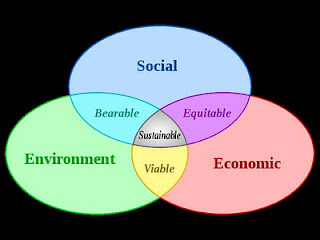
Our whole raison d’être at Cultural Detective is to help build a more inclusive, just and sustainable world.

One of the many wonderful team members we have helping us do that is Cultural Detective India co-author Madhukar Shukla. He teaches and promotes social entrepreneurship in a myriad of ways, and recently did a terrific blog post that I thought you might enjoy, on seven ways to incorporate sustainability into management education.

Please, share with us your thoughts and stories about how you help build a more sustainable and just world.

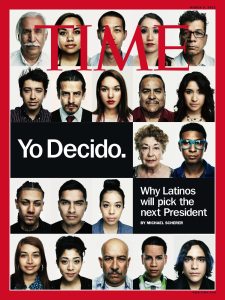
Response to Time’s “Yo Decido” Cover

I am blessed to have a comadre who is one incredibly intelligent, wise, and loving woman. Her name is Carmen DeNeve, and she is Mexican-born, living and teaching for decades now in Los Angeles California.

A day or so ago I posted this Time magazine cover to my personal Facebook wall. Many people shared it, as it’s exciting – that the voice of Latinos can be so strong in the USA!

Well, I heard very quickly from my comadrita. I find Carmen’s response so important and quite thought-provoking. It tells a tale that is true for countries around the world with new immigrant voters, I believe, and I’ve received her permission to share it with you here.

“Comadrita, I wish, but too many issues here. First, I wonder about the numbers who really vote and are well informed, even if the total figure is huge. I’m working on this where I teach because some Latino voters have called me the night before election day to ask me, ‘Who do I vote for?’ Or doubting if they should vote. Their thinking is if they don’t study hard about who they need to vote for, maybe it’s better not to exercise their vote — sounds almost sacrilegious.

I think we need neutral political education for new voters like many Latinos, but it doesn’t happen, unfortunately. I want us to be prepared to vote, not only exercise a right that is precious. That’s why later some people blame the victims! And, maybe rightly so.”

[Additional comment from Carmen the following day:] “Dianne, I started reading the article, but I don’t like that journalists give misleading information and manipulate facts, exaggerating such as YO DECIDO. Out of the 50.5 million Hispanic/Latinos they mention, or 17% of the total US population, not all of these can vote, of course. About 10.2 million according to the Census 2010 are not authorized in the U.S. (undocumented) and of course there are more in actuality. This brings us down to 40.5 million potential voters. BUT, from this number there are those under 18 years of age, which roughly I calculated looking at last Census data to be in the 18-20 million range. The recent Census data show roughly one in four children under the age of 10 in the U.S. are Hispanic.

So we don’t really have 50.5 million voting if we take out 30 million not able to vote! This leaves us with 20 million potential voters. Do all vote? Unfortunately not so. I’m trying to educate those who can vote from among these 20 million in my community. They are adorable, but not interested in politics rather focusing on survival. The education of these potential voters will take a long time.

On the other hand, the manipulation of numbers is unbelievable as we all know. I see it as a big scheme for what? I wish, I wish we could all vote and we could actually be 50.5 million and not for example only 13.7% possible voters in Colorado. So I don’t get how we will pick the next President.

We are as diverse in political issues as in religion and socioeconomics. The Miami Cubans seem to have little in common with the Sacramento Mexicans or the New Mexico Hispanics or the Chicago Latinos. But if they want to present us as a common strong block that’s their prerogative, but misleading after all.

Yemen Revolution and the Quest for Patience

This photo was taken 30 minutes after the voting closed. Not a gunshot was heard in Sanaa. This rifle (though readily placed next to the desk of a media boss in Sanaa) was not needed.

I arrived in Yemen just 12 hours before the election. As a single female traveler, the airport police did not let me out until they could appoint a driver to take me to my friend’s house. Nobody left the airport untraceable.

The election has only one candidate, Mr Hadi, and it is interesting to see that this election aims at non-violence and a peaceful handover of power rather than genuine democracy. Many Yemeni activists told me that 5 other candidates were denied by the government. They were furious, of course.

However, looking at the turmoil that Yemen has been through, I can also see the reasons behind this seemingly undemocratic election. Being a very delicate and fragile country, Yemen needs stability and its people need to know that democracy goes steps by step. The country is like a patient after a big operation. He needs soft food and milk instead of steak.

I am happy for Yemen, that the country has moved one step away from dictatorship, being in a transition of moving forwards to a real democratic election in the near future. Democracy is a process, and it needs a lot of patience and dialogue.

It’s nice to meet all of you here on the Cultural Detective blog! I am a proud member of this team, and co-author of Cultural Detective Vietnam. I am in the midst of a journey that traces the path of Islam, from its origins as it spread outward around our planet. You can follow my journey daily in Facebook or via my blog.

Eating with One’s Hands: Cause to Lose One’s Children?

Members of the Cultural Detective community are united in a common purpose: to spread respect, understanding and justice through collaboration in our world. I am so, so lucky to be able to work, each and every day, with such passionate and diversely talented people.

Yesterday was a wonderful day. We held the second in a successful series of two FOLEs (Facilitated Online Learning Events) with a globally dispersed group of movers and shakers; launched a MUCH-anticipated new package (CD Bridging Cultures); got out a blog post and a newsletter; and finished the admin area on our upcoming Cultural Detective Online subscription service. But, I was tired, and feeling rather overwhelmed by all the technology I (have to) work with. I was wondering, as many of us do sometimes, if my efforts were really having a positive impact on the world.

Just then I opened a note from one of my colleagues, a sign language interpreter who is a “foodie.” She reminded me that, yes, every little bit we put out there positively (including via technology) has constructive ripple effects in our world. Bless you and your beautiful work, Anna! Keep reading to see her note and a terrific effect of a recent social networking link.

Here’s the note I received:
Hello dear Dianne,

I am excited to share with you a post and video I made inspired by a story on your Intercultural Competence Newsfeed. Do you remember the piece about:

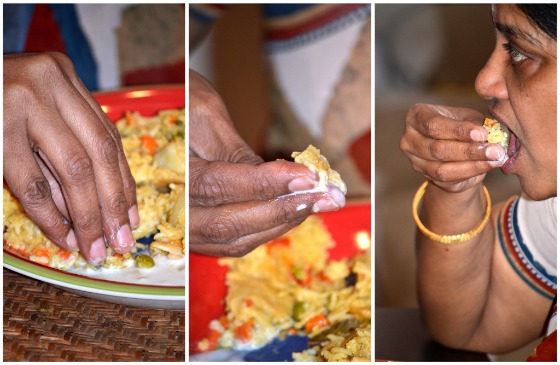
Norway authorities take away Indian couple’s children for feeding them by hand

My fascination with food and culture spurred me to write a post about different cultures who eat with their hands (including Indian, Ethiopian and Moroccan). And with the help of a friend, we shot a video of this lovely Moroccan gentleman I know giving me a lesson in eating with the hands.

I am hoping to make a series of such videos on cross-cultural food ways. Hopefully it can help build cross-cultural understanding and respect.

Thank you so much for all your wonderful work!

Anna Mindess
Co-author of Cultural Detective Deaf Culture
blog: East Bay Ethnic Eats

Below is the first video in her series, for those who don’t want to keep clicking. We’ve added it to our Cultural Detective YouTube channel as well.

Much-Anticipated New Release! Cultural Detective: Bridging Cultures

Cultural Detective Bridging Cultures coverIntercultural understanding is essential to working in a global world, though by itself it is simply not enough. There is a critical need beyond awareness of differences: an ability to generate and demonstrate effective, transformative, out-of-the-box solutions to challenging intercultural situations. Since 2004, the Cultural Detective series has successfully enabled people to do just that.

We are proud to announce the debut of our latest offering, Cultural Detective: Bridging Cultures. This new tool enables individuals, teams and organizations to purposefully strengthen mindsets and skills in order to leverage cultural differences as assets. It contains worksheets, exercises, tools, tips, and complete instructions. The learning package is authored by Kate Berardo.

Not every situation can be bridged, perhaps not every situation should be bridged, and the act of bridging, as many things in life, may involve an investment of time and energy. This new set of learning materials begins, therefore, by helping you distinguish whether “to bridge, or not to bridge.”

Cultural Detective: Bridging Cultures will enable you to understand how you tend to react when encountering cultural bridging opportunities, identify more effective strategies for bridging both in-the-moment and over time, and practice putting these skills into action. More specifically, you will:
  • Identify when a conversation is about to spiral up or down.
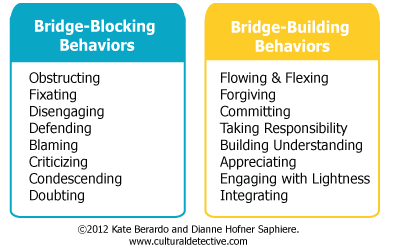
  • Identify “bridge builders” and “bridge blockers” to your successful intercultural communication.
  • Learn techniques for in the moment bridging of differences to ensure conversations spiral upward instead of downward.
  • Develop holistic strategies that consider influencing factors such as history, context, and structure of the interaction.
  • Learn how to expand, filter and test effective bridging solutions.
  • Develop high-impact, creative bridging solutions to both prepare for and repair intercultural relationships.
  • Practice, and receive feedback, on bridging strategies in situations that are real and relevant for you.
Cultural Detective: Bridging Cultures is organized around four main competencies that are essential to bridging cultural differences. They are:
  1. Self-Awareness: Being aware of the mindset you bring to challenging intercultural situations, and knowing both your strengths and blocks in turning such situations into bridging opportunities.
  2. Course Correction: Recognizing points in an interaction where misunderstanding or conflict starts to occur, and responding appropriately.
  3. Holistic Analysis: Being able to analyze complex intercultural situations in a detailed and holistic way that considers a variety of influencing factors, and, thereby, more effective solutions.
  4. Creative Solving: Learning skills and methods to generate “beyond the obvious” solutions to bridge intercultural differences.

While this is not to suggest these are all the skills needed to work effectively across cultures, these are often under-developed abilities that need to be strengthened to enable effective intercultural bridging, and, therefore, are the focus of this package.

SAMPLE EXERCISE

How about an exercise to get you started? The purpose of this activity is to learn what bridging and blocking look like for you, so you can hold a bridging mindset more often.

Let’s begin with some simple definitions.

Blocking Mindset:
  • Focused on own agenda
  • May become defensive or impatient
  • Unintentionally harming the relationship

Think about a challenging interaction in your own life (who, what, when, why) during which you held a blocking mindset. How did you feel? What did your blocking mindset look like? What behaviors did it entail? What outcomes did you achieve?

What do your reactions tell you about yourself and how you might improve your intercultural effectiveness?

Bridging Mindset:
  • Open and curious about others
  • Willingness to meet others more than half-way
  • Belief that others are NOT “out to get us” but that they have positive intentions

Think about a challenging interaction in your own life (who, what, when, why) during which you held a bridging mindset.  How did you feel? What did your bridging mindset look like? What behaviors did it entail? What outcomes did you achieve?

Learn more about Cultural Detective: Bridging Cultures; view a short video on the core Cultural Detective method, which a major software manufacturer credits with a 30% increase in customer support satisfaction; purchase small quantities of the package; or contact Kris Bibler about a site license.

Objection! – Talking with children about cultural stereotypes

“Oh no!!! Is my son really fighting the natives? Objection!” That was my thought recently when I saw my white first-grader playing a Lego video game whose content clearly perpetuated the age-old stereotype of the monolithic mass of vicious, “savage” brown-skinned “primitives” fighting the white heroic characters on a mission to find the proverbial pot of gold.

“This cannibal is a native of Pelegostos Island where his cannibal tribe believes Captain Jack is their god, trapped inside of a minifigure! He loyally serves Chief Jack – until he tries to serve him for dinner!” reads the description of the Lego character whose portrayal appalled me. Surely enough, the very ethnic group portrayed as cannibals in “Pirates of the Caribbean,” the Garinagu of Belize joined with the Kalinago (Caribs) of St Vincent, Dominica and Trinidad to send a protest letter to the executives of the Disney Corporation challenging their negative portrayal in the film, based on an ahistorical 17th century stereotype that is still very prevalent and harmful.

How to challenge destructive stereotypes present in the world around us and effectively address issues of race and racism were the topics discussed in the excellent and informative workshop I attended earlier this month in Seattle. “Talking with Children and Youth about Race,” taught by Dr. Caprice Hollins and co-facilitator Ilsa Govan of Cultures Connecting, offered the following tips I would argue work well in conversations with adults as well:
  • We don’t have to have all the answers.
  • Ask questions to see what the child is thinking and to get the child to think deeper (do not assume you know until you hear more).
  • We don’t have to be profound or “seize the moment,” as if it is the only one we have.
  • We don’t have to respond immediately. It’s okay to think, research, ask a trusted adult for input first before coming back to the conversation.
  • We can learn & explore with the kids.

Most importantly, SLOW THE CONVERSATION DOWN.

I came away from the workshop realizing that many of us, whether of color or white, are the first generation to have deep conversations about race with the younger generation, finding our way. It’s good to connect with others on a parallel journey.

Disney did not listen to the advocates from the Caribbean, but my six-year-old and I have already had a few of good conversations about problematic depictions of dark-skinned native people in the media and games. More discussions will follow.

Please share with us your stories about how you teach your kids, extended family and friends’ kids, about cultural stereotypes, via the comments section below.

Or, please share with us also your own story of intercultural effectiveness, via the form on this page.

Book Review: Transformational Diversity

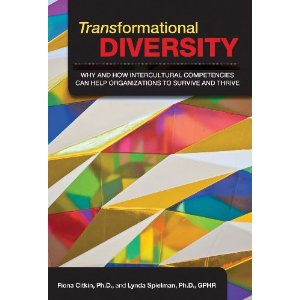
Transformational Diversity: Why and how intercultural competencies can help organizations to survive and thrive, by Fiona Citkin and Lynda Spielman, SHRM, 2011. ISBN 978-1-586-44230-9

This book had me at the title. We all work with people different from us in gender, age, function, ethnicity, nationality, intellectual orientation or religious tradition, and many of us have also been involved in mergers and acquisitions that join two or more organizational cultures. We have a wealth of diverse human talent to draw upon to penetrate new markets and creatively solve problems, but how do we do so?

Books like this one, a compendium of the latest thinking along with sample designs and resources, are gifts. Such compendia guide the responsible practitioner through the maze of information available on the topic, sifting through to highlight for the reader what is most accurate or valuable, and ideally teach us where to turn for further learning. They help us take stock of where we are as a field, where we should be going, and the latest best practice for how to get there. This book does that in a no-nonsense, practical, and brief (131 pages before appendices and bibliography) manner.

The “new imperatives” that the authors cite are real and pressing. They include the need to:
  • Compete worldwide for the best talent,
  • Develop global workforce initiatives,
  • Coordinate all domestic efforts with an increasingly multicultural workforce,
  • Have diversity contribute more visibly to performance and the bottom line, and
  • Organize inclusion-oriented systematic education for all populations (p. 6).

Transformational Diversity aims to take diversity programming “beyond race and gender” (p. 1) to “more effectively enhance productivity and performance” (p. 3).  The authors tell us, “Transformational Diversity is a call for change in current diversity and inclusion programs, which in our experience seems [sic] to be struggling from fatigue and from challenges to produce measurable results,” (p. 5).

What does the book have going for it?

What most stood out for me is that they give voice, or, rather, print, to many of the things leading global D&I practitioners have been saying over the past decade. And this is valuable. Just a few examples include:
  1. The fact that organizations hire “diversity” and then proceed to erase it by teaching new hires to fit in (p. 10).
  2. The fact that so much diversity programming is U.S.-centric (p. 13), that U.S. diversity models have “historically been grounded in… government requirements and moral ground to redress past injustices and discrimination patterns” (p. 9), and that these rarely translate well overseas.
  3. That affinity groups have gravitated towards social and celebratory roles, when their real value is in education: “to make known any differences represented by the individuals within the groups so that the differences can be respected, and thus, accepted” (p. 76).
  4. The fact that understanding the dimensions of culture is not enough. “We do not have to choose between individual and group performance but instead make sure that the relationship between them becomes meaningful in the workplace” (p. 91).

The authors share numerous helpful examples and stories. They cite several research studies and reference statistics, another plus. Their approach is always practical, such as their three steps for rolling out Transformational Diversity (pp. 38-42) or their guidance for “Exporting U.S. Diversity Programs” (pp. 68-70). Many readers will find incredible value in the six programming templates (the authors call them “Archetypes”) the authors provide (Chapter 5).

Thus, there is incredible value in this book, and I highly recommend it for all of the above reasons. The authors do a commendable job communicating basic intercultural concepts to the diversity practitioner, with advice such as helping U.S. Americans to learn to see our biases (pp. 112-114).

What would I have liked to see in this book? Adding any of the below would have added volume and complexity, and one of the most terrific things about the book is its brevity and no-nonsense approach. But, with that qualifier, I felt many of the sample solutions were still heavily knowledge-focused rather than competence-building. This would seem to me a sign of the difficulty of breaking through to new paradigms from the old. The designs in the book are excellent, and with a bit more explanation they may center on skill development, but that fact did not show through as much as I would have liked.

Secondly, as an organizational development practitioner, I was very happy to read the authors’ cautions to embed change in the organization itself (p. 73). The importance of building organizational structures and systems to support Transformational Diversity seemed to me under-emphasized, however. The six Archetypes that the authors present, though they include one on coaching, seem to focus primarily on training. What about incorporating these new commitments and capacities into our hiring, promotion, and review processes, as well as into project management and other on-the-job activities? That is my bias, of course, and no book can do it all. This one is definitely worth the read.


Jam and Bread

Submitted by George Simons, http://www.diversophy.com

Being an interculturalist for most of my life, I should know better, however a few years ago we were having a potluck picnic to celebrate Easter and I called up a Peruvian friend who lived nearby to ask what she might bring. She volunteered to bring “jam and bread.” I thought this a little strange for an Easter holiday picnic, but of course said yes.

Meanwhile I shopped for the essentials, a honey baked ham, some good sweet potatoes, scallions, wine, etc.

When Sunday came along, I heard her pull into the driveway and went to the window wiping my hands from the cooking. I was just about to go out and help her when I saw her extract from the trunk (boot) of her car a ham identical to the one that I had warming in the oven — I quickly took it from the oven and hid it in the closet. So much for “JAM and bread.”

Thank you, George! Readers, please share your story via the form below, or in the comments. Thanks for helping us build a better world!

Go back

Your message has been sent

Warning
Warning
Warning
Type of Story You're Submitting

Warning
Warning
Warning

Warning.