
The Connection between Creativity and Intercultural Competence

If I were to ask you what it takes to be effective across cultures, what comes to mind? If you are anything like me, then you have probably started to rattle off some of the classics: self-awareness, open-mindedness, curiosity, flexibility—maybe communication skills. All important.

But where is creativity in this picture? And why isn’t it closer to the top of the list when it comes to what it takes to be effective when working across cultures?

You could argue that creativity is an output of some of the above: if you are open-minded, curious, and flexible, you are likely to be able to be more creative, which will help you to be more effective. But I think it’s worth highlighting the importance of creativity as a stand-alone competency for working across cultures—especially when it comes not just to being aware of cultural differences, but being able to develop effective bridging solutions to differences you may experience.

Take Morfie, our newly named CD animal mascot, as an example. Sure, he may be curious as he scuttles across the ocean floor, but what makes him effective is his creative problem-solving in the face of challenging situations: his ability to morph himself into another sea-creature to ward off danger.

The importance of creativity is something I learned the hard way. When I first moved to Japan, I moved into an apartment subsidized by the company I was working for. There were all kinds of problems with the apartment when I arrived (for example, the heating was broken and it was the middle of winter in Sapporo—yes, the same location as the Winter Olympics in 1972). What would you do in this situation?

My initial instinct was to take a more ‘American’ approach—to take my contract in to my employer, highlight the conditions outlined in the contract that had not been met, and ask for these to be amended. But I wasn’t in the US. I was in Japan, a more relationship-focused and indirect culture. Surely going in and making these kinds of demands and pointing to a contract would not exactly start me off on the right foot with my employer, I thought.

So instead, I tried a more indirect approach. When they asked me how things were in the apartment, I remember trying to be subtle about naming some of the problems. I think at one juncture I might have even said something like, “This is the first time I’ve lived in an apartment where frost and ice forms on the insides of windows.” I kid you not. This raises a whole other topic of the ineffectiveness that can often happen when more direct speakers try to be more indirect.

The point of that story, beyond revealing how much I had to learn about Japanese culture when I arrived, was that I was far from creative in my solving of that situation. In my mind, I had two options: take the American approach, or take the Japanese approach (at least my limited understanding of it at that juncture). Be direct or indirect. It was bifurcated, dichotomized, overly simplified, and therefore ineffective.
  • What if I had invited some of my colleagues over to my apartment for a meal, during which they could have experienced the issues first-hand?
  • What if I had asked a colleague for a recommendation for a repair service? Or even asked them to call a repair company for me, since I had yet to learn the Japanese word for moldy?
  • What if I had written to the American colleague whose role I was taking over and asked him what he would do in this situation?

The point being, I could have and should have considered a lot more creative solutions here, but simply didn’t. And that’s really the point. Often when we are working across cultures, we stop at the first, most obvious answer, and that’s a limitation.

The good news is that my little housing adventure in Japan likely has helped me to become more creative—and it certainly proved the need for me to do so. Interestingly, recent research at Northwestern University in the US and INSEAD in France has highlighted that individuals who have lived abroad often demonstrate higher levels of creativity on classic ‘creative problem solving’ tasks.

That said, waiting until you are stuck in challenging intercultural dilemmas to flex your creativity muscles—or relying solely on living abroad to develop the muscle, doesn’t seem the right answer. It’s the kind of thing that you want to have so ingrained in you, that when you are faced with a tough situation, you naturally think through a number of different possibilities. In essence, it’s about learning to be Morfie-like, to be able to quickly run through a rolodex of possible options as to how to transform yourself effectively in those situations—and to continually be expanding your repertoire of possible options.

Developing your creative problem-solving skills is one of four main competencies we focus on in the newly released Cultural Detective Bridging Cultures for that reason. In the package, we go through a series of exercises that help people to expand their solution space—to really get beyond solutions of the generic, ‘he should get cross-cultural training, she should take the other person out to dinner’ nature. In an earlier post I shared with you an exercise to get started.

One really useful technique that we practice in the package comes from the work of Michael Michalko, a pioneer in creativity. It’s called challenging assumptions. The process is simple. When you are faced with a challenging situation, you name all the assumptions you are making about those situations and challenge those assumptions. The premise is that often the way we frame a problem limits the potential solutions to it.

If we go back to my Japan example, I made a lot of assumptions:
  • that I couldn’t take a typically American approach (yet my colleagues were very accustomed to working with US Americans)
  • that my colleagues were typically Japanese (they may have been attracted to the company I was working with very specifically because it wasn’t typically Japanese)
  • that the solution lied in me adjusting the way I communicated, from a more direct to indirect style (versus, for example, emphasizing another shared value we had), etc.

Challenging even just one of the assumptions would have opened up a lot of other options for me to effectively address this situation.

The experience I had in Japan was ten years ago now, but the lesson it taught me about the importance of creativity is invaluable. I now adopt a number of different creativity techniques regularly in my work. Beyond challenging assumptions, I also regularly change my physical location to prompt me to think about things differently, and I use techniques like thinking through analogies and wearing the hat of the other individual to help me identify more creative and effective solutions.

I would love to hear your experiences with creativity as they relate to intercultural problem solving: whether you’ve experienced situations similar to mine in Japan where it would have served you to be more creative; whether you’ve found other techniques that have helped you to continue to develop truly innovative intercultural solutions; even whether I should challenge the assumption I now have that creativity is a powerful, often overlooked skill in intercultural problem solving.

Link

Kevin and Rita Booker, very active Cultural Detective community members and extremely talented professionals, have put together a series of three articles on using film in intercultural education that I think you will find very helpful. If you use movie clips or YouTube videos in your coaching, training or teaching, or if you want to do that more, be sure to take a look. Lots of learning there.

By the way, if you love film, be sure to check out CDTV, our Cultural Detective channel on YouTube, with over 20 playlists. We welcome your recommendations (urls) on videos to add. Together we can build a convenient central repository of films to use to help our world become a more inclusive and collaborative place!

Developmental Intercultural Competence

The ability to collaborate productively and enjoyably across cultures is more important than ever, whether we focus on communicating with elderly parents or teenaged children, or on building trust and producing results with colleagues at the next desk and across the planet. But what do theory and practice tell us about how to gain maximum effectiveness?

One exceptionally rapid and proven way to successfully improve cross-cultural competence is to use the MashUp: a natural and powerful combination of two leading intercultural competence development processes: Cultural Detective and Personal Leadership.

Starting in September we will conduct a four-month course that will transform your personal and professional practice. It will enable you to use the MashUp in a developmentally appropriate manner to support and stretch learners at all stages of intercultural development.

Coursework will be conducted virtually, allowing you to complete the assignments from your office, home, or during travels. There will be individual and pair assignments, in addition to online classes. Do not miss this opportunity to work with some of those who are doing leading intercultural competence work worldwide. Learn more.

Oldie but Goodie: Indigenous Contributions to Global Management

Because Cultural Detective is used by so many corporations, business schools, and management development programs, we are obviously very interested in strategies for broadening the scope of management teaching.

Recently I was perusing our archives, and found this terrific article from way back in 2005, authored for us by Cultural Detective Malaysia co-author Asma Abdullah. It focuses on indigenous contributions to global management, and I thought some of you might enjoy reading it, for the first time, or seeing it again with new eyes. Oldie but goodie, in my opinion!

Global Success By Trial and Error?

The idea occurred to Dianne that a blog about “How to convince your boss to work with Cultural Detective” could spark some interesting conversation. Always in the mood for some good dialogue, I took the bait!

To those of us who live and breathe “developing cross-cultural competence,” it seems like a no-brainer. Who wouldn’t appreciate a deeper understanding of the cultural values that are most likely driving your international clients’ decision-making process? Isn’t it logical that understanding what makes our global clients, vendors or colleagues “tick” would translate into improved relationships and ultimately more or better business?

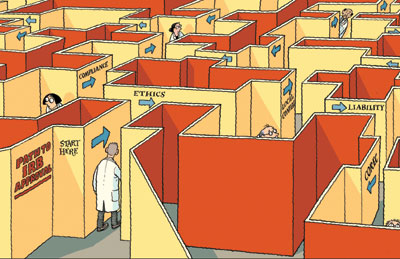
We know, by evidence of the shear number of cross-cultural mishaps resulting in project failures, job loss, plant shut-downs, etc., that millions  of dollars are lost annually by culturally inept managers following a path of trial and error versus embarking on a path of structured learning to develop competence for working across cultures. But because those dollars are not directly traceable to a lack of cultural competence, the trial by error path to global success continues to lead organizations through a maze of cross-cultural dilemmas which ultimately may or may not end well for the organization.

If you’re seeking the most direct path to your global success, it makes both personal and organizational sense to prepare the way by learning a core process for developing global competence. In fact, there was a 2007 Accenture study that involved interviews with global managers, who reported a belief that adopting a cross-cultural communication training program could improve business productivity by 26%! Most importantly, their belief was supported by actual improvements in productivity of 30% reported by organizations who did implement cross-cultural training programs.

The bottom line is that by using the Cultural Detective Method you are far more prepared for any cross-cultural situation, so that ultimately you will be more productive and effective in your job and for your organization. Better prepared employees feel more successful and have much better job satisfaction. What boss wouldn’t want that for their employees?

Our clients report feedback such as the following:
  • 30% increase in global customer satisfaction, due to training technical support representatives with the Cultural Detective
  • Alleviation of the typical “low” resulting from culture shock that many expats feel, and shorter time-to-competence on assignment, due to providing pre-departure training that includes the Cultural Detective
  • The Cultural Detective tools allow the flexibility to meet emerging needs/respond to time-sensitive opportunities because they provide “just in time” effectiveness in a cost-effective manner.
  • Cultural Detective training results in “positive and creative resolutions that bridge value differences.”

As I think more closely about this question, “How to convince your boss to work with Cultural Detective tools,” the answer clearly lies in the Cultural Detective Method and the Value Lens tools themselves! What does your boss value? And what does his/her boss value? Leverage whats important to them and put their values to work for you!

So, what do you think? How would you convince your boss? Let us hear from you!

“Diversity Training Doesn’t Work!”

“Diversity Training Doesn’t Work: Rather than extinguish prejudice, diversity training promotes it!” This was the title of a 12 March 2012 Psychology Today online article.

While so many of us complain about media sensationalism, I begrudgingly have to admit that, in this case, the inflammatory title led me to read this article from among the 200+ crossing my desk that day.

The article’s author, Peter Bregman, relies on research from 2007 to prove his point. He repeats or paraphrases the subtitle four times throughout his article, each time stating it as fact. Yet, in reviewing the original research he cites, I feel it does not support his premise. The original paper is much more nuanced and even-handed (“certain programs increase diversity in management jobs but others do little or nothing”).

While I take issue with much of what Mr. Bregman says in his article (that there are two types of diversity training, for example: those that tell people what to say/not say, and those that break people into categories. Come on, really?), there is also learning to be gained from it. His conclusion: “We decided to [teach all managers] to listen and speak with each other — no matter the difference — which is the key to creating a vibrant and inclusive environment,” was one I could heartily agree with.

Let me focus this post on the constructive learning we might get from this article. Mr. Bregman urges the reader to do nine different things. I consolidate them, as there was quite a bit of redundancy. They are:
  1. See people as people instead of categories. Train them to work with a diversity of individuals, not with a diversity of categories. Move beyond similarity and diversity to individuality. Don’t reinforce labels, which only serve to stereotype. Reveal singularities. Help them resist the urge to think about people as categories.
    • I wholeheartedly agree! Yes!!! Please! That is exactly why Cultural Detective looks at an interactional process of how people communicate in real situations (using the Worksheet with real-life or prepared critical incidents).
    • It is why we have a package titled, Cultural Detective: Self Discovery, aiding users to create Personal Values Lenses.
    • It is why Cultural Detective: Blended Culture looks at the multicultural experience of so many of the individuals in our world today.
    • It is why our definitions of “culture” go way beyond nationality or ethnicity, and include looking at multiple influences on why we are the way we are (see Layering Lenses).
    • While we are all unique individuals, we are also all members of groups and communities, and our world views are shaped by those groups (cultures) in which we were raised. Cultures establish patterns of behavior that are historically sanctioned, so we each learn all kinds of things that seem natural, yet are culturally determined. Viewing people as unique individuals not influenced by culture is a step backwards, and not helpful in understanding others.
  2. Stop training people to be “accepting” because it doesn’t work.
    • Again I agree! If people can better understand themselves, and get a bit of insight into why others might behave the way they do, we won’t need to lecture them. These are two of the Cultural Detective Model’s three core capacities (Subjective Culture/know ourselves, Cultural Literacy/understand others’ intent, Cultural Bridge/skills and systems for leveraging similarities and differences).
  3. Teach people to have difficult conversations with a range of individuals.
    • Yes! The CD Worksheet came to life as a conflict resolution tool in multicultural workplaces in Japan in the 1980s and 90s. It emerged from diverse individuals having just such difficult conversations.
  4. Teach managers how to manage the variety of employees who report to them. Teach them how to develop the skills of their various employees.
    • While I might offer this as one reason to conduct diversity training, coaching, or mentoring, I can definitely agree with the goal. Cultural Detective offers a process for understanding, valuing and leveraging individual cultural differences. Our newest package, Cultural Detective Bridging Cultures, focuses precisely on skill development.
  5. Help them resist the urge to think about others as just like themselves.
    • Yes! Thinking about others as just like ourselves is one stage of a developmental process. Learning to distinguish the ways in which we truly are similar and different, seeing value in the similarities and the differences, and creating ways to benefit from them, is what Cultural Detective is all about.

The initial research referenced in the article, (“Diversity Management in Corporate America,” Frank Dobbin, Alexandra Kalev, and Erin Kelly, American Sociological Association, 2007), was a systemic study of 829 companies, designed to see which kinds of diversity programs work best, on average. A weakness in the original study is that it looked purely at diversity, not on inclusion or competence to manage diversity.

Having said that, the findings showed that diversity councils, diversity leaders, and mentoring programs most strongly correlate with increased management diversity, while training and diversity performance evaluations have a lower correlation. To quote the study authors, “On average, programs designed to reduce bias among managers responsible for hiring and promotion have not worked. Neither diversity training to extinguish stereotypes, nor diversity performance evaluations to provide feedback and oversight to people making hiring and promotion decisions, have accomplished much. This is not surprising in the light of research showing that stereotypes are difficult to extinguish. … Research shows that educating people about members of other groups may reduce stereotyping.”

“Optional (not mandatory) training programs and those that focus on cultural awareness (not the threat of the law) can have positive effects. In firms where training is mandatory or emphasizes the threat of lawsuits, training actually has negative effects on management diversity. Managers respond negatively when they feel that someone is pointing a finger at them.”

The original article by Dobbin, Kaley, and Kelley presents three broad approaches to increasing diversity:
  • Changing the attitudes and behaviors of managers
  • Improving the social ties of women and minorities
  • Assigning responsibility for diversity to special managers and task forces

These are all situations in which the Cultural Detective Model can be used to help shape constructive interactions and manage differences effectively.

What do you think?

Miscommunication: Too Much Cultural Sensitivity!

This cross-cultural dating mishap (in response to this post) is a true story from UC Berkeley’s International House, submitted by Joe Lurie:

A German male student and a Guatemalan female student have agreed to go out on an evening date beginning at 8pm. Both wishing to make a good impression, decide to leverage their cross-cultural skills and sensitivity when dealing with approaches to time. The German fellow, normally stereotypically monochronic — 8 means perhaps five to eight — arrives at 8:45 only to find the anxious, somewhat distressed Guatemalan woman saying, “Where have you been? I have been ready since 7:50  as I wanted to be sensitive to your cultural clock.”

Adopting each other’s styles provoked an amusing disconnect — but in this case, not serious. They are married today!

Thank you, Joe! Reminds me how often I used to bow in Japan when my colleagues would simultaneously stick out their arms in anticipation of a handshake.

Layering Lenses: We are All Multicultural Individuals

“As an ethnic minority woman working in a large multinational firm, too often I feel like I have to learn only, to fit in. For the first time since I’ve worked here, I can now see, and explain, the unique and valuable perspective that I have to contribute as well!” she said, her face positively glowing.

The privilege of experiencing such affirming responses from Cultural Detective customers is part of what makes my job so incredibly worthwhile. This woman had just spent time creating her personal Values Lens, using Cultural Detective Self Discovery as well as a selection of Values Lenses from various other CD packages.

While the core of Cultural Detective is its process, which enables ongoing learning, collaboration and conflict resolution, the Lenses play an invaluable supporting role. As shown in the diagram above, one important role the Lenses can play is to help us realize that we are all unique, individual composites of the various cultures that have influenced and helped form us over our lifetimes. We are not “just” Chinese or Brazilian; we are much, much more than a single story, as Chimamanda Adichie so well told us.

In international cross-cultural work such as I’ve done over the past 34 years, too often people limit their definitions of “culture” to “nationality.” Culture goes way beyond nationality. Since by definition culture is the shared norms, values and behaviors of a group of people, culture can also include ethnicity, language group, physical ability or mobility, sexual orientation, or gender identity. More often than not, in my experience, while nationality(ies) tend to have a strong impact on our behavior, professional training, the culture of the organization to which the person belongs, the team culture, their socioeconomic level, generation, their faith or spirituality … all of these influence behavior as much as or more than national birth culture. It’s worthwhile for all of us to know ourselves in all the layers of our cultures: why we are the way we are, how we got to be who we are today. In this way we can better predict how we’ll respond, and better explain ourselves and our motivations to others, powerfully transforming collaboration.

People often ask me, where does personality end and culture begin? As a practitioner, my response is, “Does it really matter? Is there an objective, accurate answer?” We are all unique individuals and we are all also influenced by the multiple cultures in which we’ve grown up, been educated and trained, worked and lived. If we can keep our values and our goals clearly in mind, we can be flexible in our behavior and creative in our approaches, in order to perform at our highest and best in a broad variety of contexts.

More Than A Cross-Cultural Development Tool

As many of you may know, the Cultural Detective Team periodically facilitates online learning events which have been designed to help new users learn or seasoned users refresh their skills around working with the Cultural Detective Method and Values Lenses.

I recently had a follow-up conversation with one of our new users, whose organization is getting ready to expand overseas to Australia. Because I often co-facilitate the online learning events, I always find it enlightening to speak with some of our new CD users and online participants to get their perspective and gauge our facilitation success by their understanding of how to work with the CD Method. It really energized me to hear this particular client’s feedback so I wanted to share!

He said he was really excited by the multiple ways he realized his organization could use the CD Method for growth, in addition to his initial hope of using it to aid global expansion. Needless to say, as he continued to clarify his meaning: by discussing how CD is really an excellent business communications tool that can be incorporated into ongoing associate training regardless of cross-cultural work, and that CD provides a superb process for coaching as well — by the end of our call I was really grinning !

It always feels good when the messages we are trying to send make it effectively across the virtual training waves, but when they are taken to another level and creatively applied to the organizational needs, the time we spend educating is worth it’s weight in gold!