Developmental Intercultural Competence

The ability to collaborate productively and enjoyably across cultures is more important than ever, whether we focus on communicating with elderly parents or teenaged children, or on building trust and producing results with colleagues at the next desk and across the planet. But what do theory and practice tell us about how to gain maximum effectiveness?

One exceptionally rapid and proven way to successfully improve cross-cultural competence is to use the MashUp: a natural and powerful combination of two leading intercultural competence development processes: Cultural Detective and Personal Leadership.

Starting in September we will conduct a four-month course that will transform your personal and professional practice. It will enable you to use the MashUp in a developmentally appropriate manner to support and stretch learners at all stages of intercultural development.

Coursework will be conducted virtually, allowing you to complete the assignments from your office, home, or during travels. There will be individual and pair assignments, in addition to online classes. Do not miss this opportunity to work with some of those who are doing leading intercultural competence work worldwide. Learn more.
Spiritual Traditions, Passover and Easter Greetings

Throughout my life I have felt strongly that most of the world’s spiritual traditions, paths and practices share a great deal in common. Of course they have significant differences, and in understanding those differences we come to appreciate the true beauty of each. At their core are perhaps some messages hugely important to all of us and the well-being of our world.

Please allow me to wish those of you who practice a blessed Easter and a blessed Passover, Pesach Same’ach. I would like to take this opportunity to share with everyone a prayer and hymn which I sing in my heart frequently during my travels, whether I’m journeying through daily life or through the world at large. While it is a Christian hymn, I believe it carries a message that resonates with many of us who embrace interculturalism and diversity.

First in Spanish, as I most often hear it and think it living here in Mexico, then in English. The words are from Saint Francis of Asisi.

Hazme instrumento de tu paz,
donde haya odio lleve yo tu amor,
donde haya injuria tu perdón Señor,
donde haya duda fe en ti.

Hazme instrumento de tu paz,
que lleve tu esperanza por doquier,
donde haya oscuridad lleve tu luz,
donde haya pena tu gozo Señor.

Maestro, ayúdame a nunca buscar
querer ser consolado sino consolar,
ser comprendido sino comprender,
ser amado sino yo amar.

Hazme instrumento de tu paz,
es perdonando que nos das perdón,
es dando a todos que tú nos das,
y muriendo es que volvemos a nacer.

O Maestro hazme un instrumento de tu paz.

Make me a channel of your peace,
Where there is hatred let me bring you love,
Where there is injury your healing power,
Where there is doubt true faith in you.

Make me a channel of your peace,
Where there’s despair in life let me bring hope,
Where there is darkness only light,
Where there is sadness ever joy.

O Master, grant that I may never seek
So much to be consolded as to  console,
To be understood as to understand,
To be loved as to love with all my soul.

Make me a channel of your peace,
It is in pardoning that we are pardoned,
In giving to all that we receive,
And in dying that we’re born to eternal life.

O Master… Make me a channel of your peace.

Please, share with some of your favorite prayers, meditations and blessings, with a bit of context so that we might learn, won’t you? Another of my childhood favorites comes from the Navajo tradition, but I will save that for another time.

Oldie but Goodie: Indigenous Contributions to Global Management

Because Cultural Detective is used by so many corporations, business schools, and management development programs, we are obviously very interested in strategies for broadening the scope of management teaching.

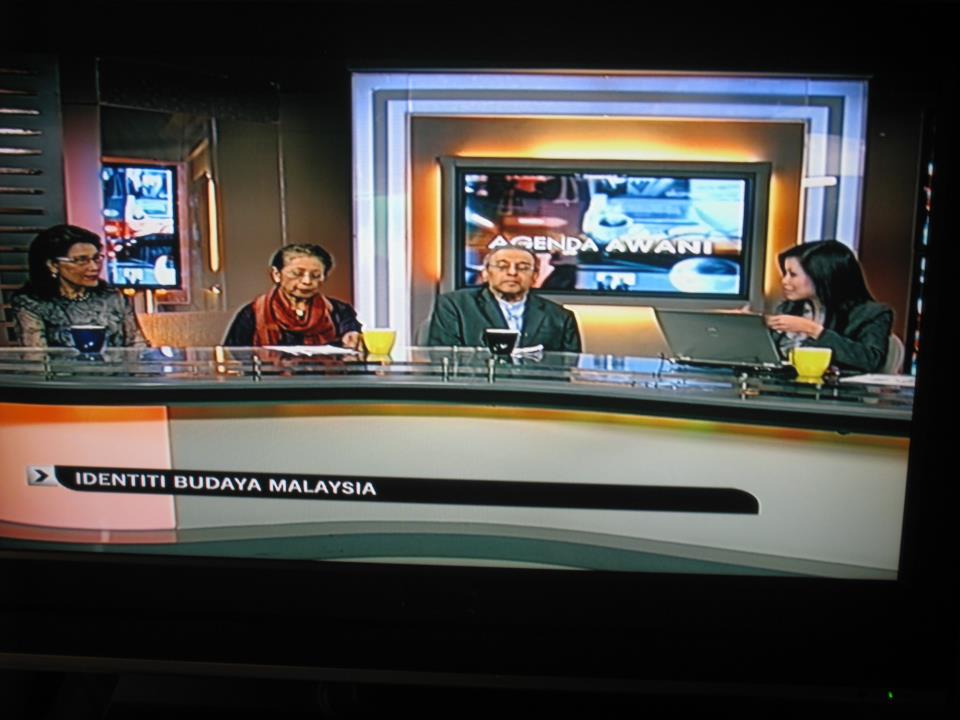
Recently I was perusing our archives, and found this terrific article from way back in 2005, authored for us by Cultural Detective Malaysia co-author Asma Abdullah. It focuses on indigenous contributions to global management, and I thought some of you might enjoy reading it, for the first time, or seeing it again with new eyes. Oldie but goodie, in my opinion!

Designing and Implementing Global Diversity

The global scene is expanding and our world has become borderless. Designing and implementing programs for global audiences presents unusual challenges. Familiar activities may be culturally inappropriate, simulations may need revision, or inherent cultural biases may limit our impact.

This five-day workshop will address strategies for adapting programs for highly diverse audiences, and for designing culturally responsive design and instruction. The facilitators will share a learning framework that will help you assess the impact of culture on teaching and learning. You will learn about the success, the challenges, and the next steps for preparing and delivering culturally sensitive global diversity programs.

To be held July 23-27 in Portland, Oregon, as part of the Summer Institute for Intercultural Communication, the workshop is designed for intermediate and advanced designers, developers, and others launching or anticipating launch of a global diversity program within organizations, whether corporate, nonprofit, NGOs, or educational institutions.

In this session, you will:
  • Learn to adapt simulations, games, blended learning and social media for multiple purposes by tailoring design, delivery, and debriefing.
  • Explore multiple approaches to delivering global diversity.
  • Assess how cultural biases impact design and implementation.
  • Identify learning challenges in implementing programs across cultures.
  • Adapt instructional design for culturally diverse populations.
  • Apply new skills to deliver culturally sensitive and culturally adaptive instruction.

The Summer Institute for Intercultural Communication is one of the world’s premier professional development venues. Be sure to join us in beautiful Portland, Oregon this coming July.

“Diversity Training Doesn’t Work!”

“Diversity Training Doesn’t Work: Rather than extinguish prejudice, diversity training promotes it!” This was the title of a 12 March 2012 Psychology Today online article.

While so many of us complain about media sensationalism, I begrudgingly have to admit that, in this case, the inflammatory title led me to read this article from among the 200+ crossing my desk that day.

The article’s author, Peter Bregman, relies on research from 2007 to prove his point. He repeats or paraphrases the subtitle four times throughout his article, each time stating it as fact. Yet, in reviewing the original research he cites, I feel it does not support his premise. The original paper is much more nuanced and even-handed (“certain programs increase diversity in management jobs but others do little or nothing”).

While I take issue with much of what Mr. Bregman says in his article (that there are two types of diversity training, for example: those that tell people what to say/not say, and those that break people into categories. Come on, really?), there is also learning to be gained from it. His conclusion: “We decided to [teach all managers] to listen and speak with each other — no matter the difference — which is the key to creating a vibrant and inclusive environment,” was one I could heartily agree with.

Let me focus this post on the constructive learning we might get from this article. Mr. Bregman urges the reader to do nine different things. I consolidate them, as there was quite a bit of redundancy. They are:
  1. See people as people instead of categories. Train them to work with a diversity of individuals, not with a diversity of categories. Move beyond similarity and diversity to individuality. Don’t reinforce labels, which only serve to stereotype. Reveal singularities. Help them resist the urge to think about people as categories.
    • I wholeheartedly agree! Yes!!! Please! That is exactly why Cultural Detective looks at an interactional process of how people communicate in real situations (using the Worksheet with real-life or prepared critical incidents).
    • It is why we have a package titled, Cultural Detective: Self Discovery, aiding users to create Personal Values Lenses.
    • It is why Cultural Detective: Blended Culture looks at the multicultural experience of so many of the individuals in our world today.
    • It is why our definitions of “culture” go way beyond nationality or ethnicity, and include looking at multiple influences on why we are the way we are (see Layering Lenses).
    • While we are all unique individuals, we are also all members of groups and communities, and our world views are shaped by those groups (cultures) in which we were raised. Cultures establish patterns of behavior that are historically sanctioned, so we each learn all kinds of things that seem natural, yet are culturally determined. Viewing people as unique individuals not influenced by culture is a step backwards, and not helpful in understanding others.
  2. Stop training people to be “accepting” because it doesn’t work.
    • Again I agree! If people can better understand themselves, and get a bit of insight into why others might behave the way they do, we won’t need to lecture them. These are two of the Cultural Detective Model’s three core capacities (Subjective Culture/know ourselves, Cultural Literacy/understand others’ intent, Cultural Bridge/skills and systems for leveraging similarities and differences).
  3. Teach people to have difficult conversations with a range of individuals.
    • Yes! The CD Worksheet came to life as a conflict resolution tool in multicultural workplaces in Japan in the 1980s and 90s. It emerged from diverse individuals having just such difficult conversations.
  4. Teach managers how to manage the variety of employees who report to them. Teach them how to develop the skills of their various employees.
    • While I might offer this as one reason to conduct diversity training, coaching, or mentoring, I can definitely agree with the goal. Cultural Detective offers a process for understanding, valuing and leveraging individual cultural differences. Our newest package, Cultural Detective Bridging Cultures, focuses precisely on skill development.
  5. Help them resist the urge to think about others as just like themselves.
    • Yes! Thinking about others as just like ourselves is one stage of a developmental process. Learning to distinguish the ways in which we truly are similar and different, seeing value in the similarities and the differences, and creating ways to benefit from them, is what Cultural Detective is all about.

The initial research referenced in the article, (“Diversity Management in Corporate America,” Frank Dobbin, Alexandra Kalev, and Erin Kelly, American Sociological Association, 2007), was a systemic study of 829 companies, designed to see which kinds of diversity programs work best, on average. A weakness in the original study is that it looked purely at diversity, not on inclusion or competence to manage diversity.

Having said that, the findings showed that diversity councils, diversity leaders, and mentoring programs most strongly correlate with increased management diversity, while training and diversity performance evaluations have a lower correlation. To quote the study authors, “On average, programs designed to reduce bias among managers responsible for hiring and promotion have not worked. Neither diversity training to extinguish stereotypes, nor diversity performance evaluations to provide feedback and oversight to people making hiring and promotion decisions, have accomplished much. This is not surprising in the light of research showing that stereotypes are difficult to extinguish. … Research shows that educating people about members of other groups may reduce stereotyping.”

“Optional (not mandatory) training programs and those that focus on cultural awareness (not the threat of the law) can have positive effects. In firms where training is mandatory or emphasizes the threat of lawsuits, training actually has negative effects on management diversity. Managers respond negatively when they feel that someone is pointing a finger at them.”

The original article by Dobbin, Kaley, and Kelley presents three broad approaches to increasing diversity:
  • Changing the attitudes and behaviors of managers
  • Improving the social ties of women and minorities
  • Assigning responsibility for diversity to special managers and task forces

These are all situations in which the Cultural Detective Model can be used to help shape constructive interactions and manage differences effectively.

What do you think?

Miscommunication: Too Much Cultural Sensitivity!

This cross-cultural dating mishap (in response to this post) is a true story from UC Berkeley’s International House, submitted by Joe Lurie:

A German male student and a Guatemalan female student have agreed to go out on an evening date beginning at 8pm. Both wishing to make a good impression, decide to leverage their cross-cultural skills and sensitivity when dealing with approaches to time. The German fellow, normally stereotypically monochronic — 8 means perhaps five to eight — arrives at 8:45 only to find the anxious, somewhat distressed Guatemalan woman saying, “Where have you been? I have been ready since 7:50  as I wanted to be sensitive to your cultural clock.”

Adopting each other’s styles provoked an amusing disconnect — but in this case, not serious. They are married today!

Thank you, Joe! Reminds me how often I used to bow in Japan when my colleagues would simultaneously stick out their arms in anticipation of a handshake.

Layering Lenses: We are All Multicultural Individuals

“As an ethnic minority woman working in a large multinational firm, too often I feel like I have to learn only, to fit in. For the first time since I’ve worked here, I can now see, and explain, the unique and valuable perspective that I have to contribute as well!” she said, her face positively glowing.

The privilege of experiencing such affirming responses from Cultural Detective customers is part of what makes my job so incredibly worthwhile. This woman had just spent time creating her personal Values Lens, using Cultural Detective Self Discovery as well as a selection of Values Lenses from various other CD packages.

While the core of Cultural Detective is its process, which enables ongoing learning, collaboration and conflict resolution, the Lenses play an invaluable supporting role. As shown in the diagram above, one important role the Lenses can play is to help us realize that we are all unique, individual composites of the various cultures that have influenced and helped form us over our lifetimes. We are not “just” Chinese or Brazilian; we are much, much more than a single story, as Chimamanda Adichie so well told us.

In international cross-cultural work such as I’ve done over the past 34 years, too often people limit their definitions of “culture” to “nationality.” Culture goes way beyond nationality. Since by definition culture is the shared norms, values and behaviors of a group of people, culture can also include ethnicity, language group, physical ability or mobility, sexual orientation, or gender identity. More often than not, in my experience, while nationality(ies) tend to have a strong impact on our behavior, professional training, the culture of the organization to which the person belongs, the team culture, their socioeconomic level, generation, their faith or spirituality … all of these influence behavior as much as or more than national birth culture. It’s worthwhile for all of us to know ourselves in all the layers of our cultures: why we are the way we are, how we got to be who we are today. In this way we can better predict how we’ll respond, and better explain ourselves and our motivations to others, powerfully transforming collaboration.

People often ask me, where does personality end and culture begin? As a practitioner, my response is, “Does it really matter? Is there an objective, accurate answer?” We are all unique individuals and we are all also influenced by the multiple cultures in which we’ve grown up, been educated and trained, worked and lived. If we can keep our values and our goals clearly in mind, we can be flexible in our behavior and creative in our approaches, in order to perform at our highest and best in a broad variety of contexts.

More Than A Cross-Cultural Development Tool

As many of you may know, the Cultural Detective Team periodically facilitates online learning events which have been designed to help new users learn or seasoned users refresh their skills around working with the Cultural Detective Method and Values Lenses.

I recently had a follow-up conversation with one of our new users, whose organization is getting ready to expand overseas to Australia. Because I often co-facilitate the online learning events, I always find it enlightening to speak with some of our new CD users and online participants to get their perspective and gauge our facilitation success by their understanding of how to work with the CD Method. It really energized me to hear this particular client’s feedback so I wanted to share!

He said he was really excited by the multiple ways he realized his organization could use the CD Method for growth, in addition to his initial hope of using it to aid global expansion. Needless to say, as he continued to clarify his meaning: by discussing how CD is really an excellent business communications tool that can be incorporated into ongoing associate training regardless of cross-cultural work, and that CD provides a superb process for coaching as well — by the end of our call I was really grinning !

It always feels good when the messages we are trying to send make it effectively across the virtual training waves, but when they are taken to another level and creatively applied to the organizational needs, the time we spend educating is worth it’s weight in gold!

Culture Change and Free Speech

Los Tigres del Norte, one of my favorite (and one of the world’s most popular) bands, was banned yesterday from playing in the city of Chihuahua. They were banned because they played a very popular narco-corrido based on a soap opera and book, La Reina del Sur. The ban occurred not in some foreign place that might be unfamiliar with the band’s norteña music, but rather in a city that is steeped in norteña culture. The Mexican press, and most Mexican people, are upset about and vocal in objecting to this cavalier censorship.

A bit of background is in order. As has been well publicized worldwide, Mexico has been a sad battle route in the drug buying and the arms selling of its northern neighbor. Locally and similar to criminals worldwide, drug lords take over and strong arm mountain pueblos, also sometimes building schools or hospitals and taking care of people, thereby building loyalty and security for themselves.

Around this drug trade has grown a culture, which has closely mixed with the pre-existing norteña culture. That cultural mix includes a style of dress (one extreme is those tippy-toed guarachero boots), a unique vocabulary and style of speech, songs (narco-corridos are songs that glorify the life of the outlaw), and even a patron saint whose image, likeness and altars can be found in most any colonía (Jesús Malverde, so-called patron saint of the drug lords and lost causes).

Mexico is a large country, as is northern Mexico, and norteña culture as influenced by narco culture has a diversity within it. There is also spillover; many people who have nothing to do with the drug trade may build an altar to Malverde (unwed mothers may pray to him, for example, as might people who have lost their jobs) or have his face emblazoned on the window of their pickup truck. And, MANY of them listen to what can be called narco-corridos. The particular song for which my Tigres were banned, ironically, ends with the outlaw (a woman) being punished for her crimes.

I believe that most Cultural Detectives value free speech, and do not believe in censorship. It is interesting, though, that this ban occurred because Chihuahua city is trying to change its culture. It is trying to take the narco out of norteña, to stop the glamorization of criminal activity, to restore responsibility and good citizenship to its citizens.

It is personally ironic to me because last year, I posted on the Facebook page of another favorite band of mine, la Banda El Recodo, sharing with them my disappointment that they had released a song so far below the respect and esteem with which they are held by the public (the song talks about guns, arms, bulletproof vests; it encourages people to get drunk and shoot bullets into the air; the official video involves non-stop drinking, high-priced cars and watches, and ends with the lead singer pretending to shoot the viewer). In hindsight, was I censoring? I know my motivations were the same as those of the city of Chihuahua: El Recodo is at the top of their craft; people respect them. I love them, and I love Mexico. I wanted them to stand for and promote what is good about Mexico, help make it a better place, not glorify and feed the worst of our local culture.

What do you all think? We interculturalists work with culture change on a daily basis. Have you advocated censorship in your role? Have the opinions you’ve expressed served to censor another? What are your strategies for culture change?

Inside Egypt: Recent Gallup Poll Results

English: Derivative work of File:BlankMap-Worl...

Image via Wikipedia

We have all been captivated by the hope, strength, and commitment to democracy of participants in the Arab Spring. I’ve also long been a “fan” of Egypt, studying Arabic for two years while living in Tokyo, in hopes of relocating to that country (hasn’t happened yet). Thus, I was excited recently to be able to hear Mohamed Younis speak about Gallup’s research in Egypt.

Over the past decade I seem to quote more and more from Pew Research, so I was very happy to see that Gallup has made a major commitment to conduct 100% self-funded, independent polls regularly in 140 countries. This should provide invaluable data for the intercultural field.

The research on Egyptians’ opinions that Mohamed presented had been conducted just after the parliamentary elections, in December 2011. The top findings he shared with us included:
  • Despite recent challenges in the country’s transition, Egyptians are still optimistic that Mubarak’s overthrow will improve their lives.
  • There is overwhelming confidence in the transparency of the upcoming presidential elections and in participation — 86% of those polled plan to vote in the presidential election.
  • Most Egyptians believe SCAF will hand over power to a civilian government after the presidential elections.
  • Islamists and Liberals very much agree on the issues of most immediate concern for Egyptian households, including women’s rights and economic priorities such as inflation and jobs.
 Some other interesting statistics from the polling:
  • 63% of the Egyptians polled felt that protests and revolts in their country have been the result of an indigenous desire for change. Mohamed said he felt this reflected a “hyper-nationalism” and “hyper-distrust” of foreign intervention, which he said can also be seen in the fact that 46% of the Egyptians polled opposed NATO intervention in Libya (compared to just 18% who were in favor).
  • Our group of listeners was largely US American, so Mohamed shared that 41% of the Egyptians polled said closer relations between Egypt and the US would be a good thing. 40% said it would be a bad thing, for a fairly even split on the issue. His interpretation is that this split is closely related to the fact that 73% of the Egyptians they polled do not feel that the USA is genuine in supporting democracy (rather they support their allies and economic interests).
  • When asked “If drafting a constitution for a new country, which rights should be included?” the vast majority of those polled cited freedom of speech, freedom of religion, and women’s rights (ahead of others in the region). The people of Egypt are definitely envisioning a representative government.

During questions and answers, Mohamed told us how some of the Islamist parties had won seats because they had bankrolled local services such as providing burial services or pilgrimages to Mecca for those who couldn’t afford them. He did not feel the rise of these parties reflected a rise in Islamism per se, and definitely not in the desire for a theocracy.

When asked what foreign governments could do to support Egypt, the clear response was: trade not aid, due to the rising sense of independence, nationalism and regionalism he perceives.

Mohamed also talked about the need for education around democracy, and the fact that an overthrow of Mubarak is not in itself going to create jobs. He said many young Egyptians expect a government job, with high salary and a pension, but with 80 million people and much poverty, they can not expect what young people in Saudi might be able to expect.

When asked about the high price of gas sales to the Sinai, and the fact that many Egyptians blame the Camp David Accords, Mohamed responded that even though this has nothing to do with the peace accords, they are nonetheless blamed. Most Egyptians have no interest in re-engaging Israel.

When asked about security for the Coptic church, Mohamed reiterated that most Egyptians very much respect religious diversity, and that the decision to protect churches was not a government mandate but rather an organic, people-led effort.

If you’re interested in hearing Mohamed present the Gallup findings, they do have a video posted and you can also find a download of his slides. He mentioned there was also audio available on iTunes.

Please note that any errors in my report of the data and Mohamed’s comments are no doubt my own.

Other Gallup reports on related subjects available online: