Report from the Field: Creating Models Worthy of Emulation

IMG_6315-640x480Many thanks to Benjamin Smith, Ph.D., linguist, intercultural consultant and trainer, and owner of Broad Imagination LLC, for this guest post.

“Recently, I was invited to lead a cultural sensitivity training for a company facing some key human resource challenges. I was given a little background information prior to my arrival, but stopped the director short as he was bringing me up-to-speed in our meeting, in order to be able to gather information during the needs assessment without preconceived notions.

The printed workbook and facilitator guide that I use to supplement my training is produced by Cultural Detective®, a company with decades of success in the intercultural field. I find that their philosophy dovetails well with mine in that they help me guide users through a process of understanding the “Lenses” through which they see the world.

To accomplish this objective, Cultural Detective® presents Values Lenses—for key cultures such as nationality, gender, spiritual tradition, age or generation, and sexual orientation—as well as Personal Values Lenses.

I feel blessed to have worked with such a remarkable group of individuals who are committed to improving their intercultural communication skills. One of the most important takeaways for me from the training was realizing that obtaining a better understanding of where we come from refines our assessment of others, and sheds a positive light on helping us accurately interpret others’ behavior.

Obtaining a better understanding of where we come from, refines our assessment of others and sheds a positive light on helping us accurately interpret others’ behavior.

My approach to the project included one-on-one interviews with each participant during and at the conclusion of the training. Thanks to valuable advice from more experienced interculturalists, the interviews enabled me to gather useful information—people often reveal things in private that they are reticent to share with a group. These insights informed the content and delivery of the training.

I deliberately engaged my strength of connectedness as I spoke with people individually. The interviews afforded me the opportunity to create a space where I could genuinely listen to participants and tailor the training to their concerns. I typically schedule a follow-up interview after the training to assess what learning has taken place.

In this intimate setting, prior to and after the training, I find that, while people are eager to talk about what everyone else is doing wrong, they are not so quick to admit their own faults. They often overemphasize their exhaustive efforts to resolve intercultural conflicts, and minimize the efforts of their colleagues.

Through appreciative inquiry and inductive listening, I can facilitate peoples’ ability to see the things they were not initially aware of, and shed light on areas where their efforts can be more effective, to gain traction and avoid spinning their wheels. These interviews are powerful supplements to the training itself, enabling participants to apply their learning and develop personal development plans.

I designed several activities for the group sessions during which participants would be able to showcase their cultures and articulate their Personal Values Lens—the glass through which they view the world, colored by the values they embrace.

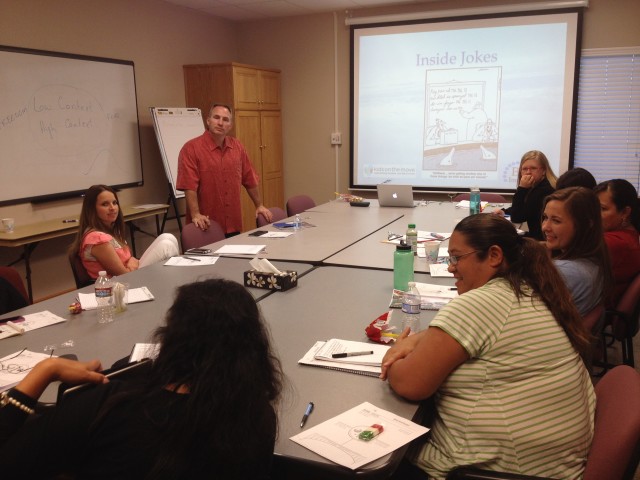
It was refreshing to see how people listened to and celebrated the cultural traditions shared by others through songs, recipes, and inside family jokes. There were several points when we analyzed family stories that had been passed through the generations, and examined the values those stories contain. It was amazing to see how participants recognized the uniqueness of each individual and what they had to share. It was also a great reminder of how anxious people are to be recognized for their contributions.

It was amazing to see how those present recognized the uniqueness of each individual and what they had to share. It was also a great reminder of how anxious people are to be recognized for their contributions.

Another facet of my company’s approach—Broad Imagination LLC—supported by the Cultural Detective® Model, consists of helping clients develop solutions themselves through a facilitated discussion. A Cultural Detective® session is not a passive chat that is forgotten when we all go home. It requires me, as a facilitator, to be present—to truly listen to and push participants for practical solutions. People tend to skirt difficult topics and slip into euphemisms or clichés as a way of avoiding the “elephant in the room.” I appreciated the courage of those who were willing to name their fears, explore them, and address them publicly.
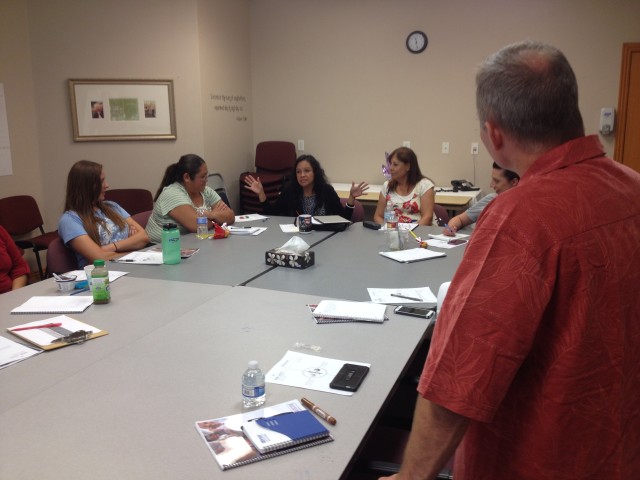
IMG_6318-640x480Some “aha” moments for trainees in this session included:

  1. Common sense is not the same as cultural sense. What we may consider to be general knowledge or a logical conclusion is not shared by everyone. Knowing that different cultures have a unique perspective on any given cultural encounter helps us open our minds and make room for unexpected conclusions.
  2. All countries do not have the same value for “ethnic exoticness” and, therefore, respect. For example, in the USA, one may appreciate a Mexican flag being displayed in a cubicle, while the display of a Canadian flag might not earn the same appreciation. It is far more common that the more “exotic” and underrepresented the culture, the more interest we take in their displays of nationalism and pride.
  3. It doesn’t matter how much time someone has spent living among other cultures, biases persist and are hard to shake. It is one thing to spend time abroad, and another to make the effort to go outside our comfort zones to truly understand another’s cultural Lens.
  4. Language has a way of revealing lack of trust in an organization. When there is low trust, it does not matter what a person does, it can still touch off our sensibilities. Being offended that someone is speaking an unfamiliar language in our presence may cause us to bristle because we suspect that they are talking about us. It may not be that the language is threatening or that there are unsavory nonverbal cues, rather simply the fact that the language is spoken in a low-trust environment results in a negative spiral of lower trust.
  5. All we can really do is observe behavior. When we seek to explain why someone did something or what their motives were, we are venturing into judgment and assumptions. Assuming the best positive intent behind observed words and actions helps mitigate potential incorrect negative perceptions and opens our mind to collaborative solutions.

The Cultural Detective® Model emphasizes three core competencies: Subjective Culture (understanding ourselves); Cultural Literacy (our ability to understand others); and Building Cultural Bridges (the ability for two or more people to collaborate productively across cultures). These competencies are taught in a variety of ways, but I have found that when learners participate in this discovery of cultural identity through provocative discussions, they overcome their anxieties and find that the issues they once believed to be insurmountable obstacles are really stepping-stones to greater appreciation and collaboration.

I love the fact that this particular client’s mission focused on “creating a positive model.” That is precisely what intercultural training provides. The training that Broad Imagination aims to deliver, and which Cultural Detective® helped accomplish, created a model worthy of emulation, one that will serve as a touch stone for future positive intercultural encounters.

Armed with an appreciation for the rich and unique cultural heritage that each employee brings to the table (representing a plethora of values and cultural influences), participants can now implement specific strategies with their colleagues, and try new approaches to the same situations—with improved results, greater personal satisfaction and increased intercultural confidence.
What is Privilege?

Today a diversity and inclusion colleague I highly respect posted a link to an exercise in which participants line up side-by-side and then take a step back for each type of privilege they have not experienced in their lives. 35 types of privilege are listed in the article, and a short video about it is below. It’s a powerful exercise, filled with potentially transformative learning.

It’s also an exercise that I’ve had several successful people tell me over the years was a traumatic experience for them. Why? Because, experiential learning activities require proper debriefing! The woman in my story was actually told, when she was standing alone at the back of the room, “See how inclusive our company is? Even someone so lacking in privilege can be successful here!” Exactly the opposite of the desired outcome for the exercise!

The meaning we make of our experience is in the debriefing! It takes a skillful facilitator to speak up to a CEO, but ethics and learning require it be done.

Please join Daniel Yalowitz (vice-provost for graduate education at the SIT Graduate Institute) and me for a five-day session at the Summer Institute for Intercultural Communication, “Gaining Gaming Competence: The Meaning is in the Debriefing,” and/or a one-day session, “Gaming Agility: Getting More Out of Our Tools.”

We look forward to seeing you there, and to working with you to build inclusiveness, respect, collaboration and justice in our workplaces and communities!

Cultural Detective at the Summer Institute for Intercultural Communication

SIIC 2015The 39th annual Summer Institute for Intercultural Communication (SIIC) offers professional development opportunities for people working in education, training, business, and consulting, in both international and domestic intercultural contexts. One of the premier gatherings of professionals in the field of intercultural communication, SIIC presents a unique opportunity to explore the field and network with others in a stimulating and supportive environment. Cultural Detective is proud to have long played a role in SIIC, and 2015 will be no exception. Sign up now as workshops are filling quickly!

The workshops below will all include Cultural Detective components; the Certification focuses exclusively on the Cultural Detective Method.

11. Gaining Gaming Competence: The Meaning Is in the Debriefing
Monday-Friday, July 13-17, 2015
Dianne Hofner Saphiere and Daniel Cantor Yalowitz

Psychologist George Kelly has suggested that learning isn’t being in the vicinity of an event, it’s the sense we make of it. If this is so, then experiential learning through games and simulations requires special knowledge and skills to derive the most significant learning. This experiential workshop focuses on current best practices and theories for creating, facilitating, and debriefing meaningful intercultural games, activities, and simulations. We will emphasize the critical importance of debriefing, including the ethics of appropriate responses in challenging situations and a variety of successful strategies that you can use in diverse intercultural settings.

Redundancía and Demonstration of Cultural Detective Online
Tuesday July 14, 2015, Evening Session 7-9 pm
Dianne Hofner Saphiere

Redundancía is one of the most powerful nine-minute learning games you will ever play. It builds empathy for non-fluent speakers, helps develop listening and communication skills, and captures the dynamics of power in conversation. It is a tool that can be used in a broad variety of educational and training situations.

Cultural Detective® approaches cross-cultural collaboration as a process, not a set of dimensions. It looks at people as individuals affected by multiple layers of culture, including nationality, gender, generation, spiritual tradition, and sexual orientation.

After we play and debrief Redundancía, the facilitator will provide a short tour of the Cultural Detective® Online system.

3. Facilitating Intercultural Competence: Experiential Methods and Tools
Monday-Friday, July 13-17, 2015

Basma Ibrahim DeVries and Tatyana Fertelmeyster

One of the main challenges for trainers and educators is finding meaningful methods and tools to develop intercultural competence. Actively engaging with conceptually grounded and widely used approaches to intercultural communication competence, such as communication styles, conflict styles, learning styles, the Cultural Detective®, and Personal Leadership®, this workshop will equip you with creative methods for training and coaching for both culture-general and culture-specific contexts. We will focus on effective group dynamics, co-facilitation, adaptation, and strategic management of participants’ and clients’ needs, as well as the creation of your own activities. You can expect to be creatively, experientially, and reflectively engaged.

Cultural Detective® Facilitator Certification Workshop
Saturday and Sunday, July 18-19, 2015

Cultural Detective® is a core method for developing intercultural understanding, productivity, and effectiveness. It serves as a powerful design backbone for courseware, coaching, and teambuilding, or as a stand-alone tool for conflict resolution, learning and dialogue. A few advantages of the facilitator certification workshop include increased ability to:
  • Use Cultural Detective® as a backbone to design, reinforcing learning from a variety of activities and experiences in a coherent developmental spiral
  • Develop competence in a broad variety of international, cross-cultural situations
  • Foster collaboration and ongoing process improvement in organizations by using a consistent method and vocabulary in multiple locations

H. Gaming Agility: Getting More Out of Our Tools
Saturday July 18, 2015

Dianne Hofner Saphiere and Daniel Cantor Yalowitz

During this highly experiential workshop we will participate in a number of different intercultural simulations and games, and then re-introduce, conduct, debrief, or modify them for varying purposes. The day will be fast-paced and high energy. There will be much work in small groups, and participants will take turns facilitating the large group. We will emphasize the critical importance of debriefing and the ethics of proper debriefing, as we illustrate that using different questions and methods can make a single activity produce learning that is applicable to a diversity of purposes. Come ready to engage!

Ecotonos: A Simulation for Collaborating Across Cultures
Tuesday July 21, 2015, Evening Session 7-9 pm
Dianne Hofner Saphiere

The Intercultural Communication Institute now publishes this classic simulation on intercultural collaboration, teaming and decision making. Be sure it’s part of your repertoire!

Powerful and extremely adaptable, Ecotonos breaks the usual stereotypes and barriers. Participants improve their skills and strategies for multicultural collaboration and teamwork.

Ecotonos can be used multiple times with the same people by selecting a new problem and different variables, with each replay offering new and different cross-cultural perspectives.

38. Training Methods for Exploring Identity 
Thursday and Friday, July 23-24, 2015
Tatyana Fertelmeyster

Self-exploration is the most vital learning for anybody who wants to guide others in their identity work. You can expect to be engaged in two days of self-discovery processes, from icebreakers to individual and team exercises, which can be used to explore identity. We will examine different ways to set up and integrate identity exercises into programs that resonate with various work groups, and discuss both the ethical and practical considerations we need to keep in mind when doing identity work. We will address why identity work is essential in intercultural training, leadership development, and team building.

Rajel messouab ta hed ma y sed lou el bab. “All doors open to the person with good manners.”

morocco_purchWe are pleased to be publishing a wonderful addition to our series, Cultural Detective: Morocco. It’s perfect for those working with Moroccans, or wanting to do business in or relocate to Morocco. Perhaps, however, you are like me: you have seen tourist posters, watched Casablanca, eaten at Moroccan restaurants, and dreamed about visiting this seemingly exotic place. If so, then you will also enjoy wandering through our new package, even if you have no immediate plans to visit or do business in Morocco—at least not when you start reading the package!

One of the delightful things about Cultural Detective: Morocco is the feeling of almost participating in the culture that begins as you read the introduction. The oral tradition of Morocco is clear throughout the package, and the stories and examples show the hospitality and warmth of the people. To truly navigate successfully within Moroccan culture, you will need the advice of an inside perspective—a cultural informant—to help you develop and maintain the relationships and connections so necessary to doing business in this fascinating country. Cultural Detective: Morocco can provide you with that ongoing guidance, with ideas to save you from being unintentionally rude, and with suggestions that may help you communicate more comfortably and successfully with Moroccans. Click on any photo to enlarge it or view a slideshow.

Cultural Detective: Morocco has truly been a “labor of love,” coming to fruition due to the determination of two very dedicated professionals, Catherine Roignan and Youssef Zahid. Currently, one author lives in France and one in Morocco; both have a great deal of international experience, both have more than full-time jobs, and both have family responsibilities that take up every spare moment. In spite of these challenges, they wrote, revised, and wrote some more.

What is even more remarkable to me is that they wrote in French and then translated their work into English so I could read it. I made suggestions, did some editing, and then my suggestions were translated back into French for their consideration. (While the current version is in English, we will soon publish the French language version.) Of course, part of the authors’ discussion was also about Arabic words, as they explored the nuances of Moroccan culture and the particular choice of words used to describe it. This was a truly multilingual, multicultural creation process, weaving observations from inside and outside of the culture, and shifting worldviews as the authors worked to share the culture of Morocco with us.

One of the Moroccan values highlighted in the package is Daba baada (the present comes first): the only thing one can be sure of is today; one cannot know what tomorrow will be like, as things may change at any moment. We hope you will take the time today to explore this terrific new package, either via the PDF version or by viewing it as part of your subscription to Cultural Detective Online.

Since When is 40% Acceptable?

Instructional_Design-InfographicOnly half of 1120 instructional design professionals surveyed recently feel their designs help meet business goals, and LESS THAN 40% feel their designs meet learning needs! That means that 60% believe their learning designs do NOT accomplish objectives! Survey results also showed that even in 2015, traditional classroom training ranks #1 on a list of the top ten learning approaches; 92% of instructional designers responding said they rely on it ahead of online or blended learning, coaching or mentoring.

Such findings help explain why sales of Cultural Detective‘s old-fashioned though beautiful, printed PDF handouts still outsell our state-of-the-art Cultural Detective Online, which provides unbelievable value for the investment (63 packages integrated into one interactive system at very affordable subscription prices). It also shows that you, our community, are learning leaders who are very quickly turning that reality on its head—if trends continue, CD Online sales will soon surpass PDF package sales.

Neither are you part of that 60% in the study who feel their designs don’t meet learning goals! You, our users, report that CD Online makes it easy to make learning creative and practical—and to achieve outstanding results.

The research findings I shared above are by ATD Research and the Institute for Corporate Productivity (i4cp), and appear in Instructional Design Now: A New Age of Learning and Beyond. The report retails for $499 ($199 for ATD members). A white paper is available for $19.99 (free to ATD members), and ATD has made a very short free preview available as well. The research addresses such questions as:

  • Are most organizations embracing high-tech options, such as mobile learning, social learning, and MOOCs?
  • Which of the newer tools and approaches produce better learning results for companies?
  • What can instructional designers expect the next few years to bring?
  • Does formal education still play a valuable role in preparing designers for the challenges of the workplace?

Organizations participating in the survey include LinkedIn, NASCO, and Novartis Pharmaceuticals Corporation.

The last study in this series—from 2010—showed that instructional design needed to become faster, more strategic, global, and tech-savvy. Other key points from the 2010 study included:

  • Emerging learning methodologies would challenge designers to craft multifaceted content.
  • Growth in social media would expand its use in learning.
  • Budget constraints and staffing issues would be stumbling blocks for instructional designers.
  • Measurement capabilities would be increasingly necessary to capture and communicate the value of learning assets.
  • Efforts would be required to get organizational stakeholders onboard with new learning mechanisms.

We frequently share designs and results from our user community on this blog. It’s a great way to help others, to encourage the development of intercultural competence in this world of ours, and to get you and your organization’s name out there as leaders in intercultural competence development. Contact us if you’d like to share a summary of your work or have us interview you.

And, for goodness sake, if you haven’t explored the potential of Cultural Detective Online, what’s stopping you? Join our next free webinar on Tuesday, May 12th. Information and registration can be found here.

Ah Ha! I knew it! Bilingualism does pay!

benefits of being bilingual

“Not only are bilingual young adults more likely to graduate high school and go to college, they are also more likely to get the job when they interview. Even when being bilingual is not a requirement, an interview study of California employers shows that employers prefer to both hire and retain bilinguals.”
—Rebecca Callahan, Associate Professor of Bilingual/Bicultural Education, University of Texas at Austin

Those of us who have worked in and around international education think that learning more than one language is good for people. We think it helps open up the mind to other possibilities, other cultural points of view. We also believe that the “code switching” involved in speaking multiple languages helps develop skills that are useful in social situations and beneficial in keeping the mind sharp.

However, for years no data existed that supported the benefits of being bilingual. And for a long time in many US educational settings, children who did not speak English as their first language were not encouraged to keep their bilingualism. Why would you need a second language when you learned English? The benefits of being able to speak more than one language were not generally recognized in the US.

I was excited to read about some new research by Rebecca Callahan, Associate Professor of Bilingual/Bicultural Education, University of Texas at Austin. In a recent article in Quartz, she writes: “Speaking more than one language may confer significant benefits on the developing brain. Research has now shown that bilingual young adults not only fare better in the job market, but are also more likely to demonstrate empathy and problem-solving skills.”

What does this mean? For study-abroad students, it might encourage them to know that the effort spent in learning and using another language has long-term economic benefits—you are more marketable! This is, of course, in addition to the eye-opening, mind-expanding, life-altering experience of living in a culture different from your own.

For children of immigrants and refugees, it means that making an effort to retain their parents’ native language is beneficial. In reality, many immigrant and refugee children in the US serve as interpreters and cultural bridges from an early age. They are forced to be bilingual—learning English to be successful in the school system, while speaking another language at home. I remember one Cambodian mother telling me, through her son, that if she learned to speak English, her son would forget how to speak Cambodian now that he was here in the US.

“Currently, researchers have begun to use data-sets that include more sensitive measures of language proficiency to find that among children of immigrant parents, bilingual-biliterate young adults land in higher status jobs and earn more than their peers who have lost their home language.

Not only have these now-monolingual young adults lost the cognitive resources bilingualism provides, but they are less likely to be employed full-time, and earn less than their peers.”
—Rebecca Callahan

For many in the US educational system, acquiring a second or third language is not as highly valued as it is in many other parts of the world. I am always impressed (and a bit jealous) when I am around people who can switch among languages—often because they were required or encouraged to learn multiple languages when they were in school. And for a nation of immigrants, it seems strange that only one-in-four US American adults are conversationally proficient in another language, according to a recent Gallup poll. It reminds me of the old joke, so true that it is embarrassing:

Question: What do you call a person who speaks four languages?
Answer: Quadrilingual.

Question: What do you call a person who speaks three languages?
Answer: Trilingual.

Question: What do you call a person who speaks two languages?
Answer: Bilingual.

Question: What do you call a person who speaks one language?
Answer: An American!

Of course, this challenge isn’t just limited to US Americans. In an article last year in The Guardian, Vice-chancellor of Cambridge University, Leszek Borysiewicz, pointed out that one in six children in English primary school do not have English as their first language. He noted that their first languages:

“…are real languages: living languages that give people a huge insight into culture and give the children who can speak them additional opportunities.

Isn’t that what education is about – enabling every child to achieve the maximum potential? What I’d love to see is an emphasis that this is an added value that that child has, a talent, and we should aspire to allow other children who may be monolingual to strive to become as bilingual as they possibly can be.”

An article about a study conducted by researchers at University of Guelph in Ontario, Canada, indicates that merely knowing a second language can result in higher earnings. The researchers say that the results of their study, published in the journal Canadian Public Policy/Analyse de Politiques, has implications for bilingual policy in Canada:

“Efforts to promote French in the ROC [rest of Canada] should be continued, not so much because of the earnings advantage that bilingualism confers, but because it results in many social/cultural/political benefits, strengthening the fabric of Canadian society and serving as an example to countries torn by ethnic, religious and linguistic divisions.”

The cultural flexibility inherent in knowing two languages is a valuable ability and a resource to be cherished. If we are to move toward intercultural competence, we need the ability to think outside of our cultural box and explore other ways of seeing the world.

That is what we try to do with our Cultural Detective packages—provide insight into another view of the world, a small glimpse into a different cultural reality, a chance to perhaps understand, just a little, how others see us, and how to work together more effectively.

Three Never-Again Opportunities!

CustomBackgroundImage-1.jpgTo celebrate SIETAR USA’s 15th anniversary, Cultural Detective is partnering with SUSA to offer an incredible win-win contest. Want to get six months of service for the price of one? How about 20 months of service for the price of 12?

1. SUSA 15th Anniversary Contest: Detect Opportunities for Cultural Bridging

  1. During April subscribe for one-month to CD Online, giving you access to the complete packages including Values Lenses for more than 60 cultures.
  2. Upload your original critical incident on CD Online, do a debrief, download it all as a PDF, and then submit to SUSA@culturaldetective.com.
That’s all you need to do. What do you get out of it?
  1. Upon receipt of your completed Incident and Debrief, Cultural Detective will upgrade your one-month subscription to six months. This means you will get 5 months of Cultural Detective Online free!
  2. CD will determine Incident and Debrief winners, who will receive a one-year subscription to Cultural Detective Online!
  3. Winning Incident and Debrief will also be showcased in a webinar in which winners can promote their services/organization as well as teach others.
2. April SIETAR USA Member Product Discount In addition to the contest, SIETAR USA is offering their members a code for a 15-month subscription for the price of 12 months. If you are a SUSA member and participate in the contest, you’ll end up getting 21 months for the price of 12! Now that’s a YOU WIN! contest!

3. SIETAR USA 15th Anniversary Conference Proposal Submissions Being Accepted Through May 4th!

Want to earn the opportunity to present at this historic 15th annual conference, October 14-17, 2015 in Orlando, FL.? Session proposals will be accepted through May 4th. Be among the field’s leaders and submit yours now!

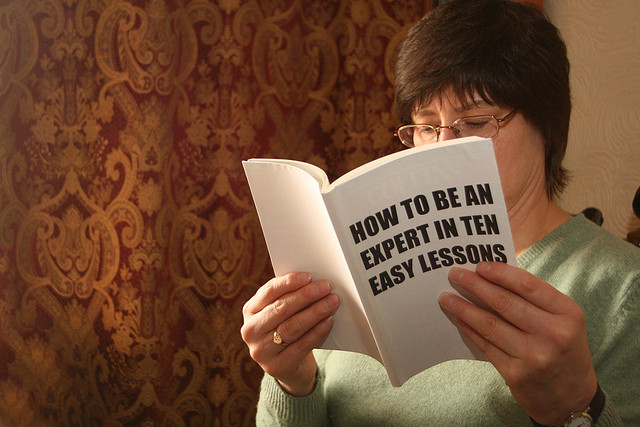
Are You an Expert?

Clients want to hire experts. Are you an expert? I hope not! At least, not in the sense many of us traditionally think of “experts.”

Cross-cultural service providers need to be deeply competent in a variety of disciplines: intercultural communication, learning theory, the context of the organization or community, the people involved, etc. However, even though clients frequently push us into the role of “the expert with the answers,” assuming that role tends to be the wrong approach to building intercultural competence. That’s probably why I find the video below so amusing, and why Cultural Detective Facilitator Certifications focus on facilitation competence rather than information delivery.

Sure, cross-cultural effectiveness may require that we know how to tie a sari correctly, bow appropriately, or kiss the expected number of times. And we need to know the business at hand, e.g., the requirements of virtual teaming or methods of procurement—the specifics of what we’re involved in. It may require that we know how to draw red lines, as in the video. These things require information—a positivist approach. There may be a single “right” answer.

Most often, a client tells an expert what he wants, and then hopes the expert will simply “make it happen.” No need for the client to get overly involved; just leave it up to the expert. When a client (or student) asks an expert a question, they want a clear, specific answer—not “it depends.” Yet, in cross-cultural situations, so much does depend. “Correct” answers are contextual: how well do you know someone, are you meeting them socially or professionally, what country and region are you in, what social strata? Do you want to build market share or gain return on investment? Are you new to a market or have you been there for decades? What’s your reputation? A relativist approach allows for cultural and contextual differences—key to effectiveness and appropriateness.

While both positivism and relativism have their place in developing cross-cultural competence, the real change-maker is in a constructivist approach. The Japanese may generally do something a certain way, but that doesn’t mean an expat, immigrant, or visitor should or must do it that way. People need to find their way of being successful in a new environment—a way that works for them personally. True intercultural effectiveness requires client engagement, along with expert guidance.

Take my friend Doug. He is US American, and he has a loud and infectious laugh that he regularly engages in with a wide-open mouth and a slap on his leg. Most definitely not common Japanese practice, right? So, when he goes to Japan, do you take a positivist approach, and teach him a Japanese-style laugh? Will that be the key to his success in Japan? Do you compare Japanese laughter to US American laughter, or his friends’ laughter to his? In Doug’s case, when he moved to Japan he didn’t really adjust his laughter at all. His laugh is a core part of who he is, and most Japanese colleagues and friends love him for it. Sure, they may have been surprised at first. But his laugh is genuine, it’s him, and they understand that. Doug was highly successful in Japan, perhaps despite his loud laugh, but more probably, in part, because of it. He adapted his style in other ways.

Such is the constructivist nature of intercultural competence. Together, we co-construe, we “construct” our shared experience, and through that, we make sense of our relationships. Cultural Detective takes a constructivist approach. Yes, the CD Method contains elements of positivism (Values Lenses) and relativism (Worksheets), too, but they are used with the goal of learning about ourselves and others, and creating bridges that will enable each of us, and our organizations and communities, to be our best.

“The wise man doesn’t give the right answers,
he poses the right questions.”
—Claude Lévi-Strauss
French Anthropologist, 1908-2009

In dealing with a client that wants an “expert,” the clue to remember is what kind of expert you are. Effective intercultural facilitation is difficult, and we as facilitators do not have the “answers.” The “answers” reside in the client, the team members, community members, or key stakeholders. Our job is to bring the answers out, help make them known, help refine them so they are real and workable, and so that they enable intercultural effectiveness. This requires a high level of expertise: to help the client look inward and develop the answers themselves, when they are looking for a “magic” solution from an outside expert.

Learning opportunities to acquire good, effective intercultural facilitation skills are often hard to find. We are pleased to offer workshops that will help you gain and improve facilitation skills useful in intercultural contexts. Our Cultural Detective Facilitation Certification workshops are quite popular with both new and experienced facilitators, who always learn more than they expected. Three opportunities are scheduled this year:

  1. pre-conference of the SIETAR Europa Congress in Valencia, Spain,
  2. As part of the Summer Institute of the International Educators’ Training Program (IETP) at Queen’s University in Kingston, Ontario, Canada,
  3. And at the Summer Institute for Intercultural Communication (SIIC) in Portland, Oregon, USA. Click on any of the links above for more information or to register.

In addition, Daniel Yalowitz and I are offering a course at SIIC, “Gaining Gaming Competence: The Meaning Is in the Debriefing.” This experiential workshop focuses on current best practices and theories for creating, facilitating, and debriefing meaningful intercultural games, activities, and simulations. This is an excellent opportunity to gain a wealth of information in a short period of time. More information can be found here: http://www.intercultural.org/11.php.

Please join us for one of these upcoming events, to hone your intercultural facilitation skills to an “expert” level! In this way we can accomplish our shared goals of spreading intercultural competence to build understanding, collaboration, equity and justice in our world.

SIETAR Europa, a Profile, Valencia, a New Book

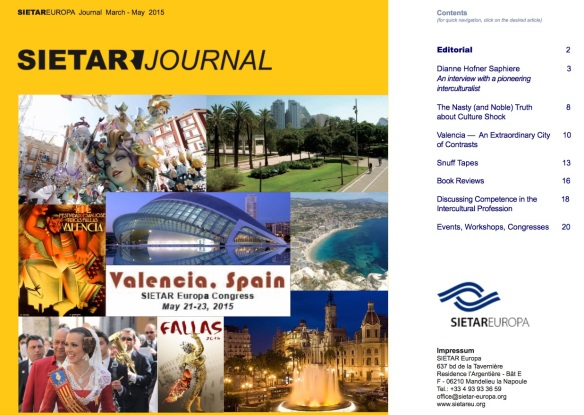
SE Journal coverThe March-May 2015 issue of the SIETAR Europa Journal is out today, and I thought some of you might want to take a look. Pari Namazie conducted a lengthy interview with me when I was last in Vienna, and it is published in the journal on pages 3-9. I find it flattering, embarrassing, encouraging and mortifying, all at the same time. It is humbling to have the honor to be profiled in this way. Thank you, Pari and Patrick Schmidt, editor. Perhaps it will give you insight into some of the experience that has contributed to Cultural Detective.

Also very important in this issue is news of the upcoming SE Congress in Valencia, Spain, 21-23 May. Please plan to attend! There are a wealth of terrific pre-conference workshops, including two focused on Cultural Detective, as well as incredible concurrent sessions, all in the gorgeous setting of Valencia. The full schedule is not yet posted, but you can register for the Congress now and then register later for any pre-conference workshops you want to attend. I hope to see you there!

Finally, I’m very excited that my old friend Joseph Shaules has published his much-anticipated book, The Intercultural Mind, and George Simons has written an insightful review of it on page 16.

You can find the issue of the Journal here.

Lampooning Leads to Apology for Sensationalism

2015.1.27.BF.COMMInaccuracies in journalism are of increasing concern to me, as is the idea that so many consumers of communication media fail to use their critical thinking skills, and, rather, believe a sensational report without checking facts. Journalists can easily fuel people’s worst fears, feeding an “us vs. them” mentality. I spoke about this in my recent Charlie Hebdo post.

If we are to create a world for ourselves in which we respect, understand, and value one another, one in which we are able to cooperate in sustainable ways, we need accurate and thorough information on which to base decisions. We need to be able to discern “gray” areas, and think things through from different perspectives.

On a slightly divergent thought track, I occasionally marvel at how powerful the visual arts, comedy, movies, and performances are in generating a paradigm shift in the general population—the sort of paradigm shift that is needed if we are to develop intercultural competence. I feel that news media should help us think things through by gathering facts, but all too often, it is the arts that help inspire us to do so.

Recently, a post crossed my desk that brings these two ideas together for me in a salient way. One of our Cultural Detective series’ authors—Basma Ibrahim DeVries—shared a link on Facebook to a story that resulted in truth telling. A major news outlet was forced to admit its multiple errors and publicly apologize for their inaccuracies, perhaps, in part, stimulated by a French television comedy show—Le Petit Journal!

Fox News interviewed someone who presented as fact that there are “no-go zones” in Europe—places in which Islamic law supersedes local law and non-Muslims fear to go. “No-go zones,” viewers were told, included the entire city of Birmingham, England and a half-dozen key areas of Paris. Fox also made various other claims, which met with widespread criticism from the likes of British Prime Minister David Cameron, and the threat of a lawsuit from the Mayor of Paris, Anne Hidalgo.

Le Petit Journal was quick to offer its humorous and yet informative rebuttal. Below is a clip of the show, in French with English subtitles.

I live in Mexico, and over the past five years I’ve experienced the negative impact that sensationalism and inaccurate, biased reporting can have on a country and its people.Often, this media bias is not confronted.  In this instance, however, Fox actually issued four separate apologies in one day for portraying Muslims in a negative light.

“Fox News took time out of four broadcasts on Saturday to apologize for four separate instances of incorrect information that portrayed Muslims in a negative light.
—CNN

Once Fox News apologized, our French comedy show, Le Petit Journal, had to gloat, of course. They lampooned Fox with great gusto while munching on super-sized popcorn and soda. Click on the link to view the video.

I am happy to hear that Fox News was forced to apologize for their biased and false “reporting.” I am grateful to know that the public expression of outrage and humor can still have some effect, however fleeting it might be. If, like me, you’d like to read more about the poll Fox cited, that one in six French citizens support ISIS, you might reference a much more insightful piece about it, published by the Washington Post.

The Cultural Detective Method helps people separate facts—what people see and hear—from interpretations, or what the facts mean to a person observing them. Our values influence how we interpret the facts—the meaning we give to the situation. Given personal and cultural differences, the facts may mean different things to different people. This is normal and to be expected. However, what we want from journalists is, to the best of their ability, the specific details and essential data necessary for us to understand a situation more accurately and thoroughly. Situations these days are often complex rather than clear-cut. Reporting on complex realities is difficult in the best of circumstances, and we applaud those ethical journalists who work to make it happen.

Thank you for accompanying us on this journey to build intercultural competence. Together, we can build international understanding, respect, and justice.