“On the Road with Migrants” Game

IMG_3100World Refugee Day is June 20th, and I am honored to be able to share with you a powerful new game available free-of-charge to help raise awareness and understanding of the refugee and migrant experience.

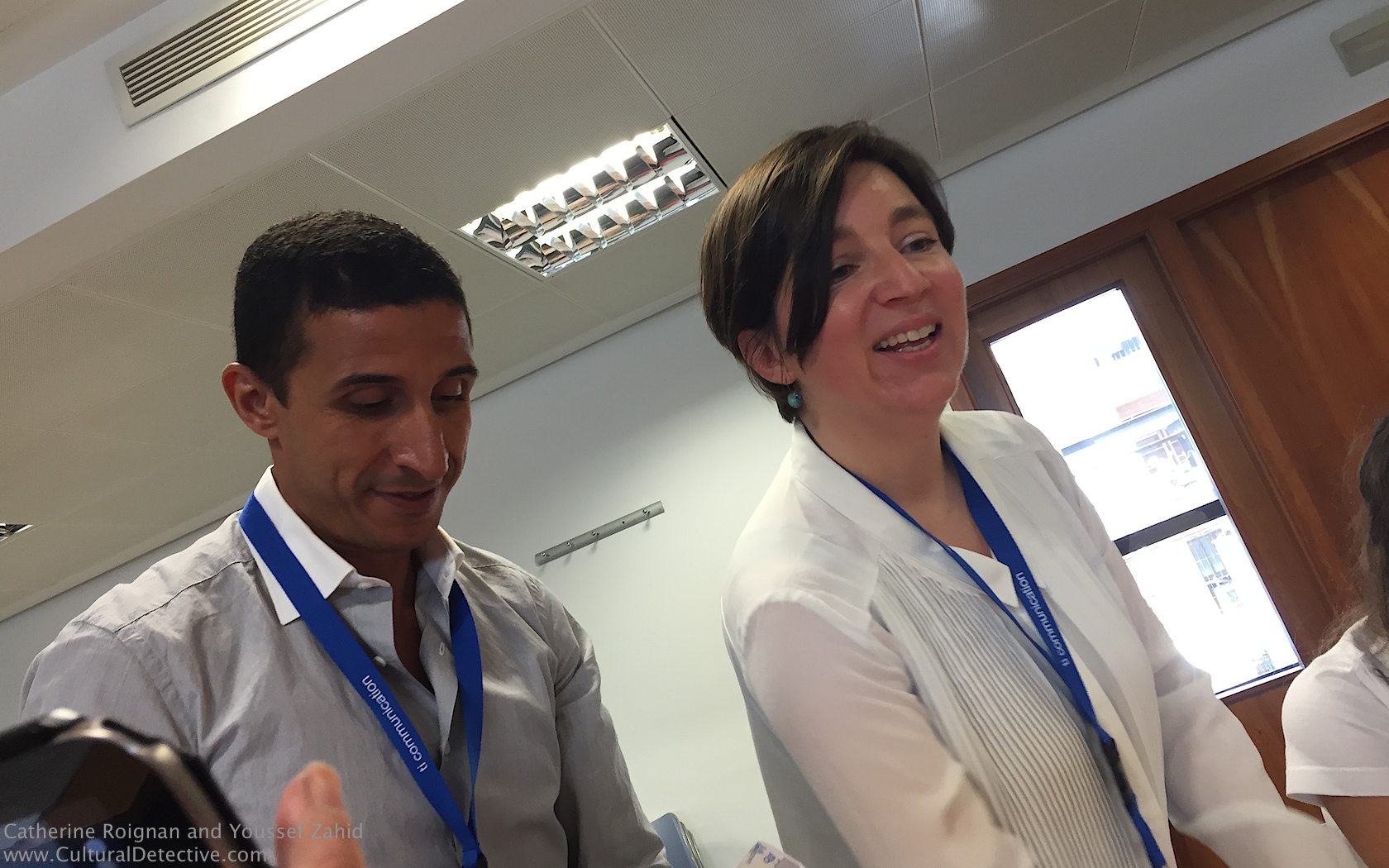
Catherine Roignan, co-author of Cultural Detective Morocco, conducted the game at the recent SIETAR Europa conference in Valencia, and it was my favorite session of the conference. Many people in the room had tears running down their cheeks, and in the days following we found ourselves often talking about the experience we’d shared.

The game is called On the Road with Migrants, and it was created by Caritas France, the Association des Cités du Secours Catholique or ACSC. At the conference we had only a brief 15-20 minutes to play, but it was remarkable!

Groups of us gathered at tables with game boards showing different continents of the world, including Africa, the Americas, Asia, and Europe. Each player had a pawn representing an immigrant, who was identified by name and story. We threw dice, drew cards and moved our pawns around the board according to the instructions on the cards and the dice.

Kudos to Caritas France for their brilliant work on this! It is a terrific game!

The materials are available for download free-of-charge; you print out the cards and boards, and add dice and pawns—1 die and 4 pawns (one color for each of four characters) per continent/board. Our SIETAR Europa group helped with the English translation—this is collaboration with a purpose!

Learn more and download the game in French, English, Portuguese or German: En route avec les migrants. I am leading a team that is translating the game into Spanish.

Please, share with us your resources and ideas for commemorating World Refugee Day and for building empathy for the migrant experience in this world of ours.

Welcome Back! I guess…

It’s that time of year—summer study abroad programs beginning, returning students headed home, along with travelers returning after brief overseas summer vacations, not to mention those expats who are moving back in time to find a place to live and enroll their kids in school for the fall.

Yup—it’s the time of year when those of us who stayed home are likely hear how much better things are elsewhere. So while we are delighted that our beloved sojourners are returning, there is frequently a bit of anxiety as we begin looking forward to the adjustment. What to do?

First, be prepared. Understand that everyone involved—the returnee, friends and family at home, the organization for which the returnee works or school where she or he studies—all need to recognize that the transition of the person returning home begins well before the actual arrival home. Leaving new friends and colleagues, withdrawing from what have become familiar patterns of behavior, saying goodbye over and over again—these are hard things even if you are looking forward to returning home. While a major goal of “re-entry” is to integrate the recent intercultural experience with life at home, we should expect these transitions take some time, and will be better dealt with by acquiring a bit of knowledge and planning about the process.

return_purchWe suggest you log into your Cultural Detective Online subscription and take a look at the ideas included in the package, The Return. While offering advice and guidance mainly directed toward the business professional returning home after an overseas assignment, there are pearls of wisdom that are applicable to any “returnee” situation. The Challenge Lens looks at different areas in which adjustment issues, both personal and professional. For example, the returnee often find that family, friends, and colleagues are not as interested as the sojourner thinks they should be in his or her experience. Things that happened at home during the time away can be more exciting to those who stayed home than are photos of new friends and places that were visited. Knowing this in advance gives an opportunity for both sides to adjust and make allowances for each others’ behavior.

coming_homeCraig Storti’s highly rated book, The Art of Coming Homeis another useful resource for you and your returnee. Craig writes in a practical and easy-to-read manner, that is theoretically well-grounded, and full of valuable tidbits. Reading Craig’s book will not only help the returnee feel less crazy, but will help those surrounding the returnee understand the complexity of the transitions involved and provide ideas for smoothing the re-entry experience.

Speaking of smoothing the re-entry experience, be sure to check out “Twelve Tips for Welcoming Returnees Home,” part of the free online resource, What’s Up With Culture? Bruce La Brack authored (see Section 2.5.1). One of the most important tips: “Understand that most returnees are, in some ways, different than they were before they left home.”

And isn’t that the point of an intercultural experience? If the returnee was just the same as before he or she left, would it not be a big waste of time and money? Whether we are a family or an organization that sent someone overseas, we have an expectation that the exposure to other cultures and languages will result in the sojourner gaining new skills and attitudes—including acquiring broader perspectives, different ways of seeing the world.

However, sometimes we, unconsciously, still expect that the other hasn’t really changed, and are therefore surprised when this is not so. Being prepared to welcome home a returning friend or loved one, but also being ready to find that they have undergone important changes and may have acquired new ideas is one key to insuring a smooth transition home for every one involved.

“One’s destination is never a place, but a new way of seeing things.” – Henry Miller

Development or Displacement?

ICIJFormed at the end of World War II to help develop countries torn by war and poverty, the World Bank is dedicated to improving the lives of the world’s poorest: to getting them clean drinking water, housing, food, and basic services like electric power. It is a challenging and complicated mission.

The Bank loans $65 billion annually for what have become increasingly large, high-profile projects such as dams, pipelines, and power plants. Projects of this magnitude can displace whole communities and wreak havoc on the natural environment. Sometimes providing water or energy to a city can drastically reduce the quality of life of rural farmers and fishermen. While the Bank has a clear policy of “do no harm” to people or the environment, all too often the Bank’s projects do negatively impact the environment and the lives of the very people the Bank was designed to help.

“Over the last decade, projects funded by the World Bank have physically or economically displaced anestimated 3.4 million people, forcing them from their homes, taking their land or damaging their livelihoods.”
International Consortium of Investigative Journalists (ICIJ)

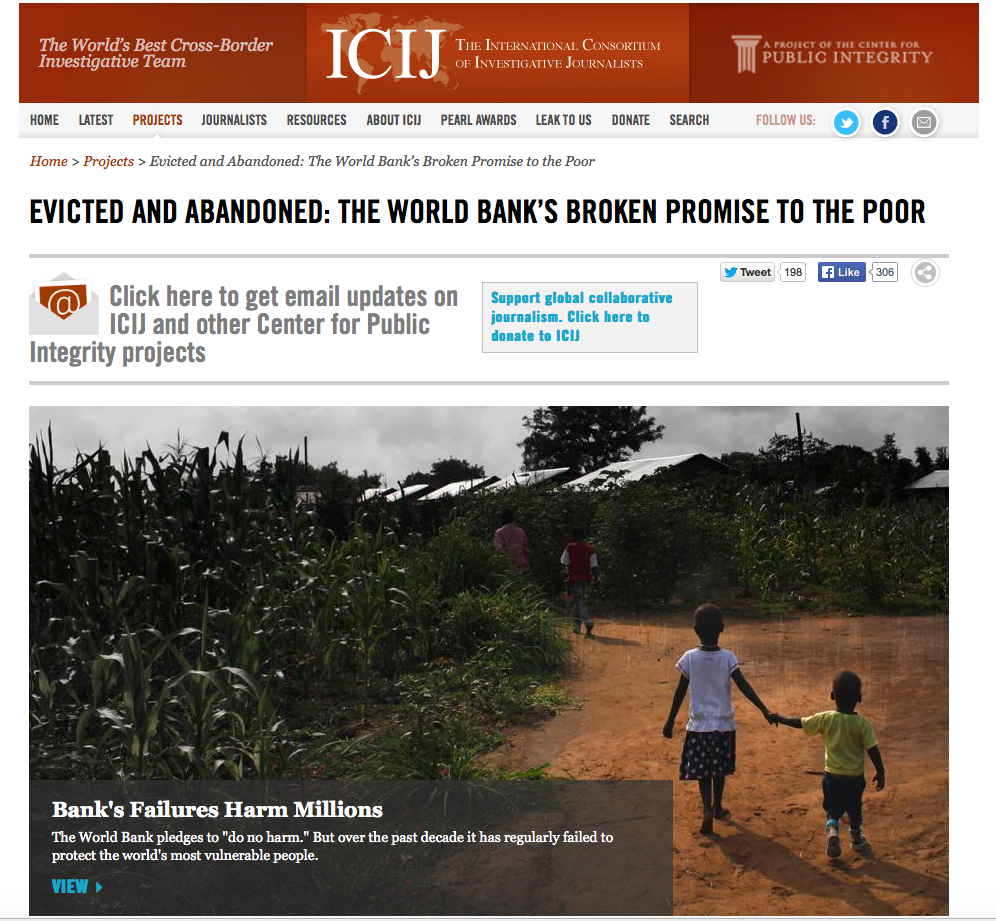
Complaints about the World Bank are nothing new; protests have taken place throughout much of my adulthood. Just a couple of weeks ago the International Consortium of Investigative Journalists added data to fuel the fire when it released the results of a year-long research project involving more than 50 journalists from 21 countries. They analyzed thousands of WorldBank records, interviewed hundreds of people, and conducted on-the-ground investigations in Albania, Brazil, Ethiopia, Ghana, Guatemala, Honduras, India, Kenya, Kosovo, Nigeria, Peru, Serbia, South Sudan, and Uganda. They titled the report, “Evicted and Abandoned: The World Bank’s broken promise to the poor.”

The report states that the World Bank has “regularly failed to enforce its rules, with devastating consequences for some of the poorest and most vulnerable people on the planet.” The most common hardship suffered by those in the path of “progress” is lost or diminished income. Forced relocations involve millions; they can rip apart kinship networks and increase the risk of illness and disease. Resettled populations are more likely to suffer unemployment and hunger, and mortality rates are higher.

“From 2009 to 2013, World Bank Group lenders pumped $50 billion into projects graded the highest risk for ‘irreversible or unprecedented’ social or environmental impacts — more than twice as much as the previous five-year span.”
International Consortium of Investigative Journalists (ICIJ)

What causes such a well-intentioned mission to go awry? When the Bank is filled with so many people who are dedicated to serving others and making the world a better place, why do the systems become dysfunctional?

  1. Bias is a human reality, and partnership is tricky. All too often, well-intentioned efforts to serve result in the world’s poorest and most historically oppressed suffering even more. Partly that is because we don’t validate what local communities know, and lenders want “experts” in the lead on projects. No matter how committed the Bank might be to partnering with local communities, bias runs deep and it’s an enormous challenge to be sure the expertise, experience, concerns and insight of all involved are heard and valued. It is a reality ripe for Cultural Detective and other intercultural tools, wouldn’t you say?
  2. Greed and glitz, blind capitalism, and the appeal to ego (and to continued funding) of the big, dazzling projects. Major infrastructure projects look good on a dossier or resumé, and they help ensure that member states will pony up the money to support the Bank’s efforts. According to the Evicted and Abandoned report, a 2012 internal audit found that projects in the Bank’s pipeline triggered the Bank’s resettlement policy 40 percent of the time—twice as often as projects the Bank had already completed.
  3. The gap between international funders and national and local governments. The Bank negotiates with those in leadership positions, who themselves may not only have the welfare of the people at heart. Or, there may be different leaders who control different regions or areas, and who consider an agreement with the national government not worth the paper on which it’s printed. Cultural Detective West Africa includes a critical incident on this very topic of negotiating with national governments when it’s local chieftains who control the territory.
  4. Corruption. Corruption can exist at all levels, including soldiers who have been known to beat, rape, and murder in the course of forced evictions. The Huffington Post reports: “’There was often no intent on the part of the governments to comply—and there was often no intent on the part of the bank’s management to enforce,’ said Navin Rai, a former World Bank official who oversaw the bank’s protections for indigenous peoples from 2000 to 2012. ‘That was how the game was played.’” While there are cultural variations in whether we hire those we know and trust or whether we have public, transparent job calls, there is a line beyond which corruption must be called corruption. For example, relocating poor villagers without restitution so that your son-in-law can own an elite oceanside resort is clearly not true leadership. The Cultural Detective series has some powerful critical incidents about the effects of cronyism and how to honor preferential treatment for family, while also ethically honoring one’s goals, as well as incidents dealing with bribery and other ethical issues (Cultural Detective Global Business Ethics).
  5. The world stage is shifting. There are new development banks on the world scene, competitors to the World Bank, that often don’t have the same social standards. Many say that this is leading to ever-lower standards, and disregard for the people and environments that “development” seeks to serve.
  6. Changing a large dysfunctional system is far from easy, no matter how well-intentioned even a top leader is. I’ve seen this in many of my clients over the years, and in a few corporations I’ve worked in as well. Many felt hope when Jim Yong Kim took over as president of the World Bank in 2012. A Korean-American physician known for his work fighting AIDS in Africa, Kim Yong became the first World Bank president whose background wasn’t in finance or politics. Twenty years earlier, Kim Yong had joined protests calling for a shutdown of the World Bank and accusing it of valuing economic growth over assistance to the poor. Despite expected improvements, “an internal survey conducted last year by bank auditors showed that 77 percent of employees responsible for enforcing the bank’s safeguards said they think that management ‘does not value’ their work. The bank released the survey in March, at the same time that it admitted to poor oversight of its resettlement policy,” according to the Huffington Post article. A 2014 World Bank internal review found that in 60 percent of sampled cases, Bank staffers failed to document what happened to people after they were forced from their land or homes, and 70 percent of the cases sampled lacked required information about whether anyone had complained and whether complaints were resolved.

In my opinion we need the World Bank, just as we need the United Nations. For all their foibles and failures as human-run entities, their missions are crucially important. Incorporating cross-cultural best practices into the manner in which projects are managed, meetings are conducted, and decisions are made is a critical first step. Developing intercultural competence in the Bank’s staff and local partners in an ongoing, sustained manner, can make a major contribution to preventing the devastating downsides of development projects.

Sikh Captain America

Vishavjit Singh in Central Park NYC as Sikh Captain America, photo by Fiona Aboud

Vishavjit Singh in Central Park NYC as Sikh Captain America, photo by Fiona Aboud

I recently came across the best “Cultural Effective” (yes, that’s a play on “detective”) I’ve seen in a long time! He has my deepest respect, and he has me rolling on the floor laughing, as well.

I found him via an article that had a photo of a skinny, long-bearded Sikh man posing as—wait for it—Captain America! He had his shield, tights, and turban on, and was ready to fight for justice. Of course it got my attention. I absolutely loved it! The article was an interview with Vishavjit Singh, an engineer, writer, educator, activist, costume player, and the artist behind the terrific series, SikhToons.com.

totally biased avengersIf you think Sikh Captain America sounds interesting, how about a complete set of Totally Biased Avengers, fighting for justice and equity in our world? They are the brainchild of the talents over at Totally Biased, and include Asian Thor, Black Black Widow, Gay Hulk, and brown Jesus Christ. You readers know that Cultural Detective is awfully cool and helpful, but these Avengers may have us beat, lol. Do yourself a favor and watch the video below. But be careful, you will laugh out loud.

Getting back to Sikh Captain America, however, you have got to check him out. He, er, rather, his alter-ego, Vishavjit, is doing wonderful work in the world! Take a look at his terrific flip book on turbans, for example. Visit his website or follow him on social media to see his latest cartoons and other ventures. I especially appreciate how he teaches people to respond to bias respectfully, rather than sinking to the same level of ignorance or, worse, anger. He demonstrates patience, intelligence, empathy, humor, and both visual and verbal communication skills—definitely a superhero combination!

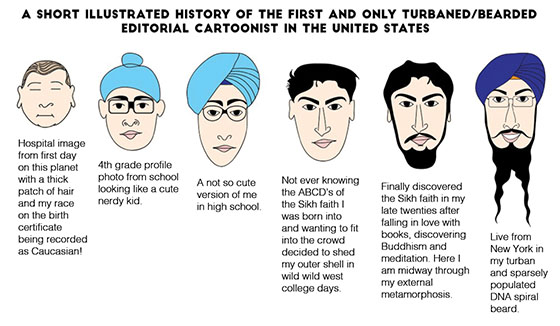
Vishavjit made a cartoon explaining the road he followed to get to where he is today. Those of us interested in the pathways to reconciling Blended Culture identity will no doubt resonate with it. The lightness yet levity with which he operates in the world is especially impressive when you consider he survived the civil unrest that resulted in the deaths of so many Sikhs in India.Autbiography_Perspectives_DA_edit

Way to go, Vishavjit!!!! Bless you! It is a pleasure to be with you on a journey to build intercultural respect, understanding, and justice in our world. And you seem to be having so much fun doing it!

This post is part of the #MyGlobalLife linkup.

Rajel messouab ta hed ma y sed lou el bab. “All doors open to the person with good manners.”

morocco_purchWe are pleased to be publishing a wonderful addition to our series, Cultural Detective: Morocco. It’s perfect for those working with Moroccans, or wanting to do business in or relocate to Morocco. Perhaps, however, you are like me: you have seen tourist posters, watched Casablanca, eaten at Moroccan restaurants, and dreamed about visiting this seemingly exotic place. If so, then you will also enjoy wandering through our new package, even if you have no immediate plans to visit or do business in Morocco—at least not when you start reading the package!

One of the delightful things about Cultural Detective: Morocco is the feeling of almost participating in the culture that begins as you read the introduction. The oral tradition of Morocco is clear throughout the package, and the stories and examples show the hospitality and warmth of the people. To truly navigate successfully within Moroccan culture, you will need the advice of an inside perspective—a cultural informant—to help you develop and maintain the relationships and connections so necessary to doing business in this fascinating country. Cultural Detective: Morocco can provide you with that ongoing guidance, with ideas to save you from being unintentionally rude, and with suggestions that may help you communicate more comfortably and successfully with Moroccans. Click on any photo to enlarge it or view a slideshow.

Cultural Detective: Morocco has truly been a “labor of love,” coming to fruition due to the determination of two very dedicated professionals, Catherine Roignan and Youssef Zahid. Currently, one author lives in France and one in Morocco; both have a great deal of international experience, both have more than full-time jobs, and both have family responsibilities that take up every spare moment. In spite of these challenges, they wrote, revised, and wrote some more.

What is even more remarkable to me is that they wrote in French and then translated their work into English so I could read it. I made suggestions, did some editing, and then my suggestions were translated back into French for their consideration. (While the current version is in English, we will soon publish the French language version.) Of course, part of the authors’ discussion was also about Arabic words, as they explored the nuances of Moroccan culture and the particular choice of words used to describe it. This was a truly multilingual, multicultural creation process, weaving observations from inside and outside of the culture, and shifting worldviews as the authors worked to share the culture of Morocco with us.

One of the Moroccan values highlighted in the package is Daba baada (the present comes first): the only thing one can be sure of is today; one cannot know what tomorrow will be like, as things may change at any moment. We hope you will take the time today to explore this terrific new package, either via the PDF version or by viewing it as part of your subscription to Cultural Detective Online.

Culture and Memory are Biological: New Research

Mateo Zareba 1970People raised in some cultures learn that memory transcends generations, that it is passed on to our descendants—carried on a cellular level. I’ve always intuitively felt this was true and wise, even though in the culture in which I was raised (German-American), I was told that such beliefs were charming but fantastical. Then, here comes scientific research showing that yet another “old wives’ tale” is, in fact, true.

Edward T. Hall, author of some of the earliest books on intercultural communication, had a strong interest in ethology (the study of animal behavior in its natural setting, and sometimes with attention to evolution) and Paul Maclean’s theory of our evolutionary, triune brain. In the words of Dr. John C. Condon, who was a friend of Hall for many years and is currently authoring a new book on him titled, It Goes Without Saying, “Ned wrote in unpublished papers about the connection between culture and biology. He gave considerable attention to culture and communication as embodied and involving all of the senses, and thought other anthropologists gave too much attention to the cognitive aspects.” So many recent scientific discoveries indeed seem to be proving Hall correct! One of those is in the field of epigenetics.

Epigenetics

The fairly new field of behavioral epigenetics offers some interesting advanced insights into what makes us who we are. Epigenetic research shows that tendencies such as preferred smells or tastes, fears and abilities, strengths and resiliencies, weaknesses and deficits—turn out to be not only socially acquired, but also potentially biologically inherited. This means that “culture” and cultural tendencies may be not just communal, but also biological.

The field of epigenetics began, in part, with a simple question in the mind of Michael Meaney: “I’ve always been interested in what makes people different from each other. The way we act, the way we behave—some people are optimistic, some are pessimistic. What produces that variation? Evolution selects the variance that is most successful, but what produces the grist for the mill?”

Decades of research led to the finding that both positive and negative experiences—trauma, love and support—in our own or our recent ancestors’ pasts, leave molecular scars on epigenetic matter that is attached to our DNA. Without a mutation to the DNA code itself, the attached methyl groups cause long-term, heritable change in gene function.

dna2-e1391648749304

Meaney and Szyf had proved something incredible. Call it postnatal inheritance: With no changes to their genetic code, the baby rats nonetheless gained genetic attachments due solely to their upbringing.”
—Dan Hurley, Discover

Such findings give credence to those who say they still experience the pain of genocide or slavery generations later. It also shows us why grandchildren may inherit their grandmother’s sunny disposition. And, it provides us as interculturalists yet another reason to heal ourselves and our communities: if we can foster understanding, respect, justice, and collaboration, perhaps we can prevent these heritable negatives, and, rather, pass stronger, more positive traits down through the generations.

Research is showing that epigenetic changes to genes active in certain regions of the brain underlie our emotional and intellectual intelligence—our tendency to be calm or fearful, our ability to learn or to forget. It would follow then that if we can truly develop intercultural competence in our communities, we can pass on the epigenetic inheritance that will create communities of emotionally resilient people with the intelligence to solve problems such as hunger and homelessness.

A fuller explanation of the science behind this is explained in this three-page paper in Discover magazine. One thing is for sure, this field of study has a long way to go. What started with rats has slowly moved into the study of human behavior. The full benefits of this incredible research may not be seen in my lifetime, but feel confident that generations that follow will be the true benefactors.

Interdisciplinary Teamwork

Of further interest to me as an interculturalist is the fact that this groundbreaking research came about as the result of specialists working in an interdisciplinary team—specialists who had to overcome significant bias and elitism in order to truly hear one another.

A colleague thought that the work of Michael Meaney, a neurobiologist, might significantly dovetail with the work of Moshe Szyf, a molecular biologist and geneticist. Even though both gentlemen worked at McGill University, they only met each other after traveling to Madrid in 1992.

To those of us who aren’t scientists, these two men seem to work in similar fields; they are both biologists, right? Should be easy enough to collaborate? No, their two disciplines are apparently two very different cultures! As Szyf reported to Dan Hurley in an interview for Discover magazine: “[Meaney’s work] sounded like voodoo at first. For a molecular biologist, anything that didn’t have a clear molecular pathway was not serious science.”

The two scientists overcame their biases and stereotypes, and twelve years later they published a landmark paper, “Epigenetic programming by maternal behavior,” in the June 2004 edition of the journal Nature Neuroscience. God bless the nameless colleague who saw the connection between their work!

Since When is 40% Acceptable?

Instructional_Design-InfographicOnly half of 1120 instructional design professionals surveyed recently feel their designs help meet business goals, and LESS THAN 40% feel their designs meet learning needs! That means that 60% believe their learning designs do NOT accomplish objectives! Survey results also showed that even in 2015, traditional classroom training ranks #1 on a list of the top ten learning approaches; 92% of instructional designers responding said they rely on it ahead of online or blended learning, coaching or mentoring.

Such findings help explain why sales of Cultural Detective‘s old-fashioned though beautiful, printed PDF handouts still outsell our state-of-the-art Cultural Detective Online, which provides unbelievable value for the investment (63 packages integrated into one interactive system at very affordable subscription prices). It also shows that you, our community, are learning leaders who are very quickly turning that reality on its head—if trends continue, CD Online sales will soon surpass PDF package sales.

Neither are you part of that 60% in the study who feel their designs don’t meet learning goals! You, our users, report that CD Online makes it easy to make learning creative and practical—and to achieve outstanding results.

The research findings I shared above are by ATD Research and the Institute for Corporate Productivity (i4cp), and appear in Instructional Design Now: A New Age of Learning and Beyond. The report retails for $499 ($199 for ATD members). A white paper is available for $19.99 (free to ATD members), and ATD has made a very short free preview available as well. The research addresses such questions as:

  • Are most organizations embracing high-tech options, such as mobile learning, social learning, and MOOCs?
  • Which of the newer tools and approaches produce better learning results for companies?
  • What can instructional designers expect the next few years to bring?
  • Does formal education still play a valuable role in preparing designers for the challenges of the workplace?

Organizations participating in the survey include LinkedIn, NASCO, and Novartis Pharmaceuticals Corporation.

The last study in this series—from 2010—showed that instructional design needed to become faster, more strategic, global, and tech-savvy. Other key points from the 2010 study included:

  • Emerging learning methodologies would challenge designers to craft multifaceted content.
  • Growth in social media would expand its use in learning.
  • Budget constraints and staffing issues would be stumbling blocks for instructional designers.
  • Measurement capabilities would be increasingly necessary to capture and communicate the value of learning assets.
  • Efforts would be required to get organizational stakeholders onboard with new learning mechanisms.

We frequently share designs and results from our user community on this blog. It’s a great way to help others, to encourage the development of intercultural competence in this world of ours, and to get you and your organization’s name out there as leaders in intercultural competence development. Contact us if you’d like to share a summary of your work or have us interview you.

And, for goodness sake, if you haven’t explored the potential of Cultural Detective Online, what’s stopping you? Join our next free webinar on Tuesday, May 12th. Information and registration can be found here.

Ah Ha! I knew it! Bilingualism does pay!

benefits of being bilingual

“Not only are bilingual young adults more likely to graduate high school and go to college, they are also more likely to get the job when they interview. Even when being bilingual is not a requirement, an interview study of California employers shows that employers prefer to both hire and retain bilinguals.”
—Rebecca Callahan, Associate Professor of Bilingual/Bicultural Education, University of Texas at Austin

Those of us who have worked in and around international education think that learning more than one language is good for people. We think it helps open up the mind to other possibilities, other cultural points of view. We also believe that the “code switching” involved in speaking multiple languages helps develop skills that are useful in social situations and beneficial in keeping the mind sharp.

However, for years no data existed that supported the benefits of being bilingual. And for a long time in many US educational settings, children who did not speak English as their first language were not encouraged to keep their bilingualism. Why would you need a second language when you learned English? The benefits of being able to speak more than one language were not generally recognized in the US.

I was excited to read about some new research by Rebecca Callahan, Associate Professor of Bilingual/Bicultural Education, University of Texas at Austin. In a recent article in Quartz, she writes: “Speaking more than one language may confer significant benefits on the developing brain. Research has now shown that bilingual young adults not only fare better in the job market, but are also more likely to demonstrate empathy and problem-solving skills.”

What does this mean? For study-abroad students, it might encourage them to know that the effort spent in learning and using another language has long-term economic benefits—you are more marketable! This is, of course, in addition to the eye-opening, mind-expanding, life-altering experience of living in a culture different from your own.

For children of immigrants and refugees, it means that making an effort to retain their parents’ native language is beneficial. In reality, many immigrant and refugee children in the US serve as interpreters and cultural bridges from an early age. They are forced to be bilingual—learning English to be successful in the school system, while speaking another language at home. I remember one Cambodian mother telling me, through her son, that if she learned to speak English, her son would forget how to speak Cambodian now that he was here in the US.

“Currently, researchers have begun to use data-sets that include more sensitive measures of language proficiency to find that among children of immigrant parents, bilingual-biliterate young adults land in higher status jobs and earn more than their peers who have lost their home language.

Not only have these now-monolingual young adults lost the cognitive resources bilingualism provides, but they are less likely to be employed full-time, and earn less than their peers.”
—Rebecca Callahan

For many in the US educational system, acquiring a second or third language is not as highly valued as it is in many other parts of the world. I am always impressed (and a bit jealous) when I am around people who can switch among languages—often because they were required or encouraged to learn multiple languages when they were in school. And for a nation of immigrants, it seems strange that only one-in-four US American adults are conversationally proficient in another language, according to a recent Gallup poll. It reminds me of the old joke, so true that it is embarrassing:

Question: What do you call a person who speaks four languages?
Answer: Quadrilingual.

Question: What do you call a person who speaks three languages?
Answer: Trilingual.

Question: What do you call a person who speaks two languages?
Answer: Bilingual.

Question: What do you call a person who speaks one language?
Answer: An American!

Of course, this challenge isn’t just limited to US Americans. In an article last year in The Guardian, Vice-chancellor of Cambridge University, Leszek Borysiewicz, pointed out that one in six children in English primary school do not have English as their first language. He noted that their first languages:

“…are real languages: living languages that give people a huge insight into culture and give the children who can speak them additional opportunities.

Isn’t that what education is about – enabling every child to achieve the maximum potential? What I’d love to see is an emphasis that this is an added value that that child has, a talent, and we should aspire to allow other children who may be monolingual to strive to become as bilingual as they possibly can be.”

An article about a study conducted by researchers at University of Guelph in Ontario, Canada, indicates that merely knowing a second language can result in higher earnings. The researchers say that the results of their study, published in the journal Canadian Public Policy/Analyse de Politiques, has implications for bilingual policy in Canada:

“Efforts to promote French in the ROC [rest of Canada] should be continued, not so much because of the earnings advantage that bilingualism confers, but because it results in many social/cultural/political benefits, strengthening the fabric of Canadian society and serving as an example to countries torn by ethnic, religious and linguistic divisions.”

The cultural flexibility inherent in knowing two languages is a valuable ability and a resource to be cherished. If we are to move toward intercultural competence, we need the ability to think outside of our cultural box and explore other ways of seeing the world.

That is what we try to do with our Cultural Detective packages—provide insight into another view of the world, a small glimpse into a different cultural reality, a chance to perhaps understand, just a little, how others see us, and how to work together more effectively.

Standards of Good Practice for Education Abroad

Standards Good Practice, FEAAre you a study abroad professional? Are you looking for like-minded professionals who share the same challenges and frustrations as you do? Are you wondering where you can turn for some solid advice and guidance to make your institution’s study abroad programs high-quality learning experiences for your students? Ever heard of The Forum?

The Forum on Education Abroad is a nifty organization, first conceived in San Diego, California, in May 2000, by a group of education abroad professionals who felt the need for a stand-alone organization. At that time, there were study abroad programs at numerous educational institutions, yet nothing existed in terms of standardization of policies and practices. Essentially, each program was on its own, and its quality was as good as the director of the program was able to make it, given the knowledge and resources available.

From its inception, standards of good practice for education abroad have been a priority for The Forum. Beginning in November of 2002, they began to lead the development of a set of standards. They used a distinctive approach: they structured the Standards by stating each Standard, followed by a set of questions designed to be used for assessment of that Standard. The first formal edition of the Standards of Good Practice for Education Abroad was published in November 2004.

The group moved quickly (history of The Forum), and by 2005, it was recognized by the US Department of Justice as the as the Standards Development Organization (SDO) for the field of education abroad. This status gives The Forum legal protection in undertaking standards-development work, and obligates the organization to exhibit “Openness, Balance, Transparency, Consensus, and Due Process in developing and disseminating standards.”

FEA Logo

“The Forum on Education Abroad is an institutional membership association and welcomes as members all institutions of higher learning, consortia, agencies, and organizations who are committed to improving education abroad. Members join a community of dynamic, thoughtful dialogue about the issues facing the field of education abroad.”

Among the variety of resources and training opportunities The Forum offers for its members and the public, a “must have” for every study abroad office is the recently published Standards of Good Practice for Education Abroad, 5th edition, 2015. This document offers authoritative and comprehensive guidelines for the development, management, assessment, and improvement of education abroad programming, in order to make students’ experiences as rewarding and meaningful as possible.

If you are a study abroad professional and are not familiar with this resource, please take a look. You will be doing yourself, your institution, and your students a big favor. As we have discussed before in this blog, meaningful intercultural experiences arise not just from being in the vicinity of an event, but from the meaning we give to those events. If we are to truly offer high-quality study abroad programs, we need to consider the pre-departure preparation, the on-going support during the time abroad, and the integration of the international experience into the life of the a student upon return home. Standards explores all these areas and more. Forum members have exclusive access to additional resources related to each Standard.

Cultural Detective salutes the work of The Forum and its ongoing efforts to promote cultural competence through well-run, ethical, study abroad programs! Cultural Detective Method and materials integrate seamlessly into all stages of study abroad—pre-departure, on-going support, and reentry— helping students to make sense of and integrate their experience.

Three Never-Again Opportunities!

CustomBackgroundImage-1.jpgTo celebrate SIETAR USA’s 15th anniversary, Cultural Detective is partnering with SUSA to offer an incredible win-win contest. Want to get six months of service for the price of one? How about 20 months of service for the price of 12?

1. SUSA 15th Anniversary Contest: Detect Opportunities for Cultural Bridging

  1. During April subscribe for one-month to CD Online, giving you access to the complete packages including Values Lenses for more than 60 cultures.
  2. Upload your original critical incident on CD Online, do a debrief, download it all as a PDF, and then submit to SUSA@culturaldetective.com.
That’s all you need to do. What do you get out of it?
  1. Upon receipt of your completed Incident and Debrief, Cultural Detective will upgrade your one-month subscription to six months. This means you will get 5 months of Cultural Detective Online free!
  2. CD will determine Incident and Debrief winners, who will receive a one-year subscription to Cultural Detective Online!
  3. Winning Incident and Debrief will also be showcased in a webinar in which winners can promote their services/organization as well as teach others.
2. April SIETAR USA Member Product Discount In addition to the contest, SIETAR USA is offering their members a code for a 15-month subscription for the price of 12 months. If you are a SUSA member and participate in the contest, you’ll end up getting 21 months for the price of 12! Now that’s a YOU WIN! contest!

3. SIETAR USA 15th Anniversary Conference Proposal Submissions Being Accepted Through May 4th!

Want to earn the opportunity to present at this historic 15th annual conference, October 14-17, 2015 in Orlando, FL.? Session proposals will be accepted through May 4th. Be among the field’s leaders and submit yours now!