A New Tool and a New Mashup on Gender Relations

Global Gender Intelligence Assessment and Cultural Detective Women and Men
Guest post by Donna M. Stringer

Using these two instruments in combination could have ground-breaking results in the area of gender relationships in the working environment (and beyond). And if we can improve gender relations, it would be nothing less than a global revolution!

ggia_full_logoThe Global Gender Intelligence Assessment is a new online tool created by Barbara Annis and Alan Richter. It is an outstanding resource that measures gender attitudes and competence in the areas of Insight (Head), Inclusion (Heart) and Adaptation (Hands). These three constructs are combined with scores for Self, Others and World, giving you a 3 x 3 grid of nine gender-related competencies—each with interpretation and developmental suggestions. There are two versions of the assessment: one for general staff and one for leaders.

The most useful aspects of this assessment are the Interpretations and Personal Action Planning sections. These areas offer detailed, practical, and “doable” suggestions for building competencies. Many assessments provide “Developmental” suggestions that are so general that they read like “can’t we just get along.” The GGIA developmental options are different. They are well thought out and so varied that individuals from a wide range of cultural perspectives can find culturally effective and appropriate ideas to implement.

The assessment is also affordable at $11-$15/per person depending on numbers purchased. For further information contact Alan Richter.

coverWomenMenCulture Detective: Women and Men is, of course, not a new tool—it  was developed as the first non-national Cultural Detective package in 2007 and revised in 2010. One of the many advantages of CD programs is that they help people understand culture and their own responses to cultural differences. Exposing people to CDs is a developmental process: it is non-judgmental and allows participants to see the world through a different lens, shift perspectives, and identify ways to bridge the differences that might otherwise create conflict or mis-understanding. CDs take a general understanding and problem solving approach that allows cultural differences to be seen as interesting issues to “solve.” The Cultural Detective Women and Men allows people to explore gender differences in a manner that is fun but not personal. Once individuals are able to approach gender in this manner, they are ready for the next step: examining their own individual gender competencies.

Gender MUThe Gender Mashup!

As a developmental process, it would work beautifully to use the GGIA as a follow-up to the CD Women and Men. Having experienced a non-judgmental process of understanding and considering both one’s own and the “other” gender, and identifying bridging behaviors, most individuals would now be ready to complete an assessment that allows them an interpretation of their responses followed by outstanding strategies for personal development suggestions.

Regardless of one’s occupation, organization, or country, gender is a primary diversity characteristic—and one that virtually everyone encounters in life. As I have traveled and worked around the globe, virtually every organization has gender as a diversity and inclusion issue. Using these two instruments in combination could have ground-breaking results in the area of gender relationships in the working environment (and beyond)—and if we can improve gender relations, it would be nothing less than a global revolution!

Written by Donna M. Stringer, Ph.D.

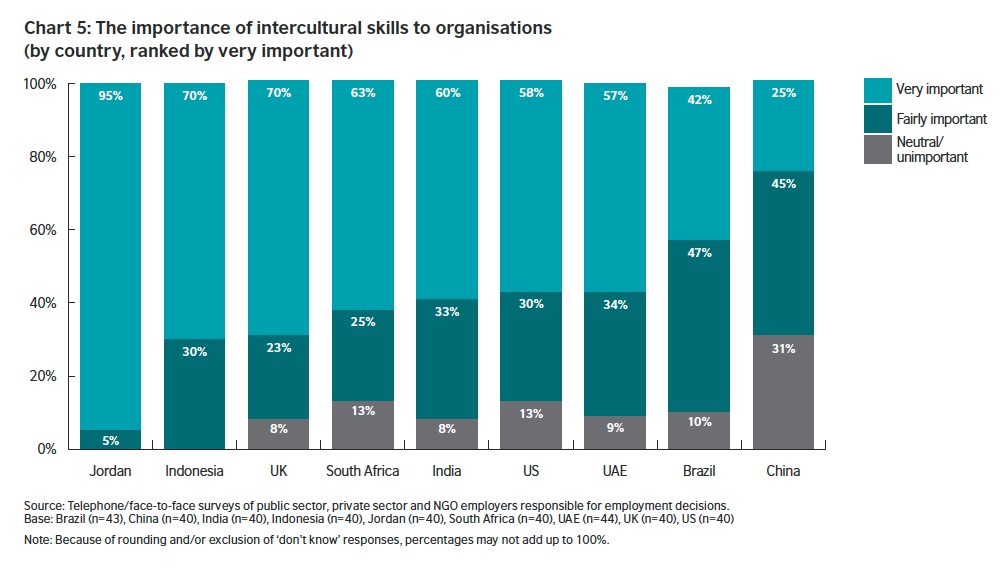
Research Findings: The Value of Intercultural Skills in the Workplace


IC Skills importance
Culture at Work: The value of intercultural skills in the workplace
—A survey conducted by the British Council, Booz Allen Hamilton and Ipsos Public Affairs, of HR managers at 367 large employers in nine countries: Brazil, China, India, Indonesia, Jordan, South Africa, the United Arab Emirates (UAE), the United Kingdom (UK), and the United States (US)

The Report’s Conclusions

“Our ability to engage successfully with other countries, organisations and people will depend to a large extent on whether we possess the necessary intercultural and foreign language skills to make fruitful connections, whether in trade and investment, charity/NGO programmes or as government and international organisations. This is fundamentally changing the way in which employers value and seek to develop intercultural skills in the workplace.”

“More and more business leaders are identifying real business value in employing staff with intercultural skills. These skills are vital, not just in smoothing international business transactions, but also in developing long term relationships with customers and suppliers. Increasingly they also play a key role within the workplace, enhancing team working, fostering creativity, improving communication and reducing conflict. All this translates into greater efficiency, stronger brand identity, enhanced reputation and ultimately impact on the bottom line.”

“Employers believe that intercultural skills are integral to the workplace.”

“A common challenge shared by employers around the world is finding employees with adequate intercultural skills. Given that the operating environments of all organisations is increasingly global, it comes as no surprise that employers need employees who can understand and adapt to different cultural contexts.”

What is the international reality in the workplace?

The research shows that employees in most large companies surveyed engage in extensive interaction across international borders.

More than two thirds of employers report that their employees engage frequently with colleagues outside of their country, and over half say that their employees engage frequently with partners and clients outside of their country.

THE BUSINESS VALUE OF INTERCULTURAL SKILLS
Intercultural skills provide business value and help mitigate risk.

The research shows that HR managers associate intercultural skills with significant business benefits. Overall, the organisations surveyed are most interested in intercultural skills for the benefits they bring—benefits that carry significant monetary value to employers:

  • Keeping teams running efficiently
  • Good for reputation
  • Bringing in new clients
  • Building trust with clients
  • Communicating with overseas partners
  • Able to work with diverse colleagues
  • Increased productivity
  • Increased sales

Employers also see significant risk to their organisations when employees lack intercultural skills. Top risks that organisations surveyed are concerned about are:

  • Miscommunication and conflict within teams
  • Global reputational damage
  • Los of clients
  • Cultural insensitivity to clients/partners overseas
  • Project mistakes

How do the organisations surveyed define “intercultural skills”?

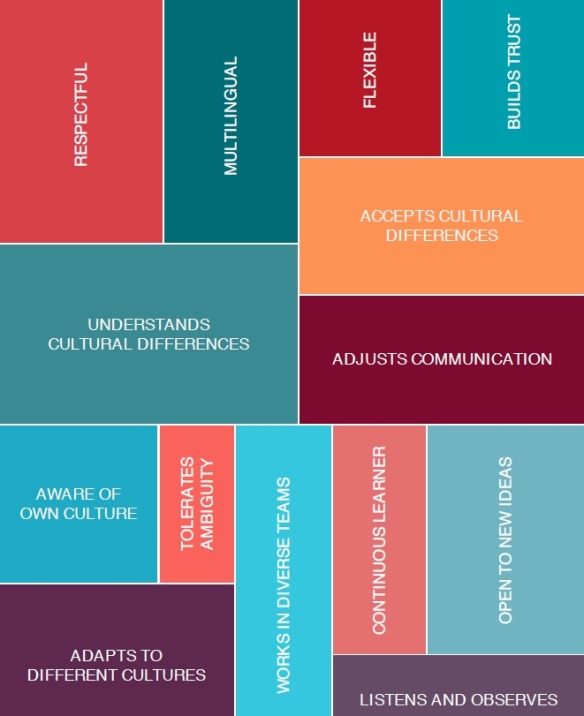
The graphic below shows the words employers used, with size of the block equating to frequency of use.

define%22interculturalskills

The terms employers use to define intercultural skills
Source: Telephone/face-to-face surveys of public sector, private sector and NGO employers responsible for employment decisions. Base: Ipsos Public Affairs, 2012: Global (n=367).

In particular, employers highlight the following as important intercultural skills that they look for in job candidates:

  • the ability to understand different cultural contexts and viewpoints
  • demonstrating respect for others
  • accepting different cultural contexts and viewpoints
  • openness to new ideas and ways of thinking
  • knowledge of a foreign language.

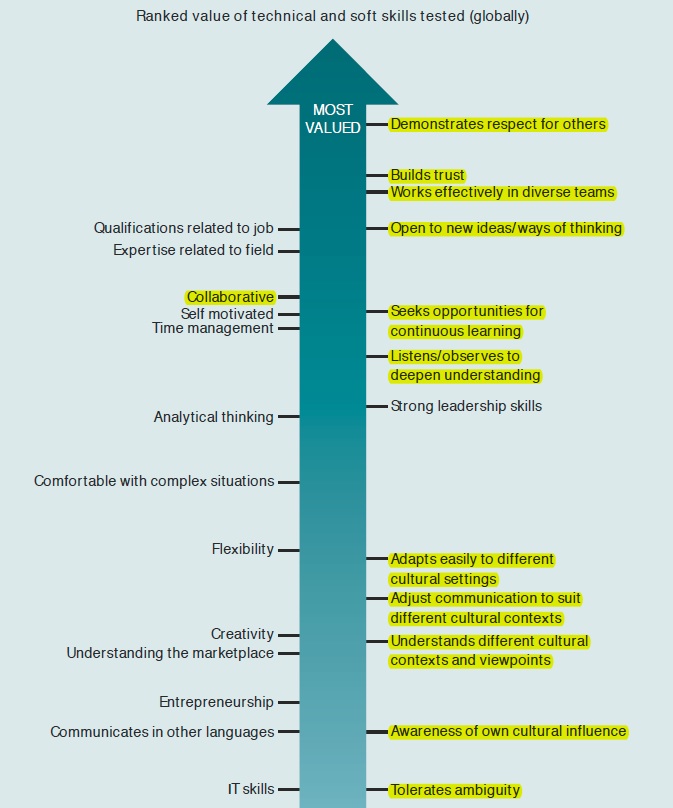
How employers rank different skills in terms of importance

valuedskills

Graphic © the original report, with yellow highlights added by Cultural Detective.

How does the research indicate these skills are developed?

Most employers report encouraging their staff to develop intercultural skills through in-house training, meetings and events. However, employers also say that educational institutions could do more to equip students with intercultural skills.

The findings suggest that policy makers and education providers could do more to contribute to the development of a workforce with the necessary intercultural skills through interventions, such as prioritising:

  • teaching communication skills
  • offering foreign language classes
  • availability of opportunities for students to gain international experience
  • development of international research partnerships.

This research suggests that there is significant opportunity for employers, policy makers and education providers to work together to strengthen the development of intercultural skills to meet the needs of an increasingly global workforce.

Film Review: Machuca

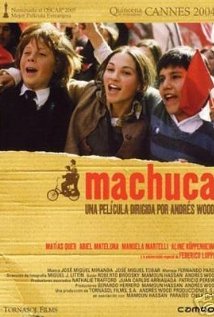
Machuca movie posterHow about watching a terrific film from Chile? Our local rental place had a closeout a few weeks ago, and one of the DVDs we happened upon was Machuca, a 2004 film by Andrés Wood. What a terrific find!

I am often asked about status and class in Latin America by those who come from more egalitarian societies. Navigating class differences has been one of our greatest challenges living in México; neither life in the US, Spain, nor Japan equipped us for the expected and often desired separateness here. While a period piece, Machuca viscerally illustrates the class differences and tensions of the era, and I would recommend it as a worthwhile resource.

Machuca takes place in Chile during the final years of Salvador Allende’s government — the first Marxist ever to be elected head of a democracy — and ends about the time of General Augusto Pinochet’s military coup d’état. Taking place during this period of heightened civil unrest, this is fundamentally a story about the friendship of two boys: Gonzalo and Pedro, who come from opposite sides of the river and opposite ends of society. Thus, we get a micro and a macro-level taste of class tension.

Gonzalo is a “junior,” the son of a wealthy family who attends St. Patrick’s, an elite Catholic boys’ school. He is frequently forced to accompany his mother during her afternoon trysts. Pedro (Machuca) lives in a shanty town, and is the son of the woman who cleans house for Gonzalo’s family. Pedro is one of a group of “scholarship students” that the head priest has invited to St. Patrick’s in an attempt to create a bit of equity in society.

The movie shows how difficult it is for these new students to integrate, and there is a memorable bullying scene in which Gonzalo defends Pedro. We gain insight into the home lives of both boys, proving of course that richer or poorer, life is not all roses.

The backdrop to the main story is, of course, a Chile in turmoil. Gonzalo’s own parents seem to come down on opposite sides of the issue, his mother content as a socialite, his father at least to some degree believing in the need for increased equity. The street demonstration scenes capture the anger, the power, and the fear of the time.

We witness the backlash of the parents at school to the priest’s “communist” tendencies, because he attempts to integrate groups they feel best remain separate. We glimpse the resourcefulness of Pedro’s “uncle,” who makes a living selling flags to both sides: the Marxists and the traditionalists. We hear about land redistribution and industry nationalization through radio broadcasts and posters in the streets. In movies like Machuca, stories about young friends trying to make sense of the world around them, there is usually a girl. In this case, she is the girl with whom both boys learn how to kiss. And she is most definitely and passionately a socialist.

Watching this film you will learn a lot about Chilean history, the ingrained status in Latin America, and the difficulty in bridging rich and poor and vice versa. If you’re anything like the members of my family, you’ll be talking about it for days afterwards. I’d urge you to get out your copy of Cultural Detective Chile, particularly the Chilean Values Lens, to aid your discussions of the movie. Enjoy! And please, let me know what you think!

Entre Dios y Alá

(English follows Spanish)

Si pudiera resumir las noticias de las últimas dos semanas, podría sin duda mencionar dos nombres: Benedicto XVI y Hugo Chávez.

El primero desafió toda una organización, un sistema, una tradición. Hoy que escribo esta nota los noticieros hablan del humo blanco saliendo de la Capilla Sixtina que anuncie que hay un nuevo Papa. No me alcanzo a imaginar todos los cambios organizacionales a los que se enfrenta la Iglesia Católica para adaptarse a este nuevo cambio de innegable impacto mundial.

Por otro lado, tenemos la muerte del presidente de Venezuela Hugo Chávez. Los análisis políticos por supuesto han sido los protagonistas de su partida. Pero no podemos dejar de lado ese aspecto que nos une en este espacio de comunicación.

En medio de la sobre-exposición de la noticia en los medios, incluyendo detalles de su vida, su gobierno, sus frases célebres, visitas a países socialistas etc, está una noticia que este lado del mundo apenas menciona.

La foto del presidente de Irán, Mahmud Ahmadineyad, expresando sus condolencias a la madre del presidente Chávez ha causado no menos que indignación en su país y los países que siguen los preceptos islámicos.

Lo que para nosotros puede parecer normal, entendible y simplemente humano al brindar consuelo en un abrazo a alguien que vive el dolor profundo del duelo, en otra latitud no es más que el irrespeto a lo que ordena su ley, la cual indica que no debe haber contacto físico entre un hombre y una mujer si no es de su círculo cercano.

No siempre podemos entonces actuar como actúan otros, es decir a la tierra que vamos hacer lo que vemos. No siempre podemos adaptarnos a otro entorno, a pesar que podamos sentir la inclinación natural a ello.

Las culturas abiertas podríamos describirlas como permeables a otras culturas, donde son fácilmente identificables y permitidos otros valores, costumbres, tradiciones siempre y cuando prevalezca el interés común sobre el particular. Por el contrario, las culturas cerradas son herméticas y poco o nada tolerantes a las demás. El caso que enfrenta al presidente Ahmadineyad es una muestra clara, y atizado además, por comparar al presidente Chávez con Jesucristo.

Se unen de nuevo alrededor de Dios, de nuestras creencias religiosas los dos hechos noticiosos que mantienen en vilo al mundo entero.

Católicos y no católicos pendientes del Vaticano. Entre tanto el mundo Islámico levantando su voz de protesta por un hecho a todas luces, para ellos totalmente inadmisible hasta para un jefe de Estado.

Entre Dios y Alá, entre Dios y Dios. Hasta la próxima.

Between God and Allah, translation by Dianne Hofner Saphiere

If I were to summarize the news of the last two weeks, I could without doubt mention two names: Benedict XVI and Hugo Chávez.

The first challenged an entire organization, a system, a tradition. Today as I write this note there is news in the white smoke coming out of the Sistine Chapel announcing that there is a new Pope.  I can’t begin to imagine all the organizational changes that confront the Catholic Church as it adapts to this new change of undeniable worldwide impact.

On the other hand, we have the death of Hugo Chávez, the President of Venezuela. The political analyses have of course been the protagonists of his departure. But we can not ignore that aspect which unites us in this communication space. Amid the over-exposure of the news media, including the details of his life, his government, his famous phrases, and his visits to socialist countries, etc., lies a story that this side of the world barely mentioned.

This photo of Iranian President Mahmoud Ahmadinejad, expressing his condolences to the mother of President Chávez, has caused no minor indignation in his country and in the countries of the world that follow Islamic principles. What to us may seem normal, understandable, and simply the human act of providing comfort with a hug to someone living the deep pain of grief, in another latitude is nothing more than disrespect to the order of law, which indicates there should be no physical contact between a man and a woman not within the same inner circle.

We cannot always behave as others do, that is to say, doing what we see in the land to which we travel. We cannot always adapt ourselves to another environment, although we might feel the natural inclination to do so.

Open cultures could be described as permeable to other cultures, those in which other values, customs, and traditions are easily identifiable and permitted as long as the common interest in the matter is maintained. By contrast, closed cultures are hermetic, and not so tolerant of others. The case facing President Ahmadinejad is a clear case in point, further stoked by comparisons of Hugo Chávez with Jesus Christ.

Our religious beliefs join again around God, in the two big news items that have captivated the world. Catholics and non-Catholics watching the Vatican. The Muslim world raising its voice in protest to an act committed openly, which for them is completely inadmissible for a Head of State.

Between God and Allah, between God and God. See you soon!

“Signs” of Cross-cultural Difference: Lydia Callis

Cultural Detective Deaf CultureIt seems I missed a huge fifteen minutes of fame during Superstorm Sandy. Such frequently happens to me, living in the “provincias” of Mexico as I do.

The events I mention involve NYC Mayor Bloomberg’s sign language interpreter, Lydia Callis. Reactions by the Hearing community to Lydia’s powerful interpreting skills were discussed on prime-time news and talk shows domestically and internationally. Parodies of Lydia signing appeared on a seemingly endless array of radio and television shows and internet sites.

Mayor Bloomberg deserves major kudos for including sign language interpreting in all major press conferences during the state of emergency. Not only did it convey important information to a large number of people, it raised awareness of the Deaf community and created opportunities for Hearing people to learn about American Sign Language (ASL), professional ASL interpreters and Deaf Culture. There is little question that Lydia is a skilled professional who loves her job. Want to see her in action? A video is below. (My apologies to those of you reading this from places where you are unable to access YouTube. And, the video does not include closed captioning.)

We all know that it usually takes controversy to create those fifteen minutes of fame. So where was the controversy? It centered around some in the Hearing community’s perception of the “animated” nature of Lydia’s “whole body” interpreting.

Just read some of the viewers’ comments posted to the video above: Lydia’s signing is “dumb,” “weird,” and one person types that Lydia looks like a “mime.” These are comments that come from a lack of understanding, from ignorance; they provide—or rather, demand—an opportunity for education.

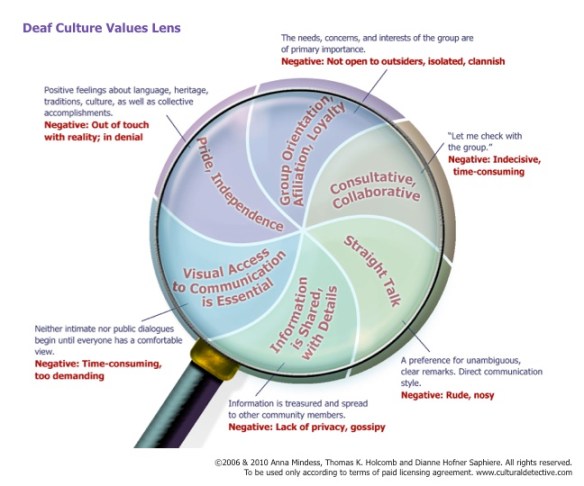
This is exactly the classic Cultural Detective “critical incident”: one person behaving correctly according to the values of her (Deaf) culture, while “outsiders” (Hearing culture) negatively judge that same behavior. One of the strengths of the Cultural Detective series is that each of our Values Lenses includes the Negative Perceptions that may frequently accompany the positive application of values, as does our CD Deaf Culture Lens.

If we take a look at the Deaf Culture Values Lens image above, it’s easy to understand why members of the Deaf community could take serious offense at such evaluative comments. The Mayor understood it was important to get information to everyone. For some in the Deaf community ASL is their first language, not English. This was a way to ensure accurate information was communicated to the Deaf and Hearing communities simultaneously. Signing and universal access were finally getting the attention and respect they deserved.

Then came the spoofs. The icon of US late-night comedy, Saturday Night Live, aired a parody that involved an actual ASL interpreter playing Lydia’s role and using funny signs for “President Obama” (his big ears), “pizzazz” (jazz hands), and quite a few other terms. The SNL skit included a comedic contrast of New York City vs. New Jersey communication styles, as reflected by the two mayors and their interpreters, a spoof of Bloomberg’s poor Spanish, and a send-up of “white” US culture. Want to take a look?

Like any comedy, spoofs can offend, and this one is potentially offensive to interpreters, Deaf people, New Yorkers, people from New Jersey, Latinos and “las personas blancas.” No doubt I’m missing someone here! While I personally find this skit pretty funny, Oscar-winning actress Marlee Matlin, who is deaf, publicly stated that the skit was very offensive.

A Deaf commentator (video below) discussed this situation, and I find it quite interesting to view his take on the situation. Just the fact that he signs it (fairly silently), and that the video does include English language closed captioning, provides a bit of an immersion experience with which many of us who hear may not be familiar. This commentator is not using ASL nor any other of the world’s naturally evolved sign languages, but a more recent pidgin called International Sign, for accessibility to the greatest numbers of Deaf viewers.

So, what can we learn from all of this? Taking a look at Cultural Detective Deaf Culture, we learn that:

  1. Sign language is not universal: “Almost every country in the world has sign language; some even have more than one, as is the case in Canada, with ASL and LSQ (Langue de Signes Quebecois), and Switzerland, which has Swiss-German, Swiss-French and Swiss-Italian Sign Languages.” Like any of the world’s languages, some of these are more inter-related than others.
  2. Lydia’s “animated” interpreting is due to the fact that ASL, as most of the world’s other sign languages, uses facial expressions for grammatical features and emphasis. Again, quoting from CD Deaf Culture: “There are several common features of Deaf people’s language use… An example would be the use of adverbs in signed languages. Although the signs for actions such as ‘working’ and ‘driving’ vary from one sign language to another, inflecting these verbs (for example, ‘working hard’ or ‘driving very fast’) would probably not be accomplished by adding a second, distinct sign, but by altering the manner of making the action sign, including the use of facial grammar.” What a Hearing person might perceive as “animated,” a Deaf person perceives as clarity and accuracy of communication.
  3. Another quick look at the Deaf Culture Values Lens image above will show us why so many people were so deeply offended by the satires of Lydia’s interpreting. Deaf Culture values include pride, loyalty, and group orientation; of course satire could be offensive. Another value is straight talk, a reason so many may have spoken out so quickly and clearly. Here is an opportunity for clarity, for helping the Hearing world understand there is a Deaf Culture. Again, quoting from CD Deaf Culture: “It is often said that language determines culture, and this is true for Deaf people all over the world. Since Deaf people do not have easy access to the spoken languages that surround them, signed languages have developed over hundreds of years, in almost every part of the world, as the most natural mode for communicating. Shared language, traditions, folklore, a strong identity, and a sense of group cohesion work together to create a Deaf culture. “
  4. Finally, according to Anna Mindess, co-author of Cultural Detective Deaf Culture, “The kind of work ASL interpreters often do is interpreting between one deaf person and one hearing person, where we can judge the educational level and language style of the Deaf person involved. However, Lydia was interpreting for anyone who happened to be watching TV (in NY that certainly included foreign-born Deaf people who may not have full command of ASL and deaf people with more or less educational experience) so that’s another reason she made her interpretation so broad as to be clear to the largest possible audience.” Lydia herself, in the Registry of Interpreters for the Deaf, said, “I knew my audience was going to be very broad. I decided to provide as much access for the Deaf Community that I could by mouthing the words and using ASL so that people who fit all along the spectrum could understand what was being interpreted.”

There is much that the Hearing have to learn about Deaf Culture. I urge you to logon to Cultural Detective Online and take a deeper look at Cultural Detective Deaf Culture, authored by Thomas Holcomb and Anna Mindess. In the package resources there you will see links to other tools, including the terrific books and DVDs from Deaf Culture THAT.

I’d also like to share with you three other resources on this topic that I found interesting.

  1. The first is a quick and insightful read I found that explains some of the signs Lydia used, entitled “Why Do Sign Language Interpreters Looks so Animated?”
  2. The second is a great blog post by Kambri Crews, a child of deaf parents who explains both “sides” of the controversy and demonstrates the danger of right/wrong thinking.
  3. And the third is an interesting piece in Forbes Magazine in response to the Lydia Callis buzz, this one on the more general topic of interpreting and translating and their role in our world today.

Please let me know what you think about all of this. What role do those of us building cross-cultural understanding and collaboration have to play? How can we support interpreters as they work to translate not only the message but also the meaning?

I’ve been told that we have a special offer for those of you who read through this post all the way to the very end! You get to take a look at Cultural Detective Deaf Culture in our CD Online version (plus all the other good stuff in there), free for a period of three days. Redeem the code below now through April 12, 2013.

  1. Go to http://www.culturaldetective.com/cdonline/orders/trial
  2. Enter your name and email address where indicated. The email address you enter will be your user ID and will be validated before you can use your subscription.
  3. Enter the promotional code <    Callis2013   > in the last box.
  4. In a few minutes you should receive an email from
    cdonline@culturaldetective.com
    This email may go into your junk or spam folder. To avoid this, please add our cdonline email address to your approved senders list.
  5. In the email you receive there will be link to verify your email. Click that link and follow the instructions in the email and you will be all set.

Happy International Women’s Day

473_485282898203686_1761119145_n(Vietnamese follows English)

I hate today, March 8th, which is called the International Women’s Day. While it does not make much sense in other countries, in Vietnam it makes me think that I am praised for the WHOLE DAY because I have been disadvantaged, marginalized, looked down on, and treated unfairly for the rest of the year, so today I can be patronized and my head can be patted on with a hidden patriarchal message: “See! Half of the world; you are not forgotten yet!”

This picture says it all. Born and raised in Vietnam, I have never seen a woman who only lives as a housewife. Vietnamese women always work, and work harder than men. They are expected to be super beings, that is, to “excel at work and be perfect at home.” I’m not exaggerating. This is the official motto of the Vietnamese National Women Association: “Gioi viec nuoc. Dam viec nha.” I suspect that this association is secretly run by men whose plot is to exploit women by telling them that in order to be a real woman, she needs to be earn money like a proper breadwinner, take care of the whole family like a respective full time working nanny, and still, be charming, sexy, obedient, and submissive towards her husband.

I long for the day this stupid March 8th will disappear like a remnant of a time when women have 1 out of 365 days to be remembered as proper humans.

Tôi ghét cay ghét đắng ngày 8/3. Nó làm cho tôi có cảm giác rằng mình được tôn vinh trong ngày này vì 364 ngày còn lại của năm mình đã bị đối xử tệ bạc, không công bằng, không được nhìn nhận đúng đắn hoặc không đực đánh giá đúng mức. Thế cho nên ngày hôm nay tôi được tặng này tặng nọ và được vỗ đầu với một cái thông điệp nặng mùi gia trưởng: “Đấy nhé! Một nửa thế giới! Các cô có hẳn một ngày…”Cả đời tôi chưa bao giờ thấy một người phụ nữ Việt Nam chỉ ở nhà làm nội trợ. Mẹ tôi thậm chí còn bĩu môi dè bỉu một cô em họ rằng “nó chẳng làm gì chỉ biết ở nhà ôm con”. Phụ nữ Việt Nam lúc nào cũng làm việc cật lực. Từ lúc sinh ra, họ đã bị cả xã hội mong chờ sẽ trở thành những siêu nhân, vừa phải “giỏi việc nước”, vừa phải “đảm việc nhà”. Đây thậm chí là một khẩu hiệu của Hội Liên Hiệp Phụ nữ Việtnam, cái hội sinh ra để bảo vệ quyền bình đẳng của phụ nữ nhưng tôi chắc chắn rằng nó đang được quản lý bởi một tổ chức bí mật của đàn ông nhằm bóc lột phụ nữ bằng cách làm cho họ lú lẫn mà tin rằng: Để có thể làm một người phụ nữ hoàn hảo thì cô phải vừa kiếm ra tiền như một người lao động chân chính, vừa quán xuyến việc nhà như một Ô sin mẫu mực, đấy là chưa kể phải vừa quyến rũ, nghe lời, gọi dạ bảo vâng, ngoan ngoãn với đức ông chồng của mình.Đến bao giờ cái ngày chết tiệt 8/3 biến mất? Đến bao giờ đàn bà nước tôi mới hết “được” “tôn vinh” một ngày để tiếp tục đầu tắt mặt tối hai tay hai súng 364 ngày còn lại?P/S sorry, quên mất! Thậm chí trong cái ngày được tôn vinh đấy phần lớn phụ nữ vẫn hào hứng khẳng định vai trò của mình bằng cách ngày thường cắm hoa đẹp rồi thì 8/3 cắm hoa đẹp hơn, ngày thường nấu ăn ngon rồi thì 8/3 nấu ăn ngon hơn…

PP/S. Việc ở nhà chăm sóc gia đình phải được coi là một nghề (cho bất kể đàn ông hoặc đàn bà), nhưng không ai trên đời có quyền yêu cầu một người bình thường phải vừa làm đàn ông vừa làm đàn bà. Hết.

If the medium is the message, what is the cultural message of a new medium?

Oakland1976

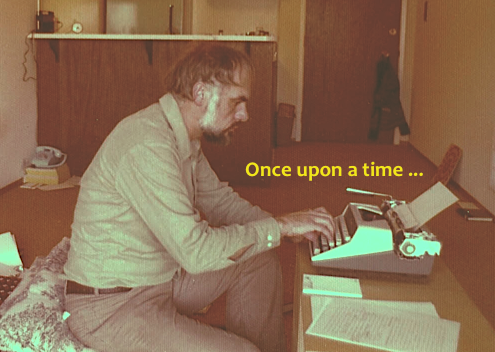
Once upon a time a carriage return returned the carriage and a folder was made of paper and we dialed the phone with a dial and mail needed a stamp. New media have changed all that though we still use the old words…

This is the fifth in a series (#1, #2, #3, #4 are here.)

If, as we have been discussing, the new media, and in particularly social networks, have been delivering such an enormous quantity of conversations into our mailboxes and our minds each day, it is important for us to look at the process of shaping the culture that is involved here. There are, I believe, two dimensions to look at. The first is what these media, as media, manifest about the cultures that create them, as well as what their own cultural message may be. The second is how can new media be used to shape discourse and create culture? We will discuss the first question today and the second in next week’s post.

When asking, “What is the cultural message of a new medium?” I am looking at the media through the lens that Canadian philosopher Marshall McLuhan offered us when he enunciated his famous dictum, “The medium is the message.” While we can look at the abundance of new media tools, platforms, and connections and ask about their role in connecting contemporary culture, it will be important for students of communication to have a careful look at each of the new media to determine what kind of message it sends simply by being what it is and working in the fashion it does.

Here are some of McLuhan’s distinctions that might provide starting points: for example, his distinction between hot and cool media in terms of its impact on the perceiver as well as the intentions of the sender. Generally speaking, hot media engage one or more senses rather completely and demand little interaction, while cool media require more participation to fill the gaps. What media and aspects of new media operate in one way or the other? Does this say something about the propensity to contribute or to lurk? This will require careful research and study, so I have to be satisfied with simply calling attention to this side of new media and their possible impacts on the users (the medium is the massage). I leave it up to experts in academic communication departments and think tanks to provide the workforce that will help us to understand what is happening to us as end-users of each medium and how their extensive use may shape culture.

McLuhan himself offered a model, which could be another starting point for steering our impressions and generating research about what a medium may actually do and how it affects cultural discourse and behavior. We can examine the media we are using and ask ourselves:

medium

What changes when we use different forms of new media?

  1. What does it enhance, what is amplified, enlarged, intensified?
  2. What does it obsolesce, what drops in prominence or even disappears?
  3. What does it retrieve, what is recovered, brought back of what was previously lost or diminished?
  4. What does it reverse, what does it do when pushed to its limits?

Movement in any of these directions may affect the culture of the users, for example the mass availability of cell phones seems to have significantly increased frequency of communication in some cultures where people were inclined to be more taciturn in face to face situations. The documentary, McLuhan’s Wake, uses the cell phone as one example of these changes: the cell phone enhances the free use of the voice; it obsolesces the phone booth; it retrieves childhood yelling (to the point where we have coaches on the train that are “zen,” where cell phone conversations are forbidden); when pushed to its limits, it reverses freedom from the wire and becomes a virtual leash for those who cannot be without it. So the starting point for inquiry here is probably sharing your own experience with peers and across generations as to how your life has been affected, changed, as new media acquired more prominent places in your life and work. Such discussion should provide suggestions for more in-depth research.

How do new media emerge from culture?
McCluhan also observed, “We shape our tools and thereafter our tools shape us.” This should not surprise us as interculturalists, knowing that what we make in the world, scooters or cellphones, are products of our inner discourse. We make culture and culture makes us. When we’re talking about media, new or old, we are talking about ways we have projected our culture on reality. They are part of our culture.

So, the question is how, from what discourse, and from what need the development of new media tools and resources emerge. While the possibilities seem infinite, still what we create emerges from discourse we have about our needs and ourselves. Here’s an impossible question, but I find it fascinating to speculate on: what the Internet and new media would look like today, if their birth and infancy had occurred through the efforts of housewives rather than the exigencies of the 1950s military. How much to we have to feel threatened, in order to move forward?  Apparently quite a bit, at least given the prevailing expression of our primitive discourse.

Today’s dominant discourse, in the socially constructed global marketplace that we live in, is Darwinian, despite the niceties we would like to embellish it with. This is rooted in the more ancestral and primitive biological discourse of survival, which at its worst is Homo homini lupus—”Man is a wolf to [his fellow] man.” This, to say the least, is unfair to wolves. “Kill and eat!” Survival shapes the first layers of primitive discourse and the stories that it tells. If we accept some validity for Maslow’s hierarchy, we must sadly admit that much of the time decisions are made in its basement, out of real or fictive insecurity and fear for one’s existence. Despite our technology and ability to create abundance, we have not been able to significantly alter or transcend this urcultural discourse.

Consequently we live in a world where both primitive and high-tech slaughter, violence, and torture contribute to the opulence of the few and the deprivation of the many despite it being a place where, paradoxically, there is more than enough to go around. New media are enablers of war by drone and pinpoint assassination. To date social media have done little to change this culture of survival by violence, though they have already provided support to movements and counter movements, revolutions and counter-revolutions. Without a shift in our primitive conversations about survival, the best intended movements and revolutions ultimately re-create the problem that summoned them forth in the first place. Harold Robbins, in The Adventurers (later made into a rather bad film), shows us a cynical picture of how revolution follows on revolution as the starry-eyed thirst for justice, almost overnight, turns into the steely-eyed exercise of power. The novel is stereotypically set in Latin America, but as contemporary history is proving, it could be anywhere and everywhere.

So creating discourse and shaping culture on a deeper level is the perennial challenge facing humanity, even as our consciousness grows about how the internecine wars of tribes, nations and classes over resources now threatens the human race as a whole. Those who are comfortable enough, throw up their hands and say, “Well it’s just human nature.” Alternative discourses of faith and philosophy, aimed at turning “swords into plowshares,” are quickly appropriated by discourses of fear and power and used to set the people’s faiths against each other.  are fearful of cultural identity, of being labeled. This challenge of managing the larger social constructions of reality, what I have elsewhere called the “urcultures” has all too little been the focus of intercultural work and study, despite the fact that the kind of insight and tools needed to do this are more likely to be found in this field than in many others.

How new are our new media?
Do new media indeed bring something fresh to life or simply bring us more and faster same-old, same-old? Are they a “game changer,” a paradigm change or shift? Does the ease and abundance of communication change the shape of how we will think about ourselves or simply widen the channels for what we are already saying and doing or does it create a new dimension? Certainly given our understanding of the social construction of our realities, it’s we who are prone to bring the same-old, same-old to the construction and use of media, and we face each new development either with hope or horror, or both. There is strong tendency to look at new media as resources, goods, tools for power to be fought over, controlled, at the same time that we would like to see their accessibility is an enabler of democracy on a level not experienced before. If so, that would signal the arrival of a culture shift of significant proportions?

A SIETAR (Society for Intercultural Education, Training and Research) colleague of mine in Argentina, Natalia Sarro, has raised the question in a recent blog post as to whether we possess our stories, or whether they possess us. I am sure that the answer is, both! One of the prevailing discourses in the contemporary self-development movement at the personal level is that we must change negative stories into positive ones, limiting ones into liberating ones. This is becoming a sacred, almost religious discourse in US culture, whence it is rapidly globalizing. It is, as so many values in the US, focused on the individual, premised on individual salvation. One comes to the altar to profess one’s faith, whether it be in God or in Mammon. Both deities are pretty popular these days.

How do new media connect us, when they also disconnect us from each other and from our past?
McLuhan’s analysis of the effects of media raises interesting questions from a cultural point of view. One of these is whether the new media are creating a new sense of community in the human family or enhancing individuation—or both. Is there anything inherent in them that leads in one direction or another? Again my suspicion is both, hesitatingly said, hoping that users and scholars will offer reflection and research on if and how this is taking place. To what degree are the human connections that new media create, “real” or rather, avoiding the essentialist tone of that question, what is the nature of the reality they construct, how does it function?

A few weeks ago I was on an extremely crowded bus for the usual half hour ride home, which in this case took an hour and a half. As the bus left the station, standing room only, just about everyone under 50 (including a few over 50 like myself) was connected to their iPhone, iPod or iPad. Almost no one was talking to anyone else. When the bus ground to a halt due to road construction and traffic obstructions, gradually people put their handheld devices away and began talking to each other, both to peers and across generations, asking questions, telling stories related to our common plight. “You had to be there.” In other words, when the bus was reduced to a stop-start, mostly stop, creep, we grounded ourselves in the physical present and connected face-to-face. Sure, there were a few phone calls of the, “Honey, I’m going to be late” kind, but the focus had shifted from the distant and virtual to the here and now as people came to the presence of warm flesh and blood. I suspect this is an example of how stress reverts our discourse to more primitive levels, in this case one of tribal solidarity.

Another tantalizing question, raised by the emergence of new media, is that of the permanence, or at least endurance of the discourse and the stories that we create with them. This is about culture, what a discourse produces, its art and its arts and its artists, its architecture and literature. Fame depends on both memory and forgetfulness. It requires we hold the memorable and create the discourse that preserves it; prevailing discourse also demands that we forget those in the crowd in favor of those who stand out from the crowd. The charm of the tiny old streets of now high-rise Singapore lives in fewer and fewer of our memories. No future archeology is likely to reconstruct it. So inevitable we ask, “What human factors are the new media rendering obsolete?”

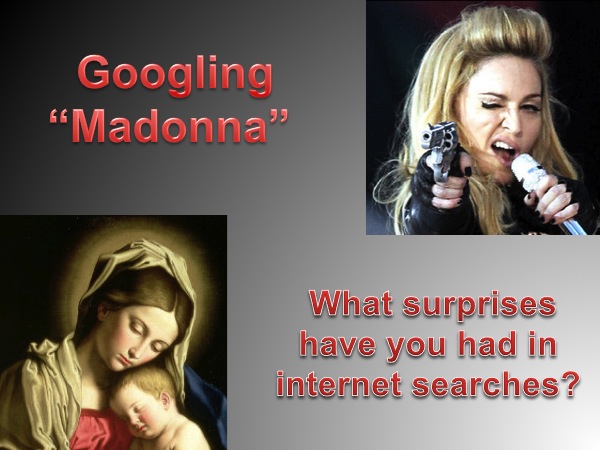
If you Google “Madonna”, most of the 230 million hits have to do with the singer, Madonna Louise Ciccone. You have to get a search a lot more specifically to find mediaeval or Renaissance paintings of the Virgin Mary, which would have been the culturally obvious meaning of “Madonna” for many only a few decades ago.

google

Will new media build on or over the cultural past? Will they create their own memorable cultural icons or lead us to a cultural fragmentation where identity is transitory and incidental? Should we worry about this? Culture is a discourse that requires consensus to exist. If, as Dominique Wolton insists, “Communication is cohabitation,” what is the human domestic architecture of new media for how we share the planet? We will look at the possibilities of rebranding identities that these media offer in the next post.

This post originally appeared in the blog of the Center for Intercultural New Media Research and is provided with the assistance of its editor Anastacia Kurylo.

Healing the Wounds of History

Playback Theatre

Armand Volkas

Cultural Detective is about collaboration, authenticity, respect, and bridging differences. The CD Method has long leveraged drama — primarily through the acting out and resolution of critical incidents — as it involves our whole person: body, heart, head and spirit.

I was delighted to learn recently about one colleague who combines our goals with one of our favorite techniques in incredibly powerful ways! On a daily basis I am astounded by and grateful for the unique contributions you, our Cultural Detective community, make to the world around us, and I’m eager to share with you this latest example.

Armand Volkas is a psychotherapist and drama therapist, the son of Auschwitz survivors and resistance fighters from World War II. He is also the life partner of Anna Mindess, frequent Cultural Detective Series editor and co-author of CD Deaf Culture.

Armand created a process called “Healing the Wounds of History,” in which a group of people sharing a common legacy of historical trauma (Germans and Jews; Palestinians and Israelis; Japanese, Chinese and Koreans; African-Americans and European-Americans, to name a few) use experiential techniques to transform the pain of such legacies into constructive action.

Healing the Wounds of History is based on the premise that there can be no political solutions to intercultural conflict until we understand and take into consideration the needs, emotions and unconscious drives of the human being.”

The project involves:
  • Breaking the taboo against “enemies” speaking to each other.
  • Humanizing each other through sharing our personal stories.
  • Taking steps towards healing personal and collective wounds using creative and experiential methods.
  • Transforming historical trauma into constructive action and service.

While unfortunately the sensitive nature of Armand’s work doesn’t lend itself to filming, those of you interested in a deeper feel for it can read through the transcript of one of his keynotes, which was acted out by members of a theater ensemble as well as Armand himself.

For more information on or to support the Healing the Wounds of History project contact Armand Volkas at +1 (510) 595-5500, Ext 11 or via email at info@livingartscenter.org

Culture’s Flow (#4 in a series)

writeshareIn the first three posts ( (#1 in the series, #2 in the series, #3 in the series), I have been hinting at a metaphor for culture that I will explicitly discuss in this post. Let me introduce it with a poem, Culture’s Flow.

FlowPoem

Old conversations and new
Sometimes I ask my trainees or students to close their eyes and imagine culture as this river. Its source, high on a mountaintop, starts with the melting ice that flows from the glacial peaks where the old wisdom of our people and our history has been stored from time beyond memory. In our primeval stream of culture are stories that have been handed down for generations—they carve the deep river bed for the stream of the discourse that flows within us.

Fresh waters of discourse, tributaries join our river’s flow from other places, from others’ mountaintops, from forest-hidden springs and history-pooled rainstorms of experience. Our stream collects, incorporates, assimilates endless sources of discourse. We absorb conversations from face-to-face contact with each other, hear rumors from elsewhere. Especially today, we are inundated by electronic streams of discourse from all over the globe, pouring through virtual media, sometimes going viral. If you’re in social networks, you may get more stories, ideas, reflections, comments than you know what to do with. They overflow your banks. Little by little, and large by large, sometimes tiny imperceptible memes, sometimes by seeping flood, sometimes by tempest and tsunami, they join this river, widen and deepen it and increase its flow. There are stagnant backwaters and rich deltas.

The mix
Discourses intersect. Some join the deeper currents; others cause raging rapids and whirlpools of power and contradiction. We belong and contribute to all kinds of discourses. Everything from our nation to our favorite football team has its story, a discourse about who we are and what we are about. These discourses meet in us to create our culture, shape what we call our person and personality. They produce the endless conversation that we have with ourselves, as we noted last time. We group ourselves with others by the importance, the gravity, and the glue of what we see as our common discourse. The river is meant to nourish the land it cuts through.

When we talk about waters of ancestral glaciers for centuries, we could call them our “primitive conversations,” origins lost in time, those that we share. Then there are “prevailing conversations,” discourse in the air, on the airwaves in cyberspace, conversations that we hear and think about or just absorb, that reflect the cultural values of the specific contexts that we find ourselves in. Prevailing conversations may indeed seem different from the original ones, but then again, not always. Culture is enduring. Its discourses don’t go away, but they flow deeply and they intimately blend with the discourses of the current moment, carrying them along in the river’s course.

Forever old, forever new (Plus ça change, plus c’est la même chose!)
When I was growing up, if you needed to take care of yourself, you went to the doctor and did what the doctor told you. A generation or so later, many of us got into natural foods, natural healing and healers. It looked like a cultural revolution. What didn’t change, but actually got stronger, was the discourse that ran, “I can control my health if I do all the right things.” It is a discourse related to, “I can control my life.” “I can control my career,” etc.”

I remember a European colleague once saying to me, “You Americans think if you do all the right stuff, you can live forever.” He didn’t share my strong US discourse of control, the belief that we are in charge, or think we should be. When I was younger, medical doctors were gods (maybe they still are in some places). Now there are prevailing discourses that tell us that we can diagnose our own problems, for example, through websites like WebMD. What happens when we discuss the problems with only relying on prevailing discourse in spite of older wisdom? While Internet information may help us ask good questions, self-diagnoses based on Internet searches can also go horribly wrong.

That is just one example of how, hearing the prevailing discourse, we may think it’s far afield from primitive wisdom. Yet looking carefully, we may find that it’s just a fresh way of expressing a more ancient discourse flowing from the river’s deep streams. Sometimes there are landslides and earthquakes, events so deep and moving that they may seem to dam up the river and alter its direction, but the power of water…

Seeing culture as a river with both ancient sources fresh inflows helps us see how streams of culture combine to create our reality. We are in a cultural flow. The metaphor allows us to visualize and acknowledge the strong streams and the mix, to accept and speak about both the endurance and the flexibility, the fluidity of culture.

fullnotemptyFull, not empty
More importantly, this metaphor helps us imagine culture as inner fullness of stories and their discourse, replete with possibilities, not emptiness or alienation from our sources. Culture is forever flexible, forever moving, something that belongs to us, something that can irrigate our land and shape our landscape. Flow makes it invalid, impossible for me to stereotype or to label others or myself in fixed, inflexible ways, because we’re all part of the Flow.

Flow is everywhere, everything is flowing. We can see it, we can describe it, we hear its discourse and build our worlds with it. Yet, as the sixth century philosopher, Simplicius of Cicilia said, “You can’t step into the same river twice.” Why? The river has flowed on and you have changed as well. The challenge of viewing culture as a flowing river is that it requires us to accept that we have both inherited and that we continue to create, shape, dismantle, and destroy through the discourses that flow within us.

What can we do with this metaphor?
We can learn about ourselves and about the groups we are part of, identifying, reflecting on and taking ownership of our cultural streams. We can seek out our deepest discourse, the primitive undertows, as well as listen our prevailing self-talk and the chatter around us. We can ask what conversations are “primitive” and which are “prevailing.” What words and tones of our mother’s voice do we still hear, for example? For a humorous but confirming evidence of mother’s voice, listen to Anita Renfroe’s “The Mom Song.”

We can list or map our discourse and the courses it takes us on. I have often recommended using a personal journal for this—some years back I created a handbook on personal writing that is downloadable. When you wish to share, or explore a group’s cultural discourse, a personal or shared blog or a Facebook or LinkedIn group could focus on identifying the streams of identity we take part in. Colleagues and I developed a tool called the Cultural Detective: Self Discovery that provides some basic exercises for identifying our own or our organization’s core values, looking at how our discourse was and is being shaped by people and forces in our story. Mind mapping can be a resource for this. I use MindManager but there are quite a few software tools for this. Take a walk along your river and see what you can see…

This post originally appeared in the blog of the Center for Intercultural New Media Research and is provided with the assistance of its editor Anastacia Kurylo.

I am a creator and destroyer of worlds – and so are you! (#3 in a series)

How We Construct Culture and Reality

In my previous posts (#1 in the series, #2 in the series), I stressed how important it is for us to develop a dynamic rather than a static view of culture. Today we will launch our boat on the river of culture and peer into its sometimes clear and often murky waters to come up with a better sense of what’s down there. We noticed last time how we are ever talking to ourselves. Everything we create is a result of this inner self-talk, this discourse, our listening. So the things that we call “culture,” in the broad sense of the word, arts, music, industry, all of these things are products of this the stories we tell ourselves, this dialogue that goes on within us and around us that helps us shape and break the rules by which we make and do things.

Blog 3.1

Dr. George Simons has long been researching the stories that make us who we are. In this series of blog posts he will be leading us in an examination of critical challenges that can lead us toward a fresh vision of culture. We will explore how we come to terms with our inner and shared identities and learn about how we construct the realities that shape our now and our future world.

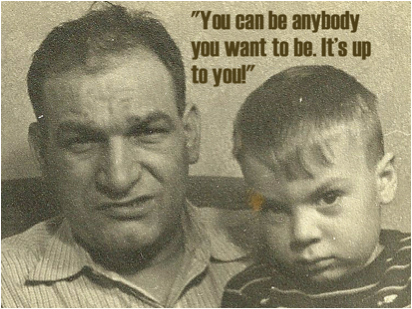
I grew up in the USA. My father was a second-generation immigrant, which often meant trying to be “more American than the Americans” because it wasn’t okay to be “too immigrant.” My father would say to me again and again, “You can be anybody you want to. It’s up to you.” “You have to take charge of your life.” “The squeaky wheel gets the grease.” Such maxims and counsel that were repeated over and over again in my family, during my education, among my peers, in the groups I belonged to, became my outlook, my world, the culture that still flows in me.

Some things we don’t ever forget. When it rains, I still hear my mother’s voice, “Take your rubbers with you.” If you saw the film Outsourced about the manager expatriated to India, you no doubt had a good howl at his conversation with his workers about the meaning of “rubbers”. (If you missed it, have a look.) Rubbers, in my case, were neither erasers nor condoms, but rubber overshoes. I don’t have any now and I haven’t had any in years, but I can still hear my mother’s voice…

Cultural discourse takes the form of memories, stories in our heads and hearts that guide us about how to act, what to think. They shape our attitudes, provide our norms. They are the raw material of our culture. Even if, and especially if these pass into the background of our minds and we no longer explicitly hear them, the ideas and feelings contained in these memories still resonate with us and lead us on.

How do we construct a dynamic definition of culture?
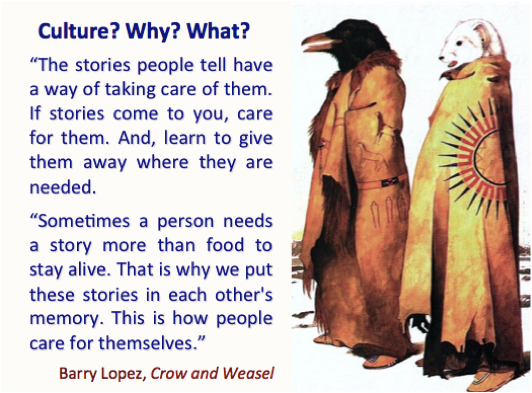
My very favorite definition of culture doesn’t come from a textbook. It comes from a children’s book called Crow and Weasel by Barry Lopez. His is the most disarming definition of culture I’ve ever laid eyes on:

“The stories people tell have a way of taking care of them. So, if stories come to you, care for them, and learn to give them away where they are needed. Sometimes a person needs a story more than food to stay alive. That’s why we put these stories in each other’s memory. This is how people care for themselves.”

Lopez furnishes us with a powerful, very powerful statement about how and why we create and pass on culture. Stories are told and retold in such a way as to shape us, giving us a common memory, common values and behavioral, even moral imperatives “for our own good.” Seeing culture this way, as adaptation to our environment, challenges our more static definitions.

Blog 3.2

Once upon a time, an anthropologist pitched tent in Borneo. Using an interpreter, he interviewed local people, looking for insight into the life and culture of the tribes native to the place. One day, questioning a local chieftain through the interpreter, the anthropologist couldn’t help noticing that the chieftain couldn’t take his eyes off a camp chair—you know, those seats with fold-up wooden frames. Nowadays, most have plastic or metal tubing, but a century ago they were simply canvas and wood. Finally, the anthropologist prompted the interpreter to ask about the chieftain’s fixation on the chair. The interpreter asked, “Why do you keep looking at the chair?” The chieftain replied quizzically, “Why do you stack your firewood that way?”

If you don’t have a use for something, you may not have a discourse for it. It may not even exist for you, or not exist in the way it exists for others. One of the critical tasks of living in a multicultural world is learning how to look at what we’ve never seen before, or have never seen in the fashion that is being presented to us. Things we’ve never “seen” before may not be physical artifacts. They may be feelings and perceptions. They may be opinions, judgments. They may even be colors – not every culture sees or names colors in the same way. We miss out on discourses that drive other people that would never drive us or might “drive us crazy!” These are not easy to discover, certainly not as obvious as puzzlement about a camping chair. Still, ask we must. We are embedded within a cultural discourse that we treat as real, but that is created by, as well as limited to what our own stories have to tell us. 

Blog 3.3Who creates?
In our times, realities, different from and deadly to each other, run rampant. Like it or not, we are challenged to understand our culture, other people’s culture, become familiar with the discourse that drives our behavior, our creativity, and perhaps brings us together in new and different ways and allows us to peacefully cohabit the planet.

So we must ask, where do our realities, where does this culture come from? Well, since culture is a conversation, since it’s discourse, it’s coming from you and me! It’s coming from everybody within earshot, from every handheld device connected to ours. Discourse requires people. It’s going on all the time, and, whether we intentionally listen to it or not, it seduces us with its themes and memes.

Sometimes, probably more often than we think, we deliberately attempt to create realities for ourselves and others. We work on shaping a reality that serves our purposes through the stories we tell in social media, traditional media, conversations with others, as we rehearse and repeat these stories in our own heads. We are as much the creators of these discourses of culture as GM and Volkswagen are designers and manufacturers of automobiles. Like the family car, some discourses can be very helpful and humane. Other discourses can be quite ugly. Like a fast set of wheels, you can use your inner discourse to rob a bank or save somebody’s life by rushing them to the emergency ward.

Roger Peterson, a US academic, is quoted saying this—and I like it:

“The collective memory [the discourse that we share] is systematically unfaithful to the past in order to satisfy the needs of the present. In other words, we attempt to address the present by reconstructing the past as if it always existed in the way we now adopt it.”

Through the stories we tell ourselves we produce a discourse. This discourse is the dynamic way we collectively create the cultural constructs that put our diverse realities, our cultures together. These constructs may be the bearers of mythology, fictional imagination, or as we all know too well, political propaganda. People are competing with their stories to create the realities they want for themselves and for others. For the sake of consistency and credibility we try to present our new story as the true and eternal story.

Enter the discourse of new media
How are new media affecting, constructing this flow? It is probably too early to tell, but certainly not too early to pay attention. For sure, they are being used both in traditional and novel ways.  Certainly they have multiplied by a factor of Xx the sheer volume and range of participation within one generation. They can be the conveyors of the traditional discourse which we consider wisdom, discourses that certain of us would like to impart to the rest of us, philosophical and religious, or New Age ideals; at the same time they are also the tools of revolution and the conveyors of revolutionary values, often drawn from the same sources, but re-expressed and broadcast in nanoseconds in a volume that hitherto would have been deemed sorcery.

How do we sort out what is new and fresh from what is newly or freshly restated to fulfill a desire or to meet a contemporary challenge? The wish to “sort out” in some definitive way is perhaps a false aspiration, a question to which there is no answer, a cul-de-sac, whose alternative is ongoing reflection as an essential part of our reality construction process. In new media, as in any other media that we use to create reality by discourse, these fresh tools are appropriated to change and introduce the realities that its authors, consciously or unconsciously, wish to disseminate.

Blog 3.4We all know that the Internet allows us to create reality ex nihilo. Fake user names create “people,” as do avatars of “aliens.” We even build virtual worlds that allow people to accept a second and a third and perhaps an infinite number of lives and realities. If you can imagine it, say it, you can be it. Yea, “Ye are gods.” Like the Jehovah of Genesis, we say, “Let there be…” And behold, there it is! And, if we are the ones who said it, we are also likely to proclaim that it is good. Like Shiva of old, I am the creator and destroyer of worlds – and so are you!

Charlatans, con men, name changers, shapeshifters and princes donning pauper’s clothing are not new to our human story. But the possibility and the temptation to creation on a quasi-divine level, and the consequences for doing so have never been so available and up for grabs. Even so, we like to imagine the world as somehow stable and static, at least in our desire to create something solid and lasting, even or perhaps especially in a virtual environment. Our human minds and hearts, even in intangible media, are inclined to treat our creations, our culture as real, not constructed.

John Lennon, a great interculturalist in my book, said “The more real you get, the more unreal the world gets.” The more you can get perspective on the discourse that flows around you, the better chance you have of seeing these things, not as useless or false, but for what they are, our attempts to construct things for benefit, for surviving and succeeding. We will look at this again as we seek a fresh cultural discourse to reshape our perspective. Meanwhile, how do you react to this fearful relativity of reality, or to the multiplicity of realities that new media have put at our disposal and which often invade our stability? What have you created as real for you? Are there real worlds, or only virtual ones…?

In Cultural Detective: Self Discovery® we offered some exercises to help you listen to your inner conversations and stories. These are only starting points. In this blog you will sometimes see pictures I have extracted from my past. This is not an exercise in nostalgia or ego promotion, but a suggestion that you might also explore the images and sounds of the past to bring the sources of your cultural discourse into focus.

This post originally appeared in the blog of the Center for Intercultural New Media Research and is provided with the assistance of its editor Anastacia Kurylo.