Link

Interesting article in Diversity Executive magazine about product naming problems in the global market, some good examples, and a link to an article on the value of intercultural competence.

Kudos to all our interpretation and translation colleagues!

What are you favorite “Cultural DeFective” examples? And your strategies for preventing them?

Talent Development Huge Topic For Keeping Employees

It’s commonly known (but not necessarily budgeted for during economic downturns) that talent development serves many purposes. Successful organizations use talent development for employee attraction and retention as well as superior employee performances. Recently, in discussing how best one of our site license clients could leverage Cultural Detective in one of their employee networks, the client mentioned there is a big push for employee development again, now that the economy is coming back. Their focus is on keeping people by teaching the skills that support inclusive and collaborative teams.

Cultural Detective is a phenomenal tool for teaching both of these skills and applying them on a global, as well as domestic level. As Janet Bennett points out in her article, “Culture General or Cultural Specific? That is the Question!“, “Rare is the professional arena where we face colleagues from only one or two cultures. Instead, each of us operates with a wealth of cultural diversity that is rich, complex, and challenging. This reality suggests that learning a single specific culture serves us well, and learning about cultural difference in general serves us even better.”

So developing employees to operate effectively in an inclusive and collaborative environment can be accomplished by learning the core Cultural Detective Method which builds the skills of knowing oneself, understanding others and building cultural bridges. As Janet goes on to say, “Cultural Detective® provides both the necessary culture-general breadth of application across many cultures while developing the culture-specific depth. The Worksheet provides a unifying and consistent process for examining yourself and others, and for bridging differences as assets. CD develops intercultural competence by simultaneously improving culture-general and culture-specific expertise in a variety of realistic contexts. By examining key cultural similarities and differences in a culture-general way, we come to know ourselves, and are able to compare and contrast our own perspective with that of others. By focusing the Values Lens on a specific culture, we enhance our capacity to untangle problems, negotiate differences, and look below the surface within and across cultures.” And through this process we can understand how to be inclusive in our multicultural environments and collaborate with those we don’t necessarily share common experiences and work styles.

With feedback like I heard from our client it seems talent development is perhaps again ready to be supported both financially and in practice — let Cultural Detective be your tool-set for achieving an inclusive and collaborative workforce!

Oldie but Goodie: Indigenous Contributions to Global Management

Because Cultural Detective is used by so many corporations, business schools, and management development programs, we are obviously very interested in strategies for broadening the scope of management teaching.

Recently I was perusing our archives, and found this terrific article from way back in 2005, authored for us by Cultural Detective Malaysia co-author Asma Abdullah. It focuses on indigenous contributions to global management, and I thought some of you might enjoy reading it, for the first time, or seeing it again with new eyes. Oldie but goodie, in my opinion!

Global Success By Trial and Error?

The idea occurred to Dianne that a blog about “How to convince your boss to work with Cultural Detective” could spark some interesting conversation. Always in the mood for some good dialogue, I took the bait!

To those of us who live and breathe “developing cross-cultural competence,” it seems like a no-brainer. Who wouldn’t appreciate a deeper understanding of the cultural values that are most likely driving your international clients’ decision-making process? Isn’t it logical that understanding what makes our global clients, vendors or colleagues “tick” would translate into improved relationships and ultimately more or better business?

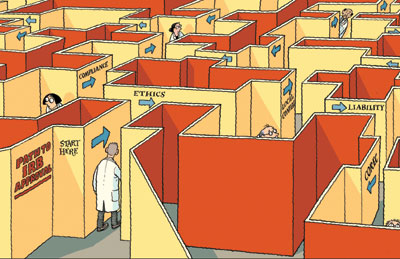
We know, by evidence of the shear number of cross-cultural mishaps resulting in project failures, job loss, plant shut-downs, etc., that millions  of dollars are lost annually by culturally inept managers following a path of trial and error versus embarking on a path of structured learning to develop competence for working across cultures. But because those dollars are not directly traceable to a lack of cultural competence, the trial by error path to global success continues to lead organizations through a maze of cross-cultural dilemmas which ultimately may or may not end well for the organization.

If you’re seeking the most direct path to your global success, it makes both personal and organizational sense to prepare the way by learning a core process for developing global competence. In fact, there was a 2007 Accenture study that involved interviews with global managers, who reported a belief that adopting a cross-cultural communication training program could improve business productivity by 26%! Most importantly, their belief was supported by actual improvements in productivity of 30% reported by organizations who did implement cross-cultural training programs.

The bottom line is that by using the Cultural Detective Method you are far more prepared for any cross-cultural situation, so that ultimately you will be more productive and effective in your job and for your organization. Better prepared employees feel more successful and have much better job satisfaction. What boss wouldn’t want that for their employees?

Our clients report feedback such as the following:
  • 30% increase in global customer satisfaction, due to training technical support representatives with the Cultural Detective
  • Alleviation of the typical “low” resulting from culture shock that many expats feel, and shorter time-to-competence on assignment, due to providing pre-departure training that includes the Cultural Detective
  • The Cultural Detective tools allow the flexibility to meet emerging needs/respond to time-sensitive opportunities because they provide “just in time” effectiveness in a cost-effective manner.
  • Cultural Detective training results in “positive and creative resolutions that bridge value differences.”

As I think more closely about this question, “How to convince your boss to work with Cultural Detective tools,” the answer clearly lies in the Cultural Detective Method and the Value Lens tools themselves! What does your boss value? And what does his/her boss value? Leverage whats important to them and put their values to work for you!

So, what do you think? How would you convince your boss? Let us hear from you!

Layering Lenses: We are All Multicultural Individuals

“As an ethnic minority woman working in a large multinational firm, too often I feel like I have to learn only, to fit in. For the first time since I’ve worked here, I can now see, and explain, the unique and valuable perspective that I have to contribute as well!” she said, her face positively glowing.

The privilege of experiencing such affirming responses from Cultural Detective customers is part of what makes my job so incredibly worthwhile. This woman had just spent time creating her personal Values Lens, using Cultural Detective Self Discovery as well as a selection of Values Lenses from various other CD packages.

While the core of Cultural Detective is its process, which enables ongoing learning, collaboration and conflict resolution, the Lenses play an invaluable supporting role. As shown in the diagram above, one important role the Lenses can play is to help us realize that we are all unique, individual composites of the various cultures that have influenced and helped form us over our lifetimes. We are not “just” Chinese or Brazilian; we are much, much more than a single story, as Chimamanda Adichie so well told us.

In international cross-cultural work such as I’ve done over the past 34 years, too often people limit their definitions of “culture” to “nationality.” Culture goes way beyond nationality. Since by definition culture is the shared norms, values and behaviors of a group of people, culture can also include ethnicity, language group, physical ability or mobility, sexual orientation, or gender identity. More often than not, in my experience, while nationality(ies) tend to have a strong impact on our behavior, professional training, the culture of the organization to which the person belongs, the team culture, their socioeconomic level, generation, their faith or spirituality … all of these influence behavior as much as or more than national birth culture. It’s worthwhile for all of us to know ourselves in all the layers of our cultures: why we are the way we are, how we got to be who we are today. In this way we can better predict how we’ll respond, and better explain ourselves and our motivations to others, powerfully transforming collaboration.

People often ask me, where does personality end and culture begin? As a practitioner, my response is, “Does it really matter? Is there an objective, accurate answer?” We are all unique individuals and we are all also influenced by the multiple cultures in which we’ve grown up, been educated and trained, worked and lived. If we can keep our values and our goals clearly in mind, we can be flexible in our behavior and creative in our approaches, in order to perform at our highest and best in a broad variety of contexts.

More Than A Cross-Cultural Development Tool

As many of you may know, the Cultural Detective Team periodically facilitates online learning events which have been designed to help new users learn or seasoned users refresh their skills around working with the Cultural Detective Method and Values Lenses.

I recently had a follow-up conversation with one of our new users, whose organization is getting ready to expand overseas to Australia. Because I often co-facilitate the online learning events, I always find it enlightening to speak with some of our new CD users and online participants to get their perspective and gauge our facilitation success by their understanding of how to work with the CD Method. It really energized me to hear this particular client’s feedback so I wanted to share!

He said he was really excited by the multiple ways he realized his organization could use the CD Method for growth, in addition to his initial hope of using it to aid global expansion. Needless to say, as he continued to clarify his meaning: by discussing how CD is really an excellent business communications tool that can be incorporated into ongoing associate training regardless of cross-cultural work, and that CD provides a superb process for coaching as well — by the end of our call I was really grinning !

It always feels good when the messages we are trying to send make it effectively across the virtual training waves, but when they are taken to another level and creatively applied to the organizational needs, the time we spend educating is worth it’s weight in gold!

Link

This year’s theme is “Leadership Across the Great Divides: Bridging Cultures, Contexts, and Complexities.”

A great theme for Cultural Detectives to contribute their expertise and share this wonderful tool to leaders globally! If you are interested in contributing you’ll need to act fast as call for proposals will close March 15th!

The 14th Annual International Leadership Association Conference will be held in Denver, October 24-27, 2012.

The ILA seeks proposal submissions that represent the best contemporary thinking about leadership from a diverse range of leadership scholars, practitioners, educators, program directors, consultants, students, and other leaders and leadership professionals. I know there are MANY of you out there that fit this description!

I invite you to visit this section of the ILA website to learn more and to submit.

Much-Anticipated New Release! Cultural Detective: Bridging Cultures

Cultural Detective Bridging Cultures coverIntercultural understanding is essential to working in a global world, though by itself it is simply not enough. There is a critical need beyond awareness of differences: an ability to generate and demonstrate effective, transformative, out-of-the-box solutions to challenging intercultural situations. Since 2004, the Cultural Detective series has successfully enabled people to do just that.

We are proud to announce the debut of our latest offering, Cultural Detective: Bridging Cultures. This new tool enables individuals, teams and organizations to purposefully strengthen mindsets and skills in order to leverage cultural differences as assets. It contains worksheets, exercises, tools, tips, and complete instructions. The learning package is authored by Kate Berardo.

Not every situation can be bridged, perhaps not every situation should be bridged, and the act of bridging, as many things in life, may involve an investment of time and energy. This new set of learning materials begins, therefore, by helping you distinguish whether “to bridge, or not to bridge.”

Cultural Detective: Bridging Cultures will enable you to understand how you tend to react when encountering cultural bridging opportunities, identify more effective strategies for bridging both in-the-moment and over time, and practice putting these skills into action. More specifically, you will:
  • Identify when a conversation is about to spiral up or down.
  • Identify “bridge builders” and “bridge blockers” to your successful intercultural communication.
  • Learn techniques for in the moment bridging of differences to ensure conversations spiral upward instead of downward.
  • Develop holistic strategies that consider influencing factors such as history, context, and structure of the interaction.
  • Learn how to expand, filter and test effective bridging solutions.
  • Develop high-impact, creative bridging solutions to both prepare for and repair intercultural relationships.
  • Practice, and receive feedback, on bridging strategies in situations that are real and relevant for you.
Cultural Detective: Bridging Cultures is organized around four main competencies that are essential to bridging cultural differences. They are:
  1. Self-Awareness: Being aware of the mindset you bring to challenging intercultural situations, and knowing both your strengths and blocks in turning such situations into bridging opportunities.
  2. Course Correction: Recognizing points in an interaction where misunderstanding or conflict starts to occur, and responding appropriately.
  3. Holistic Analysis: Being able to analyze complex intercultural situations in a detailed and holistic way that considers a variety of influencing factors, and, thereby, more effective solutions.
  4. Creative Solving: Learning skills and methods to generate “beyond the obvious” solutions to bridge intercultural differences.

While this is not to suggest these are all the skills needed to work effectively across cultures, these are often under-developed abilities that need to be strengthened to enable effective intercultural bridging, and, therefore, are the focus of this package.

SAMPLE EXERCISE

How about an exercise to get you started? The purpose of this activity is to learn what bridging and blocking look like for you, so you can hold a bridging mindset more often.

Let’s begin with some simple definitions.
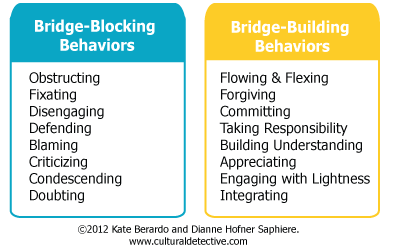
Blocking Mindset:
  • Focused on own agenda
  • May become defensive or impatient
  • Unintentionally harming the relationship

Think about a challenging interaction in your own life (who, what, when, why) during which you held a blocking mindset. How did you feel? What did your blocking mindset look like? What behaviors did it entail? What outcomes did you achieve?

What do your reactions tell you about yourself and how you might improve your intercultural effectiveness?

Bridging Mindset:
  • Open and curious about others
  • Willingness to meet others more than half-way
  • Belief that others are NOT “out to get us” but that they have positive intentions

Think about a challenging interaction in your own life (who, what, when, why) during which you held a bridging mindset.  How did you feel? What did your bridging mindset look like? What behaviors did it entail? What outcomes did you achieve?

Learn more about Cultural Detective: Bridging Cultures; view a short video on the core Cultural Detective method, which a major software manufacturer credits with a 30% increase in customer support satisfaction; purchase small quantities of the package; or contact Kris Bibler about a site license.