Link


New York City Tops Global Competitiveness, London Is No. 2, Economist Says – Bloomberg.

Link

This year’s theme is “Leadership Across the Great Divides: Bridging Cultures, Contexts, and Complexities.”

A great theme for Cultural Detectives to contribute their expertise and share this wonderful tool to leaders globally! If you are interested in contributing you’ll need to act fast as call for proposals will close March 15th!

The 14th Annual International Leadership Association Conference will be held in Denver, October 24-27, 2012.

The ILA seeks proposal submissions that represent the best contemporary thinking about leadership from a diverse range of leadership scholars, practitioners, educators, program directors, consultants, students, and other leaders and leadership professionals. I know there are MANY of you out there that fit this description!

I invite you to visit this section of the ILA website to learn more and to submit.

Link

Despite the fact that on February 29, lawmakers in St. Petersburg Russia voted to ban speech, reading, writing or debate on anything “gay” (still needs the governor’s signature), despite the fact that gay acts are illegal in many countries, there has been progress made on LGBT issues over the past year.

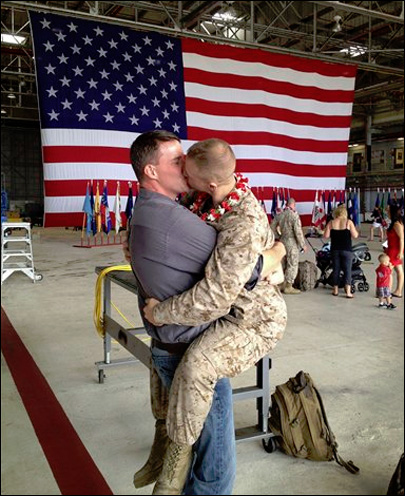
If you haven’t already seen this image, we’re pleased to let you know that this homecoming photo of a U.S. Marine caught in a passionate lip-lock with his boyfriend has gone viral on the internet. It seems to have been originally uploaded to Facebook’s Gay Marines group., and has been met with mostly positive response.

Then this morning came another homecoming kiss photo, this one from Seattle.

Congratulations to all happy lovers out there in the world! May we all learn to respect and include one another, and have the fortitude to continue the journey.

The Cultural Detective LGBT is an incredibly powerful tool for building understanding, respect and inclusion in our communities and our workplaces. Written by an international team of authors, it includes five Values Lenses and 14 critical incidents. Please put it to good use and help us make our world a more equitable and inclusive place!

Link

UCLA Chicano Studies Research Center Newsletter, March 2012 Director’s Message

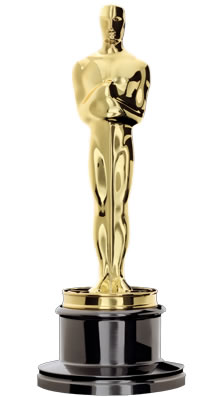
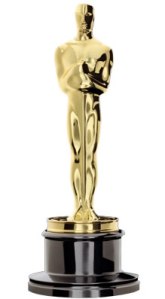
Last week amid the pre-Oscars hoopla, I kept noticing postings on Facebook about the Mexican origins of the Oscar statuette, created in 1928. Apparently, the statuette was modeled on a nude study of Emilio “El Indio” Fernández, the renowned Mexican actor, screenwriter, and director, who was working in Hollywood at the time. Mexican actress Dolores del Rio, also working in Hollywood, recommended her friend Fernández to the award designer (and her husband from 1930-41), MGM art director Cedric Gibbons. The award was first presented in 1929 and soon thereafter began to be called “Oscar,” a name that was made official in 1939. Why Oscar? Some say the award was named after BettyDavis’s husband, or Margaret Herrick’s cousin, or, because Louis B. Mayer’s executive secretary was Norwegian American, King Oscar II. Indeed, there are several explanations, but they all share one feature: the nude statuette reminded white women in Hollywood of a male relation or countryman. In this way, through an earlier era’s social network, El Indio became The European.

I find this history fascinating not for the way it ends, but for all its wonderful contradictions from the start. The mestizo Fernández, nicknamed El Indio for his indigenous features and whose directorial work would exemplify mexicanidad (Mexicanness), not only started his career in Hollywood — his naked body became the basis for the industry’s icon and its most coveted recognition. Those in Hollywood could not help but look for a way to identify with this new award, to take it into the family, so to speak, and call it by a familiar name: Oscar. Such desire crosses boundaries and tries to deny the fact of them, too. Last Sunday, Best Supporting Actress Octavia Spencer provided an alternative expression of desire when she accepted her Oscar: “Thank you, Academy, for putting me with the hottest guy in the room. I share this with everybody.”

Link

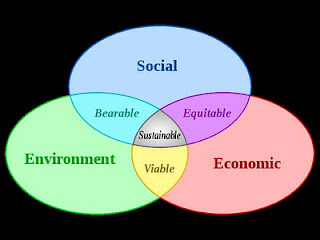
Our whole raison d’être at Cultural Detective is to help build a more inclusive, just and sustainable world.

One of the many wonderful team members we have helping us do that is Cultural Detective India co-author Madhukar Shukla. He teaches and promotes social entrepreneurship in a myriad of ways, and recently did a terrific blog post that I thought you might enjoy, on seven ways to incorporate sustainability into management education.

Please, share with us your thoughts and stories about how you help build a more sustainable and just world.

Link

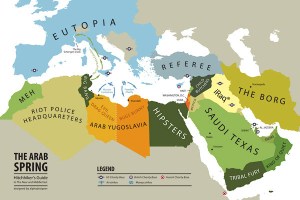
I see so many terrific ways to educate using these beautiful maps. What is the difference between a stereotype and a generalization, how do we use information to inform rather than to box people in, how might others see us or our team members (hopefully before they get to know us)…

And, as with any “loaded” tool, how do we get “beyond” or “use” the pitfalls, the errors, the hurt or misunderstanding tools such as these can cause?

Mapping Stereotypes – The Geography of Prejudice | Digg Topnews.

How would you use, and not use, these images?

Link

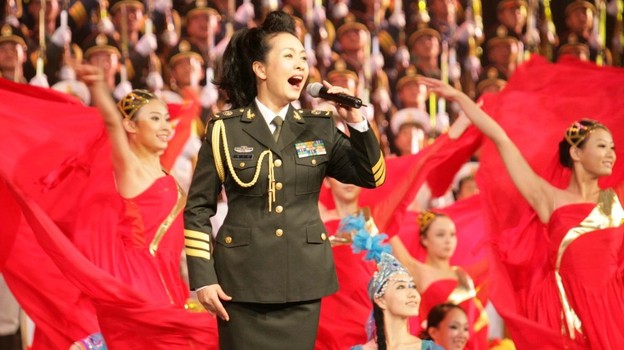
Remember Mao Zedong’s wife, Madame Mao, who had an acting career in Shanghai before becoming China’s first lady? Looks like that may be happening again.

Read the story and watch a few clips.