Global Edge: Terrific resource

Are you familiar with GlobalEdge? Funded in part by the USA Department of Education, the project provides free, centrally located international data from a variety of sources.

  • The Global Insights section includes data sortable by country, by 11 trade blocs, or by industry.
  • The Reference Desk includes a resource directory, online course modules, tutorials on international business, and a glossary of international business terms.
  • Their Knowledge Tools, my personal favorite, include tests of knowledge, economic rankings, a terrific “Database of International Business Statistics” to help you generate the custom reports you might need, an index to evaluate emerging markets, diagnostic tools to aid your business decisions, and a country comparison tool.

Many thanks to Cultural Detective facilitator Janet Graham, Baker University professor of international business, for highlighting this resource !

Can you read this?

No? Yes? If you can read the above, quick, tell me what it has to do with culture. If not….

Can you read the next one?

Yes? Perhaps this second one was easier for you? Why? Why is it we can read the above?

Our minds interpret a lot of things every day, constantly. They make sense of the world around us. They do this by recognizing patterns, putting information into templates that are familiar to us.

Obviously when we enter a new culture, the rules are different. The patterns are different, the templates unfamiliar. Our inability to make sense of what’s happening around us can cause us to feel disconcerted, maybe to lose confidence. Our past knowledge, from another place, can cause confusion. It can lead us to think we understand what we really don’t, to fail to see what is really there, or to miss important information.

There are so many interesting photos and images floating around social media networks. How many of them are you able to use to promote cross-cultural understanding, like the two above? Come on, share your favorites!

Reading key to the above images is below:

Este mensaje es para demostrar las
cosas tan increibles que puede
hacer nuestro cerebro. si logras
leer esto puedes sentirte
orgulloso de tu inteligencia, ya
que solo ciertas personas lo
logran. esto se debe a que el
hemisferio derecho del cerebro
asocia los simbolos parecidos a las
letras que conocemos normalmente
y asi logramos leer con facilidad.

This message
serves to prove how our minds
can do amazing things!
Impressive things!
In the beginning it was hard but now,
on this line your mind is reading
automatically without even
thinking about it. Be proud!
Only certain people can read this.

Grains of Sand and Cross-cultural Adjustment

Ever look at something and find it so beautiful or fascinating that it just sort of sticks with you? Perhaps it gives you a gut feeling that it speaks to something you’re working on? Then, maybe in the shower the next day, it hits you?

That’s what happened to me a while ago when our Intercultural Competence News Feed curated Dr. Gary Greenberg’s photos, taken through a microscope, of grains of sand.

While most of us normally think of grains of sand as looking fairly similar — tan or brown, some crystals, shiny — Gary’s photos show us that deep down, once we “get to know” the grains of sand, so to speak, each of them is quite unique! Now if that isn’t a metaphor for diversity, inclusion and cultural differences, what is?

We hope you’ll be pleased with the train of thought Dr. Greenberg’s gorgeous photos produced. We put together a PowerPoint on cross-cultural dynamics that you are most welcome to download and use. It hasn’t been polished and perfected like the grains of sand, but if you read the presenter notes, we are confident you’ll have fun customizing the ppt for your programs.

We all have favorite photos, metaphors, comics, and stories, or even video clips, that we love to use in teaching, training and coaching. If you have something you would be willing to share, please pass it on. We’ll be happy to get it out there for you and link through to your website or contact information. Together we can build a more respectful, understanding and collaborative world!

Incredible Cross-cultural Professional Development Opportunity in Cannes

October 11-14, three full days of training in intercultural competence Friday-Sunday, and a welcome dinner on Thursday evening. Your fees are amazingly affordable, especially considering they can include lodging and three meals/day at the beautiful Cannes Mandelieu Holiday Village in Côte d’Azur, Mandelieu, France!

I think I might be joining you, George!

Your participation in this workshop also benefits SIETAR France, and if you wish to join the organization and don’t already, they are extending to you a discount on membership as well.

Download or view detailed information, or download registration and payment details. Should you desire more information please contact the facilitator, the inimitable George Simons.

By the way, any of you attending the Summer Institute for Intercultural Communication, there are still two seats available for the Cultural Detective Facilitator Certification workshop on July 21-22 at Reed College in Portland, OR. See details here.

Our final certification of 2012 will be held after the SIETAR USA conference, in Minneapolis, MN USA in late October. We look forward to having you join us!

If you’ve already attended, please share your experience with others in the Comments below.

Fortune 500 Client Prepares to Support Global Clients

“We have achieved, for the first time in my five years working on the Learning and Development team, a 100% satisfaction rating from our learners. This is quite an achievement, considering that learners spent 12 hours over three days in the classroom. They typically are resistant to being in the classroom for more than two hours at any given time!”

Such feedback from one of our Fortune 500 Learning & Development Managers is so wonderful to hear and just as powerful is what led to these results — it is a great story to repeat. Take a read!

“Our initial plan was to offer strict localization training that would concentrate on such basic details about Australia as spelling, unique business terminology, time zones, and the fact that they use the metric system. We also planned to train basic Australian etiquette: the do’s and don’ts.

In my search for training that we could purchase and customize to our specific needs, I came across Cultural Detective and discovered that we could, using your materials and methodology, offer our learners much more than the basics. In fact, what I found in Cultural Detective was an approach to cross-cultural communication that would leverage and greatly enhance the communication skills that our team already puts to use every day to achieve shared understanding with our U.S. business-to-business customers.

Clearly, Cultural Detective was a natural fit for us—a fact that was driven home when I attended the FOLE (facilitated online learning event) sessions and saw a great example of how the training could be delivered online (something I very much appreciated, since most all of our training will be virtual by next year!). The FOLE sessions put all the pieces of the puzzle together for me and gave me plenty of ideas for conducting the training in a fun and engaging way.

After attending the FOLE sessions, I worked closely with an Australian SME who works on our Customer Services team. His willingness and enthusiasm to share his culture made adapting Cultural Detective to our purposes a real joy. As your methodology strongly suggests, having someone who grew up in the culture directly participate in the development process helped breathed life into the content, and it also added a level of credibility to the training that made it even more engaging and effective.

But what really made the Australian training effective was the fact that we prefaced it with your Self-Discovery course. Learners who may have been a bit skeptical about having to take part in a course on “culture,” when they typically receive “nuts-and-bolts” training on how to meet their customers’ technical and marketing needs, were plainly won over to the idea, at times in moving ways. Members of our team whom I have known and trained for a number of years, and who rarely participate in the classroom, shared powerful childhood stories that demonstrated their ability to connect the personal and the cultural in deep and meaningful ways.

The Self-Discovery course cleared the way for us to dig into the Australian Cultural Detective course and make what in some cases were startling discoveries. One such discovery emerged when my Australian SME, who was in the training session (not only because he is my SME, but because he will be part of this new Australian program), shared his cultural core values with the rest of the group, all of whom are native-born Americans. His values were not only quite different from the rest of the group, but they meshed perfectly with the Australian core values, once I revealed that lens to everyone. The impact on the class, including on my SME, was clear and immediate: they were startled by concrete evidence of fundamental cultural differences.

Because of this discovery, as well as their very personal engagement with their own cultural makeup, learners were able to engage with the Critical Incidents deeply, perceptively, and energetically. We were able to pull out and analyze many “clues” from the incidents, while having a lot of fun doing so!

The other discovery came when I was working with another trainer on my team whose focus was on our new client company’s marketing strategy and how it evolved over many years in Australia. When he shared his extensive research on that strategy, it was immediately clear that the Australian core values I was covering were at the heart of our client’s branding. Based on that finding, we were able to weave our courses together into a powerful and cohesive curriculum.

To ensure that the lessons learned in the classroom stick and continue to grow, our coaching team (who participated in both beta sessions and live training) are now making connections back to the Cultural Detective method, concepts, and terminology as they guide learners through the initial relationship-building process with our customers. And the anecdotal evidence of the overwhelming effectiveness of this coaching is pouring in already.

I have received kudos from my managers and the Vice President of Services for having chosen and successfully delivered the Cultural Detective training. But the kudos should really go to you and your company, Kris. Cultural Detective is a rock solid methodology.

Thanks again for all your help making this training possible. When we take our next step into the global market, we know who we will turn to for training solutions.”

When you take your next step into the global marketplace, who will you turn to?

Dealing with Postcolonialism

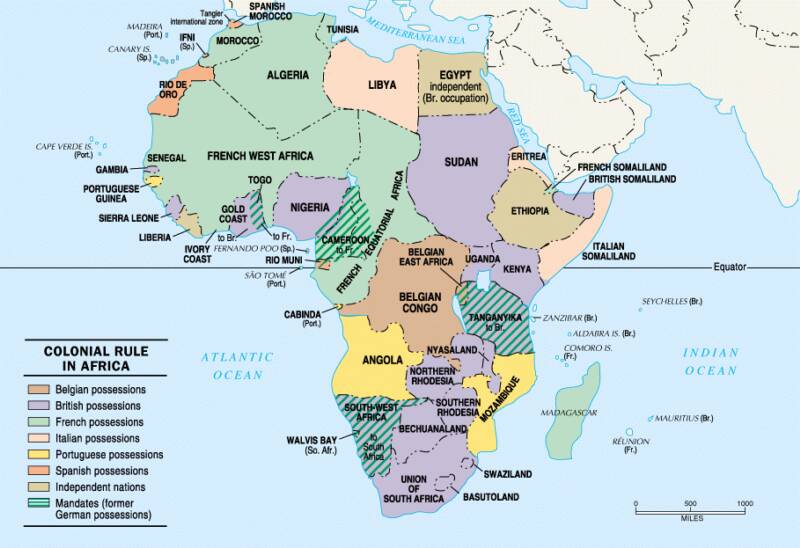
In our last blog post, The Case of Who’s in Charge: Who’s language will we speak, we got a small taste of how African colonialism and slavery have created realities that affect power dynamics and attitudes in our organizations and communities that persist to this day. From the mid-15th century to 1880, roughly twelve million Africans were torn from their homes and families from Senegal to Angola, reaching the Americas as slaves. Other millions died either during the course of enslavement in Africa or en route to the Americas. These are not facts that can or should be forgotten or set aside.

Does post-colonialism exert a negative toll on your organization and people? Is there a way to transform these potentially negative forces into tools for dialogue, understanding and organizational (and societal) transformation?

Our Cultural Detective West Africa (covering Senegal, Côte d’Ivoire, Ghana and Nigeria) authors, Doctors Emmanuel Ngomsi and Seidu Sofo, have very ably written materials that address these questions.

A short quote from their participant materials makes the main point:

“While it is true that current expatriate employees are not responsible for slavery and colonialism, or for problems linked to colonialism in this region of the world, they may nevertheless sometimes be perceived by local workers as part of the system responsible for repeated abuses. It is important to be aware of this fact, and how individual actions are likely to be understood in this historical context.

We encourage you to seize the opportunity presented by Cultural Detective: West Africa to explore the issues of colonialism and modern-day power dynamics with your West African colleagues. While there is a clear attempt on the part of many scholars (African and non-African) to blame past and current African problems on European colonization, the dynamics of colonialism and neocolonialism are complex issues, and it is crucial that business and non-business people be aware of and sensitive to the history that strongly remains in the minds of professional Africans, and often profoundly affects business relationships.

Today, there are limited forums available to openly address these issues. The workplace constitutes one of the few places in which people may discuss how they feel about historical European intervention on the continent, and perceptions of power dynamics and race relations today. Being prepared to handle these issues constructively is smart business.”

Their facilitator manual contains a section entitled “Facilitating a Discussion of Slavery and Postcolonialism,” which adds encouragement as well as how-to:

“Within the Participant Materials we have included a supplement addressing the issues of slavery and colonialism as they relate to West Africa. People are curious and want to talk about these issues, and while they can be difficult and sensitive issues to discuss, they create an important dynamic in relationships and should not be ignored. The Cultural Detective Model provides a way to explore these issues in a non-evaluative manner that can promote mutual understanding. Remember that no one point of view is ‘the truth,’ and it is rare that a discussion will result in consensus or agreement.

West Africans, Europeans, African Americans, Caucasian Americans, Latin Americans and people in the Caribbean, among others, all have different and sometimes opposing points of view on the causes and outcomes of slavery.

Contrary to a common belief among foreigners, West Africans generally are not uncomfortable talking about slavery and are willing to engage in conversations with people who sincerely and genuinely want to explore and learn about slavery and its effects.

Today throughout Africa, Europeans, Americans and other ‘White People’ may still be perceived as exploiters and neo-colonizers. Resentment remains because some believe that the best minds and bodies of the African continent were transported to the Americas. And while many agree that slavery is wrong, many West Africans also feel that if ‘Whites’ could have their way politically and socially, slavery would still be practiced.

Given the sensitivity toward these issues, foreign business owners need to be particularly mindful of their words and actions. Derogatory acts or sayings by expatriate employers directed toward West African employees are not only unkind but unwise. While private individuals react strongly to such acts, governments may also take swift and decisive action, and some have deported expatriate employers for such misconduct.

Regardless of the economic benefit that a foreign investment might bring to a West African nation, dehumanizing conduct, utterances, or work conditions are not tolerated.”

We eagerly urge you to look through these materials, and put them to good use. We would love to have those of you who work in spaces where you deal with post- and neocolonialism issues to share with us some of your experiences and learnings, so that we might all transform our practices and do our bit to heal this world of ours.

The Case of Who’s in Charge: Whose language will we speak?

Or: “How to lose a US$1 million investment in less than an hour.”

Cultural Detective and the Case of Who’s in Charge

This case takes place in one of the world’s largest companies. The company has recruited, at much expense, a leading Nigerian scientist to head up a project; he is perhaps the only person in the world with the unique knowledge base, experience and connections needed to see this major project through to fruition.

The company has gone to great expense to relocate the Nigerian project manager to western Europe, and to assemble a cross-functional team of the company’s leading professionals to aid with the project. The project is of huge significance for the company. The plan is that it will break new ground and shift the way such projects are implemented worldwide. There is much hope and excitement, as well as huge investment and anticipated return, riding on it.

The project manager, the Nigerian scientist, calls a meeting with three of his team members. All four people greet one another in English, shake hands, and sit at a table for the meeting. The project manager introduces the agenda, in English. After a few minutes the discussion seems to naturally shift from English into the local language, and continues for about 45 minutes.

At the conclusion of the meeting, the four gentlemen stand up, again shake hands, and shift back to English to congratulate one another. One of them says, “I think we have devised an excellent plan.”

The project manager replies, “Oh, yes? And what would that plan be?”

The three others appear puzzled. “The plan we just agreed to,” they say. “The plan we’ve been discussing.”

The Nigerian responds, “I didn’t understand a word you were saying. I don’t speak that language.”

“Why didn’t you say so?! We could have switched to English!!” The others’ mouths drop open in disbelief at this waste of time, and the scientist’s failure to speak up.

“I am the project manager. I called this meeting, and I started it in English. All our correspondence has been in English. You all changed the language. It is a power play. Your colonialist ways never seem to change.”

After this meeting, the project manager requested his removal from the project. It appeared this hugely anticipated effort was dead before it had even gotten going!

An orientation to cross-cultural collaboration, including work on understanding and learning to deal with issues of post-colonialism, may have prevented this rocky start. There are times when, once mistakes have been made, there is no rescue or remedy. Convincing these team members to give it another go, to get past their doubts and discuss ways of respectfully and productively working together, required skilled facilitation. The project manager was convinced that his team members were racist, and the team members were convinced the project manager was overly sensitive. Both thought the other arrogant.

What are some of the techniques you might use in such a scenario? How might you help the team members gain empathy for what the project manager was feeling? How might you equip them with the skills they need to demonstrate respect in such an environment? How might you help the project manager develop the skills he needs to manage team members effectively, given post-colonialist realities?