Unknown's avatar

About Kathryn Stillings

As editor of the Cultural Detective series, I have the pleasure of working with our wonderful international team, and, through each of them, gaining a glimpse of another worldview. It is an amazing opportunity to be able to learn from so many interesting people who share a common desire to further global understanding.

Welcome Back! I guess…

It’s that time of year—summer study abroad programs beginning, returning students headed home, along with travelers returning after brief overseas summer vacations, not to mention those expats who are moving back in time to find a place to live and enroll their kids in school for the fall.

Yup—it’s the time of year when those of us who stayed home are likely hear how much better things are elsewhere. So while we are delighted that our beloved sojourners are returning, there is frequently a bit of anxiety as we begin looking forward to the adjustment. What to do?

First, be prepared. Understand that everyone involved—the returnee, friends and family at home, the organization for which the returnee works or school where she or he studies—all need to recognize that the transition of the person returning home begins well before the actual arrival home. Leaving new friends and colleagues, withdrawing from what have become familiar patterns of behavior, saying goodbye over and over again—these are hard things even if you are looking forward to returning home. While a major goal of “re-entry” is to integrate the recent intercultural experience with life at home, we should expect these transitions take some time, and will be better dealt with by acquiring a bit of knowledge and planning about the process.
return_purchWe suggest you log into your Cultural Detective Online subscription and take a look at the ideas included in the package, The Return. While offering advice and guidance mainly directed toward the business professional returning home after an overseas assignment, there are pearls of wisdom that are applicable to any “returnee” situation. The Challenge Lens looks at different areas in which adjustment issues, both personal and professional. For example, the returnee often find that family, friends, and colleagues are not as interested as the sojourner thinks they should be in his or her experience. Things that happened at home during the time away can be more exciting to those who stayed home than are photos of new friends and places that were visited. Knowing this in advance gives an opportunity for both sides to adjust and make allowances for each others’ behavior.

coming_homeCraig Storti’s highly rated book, The Art of Coming Homeis another useful resource for you and your returnee. Craig writes in a practical and easy-to-read manner, that is theoretically well-grounded, and full of valuable tidbits. Reading Craig’s book will not only help the returnee feel less crazy, but will help those surrounding the returnee understand the complexity of the transitions involved and provide ideas for smoothing the re-entry experience.

Speaking of smoothing the re-entry experience, be sure to check out “Twelve Tips for Welcoming Returnees Home,” part of the free online resource, What’s Up With Culture? Bruce La Brack authored (see Section 2.5.1). One of the most important tips: “Understand that most returnees are, in some ways, different than they were before they left home.”

And isn’t that the point of an intercultural experience? If the returnee was just the same as before he or she left, would it not be a big waste of time and money? Whether we are a family or an organization that sent someone overseas, we have an expectation that the exposure to other cultures and languages will result in the sojourner gaining new skills and attitudes—including acquiring broader perspectives, different ways of seeing the world.

However, sometimes we, unconsciously, still expect that the other hasn’t really changed, and are therefore surprised when this is not so. Being prepared to welcome home a returning friend or loved one, but also being ready to find that they have undergone important changes and may have acquired new ideas is one key to insuring a smooth transition home for every one involved.

“One’s destination is never a place, but a new way of seeing things.” – Henry Miller
Rajel messouab ta hed ma y sed lou el bab. “All doors open to the person with good manners.”

morocco_purchWe are pleased to be publishing a wonderful addition to our series, Cultural Detective: Morocco. It’s perfect for those working with Moroccans, or wanting to do business in or relocate to Morocco. Perhaps, however, you are like me: you have seen tourist posters, watched Casablanca, eaten at Moroccan restaurants, and dreamed about visiting this seemingly exotic place. If so, then you will also enjoy wandering through our new package, even if you have no immediate plans to visit or do business in Morocco—at least not when you start reading the package!

One of the delightful things about Cultural Detective: Morocco is the feeling of almost participating in the culture that begins as you read the introduction. The oral tradition of Morocco is clear throughout the package, and the stories and examples show the hospitality and warmth of the people. To truly navigate successfully within Moroccan culture, you will need the advice of an inside perspective—a cultural informant—to help you develop and maintain the relationships and connections so necessary to doing business in this fascinating country. Cultural Detective: Morocco can provide you with that ongoing guidance, with ideas to save you from being unintentionally rude, and with suggestions that may help you communicate more comfortably and successfully with Moroccans. Click on any photo to enlarge it or view a slideshow.

Cultural Detective: Morocco has truly been a “labor of love,” coming to fruition due to the determination of two very dedicated professionals, Catherine Roignan and Youssef Zahid. Currently, one author lives in France and one in Morocco; both have a great deal of international experience, both have more than full-time jobs, and both have family responsibilities that take up every spare moment. In spite of these challenges, they wrote, revised, and wrote some more.

What is even more remarkable to me is that they wrote in French and then translated their work into English so I could read it. I made suggestions, did some editing, and then my suggestions were translated back into French for their consideration. (While the current version is in English, we will soon publish the French language version.) Of course, part of the authors’ discussion was also about Arabic words, as they explored the nuances of Moroccan culture and the particular choice of words used to describe it. This was a truly multilingual, multicultural creation process, weaving observations from inside and outside of the culture, and shifting worldviews as the authors worked to share the culture of Morocco with us.

One of the Moroccan values highlighted in the package is Daba baada (the present comes first): the only thing one can be sure of is today; one cannot know what tomorrow will be like, as things may change at any moment. We hope you will take the time today to explore this terrific new package, either via the PDF version or by viewing it as part of your subscription to Cultural Detective Online.

Ah Ha! I knew it! Bilingualism does pay!

benefits of being bilingual

“Not only are bilingual young adults more likely to graduate high school and go to college, they are also more likely to get the job when they interview. Even when being bilingual is not a requirement, an interview study of California employers shows that employers prefer to both hire and retain bilinguals.”
—Rebecca Callahan, Associate Professor of Bilingual/Bicultural Education, University of Texas at Austin

Those of us who have worked in and around international education think that learning more than one language is good for people. We think it helps open up the mind to other possibilities, other cultural points of view. We also believe that the “code switching” involved in speaking multiple languages helps develop skills that are useful in social situations and beneficial in keeping the mind sharp.

However, for years no data existed that supported the benefits of being bilingual. And for a long time in many US educational settings, children who did not speak English as their first language were not encouraged to keep their bilingualism. Why would you need a second language when you learned English? The benefits of being able to speak more than one language were not generally recognized in the US.

I was excited to read about some new research by Rebecca Callahan, Associate Professor of Bilingual/Bicultural Education, University of Texas at Austin. In a recent article in Quartz, she writes: “Speaking more than one language may confer significant benefits on the developing brain. Research has now shown that bilingual young adults not only fare better in the job market, but are also more likely to demonstrate empathy and problem-solving skills.”

What does this mean? For study-abroad students, it might encourage them to know that the effort spent in learning and using another language has long-term economic benefits—you are more marketable! This is, of course, in addition to the eye-opening, mind-expanding, life-altering experience of living in a culture different from your own.

For children of immigrants and refugees, it means that making an effort to retain their parents’ native language is beneficial. In reality, many immigrant and refugee children in the US serve as interpreters and cultural bridges from an early age. They are forced to be bilingual—learning English to be successful in the school system, while speaking another language at home. I remember one Cambodian mother telling me, through her son, that if she learned to speak English, her son would forget how to speak Cambodian now that he was here in the US.

“Currently, researchers have begun to use data-sets that include more sensitive measures of language proficiency to find that among children of immigrant parents, bilingual-biliterate young adults land in higher status jobs and earn more than their peers who have lost their home language.

Not only have these now-monolingual young adults lost the cognitive resources bilingualism provides, but they are less likely to be employed full-time, and earn less than their peers.”
—Rebecca Callahan

For many in the US educational system, acquiring a second or third language is not as highly valued as it is in many other parts of the world. I am always impressed (and a bit jealous) when I am around people who can switch among languages—often because they were required or encouraged to learn multiple languages when they were in school. And for a nation of immigrants, it seems strange that only one-in-four US American adults are conversationally proficient in another language, according to a recent Gallup poll. It reminds me of the old joke, so true that it is embarrassing:

Question: What do you call a person who speaks four languages?
Answer: Quadrilingual.

Question: What do you call a person who speaks three languages?
Answer: Trilingual.

Question: What do you call a person who speaks two languages?
Answer: Bilingual.

Question: What do you call a person who speaks one language?
Answer: An American!

Of course, this challenge isn’t just limited to US Americans. In an article last year in The Guardian, Vice-chancellor of Cambridge University, Leszek Borysiewicz, pointed out that one in six children in English primary school do not have English as their first language. He noted that their first languages:

“…are real languages: living languages that give people a huge insight into culture and give the children who can speak them additional opportunities.

Isn’t that what education is about – enabling every child to achieve the maximum potential? What I’d love to see is an emphasis that this is an added value that that child has, a talent, and we should aspire to allow other children who may be monolingual to strive to become as bilingual as they possibly can be.”

An article about a study conducted by researchers at University of Guelph in Ontario, Canada, indicates that merely knowing a second language can result in higher earnings. The researchers say that the results of their study, published in the journal Canadian Public Policy/Analyse de Politiques, has implications for bilingual policy in Canada:

“Efforts to promote French in the ROC [rest of Canada] should be continued, not so much because of the earnings advantage that bilingualism confers, but because it results in many social/cultural/political benefits, strengthening the fabric of Canadian society and serving as an example to countries torn by ethnic, religious and linguistic divisions.”

The cultural flexibility inherent in knowing two languages is a valuable ability and a resource to be cherished. If we are to move toward intercultural competence, we need the ability to think outside of our cultural box and explore other ways of seeing the world.

That is what we try to do with our Cultural Detective packages—provide insight into another view of the world, a small glimpse into a different cultural reality, a chance to perhaps understand, just a little, how others see us, and how to work together more effectively.

Standards of Good Practice for Education Abroad

Standards Good Practice, FEAAre you a study abroad professional? Are you looking for like-minded professionals who share the same challenges and frustrations as you do? Are you wondering where you can turn for some solid advice and guidance to make your institution’s study abroad programs high-quality learning experiences for your students? Ever heard of The Forum?

The Forum on Education Abroad is a nifty organization, first conceived in San Diego, California, in May 2000, by a group of education abroad professionals who felt the need for a stand-alone organization. At that time, there were study abroad programs at numerous educational institutions, yet nothing existed in terms of standardization of policies and practices. Essentially, each program was on its own, and its quality was as good as the director of the program was able to make it, given the knowledge and resources available.

From its inception, standards of good practice for education abroad have been a priority for The Forum. Beginning in November of 2002, they began to lead the development of a set of standards. They used a distinctive approach: they structured the Standards by stating each Standard, followed by a set of questions designed to be used for assessment of that Standard. The first formal edition of the Standards of Good Practice for Education Abroad was published in November 2004.

The group moved quickly (history of The Forum), and by 2005, it was recognized by the US Department of Justice as the as the Standards Development Organization (SDO) for the field of education abroad. This status gives The Forum legal protection in undertaking standards-development work, and obligates the organization to exhibit “Openness, Balance, Transparency, Consensus, and Due Process in developing and disseminating standards.”

FEA Logo

“The Forum on Education Abroad is an institutional membership association and welcomes as members all institutions of higher learning, consortia, agencies, and organizations who are committed to improving education abroad. Members join a community of dynamic, thoughtful dialogue about the issues facing the field of education abroad.”

Among the variety of resources and training opportunities The Forum offers for its members and the public, a “must have” for every study abroad office is the recently published Standards of Good Practice for Education Abroad, 5th edition, 2015. This document offers authoritative and comprehensive guidelines for the development, management, assessment, and improvement of education abroad programming, in order to make students’ experiences as rewarding and meaningful as possible.

If you are a study abroad professional and are not familiar with this resource, please take a look. You will be doing yourself, your institution, and your students a big favor. As we have discussed before in this blog, meaningful intercultural experiences arise not just from being in the vicinity of an event, but from the meaning we give to those events. If we are to truly offer high-quality study abroad programs, we need to consider the pre-departure preparation, the on-going support during the time abroad, and the integration of the international experience into the life of the a student upon return home. Standards explores all these areas and more. Forum members have exclusive access to additional resources related to each Standard.

Cultural Detective salutes the work of The Forum and its ongoing efforts to promote cultural competence through well-run, ethical, study abroad programs! Cultural Detective Method and materials integrate seamlessly into all stages of study abroad—pre-departure, on-going support, and reentry— helping students to make sense of and integrate their experience.

“If you act like a ripe plum, bats will eat you.”

(Proverb submitted by Lamar Gaye, Minnesota, USA, to BBC NEWS Africa website, Africa’s proverb of the day, 29 December 2014)

I so love proverbs—they give a view into a culture that cannot be obtained through any other source. They are tiny stories, gems in the midst of daily life. Although often I only read them in translation, they still provide valuable insight into my own and other’s values and worldviews.

Imagine my delight when I found a collection of African proverbs, contributed by folks from all over, to a site by BBC NEWS Africa. Featuring proverbs sent in during January 2015 and December 2014, I think you will find at least one that delights you or provides fresh insight into a situation.

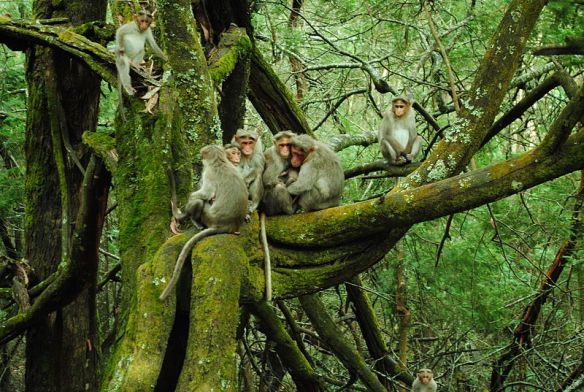
800px-Monkey_family_in_moss_tree

By Irvin Calicut (Own work) [CC BY-SA 3.0 (http://creativecommons.org/licenses/by-sa/3.0)%5D

“Monkeys do not advise their young ones to be careful on trees. They just remind them of the distance to the ground.”
—Sent by Geoffrey Kosgei, Nairobi, Kenya to BBC NEWS Africa website, Africa’s proverb of the day, 5 November 2014

Did you know that buried within each Cultural Detective package are proverbs and sayings to illustrate the culture’s core values? We periodically convert some of these to graphic format and share them on social media, archiving them on the Cultural Detective Pinterest board and Facebook page. Our authors have fun remembering what their parents or grandparents said to them, and often are surprised when they find out they were each told the same thing—or a close variant of it—even though they grew up in different circumstances!

These “childhood messages” often echo in our minds for years and continue to influence who we are today. We may even find that our core values are reflected in those proverbs and sayings that were shared by important people in our past. Our popular package, Cultural Detective Self-Discovery, uses our favorite proverbs and sayings as one method to investigate our own personal values. Cultural Detective Online now includes Cultural Detective Self-Discovery, which allows you to build your own Personal Values Lens—just as beautiful as the others contained within our series—using a variety of investigative methods.

Of course, there are books with collections of proverbs, but the ones I like best are those that I happen upon in everyday speech. Keep your ears open and let us know what gems of wisdom you hear—from yourself and those around you!

Mapping the World

https://i0.wp.com/www.clker.com/cliparts/D/v/4/h/a/X/globe-map-hi.png

“A surprisingly large number of the world’s cities remain unmapped. Nobody knows exactly how many, but cities of more than a million people in the developing world get by every day without an accurate map. Development staff in those cities trade photocopies of photocopies, scrawl the names of landmarks on post-it notes, use satellite images that lack street names, or just ask locals.”
—Chris Michael, The Guardian, 6 October 2014

Many of us, myself included, take accurate street maps for granted. Although we know services such as Google Maps can be wrong, generally our GPS or satnav will get us to where we want to go. But in many less affluent, large cities of the world, no maps exist.

An article I read in The Guardian recounted the difficulties that Médecins Sans Frontières (MSF) has encountered in working with patients from areas that weren’t mapped. It is hard to trace the spread of a disease if there is no map of the area, or if patients can’t tell you where they live.

There is, however, an exciting, innovative project to create a free and open map of the entire world. Missing Maps works through a team of volunteers to map the most vulnerable places in the developing world. “The point of the project is that the maps will all be open source,” says Missing Maps coordinator Pete Masters. “It will be illegal for anyone to charge anyone to use them—meaning local people will have total access to them, not just to look at, but to edit and develop.”

Missing Maps supports the OpenStreetMap project, which features local knowledge and a community of volunteer-contributors from a diversity of fields that includes professional cartographers as well as enthusiastic mapping amateurs. According to the Humanitarian OpenStreetMap Team (HOT) website: “OpenStreetMap is a project to create a free and open map of the entire world, built entirely by volunteers surveying with GPS, digitizing aerial imagery, and collecting and liberating existing public sources of geographic data. The information in OpenStreetMap can fill in the gaps in base map data to assist in responses to disasters and crisis.”

Why is this important? The lack of accurate maps in a humanitarian crisis can impede assistance, and even hinder the making of decisions about the best response. That’s where the Humanitarian OpenStreetMap Team (HOT) comes in—they act as a “bridge” between the OpenStreetMap Community and humanitarian responders. In the event of a crisis, HOT searches for existing data and then contacts humanitarian organizations responding to the crisis to determine their needs. This is a critical function, as HOT can then mobilize their community to focus on a specific area.

HOT can both coordinate remote workers for map digitalization and also train locals in mapping their communities. Having maps available will assist not only in times of crisis, but also in planning for building new infrastructure. Here is a visualization of the response to the earthquake in Haiti by the OpenStreetMap community.

I was struck at how this “bridging” done by HOT is so similar to the cultural bridging people learn through the Cultural Detective Method. It is like there are two cultures: the “mappers” and the “responders”—each with its own values, behaviors, and communication styles. What HOT does is to make sure the “mappers” are meeting the needs of the “responders” in a way that enables responders to understand and use the information. Both have good intentions, but without the “bridge” HOT provides they might never connect, let alone connect in a way that is so beneficial.

Often, people who are able to build cultural bridges are looked at by others as resources. What many people don’t realize is that sometimes the person adept at building bridges across cultural divides does not have culture-specific knowledge on which to rely. Rather, they have a set of skills that facilitates communication, beginning with suspending judgment and listening.

That’s the kind of resource HOT is. It doesn’t tell the responders where to go or what to do. It asks humanitarian organizations what maps and data they need to do their jobs, listens to the answers, and then this amazing group of volunteers gets to work. To learn more about this project, please read the entire article here.

And join us to learn more about the Cultural Detective Method and developing skills to build cultural bridges. Remember, we host free monthly webinars to get you started—access registration information here.

Happy Thorri! Celebrate our new CD: Iceland package!

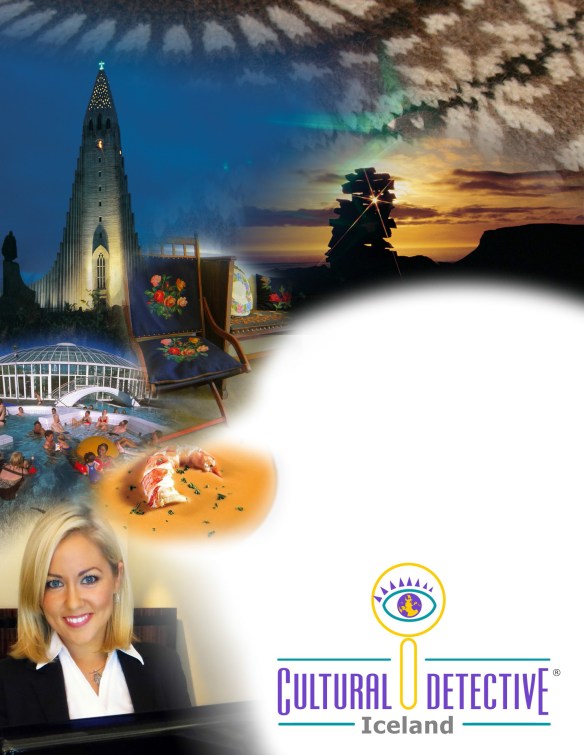
CD Iceland coverIt’s hard to believe that we have finally completed the Cultural Detective: Iceland package! This project spans more than five years, with some stops and starts. After working long hours in Iceland, in the USA, and on Skype, the emphasis was always on finishing what we started with high quality. We were both certain that, in spite of our busy work schedules, other duties, and familes, it would sort itself out, and we would manage to complete this project.

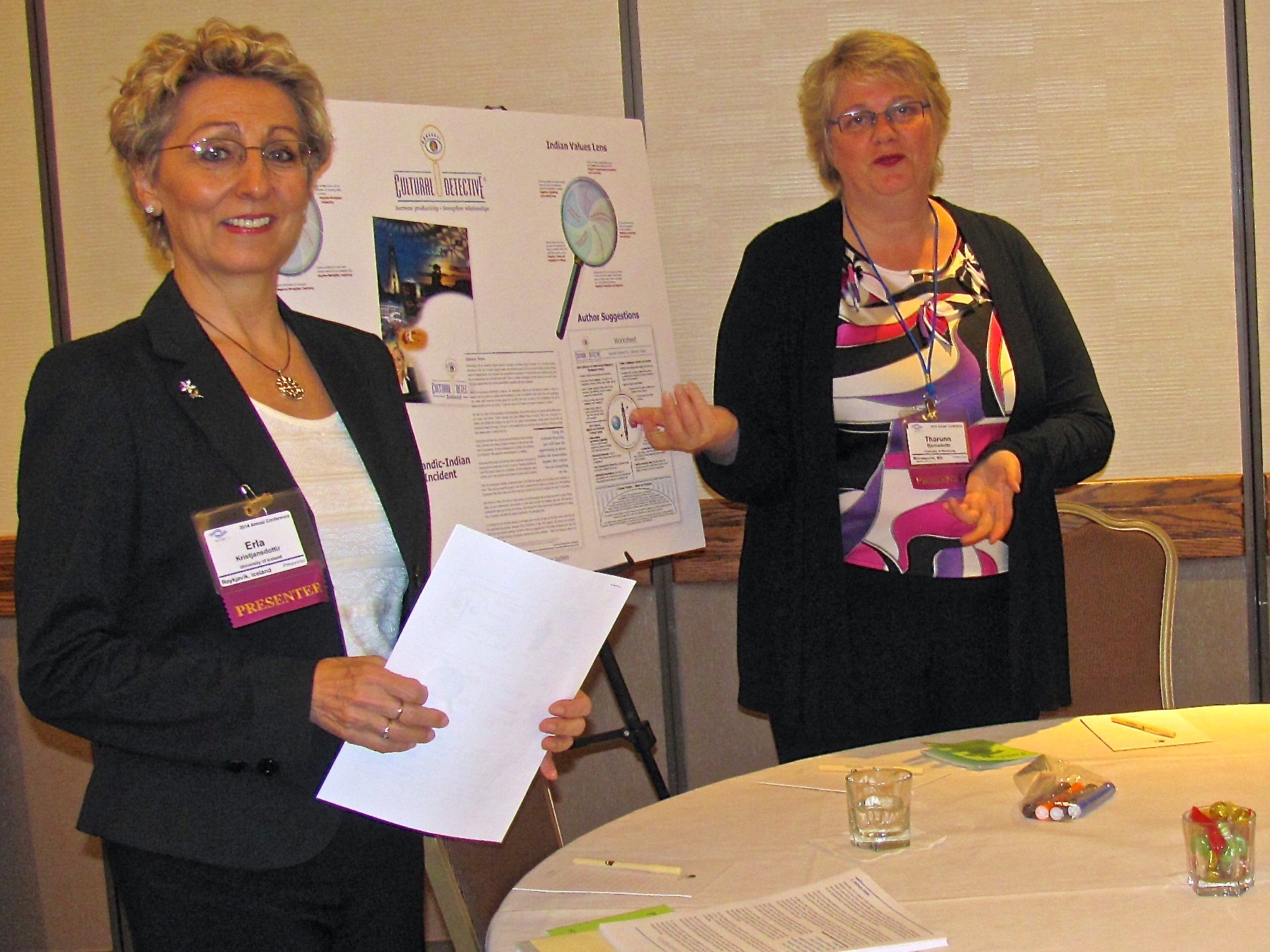
2014-10-23 12.10.15

Erla on the left, Thorunn on the right

We were introduced to each other on a beautiful sunny day in Iceland in 2008, and that very day Thorunn asked Erla if she would be interested in collaborating on the Cultural Detective: Iceland project. We immediately “clicked” and decided to meet again and discuss the idea of working together. Throughout this collaboration we learned a lot about ourselves, about each other, and about our culture and what it means to be an Icelander. Through thick and thin, stressful moments, a lot of laughter, travel between Iceland and North America, we established a wonderful friendship for life.

It is perhaps fitting that Cultural Detective: Iceland is announced on Facebook during Thorri season, when Icelanders celebrate in ways no one else in the Western World celebrates: by eating fermented food and using anise or caraway-flavored snaps to help swallow it!

Þorrablot dinner

Þorrablot dinner

This mid-winter season in Iceland is called Þorri (Thorri), and according to the historic Icelandic calendar it starts on January 23rd with Húsbóndagur (Husband Day) and ends on February 22 with Konudagur (Women’s Day). At this time of year, Iceland is cold, dark, and windy. But because the sun rises at about 9:30 am in the morning, it is a whole lot better than in December, when it rises at 11:30 am—so it is time to celebrate as a way to get through the Thorri season! The celebration is called Þorrablot or celebration of the Nordic God Þór (Thor).

These parties are usually attended by people belonging to the same social group such as a fireman’s association, an association of people from a particular fjord, or people who work for the same company, etc. The entertainment varies from a stage performance, to a comedian as Master of Ceremonies, to people making speeches and reciting Icelandic poetry, and usually ends with lots of dancing and singing of national songs. The staple foods at these parties are pickled ram’s testicles, boiled sheep’s head, blood sausages, liver pudding, smoked and cured lamb, and dried fish. Some people have to be “manned” into eating these things, and some parties have these delicacies as side dishes rather than as the main dishes.

Below is a video of Þorrablot at CCP, an international company headquartered in Iceland. A new employee from Denmark has been invited to this celebration. Can you imagine his culture shock?!!

So how do we translate our wonderful yet, at times, strange culture into a manageable frame for others to understand? This was our task as co-authors. It was not easy, but surprisingly rewarding. After interviewing foreigners living in Iceland, and Icelanders working abroad, we began to see the values system emerge.

We struggled quite a bit about which values to highlight through the Icelandic Values Lens. The more we talked to people, the clearer it became to us that Icelanders hold their language as central to the culture. So strong is this value that Icelanders believe that for anyone to be able to work in Iceland, even in menial jobs, they need to learn the language. To support this value, Icelandic companies who hire foreigners generally offer Icelandic lessons during the lunch hour.

Every culture has some things that cannot be translated. In Iceland, one of those things is the phrase, “þetta reddast,” literally translated into English as “it will work out.” However, in English, this phrase seems more of a hope than a reality. In Iceland, we understand the phrase to really mean “things will sort themselves out” and, in the end, they always do, somehow.

Because immigration is making the country more diverse and the travel industry is growing, there is a definite need to enable Icelanders to be more open and knowledgable about cultural differences and gain cultural competency. In addition, Iceland’s economy is export-driven and becoming more integrated into the world economy, so it is important for outsiders to learn how to work with these very direct, honest, and hard-working people with a great sense of humor.

Cultural Detective: Iceland is now included in Cultural Detective Online and also available in a printable PDF format. We are looking forward to using CD: Iceland in universites, companies, organizations, and any place people want to learn about our culture. If you get a chance, we hope you will visit our beautiful country. Meanwhile, we encourage you, a curious Cultural Detective, to learn about Icelandic culture by exploring the new CD: Iceland package!

Vinnan göfgar manninn. “Hard words break no bones.” (Icelandic Proverb)

CD Iceland coverI have the best job in the world: working with our Cultural Detective authors—I always learn so much! Recently, I had the pleasure of working with our authors on the Cultural Detective: Iceland package—the most recent addition to the CD series. This is a culture I know nothing about, therefore, I had no preconceived notions about how it would be to work with these bright ladies, or what I would learn.

Fortunately (from my US American point of view), being direct and straightforward is generally considered being honest, and is highly valued in Icelandic culture. When discussing a topic, everybody tends to share ideas (without evaluation) and then the best course of action is chosen. Questions are answered directly, and disagreement usually is not considered a personal attack. To those from a less direct culture, this style of communication may feel rude and blunt, while to Icelanders it’s just contributing their ideas.

The authors shared a delightful example of language and culture being intertwined: Icelanders do not use the word “love” as US Americans do. Their word for love is used in relation to family. It is a “very expensive/high value” term with a special use for a special purpose. Therefore, the use of “love” was very confusing to our authors when they first arrived in the United States. They were surprised that people loved their pets, loved ice cream, loved a movie, etc. In contrast, one of the authors told me that if her husband ever said he loved her, she would know she was dying! She told me, “Icelandic husbands love their wives so much that they almost tell them!”

This relatively small country (population 320,000) has seven universities, the oldest parliament in the world, and dynamic, high-energy, optimistic people. We look forward to introducing you to CD: Iceland, and a culture whose Viking roots impact the freedom and respect for the individual that are the heart of Icelandic values today. Be sure to check it out, put it to good use, and let us know what you think!

Cultural Resurgence Among the Tlingit of Southeastern Alaska

Totem pole, Sitka National Historical Park, Sitka, Alaska, August 2014

Totem pole, Sitka National Historical Park, Sitka, Alaska, August 2014

I recently traveled in Southeast Alaska, where I was thrilled to see gorgeous country and amazing wildlife, and also learn a tiny bit about the native peoples who inhabited the area prior to the Europeans’ arrival. Alaska is a beautiful, largely unspoiled area, much of it covered by mountains, glaciers and rivers. Southeast Alaska is a harsh land in the winter, but has amazing natural resources. In the summer you will find indigenous berries, incredible wild salmon runs, and an abundance of other seafood. The natives had a saying, “When the tide is out, the table is set.”

Totem pole, Sitka National Historical Park, Sitka, Alaska, August 2014

Totem pole, Sitka National Historical Park, Sitka, Alaska, August 2014

Today, nearly a fifth of Alaska’s population identifies some Native heritage, the survivors of peoples in the area for the last 15,000-30,000 years. They have adapted to the growth and decline of glaciers, and the changing land, climate, and resources. Prior to European contact, they probably numbered 80,000-90,000, with dozens of distinct cultures. After contact so many died, primarily due to disease, that by the first US Census in Alaska (1880), the Native population was just under 33,000.

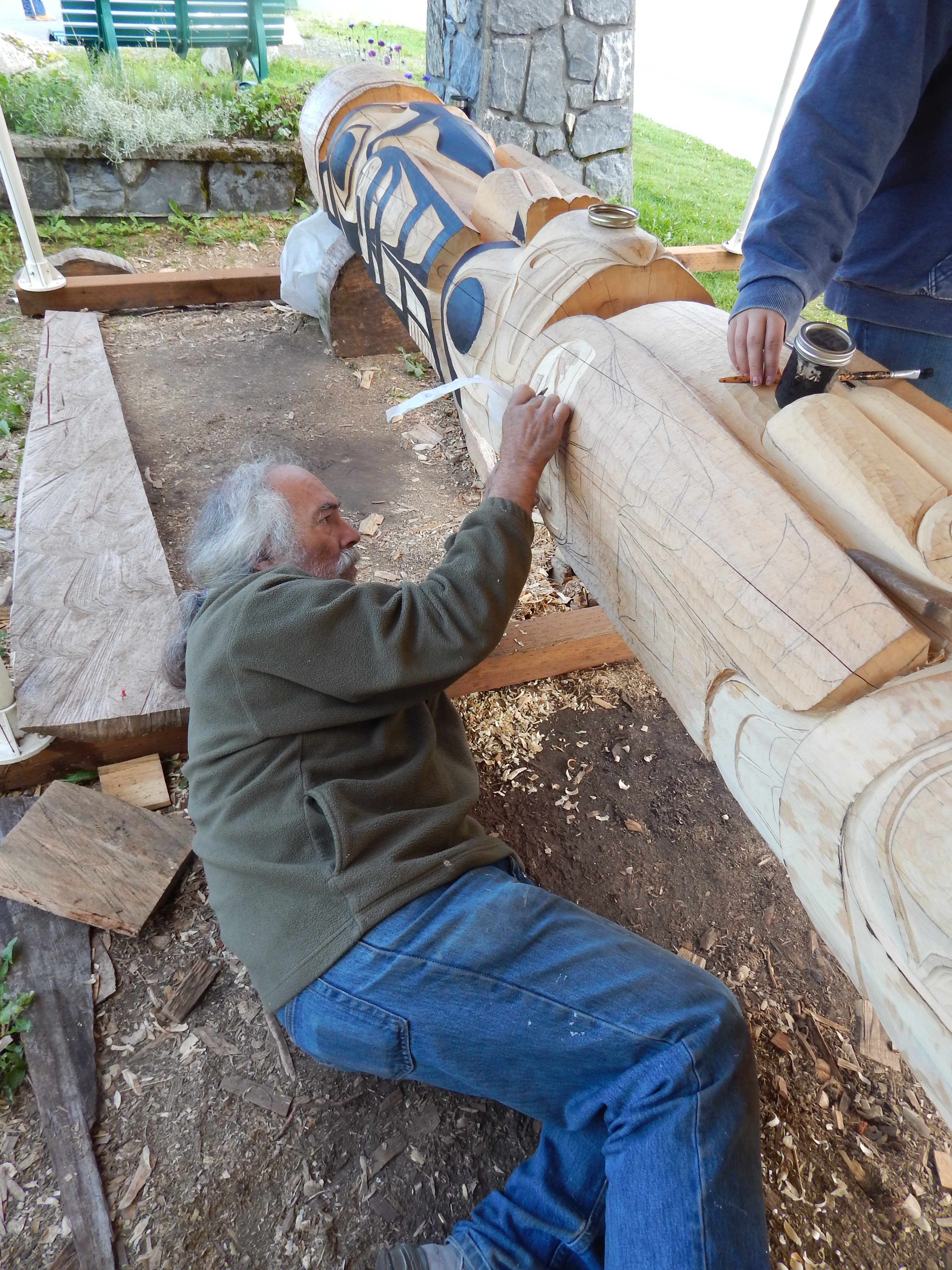
Many of the traditional ways have been lost, but increasingly many people are working to save the remaining fragments of their cultures. Totem poles have disintegrated—wood doesn’t survive forever in this temperate rain forest. Traditional arts and crafts methods and skills have almost been lost—only a few elders remember the old ways. And native languages are rapidly losing speakers. Yet there is hope because the younger generation realizes what is slipping away. Cultural arts centers are teaching traditional carving methods, beadwork, and weaving, and the young are learning dances from their elders.

Jim Heaton, Master Carver, Sheldon Museum & Cultural Center, Haines, Alaska, August, 2014

Jim Heaton, Master Carver, Sheldon Museum & Cultural Center, Haines, Alaska, August, 2014

I was privileged to hear Joe Williams, a distinguished member of the Tlingit tribe, share a little about his culture. The Tlingit (pronounced roughly like “cling kit” or “clink it”) are the indigenous peoples of what we now call Southeast Alaska. Their name for themselves is Lingít, meaning “People of the Tides.” Click here for a good short history and cultural context of the people.

Joe told us many stories about the flexibility, ethical standards, and bravery of his people. He is a great communicator, able to bridge cultures with humor. You can see a short clip of Joe talking about his culture here:

Joe was not taught the Tlingit language or traditional ways when he was young. At that time in the US and Canada there was blatant cultural imperialism and systemic discrimination against native peoples. Native children were taken from their villages and placed in boarding schools miles from family and home. The emphasis was on “civilizing” native populations by forcing them to give up their language and customs, adopt Christianity, speak English, and generally act like “good” Europeans.

Fortunately, this attitude (and the law) has changed, and multicultural diversity is more valued in the US these days. Many tribal members from the younger generation are learning, cherishing, and preserving their native heritage for those who come after them. There are organized programs for tribal members to learn their native language. I met adult language students who receive their Tlingit vocabulary-word-of-the-day on their smart phones! Who says you can’t blend the old and the new?

When asked if his culture would survive in the crazy modern world, Joe told us a story—a traditional way of teaching/learning. One day, after being away from home for several hours, he returned to find his wife working in the kitchen and his three-year-old granddaughter visiting. His granddaughter was playing under the dining room table and singing a Tlingit song. He was very excited and rushed out to the kitchen to tell his wife. She replied, “Yes, and she has been singing the same song all day—would you PLEASE teach her another one?!”

Cultural transmission in action?! Perhaps Tlingit culture will survive another 10,000 years, after all!

Transforming Lives: Education as an Alternative to Violence

AUN “The youth in Nigeria are beginning to speak—some with violence.
They attract attention. But others are also speaking.
The question is, is anyone listening to this plea
for western education, for training, for reform, for help?”

—Margee Ensign, President, American University of Nigeria

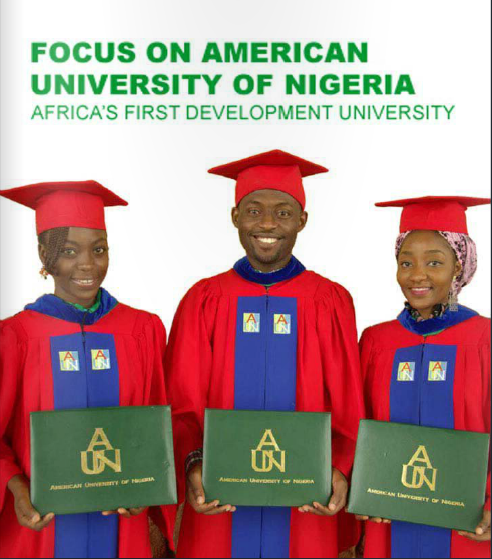
With all the grim news coming out of Nigeria these days, I thought you might want to hear about a little-known educational bright spot in the country: the unique programs offered at the American University of Nigeria, founded in Yola (capital of Adamwa state) in 2005 by the country’s former vice-president, Atiku Abubakar.

Despite Boko Haram’s year-long campaign of terror, including kidnapping over 300 girls from a school, murdering family members, burning villages, and displacing thousands of people, most families still desire an education for their girls and their boys, says Margee Ensign, President of AUN. And AUN provides it.

Both the university’s valedictorian and its graduating class speaker this year are women. The university is one of the leaders in the interfaith peace initiative. It has hired and trained more than 500 female and male security guards to protect the campus and its housing, offering each of them a free education. AUN facilities include a nursery school, primary and secondary school, in addition to the university itself. It recently dedicated a new library that has received international accolades for its efforts to create the finest e-library in Africa.

“Security comes not from our security force, but from our development and peace efforts,” Margee reports. In one of the poorest places on earth, AUN has a program to teach local women literacy and entrepreneurship skills, to enable them to generate income for their families. The university’s Peace Council has created 32 football and volleyball “unity teams” for young people to play in tournaments year-round. None of the young people have jobs, over half have dropped out of high school, and 10% have not even completed elementary school. Sports team members study a peace curriculum focused on building understanding and tolerance. The unity teams help ensure that these youth stay active and involved in their communities—making them less vulnerable to recruiting by terrorist groups like Boko Haram.

This kind of creative programming doesn’t happen by accident. Margee is a tough, dedicated, innovative, and tireless educator. Her extensive experience in administrative and faculty positions in universities in the USA (including Columbia University in New York, Tulane University in New Orleans, and the University of the Pacific, Stockton, California), and her interest and experience in international development in Africa, make her well-prepared to be president of AUN.

“I met with about 80 women in the [AUN entrepreneurship] program…They wanted to learn English, Nigeria’s official language, so that they could read to their children. In modern education, they knew, lay the only hope for the future.”

Margee relishes the challenges of working across cultures. She has embraced the local community culture, while building a university culture that retains important aspects of the US educational experience. After all, this is why parents are sending their children to college at AUN. She’s always recruiting—looking for people with just the right skills, willing to give their time and talent to join the international faculty and staff at AUN, a growing academic community in Nigeria.

The Cultural Detective Team believes it is possible to help make the world a better place through our actions. Yet, it isn’t always easy! Cultural Detective: Global Teamwork investigates some of the challenges involved in managing culturally diverse teams in today’s global environment, even if working in the same geographical location. What is the task? How do we form and maintain a high performing team? How do we manage the terrain or contexts in which team members work? How do we choose the right technology to support the team? How do time and space affect communication? Add culture to this mix, and it is even more complex! These are just the beginning of the challenges Margee faces each day—and she loves it!

All around the globe, dedicated, competent people are working to make a corner of the world a better place—often, not the corner of the world in which they were born and raised. Yet, they are motivated to share their skills in multiple arenas and diverse geographical locations. You probably know people that match this description—or are you one?! We’d be delighted to share their stories or yours with our readers!

With all the doom and gloom in the news, it is good to remind ourselves that generous people are doing wonderful things in difficult circumstances. A recent article written by Margee and published on the BBC.com website offers an often overlooked perspective on the area better known for the rampages of Boko Haram. We invite you to read Margee’s entire article here: “Nigerians defy terror to keep learning.”