Unknown's avatar

About Dianne Hofner Saphiere

There are loads of talented people in this gorgeous world of ours. We all have a unique contribution to make, and if we collaborate, I am confident we have all the pieces we need to solve any problem we face. I have been an intercultural organizational effectiveness consultant since 1979, working primarily with for-profit multinational corporations. I lived and worked in Japan in the late 70s through the 80s, and currently live in and work from México, where with a wonderful partner we've raised a bicultural, global-minded son. I have worked with organizations and people from over 100 nations in my career. What's your story?

Dr. Carlos Cortés on Multicultural Identity

ForkhashiMany of you have probably heard of Young SIETAR, one of the most vibrant groups in our professional association. If not, you should—they are a terrific organization of not necessarily young professional from a variety of disciplines who share an interest in intercultural relations, and use virtual communication to interact with members around the world.

Dr. Carlos CortésYoung SIETAR recently offered a webinar with Dr. Carlos Cortés, Professor Emeritus of History at the University of California, Riverside, who is globally esteemed for his work on multiculturalism. He’s the general editor of the newly released Multicultural America: A Multimedia Encyclopedia, and the author of many other excellent books. The webinar was moderated by the very capable and personable Melissa Hahn.

I really respect Carlos. He’s intelligent, he’s funny, and he speaks his truth regardless of context. We’ve shared several wonderful dinners in the home of a mutual friend, and I have enjoyed our collegial relationship as we have both been on the faculty of the Summer Institute for Intercultural Communication for the past two decades. I’ve treasured every moment and learned a great deal.

Carlos said a few things in the public webinar that I was delighted to hear from a man of his experience and expertise. They are key components of the Cultural Detective (CD) Method, yet sometimes I feel that we are a solitary voice on the subject. It felt good to have someone else beating the drum for a change!

Carlos opened his presentation with a slide that Melissa had made, illustrating multicultural identity. A screen shot of that slide is below.

What is MC Identity?

©Melissa Hahn, used in the webinar by Dr. Carlos Cortés

Does the slide remind you of anything? If you are at all familiar with our Cultural Detective Method, I believe you’ll immediately think of two things. First, the image contained on the definitions page in every CD package:CultDiffsMap
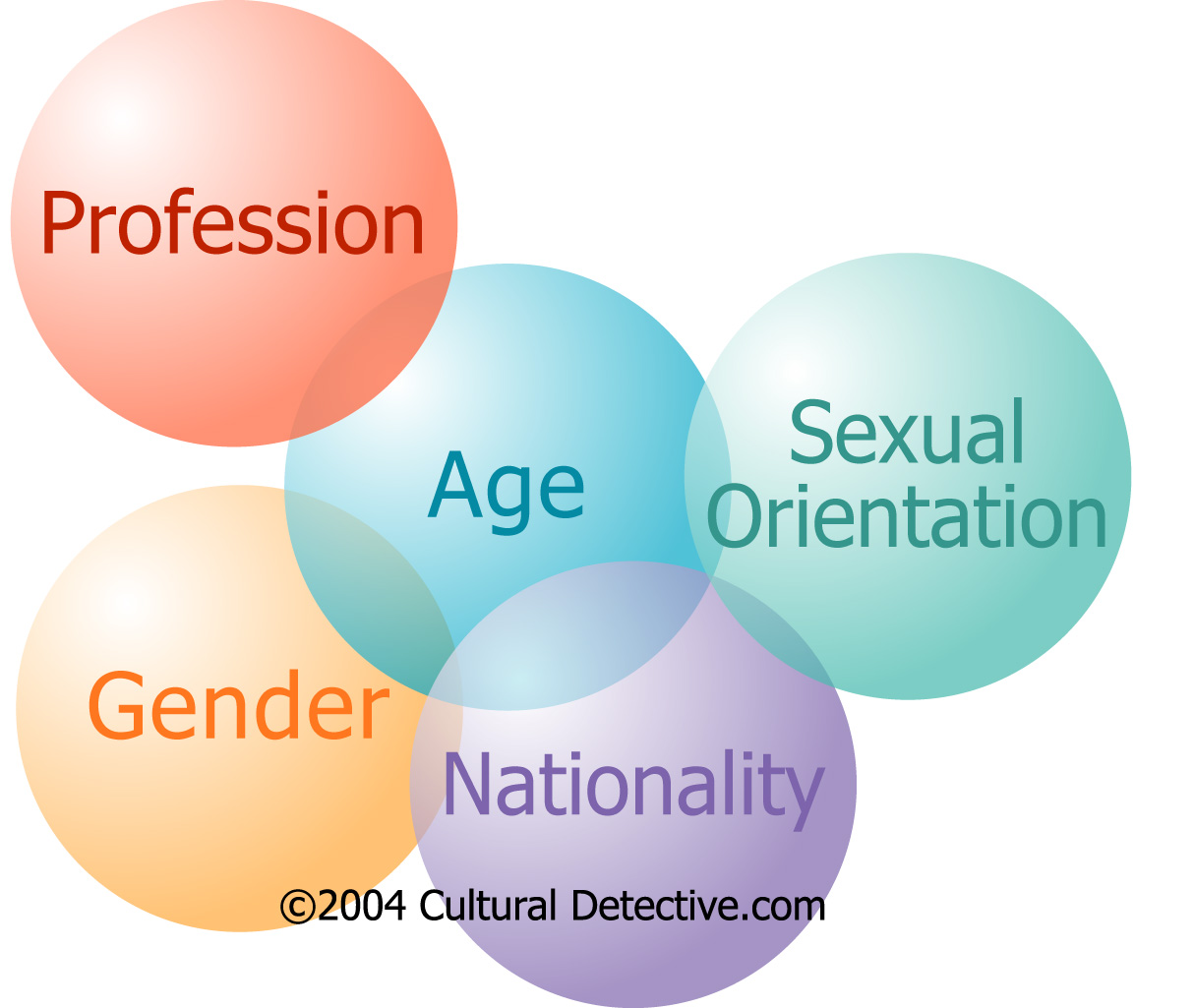
This image that reminds us that none of us are one story. We have multiple layers of identity, we have been influenced by multiple cultural experiences, and we should never diminish ourselves or others by only acknowledging one layer.

Second, the slide may remind you of our graphic illustrating the layering of our Values Lenses, showing how complex we are as individuals. This is an approach we teach over and over again in our webinars and facilitator workshops using the following graphic:

LayeredLensesFinalCarlos explained that most intercultural instruments look primarily at nationality, and he supposes that this is because it’s the easiest: “low-hanging fruit.” He explained that while a multi-layered model is important, it’s also more difficult, and that is perhaps why no one has created one. I realized that we have one such model and process here, in our CD series, and I’ve failed to communicate that to Carlos!

The second point he made was in response to a question: “Is it easier if you have a clear identity for yourself before going overseas?” While most people I know would advocate such a linear development (self before other, or other before self), Carlos didn’t hesitate for a moment before stating, emphatically, “No!” He went on to explain that just understanding others is not enough, however, and that:

“We need a dialectic between understanding others and understanding self. I’m 79 and I’m still developing and understanding my identity.”

What an elegant, concise summary of the Cultural Detective Worksheet and the yin-yang nature of relationships! Many clients use our CD tools to understand others. Many use them to understand themselves. But every client ends up developing a better understanding of both self and others in an organic, dialectic process.

Carlos addressed a question about how can we help people develop their multicultural identities in positive ways. He returned to the topic of instruments, saying that he’s not against using them as long as they open us up to discussion and discovery, and help us to confront and expand our limitations, rather than boxing us in. That is exactly what CD is all about: dialogue, discovery, mutual learning and adaptation, then synergy and innovation.

Carlos talked about the need to discuss concrete things rather than generalities (a good example is the practical, real-life focus of Cultural Detective‘s critical incidents), and the need to hear from the voice of the people themselves (our Values Lenses use native language terms rather than global, externally imposed dimensions).

Some other highlights from Carlos’ talk include:
  1. The challenge of multicultural (or in CD parlance, Blended Culture) identity is that you don’t “slot into a silo”; you don’t seem to fit, and that causes fear in some people. You can start to feel that you give the “wrong” answer on every form, and that you an oddity in any system.
  2. Self-identity negotiation takes a long time. It may sound easy, to pick and choose the “best of” your multiple heritages, but even if you try to push “pieces” aside, they can creep back at the most inopportune times. Your multicultural identity is and will remain part of you. It’s not about reconciling identity; it’s about enjoying being multicultural.
  3. TCKs (third culture/blended culture kids) need two kinds of understanding about the journey they face. They need to feel comfortable with their multiple strands, and to understand that they don’t have to pick and choose among the various parts of their identity. Talking generalizations isn’t enough—specific examples help, e.g., how difficult it can be when you don’t fit a category on an application form.
  4. The only way to truly understand multicultural identity is to listen to people with that identity. They need to share their stories and we need to listen.
  5. There are three distinct yet intersecting concepts that many people confuse:
    • Heritage: Something we all have, the layout of our family tree.
    • Identity: This comes from within, though, of course, there are always others’ perceptions of our identity that help shape us.
    • Culture: You can self-identify with a culture, yet not participate in every aspect of the culture. For example, you can self-identify as Irish, but not speak Gaelic. Therefore, you are part of the culture, but not part of the Gaelic language portion of it.
  6. Carlos recounted his personal story. He was born of a mixed marriage (Catholic and Jew, Mexican and US America). The more his parents pushed him to learn their two differing cultures, to “choose sides,” so to speak, the more they actually pushed him to develop an integrated multicultural identity.
  7. Research on multicultural identity is nearly non-existent. It’s an open topic for young people. The information currently exists in separate disciplines: racial identity, disability, etc. We need people to write their stories, hundreds of them, and study them. Carlos has studied multiculturalism for 40 years, yet he learned more by writing his autobiography (Rose Hill: An Intermarriage Before Its Time, Berkeley, CA: Heyday, 2012).
  8. Every time we enter a new cultural milieu, it’s a growth opportunity in which we can deepen and expand our understanding of who we are in a new context.
  9. Regarding national identity and social fragmentation worldwide, Carlos said that the solution to fragmentation is that a common identity/culture is needed along with space for people to have alternative sub-groups/diversity.
  10. For those looking for good resources on this topic, he highly recommends Bill Cross’ Shades of Black and Stephen Murphy Shigamatsu’s work on Asian-American identity, When Half is Whole.

As you can tell by my enthusiastic review, the webinar was a delight. Young SIETAR has loaded the recording if you’d care to listen to the entire one hour discussion. Carlos tells me he’s also happy to have you write him directly.

What does multicultural identity mean to you? What are its challenges? And its benefits? What strategies have you used to help yourself or others develop constructive Blended Culture identities? Do Carlos’ ideas mesh with your experience?
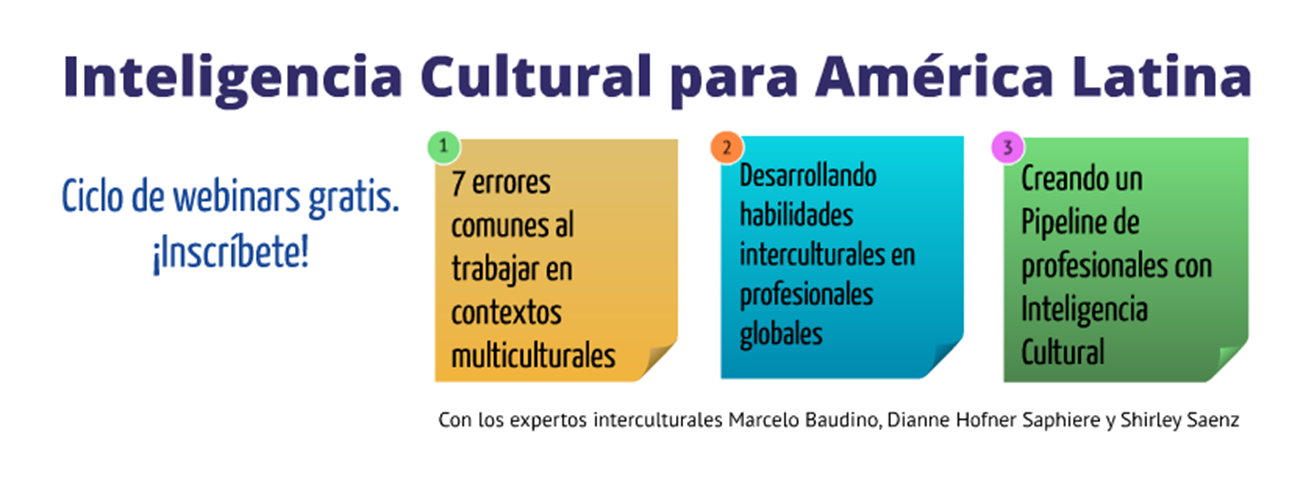
Inteligencia Cultural para América Latina—Ciclo de webinars interculturales

BlogLa globalización y la tecnología han incrementado el comercio, los negocios internacionales y el número de empresas que se expanden alrededor del mundo, dinámica que ha provocado que sean cada vez más los profesionales y ejecutivos que interactúan con otros países y los equipos de trabajo que se forman con personas de diferentes culturas.

Este creciente contexto multicultural, relativamente nuevo para América Latina gracias al papel protagónico que ha venido jugando en los últimos años a nivel internacional, plantea grandes desafíos tanto para las empresas como para cada uno de los individuos que conforman su fuerza laboral. Cada vez son más las multinacionales y empresas latinoamericanas que deciden trasladar sus operaciones globales o regionales a distintos países latinoamericanos y que requieren que sus equipos colaboren y trabajen efectivamente a nivel global, y sobretodo que sean capaces de aprovechar las oportunidades que ofrece este contexto global y multicultural.

Con el objetivo de comenzar a desarrollar las competencias interculturales necesarias en los profesionales globales de América Latina, desde ICEBERG Inteligencia Cultural hemos creado un ciclo abierto y gratuito de webinars interculturales. Este ciclo ha sido diseñado para:
  1. Profesionales y ejecutivos trabajando con personas de otros países, ya sea de manera presencial o virtual
  2. Profesionales del área de RRHH, Capacitación y Desarrollo, Gestión del talento.
  3. Empresarios globales, expatriados e interesados en cuestiones interculturales

web1Webinar 1

La diversidad cultural no es un eslogan, sino un hecho empresarial y laboral diario. Tus colegas, clientes y proveedores probablemente son de culturas diferentes, por lo que necesitas comprender sus valores y comportamientos para gestionarlos y satisfacer sus necesidades. La habilidad para trabajar, comunicar y negociar interculturalmente, constituye una competencia fundamental. En este webinar exploraremos los 7 errores culturales más comunes que les impiden a los profesionales con algún grado de exposición internacional, ser efectivos a nivel intercultural. Mientras más consciente seas de ellos, más fácil te será evitarlos, y entonces, estarás dando el primer paso fundamental hacia el desarrollo de inteligencia cultural.

Fecha: Jueves 10 de octubre de 2013
Argentina: 12 pm • Colombia: 10 am • México: 10 am

Facilitador: Marcelo Baudino
Marcelo es el fundador y director de ICEBERG Inteligencia Cultural, la primera firma argentina especializada en el desarrollo de habilidades interculturales, un servicio de consultoría intercultural innovador para la región. Marcelo es un experto en el diseño y la facilitación de talleres y programas de entrenamiento intercultural para multinacionales y está especializado en América Latina, Estados Unidos y los países del BRICS. Ha impartido cursos para empresas como Deloitte, Cargill, ExxonMobil, Banco Itaú, SC Johnson, Chevron, Tarjeta Naranja, entre otras. Ver perfil de LinkedIn.

Regístrate aquí

web2Webinar 2

Este contexto global e interconectado en el que trabajamos actualmente, nos trae un sinnúmero de oportunidades que claramente queremos aprovechar:
  • La tecnología nos permite desarrollar proyectos y crear equipos con expertos de todo el mundo. Sin embargo, lo que lleva a un equipo multicultural y geográficamente disperso a ser efectivo, son las habilidades interculturales, algo nuevo para muchos de nosotros.
  • Clientes internacionales expresan su interés en nuestros productos y servicios. Sin embargo, ¿Cómo construir relaciones de confianza y entrar en nuevos mercados de manera rentable y sostenible?
  • Queremos ser lo más competitivos posible a nivel global, pero ¿qué significa esto?

Los participantes en este seminario adquirirán herramientas para mejorar sus habilidades a la hora de trabajar en equipos multiculturales, liderar proyectos regionales e internacionales y gestionar una fuerza laboral culturalmente diversa. También recibirán acceso a recursos interculturales y un plan para el desarrollo de competencias interculturales.

Fecha: Jueves 24 de octubre de 2013
Argentina: 2 pm • Colombia: 12 pm • México: 12 pm

Facilitador: Dianne Hofner Saphiere, M.S.

Bio: Dianne ha trabajado activamente en el ámbito de la formación y consultoría intercultural desde 1979, en colaboración con personas de más de 130 países y tres continentes. Su lista de clientes incluye ABB, Hyundai-Kia, Microsoft, Mitsui, Royal Dutch Shell, Schneider Electric, Telecom New Zealand, y Texas Instruments, organizaciones de intercambio internacional como AFS y CIEE, y universidades de todo el mundo. Dianne es la creadora del Cultural Detective®, un sistema dinámico de herramientas para alcanzar la efectividad intercultural y co-autora del libro Communication Highwire: Leveraging the Power of Diverse Communication Styles, publicado por Intercultural Press. Ver perfil de LinkedIn.

Regístrate aquí

web3Webinar 3

La creciente exposición a culturas de todas partes del mundo deja en evidencia la necesidad de prepararse no sólo como individuo, sino también como organización. Ya sea a través de una estructura de organización regional, de un programa de asignaciones internacionales, de un centro global de servicios compartidos o de un joint venture con una empresa extranjera, hoy en día las empresas necesitan desarrollar los procesos y estructuras internas que faciliten la incorporación y el desarrollo de profesionales con aptitud global. En este webinar los participantes conocerán herramientas y técnicas para fomentar el desarrollo de Inteligencia Cultural.  Examinaremos como a través de los procesos de reclutamiento, programas de formación, asignaciones internacionales y el diseño de valores organizacionales, se puede transformar la diversidad cultural de la compañía en una ventaja competitiva.

Fecha: Jueves 7 de noviembre de 2013
Argentina: 2 pm • Colombia: 12 pm • México: 12 pm

Facilitador: Shirley Saenz

Bio: Shirley Saenz es formadora y consultora intercultural en ICEBERG Inteligencia Cultural, firma líder de consultoría intercultural en América Latina y miembro de la junta directiva de SIETAR Argentina (Society for Intercultural Education, Training and Research). Ha investigado sobre las diferencias culturales entre los países de América Latina, la comunicación intercultural y la efectividad de equipos multiculturales. Durante los últimos años, Shirley ha estado viviendo y trabajando en países como Colombia, Francia, China, Brasil, Argentina y los Estados Unidos, lo cual le ha permitido adquirir un profundo conocimiento de estas culturas, y también fluidez en inglés, francés, portugués y español. Shirley se ha certificado en el Summer Institute of Intercultural Communication en Portland, Oregon, en “Métodos para la formación intercultural”, “Liderazgo personal: Trabajo en equipos interculturales efectivos” y “Cultura, comunicación y colaboración en equipos virtuales”. Ver perfil de LinkedIn.

Regístrate aquí

Names Across Cultures (First in a Series of Video Interviews with Authors!)

Name ChangesThere are many reasons people change their names: some people have a stage name, pen name, nickname, religious name, or an earned title or name. All too frequently, however, a name is involuntarily changed when someone immigrates, or when a teacher or teammates have trouble pronouncing the person’s birth name.

Many of us work with individuals who have been “renamed” by other colleagues, or who have changed their names to make them more palatable and pronounceable in a new location. Other times people adopt a different name due to a change in circumstance, profession, or age. For example, as a kid growing up in a small town, my father was called “Charlie:’ however, as a middle-aged adult living in a different town, he became known as “Chuck.”

Many people’s names have special meaning or significance. An interesting way to learn about a new acquaintance can be to ask the meaning and origin of the person’s name. And, if we wish to build trust with our friends and colleagues, in addition to understanding the meaning of their names, we can learn to pronounce their names correctly. You may recall that in January 2012 we shared a link for a handy-dandy little software that allows YOU to record the pronunciation of your name, and add it to your email signature, website, LinkedIn account, etc. What a great way for those unfamiliar with your name to hear it prior to meeting you!

Perhaps you, like me, are known by several different names bestowed on us by friends and colleagues. Dianne is the name given to me by my parents at birth, while my name in Japan is Dai-an (大安 or “great peace”, also a very auspicious day of the month). My Spanish-speaking friends and colleagues call me Diana María, and close friends and family call me Di. In my case, I’d rather be known as “Diana” or “Dai-an” than have my birth name “Dianne” mispronounced.

In many cultures, such as Mexico where I live, it is a sign of cariño or affection to bestow a nickname on others (click here for a list of some unusual terms of endearment in various languages). However, many people worldwide love their birth names, believe they are imbued with power, and would honestly prefer we not change their names for them.

Yet some people do want to change their name for various reasons, and have done so. Here’s a special little drag-and-drop game for you, to see if you can match some famous people’s birth names with the names they are more commonly known by now.

I recently spoke with Dr. Emmanuel Ngomsi, a diversity consultant originally from Cameroon, about the topic of naming. Emmanuel has a wealth of experience, is very passionate, and a consummate storyteller, as you’ll see in the interview below.

Do you have a story related to naming that you’d be kind enough to share with us? Have you changed your name, or has it been changed for you? How do you feel about that? Do you have any advice for others about names and naming?

See Part 2 of this interview.

Cultural Awareness Eases Expatriate Assignments

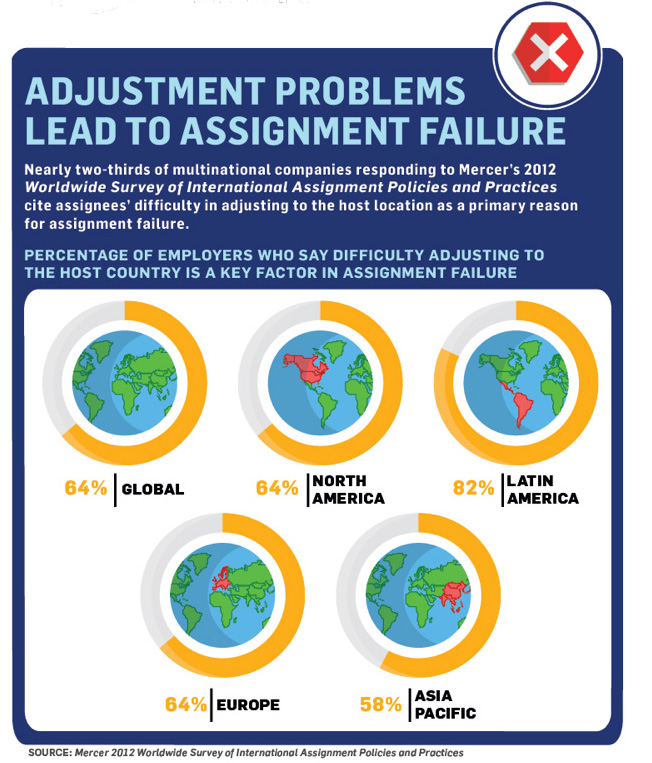
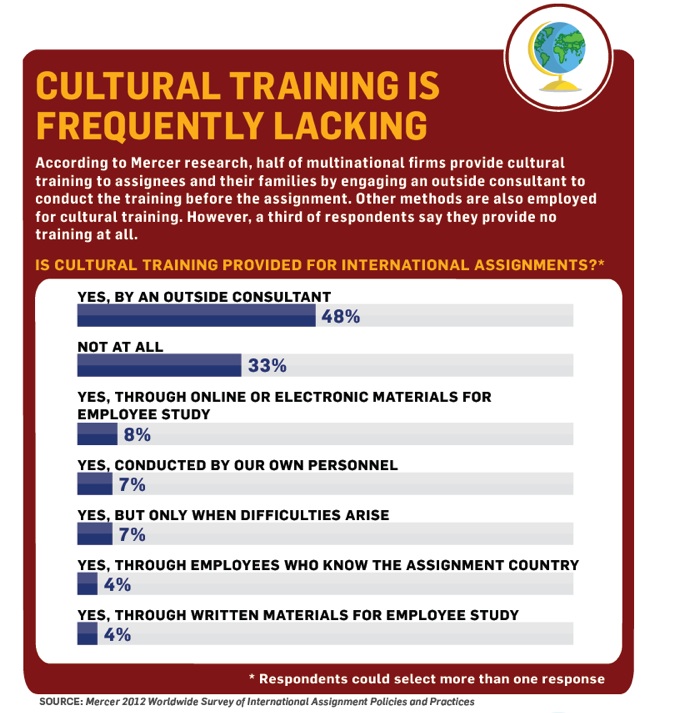
Mercer has released some useful new infographics, based on the findings in their 2012 Worldwide Survey of International Assignment Policies and Practices.

You all know that using Cultural Detective combined with reflexivity and good facilitation, you can do WAY better than “awareness”—developing the ability to collaborate across cultures.

©Mercer

©Mercer

@Mercer

@Mercer

Let’s save the lost money, the aggravation and stress on our people, and the potential loss of talent, by equipping expats and their families for their assignments! Also best to equip the receiving team, and to conduct team building, ongoing mentoring and coaching. Cultural Detective Online, along with good coaching or facilitation and organizational support systems and processes that reward intercultural competence, will make the difference.

We Have to Teach in Context!

Apple-butterfly

What we learn has to “fit” with what we know.
It has to be appropriate for where we live and work.
Part of learning is to apply the new to the old, integrating the two.

A client called us, saying they had hired a young woman with an MS in Intercultural Communication to design courseware for them. The objective of the courseware is to improve participants’ job performance, in this case, to make them more effective and efficient at servicing international customers.

“We had a lot of hope for intercultural communication training. But we’ve been doing it for nearly two years now, and we are very disappointed with the results. We have seen no bottom-line impact on performance.”

In reviewing the courseware, I found that it in many ways it was very savvy, but appeared to have been taken nearly verbatim from the woman’s graduate studies. The exercises and activities were designed for master’s students in intercultural communication, and had not been adapted for customer service representatives!

We heard from another client recently that had invested three years developing a curriculum to improve the intercultural competence of their global staff. A diverse group of their international employees attended professional development classes in intercultural communication, and an elite group at head office developed a standardized curriculum to be used worldwide. One of the main objectives of this effort is to be able to better resolve conflicts and misunderstandings more effectively.

So what’s the problem? Everyone loves the new curriculum. However, they leave the program feeling no better equipped to resolve conflicts. They love the tools they’ve learned, they enjoy the trainers, but they don’t know how to use the new tools and skills in a real situation!

THE PROBLEM IN BOTH SCENARIOS
What do these two scenarios have in common? In both cases, the training designer was replicating a graduate-level education course—designed for professionals—and repurpose it, as-is, for skill building. And that just doesn’t work! I’ve seen it far too often in recent years, and it’s a distinction we really need to make. Doctors graduate to practice medicine and to help their patients learn healthy lifestyles; they do not generally teach patients how to be doctors.

Professionals need skills they can use on the job, and that includes cross-cultural skills. But those skills must be taught in context, via application and practice in simulated and, eventually, real situations.

SOLUTION ONE
In the first case, Cultural Detective was added into the client’s existing customer service training. Leveraging pre-existing company-specific case studies and audio-visual scenarios, we used the Cultural Detective Worksheet and Values Lenses to supplement the debriefing. In this way, the need for intercultural skills became more evident and was linked to job success for the customer support engineers. In addition, all practice of cross-cultural skills was integrated with the practice of vital job skills.

We retained many of the exercises and activities included in the original, separate cross-cultural curriculum. However, we wove them into the customer service training to supplement, amplify, and deepen learning using the Cultural Detective Method. Once cross-cultural skills were grounded in the business at hand—the purposes of the employees’ work (customer service)—they made all the difference in the world.

This client reported to us a 30% increase in customer satisfaction that they directly attribute to Cultural Detective.

SOLUTION TWO
The second case is still in process. I very much admire the quality of the curriculum and the incredible coordination it has taken to get so many trainers in such diverse locations “up to speed” with the material. Yet, they are starting to realize that although the training has been well-received, staff is not able to use what they have learned once they are back on the job. Yet with so much investment, they don’t want to completely redesign. And they don’t want to be dependent on outside material.

I advised them to weave into their curriculum a simulated conflict scenario, one that could be worked on and revisited throughout the training. In this way they do not need to completely redo their superb design, and the training they have already provided will still be useful. The difference? The revised curriculum is grounded in their reality and will allow staff to practice cross-cultural skills in simulated situations. That way, when they return to work, they will know when and how to apply the cross-cultural skills and tools they have learned.

SAMPLE DESIGN
Let’s look at a typical training curriculum, and then look at how easy it is to weave Cultural Detective into the existing design. Let’s say on Day One they teach what is culture (Iceberg, observable behavior linked to underlying values) and D.I.E. (learn to Describe before we Interpret and then only with culturally appropriate information, to Evaluate). On Day Two, they teach intention/perception and cross-cultural adjustment (culture shock).

Instead, they might start Day One by introducing a case study involving an everyday challenge. Having introduced the context, trainers facilitate learning as planned in the original curriculum (Iceberg and D.I.E.—Description, Interpretation, Evaluation). After doing so, however, they return to the case study, the professional context, and explore: how do values apply to this case study? What are the Evaluations that I am making, based on what Descriptions? From there, it’s a very easy introduction to the Cultural Detective Method, which this client has already licensed and, therefore, is welcome to use.

On Day Two, intention/perception can be taught as part of the debrief of the Cultural Detective Worksheet for the case study. And, the same case study can be used to ground teaching around culturally-appropriate service or cultural adaptation. From there, as they facilitate the remainder of the designed curriculum, they can provide staff the opportunity to speak with the individuals in the case study, in a simulated environment, and to use CD Values Lenses and the CD Worksheet to help them better understand their own values and worldviews. Finally, staff can use the CD Worksheet Method to facilitate a resolution to the case study—harnessing the advantages of diversity rather than navigating around or ignoring them.

If you’ve licensed the CD Method, you know how versatile it is. But what you may not realize is that Cultural Detective doesn’t need to replace other methods. Often, if you put Cultural Detective at the core of what you are already doing, you’ll find the rest supplements it quite naturally.

Always remember, adults tend to learn best in context; they want to know why something is important to know or do. If adults learn to use and apply intercultural tools in situations that replicate real life, they’ll be much more likely to employ them when the need arises.

I Have a Dream, #DreamDay

Oh how those words, spoken 50 years ago today — August 28, 1963 — have inspired us! The wisdom and passion with which they were spoken!

I Have a DreamSo many have shared their memories on this anniversary of Dr. Martin Luther King Jr.’s famous address. There have been incredibly motivational talks, such as this short one by the Dalai Lama.

Through all of it, however, most of us remain troubled. Are we any closer to that dream? Have each of us done our best, in our lives and in our own ways, to help make that dream a reality?

One thing I know, both from my heart and professional training, is that the Dalai Lama’s message about focusing on the oneness of humanity is based upon a deep recognition of and respect for diversity. Those who know the oneness also respect individual and cultural differences.

I say this because it’s too easy to fall into the superficial “feel good”-ness of “it’s a small world.” Common goals, shared dreams, are necessary to tie us together. And our distinct gifts are necessary to implement those dreams. It’s a converge-diverge dynamic, a yin-yang, in which both commonality and diversity are needed.

Today, let us renew our quest. Inclusion, the oneness of humanity, is not the polar opposite of diversity, as too many believe. A oneness of humanity must be accompanied by a respect for diversity; the two go together hand in glove.

Thank you all, today and always, for being part of our community, for helping us all achieve the dream that justice will roll down like water upon us! That we all will be free at last!

If you haven’t yet rewatched the famous speech, here it is. Sit down, enjoy, and refocus.

Have You Taken Advantage of Our Free Webinars?

Night work

  • “Really? You are logging into this webinar, willingly and of your own accord, at midnight? No joke? And for you it’s 3 am?”
  • “Yes! I am so very excited to be here! Thank you for offering this learning opportunity!”

The response to the free “Cross-Cultural Effectiveness” webinars we have been conducting since February of this year has truly overwhelmed me. We’ve already welcomed hundreds of participants from six of the seven continents, including a broad diversity of professions and experiences—from hospitals to schools, disaster relief to hospitality. I’ve had the pleasure to meet incredible people who are building cross-cultural competence and using or hoping to use Cultural Detective in the most creative and needed ways! It has been such a joy and learning experience. Thank you all!

People don’t need to be inconvenienced by the time difference to participate in these webinars. We offer them twice a month, once at times convenient to the Americas, Europe, and Africa, and another more convenient to Asia and Oceania.

Would you like even better news? Those who participate receive a COMPLIMENTARY 3-day pass to Cultural Detective Online!

I’ve promised myself to use a different critical incident each and every webinar, and it’s amazed me the richness of the discussion this has generated, the powerful ways in which we can overcome stereotypes, the innovative ways the groups have generated to harness the power of diversity.

We also are committed to conducting special-interest webinars for you, to aid in ongoing cross-cultural competence development. Thus far we have held two, both in partnership with customers and colleagues: one on virtual teaming, and another on coaching across cultures. Stay tuned for future additions to the schedule!

If you would like to participate in a webinar, or get more of your colleagues and friends excited about intercultural competence, please register now. We have just updated the calendar through the end of December 2013.

If you use Cultural Detective in your work, and you would like to share what you do and how you do it in hopes of helping others succeed, please contact us. We may be able to partner on an upcoming webinar, or share your story in a future blog post! We also welcome your topic ideas. Keep ’em coming!

Today’s Cultural Defective: A Humorous Short Story

ImageThe past few weeks our family has been busy traveling around visiting universities with our son, who will be a senior in high school as of next week, as well as visiting family and, of course, working in between. Many thanks to all our wonderful guest bloggers who contributed posts during this time.

We are home again, and I thought you might enjoy a humorous “Cultural Defective” or cultural misstep story that happened to us upon our return. The guard, our neighbor, and our family had a good chuckle over it. Hopefully we’ll be a bit clearer in our communication with our building staff going forward, but more importantly, we gained a better understanding of our own worldview and that of the people working in our building. Here’s the story:

We live in a large condominium building. We receive a newspaper delivered to our door every day. Normally when we leave town, we tell the building staff that they are welcome to keep and read our paper while we are gone, and that we don’t need them back. It tends to be much easier and less confusing than starting and stopping delivery, and the staff enjoys the small perk. This time, however, our neighbor was in town, so we invited him to take and read our paper every day while we were gone.

Today, one of our building guards showed up at our door with a huge stack of newspapers. He most kindly explained to us that someone had been stealing our newspaper every day while we were gone (we live on a floor with three other families). Therefore, the staff had decided to hold the papers in the office, to guard them, and give them to us upon our return.

I guess we should have communicated our plans with the building staff more clearly. This was certainly nothing I would have expected. I do hope that at least the staff read them!

To me this incident is refreshing in that it didn’t really harm anyone, as many cross-cultural misunderstandings unfortunately do. However, I’m sure if confused our neighbor (why has newspaper delivery stopped?)!
If we take a bit of time to apply the Cultural Detective Method, we can easily see the value differences it illustrates:
  • The value placed upon a daily newspaper delivery—a luxury available to professionals, but beyond the reach of a laborer here in western Mexico.
  • Feelings of protectiveness and responsibility—the building guards are accustomed to a huge status differential; they don’t want to do anything that might disappoint a homeowner, or that an owner might accuse them of doing incorrectly. They were protecting us, and they were protecting themselves.

In my worldview, it never occurred to me that an owner might want six weeks of newspapers saved. Also, I have a different the sense of responsibility than our guards have. I might figure, “Hey, if the lady didn’t tell me to save her papers for her, or what to do with them while she is gone, I can’t be responsible.”

Of course, it could also have been that the guards really wanted their few weeks of leisurely newspaper reading, and resented an owner (our neighbor) taking what would otherwise be theirs, but I really don’t think that’s what happened. They just figured we’d forgotten about our paper, and that a neighbor was taking advantage of our absence. And, they did the right thing—they protected us.

This is just a small, humorous story of daily life as an expat, and how easily any of us can jump to negative conclusions. Or, if we take a few moments to reflect on our missteps, we can gain insight about ourselves, others, and living together enjoyably.

We have such a wide range of readers—I’ll bet many of you have similar anecdotes of unintended consequences to your actions (or lack of action) as you have navigated life in a foreign culture. We’d be delighted to hear your “Cultural Defective” stories and the insights you gained through the experiences.

40 Maps That Will Help You Make Sense of the World

You’ve seen some of these maps before, but I’ll bet you haven’t seen all of them. A very interesting way to visualize differences in our world from various perspectives. Enjoy!


twistedsifter's avatarTwistedSifter


If you’re a visual learner like myself, then you know maps, charts and infographics can really help bring data and information to life. Maps can make a point resonate with readers and this collection aims to do just that.

Hopefully some of these maps will surprise you and you’ll learn something new. A few are important to know, some interpret and display data in a beautiful or creative way, and a few may even make you chuckle or shake your head.

If you enjoy this collection of maps, the Sifter highly recommends the r/MapPorn sub reddit. You should also check out ChartsBin.com. There were also fantastic posts on Business Insider and Bored Panda earlier this year that are worth checking out. Enjoy!


1. Where Google Street View is Available

map-of-the-world-where-google-street-view-is-available

Map by Google


2. Countries That Do Not Use the Metric System

map-of-countires-that-use-metric-system-vs-imperial

View original post 740 more words

Want to Get Rave Reviews AND Truly Make a Difference?

WowlargeHow would you like to revel in unsolicited, overwhelming praise and gratitude? And, on the job, no less?

We all make fun of “happy sheets,” those “feel good” evaluation forms participants are asked to fill out at the conclusion of a training session. But how sweet it is when a hardworking facilitator or coach receives unsolicited kudos! And Cultural Detective can enable you to do just that.

We help you look better and DO better! Cultural Detective provides a core process for developing intercultural competence, and you facilitators, coaches, team leads, study abroad counselors, professors—you add the bells and whistles, the supplementary activities and simulations, the design and personality that weave it all into a smashing success! You know you’re using a state-of-the-art Method, grounded in developmental and constructivist theories, adding both to your credibility and effectiveness.

Here’s an email one corporate trainer recently received after using Cultural Detective. Thank you for sharing it with us!

“Hi,

I trust you are back home, and preparing for your next Cultural Detective training session. I hope all is well.

I want to thank you for coming and bringing your fabulous Cultural Detective presentation and training. I swear to goodness I have used what I learned no less than five times, within our group, to resolve differences that could have been roadblocks otherwise. You squarely “nailed” the subject matter and how to use it. Your passion, your examples, your group exercises, how you drew people out to share their experiences and expectations and your patience (with at least one of us, who shall remain nameless) was inspiring. It was excellent, and the water-cooler talk I heard echoed the same thoughts as mine. I can truthfully say that I got more out of those short, few hours, than any other training I can think of. I am anxious to use the strategy in a discussion with parties of more diverse cultures than my five encounters so far. I’m confident we both will win.

I hope you can carry Cultural Detective all across the organization, because it applies to everyone; I even used it with my wife to determine where we were going to eat, just like the example you used! How about that for an example of classroom to practice! I don’t think it gets any better than that.

Well, thanks again. I just wanted you to know how much I though of your training and what it had done for me, in, what, a week? It was great. Thanks, and if ever I can be of service to you in someway, please don’t hesitate to ask.

Sincerely,

(signature removed for privacy), a practicing cultural detective