A Question of Trust

Doi Suthep Temple, Horizontal Image (500x332)A small US American software company has been contracted to design some specialized broadcast technology software for a radio station in Thailand. This is the first time the company has received a contract in Southeast Asia and their company executive, Tom Bennett, is looking forward to doing business in the region.

The initial meetings and negotiations with the radio station management have been successful, and Tom Bennett senses that he has built up a good rapport with Khun Chai, the radio station manager. Khun Chai himself is delighted with Tom Bennett’s interest in Thailand and the local Thai community, and he is particularly impressed with Tom’s liking for spicy Thai food. Khun Chai is already contemplating the possibility of doing business with the American company again in the future.

The price is settled, the contract is signed and a deposit is paid…

Are you are a business leader, coach, consultant, speaker or teacher?  Do you want to become culturally competent and self-confident in the global arena?  Does the above story sound similar to projects in which you, your colleagues or clients engage? Despite this auspicious start, all does not end well, as you’ll discover in our upcoming webinar: Cross-cultural Coaching: A Creative and Transformative Process. In that webinar we will introduce you to a powerful and transformative coaching process with Cultural Detective Online!

The coaching process combined with Cultural Detective Online provides you with a comprehensive learning experience that is stimulating, supportive and transformative! In addition to exploring key cultural concepts and culture-specific information, the collaborative and creative coaching environment helps you develop new perspectives and skills for bridging the gap between your personal cultural “sense” and the cultural “sense” of your colleagues and clients.

Our facilitator will be Jan O’Brien, IAC-MCC, who will show us how she coaches expatriate executives towards cross-cultural success. Jan is President of Culture-Conscious International, a coaching and consulting company based in Houston, Texas. She is a US/UK dual national and has lived and worked extensively overseas, in particular in the US and the South East Asia region. Jan is a Certified Cultural Detective facilitator and a Master Certified Coach with the International Association of Coaching (IAC). She has worked with clients from many language and cultural backgrounds and has personally experienced the benefits and challenges of living and working in the global arena.

Register now, as only a few seats remain.

Meeting time is Tuesday 23 July, 2013 at 10 am Mazatlán, Sinaloa, México time. Meeting place is online. Please consult a world clock to verify your local time. 
  • Los Angeles: 8 am
  • Houston: 11 am
  • New York & Santiago de Chile: 12 noon
  • Buenos Aires or Rio: 1 pm
  • Brussels, Paris, Rome, Johannesburg: 6 pm
  • Abu Dhabi & St. Petersburg: 8 pm
  • Delhi: 9:30 pm

TCK (Third Culture Kid) Stories On Film

Video

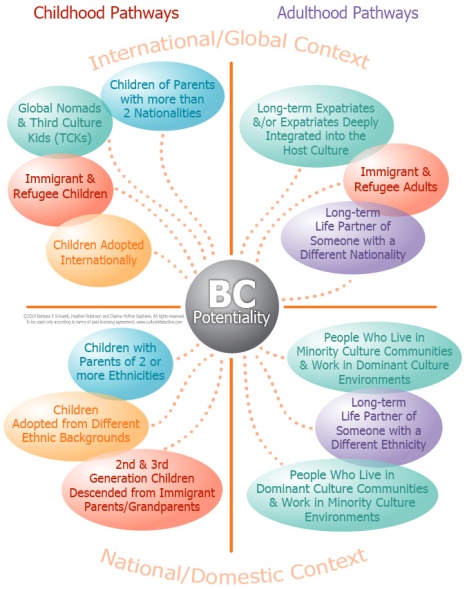
Paths to BCThird culture kids, or “TCKs.” One type of Blended Culture, TCK refers to those of us who have grown up in multiple locations and enlarged our definitions of “home.” We have multiple homes, all near and dear to us. We have multiple cultures, some of which we may be more fluent in than others, and all of which hold deep meaning for us. And, we have created “third cultures,” “blended cultures,” a global, multicultural or cosmopolitan definition of self and family.

The Blended Culture experience is increasingly common. As an expatriate myself, my son is a TCK with multiple national culture affiliations; it’s crucial for me to understand a bit of his experience if I am to parent him appropriately. I pray he grows up to reconcile his identity in constructive, multicultural ways. For those of us who work in international business, schools, study abroad, and with immigrants, it is also extremely helpful to understand at least a bit about the TCK experience. Three recent films may help us do just that.

The first film is called So Where’s Home? A Film About Third Culture Kid Identity, and is by Adrian Bautista. You can view the nine-minute film in its entirety below.

A second film is the award-winning “The Road Home,” directed by Rahul Gandotra. This 24-minute short can be rented or purchased, and the director is currently making a feature length movie about the same characters. You can view a two-minute clip of the film below.

TCKs have unique skill sets and unique challenges. The powerful trailer below (almost nine minutes) shows us what Aga Alegria has in mind as she sets about fundraising to make her documentary film about the TCK experience. Click here to learn more about that effort, or perhaps help her out.

http://vimeo.com/11658942#at=0

We wish all these ventures very well with this important and timely topic! Learn more about a tool to help make the most of the TCK experience.

10 Surefire Ways to Divide into Groups

saltyspicysweetsourAs educators and trainers, we often find ourselves needing to sort class members into small groups for an activity. Tried-and-true ways include having participants “number off” or color-coding their name tags. But even the ways in which we divide our students or trainees into small groups can contribute to learning and enjoyment: it can ground learners in the topic at hand, reinforce key points, provide insight into ourselves and others, and help develop teamwork.

In short, the way we divide into groups can become a subtle yet powerful element of spiral learning. For those of us who teach intercultural communication or diversity and inclusion, it can be helpful to divide into groups in ways that encourage learning about similarities and differences.

In that spirit, here are ten of my favorite “Quick Tips” for dividing a large group into small groups. Whether you want to explicitly debrief the learning or leave it as-is depends on your purposes. As with any activity, it needs to suit your style and that of your students, and be appropriate for the environment.

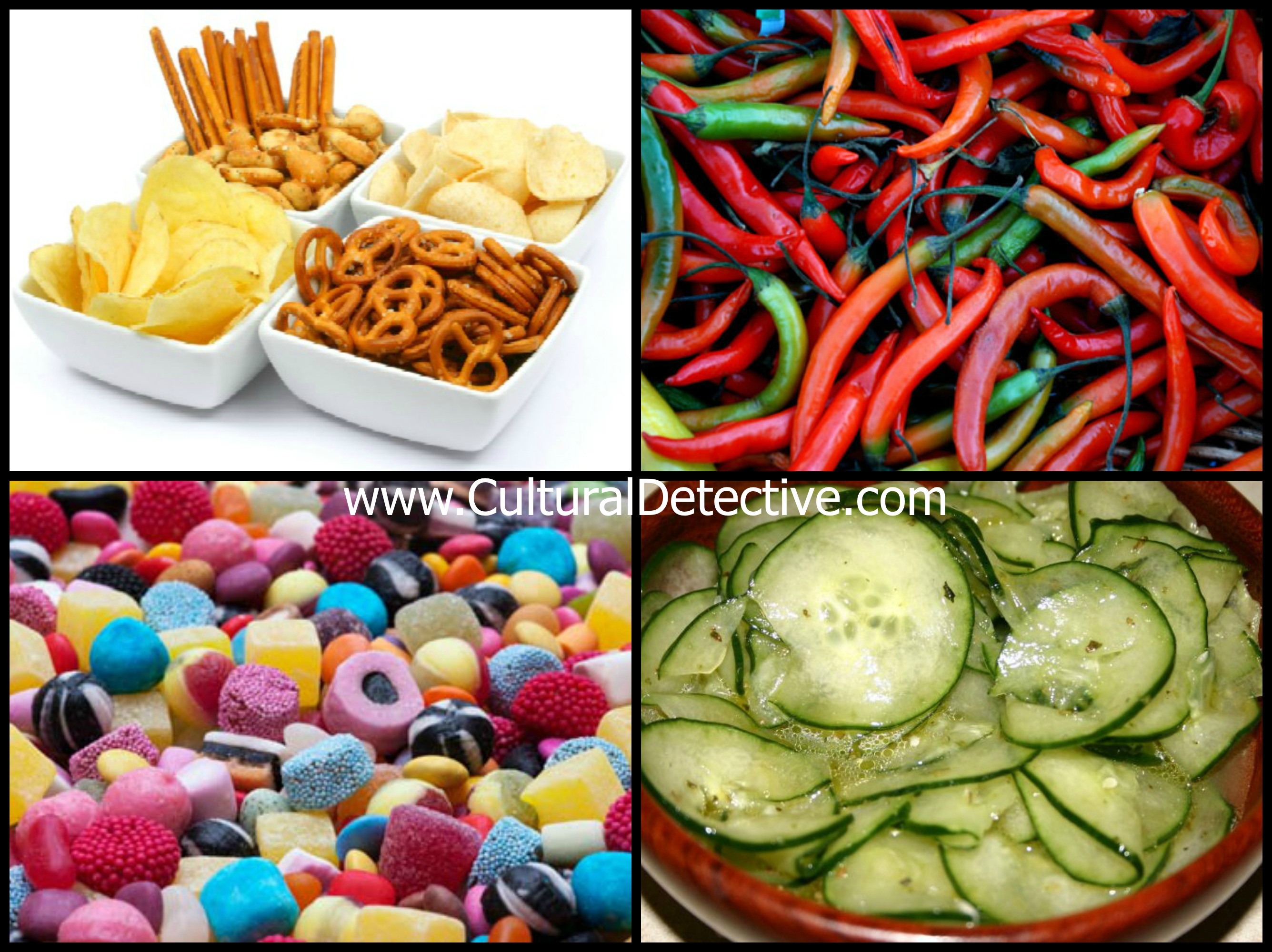
1. Salty/Spicy/Sweet/Sour
Using food is always fun and low stress for the participants. As individuals we like different tastes, and there are cultural tendencies as well. For me, the “sour” tastes of pickled food unite my German blood and my life experience in Japan, for example.
  • Instructions: Make a small sign with a flavor or taste, using as many flavors as you need groups. Then, ask class members to go to their favorite flavor.
  • Variations: Alternatively you could divide the group by having participants choose their favorite fruit or choose their favorite dish from among several common dishes. Or, try having a real snack at each location, and just see where people gravitate. Depending on the context, this could be a good time to use international and ethnic snack foods.
  • If you want to Debrief: Once you have the small groups, you can ask people to take a look around. Do they see themes in the groupings? Any cultural tendencies? Or, do they see reinforcement that we all have our individual taste preferences? Each time will be different. Ask people to reflect on why they like the taste they chose. What life experiences taught them to value that taste? Might this enhance their cultural self-awareness?
2. Goodies Sort
Again using food, this is one of my favorite methods, and one very popular with students or trainees! In the context of teaching or training, a treat is a good pick-me-up, and it’s easy to “internationalize” or add something new and different given the variety of food.
  • Instructions: Prepare “goodies” (chocolates, candies, pretzels, cheese sticks; I’ve even used dried squid and roasted grasshoppers) in as many varieties as you want groups. Put one item for each of your class members in a basket, and pass the basket. Then ask “pretzel people” to meet over here, “cheese people” over there, etc.
  • Variations: You can also use multicultural snacks! Another simple variation is to use the same kind of candy but in different colors: all the reds meet over here, the blues over there, etc. If you have a group that genuinely embraces informality, have them suck their candy, then stick out their tongues to find their fellow group members.
  • If you want to Debrief: Which snacks attracted you and why? Are your food preferences influenced by your ethnic and cultural heritage? Which rules your snack preference: personality or culture? Did any of the snacks look very unappetizing? If so, why? Perhaps make the point that just as our snack preferences vary according to whom we’re with and how we’re feeling (whether we’re tired, excited), our behavior in multicultural teams depends on the context, too.
3. Pertinent Quotes
Quotations have become quite popular on social media sites, and they are a powerful way to introduce a new topic or to summarize learning. Since this activity involves a bit of walking around, it gets people up and moving as well. It’s one of my favorite ways to get people into pairs.
  • Instructions: Assemble a set of quotations on the topic you are teaching. Choose half as many quotes as you have participants. Type up the quotes, dividing them in the middle: choose a fairly obvious place for breaking the quotation in half. Print them, cut them apart, fold them up, and have participants each choose one out of a basket. Then, ask them to find the person with the other half of their quote.
  • Variations: You can combine this method with the “Goodie Share” by taping the half-quote onto the bottom of a candy or snack, then asking participants to find their partners.
  • If you want to Debrief: To aid in this process, you could post a list of complete quotes on a flip chart. You can have some/each of the couples read their quotes aloud to the class. You might ask participants to speak to how “their” quotes relate to what they want to get out of your class today.
4. In • ter • cul • tur • al
This one’s a simple, quick, and easy way to divide participants into groups using a word that reinforces the theme, topic or key skill of the day’s learning session.
  • Instructions: Choose a word that represents an aspect of the theme you are teaching. That word should have the same number of syllables as the number of small groups you want. Instead of numbering off, have class members recite the word’s syllables. It’s a good way to reinforce key concepts.
  • Variations: You could say the word in another language, thus teaching a bit of a destination language, for example.
  • If you want to Debrief: Really not necessary, but… You could ask participants about different ways of hyphenating words, dividing syllables, in the languages they speak.
5. Playing Cards
This is another very quick way to divide participants into small groups: it can have a cultural component, yet it doesn’t necessarily need to be debriefed. With a unique deck of cards, it can be even more interesting.
  • Instructions: From a deck of playing cards, choose one card for each person in your class. Make sure you have “sets” of cards, one set for each group you want. Put all the cards from the abridged deck facedown on a table, and have participants each choose a card. Then group people as you’ve planned, by number (all 2s, 3s, etc.), or by suit, color, odds/evens, higher/lower than 8, etc.
  • Variations: Use Mexican Lotería cards, Japanese Hanafuda cards, mahjong playing cards, or another culturally appropriate (or new-to-your-participants) card deck to divide your class.
  • If you want to Debrief: Ask if everyone felt comfortable with your instructions. Were they familiar with the words you used (suit, Ace, etc.)? People who play cards have a culture unfamiliar to non-card players: shared “common sense,” vocabulary, customs. Some people associate card playing with gambling, and thus don’t like, or feel religiously forbidden from, playing. As with any educational activity, make sure this one will be comfortable for your learners.
6. What You’re Wearing 
I have learned so much from this simple activity over the years because participants always see something I hadn’t noticed. It can also serve as a wonderful impetus for reflecting on value differences.
  • Instructions: Have class members get into groups of 3 or 4, whatever you choose, based on similarities in what they are wearing. They decide what they have in common.
  • Variations: An alternative is to have learners group according to shoe type. This can be very fun, too, and it’s sometimes surprising the categories people come up with.
  • If you want to Debrief: If you choose to debrief this group-sorting activity, you may find a myriad of perceptions about clothing and shoe styles. Often people group into categories that they themselves might not have thought of on their own. Ask participants to discuss in their small groups how they decided to group themselves. Were they all focused on the same thing, or did they have different understandings of their clothing commonality? Groups can share with one another how they grouped, and compare similarities and differences. Did anyone share a perception of someone else’s clothing that surprised you? That echoed or differed from your own perception? What can this tell us about values and perceptions?
7. Number of Languages You Speak, Countries in Which You’ve Lived
This method also helps everyone learn a bit about each other quickly, that they might not have otherwise known.
  • Instructions: Have people line up according to the number of languages they speak, or the number of countries in which they’ve lived, and then divide them into groups.
  • Variations: Tell participants to assemble in groups of people who speak 1, 2, and someone who speaks 3 (or more) languages. This gives a bit more diversity in each small group. You can do the same thing with the number of countries in which participants have lived.
  • If you want to Debrief: Ask participants if they are surprised at who is in their group—have they learned something new about one or more of their colleagues? Does this change their perception of the other person? How and why? Does this change their perception of themselves? How and why?
8. Animal Sounds or Industry Vocabulary Across Languages
I have always been fascinated by the different sounds that animals make as represented in different languages. Really, in Japanese, mice say “chu”?! Use this interesting trivia to your advantage, and insert a bit of lightheartedness to your session.
  • Instructions: Print cards with an image of an animal and the sound that animal makes in a different language. Then ask people to make the sound on their card in order to find each other. You will need one card for each participant, and the number of animals you use should correspond to the number of groups you want to form.
  • If you want to Debrief: Explain that animal sounds are lighthearted, then shift to the inextricable connection between linguistic and cultural fluency. Ask participants to share with you differences they’ve noticed across languages, words that sound similar but mean different things in different places, or how much vocabulary, even in the same language, varies place-to-place. You could ask participants share other interesting sounds animals make in languages they speak.
  • Variations: You can use the same animal and have participants divide into groups according to the sound it makes in Spanish vs. German vs. Chinese, etc. You could use different animals and the sound they make in a destination language. Alternatively, you could use industry-specific vocabulary in different languages, or words having to do with the subject of your workshop in various languages.
9. Arm Cross/Hand Cross
This is a very easy way to divide the room into two groups, and to illustrate how something that looks similar can really be quite different once you analyze it a bit more.
  • Instructions: Ask your students to cross their arms over their chests. Those people with their left arms on top form one group, and those with their right arms on top form the other.
  • Variations: Asking participants to clasp their hands or cross their legs works just as well.
  • If you want to Debrief: We all have automatic habits that we don’t pay much attention to, things we do without making a conscious choice—like the way we cross our arms, or how we attempt to persuade someone, or apologize or disagree. Another  point you might debrief: ask whether, at first glance, with arms crossed, they all seemed to be doing the same thing? It wasn’t until you called attention to the subtle differences in how people were crossing their arms that they noticed. And so it can be with culture.
10. The Name Game
Many cultures around the world have a variety of traditions around naming their children: a girl may be called “daughter of __,” sons may be named according to birth order, a child may be named after an ancestor, or given a name that indicates a hope the parents have for the child (beauty, peace, etc.). Many people are very, very proud of their names, and others may have no idea how they were named or why. Some may have changed their name or had their names changed for them.
  • Instructions: Ask your students to think about their name, and a short (30 second) story about how they got the name, what their name means, how their name or nickname has varied over the years. Then tell students to walk around sharing their “name stories” with one another, until they find someone with a name story similar to theirs in some way. Participants can form pairs, groups of 3, 4, or 5—whatever is helpful.
  • Variations: An alternative of course is to find partners with very different name stories.
  • If you want to Debrief: This is a wonderful activity through which you can talk about value differences, or strategies for adapting to a new culture (do you change your name, adapt its pronunciation…).

Hey, all you trainers and teachers out there: What’s your favorite way to divide a large group into small groups for activities? Please share your creative approaches and recommendations!

Cross-cultural Competence Enhances Productivity AND Satisfaction

Last week a new brochure, this week a new introductory presentation! Thank you all for the incredible work you do with this process and these materials, to build cross-cultural respect, teamwork, productivity and equity!!!!

Use it, pass it around, and do the good work! Thank you, everyone!

Help us Build Respect and Collaboration

brochure

CulturalDetectiveBrochure

We have an updated brochure that we are debuting. Please click on the link above to view it.

We are hoping that all of you will please pass it around, use it in your spheres of influence, and put the Cultural Detective Method to good use, building a more cross-culturally respectful, inclusive, collaborative and equitable world, in which our diverse experiences generate innovative solutions to our shared problems.

You can also find the brochure on our website:

Please let us know what you think!

#nochildforsale

Check out this excellent, simple and clear video from WorldVision, designed to combat child trafficking.

Those of us committed to intercultural competence know that child labor is sadly a matter of family survival in many places on our planet. We work to change this systemic reality and create a more equitable world in which children can study and better their lot. Children who are loved and contribute to their family’s sustenance can indeed feel proud, despite the hardships they face and while we effect change.

Child trafficking, on the other hand, is a reality we need to say no to NOW. Absolutely not. There are many levels of “wrong” in the world. Putting an end to human trafficking has got to be a key focus of our efforts.

The Power of French Food Culture…Even for Selling Men’s Underwear!

underwear omeletteAnother guest blog by the wonderful Joe Lurie—I will say that I’m about ready to get on a plane and enroll in Joe’s next class!

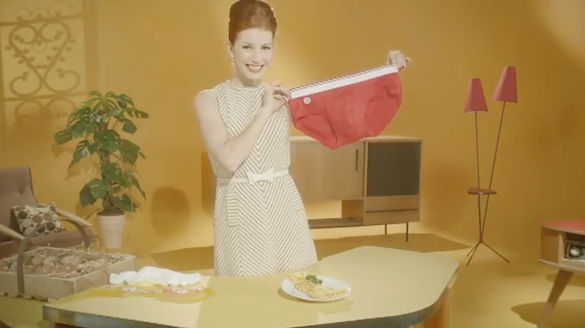
As a follow-up to my blog posts, Bicycling in the Yogurt — the French Food Fixation and Ads as Catalysts for Intercultural Conversations, I’d like to share this French ad for men’s underwear, shared with me by a French student:

The ad shocked my Chinese students — underwear in the kitchen? References to a man’s genitals in a TV ad? Not only does it reflect in an amusing and extraordinary way the seduction of food in French culture, it also reveals a theme of sensuality commonly accepted in the French public square.

While there’s plenty of pornography in North America, a French marketing professional explained to me recently that using a bare breasted mermaid to sell an ordinary product in the United States simply did not work. And so, one understands why many visitors to France are shocked by bare breasted women on public beaches. Everything, in every culture, has its own culturally accepted place.

While discussing the French underwear ad, some of the French students noted that to break one’s eggs would often suggest breaking one’s balls — being a real pain. This occasioned a vigorous, animated debate, some French students insisting that breaking one’s eggs does mean breaking one’s balls, others countering with equal force that this was generally not true, rather at best a gross exaggeration. And so in that conversation emerged other common French values and related behaviors, emerging nearly verbatim as they appear in the Cultural Detective French Values Lens — the importance of debate, of challenging ideas, of being rational, of not exaggerating, of being precise. Listen to French conversation and you will hear, over and over again, the words preciser, “to be precise,” and il faut pas exaggerer— “one must not exaggerate!”

Joe Lurie is Executive Director Emeritus at University of California Berkeley’s International House, a cross-cultural communications trainer, consultant, university lecturer, and certified Cultural Detective facilitator. He is a frequent guest contributor to this blog.

Linked to the My Global Life Link-Up at SmallPlanetStudio.

Ask Cultural Detective Your Questions!

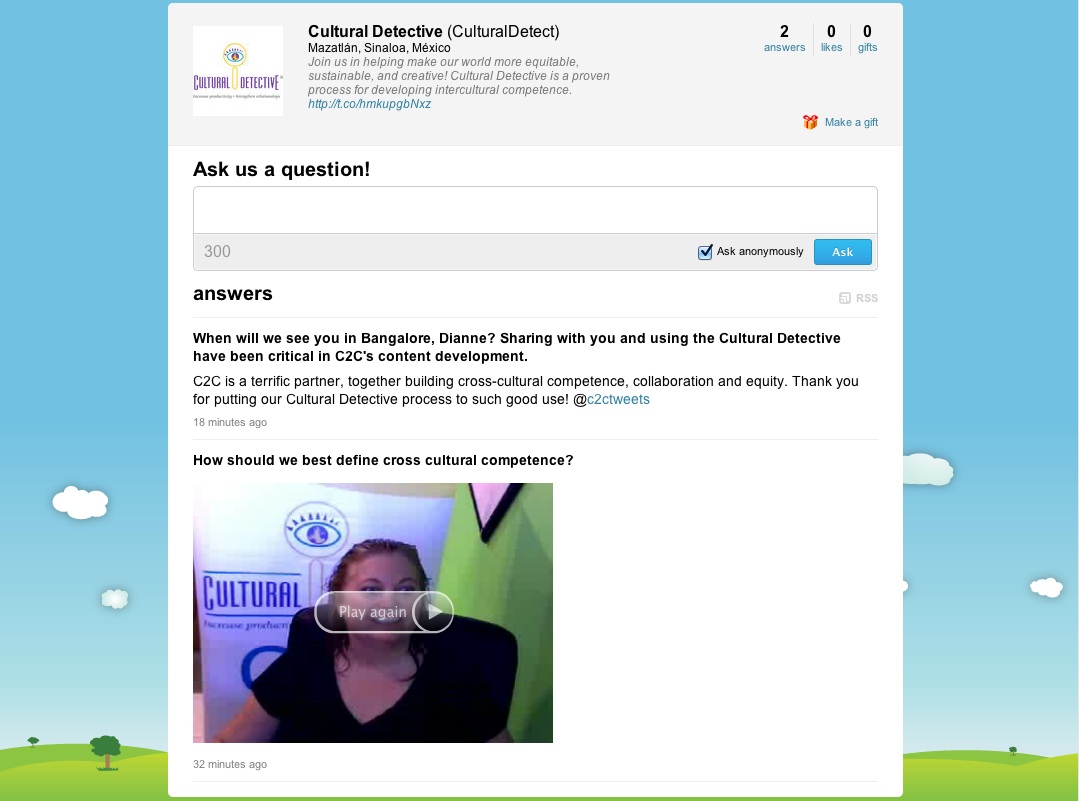
ask.fmHi everyone! We have added a new service for our community members, and trust you will join us in putting it to good use to build equitable and sustainable partnerships across cultures.

Cultural Detective now has a page where you can ask us a question, and we will text or videotape an answer to you. We just launched late last night, and this morning we woke up to two interesting questions. Below is our answer to the first. Click on the link above to view both sets of questions and answers, or share your question with us. We look forward to the dialogue!

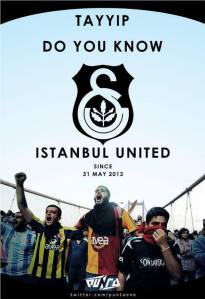
Update Istanbul

IstFutI would very much like to thank Erika Leuteritz, talented and passionate member of our Cultural Detective community, for sharing this guest post:

Am I competent to write something about Istanbul? I’m German, I live and work in Germany. I love Istanbul, and I have been traveling to Istanbul every year for the past decade. I’ve been taught to be a Cultural Detective in a three-day course — in Istanbul. I have Turkish friends in Istanbul, Ankara, Izmir, Antalya and some smaller towns. Some are real friends, some are Facebook friends — acquaintances would be the old-fashioned word.
 These are normal women and men between 28 and 55. Usually they post photos of their children, their holidays, of flowers, insects, cats, information about books, music, quotations, cartoons, soccer … sometimes a political statement.

Last Friday night, I noticed that something must have happened. 
Nearly ALL of them were posting photos and videos of demonstrations, of drastic police violence. I know the area around Taksim Square. I was shocked. I asked one of my friends what was going on, and I checked German and British media. 
The following day, several of my friends asked me to help spread the news to the world because Turkish media remained silent. Since Saturday, I’ve been looking at videos, photos, information — since I don’t speak Turkish, I had to check German and English media as well.

These are the facts:
 A small group of demonstrators wanted to stop the government from felling over a hundred old trees in a park near Taksim Square for a shopping mall. They were few, they had a small camp, they were peaceful. The police disrupted the camp with tear gas and water canons. I’ve corroborated this with friends, Facebook, German and English media. This triggered, as it would in any country, a huge demonstration against police violence and against the government. These demonstrations have been continuing in Istanbul and have spread to about 50 other cities in Turkey — with police violence. More than 1700 people have been arrested, more than 2000 have been injured, per German and English media.

These demonstrations were triggered by some comments by Turkish Prime Minister Erdogan. He called the demonstrators extremists and looters. In the German and English media, I couldn’t find any reports of looting.
 PM Erdogan has emphasized that he has been elected three times by the majority of the people, and that therefore the demonstrators are just a small minority.

It is true that Erdogan had been reelected several times. His conservative Islam party, AKP, has paved the way for the largely conservative, religious, rural majority to better education and job opportunities.
 The mainly secular and well-educated urban population has always feared that Erdogan wants to create an Islamic state.

Here we have a division along culture lines: Islamic – secular, more rural – more urban. This may be the underlying current of these demonstrations. But usually things don’t tend to be so simple.

Only last week, the AKP majority passed a law forbidding the sale of alcohol between 10 PM and 6 AM.
 In some of the demonstrations people deliberately drank alcohol. The Erdogan administration has in past years put massive pressure on the media: There are more journalists imprisoned in Turkey than in China! 
And there’s also the headscarf issue … German and English commentaries say that people are getting increasingly fed up with Erdogan getting more and more authoritarian. They say that these demonstrations could for the first time pose a serious problem for him.

I perceive that people who formerly nursed their differences are uniting in these demonstrations. There was a photo on Facebook saying that Turks, Kurds, Alevis and Sunnis are uniting
. In the 2007 election, a lot of the (religious) minorities voted for Erdogan. They felt sure that Erdogan and his AKP, sice he had been a political minority in a secular state, would be good for and good to other minorities as well. I was on a study tour in October 2007 and had the chance to meet representatives of some of these minorities. 
One of the main charges the demonstrators hold against Erdogan is that, in the end, he’s not paying any attention to minorities …

On the videos and photos I don’t only see young people, women and men, but people of all ages — though the younger ones are predominant
 — and the three big soccer teams of Istanbul (Besiktas, Fenerbahce and Galatasray) have all united as well!
 THAT really is cross cultural competence!!!

There is support: at least one of the big hotels at Taksim is offering food to demonstrators, as is a cultural center. Not only hospitals and universities but also mosques are looking after the injured. In the night, women clank pots on their balconies in support of the demonstrators.

Now what about Erdogan’s majority? My friends are all secular — though I don’t believe such a condition really exists. Common sense and my training tell me that there is no such thing as black and white, as two granite blocks: “secular” and “religious.” The other day, there was a a photo on Facebook showing women with head-scarves at a demonstration — Devrimci Müslümanlar. I asked a friend about them. She told me that they are a (small) group of Muslim socialists who openly counter rumors of demonstrators attacking women with headscarves and demolishing mosques.

Yes, it is a question of values, but not (only) of secular and religious, but of freedom — freedom of speech, for instance.

Here is a news report that I trust may help explain the situation.

Using Our Perceptions to Discover Ourselves: Two Iconic Embraces

We often hear that feedback says as much about the person giving the feedback as it does about the subject of the evaluation.

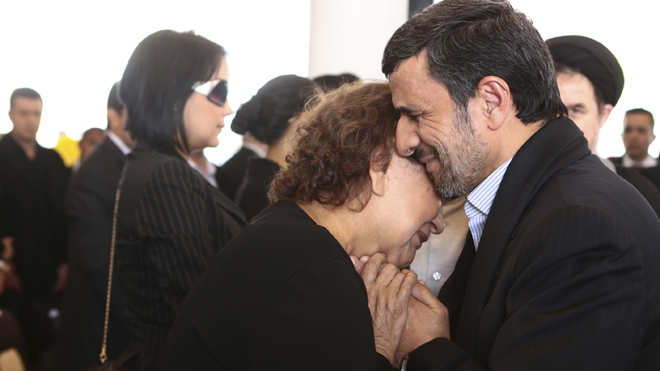
Our perceptions can tell us loads about ourselves. Take a quick look at the photo below, and take a few notes on what you see.

Mahmoud Ahmadinejad, Elena FriasKeep looking at the photo above. In case you do not already know, the photo was taken at the funeral of Venezuela’s President Hugo Chavez in March 2013. On the left is Chavez’s mother, Elena Frias de Chavez, and on the right is Iran’s President Ahmadinejad. Now, pause and take a few more notes on what you see in the photo.

Did your perceptions change between the first and second times you took notes? Before you proceed, take a moment to reflect on the values, assumptions, and beliefs that underly your perceptions.

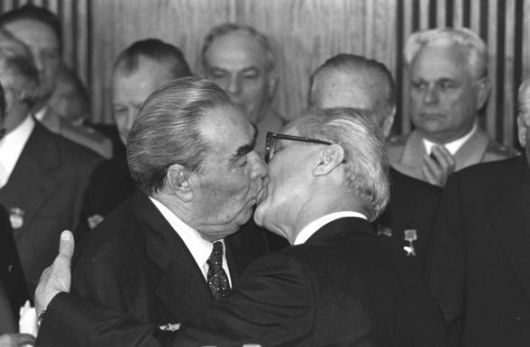
Once you’ve done that, how about looking at another photo? Same instructions: take a look at this photo, and jot a few notes about what you see. Perhaps you have already seen both of these rather iconic photos.

Breznev-Honecker_1979

Keep looking at the second photo. If you did not already know this, the photo was taken during the 30th anniversary celebrations of the Democratic Republic of Germany (East Germany) in 1979. On the left is Leonid Brezhnev, leader of the USSR, and on the right is East German President Erich Honecker. Now, take a few more notes on what you see in the photo.

Did your perceptions change between the first and second times you took notes? Before you proceed, take a moment to reflect on the values, assumptions, and beliefs that underly the perceptions you noted this second time around.

Finally, compare your perceptions, and your values, assumptions, and beliefs about both of these photos. In what ways did you respond similarly? In what ways differently? Why?

FIRST PHOTO
In fact, President Mahmoud Ahmadinejad was criticized for consoling Chavez’s mother in this way; she is not a member of his family, and thus, such touching is haram or forbidden. While my research shows the photo to be real, there are reports of the photo being doctored in order to cause problems. I personally find the actions captured in the photo quite believable: a man consoling a grieving mother and bridging cultures in the moment. Below are two sources for those of you curious to learn more about this photo and the response to it:

  1. Daily Mail article
  2. IranPulse English language news blog

SECOND PHOTO
It was quite commonplace for Communist leaders to kiss on the mouth as an expression of brotherhood and solidarity. This iconic photo was taken by Régis Bossu, a freelance photographer for European Stars and Stripes, Stern, Spiegel, and Sygma. Most observers of the time viewed this Brezhnev-Honecker kiss as more enthusiastic than usual. The photo was quickly and widely circulated.

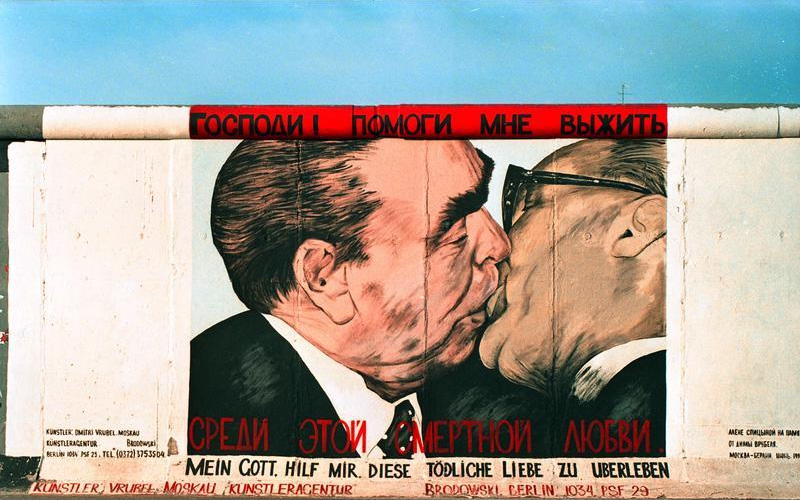
Berlin, East Side GalleryIn 1989, during the euphoria following the fall of the Berlin Wall, Dmitri Vrubel painted a replica of the kiss on the Eastern side of the Wall. If you wish to learn a bit more about the photo and the painting, here are a couple of links:

  1. Lite Strabo Stories from History blog
  2. Wikipedia

While we can learn much about history and politics from photos such as these, we can also learn about customs and values. And, perhaps most importantly, we can learn to see our own cultural filters and biases a bit more clearly. Exercises such as these can be used to complement the learning we gain about ourselves via the Cultural Detective Self Discovery.

Coincidentally, when she was proofreading this post for me, our editor, Kathryn Stillings, shared with me that she had just read this article, about our perceptions (socially constructed) of race: What Does “Black” and “White” Look Like, Anyway?: Obama and His Grandpa. I share it with you as it would seem to support, as well as build on, the point of this post. I particularly love the morphed photos at the bottom of the article.

Before I close, I’d like to thank a few of the members of SIETAR Argentina, who recently used the second photo above in a training, and reminded me of it after so many years.

And, in conclusion, I leave you today with a few quotes:

There is no truth. There is only perception.
—Gustave Flaubert

Science is nothing but perception.
—Plato

Studies have shown that 90% of error in thinking is due to error in perception. If you can change your perception, you can change your emotion and this can lead to new ideas.
—Edward de Bono