Cuisine, Culture and Performance

10438640_715299471895885_8128051140435588302_n“A collective. International. Pushing boundaries. Longing to discover new cultures and exchange knowledge. Collaborative. Find your tribe. Exploring the unknown, adapting to uncertain situations, charting new territories to sharpen creativity…”

Does this sound to you like a Cultural Detective? It’s actually taken from the home page of the Gelinaz! website, a collaborative of international chefs doing amazingly creative things. I sooooo want to attend one of their dinners!

Below is a short introductory video to what they are all about:

The group’s tagline is “Cook. Art. Performance.” They last got together at the Villa Panna estate in Tuscany in July for a four-hour, 13-course feast, including a dish with seven varieties of Latin American potatoes, a soup of pig’s blood and chocolate, tripe with wild mushrooms, and crispy pig’s head. Ok, that probably would not have been my favorite meal.

The name “Gelinaz!” pays campy homage to the virtual band “Gorillaz,” who play a fusion of rock, hip hop, reggae, electronica and pop. Like the band, Gelinaz! members combine different genres of cooking in experimental ways. They aim to “build bridges between cuisine and other means of expression,” according to Andrea Petrini, the Italian food writer and founder of the group.Thus far their meals have included Japanese dance, a violinist playing Iron Maiden, and various topless performances.

Gellinaz! reminds me of the myriad of innovative ways you are using Cultural Detective to build intercultural competence in NGOs, communities, faith traditions, at universities, for study abroad, and in multinational organizations. Be sure to share with us your designs and ideas! Together we can change the world.

Bananas!!! Training Activity and Nourishment

images

Click on the audio player above to listen to the “Banana Boat Song” by Harry Belafonte as you read this post.

“Vitamin A deficiency is probably the third largest public health problem in the world,” according to James Dale, Director of the Centre for Tropical Crops and Biocommodities at Queensland University of Technology in Australia. “Somewhere between 600,000 and two million children die every year of Vitamin A deficiency, and another million or so go permanently blind. We’ve relied on supplements for a long time to fight malnutrition,” but supplements can be expensive, and many people don’t want to take them.

Stephen Buah, a researcher at the same institution, chimes in, “Ugandans consume about 1.5 kilograms of banana a day, so we’re talking about 400 to 600 kilograms a year. A recent health survey has actually shown that up to 30% of children in Uganda are Vitamin A deficient, and a similar figure goes for women who are pregnant.”

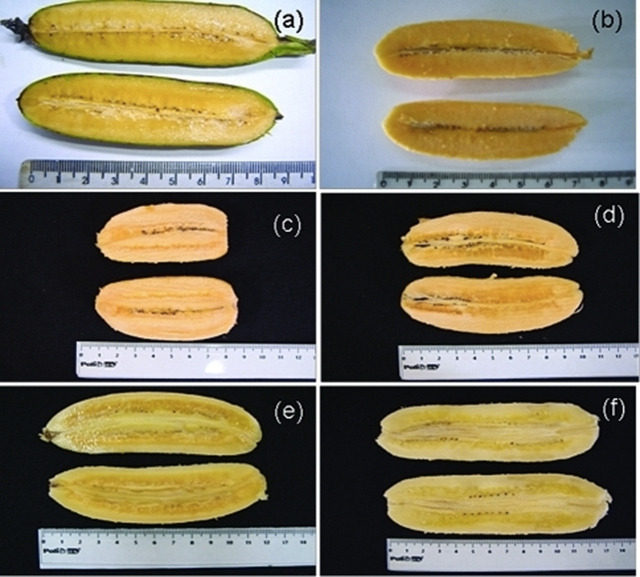
Enter a new project to bio-fortify the East African Highland cooking banana, a staple in the Ugandan diet. Our bodies convert beta-carotene to Vitamin A, so the idea is to increase the naturally occurring beta-carotene in the banana through bio-fortification, using a Papua New Guinean banana. The project has been funded by the Bill and Melinda Gates Foundation since 2005, and the “super-bananas” have just been cleared to begin human trials in the USA.

You may firmly believe that GMO foods are not the answer to world nutritional deficits, or you may applaud this effort. Either way, the project involves cultural twists and ramifications, as such projects always do. This is the interesting part for a Cultural Detective.

Beta-carotene-heavy "super banana" is very orange

Beta-carotene-heavy “super banana” is very orange

Our challenge is that the beta-carotene-heavy “super banana” is bright orange inside. This could prove an impediment to Ugandans and others adopting it into their diets and using it in their traditional dishes. Here are some thoughts from a recent article in Scientific American:

“…bananas are more than just a food staple in Uganda; they are part of the cultural fabric. The Ugandan word for food is actually the same as the word for a traditional meal made of the stewed banana: matooke. Physical attributes of the fruit itself are particularly important to Ugandans, so altering the fruit could have social consequences. For example, when matooke is prepared properly, it obtains a certain yellow color. If you are a woman who prepares matooke of the incorrect color or texture for your husband, you can be beaten.”

“Furthermore, when we asked what trait farmers would like to see most improved about their crops, they consistently selected nearly every other trait before nutrition.”
—Matthew Schnurr, Dalhousie University, Canada

There are many challenges to making sure everyone gets enough nourishment; cross-cultural understanding and communication are one of them. We applaud those who are taking on these challenges and building bridges to enhance access to healthy food and clean water.

Speaking of bananas, I heard about an activity recently that I think might be helpful to you. If anyone knows the original source of the activity, would you please share it with me, for citation here? Thank you. The instructions and debriefing below are my own, based on the idea of exploring how people peel bananas.

bananaActivity: The Banana Peel

Objectives:
Learners will discover that:
  1. Many of us go through life believing that “our way” is “the way” to do something. We often fail to investigate—or even notice—if there are other approaches to performing a task (such as peeling a banana).
  2. “Common sense” (e.g., how to peel a banana) is really “cultural sense,” common only to those who share the same learned patterns of behavior.
  3. “My way” is not the only “right way” and, in fact, may not be the “best way” for the purpose.
  4. Having alternatives, diversity, and knowing more than one way to do something are assets.

Procedure:
This is a terrific activity to conduct prior to a break, or mid-afternoon when learners may be hungry. After making sure your learners have no banana allergies or other restrictions, give each of them a banana.

Ask your learners to peel their bananas and hold onto the peels. Let them know they are welcome to eat the bananas, as well.

That’s it—quick and simple! Remember, the key to experiential learning is the meaning-making that takes place during the debriefing.

Debrief:
The debriefing is the most important part of any learning activity. It is where sense is made of the experience.

  1. Ask learners how they peeled their bananas. Have a few people share.
  2. Ask learners how they learned how to peel a banana. Who taught them? When? Where? Explain to them that this is how culture is learned. Culture is our “common sense,” the template (learned behavior, habits) for how we make decisions and interact with the world.
  3. Ask learners if everyone in the group peeled their bananas in the same way. Encourage learners to look around and discuss. Usually there will be, at minimum, two different ways learners peel their bananas, particularly if you have an international or multi-ethnic group. Many people peel from the stem end, but others peel from the “top,” as illustrated in the video below.
  4. Ask learners if they realized that others were peeling their bananas differently than they were. If they did not, why not? What “blinded” them to seeing the difference? What assumptions did they make?
  5. Ask learners if they think their way of peeling a banana is better than another way. You can ask a couple of learners to speak to this, even setting up a debate if appropriate for your context. You can even make a list of pros and cons of the different methods of peeling. Be sure to note that people tend to be perfectly happy with the way in which they are used to peeling a banana. It’s the same with culture. We think “our” way of doing things is the “right” way or, often, the “only” way. Then, we discover there are other ways of doing things.
  6. Summarize main learning points, e.g., that differences provide us alternatives and add interest to life. Rather than feeling threatened by difference or resisting it, asking people to “fit in,” we can learn from differences and choose the best ways for our team, family, or organization. In a sense, we can create a “third culture.”

I hope you’ve enjoyed the activity, as well as the info on the super-banana. If you have a favorite cross-cultural training activity that you use in conjunction with Cultural Detective, please share it! We’ll be happy to credit you and link to your page. Together, we can build intercultural competence, justice, and respect in this world of ours. Thank you for being with us on this journey!

The Almadraba: A Dying Cultural Tradition?

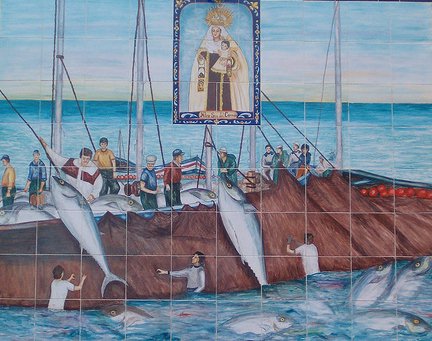
almadraba10Every May, thousands of Atlantic bluefin tuna (atún rojo) swim through the Strait of Gibraltar at over 30 miles per hour to spawn in the Mediterranean. And for 3000 years fishermen have intercepted the large tuna in a fishing tradition called the almadraba in Andalusia and tonnara in Sicily.

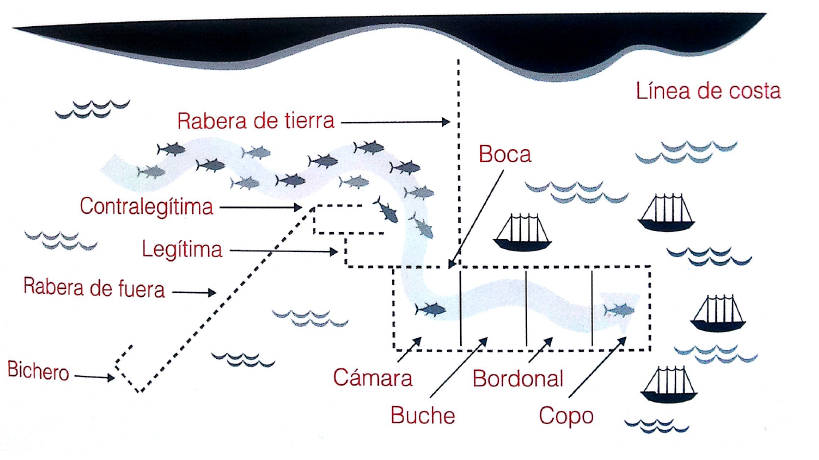
The almadraberos are often sons, grandsons, and great-grandsons of almadraberos, and feel a brotherhood with their fellow fishermen. They tend to be proud and tough, with a strong respect for history and the sea. They catch the tuna by putting out a maze of underwater nets that the bluefin swim through until they reach a final pool, el copo (diagram of a net, below).

LA ALMADRABA

Tuna swim east to the Mediterranean, going through various areas of the net until they reach the “copo,” where they are hoisted up out of the water.

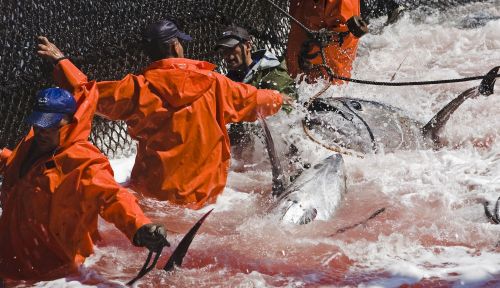
Once the copo is filled, the fishermen circle their boats, working together to haul the huge net to just a few feet below the surface—the levantá del atún, or “raising of the tuna.” There are so many tuna jumping around in such a shallow space above the net that it creates the illusion that the water is boiling.

At this point the copejadores assume the treacherous task of jumping down into the net to hook and hoist the often 1000 pound-plus tuna, whose tails may be longer than the fishermen are tall, into the surrounding boats. Most copejadores have suffered many injuries over the years: broken knees, ankles, wrists, and noses. Some people call the practice slaughter, equating it to what they perceive as the savagery of bull fighting, while others perceive it as a noble tradition.

PESCA-ALMADRABA

So what is endangering the historic almadraba tradition?

  1. Tuna have been overfished: there are half as many bluefin tuna in the Atlantic as there were 39 years ago. Some almadraberos report that they used to catch 1000 tuna a day, whereas now they are lucky to catch that amount in an entire season. The Atlantic Bluefin Tuna (thunnus thynnus) has been listed as endangered by the International Union for Conservation of Nature (IUCN’s “red list”) since 2011. But conservationists do not generally blame the almadraba for the species’ decline.
  2. Technology such as sonar tracking and huge vessels have brought stiff competition to traditional fishing methods such as the almadraba. Most research that I have seen in a web search equates overfishing to the larger, high-tech vessels and, ironically, to tuna farming—fishermen catch the young bluefin and then fatten them up in farms—rather than to traditional fishing methods such as almadraba.
  3. Do you like sushi? Japanese regard the cold-water Atlantic bluefin as the best fish in the world for sashimi, and atún rojo has turned the southern Spanish coast into a gastronomic destination. With prices for bluefin in Tokyo’s Tsukiji fish auction higher than ever (you’ll remember one fish sold for $1.8 million in 2013), demand has skyrocketed, which has resulted in the overfishing.tuna2_l

Video of the raising of the nets:

Video of how the almadraba nets work, and a bit of history and geography:

Video of the levantá del atún, right through to the filleting of the meat:

What traditions in your culture are in danger of extinction? How do we determine if it’s time to let go of a practice and flow with the changing times, or hang on to our ancestral practices? And, what makes a tradition a tradition?

Remember How We Used To Celebrate? Culture and Holiday Rituals

image002

Photo from Martha Stewart

Below is a guest blog post by Carrie Cameron, co-author of Cultural Detective Russia.

Another year of enjoying Halloween in the USA just passed. Each year, I notice a bit more shifting of the traditions. For example, commercial haunted houses are proliferating; they seem to be a way for teenagers and young adults to express their Halloween fervor. These days, children don’t only go trick-or-treating around their own neighborhoods as when I was a kid, but often their parents will drive them to neighborhoods that are known to celebrate the evening more vivaciously. Many houses and yards are decorated more and more elaborately every year, probably analogous to the Olympic-grade “competitive” Christmas decorating seen in some parts of the US these days. It’s not just a jack-o-lantern on the porch anymore! And, living in Texas, I have noticed that, over the last five years or so, Mexican Day of the Dead-style imagery has become very popular and even somewhat trendy. (Sometimes I want to remind people that Christians already have two days of the dead, forgotten by many: All Saints’ Day on November 1 and All Souls’ Day on November 2.

I look forward to Halloween and all the fall and winter holidays every year. Like most people over the age of, say, 30, I have fond memories of the way holidays were celebrated when I was a child, and contrast these memories with the way the holidays are celebrated today. But I never realized how intensely emotional and culturally bound these personal representations of holiday traditions are until I participated in an intercultural panel discussion of holidays, years ago, at a SIETAR meeting (Society for Intercultural Education, Training and Research).

modernmarketingjapan.blogspot.com

Photo from modernmarketingjapan.com

The discussion began with an Anglo-American woman telling the story of how the practically sacred—for her—ritual of decorating the Christmas tree was misunderstood by her Japanese immigrant husband. He saw it as merely one more task in the holiday preparations, like wrapping gifts or putting lights on the house. She didn’t understand his apparent indifference because the tree-trimming ritual was such a fundamental part of her assumptions about Christmas. This triggered an argument that neither of them really understood. This same woman was shocked to find out, sometime later, that one of her closest friends from a similar background also viewed tree-trimming as a task, rather than a pleasant ritual.

Photo from the Long Beach Post

Photo from the Long Beach Post

Next, an African-American man related how his grown children had begun to insist on celebrating Kwanzaa, which he definitely wasn’t interested in. After a couple of years, he began to accept and enjoy it, and Kwanzaa eventually became an important new part of their family life together.

Photo from dawn.com

Photo from dawn.com

A Pakistani man told of how he felt excluded from the apparent “universal” joy of Christmas. He struggled to understand why small gifts were presented to children in socks—didn’t that seem unhygienic? (This upset some of the Christians in the group.) He also shared his feelings about the “universal” joy of Eid, and how that deep down, he couldn’t really understand the indifference of his US American friends and colleagues when Eid came around.

A Mexican-American woman found it puzzling how many Anglo-Americans celebrated Easter as a seemingly frivolous children’s holiday. To her, it was a solemn occasion. The Asians saw New Year’s as a time to be with family, rather than at the most glamorous or wildest party of the year. (Do any of the US Americans remember having a family New Year’s Day dinner, or do you still celebrate the holiday in that way??)

But for everyone in the room, the most touching moment was when a woman told her story of growing up mainstream Christian in the US, and how her parents converted to another sect when she was about ten years old. The new sect did not permit Christmas to be celebrated with gifts, decorations, feasting, and parties—it was a serious and purely religious event. As she told of how she and her brother had suddenly become walled off from all of the traditions, activities, images, music, and food surrounding their previous understanding of Christmas, she began to cry, having never had the chance to consciously mourn and articulate this loss. All of the hearts in the room were breaking for her: same holiday—different symbolism. At that moment, I realized just how truly profound a part of our being our cultural symbols of the holidays are. They are irrational, deep within us, and sometimes the source of surprisingly intense emotion.

Having the opportunity to verbalize, compare, and process these intimate personal and cultural meanings was a tremendously valuable experience for everyone in the room. Going beyond the “face value” of the symbols to their significance was a powerful bridge-building moment, and I think we all felt the universality and peace of the holidays a little more brightly that year.

Post-script: As I was writing this, I received a text from a friend in Japan about a “peanut bird wreath.” It was accompanied by a photo of a woman wearing a pin that consisted of a silver pine cone, a yellow ribbon, and a cluster of peanuts in their shells. My knee-jerk reaction, seeing the word “wreath” and a silver pine cone, was that this was some kind of Japanese interpretation of a Christmas item. I immediately thought, “The ribbon is not supposed to be yellow, and peanuts have nothing to do with Christmas.” A few moments later I received a follow-up text informing me that they were at the Bird Festival. Gomen nasai. I guess I am a cultural being!

3 Fundamental Skills for Intercultural (and Life) Effectiveness

Chef

A, B, C of intercultural effectiveness, and a film recommendation

For well over twenty years I travelled 25 days out of every month. I loved it. Always a new place, thriving off the energy of the people I had the pleasure of working with, each week or two entering a new industry and learning how things work. The fundamentals of human interaction that I dealt with did not vary significantly by industry; the content, however, did.

When my son was small, he and the nanny travelled with me. As he got older, he accompanied me. He sat through my training workshops, he accompanied me on some consulting gigs, and he enjoyed babysitters, daycare and children’s learning clubs around the world. Ten years ago, when my son was about eight, I began scaling back my travels. The impetus for scaling back was that my son was now old enough that it became challenging to take him out of school; he would miss too much. And, there was no way I was going to miss his childhood! An additional reality was that the constant travel was ruining my health, I always felt tired, and, I was honestly just ready for a change.

So, I stopped the 25 days/month travel schedule. It was difficult to say “no” to interesting and high-paying work, but I’d set my priority. I started staying home. I started a small publishing project (Cultural Detective). I absolutely loved it. I was now able to take time to cook regularly, a passion I love. I was able to exercise daily, and meet new people locally via exercise classes and groups. I was able to go out for coffee with girlfriends, and to be present for friends’ major life events—so many things I’d missed when I travelled a lot. Of course, I also missed the travel, and seeing my far away friends.

Now, when I occasionally travel (every couple of months), I find myself grateful for the experience rather than resentful. The journey is enjoyable again. Thus, on a recent flight to Vienna, I relished having two seats to myself. I was grateful for the free-flowing, high-quality red wine on Tirolian/Austrian Air. I read the in-flight magazines on two different airlines and got several blog post ideas. And I very much enjoyed watching a Blended Culture movie entitled, Chef.

The film is an enjoyable reminder of some fundamental intercultural competencies and life truths…

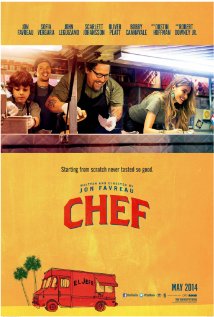
Chef is a 2014 movie starring Jon Favreau, Scarlett Johansson, Dustin Hoffman, and Robert Downey, Jr., about a chef whose family and career have both become frustratingly dull. He’s caught up in the busy-ness that can be modern life, and failing to pick up on the cues that his relationships and creativity require a major shift. He reminded me a bit of myself, actually. Have you ever found yourself in a rut? Going through the motions, not paying enough attention to what really matters, focusing primarily on accomplishing all the tasks on your plate?

In true Hollywood style, by the end of the movie the chef figures it all out, and happiness reigns as the credits roll. Along the way, the film is an enjoyable reminder of some fundamental intercultural competencies and life truths.
  1. Attentiveness: Stay alert to what’s around you (family, friends, work environment), as well as to what’s inside you (your passions, talents and desires). Prioritize your activities so that you feed what’s important to you and minimize that which diminishes you. Staying externally attentive will help ensure that you adapt appropriately in cross-cultural situations, while internal attentiveness will help ensure that you do not lose yourself, your ethics and your talents, in the process.
  2. Bravery: Don’t be afraid to take risks. There are many euphemisms for failing to do what we know we need to do: “going through the motions,” “paying the bills,” “not rocking the boat,” “keeping one’s head low.” Staying true to oneself and what you know to be “right” often requires bravery and trust. I’ve seen many times that foreigners or outsiders can effect positive and needed change to a system when old-timers can not. I’ve worked with many people who try so hard to “fit in” to cross-cultural situations that they lose who they are, their authenticity. Be brave enough to adapt, and be brave enough to be yourself.
  3. Creativity: If you’re not feeling energized, if you fail to see connections between the different areas of your daily life, if you’re not frequently generating ideas, experimenting with innovative projects, or exploring new territory, take note. You are probably pushing and trying to do too much too quickly. Slow down, step off the rat race, refresh, restore and recuperate. You are far too precious, and your insights and talents are too needed, in this world of ours. How can any of us bridge cultures if we don’t have access to our innate creativity? And, let’s remember: it takes all of us to be creative if we are to form a truly inclusive society or organization.

Linked to the My Global Life Link-Up at SmallPlanetStudio.com

User Tip: Bridging Cultures

Bridging Cultures2
One of Cultural Detective‘s valued and respected long-time users, Meg Quinn, recently shared with us a new technique that she has developed for introducing her learners to building more powerful cross-cultural bridges.

When she introduces the Cultural Detective Worksheet, Meg asks participants to think about three different approaches:
  1. Assimilation (bridging from just one side)
  2. Adaptation (“true” bridging in the CD sense), and
  3. Time Machine (What might the parties do/have done before all this came to a head? This is how some of the author-suggested Bridges in the CD series are framed.)

Meg has found that such an introduction helps learners to move beyond their initial responses, think more deeply and more creatively, and develop bridging ideas that are more realistic and enduring.

Thank you for sharing, Meg!

Trainers and educators love the flexibility that Cultural Detective allows them. It is easy to adjust your presentation to help your audience think in more innovative ways, as Meg has done. And whether working with students, experienced professionals, government officials, or your local community group, you can always find a “hook” that resonates with the participants and gives them the opportunity to understand and apply the CD Method to their personal lives.

Readers, please be sure to share with us your tips, designs, and experiences; we are happy to pass them on.

Clean House and Change the Bedding to Greet the Lava

Photo by Pahoa-based photographer Sean King/Caters

Photo by Pahoa-based photographer Sean King/Caters

The gem of a video clip below offers a glimpse into an aspect of native Hawaiian culture of which many people may be unaware. As lava flows on the island, there are vast cultural differences in how the native and immigrant cultures view the event. While native Hawaiians prepare to welcome a guest, others talk about ways to change the course of the lava to flow in a more convenient direction.

I am so proud of what the government in Pahoa, district of Puna, county of Hawaii is doing, and not doing, to “divert” the lava flow that is destroying homes, businesses, and lives. The clarity, patience, and wisdom they show in their answers to community members’ questions make me wish they worked in my county.

In the video, you will see Pi’ilani Ka’awaloa, an INCREDIBLE cultural resource person!!! She demonstrates wisdom in her people’s truth, and openness to teaching as well as acting in collaboration with others. She tells us that the native Hawaiians have adjusted to western culture, in that they now “buy” their land. But she also tells us they will never “own” it; it belongs to the goddess Pele.

“We would never tell Pele to go here or there in her own home! If she feels she needs to clean her house, then let her clean her house!”

I believe you will very much enjoy the cross-cultural differences visible in this Question and Answer session after a county informational meeting on the lava flow. What a challenge to bridge two such vastly different cultural orientations, on such a very sensitive subject as saving our homes and businesses.


I learned about what is going on in Pahoa from a friend I have only met virtually, Tim Sullivan, who lives there. Some people say that online “friends” aren’t real, but I can assure you that via social media I am now connected with many people whom I respect and learn much from. Tim recently wrote an extremely insightful and powerful blog post on the cross-cultural aspects of the lava flow in Pahoa. Be sure to check it out.

I think this short video clip would be an excellent piece of material to debrief using a Cultural Detective Worksheet. Give it a try and let us know how it goes! And may blessings be upon all those who make Pahoa their home.

5 Things Mexicans Say to Avoid the Word “No”

Excellent article by Susannah Rigg

MEXICANS ARE VERY POLITE and can seem downright formal compared to residents of other Spanish-speaking countries. People greet each other in elevators, on buses, and shared taxis almost always with “con permiso,” — “with your permission,” — and “propio” — “you may grant your own permission, as you don’t need mine.”

I love all this about Mexican culture. However, it took me a long time to realize that, because of all the politeness, Mexicans really struggle to say “no” and will find any number of ways to avoid the accursed word. Here are just a few examples.

1. Yes

It’s very common in Mexico that yes means no….

Read more here

How to Get Promoted in 3 Hours

mexican-american flagsI’m going to tell you a real story, of an actual person, who was promoted to a management position from an administrative assistant position because of a three-hour workshop she conducted for her bosses.

How’d it happen? The woman, let’s call her Yolanda, worked for a very large multinational in Texas. The firm, of course, did a lot of business with Mexico. Over the ten years or so Yolanda had been with the company, she’d worked for a succession of bosses, most of whom did not understand Mexican culture and had committed many errors, losing opportunity and revenue, as well as credibility, for themselves and the company. Yolanda is Mexican-American, and her bosses’ actions used to frustrate and embarrass her. She could see that her bosses could be a lot more effective, she wanted to help, but she didn’t know where to begin to explain Mexican culture to her bosses. She was an administrative assistant, not a consultant, executive coach, or trainer.

Enter Cultural Detective. Yolanda looked over the Cultural Detective Mexico package. It made sense to her. She intuitively understood the values in the package’s Mexican Values Lens. She could tell stories from her own organizational experience to illustrate each value and correlating negative perception. Yolanda had so many stories, stories that were real, that had cost her company money and, in some cases, staff.

Yolanda got her four bosses to agree to a three-hour “lunch and learn,” during which she’d teach them about Mexican culture. She was excited, but she was also scared. She wasn’t a facilitator, she’d never studied culture or cross-cultural communication. But, she knew her organization, she knew her bosses, and she knew both US American and Mexican cultures. So, she gave the workshop her best.

At the outset of her seminar, Yolanda told her bosses a story—a story they clearly recognized from their own experience, a story of a time they’d been frustrated, and less than successful. They all knew the details; she had only to remind them of the event she was talking about. Yolanda drew a Cultural Detective Worksheet on the flip chart. She asked her bosses what they had done in that situation. Then, she asked them to think about why they had done what they’d done—what was the underlying “common sense” that motivated their behavior? That wasn’t so easy, but they did it. And it proved pretty insightful. They hadn’t consciously thought about the reasons for their actions, hadn’t spent time thinking about how culture-bound their behavior was. This was Yolanda’s first successful “aha” of the three hours.

Next, she asked them what their Mexican colleagues had done in the given situation. Yolanda encouraged her bosses to quote the words that were said and the actions the Mexicans took. Of course, her bosses said things like, “I couldn’t trust them,” “he wouldn’t tell me the truth,” or “they went behind our backs,” but on the flip chart she recorded the actual words and behavior of the Mexican colleagues. Yolanda then asked her bosses to do the same thing for the Mexicans that they had done for themselves. She said, “Maybe your colleagues really were dishonest, untrustworthy, conniving. But, for the sake of learning, for a few minutes let’s give them the benefit of the doubt. What could have been the positive intentions behind their words and actions? If we look at your side of this Worksheet, you have all positive intent, nothing negative. Let’s see if we can’t fill in their side the same way. Maybe at the end we decide to throw it all out, decide that they were just bad people. But first let’s see.”

Her bosses came up with several guesses—possible motivators of their Mexican counterparts’ behavior. Then Yolanda filled in a couple more, explaining the reasons these colleagues had probably acted and responded the way they had. Her bosses said things like, “That makes sense,” “I’d never considered that before,” and “so I did exactly the wrong thing; I shot myself in the foot!” Her bosses experienced their second “aha” of the workshop.

Next, Yolanda handed out a copy of Cultural Detective Mexico to each of her bosses. She walked them through the Mexican Values Lens, telling stories from her organizational experience. She asked them how they felt about each of the values, and reminded her bosses that each Mexican is unique—that the values in the Lens are societal tendencies. After introducing the Values Lens, she focused her bosses’ attention back on the Worksheet. Now they had lots of ideas about why their Mexican colleagues might have acted the way they did. And even more importantly, her bosses had lots of ideas on how they could have acted in ways more conducive to achieving their business objectives—to bridging cultures. A third round of “aha” learning was achieved.

The three hours sped by quickly. Her bosses learned so much. Their ability to do business in Mexico and with Mexicans was greatly enhanced. They learned about themselves, about their own personal and US cultural values, which enabled them to better explain themselves to any new colleague, whether Mexican, Chinese, or US American. And, very key to me, Yolanda’s bosses learned what a valuable asset she was as a cultural resource. They began using Yolanda as a sounding board, asking her to help them write emails and reports, and also to help plan strategy. Within a couple of months, Yolanda left her job as an administrative assistant because she was promoted to a more prestigious and much better paid management position. She achieved her dream of being able to travel for business, and she loved the kind of work she was able to do. Her company gained an employee who was confident and able to use her bicultural heritage in ways that added value.

Now, I’m not promising that using Cultural Detective will get you a promotion, but if you and your organization work across cultures—and what organization doesn’t these days—you will definitely gain a whole lot of skill and expertise by using Cultural Detective. Add it to your priority list! Start building your intercultural competence by attending one of our free 90-minute webinars, or subscribing to (and using!) Cultural Detective Online today.

Let’s Investigate What Makes Cultural Detective Unique

ICToolsCollage

Country Navigator™, GlobeSmart®, CultureWizard™, Cultural Navigator® and their logos are the property of their respective parent companies.

We get calls and emails every day, asking us how Cultural Detective compares with some of the other intercultural tools on the market. Thank goodness people are passionate about developing intercultural knowledge and skills, and that there are so many intercultural tools available! That’s a big change in the last two decades, and a huge step in the direction of building intercultural competence in our organizations, our communities, and ourselves!

Most of the well-known development tools in the field—Cultural Detective®, Country NavigatorTM, GlobeSmart®, CultureWizardTM, and Cultural Navigator®, among others, use a values-based approach to understanding cultural differences. Such a method has proven significantly more effective than a “do’s and don’ts” approach, because behavior depends on context. Thus, do’s-and-don’ts advice is frequently erroneous because it has little or no connection to a specific situation you may find yourself confronting.

In addition to a shared focus on values, these tools share the aim of improving cross-cultural understanding. That, however, is about where the similarity ends. Comparing Cultural Detective and the other tools on the market is difficult because, according to leading intercultural competence researcher Doug Stuart, “it’s like comparing apples and oranges.” Both fruits are tasty, and they go well together in a salad, but they are oh-so-different on nearly every other criterion!

Goals

Cultural Detective (CD) is a process-based tool designed to improve communication and collaboration. The other tools mentioned above are designed to compare and contrast cultures. There are strengths in both of these goals, and they can complement one another very well. But the differing goals make these tools fundamentally different species.

Dimensions

Dimensions-based tools allow users to easily compare whether Chinese are more group-oriented than Japanese or Brazilians, and how we personally compare with the national averages of each of those places. The creators of the best of these tools conduct a lot of research to produce statistically reliable comparison data. According to Doug, the strength and weakness of a dimensional comparison (for example, where a culture or an individual stands on Hierarchy vs. Egalitarianism) is that we get a clear general picture of how different two populations may be, but no specifics on how that difference looks behaviorally. The numbers on the scales produced by these tools are culture-specific, but the categories are universal and broad.

Process

Cultural Detective helps develop skill and strategy, both culture-general and culture-specific. The core method is a process designed for use and practice over time, in specific situations and multiple cultures, so that it becomes second nature. Thus, Cultural Detective provides appropriate stimulation at all stages of intercultural competence development. Users develop critical thinking skills to discern similarities, differences, and how best to leverage them for mutual benefit.

Context

Cultural Detective is contextually grounded—the method centers on stories or critical incidents. This reinforces the need to understand people as complex individuals who are influenced by multiple cultures including gender, generation, professional training, sexual orientation, spiritual tradition, organizational and national culture, and lived multicultural experience—not just passport nationality.

Inside-Out vs. Outside-In

Cultural Detective looks at culture from the inside-out. Values Lenses focus on the core values natives of the culture hold near and dear. These are the same values that often confuse non-members of the culture and get in the way of cross-cultural collaboration. This approach enables a native, or someone very familiar with a culture, to explain the culture in a meaningful way to a newcomer. We might consider these Value Lenses as extremely culture-specific “themes” (internal discourse, logic or “common sense”) that are intimately tied to behaviors, and easily and meaningfully illuminated through stories. A culture is a unique expression of these themes, which are difficult or impossible to capture successfully within broad global dimensions.

The other tools mostly look at culture from the outside-in, comparing national cultures according to well-researched categories such as Power Distance or Achievement/Ascription. A table of cultural dimensions that contrasts China and Japan tells you nothing practical about how people behave. Comparing Cultural Detective Values Lenses for China and Japan offers a completely different, immediately applicable line of inquiry: what are the underlying motivators of people’s behavior? Both approaches have their strengths, and many successful coaches, trainers, and educators use them in combination.

Self-Assessment

Many of the other intercultural tools on the market provide users a self-assessment, which, when completed, statistically compares them with their home society and other cultures. Users love seeing themselves, their values and style, especially when correlated with numbers or illustrated in a chart—it’s interesting and engaging.

Cultural Detective users reflect on their personal values, developing a Personal Values Lens that they can compare and contrast with those of team members, their own or other cultures. One approach is dimensions-based, the other based on qualitative analysis. Used in combination, one enhances the other. But they are two very different animals.

Experiential

Cultural Detective Online encourages learners to upload and analyze real stories from their own lives. Users can easily integrate the system’s Values Lenses and Worksheet into analysis of their personal critical incidents. They can invite team members to help them fine-tune the story and the debriefing. As Doug says, “While the cultural themes of Cultural Detective Value Lenses are very transparent to natives and, thus, easily illustrated by stories, the dimensions-based tools usually require an experienced cultural trainer to create ‘critical incidents’ illustrating universal dimension differences, which are more difficult to specify behaviorally across cultures (unless one is very familiar with both cultures). Simply summarized, universal dimensions are generic; they provide a good ‘first look’ at how different two cultures might be. To actually understand those differences as they play out behaviorally, we need the Cultural Detective’s Value Lenses.”

Cultural Detective is not your father’s intercultural tool, to paraphrase an auto industry advert. It utilizes a “culture-specific” approach, while simultaneously building users’ “culture-general” understanding. It provides not just a knowledge base, but a personal skill base from which to strengthen intercultural competence. Best of all, it can be used in a variety of settings to help facilitate intercultural communication and collaboration. Our global team of 130 continues to work hard to collaboratively build a productivity tool that will deepen your learning and jumpstart your effectiveness. Give it a spin! Join us in one of our upcoming free webinars to learn more, and receive a 3-day pass to Cultural Detective Online!