Cultural Detective as a Facilitator’s Magic Tool

IMG_6335Guest blog post by Tatyana Fertelmeyster, co-author of Cultural Detective Russia,
connecting.differences@gmail.com

First of all a disclaimer: I have a long-lasting love affair with Cultural Detective and see it as the favorite tool in my toolbox, good for almost anything where training or coaching is concerned. It does not mean that I try to squeeze it into every design or set of handouts I do, but it is a go-to resource. In this short post I’d like to invite you to consider the Cultural Detective Model as a very powerful mechanism for effective facilitation of any process (training, meeting, academic classroom learning, etc.) that you might be facilitating.

Let’s say you come in all ready and prepared to teach, but for some reason the group is just not following you, no matter where you are trying to lead them. Observe. Observe the group and observe yourself: who is doing and saying what here? Ask yourself my favorite question: assuming they have a reason to respond to my efforts in that strange way—what might that be? Take your next step in accordance with your analysis and not in accordance with your initial brilliant plan that just flew out the window (assuming it had a good reason to fly out the window—what might that be?)

Say you’ve got yourself a difficult participant (you know the kind I am talking about, though yours might look nothing like mine). Take a deep breath and ask yourself: assuming this person’s behavior comes from some place of value, what might that be? To get really good at it, practice on significant others. If you master doing it with teenagers, the whole world will be yours for the taking.

I owe one of my best co-facilitation experiences to Cultural Detective as well. A few years ago Kate Berardo (CD Self-Discovery and CD Bridging Cultures) and I were teaching a class at the Summer Institute for Intercultural Communication (SIIC) together. It was our first collaboration. As we started preparing for the class we talked about ourselves using the structure of the CD Value Lens: this is what I bring to this project, this is how it can be instrumental, and this is how I can be a pain in the neck for somebody who operates differently. I don’t know too many people whose style as is different from mine as Kate’s is. It could’ve been a huge disaster. Instead we were able to really combine our strengths, which is such a wonderful alternative to drowning in frustration over “how come you are not like me?”

If you want to strengthen your skills as a facilitator, come join me this July in Portland, OR at the Summer Institute for Intercultural Communication. I will be teaching three workshops incorporating Cultural Detective in various ways:

I hope to see you there!

A Design for Incorporating Cross-cultural Effectiveness into Existing Programs

arton235-88ad2Do you have an existing curriculum or training design and wish you could simply add a cross-cultural element to it? You probably don’t realize how easy and affordable it is to keep your existing objectives and design, while weaving in key cross-cultural dynamics using Cultural Detective. Below is a half-day design using Cultural Detective that works well in a variety of contexts with a variety of topics:

  • In business for global management, leadership across cultures, multicultural or international customer service, multicultural team effectiveness, negotiating across cultures, management and motivation, new hire orientation, expatriation (prior to departure, during the assignment, reentry).
  • In study abroad for students during orientation, their sojourn and reentry; orientations for host families; teamwork and community-building for students, receiving organizations, and host families.
  • For special purposes such as patient-care across cultures, multicultural spiritual communities, and neighborhood community building.

A Sample Half-Day Training Design Leveraging the Cultural Detective® Method

1. Objectives, introductions, agenda (of your chosen topic).

2. “What’s in it for me?” Present your topic in context; why is it important?

3. Skills for [workshop topic, e.g., leadership, teamwork, healthcare, sales, etc.] Across Cultures:

  • Tell a story or show a video of cross-cultural interaction in the context of the [workshop topic]. The playlists and videos on Cultural Detective‘s YouTube channel may give you some ideas.
  • Lead the participants through an analysis of the story (debrief) using the Cultural Detective Worksheet.
  • Once complete, ask participants what they learn from this approach (values, beliefs and “common sense” world view motivate behavior; world views are often different but all are “correct”; similar values can lead to different behavior; different values can motivate similar behavior; bridges must leverage similarities and shared objectives as well as differences/complementarities; bridges must be interpersonal and multidirectional but also organizational/systemic)
  • Summarize: What skills for [workshop topic] can we learn from this Cultural Detective (CD) approach?
  • Apply: How can participants use this CD approach in their daily work?

4. Culture-specific Skills for [workshop topic]

  • Introduce Values Lenses: what they are and aren’t; explain values and negative perceptions.
  • Introduce the Values Lens for each of the cultures in the story you told or the video clip you showed.
  • Ask participants if these values provide them further insight or deeper understanding of the incident. Do the Lenses provide any clues to help them add information to the CD Worksheet debrief? If not, fine. If yes, use that info.
  • Summarize: What skills for [workshop topic] can we learn by using Values Lenses? How can we use the Lens tools well? How should we never use the Lenses? (Lenses are guides to societal norms, and should never be used to stereotype or “box-in” individuals, but rather as clues for learning and dialogue.)
  • Apply: How could participants use Values Lenses in their daily work?

5. Knowing Oneself as a Cultural Being in the Context of [workshop topic]

  • Use a couple of the activities from Cultural Detective Self Discovery and guide participants to complete a Personal Values Lens
  • In pairs or threes, have participants share their Personal Lenses with one another
  • Have them discuss how they could best work together in the context of [workshop topic], to bring out the best in one another.
  • Summarize: What are some best practices for cross-cultural [workshop topic]? What have you learned?
  • Provide the Cultural Detective’s “A Dozen Best Practices for Cross-Cultural Effectiveness.”
  • Apply: What will you do to ensure you perform at your best in a cross-cultural [workshop topic] situation? To ensure you bring out the best in your team/clients/patients?

6. Summary and Application

  • Provide a list of skills for effective cross-cultural [workshop topic].
  • Ask participants what they have learned about themselves today as regards [workshop topic]?
  • What are the top 1-3 skills each participant wants to demonstrate to enhance their cross-cultural effectiveness at [workshop topic]?
  • How will they hold themselves accountable?

What cost does this add to your curriculum? If you are training 30 or more people, Cultural Detective Self Discovery licenses are just US$15 per participant. For Values Lenses, you can subscribe to Cultural Detective Online for less than $100 per year and project Lenses in a group training environment. The subscription price goes down for multiple users, to less than $30 per year per subscriber.

We hope you find this sample design useful, and that you will share with us your tried-and-true designs and curricula for integrating Cultural Detective into educational or training programs. We know you do terrific work, in such a broad variety of contexts, and your designs will no doubt stimulate others’ creativity and effectiveness. Together we can build a more equitable, just, respectful world in which we collaborate for a sustainable future!

Transforming Lives: Education as an Alternative to Violence

AUN “The youth in Nigeria are beginning to speak—some with violence.
They attract attention. But others are also speaking.
The question is, is anyone listening to this plea
for western education, for training, for reform, for help?”

—Margee Ensign, President, American University of Nigeria

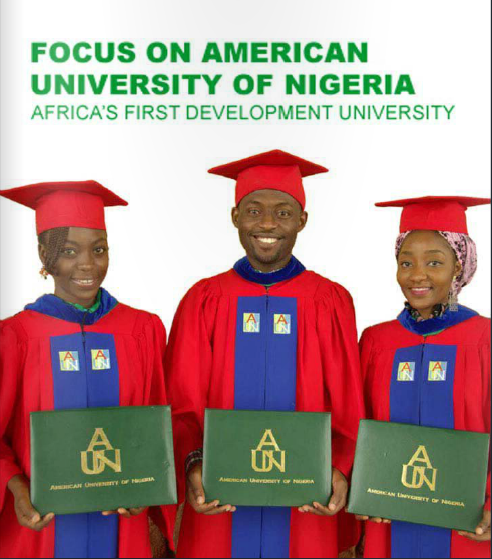
With all the grim news coming out of Nigeria these days, I thought you might want to hear about a little-known educational bright spot in the country: the unique programs offered at the American University of Nigeria, founded in Yola (capital of Adamwa state) in 2005 by the country’s former vice-president, Atiku Abubakar.

Despite Boko Haram’s year-long campaign of terror, including kidnapping over 300 girls from a school, murdering family members, burning villages, and displacing thousands of people, most families still desire an education for their girls and their boys, says Margee Ensign, President of AUN. And AUN provides it.

Both the university’s valedictorian and its graduating class speaker this year are women. The university is one of the leaders in the interfaith peace initiative. It has hired and trained more than 500 female and male security guards to protect the campus and its housing, offering each of them a free education. AUN facilities include a nursery school, primary and secondary school, in addition to the university itself. It recently dedicated a new library that has received international accolades for its efforts to create the finest e-library in Africa.

“Security comes not from our security force, but from our development and peace efforts,” Margee reports. In one of the poorest places on earth, AUN has a program to teach local women literacy and entrepreneurship skills, to enable them to generate income for their families. The university’s Peace Council has created 32 football and volleyball “unity teams” for young people to play in tournaments year-round. None of the young people have jobs, over half have dropped out of high school, and 10% have not even completed elementary school. Sports team members study a peace curriculum focused on building understanding and tolerance. The unity teams help ensure that these youth stay active and involved in their communities—making them less vulnerable to recruiting by terrorist groups like Boko Haram.

This kind of creative programming doesn’t happen by accident. Margee is a tough, dedicated, innovative, and tireless educator. Her extensive experience in administrative and faculty positions in universities in the USA (including Columbia University in New York, Tulane University in New Orleans, and the University of the Pacific, Stockton, California), and her interest and experience in international development in Africa, make her well-prepared to be president of AUN.

“I met with about 80 women in the [AUN entrepreneurship] program…They wanted to learn English, Nigeria’s official language, so that they could read to their children. In modern education, they knew, lay the only hope for the future.”

Margee relishes the challenges of working across cultures. She has embraced the local community culture, while building a university culture that retains important aspects of the US educational experience. After all, this is why parents are sending their children to college at AUN. She’s always recruiting—looking for people with just the right skills, willing to give their time and talent to join the international faculty and staff at AUN, a growing academic community in Nigeria.

The Cultural Detective Team believes it is possible to help make the world a better place through our actions. Yet, it isn’t always easy! Cultural Detective: Global Teamwork investigates some of the challenges involved in managing culturally diverse teams in today’s global environment, even if working in the same geographical location. What is the task? How do we form and maintain a high performing team? How do we manage the terrain or contexts in which team members work? How do we choose the right technology to support the team? How do time and space affect communication? Add culture to this mix, and it is even more complex! These are just the beginning of the challenges Margee faces each day—and she loves it!

All around the globe, dedicated, competent people are working to make a corner of the world a better place—often, not the corner of the world in which they were born and raised. Yet, they are motivated to share their skills in multiple arenas and diverse geographical locations. You probably know people that match this description—or are you one?! We’d be delighted to share their stories or yours with our readers!

With all the doom and gloom in the news, it is good to remind ourselves that generous people are doing wonderful things in difficult circumstances. A recent article written by Margee and published on the BBC.com website offers an often overlooked perspective on the area better known for the rampages of Boko Haram. We invite you to read Margee’s entire article here: “Nigerians defy terror to keep learning.”

Ecotonos: Simulación Intercultural en una Clase de Negociación en Colombia

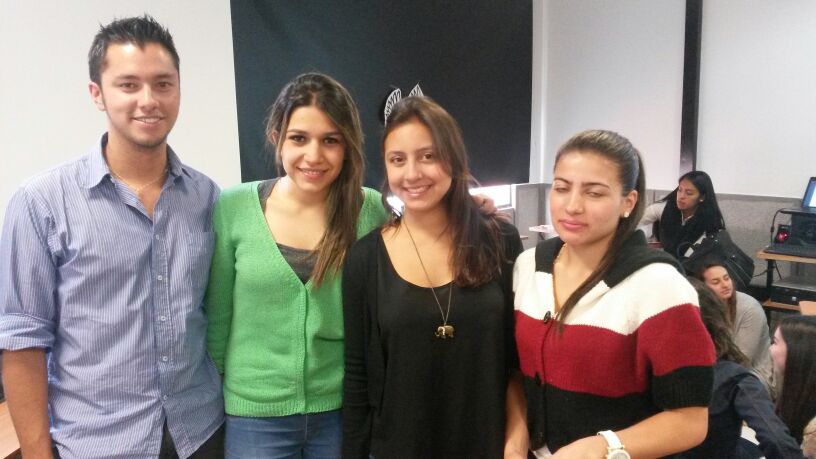
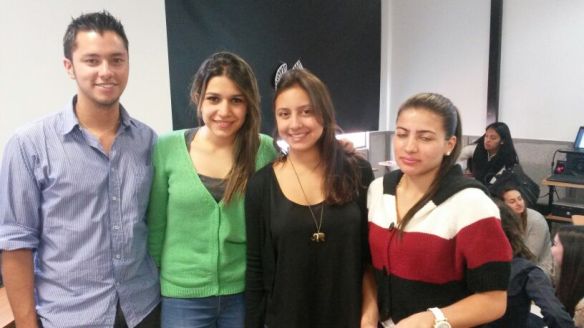
Sixth semester students (juniors) David, Lina, Gabriela and Ximena helped facilitate the simulation

Sixth semester students (juniors) David, Lina, Gabriela y Ximena helped facilitate the simulation

Ecotonos: An Intercultural Simulation in a Negotiation Class in Colombia

La Universidad Sergio Arboleda in Bogotá, Colombia, recently utilized Ecotonos: A Simulation for Collaborating Across Cultures for the third time in its International Negotiation class. The professor, Fernando Parrado, gave four of his experienced students the opportunity to act as co-facilitators, and they learned so much from the experience. Below is their report.

Translation to English by Dianne Hofner Saphiere follows the Spanish original.

AGUILAS

Las Águilas estaban conformadas por un grupo total de diez estudiantes, por lo que en primera estancia se repartieron las fichas de valores a cada uno de los integrantes. Los valores e acciones de las Águilas eran:

  • Tú crees que es grosero expresar tu propia opinión demasiado fuerte. Tú prefieres preguntar la opinión de los otros antes de afirmar la tuya y frecuentemente ilustras con ejemplos los puntos que los demás han dado.
  • Cuando una persona te dice algo que tú has escuchado antes, tú aplaudes. Miras sobre la cabeza de las personas cuando deseas demostrarles que estas en desacuerdo.
  • Para entender completamente que está diciendo alguien, tú interrumpes, aclaras y resumes.
  • Tú crees que todo se mueve a su propio ritmo y que el tiempo es artificial. No te das prisa con las decisiones o tareas sino que prefieres que esta se desenvuelva. Los relojes o tiempos de referencia te hacen sentir incómodo.
  • En discusiones tu estas más cómodo parado o sentado al menos a un brazo de distancia de las otras personas. El contacto físico es extremadamente incómodo para ti.

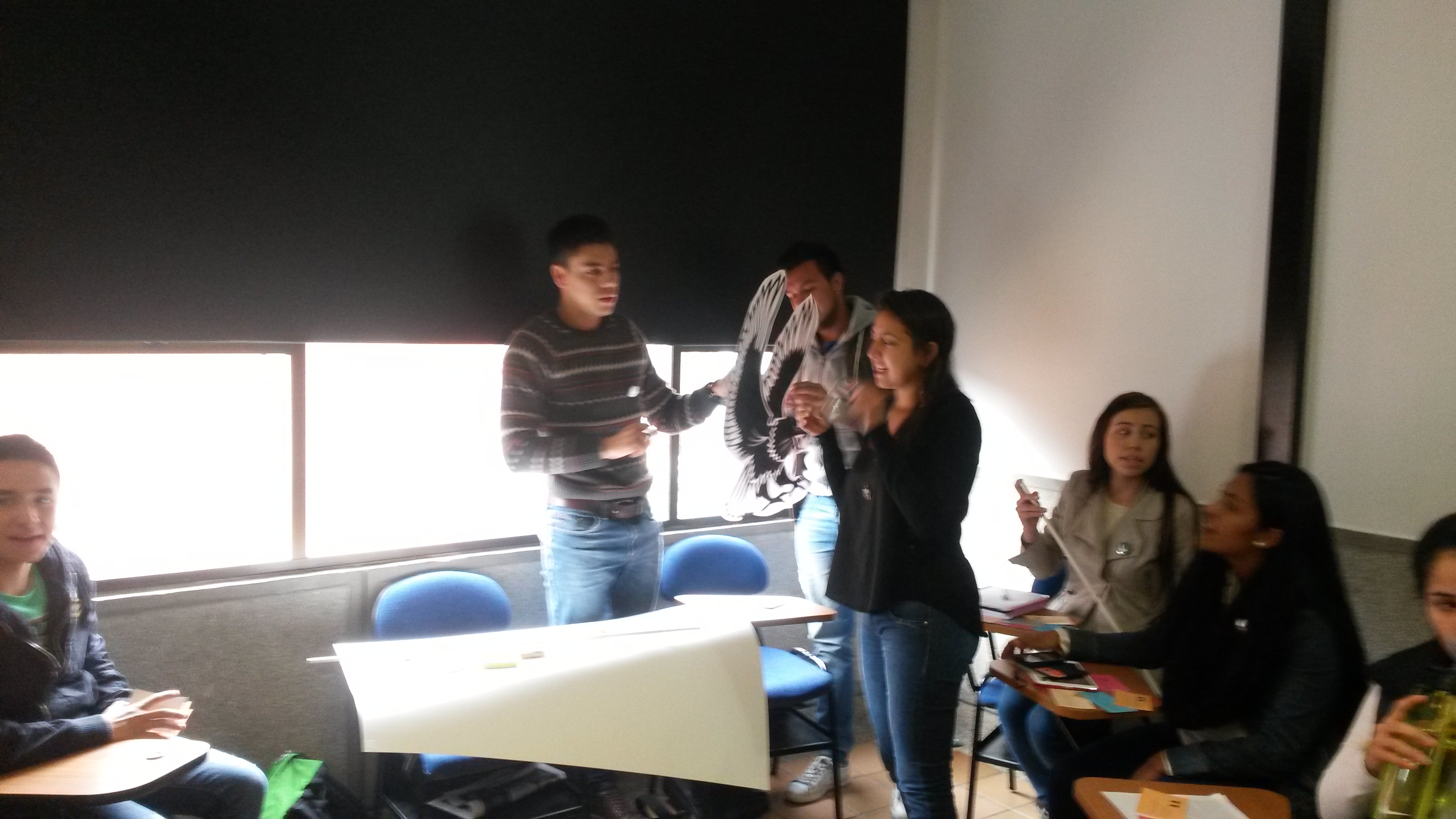
Después de entendidos y discutidos los comportamientos a seguir por las Águilas, se realiza la creación del mito por parte de todo el grupo. Los miembros fueron muy creativos y relacionaron los valores con el nombre del grupo (las Águilas), determinando así que se habían independizado hace poco tiempo, y que además su Dios era el águila, lo que determinaba su necesidad de espacio, no contacto físico, y comportamiento sumiso ante la opinión de los demás.

20140407_075252

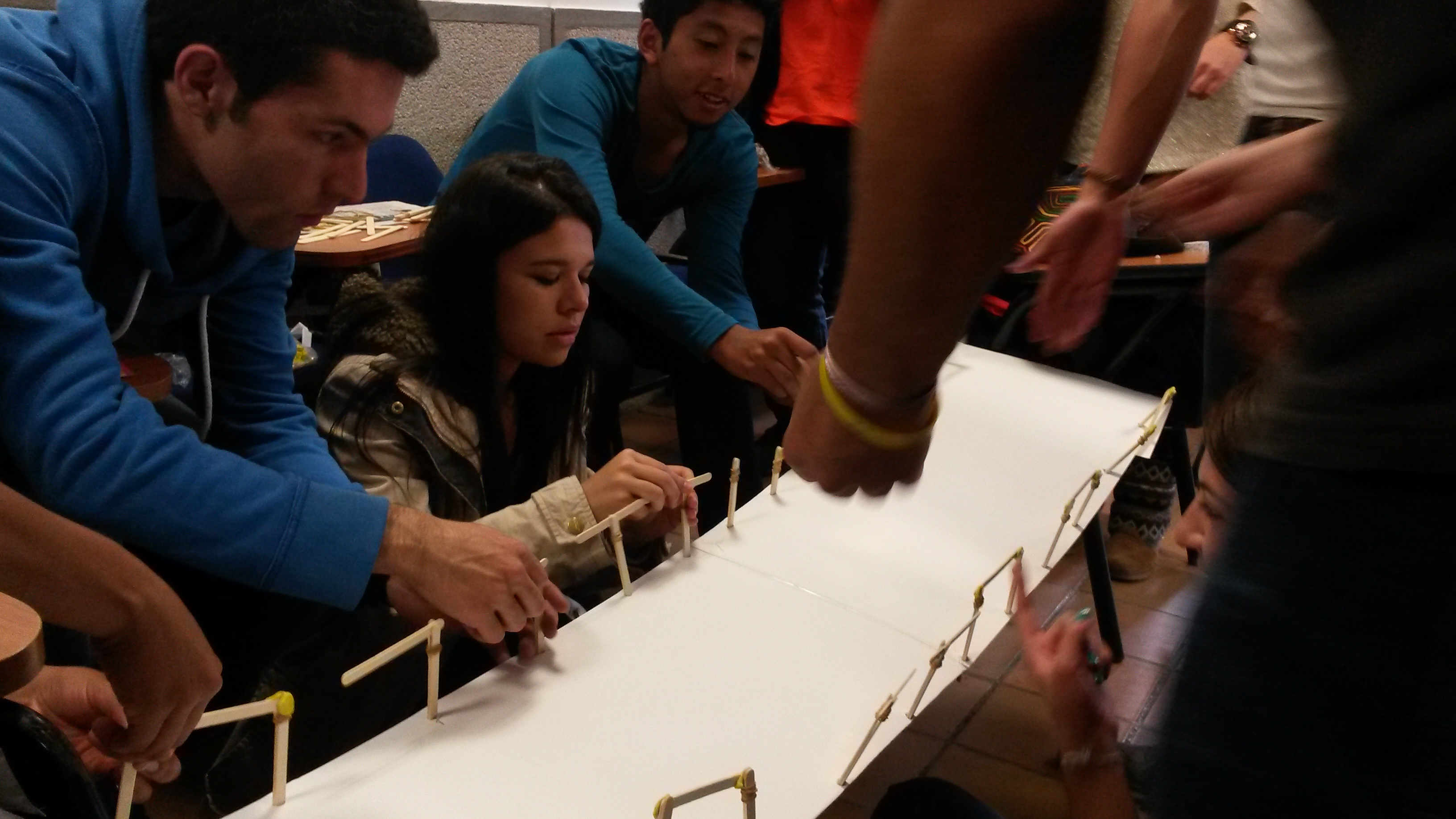
Posteriormente se inició la construcción de los puentes. Los miembros decidieron recurrir a otros recursos, además de los ya otorgados por los facilitadores, como sus sacos.

Luego se realizó la mezcla de los participantes. Las Águilas fueron determinadas a ser un Joint Venture, por lo que cinco participantes del grupo de los Zantes se unieron a las Águilas, de la misma manera que cinco integrantes se fueron a los Delfines y a los Zantes. Dado así el grupo quedo conformado por cinco Águilas y cinco Zantes. La cultura de los Zantes era absolutamente opuesta por lo que la continuación del puente fue un reto, mas sin embargo a pesar de las diferencias, todos participaron activamente y sacaron adelante el proyecto.

A continuación se realizó la presentación del mito por parte de uno de los participantes, y luego se realizó la retroalimentación de la cual el grupo tuvo las siguientes conclusiones:

Los elementos que ayudaron tener mayor efectividad y colaboración entre las dos culturas:

  • Ambas culturas saben escuchar.
  • Ambas culturas trabajan en grupo con un fin común.
  • A pesar de la diferencia cultural, había tolerancia lo que no genero conflictos, por lo que el trabajo en equipo fue flexible.

Los elementos que impidieron tener mayor efectividad y colaboración entre las dos culturas:

  • La cultura de las Águilas era muy flexible al tiempo, por lo cual el tiempo no fue aprovechado de manera efectiva. “El tiempo vale oro”.
  • La diferencia y falta de conocimiento del lenguaje verbal y corporal de cada una de las otras culturas
  • La diferencia en la afectividad y contacto físico por parte de cada una de las culturas

Las Águilas plantearon tres estrategias que hubieran ayudado a los grupos a entenderse mejor y utilizar las habilidades de cada uno de los miembros fueron:

  • Tener un contacto previo con la otra cultura, para entender y comprender los diferentes comportamientos.
  • Reemplazar el lenguaje corporal por lenguaje verbal, para lograr un mayor entendimiento.
  • Tener clara la tarea a realizar para poder planificar y realizar de manera correcta.
  • Implementar la división del trabajo.

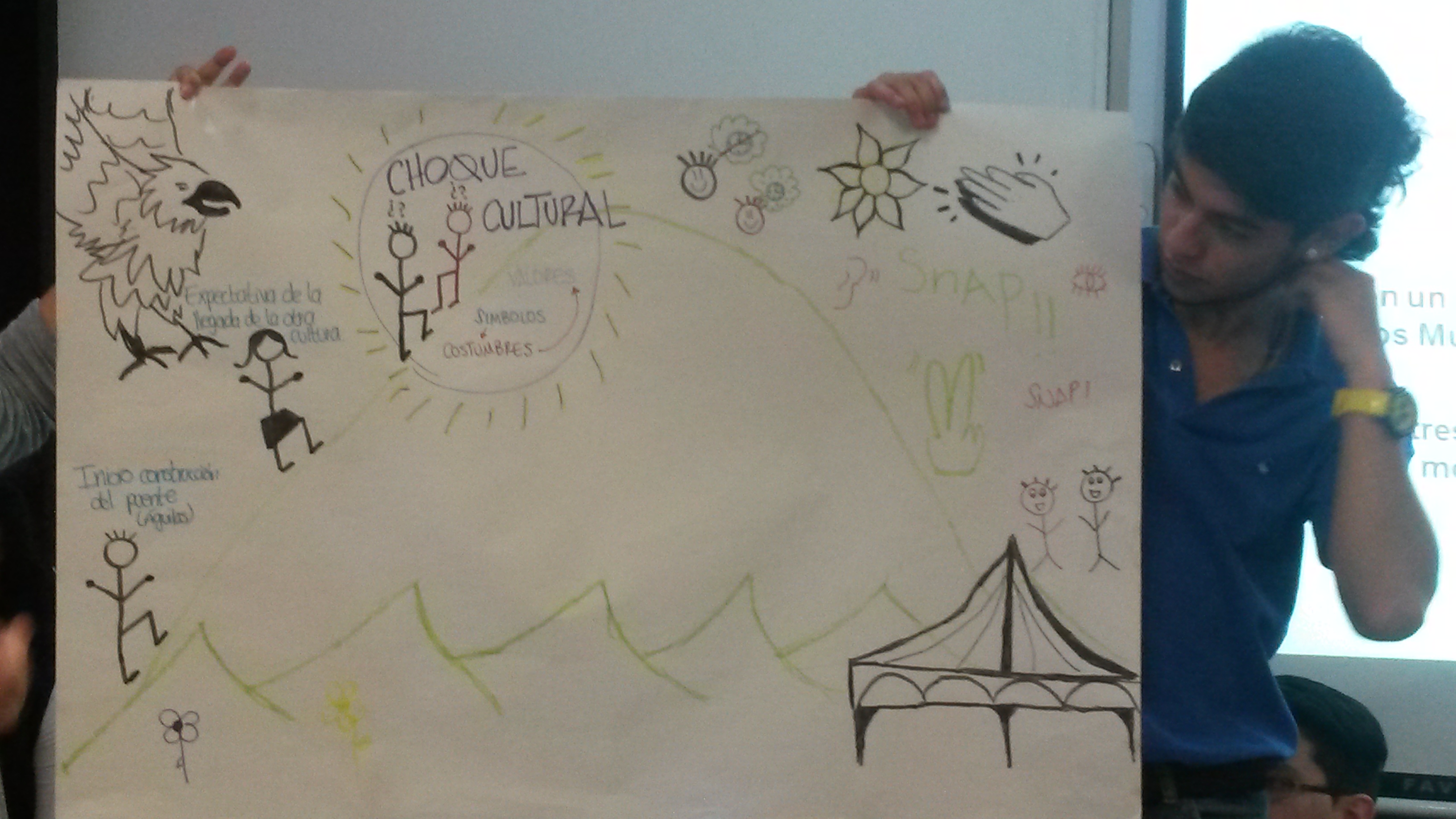
Por último el grupo realizo el siguiente mapa de procesos para evidenciar el proceso vivido.
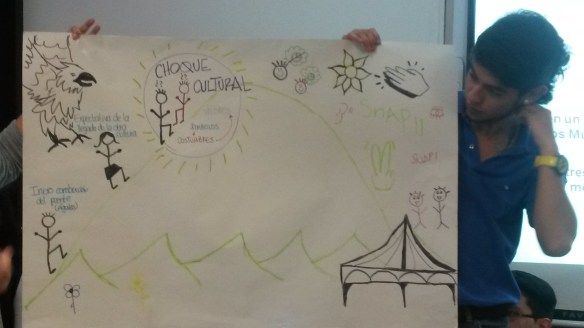
20140407_093659

DELFINES

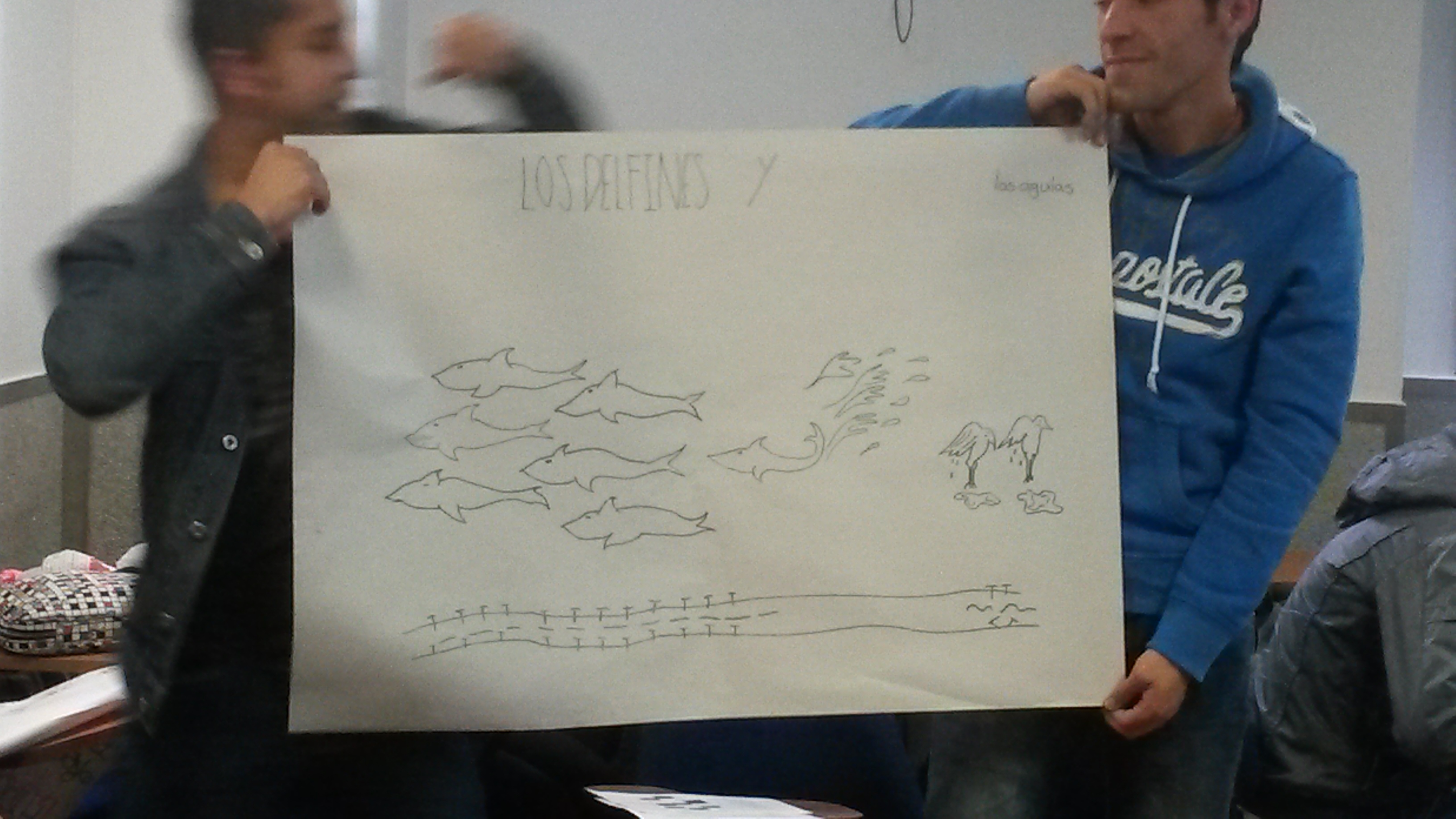
La personalidad de los Delfines los describe como una cultura apartada que no les gusta tener contacto con otras culturas, aparte de esto siempre quieren tener siempre la razón motivo por el cual cuando van a comunicarse con otros es más difícil llegar a un acuerdo, en el trabajo se evidencio cuando hubo cambios de culturas que era complicado llegar a aportar algo a esta cultura.

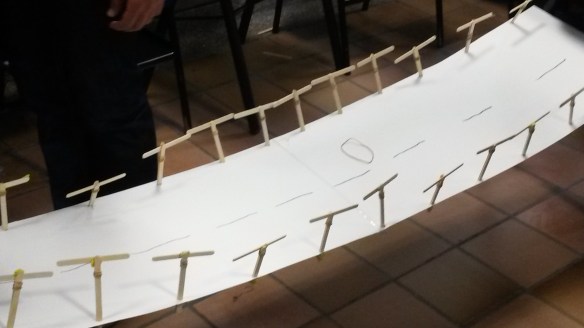
Los Delfines estaban armando su puente, todos los integrantes tenían un cargo y así fueron armando su puente, todos se entendían bien y cuando no estaban de acuerdo lo hablaban y rápidamente llegaban a un acuerdo para beneficiarse todos, entre la cultura nunca hubo un problema o discusiones por las decisiones tomadas.

20140407_083401

Cuando las dos Águilas intervinieron este grupo para continuar armando el puente pero como había mayoría de Delfines se evidencio que las Águilas quedaron de lado discriminadas, ya que los Delfines no les gusta tener interacción con otras culturas, es claro que cuando hay una mayoría vs minoría siempre la mayoría va a tomar las decisiones y la minoría va a tener que adaptarse a estas decisiones.

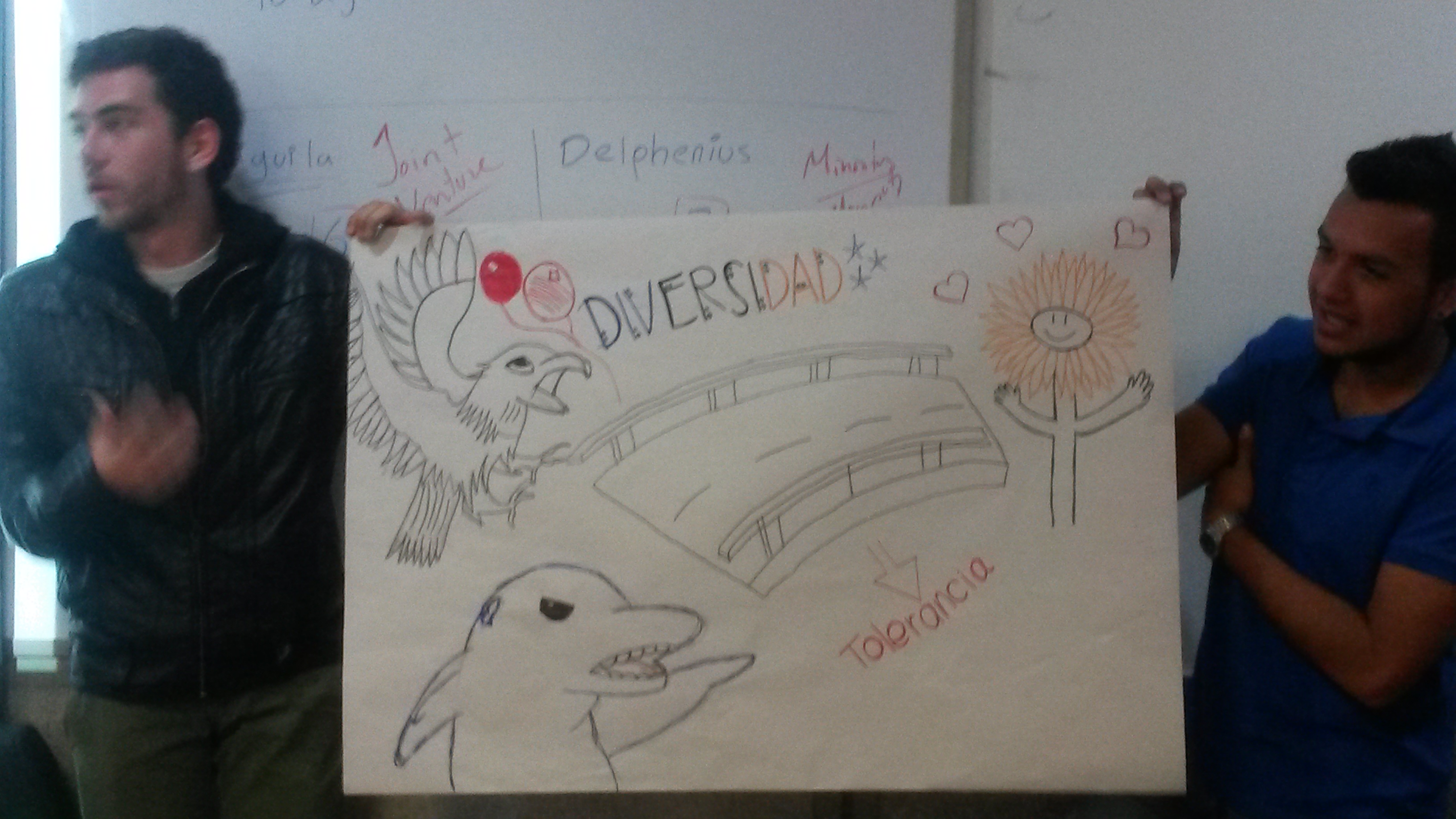
En el momento en el que a los grupos se les puso a mirar las fortalezas y debilidades de la interacción con otras culturas los Delfines se dieron cuenta que las fortalezas que esto trajo para armar el puente fue que tanto las Águilas como los Delfines tenían un tiempo flexible el cual hizo que ninguno tuviera un choque ahí, también los Delfines debieron reconocer el trabajo de otra cultura que quiso intervenir para ayudarlos y por ultimo tuvieron que tener respeto y tolerancia hacia las Águilas, no hay mejor comunicación que saber hablar pero más importante es saber escuchar.
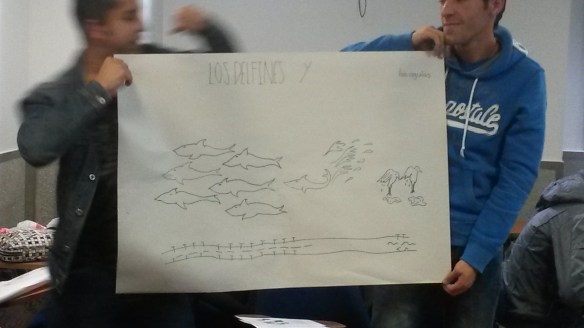
20140407_094511

Las debilidades que los Delfines encontraron al interactuar con las dos Águilas que llegaron al grupo fue que había falta de comunicación ya que las dos culturas se comunicaban de forma diferente, además se notaba un impedimento entre las dos culturas ya que la distancia era muy notable. Sin embargo, pudieron armar el puente y al finalizar el logro fue compartido entre Águilas y Delfines.
20140407_085533

ZANTES

En el juego de simulación intercultural el grupo tres era el grupo de los Zantes, el cual estaba conformado por diez integrantes.

La primera actividad que se realizo fue escoger algunas cartas de reglas culturales y con estas se creó una nueva cultura con las acciones dados, para ello tenían que crear un mito explicando cómo nació la cultura. Las que escogimos fueron las de color naranja las cuales representan los gestos y el contacto con los ojos (hacer sonar nuestros dedos y mirar fijamente), azul clara que eran los estilos de escucha (sabían escuchar y hablan cuando el otro terminaba), el color rosado representa contacto (se caracterizaban los Zantes porque les gustaba el contacto con los demás), realizaban gestos mientras hablan para ayudar a los otros a entender, y por ultimo estaba la carta beige que era la orientación al tiempo (eran muy rigurosos con el tiempo, para ellos este valía oro). En el desarrollo de esta primera actividad se pudo notar que dentro del grupo había integrantes con personalidades muy distintas, ya que algunos estaban muy concentrados en el juego y muy participativos, mientras que otros miembros del grupo solo estaban escuchando y no aportaban ideas sino al contrario hacen lo que otros compañeros decían. Con el tiempo todos los integrantes empezaron a practicar sus características culturales respectivas y finalmente para esta actividad trabajaron muy bien porque todos se familiarizaron con sus valores (que eran iguales) por lo cual no existió ningún conflicto.

20140407_084830

La segunda actividad que se realizo fue la de crear un puente con unos materiales que los monitores suministramos al grupo, el puente debía ser innovador y confortable. Al comenzar el puente el grupo trabajo muy bien ya que todos se escuchaban y trabajaban efectivamente para poder realizar un buen trabajo, a cada instante se percibían los valores del grupo porque constantemente los estaban practicando y utilizando para realizar su trabajo. Cuando ya tenían la mitad del puente el grupo fue dividido y a los Zantes llegaron integrantes de los Delfines y de las Águilas, con los cuales se pudo evidenciar el impacto cultural de estos nuevos integrantes ya que tenían características totalmente distintas, algunos llegaron a ser ofensivos, aplaudían constantemente, no les gustaba el contacto, todos tenían sus características culturales muy marcadas y distintas lo cual produjo que se crearan conflictos. Cuando los miembros de los Delfines y de las Águilas intervinieron en la creación del puente se pudo notar que en un principio cambiaron drásticamente la estructura del puente, construyeron algo totalmente distinto a lo que habían realizado los Zantes, pero con el tiempo esta estructura se volvía a acoplar un poco a lo que fue la de los Zantes y el grupo multicultural pudo crear un excelente puente. Los jugadores pudieron comprender el impacto que la cultura tiene en cada una de sus vidas.

Los juegos anteriores permitieron comprender al grupo el impacto que tiene la cultura, por esto es indispensable que a la hora de negociar se conozca y además se entienda la cultura con la que se va a negociar para tener la capacidad de resolver problemas y para trabajar de manera efectiva. Y finalmente la conclusión más importante es que hay que aprender a manejar nuestras conductas y valores a la hora de negociar con personas que tengan diferencias culturales.

20140407_095110

CONCLUSIÓN

En conclusión esta actividad a los 4 monitores fue muy productiva. Entendimos las diferencias culturales con unas simples actividades que nos dan un ejemplo de cómo serian una negociación o trabajo en equipo con miembros de otros países, nos enseño como escuchar y ser de mente abierta siempre para la negociación aprender lo mejor del otro y siempre respetar a los demás.

AGUILAS

The Aguilas were a group of ten students, each given rule cards. The values and actions on the Aguila cards were:

  • You believe it is rude to express your opinions too strongly. You prefer to question others’ opinions before sharing your own, and you frequently affirm the points others have made by offering examples.
  • When someone tells you something you’ve heard before, you clap. You look above the person’s head when you wish to demonstrate disagreement.
  • To understand more fully what someone is saying, you interrupt, clarify and summarize.
  • You believe that things move according to their own rhythm, and that time is artificial. You don’t hurry decisions or tasks and rather prefer that they unfold. Clocks and references to time make you uncomfortable.
  • In discussions you are more comfortable standing or sitting at least an arm’s length away from others. Physical contact is extremely uncomfortable for you.

After discussing and understanding the behaviors to follow, the Aguilas created their myth. The members were very creative and related their values with the name of the group, determining that they became independent fairly recently, and that their god was the eagle, which determined their need for space, no physical contact, and submissiveness to the opinions of others.

Next they began the construction of the bridge. The members decided to use other resources in addition to those provided by the facilitators.

After building for a while, participants were mixed. Five Aguilas left to join the Delfins and the Zantes. The remaining Aguilas were joined by five Zante participants, forming a Joint Venture group of five Zanteans and five Aguilas. The culture of the Zantes was absolutely opposite to that of the Aguilas, so the joint bridge building was quite a challenge. Despite the differences, however, everyone participated actively and took the project forward.

Upon concluding the simulation the participants presented their creation myth, and then conducted a debriefing discussion that led to the following conclusions:

The elements that helped the mixed group of two cultures to be more effective and collaborative were:

  • Each culture’s members knew how to listen.
  • Members of both cultures worked in groups to a common purpose.
  • Despite the cultural differences, there was tolerance, and participants did not generate conflict, so the group work was flexible.

The elements that impeded effectiveness and collaboration between the two cultures were:

  • The Aguila culture was very flexible with time, which meant that time was not used in an effective manner. “Time is gold.”
  • Differences in and lack of knowledge of verbal and body language of the different culture
  • Difference in affection and physical contact in each of the cultures

Group members came up with three strategies that would have helped them understand each other better and utilize the abilities of each of the members of the mixed culture:

  • Have previous contact with the other culture, in order to understand the different behaviors.
  • Replace body language with verbal language, in order to have better understanding.
  • Keep the task clearly in mind in order to plan and perform it correctly.
  • Implement a division of labor.

Finally, the group created the following process map illustrating the process they experienced:

DELFINUS

The personality of the Delfins can be described as that of a secluded culture that doesn’t like to have contact with other cultures. Apart from this, they always want to be right when they communicate with others, making it difficult to come to an agreement. This was evident in the work: when there was a change of cultures it was difficult to contribute anything to this culture.

The Delfins were assembling their bridge, all of its members had their job and were working to build the bridge, and everyone understood each other well. When they disagreed they spoke and quickly reached an agreement that would benefit everyone. Within the culture there was not a problem or discussion of the decisions made.

When the two Aguilas joined the group to continue assembling the bridge, since there were a majority of Delfins, you could see the Aguilas were a bit left out and discriminated against, as Delfins don’t like to interact with other cultures. It was clear that with the majority and minority in this group, the majority made decisions and the minority had to adapt itself to those decisions.

When the group members reflected on their strengths and weaknesses interacting with other cultures, the Delfins realized that the strengths for building the bridge included that both the Aguilas and the Delfins had a flexible sense of time, so there was no problem there. Also, the Delfins needed to acknowledge the work of the other culture, to have respect and tolerance for the Aguilas and realize that they wanted to help, that there is no better way to communicate than to know how to speak but even more to know how to listen.

The weaknesses that the Delfins encountered when interacting with the two Aguilas who arrived to the group were that there was a lack of communication due to the fact that the two cultures communicated in a different form, in addition another impediment between the two cultures was that the distance was very notable. Nevertheless, they were able to build the bridge and the accomplishment was shared between the Aguilas and the Delfins.

ZANTES

In the intercultural simulation, the third group was the Zantes, composed of ten members.

The first activity was to choose cultural rule cards to create a new culture with the actions described on them. In order to do that, the members needed to use the rules to author a myth about how the culture was born. The rules chosen included the orange color—gestures and eye contact (snap one’s fingers and stare), light blue — listening style (listen closely and speak only when the other has finished), pink—representing touch (this characterized the Zantes because they loved touching others), gesticulating while talking in order to help others understand, and the last was the beige card—time orientation (very rigorous with time, as time is golden). During this first activity it was noteworthy that there were members of the group with very distinct personalities. Some concentrated on the game and were very participatory, others in the group were only listening and rather than contribute ideas they did what the others said. With time the group members began practicing their cultural characteristics and finally they worked together very well, because everyone was familiar with their values (they were all equal) and there was no conflict.

The second activity the group realized was to create a bridge with some materials that the facilitators gave the group. The bridge needed to be innovative and aesthetically pleasing. When beginning the bridge the group worked very well together; everyone listened to one another and they worked effectively to complete the work. At each moment one could perceive the values of the group because they were constantly practicing and utilizing them during their work. When they already had half the bridge built, the group was divided and some Delfins and Aguilas joined the Zantes. At this point the cultural impact was evident; some arrived offensively—they clapped constantly, they didn’t like touching others—everyone had cultural characteristics that were very marked and distinct and that created conflicts. When the members of the Delfins and the Aguilas joined the creation of the bridge, it was noted that at one point the structure of the bridge changed drastically; they constructed something completely distinct from what the Zantes had originally been building. However, with time the structure returned to something similar to what the Zantes had intended, and the multicultural group was able to create an excellent bridge. The players were able to understand the impact that culture has on each of their lives.

The simulation permitted group members to understand the impact of culture, and that it is indispensable to recognize and understand culture when negotiating, in order to be able to resolve problems and work in an effective manner. Finally, the most important conclusion is that we need to learn to manage our conduct and values when negotiating with people who are culturally different from us.

CONCLUSION

In conclusion, this activity was very productive for the four of us as co-facilitators. We understood cultural differences with these simple activities. It provided us an example of how a negotiation or teamwork could be with people from other countries. It taught us how to listen and to maintain an open mind during negotiations, to learn the best of the other and to always respect others.

Thank you very much for sharing your experiences with us, students! Any of our readers who are interested in Ecotonos, you can find more information or order the simulation by clicking here.
A Rainbow with a Streak of Gray: Demographic Trends in the United States

dreamstimecomp_39321275

Photo ©Dreamstime.com

“Demographic transformations are dramas in slow motion. America is in the midst of two right now. Our population is becoming majority non-white at the same time a record share is going gray. Each of these shifts would by itself be the defining demographic story of its era. The fact that both are unfolding simultaneously has generated big generation gaps that will put stress on our politics, families, pocketbooks, entitlement programs and social cohesion.”
—Paul Taylor, Pew Research Center

As a US American interested in diversity issues, I was intrigued by the recently released Pew Center report based on the book, The Next America, examining demographic changes taking place in the United States. Pew reports are well-researched, present interesting and useful data, and never fail to give me a different perspective on the world in which we live.

The United States is changing demographically faster than many of us realize. I remember a few years ago, when working for an educational institution that offered diversity courses, a city official from California called to say they needed help because the “minority” population was soon to be over 50%! Today, I rarely hear the term “minority,” and this study definitely shows why.

“In 1960, the population of the United States was 85% white; by 2060, it will be only 43% white. We were once a black and white country. Now, we’re a rainbow.”

Immigration is the main force behind this rainbow, according to the report. Large numbers of immigrants during the late 19th and early 20th century were from Europe; today only 12% are European. Since 1965, the USA has seen more than 40 million immigrants; about half are Hispanic and nearly three-in-ten are Asian.

As this shift in demographics has taken place, so have shifts in attitudes. According to Mark Lopez, Director of Hispanic Research at Pew, ““Intermarriage is playing a big role in changing some of our views of ethnicity.” Currently, 15% of marriages are between people who are not of the same race or ethnicity—that is, one out of six marriages. Talk about a “melting pot!”

As these marriages produce children, a new set of issues arises.  One example: categories of race and ethnicity on government forms are less likely to fit or be meaningful. What do you call yourself when you are confronted with choosing just one part of your interracial or interethnic (Blended Culture) identity?

This situation arose recently when my son (White) and his wife (African American/White) had to complete a form to enroll their three-year old son in pre-school. Although one-quarter African American, my grandson looks very White, like his dad. There was lengthy discussion about what race to choose: African American or White. There were no other options, available for them—they could only choose one “race”—and they were uncomfortable with either choice as it didn’t reflect his heritage accurately.

Not only is the USA becoming more ethnically and racially diverse, but our population is aging. According to the study’s author, “10,000 Baby Boomers a day will turn 65—every single day between now and the year 2030.” That’s a lot of old people!

Contrast their lives with that of the first generation of “digital natives”—people for whom the online world has always existed. Their experience is shaped in part by their technological comfort and ease, while many of the older generation struggle to simply use their cell phones.

However, more than a “digital divide” exists among the generations in the USA. Growing up in different times and having radically different experiences means that the generations don’t always see eye-to-eye on lifestyle, issues, or politics. Yet, these days, a record number of US Americans—over 50 million—live in multi-generational family households, according to the report.

While this may seem perfectly normal to some of our blog readers, it is a new reality in the US. In the past several years, a stigma became attached to returning home after moving out for school or a job. To many, an adult “boomerang” child returning home to live with their parents was “clearly” a failure or had problems of some sort. No longer! Due to the poor economy, it is now seen as quite practical to live together when one can’t find a job or has limited (or no) means. And, as much as they might like each other, differences in opinion can cause stress in a household.

“It is a challenge for our society how we navigate this change at a time when the young and old don’t look alike, don’t think alike, and don’t vote alike.”
—Paul Taylor, author  The Next America

Cultural Detective has tools to facilitate change by helping users to better understand some of the different cultures making up the USA today. First, however, as intercultural professionals worldwide know, before one can understand others, one needs to understand oneself.

Cultural Detective Self Discovery helps people discover their values, preferences, and the cultural influences driving their thinking and their actions, and explore their cultural identities. It can be used as a stand-alone exercise or as a powerful component in sessions focused on cultural awareness, diversity and self-development, or as a process to facilitate teambuilding and organizational synergies.

Cultural Detective Generational Harmony provides a glimpse into four distinct generations in the USA, each with differing experience, expectations, and lifestyle requirements. By understanding these distinctions, one can be better prepared to recognize and manage issues that may arise due to generational differences in the workplace, while at the same time meeting organizational demands and objectives.

Cultural Detective African American explores the complexities of African American culture in the USA today. It investigates the values and communication styles of this community in an effort to bridge cultural gaps and support more inclusive groups, communities, and workplaces.

Cultural Detective Latino/Hispanic introduces this heterogeneous, multiracial group residing in the United States, people with cultural, historical, and ethnic roots in countries of Latin America. Comprising the fastest-growing ethnic minority group in the United States, Latino/Hispanics now number over 50 million, and account for one-out-of-four public school students in the US.

Cultural Detective USA offers insight into some of the key values that are representative of the dominant societal norm, in large measure Protestant, Anglo-Saxon values. While there is a wealth of ethnic, racial and cultural diversity within the USA, one needs to be aware of the power of the dominant culture in influencing behavior, as well as the specific values of other cultural groups, when learning about the USA.

Cultural Detective Blended Culture investigates those who hold multiple frames of cultural reference within themselves. This may include such individuals as internationally assigned employees and their families, immigrants and refugees; those who have grown up as members of ethnic minority communities within a dominant culture; and people raised by parents of different cultural backgrounds.

Cultural Detective Bridging Cultures helps take cultural awareness and savvy to the next level by looking at how to develop effective bridging strategies for working across cultures. Recognizing that cultural understanding is essential but not enough, this packages focuses exclusively on connecting cultural similarities and bridging cultural differences effectively to reap the benefits of diversity.

Any of these packages sound interesting? Cultural Detective Self-Discovery and Cultural Detective Bridging Cultures are available for purchase through our website. The other packages mentioned are available for handy reference, 24/7, as part of Cultural Detective Online. What are you waiting for? Use Cultural Detective to investigate the cultures shaping the USA and our world, and Get A Clue!

Our New Friend, Roquillo…

A guest blog post by Basma Ibrahim DeVries and Tuula Piispanen-Krabbe

During our recent Cultural Detective Tenth Anniversary meetings and celebrations in Mazatlán, Mexico, some of those attending used a free hour in the program to walk out into the community to conduct short ethnographic studies—to practice their detective skills. Below is a summary of what interested one group. Click here for a link to the instructions for this activity; you are most welcome to adapt them for your own purposes! Just think how frequently we travel to very different places for work, and how often we don’t take the time to interact with the local people in ways that help us get to know them as people. The same can be said for the beautiful places we travel as tourists. Let’s make a point of practicing our Cultural Detective skills wherever we are, building cross-cultural respect, understanding, and friendship!

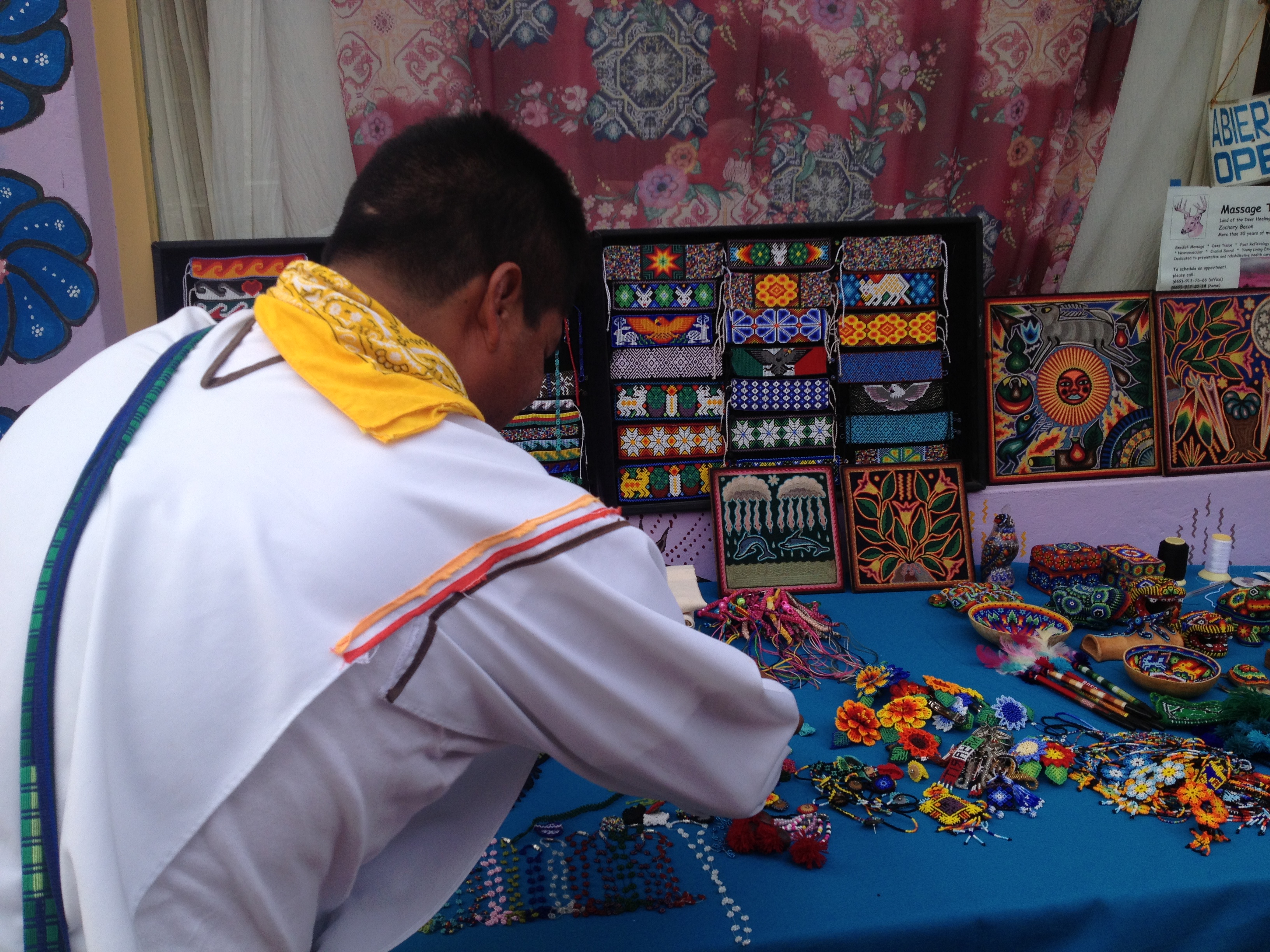
Rogelio 1It was a beautiful sunny morning as we set out to experience Mazatlán. Shortly into our walk, we turned down a side street, heading towards the beach. We were immediately attracted by vibrant colors and a handsomely dressed man. While most shops were not yet open for the day, he was diligently setting up his table of lovely beaded goods.

We approached his “table-shop” and began admiring the tiny-bead necklaces, bracelets, earrings, decorative boxes, bowls, and charms. Striking up a conversation, we learned that this artist and businessman, Roquillo, moved to the Mazatlán area two years ago after living in the mountains all his life. His description of life in the mountains sounded very communal and free of tourists and outside influence. He now lives on La Isla de la Piedra with his wife, Christiana; 4-year old daughter, Adrianne; 3-year old son, Damian; and 8-month old daughter, Lulu. We talked about how Basma’s two children are the same ages as his oldest and youngest.

Roquillo mainly sells his goods in Mazatlán, where he said it is busy most of the year. He told us that July and August are the slowest months—perhaps fewer tourists from colder areas come to Mazatlan in the summer? Roquillo also spends a couple months each year in Puerto Vallarta, where he said there are many cruise ships, making for good business there. We related his willingness to travel to sell his goods to a very strong value on providing for his family. Our guess is he may even send money back home to his extended family and community, though we failed to ask him that question.

Roquillo told us that his whole family is involved in making the beaded goods, and each contributes based on skill level. He said it takes about one day to make a pair of earrings or a necklace. One person can make two bracelets per day. His wife, Cristiana, also does embroidery, and he showed us some beautiful traditional children’s clothes that she had made. Basma was disappointed he didn’t have any sizes that would fit her children. However, she did purchase lovely jewelry for her nieces, and an iguana key chain for her nephew.

We thoroughly enjoyed meeting and talking with Roquillo—despite our less-than-stellar Spanish skills. We were impressed by how he emphasized the importance of the family involvement in the business and by his desire to keep this traditional beading craft alive and accessible to others. (Click on any photo to enlarge it or view them as a slideshow.)

Of course, the first Cultural Detective Mexico core value to stand out was that of Familia y relaciones (Family and relationships). As we had learned, in Mexico the family is generally the core network and main nucleus of affiliation and obligation. No wonder Roquillo was proud that they all worked together, each contributing according to his or her ability! And the sacrifices he made, including moving his family to the city, were decisions to support and better his family’s opportunities.

Tradición (Tradition) is also important to Roquillo, as evidenced by the fact he is proudly holding onto a craft from his village, and passing that knowledge along to his children. Traditions provide stability and help maintain cultural identity—a big challenge amid the rapid growth and change in Mexico today. Helping children understand and preserve their cultural heritage is not easy.

Roquillo’s amiable manner and gentle way of interacting may have reflected his value of Sentirse agusto (feeling good about someone or something). This feeling allows people to preserve their dignity, a self-image of worth, and pride. Caer bién (to be liked or to like others) means to be pleasant or to find someone pleasant, and it is part of Sentirse agusto. Roquillo was most cordial, answered our questions patiently as we struggled with our limited Spanish, and he even wanted a copy of the pictures we took of him. Sentirse agusto is also at the core of the great Mexican hosting tradition, with a strong value placed on making the guest (in this case, us) feel comfortable.

Roquillo is obviously a member of an indigenous group, most probably Huichól. No doubt, then, and as with each one of us, there are layers of cultural values beyond the Mexican national values that permeate the way he was brought up. We only wish we had had more time to visit with Roquillo, better Spanish language skills with which to do it, and that we would have thought of all the questions we were to be asked by our fellow authors upon our return!

Ten Years of Building Respect, Understanding, Justice and Collaboration!

P1110373Thank you for joining us on the journey to build respect, justice and collaboration across cultures!

A group of our authors recently gathered in Mazatlán, Mexico to celebrate the tenth anniversary of this collaborative project, Cultural Detective. We held three days of work meetings and a facilitator certification workshop; we hosted a wonderful party that included the indigenous Yoreme Deer Dance; and we played—on the beach, in the water, at restaurants, with music, and all around town!

Our community members will have more celebrations around the world throughout 2014; contact us if you’d like to join one!

Below is a slideshow of just some of the many authors and community members who have contributed to making Cultural Detective such an amazing tool, and to using it to transform the world in which we live, bit by bit.

Are you curious about how Cultural Detective came to be? You might want to read this short history of our project.

We have received quite a few greetings from customers and community members—their videos show the breadth of application of this toolset. Take a look at the anniversary playlist on the Cultural Detective YouTube channel.

Want to become more active, transforming the communities in which you live and work? Join us for a free webinar and three-day pass to Cultural Detective Online, or join the conversation on Twitter, LinkedIn or Facebook.

The Story of Eva

IMG_0465A guest blog post by Don Rutherford and Ellen James

During our recent Cultural Detective Tenth Anniversary meetings and celebrations in Mazatlán, Mexico, some of those attending used a free hour in the program to walk out into the community to conduct short ethnographic studies—to practice their detective skills. Below is a summary of what interested one group.

Click here for a link to the instructions for this activity; you are most welcome to adapt them for your own purposes! Just think how frequently we travel to very different places for work, and how often we don’t take the time to interact with the local people in ways that help us get to know them as people. The same can be said for the beautiful places we travel as tourists. Let’s make a point of practicing our Cultural Detective skills wherever we are, building cross-cultural respect, understanding, and friendship!

Eva 2

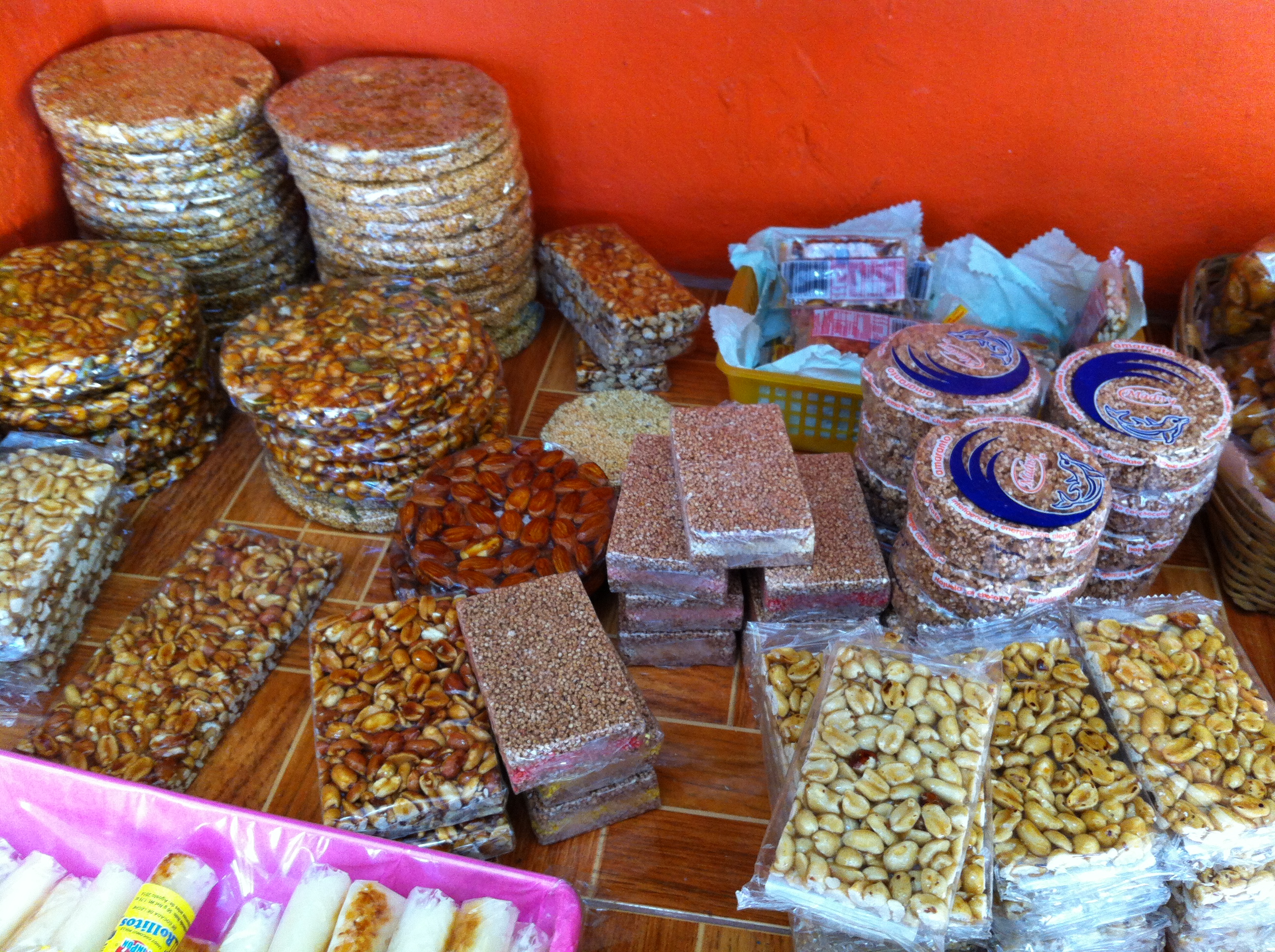
Eva is a candy store manager in Mazatlán, Mexico. Her tidy shop offers an amazing array of candy and treats including freshly roasted and flavored peanuts, almonds, pumpkin seeds and more. Coconut-based treats are also available, as are some sweets imported from other parts of Mexico. Truly a treasure trove of goodies for those of us fond of sugary treats! Although not overly crowded, the store had a steady stream of happy customers during the time we were there.

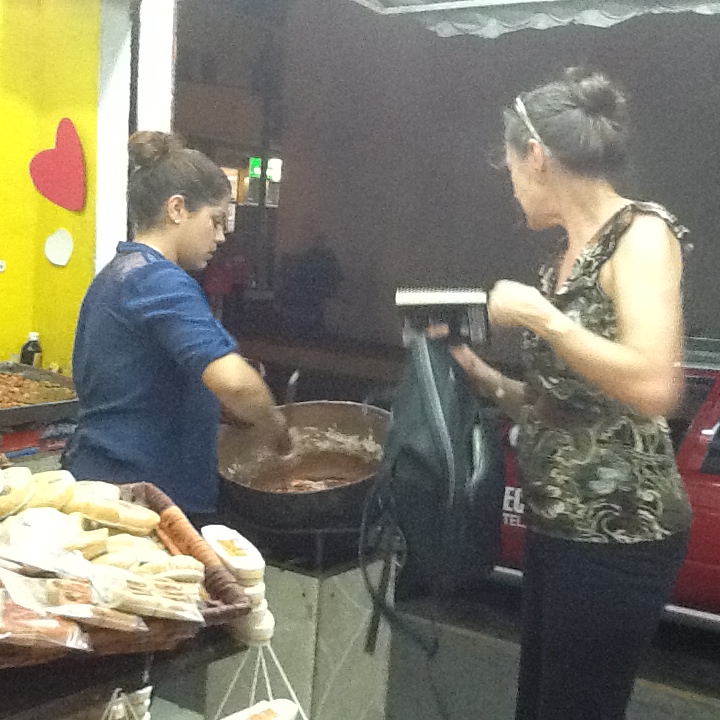
We met Eva as she was stirring a delicious smelling vat of cacajuatos garapinyatas—peanuts in syrup with sesame seeds—the scent and the lovely old copper kettle drawing us off the street and into the open-front store. She says the production of the sweets is fairly easy, though she showed us a couple of scars on her arm from burns that are “hazards of the job.”

Eva was quite serious when we first met her; however, she was more than happy to give us a tour of her shop and answer our questions. She was also gently patient with our very rudimentary Spanish. When we couldn’t find the right words, she was able to elaborate in English—as her English was much better than our Spanish.

She is 25, confident, pretty and wears really high heels, as do many fashionable women we saw in Mazatlan. The store belongs to her uncle (who lives in Puerto Vallarta, six hours south), and it is located near the cathedral in the Centro Histórico District of Mazatlán, an area that draws many tourists. Eva, herself, is from Guadalajara (five hours into the interior of Mexico), where her immediate family remains. She moved to Mazatlan to run the candy shop four years ago as she felt there were more tourists, and, therefore, more work opportunity. The other employees in the candy store are not family members.

Having recently reviewed the CD Mexico core values with Rossana Johnston, CD Mexico author, we pulled out our Cultural Detective magnifying glass and took a look at our interaction with Eva.

  • Familia y relaciones/Family and relationships: The family gives its members stability, support, and protection in economic, emotional, and social spheres, and also gives a sense of belonging to and a permanent connection with others from the same group. This value was easy to see in action—Eva works long hours for her uncle, who owns the business. He trusts his niece to successfully run his candy store and manage the other employees. Eva understands the importance of relationships in everyday life, and we think this influenced her willingness her take the time to patiently answer our questions and help us when we struggled with our Spanish-language facility (or lack there of).
  • Hay que cuidarse/Self-protectiveness: This common Mexican expression and attitude can be understood as a certain level of doubt about each other’s honesty, reliability, competence, and care. Trust does not normally come easy outside of the family. We noticed that Eva was very formal and reserved when we first started speaking with her. As we chatted a bit more and she understood our purpose, she seemed to become more friendly and open in her manner and conversation.
  • Mañana/Tomorrow: Time in Mexico tends to be perceived as elastic, circular, and flexible—what cannot be done today, will be done some other time. Any moment in life can be impacted by colliding factors, many of which are out of one’s control.
    Candy is a simple pleasure—enjoy life now—eat the sweets—who knows what tomorrow will bring?
  • Cantinflismo/Affable circular communication: Mexican patterns of communication are generally cordial, chatty, and informal. Mexicans are quick to strike a joke to set a harmonious tone. Initially, Eva seemed more serious than some Mexicanas, but once engaged in conversation, the smiles emerged and she was joking about her scars.
  • Sentirse agusto/Feel good about someone or something. One’s sense of feeling accepted, acknowledged, respected, and within a comfortable atmosphere is an important gage of one’s emotional comfort level with someone or something. We found Eva competent and confident in her abilities, and she seemed to be respected as the manager by the ways in which other employees interacted with her. The atmosphere in the candy shop was very comfortable and welcoming. Even though she is on her feet all day, Eva wears high-heeled shoes—she knows who she is and feels good about it!

We thoroughly enjoyed meeting Eva, and certainly bought and ate more candy than we would have without the “assignment.” Turning the Cultural Detective magnifying glass on ourselves, we clearly evidenced the Canadian values of “Task and Project Orientation,” as we sampled a variety of candies and sweets to make sure the quality was maintained throughout the range of products! We took “Individual Initiative” to do this, and used our value of “Informality” to help create a relaxed and comfortable conversation with Eva. As good practitioners of “Global Citizenship,” we wanted to do the right thing and make a positive contribution to the global community. So we bought candy treats to take home to friends. And finally, our value of “Consensus” was in evidence when we couldn’t decide on exactly which kind of candy to get for ourselves. We ended up getting both of our favorite kinds!

Gracias, Eva!


Linked to the My Global Life Link-Up at SmallPlanetStudio.com

A Vietnamese Woman’s Experience of the Arab Spring

1947577_10203237474119981_1557351267_nCultural Detective Vietnam co-author, Phuong-Mai Nguyen, spent eight months traveling through 13 countries, tracing the path of Islam from Saudi Arabia to East Asia. She chronicled her journey here on this blog. Mai traveled alone, during the height of the Arab Spring, amidst so many changes and so much turmoil. She met hospitality everywhere she went, learned a whole lot, and fell in love with the people and places.

Mai has just launched her Vietnamese-language book (two, actually) about her journey. The English edition will debut in October. Be sure to catch her powerful short video, below.

10th Anniversary of Cultural Detective!

Cultural Detective 10th Anniversary

Do you know that 2014 is Cultural Detective‘s 10th anniversary year? It’s also the 25th anniversary of my company—Nipporica Associates, and the 35th anniversary of my work in the intercultural field! Help us celebrate! Show our authors some love! Send us a greeting and win a one-year subscription to Cultural Detective Online.

The Cultural Detective Worksheet was born back in the early 1980s in Japan, emerging out of the need for a real-time multicultural conflict resolution tool. The Values Lenses came shortly thereafter—what are today termed “negative perceptions” were then called “the dark side,” echoing the Star Wars popularity of the day.

I used Cultural Detective tools in my proprietary work for about ten years with enormous success. Then, around 2002, Shell Oil began saying that Cultural Detective gave them the most highly rated global management training they’d ever experienced—from Nigeria to Malaysia, The Hague to Houston. They told us they wanted us to develop packages for every country in which they did business. While I envisioned nothing so ambitious, I did ask ten of my most esteemed colleagues to develop five “test packages”—Cultural Detectives England, Germany, Japan, Sweden and USA. They were so enthused about this Method and material that more and more admired colleagues asked if they could author packages. Today, the Cultural Detective series includes 65 packages (with several more to be released in the next few months) and an online subscription service.

Our vision was to provide theoretically sound, practical development tools, easy for the lay person to use, effective for beginners and experienced interculturalists, at accessible prices. Our goal was to help build respect, understanding, justice, collaboration and sustainability in this world of ours. Bless you for accompanying us on this journey thus far!

Thank you so much, to all our authors, our customers, certified facilitators, users, colleagues and friends! What a grand adventure it has been! Growing faster than we ever imagined possible, and building intercultural competence in areas we never dared dream of: spiritual communities, universities and study abroad programs, professional associations, NGOs, governments, and business. Over the last ten years, the Cultural Detective Method as been refined, deepened, and broadened—thanks to all of you!

A group of Cultural Detective authors will gather this month—February 2014—in Mazatlán, México to celebrate the project’s 10th anniversary. Other authors are planning events in their locations around the world to commemorate this auspicious occasion. We have started to receive greetings, and I thought you would enjoy seeing a few of them. I’ll post a selection below.

Would you like to get in on the action? Share your greetings? Thank our authoring team? Thank the person who first introduced you to CD? How about if we make it fun?!

10th ANNIVERSARY CONTEST ANNOUNCEMENT
Share your greeting with us, and the authors of our favorite submissions will receive a complimentary ONE YEAR SUBSCRIPTION to Cultural Detective Online!

As you already know, Cultural Detective Online is a terrific personal development too. But what you may not know is that the user agreement allows you to project the contents for your students, trainees or coaches—as long as you tell them Cultural Detective Online is a publicly available tool to which they can subscribe, too. As a colleague told me yesterday,

“Why would any intercultural trainer NOT pay $150 for a TWO YEAR subscription to this tool? It gives me access to over 60 packages, allowing me to conduct such a breadth of quality training!”

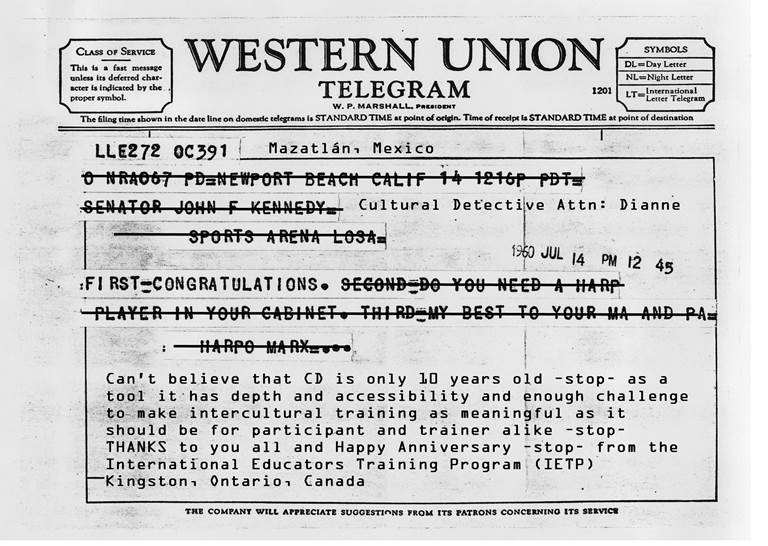
How to enter? Record a video and upload it to YouTube, then send the url to ten@culturaldetective.com. Alternatively, you can send a photo greeting to that same address. Here’s the first photo we’ve received. It’s a good one, don’t you think? Many thanks to our partners at the International Educators Training Program, Queens University, Canada.

Allison10thCome on, join in the celebration! Your greeting can be as short as you like, funny or serious. We’d love to hear what Cultural Detective means to you, what difference it’s made for you, what impact it’s had on the field. Perhaps you can share a funny story of cross-cultural miscommunication, or share your success—a Cultural Defective or Cultural Effective! We can’t wait! If this series has meant something to you, please take a moment to let us know.

Send your entries by March 15th, 2014. We will contact the winners by email with instructions on how to redeem their prize of a full year’s access to all the content in CD Online, to use on their own or with their students. We can’t wait to receive your message!

Following are a few of the video greetings that we’ve already received, with a bit of background about each:

Microsoft uses Cultural Detective to coach their international support engineers. The first year they used it, they attributed a 30% increase in customer satisfaction directly to Cultural Detective. The Culture and Communication Program staff is truly inspiring. In the clip below, Shalini Thomas shares her greetings with the Cultural Detective community.

AFS, the international exchange organization with operations in more than 50 countries, has long used Cultural Detective with staff, volunteers, students, and host families. Nearly everywhere I travel, anywhere on our planet, there is almost always someone from AFS in the audience. We are thrilled to know that our leaders of tomorrow are developing intercultural competence through our partnership with AFS! I first met Hazar Yildirim in Istanbul, where he and the AFS contingent there gave me a very warm welcome. Now he’s based in New York. Here is what Hazar has to say:

The Intercultural Development Research Institute (IDRI) is committed to longer-term, sustained development of intercultural competence. Their motto is “coherent theory generates powerful practice.” Thus, it means a lot to me when the co-founder of that Institute, Milton Bennett, says Cultural Detective is a tool that truly translates theory into practice and carries on the heritage of the founders of the intercultural field. I met Milton back in 1982, at the Stanford Institute for Intercultural Communication (SIIC).

The last greeting I’ll share with you here comes from another customer, Atieh International, specialists in emerging and risky markets. “The world of today comes filled with new opportunities hidden in a sea of uncertainty and risk. It is our job to assist our clients to understand and be prepared for the tides and waves, the ebbs and flows in each market, to appreciate the beauty and depth of cultures and diversity and to build sustainable strategies founded on reliable intelligence and trust.” We are privileged to be associated with them. Managing Partner Pari Namazie shares her remarks, below.

Please block some time now to make or record your greeting and send it to us! We are looking forward to hearing from you, and we would especially love to share a gift subscription with you! Our authors work hard, not to pursue monetary wealth, but impassioned by a commitment to the vision of everybody having a voice, sharing their gifts, and realizing their potential. Let them know they have made a difference!

We will post the video greetings we receive to the playlist below. Take a look at those we have so far, including greetings from CIEE, Korn Ferry, and EDS. They are very heartening to watch! We look forward to hearing from you!