Cantemos las mañanitas

(English follows the Spanish)
Para muchos de nosotros los que hemos pasado alguna temporada de nuestra vida en un punto geográfico de América Latina, escuchar Las mañanitas nos hace brincar el corazón. Las hemos tomado prestadas de la tierra azteca, de México lindo y querido y nos hemos apropiado de más de una versión para celebrar el día de cumpleaños.

Pues bien, cantemos hoy Las mañanitas al unísono para este blog y el proyecto que Cultural Detective ha emprendido con el fin de llevarnos de la mano en el camino de la interculturalidad. En uno de sus versos dice  “despierta mi bien despierta, mira que ya amaneció, ya los pajaritos cantan la luna ya se ocultó”.

(Una versión con un personaje italiano que conocí como argentino, el Topo Gigio)

Que salga el sol entonces para todos y podamos seguir enriqueciendo este espacio, este encuentro de mundos, ideas, sabores y colores. Que podamos entretodos establecer el entendimiento de las mentes que puedan traer juntos a los pueblos.

Felicidades Dianne, Felicidades Cultural Detective.

Let’s Sing Happy Birthday

For many of us who have passed a portion of our lives in the geographic area that is Latin America, hearing “Las Mañanitas” brings joy to our hearts. We have received the song on loan from the land of the Aztecs, from “Mexico beautiful and beloved,” and we have appropriated more than one version of it to celebrate our birthdays.

So, today, we sing Las Mañanitas in unison for this blog and for the Cultural Detective project, which has been undertaken to promote our journey towards interculturalism. In one of the song’s verses it says, “Wake up my dear, wake up, look what has risen, the birds are already singing and the moon has disappeared.”

The above video is a version of the song with Topo Gigio, an Italian personality that I thought was an Argentino.

I trust the sun will come out for everyone, and that we can continue enriching this space, this meeting of worlds, ideas, flavors and colors. I hope that together we can establish an understanding of the minds that brings people of all communities together.

Congratulations, Dianne, congratulations Cultural Detective.

Get in Intercultural Shape for the New Year!

New Year Collage

Welcome to the New Year — at least for those of you following the Gregorian calendar! Are you ready? Is your organization poised and equipped to make significant positive contributions to this planet of ours? Do you have organizational traditions to kick-off the new year and encourage employees to strive towards new goals?

Most cultures of the world have very special traditions for sending out the old year and bringing in the new one. In Mexico where I live women wear special undergarments on New Year’s Eve — either red for love or yellow for gold or money — symbolizing what they most want to receive in the year ahead. Those who would like to travel carry a suitcase out into the street and around the block.

In Japan where I lived previously, the end of the year is a time to clean the house, purging it of things from the past that are no longer needed. We cook osechi foods, the beautiful make-ahead kinds of delicacies that will feed family and visitors through the first few days of the new year, and allow everyone — including the cook — to enjoy a respite.

What are your traditions for saying goodbye to the past year and greeting the future? Do you make resolutions, set goals, or make plans to learn something new?

My absolute favorite New Year’s was spent with good friends nearly two decades ago. On New Year’s Eve, we wrote down the hurts we’d experienced, the negative habits or memories we continued to carry and wanted to get rid of, the qualities about ourselves that no longer served us, the visions of ourselves, others or our businesses that were not constructive. We made a big bonfire, and we had a field day burning these no-longer-wanted items. Oh how liberating it was! We all felt so light, so energized!

On New Year’s morning we woke before sunrise. We had written, on paper we’d folded into origami boats, the qualities we wanted to receive and nurture in the new year. The positive habits and qualities we wanted to cultivate, relationships and moments we wanted to consciously treasure, and healthy visions of ourselves, others and our businesses that we wanted to hold close. We launched these items into the ocean, setting them into motion.

The beginning of a year is a good time to reflect on our cross-cultural successes (Cultural Effectives) as well as to learn from our mistakes and misunderstandings (Cultural Defectives) and decide what kind of year we want in 2013. Back in October we published a post about intercultural fitness. In November we reiterated why such fitness is so important, why organizations need intercultural fitness.

Maybe reading these posts has helped you to decide what to throw in the fire and what to set out into the water? If your fire is full of cultural missteps and your boat contains a desire to expand your intercultural competence, maybe it’s time you took action!

Cultural Detective wants to encourage you to get fit, too — interculturally fit! Much like committing to an exercise plan or a sensible nutrition plan, committing to prioritizing intercultural competence in the coming year will serve us well personally, in our families, as well as in our work lives. Also, just like a gym, it can be fun. We can spend as much time as we like and we might meet some really interesting people.

The new year is full of special offers for gym memberships, exercise classes, and diet programs — ways to encourage you to get fit in 2013. Just as gyms and diet programs offer incentives this time of year, the Cultural Detective Online intercultural competence gym is offering complimentary three-day subscriptions to help get you focused and motivated!

Here is how to get yours:

  1. Log on to http://www.culturaldetective.com/cdonline/orders/trial before January 31, 2013.
  2. Enter your name, email address and the promotional code: NewYearFitness
  3. You will receive a verification email from cdonline@culturaldetective.com. Be sure to clear it in your spam filter! Click the link in the email, follow the instructions, and explore a new way to improve your intercultural fitness 24/7!

We hope you will take advantage of this special offer to learn how Cultural Detective Online can assist you at home and abroad, with colleagues and friends, in your community and in your organization! Feel free to share this offer with those you care about — we think the world could benefit from a little more intercultural competence on everyone’s part!

Best wishes for a peaceful year ahead from the Cultural Detective team!

Want to Feel Ukiuki, Pichipichi and Pinpin? Japanese Food Onomatopoeia

I have been quite ujiuji (melancholy) in recent weeks, feeling uzu-uzu (a burning desire) to hear and speak Japanese. Living in a small city in Mexico, zenzen (almost never) can(‘t) I hear Japanese, and my heart gets shoboshobo (sad).

Joe’s recent blog post on the French food fixation only fueled more tsukuzuku (heartfelt thinking) on my part. As you may have already figured out from my wazawaza (purposeful) language, I’ve been thinking about Japanese sound symbolism, particularly in the context of food.

Whether you eat gatsugatsu (gobble or devour) or potsupotsu (little by little), if you want to talk about food in Japanese you will be using words that mimetically represent feelings and senses. As the originators of the concept of umami (pleasant savory taste — one of the five basic tastes), Japanese tend to mokumoku (munch) the way they listen: with all their senses. Taste, texture, and temperature, sound, smell and sensation… all are important elements that combine to keep people ukiuki (cheerful), pichipichi (young and vigorous) and pinpin (in good health).

While many people think of Japanese food as the 
tastes and textures of sashimi or sushi, a typical meal may also contain irorirona (a variety of) food including boiled, broiled, fried or pickled dishes, a soup and hokahoka (warm) steamed white rice. Is your stomach starting to guuguu (growl hungrily)?

For the fresh or raw component of your meal, would you like something shakishaki — crisp as in veggies or fruits, e.g., lettuce washed in cold water? Or would you prefer something more korikori — crunchy and crisp, as in fresh raw abalone? Be sure to rinse the abalone well, so it doesn’t taste jarijari (gritty) or zarazara (coarse). Maybe you want something sharishari — tangy and juicy, like an Asian nashi pear or sherbet? Or is your tongue like mine, and craves the piripiri (sting) of wasabi or fugu (blowfish)? Any of these dishes will require chokichoki (cutting with a knife) preparation.

A boiled dish in our meal might include pumpkin nimono, stewed hokuhoku (steamy and dense but not soggy), or something more furufuru (soft and jiggly) like boiled eggs. Maybe we should make some chikuwa (fish paste roll) for oden till it’s buyobuyo (swollen and soft) and fuwafuwa (fluffy)? Oh that sounds good! There are just so many possibilities! So many tastes and textures!

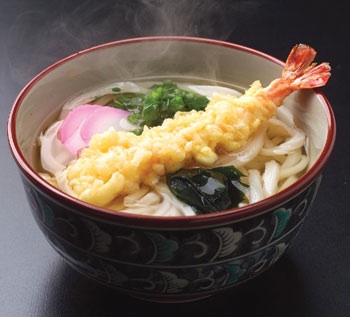
There are madamada (still) ippai-ippai (lots) more onomatopoeia to consider. What about a main dish? Shall we eat something sakusaku (freshly cooked crisp and light) like tempura shrimp? I could fry it till the shrimp inside are puripuri (plump with a nice resistance) and the breading is poripori (quietly crunchy). Perhaps you are really craving the shikoshiko (chewy, elastic firmness) of some udon noodles? Never over-boil the pasta so it becomes betobeto (sticky and gummy); rather, you’ll probably be wakuwaku (trembling with excitement) to eat your tsurutsuru (shiny and slurpy) noodles and gabugabu (drink heartily) a beer!

Instead of your normal bowl of rice you might enjoy something a bit more mochimochi (soft, sticky and chewy) or netoneto (glutinous and gummy) like sticky rice. Maybe rice that’s a bit more pasapasa (dry), like jasmine rice, sounds appetizing? The kunkun (smell) is so nice! Tabitabi (once in a while), though, I like the parapara (moist but loose) of fried rice.
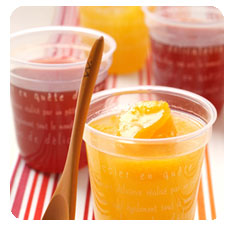
Even though by now you are panpan (full), pukupuku (swollen), and maybe even kokkurikokkuri (nodding off), a karikari (hard and crispy) biscotti, a fukafuka (soft and fluffy) cream puff, or even some purupuru (wiggly, jiggly) kanten (gelatin) for dessert might refresh your soul. Maybe just a handful of something punyupunyu, like some gummis?

After such a big meal your throat may feel karakara (thirsty). I’d definitely recommend a chibichibi (sip) of a kachikachi (ice cold) shuwashuwa (sparkling) beverage over a betabeta (sticky) dessert wine. It can help settle any mukamuka (queasiness) you might have.

What if you’re not really that hungry, and you just want to mushamusha (munch)? You might want the paripari (thin and crispy) of nori (toasted seaweed) or chips. Sometimes, though, we crave a louder pachipachi (crispy snapping sound), like the baribari (loud crunchiness) of sembei (rice crackers) or the kachikachi (crisp firmness) of arare (another kind of rice cracker).

For those of you interested in this subject, I found a really cool study conducted by a cross-disciplinary group of students (information science, engineering, medicine) from the University of Tokyo. They “harvested” online food reviews in Japanese to find the most common food-related onomatopoeia. How cool is that — a terrific application of science to language and culture studies! Below is one of the tables from their report, detailing the most commonly occurring onomatopoeia for food.

There are several categories of onomatopoeia in Japanese. They are:

  1. Giongo (擬音語): These are the words that mimic the sounds of life around us, such as the sound of sprinkling vs. heavy rain, a door creaking or glasses clinking. Most of the food onomatapoeia above are giongo.
  2. Giseigo (擬声語): Sounds made by people or animals, such as a cat’s meow or a dog’s woof.
  3. Gitaigo (擬態語): Words that describe actions, such as smiling or grumbling, or psychological states, such as cheerful or irritated. Sometimes these latter are also called gijogo. Technically these are not onomatopoeia, since they don’t mimic sounds; they are mimetic words that mimic actions or emotions. However, since we don’t use these types of words often in English, and they are very important to speaking and understanding Japanese, I include them here.

I also found several online dictionaries of Japanese onomatopoeia. The first is Giongo Dictionary, where you can sign up for a daily email to keep learning. A second, if you read Japanese, is Onomatopedia. The third is a cool little resource with sounds you can listen to. Finally, though it only works sporadically, is Nihongo Resources, where you can search in English or Japanese. I hope you’ll enjoy them.

Japanese speakers: Please share some more of your favorite 擬音語 (giongo) and insights with us! There are of course regional (and personal!) variations of many of these!

Speakers of other languages: We’ll be happy to publish it if you send us your post about unique features in your language. Thanks!

“Interculturalidad” – View on Interculturalism from Latin America

During my recent and incredibly learning- and success-filled trip to Colombia, a client asked me to do a short presentation on the state of intercultural competence in Latin America. Such a small request, right (asked wryly and facetiously)? I live in México, but after four years I sure don’t count myself a culture-specific expert, and I am surely not qualified to speak for over half the hemisphere! So, what to do? Turn to an esteemed colleague’s expertise, of course. In this case, I turned to Adriana Medina (and her co-author, John Sinnigen).

The beauty of the source article I used, “Interculturality vs. Intercultural Competencies in Latin America,” is that the authors introduce facts and history we all know, but they put them into a context in such a way that makes total sense and creates new meaning. At least for me.

For example, one of their points is how Latin Americans have lived interculturality for hundreds of years if not longer: wars, imperialism and commerce between the many distinct indigenous cultures, then conquistadores, colonialism, slavery and intercontinental commerce. Intercultural competence on this stage is not some new import during the current age of global economic interdependence. Rather, Latin America’s gold, silver, emeralds and such were important to European economies beginning centuries ago. The authors’ point is, one of the valuable contributions that Latin American interculturalidad can add to the largely northern and western-originated notions of intercultural communication or intercultural competence is this: power, specifically power imbalances.

“Interculturality, the preferred term in Latin America, refers to a historic condition, a radical restructuring of the historically uneven relations of wealth and power that have existed between Europeans and their descendants and indigenous and other subordinated groups during the last half millennium. The aim is decolonization of institutions and the sociocultural fabric of the country.”
— A. Medina-López-Portillo and John H. Sinnigen, “Interculturality vs. Intercultural Competencies in Latin America,” chapter 13 in Deardorff 2009, Sage Handbook of Intercultural Competence

In their article the authors present six strengths that Latin American interculturalidad can contribute to the intercultural communication and competence field. And, speaking for myself, our field is in huge need of hearing and incorporating these perspectives into our theory and practice! Contributions of interculturalidad, according to Medina and Sinnigen,  include that it:
  1. Is counter-hegemonic; focuses on the balance of power
  2. Starts with the needs of marginalized cultures (diverse indigenous movements from Mexico to Bolivia and Ecuador)
  3. Advocates mutual respect and economic and political equality rather than the acculturation of the oppressed
  4. Incorporates Andean/Amazonian concepts such as respect for Pachamama, good living, communitarian practices
  5. Multilingual integration
  6. Decades of dialogue leading to constitutional specificity

I want to thank this client for making this request of me, as it spurred me to learn more about a colleague’s work, and also to learn more about the work of Nestor García Canclini (more about his work in another blog post). I also want to thank Adri and John, whose work, I feel, is very important. I hope this might spur more of us to read, incorporate and build on their findings.

I have posted three PowerPoint slides summarizing this article, and you are welcome to download and use them if they might serve you. Please be sure to retain all source references, including the authors’ and Cultural Detective‘s. Together we can make a difference!

What do you think about the authors’ premises? How might we help the intercultural field to incorporate the Latin American perspective? How do you handle power differences in your work? I look forward to hearing from you!

Born and raised in Mexico City, Adriana Medina-López-Portillo is Assistant Professor of Intercultural Communication and Spanish in the Department of Modern Languages, Linguistics and Intercultural Communication at the University of Maryland, Baltimore County (UMBC). She is an accomplished intercultural trainer, having designed and led workshops for higher education, not-for-profit, governmental, and corporate clients in the United States and abroad. Among her favorite appointments are training for The Scholar Ship, a transnational academic program housed on a passenger ship, and offering pre-departure and on site orientations for the King Abdullah University of Science and Technology (KAUST) in Saudi Arabia. John Sinnigen is Prof. of Spanish and Intercultural Communication at UMBC.  He is the co-editor of América para todos los americanos:  prácticas interculturales (Mexico: UNAM, 2012).

Spiritual Traditions, Passover and Easter Greetings

Throughout my life I have felt strongly that most of the world’s spiritual traditions, paths and practices share a great deal in common. Of course they have significant differences, and in understanding those differences we come to appreciate the true beauty of each. At their core are perhaps some messages hugely important to all of us and the well-being of our world.

Please allow me to wish those of you who practice a blessed Easter and a blessed Passover, Pesach Same’ach. I would like to take this opportunity to share with everyone a prayer and hymn which I sing in my heart frequently during my travels, whether I’m journeying through daily life or through the world at large. While it is a Christian hymn, I believe it carries a message that resonates with many of us who embrace interculturalism and diversity.

First in Spanish, as I most often hear it and think it living here in Mexico, then in English. The words are from Saint Francis of Asisi.

Hazme instrumento de tu paz,
donde haya odio lleve yo tu amor,
donde haya injuria tu perdón Señor,
donde haya duda fe en ti.

Hazme instrumento de tu paz,
que lleve tu esperanza por doquier,
donde haya oscuridad lleve tu luz,
donde haya pena tu gozo Señor.

Maestro, ayúdame a nunca buscar
querer ser consolado sino consolar,
ser comprendido sino comprender,
ser amado sino yo amar.

Hazme instrumento de tu paz,
es perdonando que nos das perdón,
es dando a todos que tú nos das,
y muriendo es que volvemos a nacer.

O Maestro hazme un instrumento de tu paz.

Make me a channel of your peace,
Where there is hatred let me bring you love,
Where there is injury your healing power,
Where there is doubt true faith in you.

Make me a channel of your peace,
Where there’s despair in life let me bring hope,
Where there is darkness only light,
Where there is sadness ever joy.

O Master, grant that I may never seek
So much to be consolded as to  console,
To be understood as to understand,
To be loved as to love with all my soul.

Make me a channel of your peace,
It is in pardoning that we are pardoned,
In giving to all that we receive,
And in dying that we’re born to eternal life.

O Master… Make me a channel of your peace.

Please, share with some of your favorite prayers, meditations and blessings, with a bit of context so that we might learn, won’t you? Another of my childhood favorites comes from the Navajo tradition, but I will save that for another time.

Culture Change and Free Speech

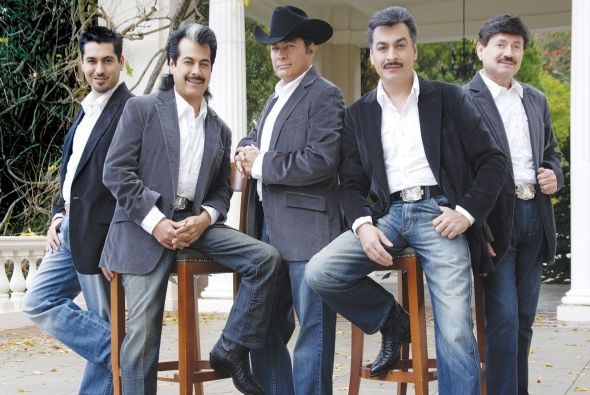
Los Tigres del Norte, one of my favorite (and one of the world’s most popular) bands, was banned yesterday from playing in the city of Chihuahua. They were banned because they played a very popular narco-corrido based on a soap opera and book, La Reina del Sur. The ban occurred not in some foreign place that might be unfamiliar with the band’s norteña music, but rather in a city that is steeped in norteña culture. The Mexican press, and most Mexican people, are upset about and vocal in objecting to this cavalier censorship.

A bit of background is in order. As has been well publicized worldwide, Mexico has been a sad battle route in the drug buying and the arms selling of its northern neighbor. Locally and similar to criminals worldwide, drug lords take over and strong arm mountain pueblos, also sometimes building schools or hospitals and taking care of people, thereby building loyalty and security for themselves.

Around this drug trade has grown a culture, which has closely mixed with the pre-existing norteña culture. That cultural mix includes a style of dress (one extreme is those tippy-toed guarachero boots), a unique vocabulary and style of speech, songs (narco-corridos are songs that glorify the life of the outlaw), and even a patron saint whose image, likeness and altars can be found in most any colonía (Jesús Malverde, so-called patron saint of the drug lords and lost causes).

Mexico is a large country, as is northern Mexico, and norteña culture as influenced by narco culture has a diversity within it. There is also spillover; many people who have nothing to do with the drug trade may build an altar to Malverde (unwed mothers may pray to him, for example, as might people who have lost their jobs) or have his face emblazoned on the window of their pickup truck. And, MANY of them listen to what can be called narco-corridos. The particular song for which my Tigres were banned, ironically, ends with the outlaw (a woman) being punished for her crimes.

I believe that most Cultural Detectives value free speech, and do not believe in censorship. It is interesting, though, that this ban occurred because Chihuahua city is trying to change its culture. It is trying to take the narco out of norteña, to stop the glamorization of criminal activity, to restore responsibility and good citizenship to its citizens.

It is personally ironic to me because last year, I posted on the Facebook page of another favorite band of mine, la Banda El Recodo, sharing with them my disappointment that they had released a song so far below the respect and esteem with which they are held by the public (the song talks about guns, arms, bulletproof vests; it encourages people to get drunk and shoot bullets into the air; the official video involves non-stop drinking, high-priced cars and watches, and ends with the lead singer pretending to shoot the viewer). In hindsight, was I censoring? I know my motivations were the same as those of the city of Chihuahua: El Recodo is at the top of their craft; people respect them. I love them, and I love Mexico. I wanted them to stand for and promote what is good about Mexico, help make it a better place, not glorify and feed the worst of our local culture.

What do you all think? We interculturalists work with culture change on a daily basis. Have you advocated censorship in your role? Have the opinions you’ve expressed served to censor another? What are your strategies for culture change?

Response to Time’s “Yo Decido” Cover

I am blessed to have a comadre who is one incredibly intelligent, wise, and loving woman. Her name is Carmen DeNeve, and she is Mexican-born, living and teaching for decades now in Los Angeles California.

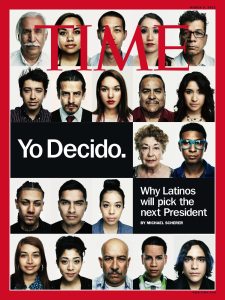
A day or so ago I posted this Time magazine cover to my personal Facebook wall. Many people shared it, as it’s exciting – that the voice of Latinos can be so strong in the USA!

Well, I heard very quickly from my comadrita. I find Carmen’s response so important and quite thought-provoking. It tells a tale that is true for countries around the world with new immigrant voters, I believe, and I’ve received her permission to share it with you here.

“Comadrita, I wish, but too many issues here. First, I wonder about the numbers who really vote and are well informed, even if the total figure is huge. I’m working on this where I teach because some Latino voters have called me the night before election day to ask me, ‘Who do I vote for?’ Or doubting if they should vote. Their thinking is if they don’t study hard about who they need to vote for, maybe it’s better not to exercise their vote — sounds almost sacrilegious.

I think we need neutral political education for new voters like many Latinos, but it doesn’t happen, unfortunately. I want us to be prepared to vote, not only exercise a right that is precious. That’s why later some people blame the victims! And, maybe rightly so.”

[Additional comment from Carmen the following day:] “Dianne, I started reading the article, but I don’t like that journalists give misleading information and manipulate facts, exaggerating such as YO DECIDO. Out of the 50.5 million Hispanic/Latinos they mention, or 17% of the total US population, not all of these can vote, of course. About 10.2 million according to the Census 2010 are not authorized in the U.S. (undocumented) and of course there are more in actuality. This brings us down to 40.5 million potential voters. BUT, from this number there are those under 18 years of age, which roughly I calculated looking at last Census data to be in the 18-20 million range. The recent Census data show roughly one in four children under the age of 10 in the U.S. are Hispanic.

So we don’t really have 50.5 million voting if we take out 30 million not able to vote! This leaves us with 20 million potential voters. Do all vote? Unfortunately not so. I’m trying to educate those who can vote from among these 20 million in my community. They are adorable, but not interested in politics rather focusing on survival. The education of these potential voters will take a long time.

On the other hand, the manipulation of numbers is unbelievable as we all know. I see it as a big scheme for what? I wish, I wish we could all vote and we could actually be 50.5 million and not for example only 13.7% possible voters in Colorado. So I don’t get how we will pick the next President.

We are as diverse in political issues as in religion and socioeconomics. The Miami Cubans seem to have little in common with the Sacramento Mexicans or the New Mexico Hispanics or the Chicago Latinos. But if they want to present us as a common strong block that’s their prerogative, but misleading after all.