“Most Multicultural Teams are Dominated by One Cultural Group”

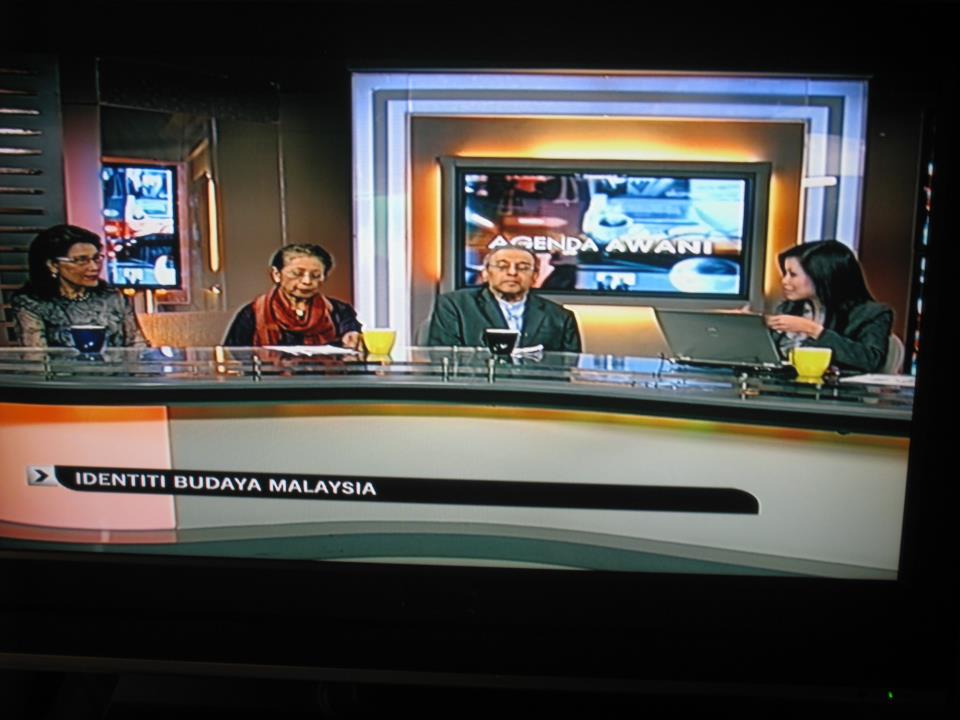
Or so claims Jeanne Brett in a recent Harvard Business Review blog post. I will agree that most of the multicultural teams I’ve worked with over the past 28 years have been dominated by a sub-group of members. My guess is that’s the same for most teams, no matter the visible diversity of their composition.

This idea caught my attention, and I also really liked that rather than the usual analogy of talking about multicultural teams as symphony orchestras or likening them to herding cats, Jeanne relates multicultural teams to fusion cuisine. And who doesn’t like fusion cuisine? Way to sell multiculturalism!

“It turns out that fusion teams often … break a large team into smaller subgroups, encourage informal conversations, and thereby get input from previously quiet team members. Eventually, the subparts have to be integrated back into a whole; this turns out to be less of a problem than you’d think. In the teams we studied, the trust and respect generated within the subgroups made it reasonably easy to facilitate collaboration in the larger group.”

Another of Jeanne’s points very much echoes what the six expert, globally dispersed authors of Cultural Detective Global Teamwork have to say. Many of you know what a dynamite package that is and, if you don’t, please be sure to check it out! To quote Jeanne’s post:

“We’ve come across team leaders who achieve the same result (getting the most out of all cultural subgroups) by carefully establishing team norms at the start of a project. For example, we know of one manager who was leading an English-language software-development project; English was not his first language. In fact, his English was strongly accented. When he met with the team for the first time, he told them, ‘You’ve probably noticed I have an accent. If I could get rid of it, I’d be happy to do so, but since I cannot, we’re going to have to communicate … regardless of my accent or for that matter yours. If you do not understand me, or one another, whether it’s because of accent or anything else, we need to communicate until we do understand.'”

What do you think? In what ways are multicultural teams like fusion cuisine? What are some of your tried-and-true best practices for multicultural teamwork?

New Restaurant Builds Intercultural Communication between Deaf and Hearing Cultures

Ever read or watch something, made for one purpose, and realize how completely perfect it is for another purpose? There is definite joy in that, right?

Yesterday Anna Mindess sent me a link to her  latest food blog. As you have learned by now, our Cultural Detective Deaf Culture co-author very deftly combines her passions for food and new restaurants with her passion for intercultural. Her newest restaurant review teaches us so much about Deaf Culture that I’ve added the video to our CDTV channel. Take a look:

What does this short video teach us about Deaf Culture? About hearing culture? About cross-cultural communication? Please share your responses with us by clicking “Leave a reply” below.

For those of you interested, here are a couple of paragraphs from Anna’s original post: “While Mozzeria proudly holds the distinction of being San Francisco’s first deaf-owned restaurant, the Steins prefer that the focus remains on their food. There is no posted sign to alert customers that many of the employees are deaf. Melody and Russ toyed with the idea of putting an explanatory sheet about Deaf culture in the menu or name tags on the servers identifying who was deaf or hearing, but dropped these as unnecessary. Basically, they believe, if patrons enter with an open mind, the communication will work itself out — and it usually does.

This low-profile set-up stands in contrast to probably the first, and definitely the most famous deaf-run dining establishment in the world, Café Signes in Paris, which I visited shortly after its opening in 2003. That cafe’s menu comes with an explanation of culturally appropriate tips — in Deaf culture, not French culture — for attracting your server’s attention. The list is a great example of the universality of much of Deaf Culture* (the sign languages, by the way, are different in each country). A waving hand, a stomp on the floor, a slight tap on the arm, the toss of a light object within the visual field, instituting a chain of taps among neighbors around the room will all work as attention getting devices. But in the end, Cafe Signes installed small light signals at each table so diners need only flick a switch to get attention.

At Mozzeria, having servers who can all sign (regardless of their own hearing status) makes for an accessible “deaf-friendly” environment. It also carries side benefits for hearing diners. In many restaurants, attempting to get the server’s attention for a simple glass of water can often feel like trying to flag down a racer at the Indy 500. Since the eyes are such an important part of Deaf culture, however, most deaf people are especially attuned to visual cues. I was thrilled to find that to attract my server’s attention at Mozzeria, even from the other end of the long narrow space, all I needed to do was to establish eye contact and raise a finger or even an eyebrow. Hearing customers also seem to appreciate the relatively low noise level which permits actual conversations with their tablemates. (Mozzeria’s hearing employees do set background music nightly, but it is never overbearing).

While Mozzeria has become  a new San Francisco must-visit-destination for deaf visitors from across America and around the world, both deaf and hearing diners probably care more about chowing down on some awesome pizza and all signs point to the fact that this is what you’ll find at Mozzeria. In the end, it might not matter that much who made it all possible. Indeed, a recent Yelper (who failed to mention if he had been enjoying some of their well chosen beer on tap or glasses of Italian wine) didn’t even realize that the staff was mostly deaf, “thought they were just being all Italian, waving their arms around and such.”

Check out more videos on Deaf Culture by visiting our CDTV: Cultural Detective’s channel on YouTube. You’ll see a bunch of package playlists at the lower right. Select Deaf Culture, and watch the videos!

Why is Intercultural Competence Helpful? The Case of the Ion Exchange Resins

Is there a bottom-line business benefit to intercultural competence? As someone who has lived and breathed cross-cultural and intercultural business competency for well over thirty years, that question tends to elicit a chuckle in me. And today, the person on the phone who asked me that question reminded me of a story.

You see, just yesterday I received an invitation to an “OB-OL-kai” in Japan, a “get together of Old Boys and Old Ladies,” a reunion of a group of colleagues that I miss terribly and would love to party with, again, face to face. We went through a lot together. They are some of the most talented professionals I’ve had the pleasure of working with in my career. And a few members of that group were involved in the story I’m about to tell you:

Cultural Detective and the Case of the Ion Exchange Resins

We worked for a multinational business that globally sourced ion exchange resins. IERs are small beads used to separate, purify or decontaminate; they are used to make ultra-pure water, for example. Don’t worry about the technicalities; this story focuses on how the people worked together.

In this case, the IERs were produced in southern France, at a facility that was one of the absolute best in the world. My client imported the IERs to Japan, selling them primarily to the semiconductor manufacturing industry.

The Japanese customers had extremely high quality standards, and the French-produced IERs consistently met all the customer’s requirements. The product was well within spec. But, the Japanese customers were worried: occasionally the IERs they received from France would vary slightly in color. One shipment might arrive quite clear, the next shipment more yellow or orange. Always the specifications were met. The IERs functioned to their purpose. But the color varied.

“The color doesn’t matter,” the French vendor explained. “The color has absolutely no impact on the performance of the IER.”

“Yes, that is true. We understand that color does not affect performance,” came the reply from the Japanese customer. “But we are concerned about why there is a color variation? We feel it must indicate a variance in the production process itself. There must be some variable in production that is not consistent and could be improved.”

A classic cultural gap: a focus on result vs. a focus on process. Does the product perform as required? Or do we look at continuous improvement of the production process itself?

In this case, the argument could quickly produce a stalemate, with both supplier and customer insisting their view is “correct.” The French could insist that their IERs are the best the customer will find. As long as the customer doesn’t find an equivalent product, that could be ok. But, it’s not a very good answer on a global stage, where there always seems to be another supplier waiting in the wings, with cheaper cost, easier shipping, or more commitment to listening to the customer.

Possible results of the vendor insisting that color doesn’t matter?
  • Lost customer (and this was a lengthy and very lucrative relationship),
  • Lost business/profit/cash flow,
  • Lost investment in developing this customer,
  • Huge reinvestment to develop a new customer of the same caliber,
  • Loss of opportunity to improve their product and their production process,
  • Not to mention the human aggravation.

The Japanese, in turn, could blame the supplier. “They are not committed to being the best they can be. They are resting on their laurels, on their prior success. We need suppliers who strive to maintain their leading edge. We need a supplier who listens to us and respects us.”

Possible results of the customer insisting color variation matters?
  • Diminishing trust of, communication and collaboration with the vendor, leading to
  • Loss of a strategic vendor,
  • Loss of the investment in selecting and developing the vendor,
  • Huge reinvestment to source and develop a new vendor,
  • Major time and financial commitment to establishing a relationship and educating a new vendor regarding customer needs, in hopes that the new relationship might become a strategic partnership.

I have seen this push-pull occur so often in my career. It frustrates those involved, it causes aggravation, it wastes time, and it wastes money. Take a moment to put some money to the points above, to calculate the “bottom-line impact” of such a simple cross-communication. In this industry, it is easily in the millions of dollars. And why? Due to pride, to arrogance, but mostly due to ignorance: not really understanding cultural differences and how to navigate them effectively.

And what might an interculturally competent solution look like? We know it involves multi-directional bridging, and systemic as well as interpersonal solutions. And, usually, such interculturally competent solutions are win-wins for both customer and supplier.

How so? Well, the vendor could listen to the customer, learn from the customer, even though the customer’s points don’t pertain directly to the product performance. In this way, the vendor would:
  • Strengthen trust and teamwork with the Japanese customer,
  • Could very well improve the quality of its manufacturing process, which in turn
  • Could help ensure it remains best-in class.
  • The customer will refer more customers to the vendor, due to the strong relationship with and excellent quality of the vendor, and the vendor’s global markets will grow.
In turn, the customer could voice its praise for the vendor’s quality, and explain that it’s intentions are collaborative and collegial; to help both vendor and customer be the best they can be. The customer could apologize for the hassle, and offer its process expertise to the vendor. In this way, the customer would:
  • Strengthen a very lengthy and very strategic vendor relationship,
  • Improve the cross-cultural skills of its staff, enabling them to partner more effectively with other vendors,
  • Improve the customer’s reputation in the global marketplace, as one of collaboration and loyalty.

Thus, the French and Japanese could work together to manufacture more color-consistent IERs, grow their global markets, strengthen their partnership, improve their employees’  skills, and polish their reputations in the marketplace. Win-win-win.

In real life, what actually happened was somewhere in between. These people were smart enough to hire a full-time intercultural consultant, after all, which I believe is one demonstration of their commitment to success. They got advice, and they did their best to put it to good use. They realized that intercultural competence is a lifelong process, contextually based, and strived to always do a bit better. It’s one of the reasons I want to travel halfway around the world to go to that OB-OL-kai!

What do you think? I would love you to share with us why you believe intercultural competence is helpful? Do you have a Cultural Defective or Cultural Effective case to share?

“Belief Holding” as an Intercultural Competence – Religious less motivated by compassion

Frequently and for many years I have cited Milton Rokeach’s The Open and Closed Mind when people ask me about intercultural competence. In this book he talks about the importance of holding beliefs tentatively and situationally instead of imposing them on or expecting them of others.

“A closed way of thinking could be associated with any ideology regardless of content. It includes an authoritarian outlook on life, an intolerance towards those with opposing beliefs, and a sufferance of those with similar beliefs.”

According to this line of thinking, open-minded people may hold their beliefs firmly and strongly, but they also respect others’ rights to believe something different. They believe their path is right for them, but they do not believe it is necessarily the one and only path for everyone on the planet. “It is not so much what you believe that counts, but how you believe,” Rokeach tells us.

In our current age of heightened religious and nationalistic fervor, “belief holding” or “permeability of beliefs” seems more important than ever. As do religious or spiritual beliefs as dimensions of culture and cross-cultural interaction.

In this context, today I read the headline, “Highly Religious Less Motivated by Compassion.” Oh dear. I read on to find out that it is the key finding of social psychologists at the University of California Berkeley, who have conducted three separate studies since 2004 on a largely US American sample.

“Overall, we find that for less religious people, the strength of their emotional connection to another person is critical to whether they will help a person or not. The more religious, on the other hand, may ground their generosity less in emotion, and more in other factors such as doctrine, a communal identity, or reputational concerns.”

Perhaps it is time for all of us who coach, train, or educate on the topic of intercultural communication to remember this important competence, which was first published back in 1960.

Help End Poverty; Make a $25 MicroLoan for Free!

You’ve heard of micro-lending, and how small loans to the right people can transform poverty and starvation into community-wide collaborative entrepreneurial spirit, leading to clean water, food, light and hope. You all no doubt have many ways in which you help make our world a better place. I’d like to ask you to join us in another terrific and easy way to help alleviate global poverty. Join our Cultural Detective team on Kiva! By clicking on this link, you can make your first US$25 loan for free! Let’s take put this offer to great use!

What do I love about loaning with Kiva?

  • 100% of the money you lend goes to loans, not overhead. Kiva has Charity Navigator’s highest rating.
  • In this case, your first loan is free!
  • You can make your a loan with as little as US$25.
  • You choose who you want to lend to. Kiva allows you to search by gender, country, economic sector, or lending organization to review profiles of people worldwide who are requesting a loan.
  • It is fun to loan with a group of like-minded colleagues. There is strength in numbers! Watching my loans get repaid, and the loans I’ve extended multiply, is even cooler because I can see how much impact all of us together are having! And, I can see how others on the team are loaning, and learn from them. (You can also be perfectly anonymous and private if you choose.)
  • It all happens online. When a loan gets repaid, you get notified. If you want to see what’s going on, you visit the website.
  • You make a loan, the loan gets repaid, you either get your money back, or you get to make another loan! The assistance just keeps echoing out, helping more and more people.
  • I so enjoy looking through all the terrific ways people find to improve the lives of their families and communities. A few minutes spent on Kiva can uplift your soul!

Micro-credit isn’t the only answer to poverty, but it sure seems to have been an answer for millions of people.

Thank you so much for being part of our Cultural Detective community. We are thrilled you have joined us in the quest to make our world a more equitable, sustainable, collaborative place. Joining the CD Kiva team is just one more way of doing that.

Oldie but Goodie: Indigenous Contributions to Global Management

Because Cultural Detective is used by so many corporations, business schools, and management development programs, we are obviously very interested in strategies for broadening the scope of management teaching.

Recently I was perusing our archives, and found this terrific article from way back in 2005, authored for us by Cultural Detective Malaysia co-author Asma Abdullah. It focuses on indigenous contributions to global management, and I thought some of you might enjoy reading it, for the first time, or seeing it again with new eyes. Oldie but goodie, in my opinion!

Mixed (&) nuts? A cross-cultural parenting perspective

A Czech and a Jamaican walk into a…. relationship. And BAM! There we have it — my reality in a nutshell. Building my relatively new multiracial, multicultural blended family has been quite the ride: challenging, but worth all the energy, inspiration and personal transformation that the experience has brought about.

The key to making things work has been clear, open and respectful communication and a willingness to self-examine and adjust, while staying authentic and standing one’s ground about the key values that must remain uncompromised. As my sweetie and I say, if he and I can’t work through our differences, how can we ever expect the rest of the world to do the same?

In our case, in addition to the divergent racial realities we experience in this society (he as a black male, and I as a white female), the contrast between our upbringings and home community cultural values is quite vast. Our parenting styles mirror those which guided each of us, and they are nearly polar opposite! The parenting of our children from previous relationships, in fact, has been the hottest point of contention.

My style veers towards the permissive side of the spectrum which gives the child the time and freedom to construct his own internal moral compass experientially through empathy (of course, not totally without guidance). This parenting tendency reflects how I was brought up and is, in a way, indicative of the degree of the privilege, which has applied to me since childhood, to be generally relatively safe, and sheltered from strife.

My partner’s parenting method is authoritarian, bent on instilling strong discipline and ethic as a means to survive and thrive in a sometimes harsh world. His is a form of tough, protective love, “a strict and clearly defined” style, as he calls it. You could see how these vastly different philosophies could drive us nuts, but we are on a journey together, determined to respect one another and find meeting places somewhere in the middle. In fact, an interesting pattern is developing where we, the parents, are adopting a little of each other’s tactics as we evaluate which are useful for our particular circumstances. In short, we are really mixing it up in the mixing bowl that our family is.

What I am most excited about is that we are learning from each other and drawing on not only the richness of what was passed down to each one of us, but also from each other’s worlds. My hope is that this, for our children, rather than confuse, will open new doors and encourage new ways of seeing the world and interacting with the people in it.

Layering Lenses: We are All Multicultural Individuals

“As an ethnic minority woman working in a large multinational firm, too often I feel like I have to learn only, to fit in. For the first time since I’ve worked here, I can now see, and explain, the unique and valuable perspective that I have to contribute as well!” she said, her face positively glowing.

The privilege of experiencing such affirming responses from Cultural Detective customers is part of what makes my job so incredibly worthwhile. This woman had just spent time creating her personal Values Lens, using Cultural Detective Self Discovery as well as a selection of Values Lenses from various other CD packages.

While the core of Cultural Detective is its process, which enables ongoing learning, collaboration and conflict resolution, the Lenses play an invaluable supporting role. As shown in the diagram above, one important role the Lenses can play is to help us realize that we are all unique, individual composites of the various cultures that have influenced and helped form us over our lifetimes. We are not “just” Chinese or Brazilian; we are much, much more than a single story, as Chimamanda Adichie so well told us.

In international cross-cultural work such as I’ve done over the past 34 years, too often people limit their definitions of “culture” to “nationality.” Culture goes way beyond nationality. Since by definition culture is the shared norms, values and behaviors of a group of people, culture can also include ethnicity, language group, physical ability or mobility, sexual orientation, or gender identity. More often than not, in my experience, while nationality(ies) tend to have a strong impact on our behavior, professional training, the culture of the organization to which the person belongs, the team culture, their socioeconomic level, generation, their faith or spirituality … all of these influence behavior as much as or more than national birth culture. It’s worthwhile for all of us to know ourselves in all the layers of our cultures: why we are the way we are, how we got to be who we are today. In this way we can better predict how we’ll respond, and better explain ourselves and our motivations to others, powerfully transforming collaboration.

People often ask me, where does personality end and culture begin? As a practitioner, my response is, “Does it really matter? Is there an objective, accurate answer?” We are all unique individuals and we are all also influenced by the multiple cultures in which we’ve grown up, been educated and trained, worked and lived. If we can keep our values and our goals clearly in mind, we can be flexible in our behavior and creative in our approaches, in order to perform at our highest and best in a broad variety of contexts.

More Than A Cross-Cultural Development Tool

As many of you may know, the Cultural Detective Team periodically facilitates online learning events which have been designed to help new users learn or seasoned users refresh their skills around working with the Cultural Detective Method and Values Lenses.

I recently had a follow-up conversation with one of our new users, whose organization is getting ready to expand overseas to Australia. Because I often co-facilitate the online learning events, I always find it enlightening to speak with some of our new CD users and online participants to get their perspective and gauge our facilitation success by their understanding of how to work with the CD Method. It really energized me to hear this particular client’s feedback so I wanted to share!

He said he was really excited by the multiple ways he realized his organization could use the CD Method for growth, in addition to his initial hope of using it to aid global expansion. Needless to say, as he continued to clarify his meaning: by discussing how CD is really an excellent business communications tool that can be incorporated into ongoing associate training regardless of cross-cultural work, and that CD provides a superb process for coaching as well — by the end of our call I was really grinning !

It always feels good when the messages we are trying to send make it effectively across the virtual training waves, but when they are taken to another level and creatively applied to the organizational needs, the time we spend educating is worth it’s weight in gold!

Eating with One’s Hands: Cause to Lose One’s Children?

Members of the Cultural Detective community are united in a common purpose: to spread respect, understanding and justice through collaboration in our world. I am so, so lucky to be able to work, each and every day, with such passionate and diversely talented people.

Yesterday was a wonderful day. We held the second in a successful series of two FOLEs (Facilitated Online Learning Events) with a globally dispersed group of movers and shakers; launched a MUCH-anticipated new package (CD Bridging Cultures); got out a blog post and a newsletter; and finished the admin area on our upcoming Cultural Detective Online subscription service. But, I was tired, and feeling rather overwhelmed by all the technology I (have to) work with. I was wondering, as many of us do sometimes, if my efforts were really having a positive impact on the world.

Just then I opened a note from one of my colleagues, a sign language interpreter who is a “foodie.” She reminded me that, yes, every little bit we put out there positively (including via technology) has constructive ripple effects in our world. Bless you and your beautiful work, Anna! Keep reading to see her note and a terrific effect of a recent social networking link.

Here’s the note I received:
Hello dear Dianne,

I am excited to share with you a post and video I made inspired by a story on your Intercultural Competence Newsfeed. Do you remember the piece about:

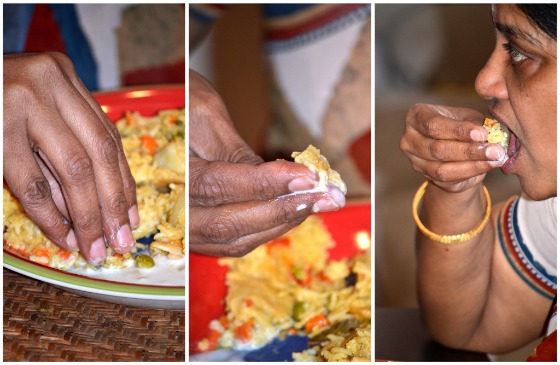
Norway authorities take away Indian couple’s children for feeding them by hand

My fascination with food and culture spurred me to write a post about different cultures who eat with their hands (including Indian, Ethiopian and Moroccan). And with the help of a friend, we shot a video of this lovely Moroccan gentleman I know giving me a lesson in eating with the hands.

I am hoping to make a series of such videos on cross-cultural food ways. Hopefully it can help build cross-cultural understanding and respect.

Thank you so much for all your wonderful work!

Anna Mindess
Co-author of Cultural Detective Deaf Culture
blog: East Bay Ethnic Eats

Below is the first video in her series, for those who don’t want to keep clicking. We’ve added it to our Cultural Detective YouTube channel as well.