If the medium is the message, what is the cultural message of a new medium?

Oakland1976

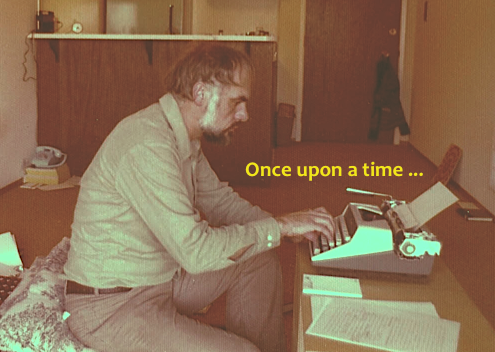
Once upon a time a carriage return returned the carriage and a folder was made of paper and we dialed the phone with a dial and mail needed a stamp. New media have changed all that though we still use the old words…

This is the fifth in a series (#1, #2, #3, #4 are here.)

If, as we have been discussing, the new media, and in particularly social networks, have been delivering such an enormous quantity of conversations into our mailboxes and our minds each day, it is important for us to look at the process of shaping the culture that is involved here. There are, I believe, two dimensions to look at. The first is what these media, as media, manifest about the cultures that create them, as well as what their own cultural message may be. The second is how can new media be used to shape discourse and create culture? We will discuss the first question today and the second in next week’s post.

When asking, “What is the cultural message of a new medium?” I am looking at the media through the lens that Canadian philosopher Marshall McLuhan offered us when he enunciated his famous dictum, “The medium is the message.” While we can look at the abundance of new media tools, platforms, and connections and ask about their role in connecting contemporary culture, it will be important for students of communication to have a careful look at each of the new media to determine what kind of message it sends simply by being what it is and working in the fashion it does.

Here are some of McLuhan’s distinctions that might provide starting points: for example, his distinction between hot and cool media in terms of its impact on the perceiver as well as the intentions of the sender. Generally speaking, hot media engage one or more senses rather completely and demand little interaction, while cool media require more participation to fill the gaps. What media and aspects of new media operate in one way or the other? Does this say something about the propensity to contribute or to lurk? This will require careful research and study, so I have to be satisfied with simply calling attention to this side of new media and their possible impacts on the users (the medium is the massage). I leave it up to experts in academic communication departments and think tanks to provide the workforce that will help us to understand what is happening to us as end-users of each medium and how their extensive use may shape culture.

McLuhan himself offered a model, which could be another starting point for steering our impressions and generating research about what a medium may actually do and how it affects cultural discourse and behavior. We can examine the media we are using and ask ourselves:

medium

What changes when we use different forms of new media?

  1. What does it enhance, what is amplified, enlarged, intensified?
  2. What does it obsolesce, what drops in prominence or even disappears?
  3. What does it retrieve, what is recovered, brought back of what was previously lost or diminished?
  4. What does it reverse, what does it do when pushed to its limits?

Movement in any of these directions may affect the culture of the users, for example the mass availability of cell phones seems to have significantly increased frequency of communication in some cultures where people were inclined to be more taciturn in face to face situations. The documentary, McLuhan’s Wake, uses the cell phone as one example of these changes: the cell phone enhances the free use of the voice; it obsolesces the phone booth; it retrieves childhood yelling (to the point where we have coaches on the train that are “zen,” where cell phone conversations are forbidden); when pushed to its limits, it reverses freedom from the wire and becomes a virtual leash for those who cannot be without it. So the starting point for inquiry here is probably sharing your own experience with peers and across generations as to how your life has been affected, changed, as new media acquired more prominent places in your life and work. Such discussion should provide suggestions for more in-depth research.

How do new media emerge from culture?
McCluhan also observed, “We shape our tools and thereafter our tools shape us.” This should not surprise us as interculturalists, knowing that what we make in the world, scooters or cellphones, are products of our inner discourse. We make culture and culture makes us. When we’re talking about media, new or old, we are talking about ways we have projected our culture on reality. They are part of our culture.

So, the question is how, from what discourse, and from what need the development of new media tools and resources emerge. While the possibilities seem infinite, still what we create emerges from discourse we have about our needs and ourselves. Here’s an impossible question, but I find it fascinating to speculate on: what the Internet and new media would look like today, if their birth and infancy had occurred through the efforts of housewives rather than the exigencies of the 1950s military. How much to we have to feel threatened, in order to move forward?  Apparently quite a bit, at least given the prevailing expression of our primitive discourse.

Today’s dominant discourse, in the socially constructed global marketplace that we live in, is Darwinian, despite the niceties we would like to embellish it with. This is rooted in the more ancestral and primitive biological discourse of survival, which at its worst is Homo homini lupus—”Man is a wolf to [his fellow] man.” This, to say the least, is unfair to wolves. “Kill and eat!” Survival shapes the first layers of primitive discourse and the stories that it tells. If we accept some validity for Maslow’s hierarchy, we must sadly admit that much of the time decisions are made in its basement, out of real or fictive insecurity and fear for one’s existence. Despite our technology and ability to create abundance, we have not been able to significantly alter or transcend this urcultural discourse.

Consequently we live in a world where both primitive and high-tech slaughter, violence, and torture contribute to the opulence of the few and the deprivation of the many despite it being a place where, paradoxically, there is more than enough to go around. New media are enablers of war by drone and pinpoint assassination. To date social media have done little to change this culture of survival by violence, though they have already provided support to movements and counter movements, revolutions and counter-revolutions. Without a shift in our primitive conversations about survival, the best intended movements and revolutions ultimately re-create the problem that summoned them forth in the first place. Harold Robbins, in The Adventurers (later made into a rather bad film), shows us a cynical picture of how revolution follows on revolution as the starry-eyed thirst for justice, almost overnight, turns into the steely-eyed exercise of power. The novel is stereotypically set in Latin America, but as contemporary history is proving, it could be anywhere and everywhere.

So creating discourse and shaping culture on a deeper level is the perennial challenge facing humanity, even as our consciousness grows about how the internecine wars of tribes, nations and classes over resources now threatens the human race as a whole. Those who are comfortable enough, throw up their hands and say, “Well it’s just human nature.” Alternative discourses of faith and philosophy, aimed at turning “swords into plowshares,” are quickly appropriated by discourses of fear and power and used to set the people’s faiths against each other.  are fearful of cultural identity, of being labeled. This challenge of managing the larger social constructions of reality, what I have elsewhere called the “urcultures” has all too little been the focus of intercultural work and study, despite the fact that the kind of insight and tools needed to do this are more likely to be found in this field than in many others.

How new are our new media?
Do new media indeed bring something fresh to life or simply bring us more and faster same-old, same-old? Are they a “game changer,” a paradigm change or shift? Does the ease and abundance of communication change the shape of how we will think about ourselves or simply widen the channels for what we are already saying and doing or does it create a new dimension? Certainly given our understanding of the social construction of our realities, it’s we who are prone to bring the same-old, same-old to the construction and use of media, and we face each new development either with hope or horror, or both. There is strong tendency to look at new media as resources, goods, tools for power to be fought over, controlled, at the same time that we would like to see their accessibility is an enabler of democracy on a level not experienced before. If so, that would signal the arrival of a culture shift of significant proportions?

A SIETAR (Society for Intercultural Education, Training and Research) colleague of mine in Argentina, Natalia Sarro, has raised the question in a recent blog post as to whether we possess our stories, or whether they possess us. I am sure that the answer is, both! One of the prevailing discourses in the contemporary self-development movement at the personal level is that we must change negative stories into positive ones, limiting ones into liberating ones. This is becoming a sacred, almost religious discourse in US culture, whence it is rapidly globalizing. It is, as so many values in the US, focused on the individual, premised on individual salvation. One comes to the altar to profess one’s faith, whether it be in God or in Mammon. Both deities are pretty popular these days.

How do new media connect us, when they also disconnect us from each other and from our past?
McLuhan’s analysis of the effects of media raises interesting questions from a cultural point of view. One of these is whether the new media are creating a new sense of community in the human family or enhancing individuation—or both. Is there anything inherent in them that leads in one direction or another? Again my suspicion is both, hesitatingly said, hoping that users and scholars will offer reflection and research on if and how this is taking place. To what degree are the human connections that new media create, “real” or rather, avoiding the essentialist tone of that question, what is the nature of the reality they construct, how does it function?

A few weeks ago I was on an extremely crowded bus for the usual half hour ride home, which in this case took an hour and a half. As the bus left the station, standing room only, just about everyone under 50 (including a few over 50 like myself) was connected to their iPhone, iPod or iPad. Almost no one was talking to anyone else. When the bus ground to a halt due to road construction and traffic obstructions, gradually people put their handheld devices away and began talking to each other, both to peers and across generations, asking questions, telling stories related to our common plight. “You had to be there.” In other words, when the bus was reduced to a stop-start, mostly stop, creep, we grounded ourselves in the physical present and connected face-to-face. Sure, there were a few phone calls of the, “Honey, I’m going to be late” kind, but the focus had shifted from the distant and virtual to the here and now as people came to the presence of warm flesh and blood. I suspect this is an example of how stress reverts our discourse to more primitive levels, in this case one of tribal solidarity.

Another tantalizing question, raised by the emergence of new media, is that of the permanence, or at least endurance of the discourse and the stories that we create with them. This is about culture, what a discourse produces, its art and its arts and its artists, its architecture and literature. Fame depends on both memory and forgetfulness. It requires we hold the memorable and create the discourse that preserves it; prevailing discourse also demands that we forget those in the crowd in favor of those who stand out from the crowd. The charm of the tiny old streets of now high-rise Singapore lives in fewer and fewer of our memories. No future archeology is likely to reconstruct it. So inevitable we ask, “What human factors are the new media rendering obsolete?”

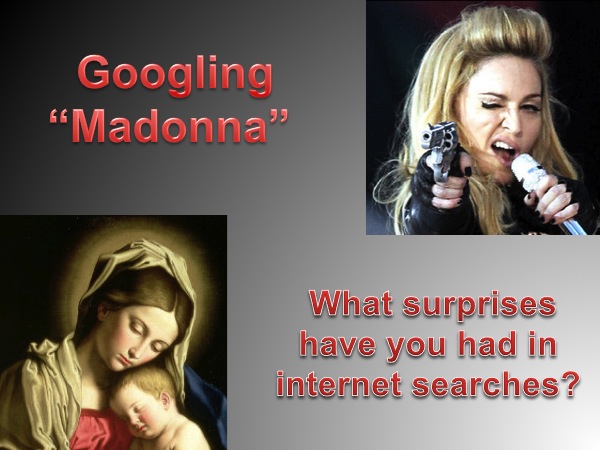
If you Google “Madonna”, most of the 230 million hits have to do with the singer, Madonna Louise Ciccone. You have to get a search a lot more specifically to find mediaeval or Renaissance paintings of the Virgin Mary, which would have been the culturally obvious meaning of “Madonna” for many only a few decades ago.
google

Will new media build on or over the cultural past? Will they create their own memorable cultural icons or lead us to a cultural fragmentation where identity is transitory and incidental? Should we worry about this? Culture is a discourse that requires consensus to exist. If, as Dominique Wolton insists, “Communication is cohabitation,” what is the human domestic architecture of new media for how we share the planet? We will look at the possibilities of rebranding identities that these media offer in the next post.

This post originally appeared in the blog of the Center for Intercultural New Media Research and is provided with the assistance of its editor Anastacia Kurylo.
Healing the Wounds of History

Playback Theatre

Armand Volkas

Cultural Detective is about collaboration, authenticity, respect, and bridging differences. The CD Method has long leveraged drama — primarily through the acting out and resolution of critical incidents — as it involves our whole person: body, heart, head and spirit.

I was delighted to learn recently about one colleague who combines our goals with one of our favorite techniques in incredibly powerful ways! On a daily basis I am astounded by and grateful for the unique contributions you, our Cultural Detective community, make to the world around us, and I’m eager to share with you this latest example.

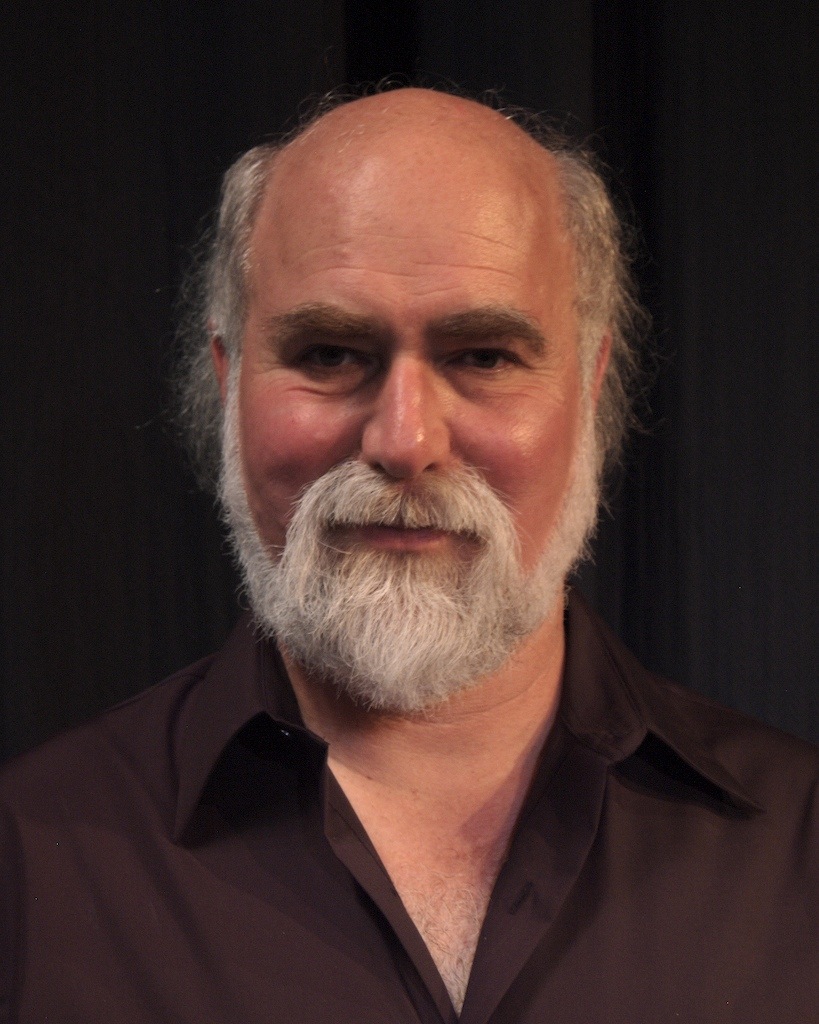
Armand Volkas is a psychotherapist and drama therapist, the son of Auschwitz survivors and resistance fighters from World War II. He is also the life partner of Anna Mindess, frequent Cultural Detective Series editor and co-author of CD Deaf Culture.

Armand created a process called “Healing the Wounds of History,” in which a group of people sharing a common legacy of historical trauma (Germans and Jews; Palestinians and Israelis; Japanese, Chinese and Koreans; African-Americans and European-Americans, to name a few) use experiential techniques to transform the pain of such legacies into constructive action.

Healing the Wounds of History is based on the premise that there can be no political solutions to intercultural conflict until we understand and take into consideration the needs, emotions and unconscious drives of the human being.”

The project involves:
  • Breaking the taboo against “enemies” speaking to each other.
  • Humanizing each other through sharing our personal stories.
  • Taking steps towards healing personal and collective wounds using creative and experiential methods.
  • Transforming historical trauma into constructive action and service.

While unfortunately the sensitive nature of Armand’s work doesn’t lend itself to filming, those of you interested in a deeper feel for it can read through the transcript of one of his keynotes, which was acted out by members of a theater ensemble as well as Armand himself.

For more information on or to support the Healing the Wounds of History project contact Armand Volkas at +1 (510) 595-5500, Ext 11 or via email at info@livingartscenter.org

Culture’s Flow (#4 in a series)

writeshareIn the first three posts ( (#1 in the series, #2 in the series, #3 in the series), I have been hinting at a metaphor for culture that I will explicitly discuss in this post. Let me introduce it with a poem, Culture’s Flow.

FlowPoem

Old conversations and new
Sometimes I ask my trainees or students to close their eyes and imagine culture as this river. Its source, high on a mountaintop, starts with the melting ice that flows from the glacial peaks where the old wisdom of our people and our history has been stored from time beyond memory. In our primeval stream of culture are stories that have been handed down for generations—they carve the deep river bed for the stream of the discourse that flows within us.

Fresh waters of discourse, tributaries join our river’s flow from other places, from others’ mountaintops, from forest-hidden springs and history-pooled rainstorms of experience. Our stream collects, incorporates, assimilates endless sources of discourse. We absorb conversations from face-to-face contact with each other, hear rumors from elsewhere. Especially today, we are inundated by electronic streams of discourse from all over the globe, pouring through virtual media, sometimes going viral. If you’re in social networks, you may get more stories, ideas, reflections, comments than you know what to do with. They overflow your banks. Little by little, and large by large, sometimes tiny imperceptible memes, sometimes by seeping flood, sometimes by tempest and tsunami, they join this river, widen and deepen it and increase its flow. There are stagnant backwaters and rich deltas.

The mix
Discourses intersect. Some join the deeper currents; others cause raging rapids and whirlpools of power and contradiction. We belong and contribute to all kinds of discourses. Everything from our nation to our favorite football team has its story, a discourse about who we are and what we are about. These discourses meet in us to create our culture, shape what we call our person and personality. They produce the endless conversation that we have with ourselves, as we noted last time. We group ourselves with others by the importance, the gravity, and the glue of what we see as our common discourse. The river is meant to nourish the land it cuts through.

When we talk about waters of ancestral glaciers for centuries, we could call them our “primitive conversations,” origins lost in time, those that we share. Then there are “prevailing conversations,” discourse in the air, on the airwaves in cyberspace, conversations that we hear and think about or just absorb, that reflect the cultural values of the specific contexts that we find ourselves in. Prevailing conversations may indeed seem different from the original ones, but then again, not always. Culture is enduring. Its discourses don’t go away, but they flow deeply and they intimately blend with the discourses of the current moment, carrying them along in the river’s course.

Forever old, forever new (Plus ça change, plus c’est la même chose!)
When I was growing up, if you needed to take care of yourself, you went to the doctor and did what the doctor told you. A generation or so later, many of us got into natural foods, natural healing and healers. It looked like a cultural revolution. What didn’t change, but actually got stronger, was the discourse that ran, “I can control my health if I do all the right things.” It is a discourse related to, “I can control my life.” “I can control my career,” etc.”

I remember a European colleague once saying to me, “You Americans think if you do all the right stuff, you can live forever.” He didn’t share my strong US discourse of control, the belief that we are in charge, or think we should be. When I was younger, medical doctors were gods (maybe they still are in some places). Now there are prevailing discourses that tell us that we can diagnose our own problems, for example, through websites like WebMD. What happens when we discuss the problems with only relying on prevailing discourse in spite of older wisdom? While Internet information may help us ask good questions, self-diagnoses based on Internet searches can also go horribly wrong.

That is just one example of how, hearing the prevailing discourse, we may think it’s far afield from primitive wisdom. Yet looking carefully, we may find that it’s just a fresh way of expressing a more ancient discourse flowing from the river’s deep streams. Sometimes there are landslides and earthquakes, events so deep and moving that they may seem to dam up the river and alter its direction, but the power of water…

Seeing culture as a river with both ancient sources fresh inflows helps us see how streams of culture combine to create our reality. We are in a cultural flow. The metaphor allows us to visualize and acknowledge the strong streams and the mix, to accept and speak about both the endurance and the flexibility, the fluidity of culture.

fullnotemptyFull, not empty
More importantly, this metaphor helps us imagine culture as inner fullness of stories and their discourse, replete with possibilities, not emptiness or alienation from our sources. Culture is forever flexible, forever moving, something that belongs to us, something that can irrigate our land and shape our landscape. Flow makes it invalid, impossible for me to stereotype or to label others or myself in fixed, inflexible ways, because we’re all part of the Flow.

Flow is everywhere, everything is flowing. We can see it, we can describe it, we hear its discourse and build our worlds with it. Yet, as the sixth century philosopher, Simplicius of Cicilia said, “You can’t step into the same river twice.” Why? The river has flowed on and you have changed as well. The challenge of viewing culture as a flowing river is that it requires us to accept that we have both inherited and that we continue to create, shape, dismantle, and destroy through the discourses that flow within us.

What can we do with this metaphor?
We can learn about ourselves and about the groups we are part of, identifying, reflecting on and taking ownership of our cultural streams. We can seek out our deepest discourse, the primitive undertows, as well as listen our prevailing self-talk and the chatter around us. We can ask what conversations are “primitive” and which are “prevailing.” What words and tones of our mother’s voice do we still hear, for example? For a humorous but confirming evidence of mother’s voice, listen to Anita Renfroe’s “The Mom Song.”

We can list or map our discourse and the courses it takes us on. I have often recommended using a personal journal for this—some years back I created a handbook on personal writing that is downloadable. When you wish to share, or explore a group’s cultural discourse, a personal or shared blog or a Facebook or LinkedIn group could focus on identifying the streams of identity we take part in. Colleagues and I developed a tool called the Cultural Detective: Self Discovery that provides some basic exercises for identifying our own or our organization’s core values, looking at how our discourse was and is being shaped by people and forces in our story. Mind mapping can be a resource for this. I use MindManager but there are quite a few software tools for this. Take a walk along your river and see what you can see…

This post originally appeared in the blog of the Center for Intercultural New Media Research and is provided with the assistance of its editor Anastacia Kurylo.

As They Say in Russia

OLYMPUS DIGITAL CAMERAGuest blog by Tatyana Fertelmeyster, Co-author of Cultural Detective Russia and Senior Trainer of Facilitators

There is a Russian saying, “If a face is ugly, don’t blame the mirror.” I have been thinking about it lately as the topic of Russia has come up in different mirrors, and it is not looking all that good.

In addition to all these, Human Rights Watch, in its World Report 2013, addresses a long list of concerns, concluding that 2012 was “the worst year for human rights in Russia in recent memory,” according to  Hugh Williamson, Europe and Central Asia Director at Human Rights Watch.

The official Russian response to all of that? It is complex, nuanced, and as contextual as everything in Russia. And most often it is about blaming the mirror or whoever is putting this mirror in front of Russia’s face. Just in the last few months Russia enacted laws that

  1. Require NGOs with any foreign funding to register as “foreign agents”,
  2. Reinterpret treason so broadly that almost anybody cooperating with foreigners can be — if necessary — accused of selling out the Motherland,
  3. Prohibit Russian orphans to be adopted by US Americans.

Two other very common Russian sayings come to mind:

  • “I am a fool? You are a fool yourself!” and
  • “Don’t teach me how to live my life!”

Considering that Russia is the largest country in the world, with the seventh largest domestic market and the second largest nuclear arsenal, it might be useful to know what they say in Russia. And it will be priceless to understand what they mean when they say it.

Cultural Detective Russia is available in our new Cultural Detective Online system. I hope you’ll give it  whirl and see how it might help make meaning of some of this.

Tatyana Fertelmeyster, Co-author of Cultural Detective Russia
Connecting.differences@gmail.com

I am a creator and destroyer of worlds – and so are you! (#3 in a series)

How We Construct Culture and Reality

In my previous posts (#1 in the series, #2 in the series), I stressed how important it is for us to develop a dynamic rather than a static view of culture. Today we will launch our boat on the river of culture and peer into its sometimes clear and often murky waters to come up with a better sense of what’s down there. We noticed last time how we are ever talking to ourselves. Everything we create is a result of this inner self-talk, this discourse, our listening. So the things that we call “culture,” in the broad sense of the word, arts, music, industry, all of these things are products of this the stories we tell ourselves, this dialogue that goes on within us and around us that helps us shape and break the rules by which we make and do things.

Blog 3.1

Dr. George Simons has long been researching the stories that make us who we are. In this series of blog posts he will be leading us in an examination of critical challenges that can lead us toward a fresh vision of culture. We will explore how we come to terms with our inner and shared identities and learn about how we construct the realities that shape our now and our future world.

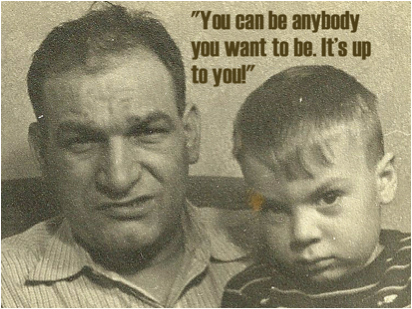
I grew up in the USA. My father was a second-generation immigrant, which often meant trying to be “more American than the Americans” because it wasn’t okay to be “too immigrant.” My father would say to me again and again, “You can be anybody you want to. It’s up to you.” “You have to take charge of your life.” “The squeaky wheel gets the grease.” Such maxims and counsel that were repeated over and over again in my family, during my education, among my peers, in the groups I belonged to, became my outlook, my world, the culture that still flows in me.

Some things we don’t ever forget. When it rains, I still hear my mother’s voice, “Take your rubbers with you.” If you saw the film Outsourced about the manager expatriated to India, you no doubt had a good howl at his conversation with his workers about the meaning of “rubbers”. (If you missed it, have a look.) Rubbers, in my case, were neither erasers nor condoms, but rubber overshoes. I don’t have any now and I haven’t had any in years, but I can still hear my mother’s voice…

Cultural discourse takes the form of memories, stories in our heads and hearts that guide us about how to act, what to think. They shape our attitudes, provide our norms. They are the raw material of our culture. Even if, and especially if these pass into the background of our minds and we no longer explicitly hear them, the ideas and feelings contained in these memories still resonate with us and lead us on.

How do we construct a dynamic definition of culture?
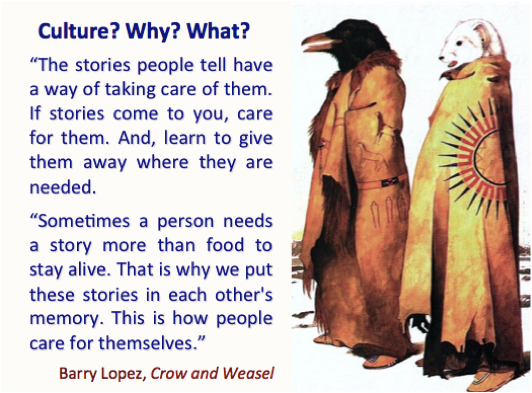
My very favorite definition of culture doesn’t come from a textbook. It comes from a children’s book called Crow and Weasel by Barry Lopez. His is the most disarming definition of culture I’ve ever laid eyes on:

“The stories people tell have a way of taking care of them. So, if stories come to you, care for them, and learn to give them away where they are needed. Sometimes a person needs a story more than food to stay alive. That’s why we put these stories in each other’s memory. This is how people care for themselves.”

Lopez furnishes us with a powerful, very powerful statement about how and why we create and pass on culture. Stories are told and retold in such a way as to shape us, giving us a common memory, common values and behavioral, even moral imperatives “for our own good.” Seeing culture this way, as adaptation to our environment, challenges our more static definitions.

Blog 3.2

Once upon a time, an anthropologist pitched tent in Borneo. Using an interpreter, he interviewed local people, looking for insight into the life and culture of the tribes native to the place. One day, questioning a local chieftain through the interpreter, the anthropologist couldn’t help noticing that the chieftain couldn’t take his eyes off a camp chair—you know, those seats with fold-up wooden frames. Nowadays, most have plastic or metal tubing, but a century ago they were simply canvas and wood. Finally, the anthropologist prompted the interpreter to ask about the chieftain’s fixation on the chair. The interpreter asked, “Why do you keep looking at the chair?” The chieftain replied quizzically, “Why do you stack your firewood that way?”

If you don’t have a use for something, you may not have a discourse for it. It may not even exist for you, or not exist in the way it exists for others. One of the critical tasks of living in a multicultural world is learning how to look at what we’ve never seen before, or have never seen in the fashion that is being presented to us. Things we’ve never “seen” before may not be physical artifacts. They may be feelings and perceptions. They may be opinions, judgments. They may even be colors – not every culture sees or names colors in the same way. We miss out on discourses that drive other people that would never drive us or might “drive us crazy!” These are not easy to discover, certainly not as obvious as puzzlement about a camping chair. Still, ask we must. We are embedded within a cultural discourse that we treat as real, but that is created by, as well as limited to what our own stories have to tell us. 

Blog 3.3Who creates?
In our times, realities, different from and deadly to each other, run rampant. Like it or not, we are challenged to understand our culture, other people’s culture, become familiar with the discourse that drives our behavior, our creativity, and perhaps brings us together in new and different ways and allows us to peacefully cohabit the planet.

So we must ask, where do our realities, where does this culture come from? Well, since culture is a conversation, since it’s discourse, it’s coming from you and me! It’s coming from everybody within earshot, from every handheld device connected to ours. Discourse requires people. It’s going on all the time, and, whether we intentionally listen to it or not, it seduces us with its themes and memes.

Sometimes, probably more often than we think, we deliberately attempt to create realities for ourselves and others. We work on shaping a reality that serves our purposes through the stories we tell in social media, traditional media, conversations with others, as we rehearse and repeat these stories in our own heads. We are as much the creators of these discourses of culture as GM and Volkswagen are designers and manufacturers of automobiles. Like the family car, some discourses can be very helpful and humane. Other discourses can be quite ugly. Like a fast set of wheels, you can use your inner discourse to rob a bank or save somebody’s life by rushing them to the emergency ward.

Roger Peterson, a US academic, is quoted saying this—and I like it:

“The collective memory [the discourse that we share] is systematically unfaithful to the past in order to satisfy the needs of the present. In other words, we attempt to address the present by reconstructing the past as if it always existed in the way we now adopt it.”

Through the stories we tell ourselves we produce a discourse. This discourse is the dynamic way we collectively create the cultural constructs that put our diverse realities, our cultures together. These constructs may be the bearers of mythology, fictional imagination, or as we all know too well, political propaganda. People are competing with their stories to create the realities they want for themselves and for others. For the sake of consistency and credibility we try to present our new story as the true and eternal story.

Enter the discourse of new media
How are new media affecting, constructing this flow? It is probably too early to tell, but certainly not too early to pay attention. For sure, they are being used both in traditional and novel ways.  Certainly they have multiplied by a factor of Xx the sheer volume and range of participation within one generation. They can be the conveyors of the traditional discourse which we consider wisdom, discourses that certain of us would like to impart to the rest of us, philosophical and religious, or New Age ideals; at the same time they are also the tools of revolution and the conveyors of revolutionary values, often drawn from the same sources, but re-expressed and broadcast in nanoseconds in a volume that hitherto would have been deemed sorcery.

How do we sort out what is new and fresh from what is newly or freshly restated to fulfill a desire or to meet a contemporary challenge? The wish to “sort out” in some definitive way is perhaps a false aspiration, a question to which there is no answer, a cul-de-sac, whose alternative is ongoing reflection as an essential part of our reality construction process. In new media, as in any other media that we use to create reality by discourse, these fresh tools are appropriated to change and introduce the realities that its authors, consciously or unconsciously, wish to disseminate.

Blog 3.4We all know that the Internet allows us to create reality ex nihilo. Fake user names create “people,” as do avatars of “aliens.” We even build virtual worlds that allow people to accept a second and a third and perhaps an infinite number of lives and realities. If you can imagine it, say it, you can be it. Yea, “Ye are gods.” Like the Jehovah of Genesis, we say, “Let there be…” And behold, there it is! And, if we are the ones who said it, we are also likely to proclaim that it is good. Like Shiva of old, I am the creator and destroyer of worlds – and so are you!

Charlatans, con men, name changers, shapeshifters and princes donning pauper’s clothing are not new to our human story. But the possibility and the temptation to creation on a quasi-divine level, and the consequences for doing so have never been so available and up for grabs. Even so, we like to imagine the world as somehow stable and static, at least in our desire to create something solid and lasting, even or perhaps especially in a virtual environment. Our human minds and hearts, even in intangible media, are inclined to treat our creations, our culture as real, not constructed.

John Lennon, a great interculturalist in my book, said “The more real you get, the more unreal the world gets.” The more you can get perspective on the discourse that flows around you, the better chance you have of seeing these things, not as useless or false, but for what they are, our attempts to construct things for benefit, for surviving and succeeding. We will look at this again as we seek a fresh cultural discourse to reshape our perspective. Meanwhile, how do you react to this fearful relativity of reality, or to the multiplicity of realities that new media have put at our disposal and which often invade our stability? What have you created as real for you? Are there real worlds, or only virtual ones…?

In Cultural Detective: Self Discovery® we offered some exercises to help you listen to your inner conversations and stories. These are only starting points. In this blog you will sometimes see pictures I have extracted from my past. This is not an exercise in nostalgia or ego promotion, but a suggestion that you might also explore the images and sounds of the past to bring the sources of your cultural discourse into focus.

This post originally appeared in the blog of the Center for Intercultural New Media Research and is provided with the assistance of its editor Anastacia Kurylo.

Global Teams in Theory and in Practice

Global-TeamGuest post by Vicki Flier Hudson

I once heard a Zen Buddhist monk say that the definition of suffering is the gap between what is and what we think should be. The wider that gap, the more we experience stress. Today’s global virtual team, without the right tools, might end up spending a lot of time in that gap. Most teams want to becoming high-performing units with all individuals feeling valued, all cultures being respected, and all tasks getting completed on time. The reality can look quite different, however. In today’s taxing environment, many teams find themselves reacting to fires, completing their tasks but without the benefit of time for intentional reflection or action.

As an intercultural practitioner I’ve had the privilege of working with a variety of global teams in industries from manufacturing to finance. Many of them display similar characteristics. They are often comprised of talented individuals who appreciate cultural diversity and want to collaborate effectively. But why do few teams achieve that vision? What causes the gap between that desire to collaborate and the reality of division or confusion?

So many factors play into the health of a global team, some of which defy explanation — call it chemistry, dynamics, or magic. Some of the factors, however, are more visible. For example, I see many teams become misaligned because they do not have proper communication protocols in place. They make false assumptions about shared understanding of terms or processes which can delay projects. Cultural differences also play a significant role in the effectiveness of global teams. Team members might run into disparate cultural approaches to a project, and rather than observe the problem objectively they immediately begin jumping to conclusions and/or negative evaluations. This premature leap can cause them to chase down incorrect solutions and again delay the project. Also, the team may not take full advantage of the diverse perspectives and resources that the members provide.

How do we close this gap between the theory of a collaborative team and the practice of one? First, a global team must realize that intercultural competence is a learned skill, in some ways like welding or computer programming. Cross-cultural skills may be harder to acquire or measure, but they must be studied and practiced. Cultural Detective Online is an incredible tool for global teams to unite around and hone their intercultural proficiency.

CD Online makes it possible, for example, for teams represented in fifteen countries to come together in a virtual training room and explore several important aspects of collaboration. First, they learn to separate objective facts from their perceptions of situations. That skill alone can increase team trust dramatically. Then they learn through what lenses their colleagues might be looking, and how those values impact the outcome of a business problem. Imagine eighteen members of a global team, all online and on the phone, working through a CD Online scenario together that illuminates the values of cultures they work with every day. Everyone gets to contribute and they physically practice those vital cross-cultural skills right there in the training.

I feel a great sense of excitement about what Cultural Detective Online does to increase the effectiveness of global teams, and not just in theory. Join me and the Cultural Detective team as I walk through a case study of a virtual training designed for a global team using CD Online. This event is free and will take place April 9, 2013. To learn more about this event click here, or to register please click here.

Global teams have amazing potential. What tools have you used to get your global team to high-performance?

Vicki Flier Hudson, speaker and Chief Collaboration Officer for Highroad Global Services, inspires people to live, work, and build teams across cultures. She has helped countless large-sized corporations establish successful operations between the United States and India or Europe. Vicki is a certified administrator of the Cultural Detective methodology and the Intercultural Development Inventory (IDI). She has been featured on NBC News, and many of her articles have been published in a variety of magazines.

Cantemos las mañanitas

(English follows the Spanish)
Para muchos de nosotros los que hemos pasado alguna temporada de nuestra vida en un punto geográfico de América Latina, escuchar Las mañanitas nos hace brincar el corazón. Las hemos tomado prestadas de la tierra azteca, de México lindo y querido y nos hemos apropiado de más de una versión para celebrar el día de cumpleaños.

Pues bien, cantemos hoy Las mañanitas al unísono para este blog y el proyecto que Cultural Detective ha emprendido con el fin de llevarnos de la mano en el camino de la interculturalidad. En uno de sus versos dice  “despierta mi bien despierta, mira que ya amaneció, ya los pajaritos cantan la luna ya se ocultó”.

(Una versión con un personaje italiano que conocí como argentino, el Topo Gigio)

Que salga el sol entonces para todos y podamos seguir enriqueciendo este espacio, este encuentro de mundos, ideas, sabores y colores. Que podamos entretodos establecer el entendimiento de las mentes que puedan traer juntos a los pueblos.

Felicidades Dianne, Felicidades Cultural Detective.

Let’s Sing Happy Birthday

For many of us who have passed a portion of our lives in the geographic area that is Latin America, hearing “Las Mañanitas” brings joy to our hearts. We have received the song on loan from the land of the Aztecs, from “Mexico beautiful and beloved,” and we have appropriated more than one version of it to celebrate our birthdays.

So, today, we sing Las Mañanitas in unison for this blog and for the Cultural Detective project, which has been undertaken to promote our journey towards interculturalism. In one of the song’s verses it says, “Wake up my dear, wake up, look what has risen, the birds are already singing and the moon has disappeared.”

The above video is a version of the song with Topo Gigio, an Italian personality that I thought was an Argentino.

I trust the sun will come out for everyone, and that we can continue enriching this space, this meeting of worlds, ideas, flavors and colors. I hope that together we can establish an understanding of the minds that brings people of all communities together.

Congratulations, Dianne, congratulations Cultural Detective.

Happy One-Year Anniversary of this Blog!

congratulations_sticker-p217320826197787657en8ct_325Happy Birthday! The Cultural Detective blog is one year old!

A year ago, on February 17, 2012, we made a commitment to blog regularly to promote cross-cultural understanding, link theory and practice, encourage best-practice use of tools, share resources and techniques, and raise awareness of the importance of building constructive cross-cultural bridges through communication. That commitment was intimidating — life and work are busy and the blog meant adding another major task.

Today, please join us in a bit of celebrating — this is our 128th post — not bad for a busy year and a new undertaking! Our quest isn’t for quantity, but rather to share a variety of quality educational materials.

Playing on the sound of the Cultural Detective, we started our blog with twin themes: 22 posts related to Cultural Effectives and 11 posts illustrating cross-cultural missteps or Cultural Defectives. We welcome your additions to these posts — we all learn from sharing  each other’s experiences!

Speaking of sharing, a terrific gift this year was the series of posts by Phuong-Mai Nguyen, as she made a journey to trace the path of Islam from its origins as it spread outward. And, while we began the blog in English, we are happy to also be able to publish some posts bilingually in Vietnamese and Spanish.

Over the last year, we reviewed 19 resources, including five books, five training and coaching tools, three movies, two sources for research data, and two assessment tools.

We shared eight exercises/activities, eight free gifts/downloads, six how-tos or tips on using the Cultural Detective Series correctly, and one half-day workshop design. We posted four different research studies and theory reviews, as well as seven pieces of feedback and guidance from customers.

We were pleased to see the blog’s popularity building over the course of the year. The blog’s busiest day was December 13th, when seven posts showed record readership:

  1. Respect for All Spiritual Traditions
  2. Developing Intercultural Competence — Online?
  3. Film Review by Sunita Nichani: English Vinglish
  4. Every Organization Needs Intercultural Competence
  5. Resource Review: GDI Benchmarks
  6. What Do You Mean? I Worked Abroad 20 Years and Scored Low?!
  7. Partnerships: 5 Tips for Turning Frustration Into Innovation

Of course you, our readers, are central to us. You are the ones doing the important work in our world, teaching, coaching, educating, consulting, training, managing, guiding, bridging, mediating. You are building intercultural competence, respect, understanding, equity and collaboration in your spheres of personal influence. So who are you?

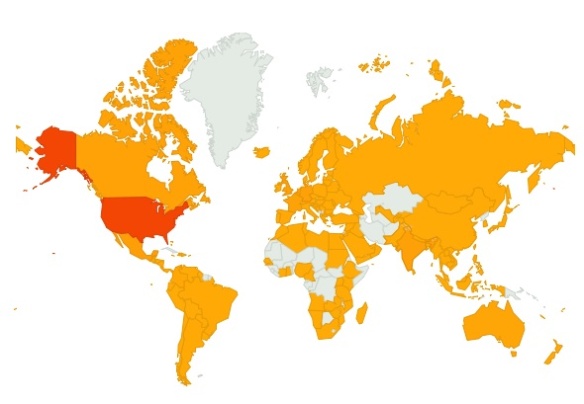
You come from 152 countries — that’s only 40 fewer than the number of UN member-countries. There is not a lot of information about blog readers except for where your IP address is registered. You, our followers, truly come from all over the world — though we could use some readers in Greenland and a few other locations, as you can see on the map below.

CD Blog Readers Year One

Cultural Detective Blog followers log on from these countries

The top 20 countries from which we draw followers are:

  1. USA
  2. Mexico
  3. India
  4. Germany
  5. UK
  6. Canada
  7. France
  8. Australia
  9. The Netherlands
  10. Colombia
  11. Spain
  12. New Zealand
  13. Argentina
  14. Japan
  15. Switzerland
  16. The Philippines
  17. Israel
  18. Malaysia
  19. Brazil
  20. Belgium

Given the diversity of our followers, and the variety and quantity of content, we wondered what you found most interesting in our first year? Surprisingly, three of our top five most-viewed posts were about food! Congratulations and many thanks go out to guest blogger Joe Lurie, who authored two of those. The top ten posts on this blog in 2012 were:

  1. Joe Lurie’s Bicycling in the Yoghurt: the French Food Fixation
  2. Kevin and Rita Booker’s Using Film in Intercultural Education
  3. An anthem for the use of intercultural communication entitled Every Organization Needs Intercultural Competence
  4. Want to Feel Ukiuki, Pichipichi and PinPin? Japanese Food Onomatopoeia
  5. Joe Lurie’s The Squid Has Been Fried: Language, Culture and the Chinese Food Fixation
  6. A book review of How Maps Change Things
  7. A post on cultural appropriation with the case in point: The Swastika
  8. Our post entitled, Infographics on World Cultures and Immigration Trends
  9. A post explaining how to cull learning from some of those images we find in social media, entitled Can You Read This?
  10. Belief Holding as an Intercultural Competence, a competence that has long been one of my favorites, referencing Milton Rokeach’s Open and Closed Mind

Our top five most commented-on posts included one that didn’t make any of the lists above: Diversity Training Doesn’t Work! Obviously a title for some debate and discussion!

Many, many thanks to our regular authors Kris Bibler, Phuong Mai Nguyen, Tereza Bottman, Maryori Vivas, and Kate Berardo. Many thanks as well to our guest authors and contributors, including: Joe Lurie, Anna Mindess, Sunita Nichani, Piper McNulty, Barbara Schaetti, Pari Namazie, Thorunn Bjarnadottir and Avrora Moussorlieva, Kevin and Rita Booker, Carmen DeNeve, Ruth Mastron, Tatyana Fertelmeyster, George Simons, and Madhukar Shukla. We could not have built this terrific blog community without all of you who have commented, shared your resources, reposted our posts, and reviewed our posts before they were published. Many thanks!

If you have a passion for writing about cross-cultural issues and are interested in joining us here as a guest blogger, please contact me. We would love to be able to provide space for talented people to share their voices! We would also welcome your ideas for stories or resources to review, as well as your feedback.

Thank you for accompanying us during this first year of blogging! We trust that you have benefitted from what we have shared, and the thoughts and comments of readers around the world. We look forward to a peaceful and caring 2013!

Culture’s Dynamic… What Are You Listening? (#2 in a series)

Dilemma

Dr. George Simons has long been researching the stories that make us who we are. In this series of blog posts he will be leading us in an examination of critical challenges that can lead us toward a fresh vision of culture. We will explore how we come to terms with our inner and shared identities and learn about how we construct the realities that shape our now and our future world.

If how we talk about culture, as I mentioned in the last post, appears too static, it is not because culture itself is static. Its dynamism penetrates every corner of life. Why this paradox? Why? We need to look at culture not as an idea, but in action.

I can’t tell how many of you are having conversations with your partner, children, dog, or friends at the moment you are looking at this blog, but what I am sure of is that, even if you’re not talking to anybody, you are talking a mile a minute. Research suggests that even in a face-to-face conversation, people are speaking to themselves about eight times as fast as they talk to each other. In a tele-conversation you can mute the microphone but not your mind. This means that, even if you’re not talking to any friends, pets, or other things in your ambience at the moment, you’re talking to yourself—unless of course you’ve fallen asleep and may be dreaming. Sometimes we are totally with these inner conversations—we call it “daydreaming.”

Screen Shot 2013-02-09 at 10.28.47 AMTalking and listening
This is to say, with your inner chatter you’re asking yourself, “What’s this all about?” “What’s he saying?” “Is this useful to me?” “Do I understand this, or this, or this?” Your mind is proposing all kinds of things about what’s going on around and in you, “What am I hearing?” “What am I doing?” “What am I feeling?” Trying to make what we are sensing fit in with what we know. There are even those little conversations we mislabel as distractions, “What’ll I do tomorrow or this afternoon or have for lunch?” We’re always talking to ourselves. We can’t help it. It’s the way we are. Some of us may have learned to meditate to slow down or to quiet our inner voices at times, but they keep chattering on most of the time, whether you pay attention to them or not. What are you talking to yourself about at this moment?

What is this inner flow all about? It is what we call “listening.” I know that sounds crazy because we’ve all probably been taught that to listen, we should shut up, stop thinking and hear the other out. Well, you can’t do that very well. What really happens is that the mind is forever proposing theories about: What’s going on here? What am I reading, hearing? Do I have a second opinion? What should I do? Is this good bad, beautiful or ugly, worth my time? Should I go do something else? And so on and so forth.

Listening is that voice—I’m describing it simply as a voice, but the flow of listening contains pictures, imaginative scenarios and feelings of all kinds that come up in reaction to what’s going on around you and in you. Actively listening means engaging with these conversations, deciding which are focal, which should take priority, which ones we wish to avoid, pursue, take action on.

This is culture!
The conversations, the discourse that you listen to is what we call “culture.” In other words we have inherited, built, built upon, and shared such discourse all of our lives. Today I’m inviting you to take a look at it in this new and different way.  Listening is culture speaking.  It is at once process and content. We have inner conversations, discourses about all kinds of things, about our goals, about the people we are, whether we’re how we should be or not. We have basic discourses about such things as: What’s a man? What’s a woman? How to live out my masculinity, my femininity? We have discourses that come from where we are born, the gangs we hang out with, and discourses that prevail at a certain point in my generation, in your generation.

That discourse not only originates from outside of us, but also springs up from within, as our unconscious mind brings these strains together. With old conversations rubbing up against the new, sometimes helpful, sometimes contradictory, we are ever awash with fresh ideas in the wired, or should we start saying, “wireless” world that we live in.

A torrent of discourse
So today the culture that builds our inner listening is a flow of discourse coming from countless sources; we live in worlds that are continually shaped by these flows of discourse within us and around us. They are continually flowing over us and into us, following old channels and carving new paths. What was once a slower moving stream of discourse has now become a torrent with the explosive growth of social media and facile, inexpensive means of communication. It sometime seems that everyone is wired, everywhere, or, again replacing the aging terminology, it seems that “everyone is wireless everywhere!”

When I was a student at Notre Dame graduate school, I kept a notebook in my dorm room where I jotted down what I needed to research at the library. Every Tuesday and Friday afternoon I trekked across campus toward the arms of “Touchdown Jesus,” the mosaic mural that welcomed scholars to the Hesburgh Library, to satisfy my learning needs and humor my serendipity. Today I can Google and Wiki most information quicker than I can stand up and walk over to the bookcase where I know the exact book that holds my answers. In terms of sheer quantity, I suspect that, now as a septuagenarian, I am learning a hundred times more each day than I did as a collegian. Shivering in the wee hours of the winter morning, I Skype with heat-oppressed colleagues in Australia or friends in Indonesia without thinking it magic. Yesterday I bought a USB flash drive about the size of the first joint of my index finger, but large enough, I am told, to hold 32 copies of the Encyclopedia Britannica I once owned. Go figure!

On the sociopolitical level, we see new media: Twitter, blogs, and Facebook, support the Occupy protests, the Arab Spring, and provide a conduit for wikileaks, all calling into question the way the culture of power is structured and exercised. Battlefields are managed from half a world away. On the commercial level we may feel helpless in the face of mind-bending electronic advertising, victims of strangers who can know everything about us, not just where but how we live, but our likes and dislikes, as well as the GPS coordinates of our smart phones at any given moment. Ought we call in the exorcist or take a digital sabbatical when our inner voices start to babble?

Dynamic culture
There is no end in sight. On one hand our identity seems diluted in the flow of discourse, sound bites and memes, while on the other hand we have powerful means to connect and coordinate our values and our actions to shape both the world we have inherited and this emergent electronic global village we now live in. Given this, we need a truly dynamic discourse about culture, not just a static definition that puts labels on what people have in common and do in similar ways, but one that enlightens us on the ways we share and influence, as well as misunderstand each other.

Please share some reflections on how you see your identity in this new context. What is changing? What is not? How are you and those about you connected, supported, or threatened by the discourse you share? What do you listen? What are the inner voices saying? What is culture telling you?

This post originally appeared in the blog of the Center for Intercultural New Media Research and is provided with the assistance of its editor Anastacia Kurylo.

Unsolicited Review

coverAfAmI just had a chance to review the newly released Cultural Detective: African-American, by Kelli McCloud-Schingen and Patricia Coleman, as well as talk to the authors yesterday in the teleconference on the topic of “Black versus African-American.” Normally, I don’t review items in this series, not just because I’m the co-author of several, but because the formula for their success both in printed versions and now online hardly requires special notice for the individual items which now number well over 50.

However, in this case I think a word is necessary. Necessary, particularly because my suspicion is that most folks reading the title twill probably think largely in terms of diversity and inclusion, rather than in terms of culture. While these issues are at a certain point inseparable, one of the weak points of the diversity movement in the USA has been to imagine itself as intercultural, with little attention, and sometimes fear of dealing with the attitudes and values of targeted groups. There is still a lot of sensitivity here. Consequently when people, particularly outside the US, see publications focused on US minorities, they may think to dismiss them as some of the same-old, same-old diversity stuff.

That is not the case here. This is truly a work of intercultural significance, despite the fact that the participant guide runs to only about 30 pages. First of all, the introduction, slightly longer than the average instrument in this series is absolutely brilliant. It gives the user an overview that is rich, thoughtful, insightful, even for, perhaps particularly for US Americans who tend to see racial issues one at a time, without a sense of heritage and culture in their historical context. But it is certainly what outsiders need and should want to know in order to work well with African-Americans.

“Truly a work of intercultural significance!”
“Absolutely brilliant.”
“Rich, thoughtful, insightful.”
“Heritage and culture in historical context.”

For the many expats going from other parts of the world to the USA, there is usually a question of, “What should I know about… How should I behave around… What should I avoid when dealing with African-Americans?” This instrument helps you cut to the chase, not by offering “kiss, bow, and shake hands tips” but providing insight into the values, strengths, and sensitivities peculiar to a part of the US population who are still to a great degree consciously heirs of a trajectory anchored in slavery, passing through personal pain even while also arriving in corporate boardrooms and occupying the Oval Office. This is a solid cultural perspective on the discourse, on the story that leads to the core values of African-Americans today, in all their diversity, and in contexts where bias and discrimination are still possible obstacles to appreciating cultural identity.

So, if you are preparing expats to go to the USA, or if you are one, this is an important tool, and now one of several dealing with internal cultural dimensions of the very diverse USA, now available in the easily accessible online versions of Cultural Detective.