Oldie but Goodie: Comprehensive Expatriate Support System

Expat-Flow

Moving overseas is an exciting yet stressful time for all involved: the person transitioning to a new position, the expat’s family who is relocating, and the organization—both the office dealing with the loss of a valued employee, and the receiving organization. We all know there are a myriad of details involved in preparing someone to work abroad, but where to start and what to include?

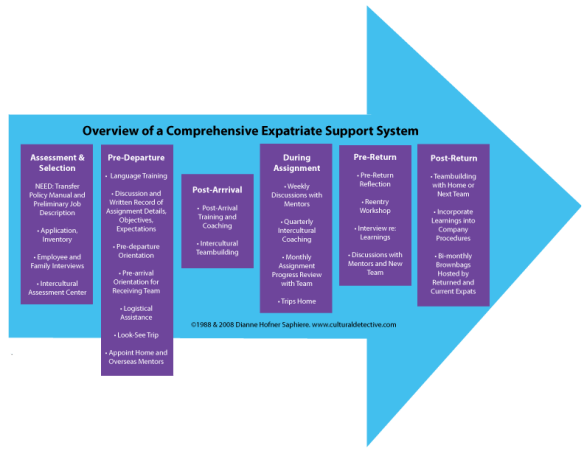
Years ago, when Cultural Detective Online was not yet a glimmer in anyone’s dreams, I put together the above guide for a client. You are most welcome to use it if it can be of assistance (click through to view a larger version), though I ask that you retain the copyright and url of the original.

I was proud to work with that client. They valued their international assignees, desiring that the employee and the relocating family become stronger from international assignment, and that both the receiving organization and the organization as a whole learn and grow. They thus asked me to “map” a process to help make that happen.

Today, Cultural Detective Online is an excellent tool to use with expatriates, relocating families, and receiving teams and organizations, at each stage of the relocation process. It offers a process as well as information at your fingertips — anytime, anywhere — to help build bridges across cultures, to help each of us better understand those we work with, and to get to know ourselves better.

“The Cultural Detective Online product is a sound investment for my work as an intercultural and relocation coach. I suggest to my clients to get a subscription for themselves.”
—Maartje Goodeve, Nascence Coaching, BC, Canada

How might you update the process in the graphic above? How could you use Cultural Detective Online in combination with other tools, approaches and your own facilitation to enhance expatriate performance?

Intercultural Work—Stuck in its own past? (#1 in a series)

GSportrait

Dr. George Simons has long been researching the stories that make us who we are. In this series of blog posts he will be leading us in an examination of critical challenges that can lead us toward a fresh vision of culture. We will explore how we come to terms with our inner and shared identities and learn about how we construct the realities that shape our now and our future world.

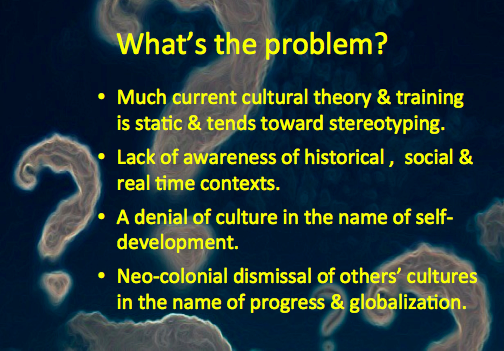
Despite a tide swell in intercultural communication and worldwide immersion in social media, the current field of intercultural communication itself seems static. This blog post articulates five ways in which the field appears to be moving too slowly for the world around it.

1. Essentialism
The word used for the kind of intercultural intervention that leads in the direction of stereotyping is called “essentialism.” One tends to assume that a certain person must inevitably share certain cultural characteristics or behaviors if they come from a particular group, ethnicity or culture. Saying that I am from the USA or that I am German or Nigerian makes a whole mess of things stick to me as stereotypes. Of course, we do have cultural characteristics, but who has them, to what degree as well as when, how and where they’ll be expressed is what we don’t know, and is what we need to learn about each other as we work together. Moreover, we belong to multiple cultural circles that may define us in variable, even contradictory ways. Interculturalists loudly condemn stereotyping but seem less adept at escaping from delivering cultural information.

There may be benefits to identifying with a group despite or in some cases because of the stereotypes, though all too easily an identity is painfully imposed on us. A little story to illustrate this. Nordstrom is a big department store in Los Angeles, in the San Fernando Valley. A young woman in my class at Loyola—let’s call her Yuko—told me how, when working there, a woman making a purchase asked, “Honey, where are you from?” (Yuko had identifiably Asian features in her face). The young woman said, “Oh I’m from right here in the Valley. The woman went on, “But where did your parents come from?” Yuko answered, “Oh, they came from the Valley, too.” The woman persisted, “But where did your grandparents come from?” Yuko answered, “Oh, they weren’t from the Valley, they were from Fresno [another California town].” In fact, Yuko’s Japanese-American family predated the many European immigrants that came at the end of the 19th and first half of the 20th century. Essentialism looks at “difference” as “not belonging.” Yuko suffered this kind of pain repeatedly just because she didn’t look like “everybody else.”

2. Ignoring context
A lack of awareness of the social and particularly historical contexts is another way the intercultural thinking and practice can remain static. A lot of people’s feelings about those different from themselves is not simply a matter of their looking or sounding different, and may be anchored in a story of things that happened in the past. Remember, for example, when Yugoslavia disintegrated into smaller states, how politics called into popular sentiment old memories of “what they did to us” 50 years ago, 500 years ago, 1000 years ago, and so on. These memories live in a culture and affect how we react to individuals in other groups. This is to say nothing of social context, particularly now. Since the financial crisis, we’ve been struggling, in a more conscious way than most of us have done in our lifetimes, with those who have and those who have not. This also provides subtext for our communication with each other.

Questions

©George Simons, blog.culturaldetective.com

3. Cultural denial
A lot of people I work with, particularly many younger people today, have or are encouraged to have an attitude that expresses itself as, “I don’t have a culture,” or “I’m a global person, a global citizen.” This suggests that prioritizing individualism, so strongly promoted in the West, makes it in a way shameful to be connected to our past, to have identifiable roots. This is true not simply of third culture kids (TCK’s), some of whom have been jetsetters while in the womb, but of others, and seems to be part of the educational process. All too many people, and not exclusively the young, have suffered by or are fearful of being labeled, of being stereotyped, as we mentioned above, or they feel a need to disassociate with what feels like the oppression of their origins, their family, religious faith or local context. Having cultural features seems a liability to them, a restriction of freedom. Inability to address this inclination is another point of stasis in intercultural work.

4. Implicit colonialism
An even bigger issue is a kind of lingering sense of better-than-thou-ness, and noblesse-oblige do-goodism that results in a kind of hidden chauvinism, a myopic view of other cultures that too easily infects intercultural efforts and holds them back. Part of this involves interculturalists’ need to come to grips with colonial history and its enduring effects in political and economic terms , not just hand wringing. We are fully aware of having a long history of European colonialism and US colonialism that doesn’t take other people’s cultural and environmental ownership seriously. So we come to enlighten them, to bring them progress, to bring globalization, of course to sell them our products. The need for cultural savvy makes it an important commodity today and this situation begs us to take a larger view. But even more important for intercultural professionals are discovery, exploration and treatment of the psychological residue of colonial thinking in themselves. Failing this, it is hard to imagine our efforts moving forward in the ways we like to think that we intend.

5. Dyadic dimensional thinking
Traditionally, in the boilerplate of the intercultural profession, we studied values in what are called “dimensions.” This was our starting point, something for which we are very grateful to the original researchers, people like Geert Hofstede and Edward Hall. In their observations and studies they raised questions and classified the answers. For example, they identified people as more or less “individualistic” or “collective,” “masculine” or “feminine,” “direct or indirect,” according to how people in different cultures reported their likely behavior given similar situations. Their work made us aware of the fact that there were areas of life in which different people had different ways. Yet, on the other hand, the resulting value labels were a product of Western academic mentality, an attempt to understand other people on our own terms rather than on theirs. This may have been the key to the antechamber of understanding, but leaves us standing in front of a second locked door.

In sum, five road blocks, often in combination with each other, that challenge intercultural thinking and practice. Will social media change our static habits? Perhaps so, because they regularly confront us with evidence from around the world, literally at our fingertips, that may challenge these notions. Yet confirmation bias, our ability to see only what we know or expect to see and make otherness fit into it, is likely to be operative in the online world as well. What think you?

This post originally appeared in the blog of the Center for Intercultural New Media Research and is provided with the assistance of its editor Anastacia Kurylo.

Our Culture on the Firing Line

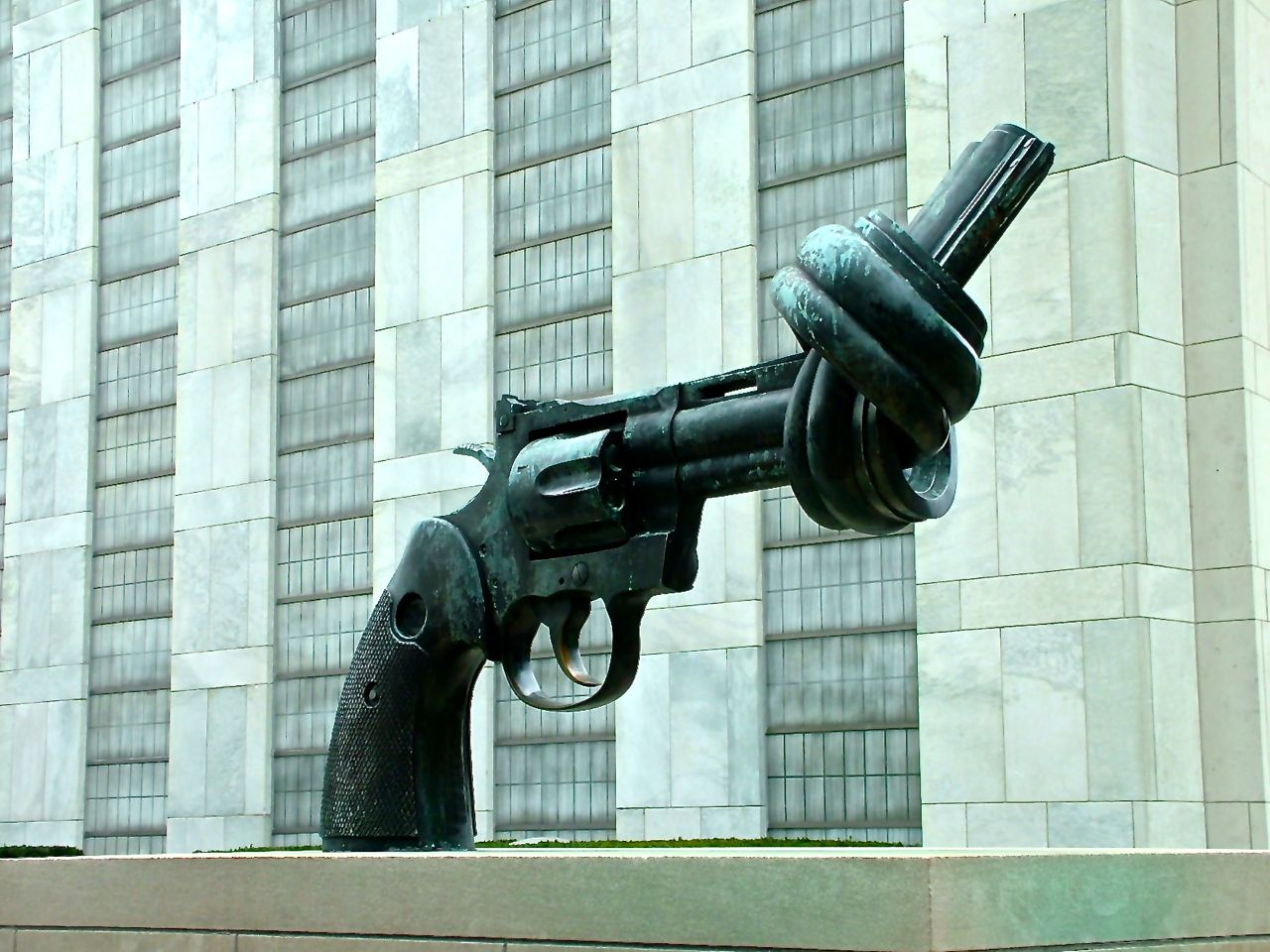
UN gun sculptureWe are very pleased to be able to share with you another guest post by the insightful and talented Joe Lurie, Executive Director Emeritus, University of California Berkeley’s International House. Sadly, the topic is again, or still, timely. We published his first post on this subject, “Language Under the Gun,” in February of 2011. Let us work to change the culture of anger and violence by this time next year!

As introduction to the piece, allow me to share with you Joe’s message, urging me to publish his post sooner rather than later: “If it can be published earlier, given the ‘heat people  are packing’ now in the current ‘ballistic’ and ‘explosive’ reactions to Obama’s proposals, that would be more likely to ‘hit the bull’s-eye’ in the current environment.”

With only 5% of the world’s population, US Americans now possess about 50% of the world’s guns. Is it any wonder then that mass shootings in the US have skyrocketed in the last decade? And in the wake of the grotesque massacre in Sandy Hook, gun sales have spiked dramatically. No wonder that sales of kids’ bullet-proof backpacks have soared, or that our culture more than ever is drenched in the language of guns!

As I watch left and right wing politicians and pundits “up in arms” on TV, battling in a “cross-fire” of blame, each side looking for a “smoking gun” to explain or cast blame for horrifying gun-related catastrophes, I’ve become increasingly aware of how our culture’s preoccupations with guns are reflected even during innocent “shooting the breeze” conversations.

We often value the “straight shooter,” yet we are wary of those who “shoot their mouths off,” and those who “shoot from the hip” or glibly end an argument with a “parting shot.” We caution colleagues to avoid “shooting themselves in the foot,” and counsel them not to “shoot the messenger.”

Without suspecting what drives our language, we are “blown away” by adorable photos of loved ones. At the movies, many audiences are thrilled by “shoot- em-up,”  “double barreled action” scenes, or are excited by car chases where actors “gun” their engines.

I often ask friends to “shoot me” an email and I’ve encouraged job seekers to give an interview their “best shot” and “stick to their guns” during salary discussions. And if a job is offered, I might congratulate them for doing a “bang up” job.

In sensitive business negotiations, I’ve advised patience, urging clients to “trouble shoot” solutions, but to avoid “jumping the gun” and to be aware of “loaded” questions. To get the biggest “bang for the buck,” I’ve recommended bringing the “big guns” to the table. We look for “silver bullet” solutions, hoping for “bulletproof” results. And when success is in sight, we say: “You’re on target,” or “you’re going great guns!”

We encourage entrepreneurial risk taking, even if the project doesn’t have a “shot in hell.” Just “fire away” when you make that “killer” presentation, and if your idea is “shot down,” don’t be “gun shy.” Just “bite the bullet” and go at it again, with “guns blazing.” Don’t be afraid to “shoot for the moon,” even if it looks like a “shot in the dark.”

Having worked as a university executive with students from more than 80 countries, I’ve noticed that students from abroad are struck by the violent language in our songs and films, and they hear it bleeding into our political discourse. Many have asked me in amazement why it is even necessary to state that guns and ammunition are banned from university residence halls. Yet, “son of a gun,” 26 colleges in three states permit guns on college campuses. And gun liberalization legislation for colleges is in the “cross hairs” in at least nine more states.

I’ve heard staff and students alike stressed by an approaching deadline, instinctively describing themselves as being “under the gun.” Sometimes my colleagues have described emotional co-workers as “loose cannons” or having “hair trigger” personalities. And when a student has gone off “half cocked,” psychologists have advised employees to “keep their powders dry” and to review “bullet point” guidelines for handling volatile personalities.

In the same way that the US is flooded with millions of guns (there are 90 guns per one hundred Americans), so our newscasts — “sure as shootin’ ” — are exploding almost nightly with murder stories, reflecting the newsroom mantra: “If it bleeds, it leads.”

When the local story becomes a national tragedy, there is “new ammunition” for both gun control supporters and opponents of fire arm bans in such places as elementary schools, day care centers, churches, or even the neighborhood bar!

The world of guns has had our rhetoric in its sights for a very long time. And our wounded language — now more than ever with a gun to its head — is telling us that our culture is on the firing line.

Joe Lurie, Executive Director Emeritus at the University of California’s International House, is currently a cross-cultural communications consultant, university instructor and Cultural Detective certified facilitator. Contact Joe via email or LinkedIn.

This post builds on Joe’s February 2011 piece, “Language Under the Gun.”

More Cultural Appropriation: The Swastika

The story we published recently about cultural appropriation reminded me of one of my favorite incidents in our series. It resides in the Cultural Detective Global Business Ethics package, and involves a corporate newsletter publishing photos from the office in India. One photo, taken at a temple, shows a swastika.

Outraged, an anonymous writer emails the newsletter editor to complain about a lack of cultural sensitivity, a lack of commitment to diversity and inclusion. The newsletter editor is crestfallen; the comment saps all his energy. It is exactly his commitment to inclusion and diversity that has motivated him to include posts from offices worldwide! How much harder can he try?

The swastika is sadly a symbol of genocide and the Holocaust for many; something to be reviled. There was an unsuccessful effort to ban the use of the swastika in the European Union. Seeing this symbol can bring forth indescribable pain and outrage for many people.

Swastika is a Sanskrit word, a religious symbol of good fortune used by Hindus, Buddhists, Jains and others worldwide. It can be seen in the art of the Egyptians, Romans, Greeks, Celts, Native Americans, and Persians as well.

To me, the swastika is one of the world’s most horrifying misappropriations of a cultural symbol! I’d welcome hearing from anyone who knows the history of Hitler’s and the Nazis’ appropriation of this symbol.

It is important for us to understand both of these very different realities. To some, the swastika symbolizes genocide and hate. To others it symbolizes beauty, the steps of Buddha. Does this therefore mean we should not use it? That we should? Can we transform its use through ongoing learning and dialogue?

Back to the incident, learning to make the most of learning opportunities such as these, to encourage cultures (organizations, communities) in which people listen to, respect and collaborate with one another, is what Cultural Detective is all about. Thank you all for joining us in this mission!

Cultural Appropriation — A Cultural “EF”ective Story

I want to share with you a very exciting “Cultural Effective” that has just come to my attention. It is a wonderful story that shows the power of saying our truth, listening with heart, and taking action on what feels right.

It seems a southern California-based fashion house, Paul Frank, hosted a huge party/event with a Native American theme. They seem to sell (or to have sold) quite a few products that include adaptations of native designs (the designer, Paul Frank, is also a cartoonist).

The people at Native Appropriations, among others, complained about cultural appropriation of native designs, and the Paul Frank company reached out to them to ask, learn and take action! They have not only issued an apology but yanked photos of the event and removed all native designs from their product line!

I don’t know the people over at “Native Appropriations,” but the work they are doing indeed looks wonderful! And kudos to Paul Frank for their openness and even eagerness to learn and develop!

There are so many ways we can inadvertently offend one another. Refusing to take offense but rather to tell one’s truth without blame or judgment, and then to be greeted by someone fully listening and wanting to hear and learn from that truth… What a great example they have set for us!

Appropriation is a slippery slope. I can think of several times in my life when a colleague or friend kindly and generously gifted me with traditional dress from their home. I wanted to wear it, to demonstrate my thanks and to show respect. And, in others’ eyes, wearing such dress, when I am not from that place, can insult. So many times appropriation begins as a compliment, as admiration. And so much is in the eye of the beholder.

While I have no direct knowledge or involvement in this story, it appears to be a good example of going beyond “political correctness” to really listening to and collaborating with one another.

“The Innocence of the Muslim” Provokes Mismatch in Cultural Understanding

Media has indeed become the strongest destructive weapon one can dare to imagine. An idiot with next to no ethics or professional knowledge can produce a stupid, laughable, amateuristic film about Islam, put it on the internet, and there you go: one ambassador murdered, hundreds wounded, thousands of others threatened with death, and escalating protests across the whole Middle East.

A silly movie with a quality that deserves to die slowly and peacefully in a mossy corner of the internet suddenly caused waves of unrest around the world.

If anyone has 14 minutes to waste and not regret, watching the trailer of “The Innocence of the Muslim” will help to confirm this and this message only: the movie was made to ignite violence, exactly what we are witnessing at the moment. Producer Sam Bacile has reached his goal, gloriously, to lure easily-agitated Muslims to fall into the trap. Now the whole world is sitting in front of the TV, thinking to themselves: “Oh dear! It is right! Islam is indeed violent.”The core of the conflict is none other than a classic mismatch in cultural understanding. For the West, it is firmly decided that freedom of speech can not be sacrificed, no matter how offensive the content may be. For many others who are religious, freedom of speech does not necessarily mean the freedom to offend others. Also herein lies the dangerous border: to what extent can something be seen as offensive?It is naiveté for protesters to demand that Western governments ban religiously offensive media. Hello? It is 2012, just in case one happens to have short-term memory. We have entered an era where a five year old children can play with their parents’ notebook and share with the whole world everything that their parents would kill to keep secret. With today’s technology, absolute control is simply impossible.Last but not least, let’s delve into that concept called “control.” Demanding protesters in Middle East should understand that governments in some Western countries do not act, and can not possibly act, like parents. They issue laws based on a certain level of democratic process, exactly the sort of democratic system that many Middle Eastern people have been fighting and dying for in the Arab Spring.
Chưa bao giờ mạng xã hội lại trở thành một thứ vũ khí lợi hại hơn cả một đạo quân lớn như ngày nay. Một gã đàn ông vô danh tiểu tốt sản xuất một bộ phim không chuyên, nực cười và ngu dốt nhằm vào Hồi Giáo, tung lên mạng, và thế là tằng tằng

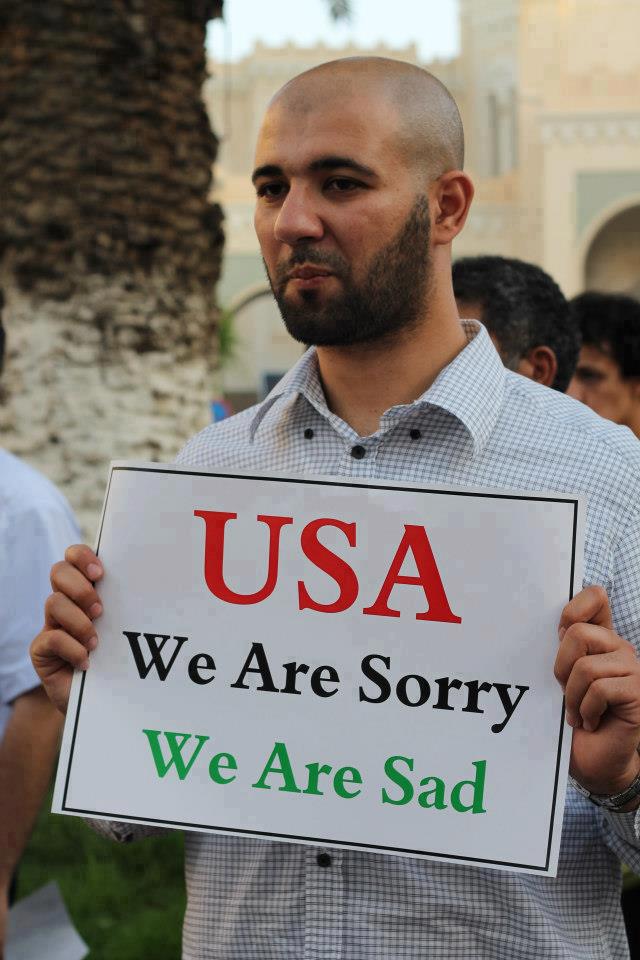
 tằng, một ông đại sứ bị bắn chết, hàng trăm người khác bị thương, hàng ngàn người bị dọa giết, và liên tu bất tận các cuộc biểu tình không ngưng nghỉ.Nếu ai đó rỗi hơi đến mức có thể vứt đi 14 phút quý báu của đời mình mà không hối tiếc, xin mời ngó thử cái đoạn quảng cáo của phim “Sự vô tội của người Hồi” (The innocence of the Muslim). Kết luận duy nhất chỉ có thể là Sam Bacile làm bộ phim này để kích động người Hồi dùng vũ lực, chính xác là kiểu vũ lực và giết chóc mà chúng ta đang được chứng kiến. Người Hồi mắc bẫy thảm thương. Các lãnh tụ Hồi giáo cực đoan thù ghét phương Tây nhân cơ hội đẩy mạnh thánh chiến. Phần còn lại của thế giới ngồi trước TV, bụm miệng kêu thầm: “Ối trời ơi! Hóa ra bọn đạo Hồi này đúng là ưa bạo lực” . Mục đích của Sam đã đạt được một cách vinh quang, chói lọi.Có 3 điểm cần nhấn mạnh ở đây. Thứ nhất, phương Tây tôn thờ tự do ngôn luận tuyệt đối. Điểm này mẫu thuẫn với văn hóa của rất nhiều đất nước cho rằng tự do ngôn luận không có nghĩa là tự do phỉ báng người khác.Thứ hai, việc những người biểu tình yêu cầu Mỹ và phương Tây phải có luật ngăn cấm các sản phẩm văn hóa xúc phạm tôn giáo là điều không thể. Bây giờ là mấy giờ rồi ạ? Năm 2012 nếu ai đó bị mắc chứng trí nhớ ngắn hạn. Một đứa trẻ con 5 tuổi có thể toáy ngoáy máy tính của bố mẹ và tung lên mạng tất tần tật những bí mật mà bố mẹ nó thà chết chứ không để lộ ra ngoài. Với công nghệ thông tin như hiện nay, cấm văn hóa mạng là một điều không tưởng.Cuối cùng, đó là việc dân biểu tình ngây thơ cho rằng Mỹ và phương Tây có thể hồn nhiên cấm cản điều này điều nọ. Luật pháp phương Tây được xây dựng trên một hệ thống chưa phải là toàn diện nhưng tương đối có tính dân chủ. Trớ trêu thay, đây chẳng phải là điều mà bao nhiêu người ở Trugn Đông đã hy sinh để đạt được trong Mùa Xuân Ả Rập đó sao?Xin gửi các bạn một hình ảnh từ Libya, nơi rất nhiều người Hồi hối hận, buồn bã về việc Đại Sứ Mỹ Steven bị giết.

What also makes people discriminate?

(Tiếng Việt ở dưới cả nhà ạ)

I choked when this picture popped up on my Facebook wall, claiming that Muslims are being oppressed in Vietnam. Within the last few days, almost 4000 people have shared the photo. By now, those who genuinely believe that the Muslims in my country are being rope tied to each other, forced to kneel down, and threatened with knives could be a million. And the number rolls on! Uncontrollably!

There is no doubt that social media is a monstrous tool to promote both goodness and dark deeds. This is an era in which a picture does not just equal 1000 words but can turn 1000 ill-informed innocent people into 1000 martyrs.No time to read, no time to research, no time to cross check, not even time to use our brains to think. All reason can be overwhelmed by the thrilling power and the irresistible waves of emotion that a snapshot or a video clip can deliver.

For your information: This is a picture from the Vietnam war, roughly 40 years ago, capturing an investigation of North-Vietnam solders. The 70,000 Muslims residing in Vietnam are not in danger and often harmoniously mix their lifestyles and rituals with Vietnamese tradition and culture.I can imagine my Vietnamese countrymen would not be happy to see this abuse of history and ignorant act, although it may have originally been posted with good intentions. Yes, note this! It is not only the terrorists with their hideous acts that make people discriminate; it is also those who blindly believe that the whole world is against them and thus turn even a friend into a foe.

Tức ói máu khi nhìn thấy tấm ảnh này trên wall nhà mình với cái tiêu đề to tướng: Người Hồi Giáo bị đàn áp ở Việt Nam. Pót lên mạng ngày 23-8, cho đến nay đã có gần 4000 người share, và có lẽ hàng triệu người trên thế giới này đang đinh ninh rằng người Hồi ở VN bị trói chằng tay vào nhau, bắt quỳ xuống đất với dao găm kề vào cổ.

Mạng xã hội khiến ai cũng cảm thấy như mình là một nhà báo quyền lực vô song. Kể cả khi nhà báo ấy ngu dốt, quan điểm sai lạc, hay như kẻ pót cái ảnh này, thì nhìn gà hóa quốc, chỉ nhăm nhăm muốn gào lên cho cả thế gian này biết mình là kẻ bị hãm hại. Rồi thì trong cơn phẫn uất, bạ ai cũng lên án, vô tình biến cả bạn bè thành kẻ thù. Ai bảo chỉ có mấy thằng khủng bố mới làm cho người ta trở nên dị ứng với đạo Hồi?

Nhiều lúc cảm thấy lo lắng vì mình đang sống trong một thế giới mà tốc độ thông tin phát triển quá nhanh khiến người thường không mấy ai đủ thời gian để thích nghi. Một bức ảnh bây giờ không chỉ còn có sức mạnh hơn 1000 con chữ nữa mà còn có thể biến 1000 kẻ ngu xuẩn thành 1000 kẻ sẵn sàng cảm tử. Ở thế hệ You-tube này, chẳng mấy ai còn có thì giờ để đọc, để cân nhắc, chưa nói đến để suy ngẫm. Đập vào mặt một cái ảnh hay một cái clip thì lập tức tình cảm dồn lên đè bẹp tư duy. Loài người bao nhiêu năm qua đúng là cừu vẫn hòan cừu (câu này ai nói quên xừ mất rồi!)

Tái bút: Gần 70.000 người Hồi ở Việt Nam sống chủ yếu ở vùng của đồng bào Chăm. Họ, cũng như đại đa số những người Hồi trên thế giới chẳng khác quái gì đồng loại xung quanh cả. Từ khi du nhập vào VN, người Hồi thậm chí còn hòa quyện tín ngưỡng tôn giáo Hồi vào các dòng tín ngưỡng khác của dân tộc – một đặc điểm chung của rất nhiều nền văn hóa châu Á.

Endangered Languages Project

Experts estimate that only 50% of the languages that are alive today will be spoken by the year 2100. The disappearance of a language means the loss of valuable scientific and cultural information, comparable to the loss of a species. Tools for collaboration between world communities, scholars, organizations and concerned individuals can make a difference. Such is the raison d’être of the Endangered Languages Project, an online collaborative effort to protect global linguistic diversity.

The first thing I noticed on this site is the incredibly high quantity of red dots on the world map, each indicating a severely endangered language. The site enabled me quickly and easily to look up endangered languages in Mexico, where I live (the closest red dot to my home is the Seri language, one I’d never even heard of!). I also looked up the language that first interested me as a pre-teen in the southwestern USA: Navajo (it is labelled “at risk” and is currently a featured language on the site). Even in my adopted homeland of Japan, as I expected, the Ainu language is ranked “critically endangered.”

The languages included in the project and the information displayed about them are provided by the Catalogue of Endangered Languages (ELCat), produced by the University of Hawai’i at Manoa and The Institute for Language Information and Technology (The Linguist List) at Eastern Michigan University. The list of collaborators in the Alliance for Linguistic Diversity is indeed impressive. The project site is definitely worth using!

Appearance Can Be a Life or Death Matter

Immediately when I heard about the attack on the Sikh temple in Wisconsin (USA), the first thought that came to my mind is that the shooter must have confused Sikhs for Muslims because they wear turbans and grow beards. There have been many similar incidents, one of them in 2002 when four teenagers burned down the Sikh temple Gobind Sadan in New York. The teens told authorities that they believed the temple was named “Go Bin Laden” (!!!)

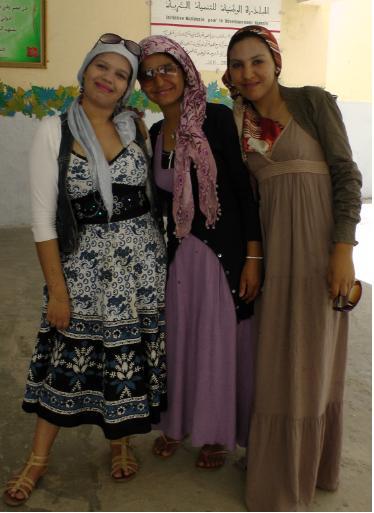
Similarly, Christian figures and nuns may be mistaken for Muslims, with their loose outfits and head coverings. A picture taken in Jerusalem may confuse many, for it can be very unclear who is Jewish, who is Muslim and who is Christian. I have asked lots of my friends and they often think that the three Morrocan Muslim girls in this picture look more like Jewish women because of their headscarf style and their dress.

Almost everwhere I go in the world, people on the streets mostly call me Chinese. I have embraced a business idea of producing millions of T-shirt that say, “Everything is made in China. NOT ME!” and sell them to desperate and angry Japanese, Korean, Singaporean and Vietnamese tourists. I’ll probably be rich and earn enough money to travel more.
When I was in Syria lately, immediately upon stepping into a neighboring house, Abdullah my friend shouted out even before the host could see my face: “She is not Chinese!” Very wise of him, because the man we were visiting belongs to the opposition, who is of course very pissed off with China and Russia for their support towards Assad’s government.
Looks do matter, regardless of how superficial they are. Of course no one should be killed, and most religions have love and respect at their core. It can be detrimental and become a matter of dealth and life in this age of speed, in which people only have time to watch, not to think, and news is more important than knowledge.

Dealing with Postcolonialism

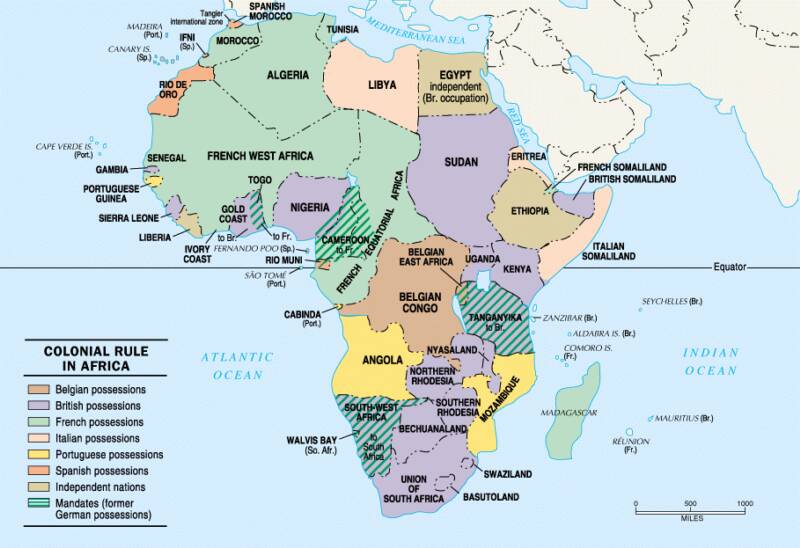
In our last blog post, The Case of Who’s in Charge: Who’s language will we speak, we got a small taste of how African colonialism and slavery have created realities that affect power dynamics and attitudes in our organizations and communities that persist to this day. From the mid-15th century to 1880, roughly twelve million Africans were torn from their homes and families from Senegal to Angola, reaching the Americas as slaves. Other millions died either during the course of enslavement in Africa or en route to the Americas. These are not facts that can or should be forgotten or set aside.

Does post-colonialism exert a negative toll on your organization and people? Is there a way to transform these potentially negative forces into tools for dialogue, understanding and organizational (and societal) transformation?

Our Cultural Detective West Africa (covering Senegal, Côte d’Ivoire, Ghana and Nigeria) authors, Doctors Emmanuel Ngomsi and Seidu Sofo, have very ably written materials that address these questions.

A short quote from their participant materials makes the main point:

“While it is true that current expatriate employees are not responsible for slavery and colonialism, or for problems linked to colonialism in this region of the world, they may nevertheless sometimes be perceived by local workers as part of the system responsible for repeated abuses. It is important to be aware of this fact, and how individual actions are likely to be understood in this historical context.

We encourage you to seize the opportunity presented by Cultural Detective: West Africa to explore the issues of colonialism and modern-day power dynamics with your West African colleagues. While there is a clear attempt on the part of many scholars (African and non-African) to blame past and current African problems on European colonization, the dynamics of colonialism and neocolonialism are complex issues, and it is crucial that business and non-business people be aware of and sensitive to the history that strongly remains in the minds of professional Africans, and often profoundly affects business relationships.

Today, there are limited forums available to openly address these issues. The workplace constitutes one of the few places in which people may discuss how they feel about historical European intervention on the continent, and perceptions of power dynamics and race relations today. Being prepared to handle these issues constructively is smart business.”

Their facilitator manual contains a section entitled “Facilitating a Discussion of Slavery and Postcolonialism,” which adds encouragement as well as how-to:

“Within the Participant Materials we have included a supplement addressing the issues of slavery and colonialism as they relate to West Africa. People are curious and want to talk about these issues, and while they can be difficult and sensitive issues to discuss, they create an important dynamic in relationships and should not be ignored. The Cultural Detective Model provides a way to explore these issues in a non-evaluative manner that can promote mutual understanding. Remember that no one point of view is ‘the truth,’ and it is rare that a discussion will result in consensus or agreement.

West Africans, Europeans, African Americans, Caucasian Americans, Latin Americans and people in the Caribbean, among others, all have different and sometimes opposing points of view on the causes and outcomes of slavery.

Contrary to a common belief among foreigners, West Africans generally are not uncomfortable talking about slavery and are willing to engage in conversations with people who sincerely and genuinely want to explore and learn about slavery and its effects.

Today throughout Africa, Europeans, Americans and other ‘White People’ may still be perceived as exploiters and neo-colonizers. Resentment remains because some believe that the best minds and bodies of the African continent were transported to the Americas. And while many agree that slavery is wrong, many West Africans also feel that if ‘Whites’ could have their way politically and socially, slavery would still be practiced.

Given the sensitivity toward these issues, foreign business owners need to be particularly mindful of their words and actions. Derogatory acts or sayings by expatriate employers directed toward West African employees are not only unkind but unwise. While private individuals react strongly to such acts, governments may also take swift and decisive action, and some have deported expatriate employers for such misconduct.

Regardless of the economic benefit that a foreign investment might bring to a West African nation, dehumanizing conduct, utterances, or work conditions are not tolerated.”

We eagerly urge you to look through these materials, and put them to good use. We would love to have those of you who work in spaces where you deal with post- and neocolonialism issues to share with us some of your experiences and learnings, so that we might all transform our practices and do our bit to heal this world of ours.