Cross-cultural Competence Enhances Productivity AND Satisfaction

Last week a new brochure, this week a new introductory presentation! Thank you all for the incredible work you do with this process and these materials, to build cross-cultural respect, teamwork, productivity and equity!!!!

Use it, pass it around, and do the good work! Thank you, everyone!

Help us Build Respect and Collaboration

brochure

CulturalDetectiveBrochure

We have an updated brochure that we are debuting. Please click on the link above to view it.

We are hoping that all of you will please pass it around, use it in your spheres of influence, and put the Cultural Detective Method to good use, building a more cross-culturally respectful, inclusive, collaborative and equitable world, in which our diverse experiences generate innovative solutions to our shared problems.

You can also find the brochure on our website:

Please let us know what you think!

Ask Cultural Detective Your Questions!

ask.fmHi everyone! We have added a new service for our community members, and trust you will join us in putting it to good use to build equitable and sustainable partnerships across cultures.

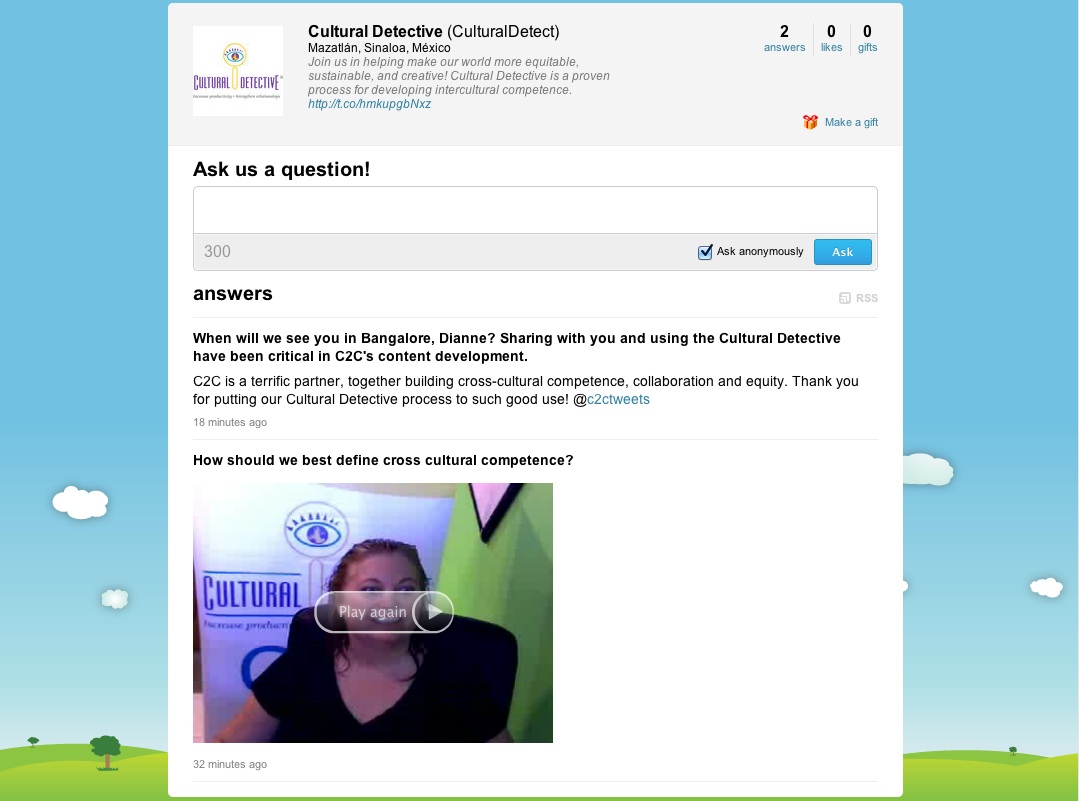
Cultural Detective now has a page where you can ask us a question, and we will text or videotape an answer to you. We just launched late last night, and this morning we woke up to two interesting questions. Below is our answer to the first. Click on the link above to view both sets of questions and answers, or share your question with us. We look forward to the dialogue!

Using Our Perceptions to Discover Ourselves: Two Iconic Embraces

We often hear that feedback says as much about the person giving the feedback as it does about the subject of the evaluation.

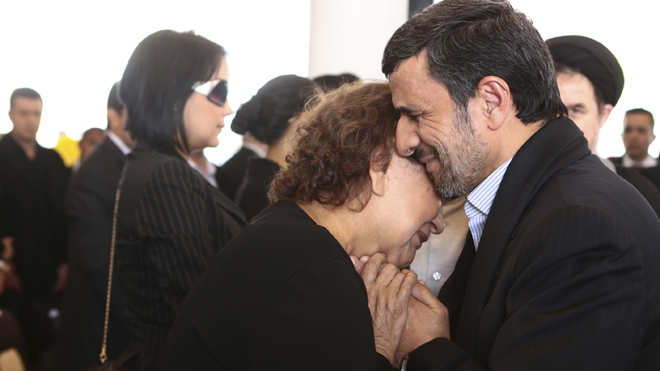
Our perceptions can tell us loads about ourselves. Take a quick look at the photo below, and take a few notes on what you see.

Mahmoud Ahmadinejad, Elena FriasKeep looking at the photo above. In case you do not already know, the photo was taken at the funeral of Venezuela’s President Hugo Chavez in March 2013. On the left is Chavez’s mother, Elena Frias de Chavez, and on the right is Iran’s President Ahmadinejad. Now, pause and take a few more notes on what you see in the photo.

Did your perceptions change between the first and second times you took notes? Before you proceed, take a moment to reflect on the values, assumptions, and beliefs that underly your perceptions.

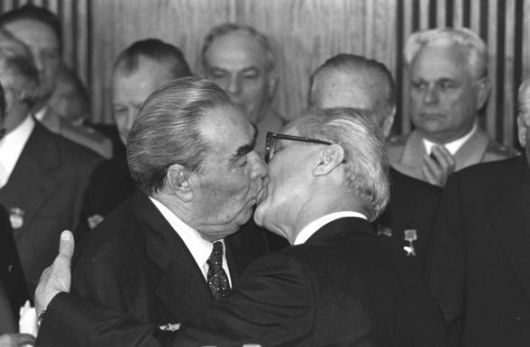
Once you’ve done that, how about looking at another photo? Same instructions: take a look at this photo, and jot a few notes about what you see. Perhaps you have already seen both of these rather iconic photos.

Breznev-Honecker_1979

Keep looking at the second photo. If you did not already know this, the photo was taken during the 30th anniversary celebrations of the Democratic Republic of Germany (East Germany) in 1979. On the left is Leonid Brezhnev, leader of the USSR, and on the right is East German President Erich Honecker. Now, take a few more notes on what you see in the photo.

Did your perceptions change between the first and second times you took notes? Before you proceed, take a moment to reflect on the values, assumptions, and beliefs that underly the perceptions you noted this second time around.

Finally, compare your perceptions, and your values, assumptions, and beliefs about both of these photos. In what ways did you respond similarly? In what ways differently? Why?

FIRST PHOTO
In fact, President Mahmoud Ahmadinejad was criticized for consoling Chavez’s mother in this way; she is not a member of his family, and thus, such touching is haram or forbidden. While my research shows the photo to be real, there are reports of the photo being doctored in order to cause problems. I personally find the actions captured in the photo quite believable: a man consoling a grieving mother and bridging cultures in the moment. Below are two sources for those of you curious to learn more about this photo and the response to it:

  1. Daily Mail article
  2. IranPulse English language news blog

SECOND PHOTO
It was quite commonplace for Communist leaders to kiss on the mouth as an expression of brotherhood and solidarity. This iconic photo was taken by Régis Bossu, a freelance photographer for European Stars and Stripes, Stern, Spiegel, and Sygma. Most observers of the time viewed this Brezhnev-Honecker kiss as more enthusiastic than usual. The photo was quickly and widely circulated.

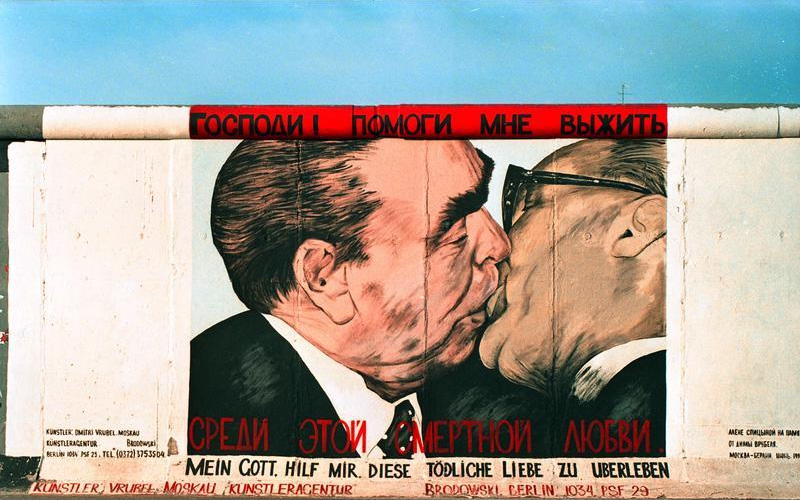
Berlin, East Side GalleryIn 1989, during the euphoria following the fall of the Berlin Wall, Dmitri Vrubel painted a replica of the kiss on the Eastern side of the Wall. If you wish to learn a bit more about the photo and the painting, here are a couple of links:

  1. Lite Strabo Stories from History blog
  2. Wikipedia

While we can learn much about history and politics from photos such as these, we can also learn about customs and values. And, perhaps most importantly, we can learn to see our own cultural filters and biases a bit more clearly. Exercises such as these can be used to complement the learning we gain about ourselves via the Cultural Detective Self Discovery.

Coincidentally, when she was proofreading this post for me, our editor, Kathryn Stillings, shared with me that she had just read this article, about our perceptions (socially constructed) of race: What Does “Black” and “White” Look Like, Anyway?: Obama and His Grandpa. I share it with you as it would seem to support, as well as build on, the point of this post. I particularly love the morphed photos at the bottom of the article.

Before I close, I’d like to thank a few of the members of SIETAR Argentina, who recently used the second photo above in a training, and reminded me of it after so many years.

And, in conclusion, I leave you today with a few quotes:

There is no truth. There is only perception.
—Gustave Flaubert

Science is nothing but perception.
—Plato

Studies have shown that 90% of error in thinking is due to error in perception. If you can change your perception, you can change your emotion and this can lead to new ideas.
—Edward de Bono
Six Powerful Ways to Build Cross-cultural Effectiveness

numeral button-sixWe have some very exciting news for you! Cultural Detective has teamed up with several of our partners to offer you SIX innovative ways to harness the innovation and power of diversity!

Yes, six upcoming events, several of which are free of charge.

Please take the time to sign up now to secure your seats, as these events will sell out quickly.

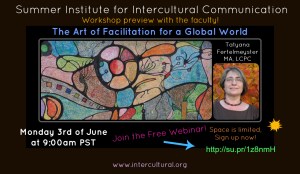
Tatyana Webinar FINAL#1: JUNE 3, Online
The Art of Facilitation for a Global World

This free-of-charge webinar will be conducted by Tatyana Fertelmeyster, and will preview three of the many dynamite learning opportunities that will be offered at the Summer Institute for Intercultural Communication in July, each of which will include Cultural Detective. Her unique technique of Spontaneous Facilitation allows her to work with individuals and groups with maximum concentration on the reality of the present moment. Click here to learn more or register.

IMG_9443#2: JUNE 5 & 20, JULY 10 & 18, AUGUST 7 & 22, Online
Enhancing Cross-Cultural Collaboration:
Demonstration of Cultural Detective Online

These events are free-of-charge. Participants learn to leverage similarities and diversity as assets, rather than minimizing or managing around difference. You will experience some of the wealth of content and process available in the Cultural Detective Online system, and see how easily the system can be incorporated into existing courseware. Participants in the webinar receive a free three-day pass to Cultural Detective Online.

Click here to view client testimonials and videos on the Cultural Detective Online system. From that page, click on “Learn More/Subscribe” for details and pricing information. To learn more about this event or sign up click here.

Flyer seminario sin

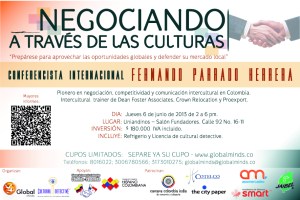
#3: JUNE 6, Bogotá COLOMBIA
Negociando A Través de las Culturas

Cultural Detective is proud to sponsor this event conducted by Global Minds. Facilitated by Fernando Parrado, it will be held in the Salón Fundadores at the beautiful Uniandinos. The event will focus on joint ventures between Colombia and India.

60772_497965080240721_1862908967_n#4: JUNE 25, Online
Coaching and the Cultural Detective: A Creative and Transformative Process

This is a brand-new, first-time-ever offering! Are you are a business leader, coach, consultant, speaker or teacher? Do you want to become culturally competent and self-confident in the global arena? In our webinar we will introduce you to a powerful and transformative coaching process for cross-cultural competence!

The coaching process leverages the core process and wealth of content in the Cultural Detective Online to provide you with a comprehensive learning experience that is stimulating, supportive and transformative! In addition to exploring key cultural concepts and culture-specific information, the collaborative and creative coaching environment helps you develop new perspectives and skills for bridging the gap between your personal cultural “sense” and the cultural “sense” of your colleagues and clients.

The webinar will be facilitated by Jan O’Brien, IAC-MCC, President of Culture-Conscious International, a coaching and consulting company based in Houston, Texas. Jan is a US/UK dual national and has lived and worked extensively overseas, in particular in the US and the South East Asia region. She is a Certified Cultural Detective® facilitator and a Master Certified Coach with the International Association of Coaching (IAC). Jan has worked with clients from many language and cultural backgrounds and has personally experienced the benefits and challenges of living and working in the global arena. To learn more or register click here.

ici#5: JULY 20-21, Portland Oregon USA
Cultural Detective Facilitator Certification

Live and in person, this two-day facilitator certification program is the ONLY PUBLIC CERTIFICATION we have scheduled this year.

This workshop will be held between Sessions 2 and 3 of the Summer Institute for Intercultural Communication, to make it convenient for you to attend and take advantage of other professional development opportunities in the same trip. Facilitated by Tatyana Fertelmeyster. This workshop will include a one-month subscription to Cultural Detective Online.

Click here to register. Click here for more information.

highroaders_logo#6: SEPTEMBER 24, Online
High-Performing Global Teams: How to Combine Virtual Training and
Cultural Detective for Incredible Results

This event sold out within 26 hours the first time we held it. This will be the second time it’s offered. Global teams have become the norm in most business environments today, but many teams never achieve “high-performance.” Why? Because team members from around the world are expected to achieve consistent results across languages, time zones, cultural values, and more but they are not given all of the skills they need to match this expectation.

Join us for an interactive webinar and learn the latest creative techniques for preparing today’s global teams to excel. Explore how global teams can come together via virtual training platforms and use Cultural Detective to work through scenarios relevant to their business challenges.

In this webinar, Vicki Flier Hudson, Chief Collaboration Officer for Highroad Global Services will walk you through a demonstration of a global team training designed for a large company using a variety of tools including Cultural Detective Online. You will gain ideas, tips, and strategies to help bring your global team together, build solid relationships, and achieve high-performance. To learn more or register click here.

Global Statistics on Women’s Rights

I’m guessing you’ve heard of “One Billion Rising,” a global action project to end violence against girls and women. They hold a mirror up to us that shows a reflection oh-so-difficult to own: that one out of three women on our planet will be raped or beaten in our lifetime, for example. Where I live, in Mexico, women disappear in alarming numbers every day.

Today I saw this new video, which I feel speaks very well to the issue. While I don’t necessarily agree with the video’s conclusion that women are THE answer, all of our talents together, indeed, are the answer.

Please help this video gain some traction, if you would. Cross-cultural sensitivity is important because it helps us achieve respect for all, a voice for all, equity and sustainability. Cross-cultural sensitivity can not be used as an excuse to abuse fundamental human rights. We hope that Cultural Detective Women and Men, available in our online subscription system as well as via printable PDF, will help us learn to understand and value our differences.

Does Cultural Detective “Work” in a University Setting?

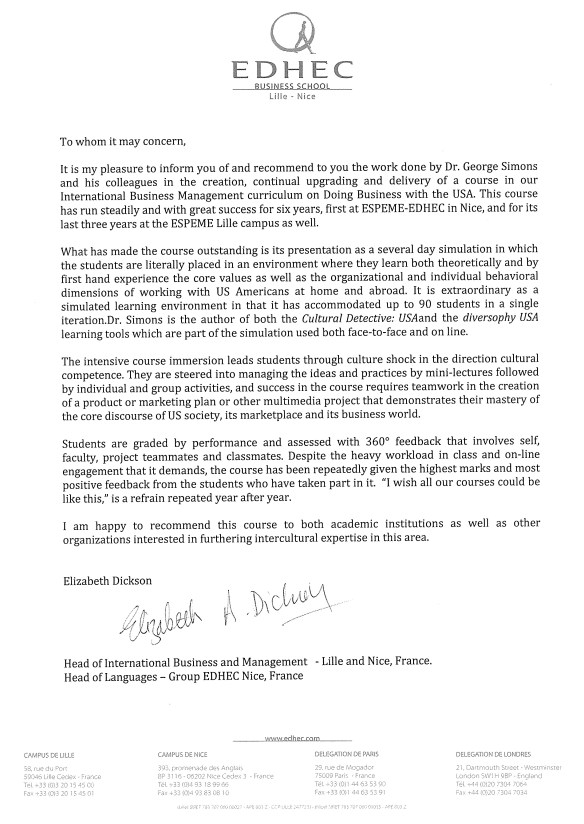
Simons-ESPEME

Click on the image to view a full-size version of this letter.

We are very proud to say that Cultural Detective has been an essential ingredient of the International Business Management Program in the ESPEME-EDHEC Business School in France over the past six-years. Dr. George Simons and colleagues have designed and delivered leading-edge courseware in fully simulated environments, spiraling around a Cultural Detective backbone. The results they have achieved have been remarkable. George has, over the years, most generously shared his experiences, his students’ projects (Blended Culture identity, comparative culture differences, movies, artwork, papers), and his designs with us.

I am thus quite eager to share with you this letter from Elizabeth Dickson, Head of the International Business Management Program at EDHEC Nice and Lille. I’m confident you’ll join me in congratulating George as well as his colleagues for the fine work they continue to do. I believe you will find it interesting to read Elizabeth’s letter, and to view what one head of a major educational institution feels have been the components of a successful international business course.

And, to answer the question in this post’s title, “Yes, by all means. There are quite a few universities on several continents using Cultural Detective to great effect.” It’s not just for business anymore.

There are quite a few other use cases that might prove interesting to you on our website.

Do One Thing for Diversity and Inclusion

Do One Thing logoIn 2001, UNESCO adopted the Universal Declaration on Cultural Diversity and in December 2002, the UN General Assembly, in its resolution 57/249, declared May 21 to be the World Day for Cultural Diversity for Dialogue and Development. The day provides us with an opportunity to deepen our understanding of the values of cultural diversity and to learn to live together better. In 2011, a grassroots campaign ‘Do One Thing For Diversity and Inclusion’, celebrating the annual World Day for Cultural Diversity was launched by UNESCO and the UN Alliance of Civilizations.

Cultural Detective is proud to announce that we have been selected as an ambassador of this global campaign. Goals of the campaign include:

  • Raise awareness worldwide about the importance of intercultural dialogue, diversity and inclusion.
  • Build a world community of individuals committed to support diversity with real and every day-life gestures.
  • Combat polarization and stereotypes to improve understanding and cooperation among people from different cultures.

Won’t you please join us in celebrating diversity and inclusion tomorrow, May 21, 2013? Below we share with you ten ideas from the event’s organizers, and we’re pretty sure that readers of this blog will have more savvy ways to celebrate global diversity and inclusion. We look forward to seeing and hearing what you do!

  1. Visit an art exhibit or a museum dedicated to other cultures.
  2. Invite a family or people in the neighborhood from another culture or religion to share a meal with you and exchange views on life.
  3. Rent a movie or read a book from another country or religion than your own.
  4. Invite people from a different culture to share your customs
  5. Read about the great thinkers of other cultures than yours (e.g. Confucius, Socrates, Avicenna, Ibn Khaldun, Aristotle, Ganesh, Rumi)
  6. Go next week-end to visit a place of worship different than yours and participate in the celebration.
  7. Play the “stereotypes game.” Stick a post-it on your forehead with the name of a country. Ask people to tell you stereotypes associated with people from that country. You win if you find out where you are from.
  8. Learn about traditional celebrations from other cultures; learn more about Hanukkah or Ramadan or about amazing celebrations of New Year’s Eve in Spain or Qingming festival in China.
  9. Spread your own culture around the world through our Facebook page and learn about other cultures
  10. Explore music of a different culture.

The campaign works through a dedicated Facebook page, serving as a platform for people around the world to share their experiences through posts and videos. Following this event, on May 29, 2013, in Baku, Azerbaijan, will be the World Forum on Intercultural Dialogue.

Share With Us Your 6 Second Videos on Crossing Cultures!

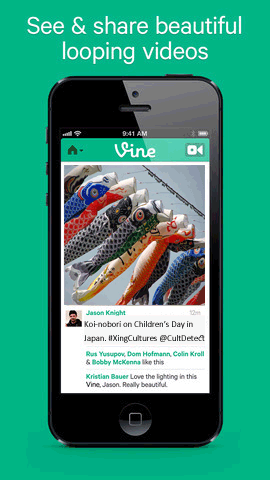
VineCDI used to really dislike Twitter — one more social media, and such short messages! We don’t need more information overload in our world, bothering us everywhere we go!

Then I reframed Twitter in my mind. I realized that those tweets (140 characters maximum) are like haiku! Their brevity encourages us to capture the core essence, the deep meaning, in a new and creative way! In that sense, Tweets are perfect for Cultural Detectives or anyone who bridges cultures, whether within the family, neighborhood, or internationally. Now I quite enjoy the medium.

Recently I learned that you can now stream video via Twitter in much the same way as you share photos via Instagram.

You download a free app called Vine, then use your iPhone, iPod or iPad to record and Tweet 6-second videos. You can also easily post the photos to Facebook. Want to see some samples? Looping videos, short and sweet: multimedia haiku.

So I thought this could be an enjoyable and useful activity for Cultural Detectives: sharing short videos with each other about crossing cultures, from wherever we happen to be based or traveling. Here is the proposal:

I have a fun and exciting challenge for you! Please, capture a short video of your experience crossing cultures: what does bridging cultures effectively, what does cross-cultural competence mean to you?

Then, Tweet it to us at @CulturalDetect using hashtag #XingCultures

And/or, post your video to our Facebook page

I’m sure this could be a whole lot of fun, and provide interesting material that many of you could use. We have followers all over the world, and if you participate and pass this on to your friends and followers, the reach will be even wider.

Looking forward to your insight and creativity!!!!

“Collide-o-culture” or “Kaleid-o-culture”: GPS for Human Beings

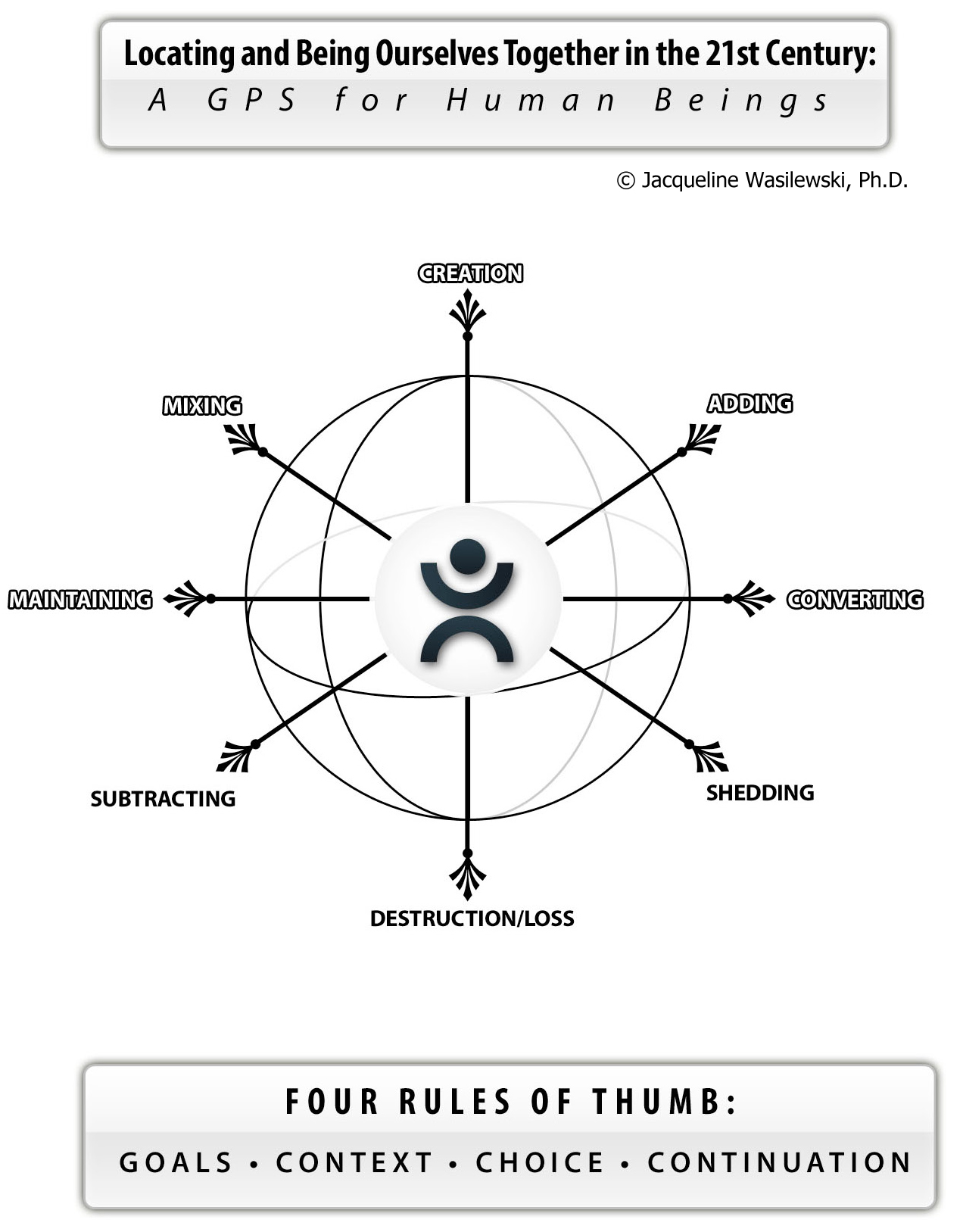
This graphic and the concepts underlying it are the work of Jackie Wasilewski.

“Collide-o-culture” or “Kaleid-o-culture”

I have long been a fan of Jackie Wasilewski’s. She is one of the brightest shining stars in our intercultural field, plus an all-around terrific human being and friend.

Her investigations are motivated by a couple of key objectives that dovetail beautifully with our work at Cultural Detective®:

  • How to include everyone (in her extended family at her holiday dinner table) in their full authenticity?
  • How to reconcile highly contrastive content (how to bridge), when it seems impossible to please everyone simultaneously?

Values ≠ Traditions
One point she makes is that values are not the same as traditions, and the two must not be confused. Values can be held while behavior is changed—a la Cultural Detective. Jackie told us in Spokane that when cultures get threatened, they get reified. That when cultures stop changing, they die. So, our quest needs to be, how to preserve and change, simultaneously?

GPS for Human Beings
Way back when Jackie conducted her Ph.D. research, she analyzed the personal histories of 192 multicultural people. That approach—learning from the inside-out rather than the outside-in, is also the Cultural Detectiveapproach.

One of the outcomes of her research was the graphic shown above, a “GPS” outlining paths to multiculturalism. The negative paths at the bottom of the sphere used to have only one label, subtracting, but over time this label has come to include destruction/loss and shedding, and Jackie tells us that the “choice” of this direction is often the result of oppression. However, this cluster of negative pathways also has a mysterious connection to the creation option at the top of the choice sphere. Sometimes the old has to be wiped away for the new to come into existence. At Cultural Detective we usually aim for mixing, creation, or adding. The final two options in her framework are maintaining and converting/assimilation. Here is a quote from the paper she presented:

To use this “GPS” effectively, each of us has to examine our goals and the characteristics of the context in which we are making the choice. Where do we want to end up? What are the opportunities and constraints of the environment in which we find ourselves? Where are our “degrees of freedom”? What are the costs and benefits of taking each direction? Which “direction” will lead us nearer our goal?

We have to imagine that we are like an aikido master standing in the center of a sphere consisting of the six options or “directions” [maintaining, converting, mixing, adding, creating and the subtractive cluster]. At each choice point, we have to consider all our options, just as if we were considering them for the very first time. None of these directions is better or worse. None is of higher or lower rank. Some are more complex to enact in a given context or set of circumstances. But the best choice is the appropriate one for enabling us to continue towards our goal in that particular context.

To manage these options productively people need a support network; a supra-ordinate goal; the ability to acknowledge their own complexity; the ability to transform negative emotional energy into positive energy; the ability flexibly to use the six options stated above; and at certain key moments, the ability to publicly stand for their full complexity so that new social space can be created.

“Collide-o-culture” or “Kaleid-o-culture”?
One of her definitions of “people power” is the web or sphere of interpersonal relationships we hold. Jackie tells us that if we think in relationships, then when we meet another individual we will realize that we are bringing together two communities. In her words, will it be “Collide-o-culture” or “Kaleid-o-culture”? If we see the relationships, we will be more motivated to try to understand.

Indigeneity and Respect
The concept of “indigeneity” emerged from work conducted by LaDonna Harris, a Comanche woman and political advocate, and Alexander Christakis, a systems scientist. They discovered that indigenous people and 20th century knowledge management specialists had similar approaches to the management of complex problems. The four principles they identified for organizing societies that are both inclusive and just are: Relationship, Responsibility, Reciprocity, and Redistribution. The result of these four R’s is a fifth: Respect. Goals of the ongoing work that has now been taken worldwide include maximum autonomy and maximum choice for the smallest units of society. To again quote Jackie’s SUSA paper:

Physician, therapist and healer, Brenda Davies (2007) says there is “nothing but communication.” Our truth, as we know it, is always what we are communicating. However, we have to be willing to update our truth every second. Our integrity is also a function of our truth as we know it. Each of us has a unique integrity based on our experiences. It constitutes our personal set of rules, but it too is always moving. Understanding another person’s integrity is the best we can do, and it allows us to love them separately from their behavior. The key would seem to be to create discursive spaces like the ones discussed above where we can all update our truth together and enable our mutual integrity to rise exponentially.

This is a VERY brief overview and of course does not do Jackie’s work adequate justice.  I trust it will motivate you to learn more about her work, and to use what she knows in order to use the Cultural Detective method and materials to the highest benefit. You can download a full copy of the paper she presented that this article summarizes.

(This post is taken in major part from an article I wrote in 2010.)