Layering Lenses: We are All Multicultural Individuals

“As an ethnic minority woman working in a large multinational firm, too often I feel like I have to learn only, to fit in. For the first time since I’ve worked here, I can now see, and explain, the unique and valuable perspective that I have to contribute as well!” she said, her face positively glowing.

The privilege of experiencing such affirming responses from Cultural Detective customers is part of what makes my job so incredibly worthwhile. This woman had just spent time creating her personal Values Lens, using Cultural Detective Self Discovery as well as a selection of Values Lenses from various other CD packages.

While the core of Cultural Detective is its process, which enables ongoing learning, collaboration and conflict resolution, the Lenses play an invaluable supporting role. As shown in the diagram above, one important role the Lenses can play is to help us realize that we are all unique, individual composites of the various cultures that have influenced and helped form us over our lifetimes. We are not “just” Chinese or Brazilian; we are much, much more than a single story, as Chimamanda Adichie so well told us.

In international cross-cultural work such as I’ve done over the past 34 years, too often people limit their definitions of “culture” to “nationality.” Culture goes way beyond nationality. Since by definition culture is the shared norms, values and behaviors of a group of people, culture can also include ethnicity, language group, physical ability or mobility, sexual orientation, or gender identity. More often than not, in my experience, while nationality(ies) tend to have a strong impact on our behavior, professional training, the culture of the organization to which the person belongs, the team culture, their socioeconomic level, generation, their faith or spirituality … all of these influence behavior as much as or more than national birth culture. It’s worthwhile for all of us to know ourselves in all the layers of our cultures: why we are the way we are, how we got to be who we are today. In this way we can better predict how we’ll respond, and better explain ourselves and our motivations to others, powerfully transforming collaboration.

People often ask me, where does personality end and culture begin? As a practitioner, my response is, “Does it really matter? Is there an objective, accurate answer?” We are all unique individuals and we are all also influenced by the multiple cultures in which we’ve grown up, been educated and trained, worked and lived. If we can keep our values and our goals clearly in mind, we can be flexible in our behavior and creative in our approaches, in order to perform at our highest and best in a broad variety of contexts.

More Than A Cross-Cultural Development Tool

As many of you may know, the Cultural Detective Team periodically facilitates online learning events which have been designed to help new users learn or seasoned users refresh their skills around working with the Cultural Detective Method and Values Lenses.

I recently had a follow-up conversation with one of our new users, whose organization is getting ready to expand overseas to Australia. Because I often co-facilitate the online learning events, I always find it enlightening to speak with some of our new CD users and online participants to get their perspective and gauge our facilitation success by their understanding of how to work with the CD Method. It really energized me to hear this particular client’s feedback so I wanted to share!

He said he was really excited by the multiple ways he realized his organization could use the CD Method for growth, in addition to his initial hope of using it to aid global expansion. Needless to say, as he continued to clarify his meaning: by discussing how CD is really an excellent business communications tool that can be incorporated into ongoing associate training regardless of cross-cultural work, and that CD provides a superb process for coaching as well — by the end of our call I was really grinning !

It always feels good when the messages we are trying to send make it effectively across the virtual training waves, but when they are taken to another level and creatively applied to the organizational needs, the time we spend educating is worth it’s weight in gold!

Inside Egypt: Recent Gallup Poll Results

English: Derivative work of File:BlankMap-Worl...

Image via Wikipedia

We have all been captivated by the hope, strength, and commitment to democracy of participants in the Arab Spring. I’ve also long been a “fan” of Egypt, studying Arabic for two years while living in Tokyo, in hopes of relocating to that country (hasn’t happened yet). Thus, I was excited recently to be able to hear Mohamed Younis speak about Gallup’s research in Egypt.

Over the past decade I seem to quote more and more from Pew Research, so I was very happy to see that Gallup has made a major commitment to conduct 100% self-funded, independent polls regularly in 140 countries. This should provide invaluable data for the intercultural field.

The research on Egyptians’ opinions that Mohamed presented had been conducted just after the parliamentary elections, in December 2011. The top findings he shared with us included:
  • Despite recent challenges in the country’s transition, Egyptians are still optimistic that Mubarak’s overthrow will improve their lives.
  • There is overwhelming confidence in the transparency of the upcoming presidential elections and in participation — 86% of those polled plan to vote in the presidential election.
  • Most Egyptians believe SCAF will hand over power to a civilian government after the presidential elections.
  • Islamists and Liberals very much agree on the issues of most immediate concern for Egyptian households, including women’s rights and economic priorities such as inflation and jobs.
 Some other interesting statistics from the polling:
  • 63% of the Egyptians polled felt that protests and revolts in their country have been the result of an indigenous desire for change. Mohamed said he felt this reflected a “hyper-nationalism” and “hyper-distrust” of foreign intervention, which he said can also be seen in the fact that 46% of the Egyptians polled opposed NATO intervention in Libya (compared to just 18% who were in favor).
  • Our group of listeners was largely US American, so Mohamed shared that 41% of the Egyptians polled said closer relations between Egypt and the US would be a good thing. 40% said it would be a bad thing, for a fairly even split on the issue. His interpretation is that this split is closely related to the fact that 73% of the Egyptians they polled do not feel that the USA is genuine in supporting democracy (rather they support their allies and economic interests).
  • When asked “If drafting a constitution for a new country, which rights should be included?” the vast majority of those polled cited freedom of speech, freedom of religion, and women’s rights (ahead of others in the region). The people of Egypt are definitely envisioning a representative government.

During questions and answers, Mohamed told us how some of the Islamist parties had won seats because they had bankrolled local services such as providing burial services or pilgrimages to Mecca for those who couldn’t afford them. He did not feel the rise of these parties reflected a rise in Islamism per se, and definitely not in the desire for a theocracy.

When asked what foreign governments could do to support Egypt, the clear response was: trade not aid, due to the rising sense of independence, nationalism and regionalism he perceives.

Mohamed also talked about the need for education around democracy, and the fact that an overthrow of Mubarak is not in itself going to create jobs. He said many young Egyptians expect a government job, with high salary and a pension, but with 80 million people and much poverty, they can not expect what young people in Saudi might be able to expect.

When asked about the high price of gas sales to the Sinai, and the fact that many Egyptians blame the Camp David Accords, Mohamed responded that even though this has nothing to do with the peace accords, they are nonetheless blamed. Most Egyptians have no interest in re-engaging Israel.

When asked about security for the Coptic church, Mohamed reiterated that most Egyptians very much respect religious diversity, and that the decision to protect churches was not a government mandate but rather an organic, people-led effort.

If you’re interested in hearing Mohamed present the Gallup findings, they do have a video posted and you can also find a download of his slides. He mentioned there was also audio available on iTunes.

Please note that any errors in my report of the data and Mohamed’s comments are no doubt my own.

Other Gallup reports on related subjects available online:

“Never Again,” an Apropos Motto in a Climate Increasingly Hostile to Roma

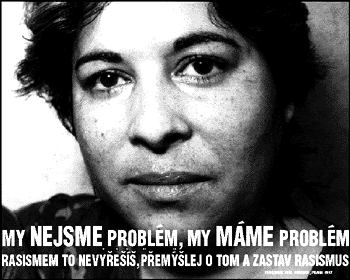
"We are NOT the problem; we HAVE a problem. You won't solve anything with racism.
Think about it and stop racism."
(Czech anti-racism ad campaign poster)

Two generations have not yet passed since ninety percent of Czech Roma, and between a half million and two million European Roma in total perished at the hands of the Nazis in The Great Devouring, or Porrajmos, the Romani word for the Holocaust. Roma, also known by the pejorative term “Gypsies,” make up the largest minority in Europe today with some 10 to 12 million members. Roma face fierce discrimination in accessing employment, education, health care, and public and social services. In spite of repetitious cases of racist violence and hate speech targeting Roma, the community continues its struggle for human rights all across the continent.

Two years ago I paid my homage to those who died in Auschwitz and Hodonín u Kunštátu, a Czech concentration camp for Roma. “Tensions in society are heightening. Perhaps the time will come again when we are sent away to designated areas,” were the words of the priest leading the commemoration service.

Today, many in the Romani community echo these fears, afraid for their safety since numerous neo-Nazi-led marches have been taking place periodically across the country, and several arson attacks at Romani residences have been perpetrated by white supremacists. Racial tensions have been growing more intense with the media printing negative stereotypes, inventing damaging reports and spreading fabricated accounts blaming criminal acts on members of the Romani community.

In mid-February, the director of the European Roma Rights Center, testified that violence against the Roma is on the rise at a hearing in Washington DC held by the Commission on Security and Cooperation in Europe (US Helsinki Commission).

In the Czech Republic, where I was born and raised, a study on extremism commissioned by the Czech Interior Ministry states that there are currently about 4,000 militant neo-Nazi activists in the country. Experts warn that violent crimes committed by neo-Nazis against Romani people will likely rise. The risk of race wars in some regions of the country, specifically between gangs of white Czechs and groups of ethnic Roma, looms large, experts say.

Today’s white supremacist movement is pan-European (with strong German and Italian influences), and international (namely US-inspired). Since the years 2008 and 2009 the movement has become more radicalized and organizationally sophisticated in the Czech Republic, becoming more visible in the streets and infiltrating the political scene.

In Hungary, an armed militia group has been patrolling and terrorizing a Romani village. This following a series of racially motivated murders.

“Gypsy criminality” is one of the most prevalent anti-Roma stereotypes. It permeates all parts of central European life—and can be found as commonly in the media as the local pub. The Roma are also said to abuse welfare and to not want to work. The World Bank just showed the former was absolutely untrue in Slovakia. The latter is a also a damaging myth held by the white majority. These stereotypes are all the more exaggerated in light of the economic downturn and the scarcity thinking the crisis triggers in the white majority.

What are the solutions? Many rights groups are pushing for economic betterment in the form of job creation and training. Organizations are active in producing independent media with a human rights bent, as well as waging campaigns pressuring mainstream media outlets to be accountable and responsible in their reporting. Key are also positive opportunities for cross-ethnic social interactions and education. Those aware must remain vigilant and spread the word about the threat of extremism that exists in European societies. We must never again permit another Great Devouring.

Movie Review: The Separation of Nader va Simin (Iran)

The media attention on Israel’s potential response to Iran’s nuclear activity has piqued my interest to learn a bit more about Iranian culture. Last week our family watched a most incredible film that I felt provided so much insight, so I asked my very good friend, Cultural Detective certified facilitator Pari Namazie, what she thought about what I had learned and seen.

I trust you’ll all enjoy her insights as much as I have. It would seem that this film could be an excellent learning tool for those working with Iranians.

Pari joon, thank you for sharing your insights with us!

They were proud moments for us Iranians when Asghar Farhadi received the Oscar for Best Foreign Film, as well as the Golden Globe and the Golden Bear of Berlinale, for his film A Separation (Jodaeiye Nader az Simin).

The film, which talks about a divorce between Nader and Simin, has two main underlying themes: responsibility and truth. Though one initially thinks the film is about a divorce case, Farhadi cleverly weaves many layers of Iranian society into his film, including power, religion, truth, gender, family, and social class. The points which stuck out most when I watched the film were:

The role of women: Iran is governed by Islamic law. The society is patriarchal and the laws between men and women unequal. Although the foreign media might portray Iranian women as weak and dominated by men, the reality of the matter was captured well in Farhadi’s film, which showed Simin wanting to leave Iran with her daughter, as she believed it was not an environment for a child to grow up in. When her husband refused to immigrate with her (due to his father’s condition), she then insisted on divorce and moved into her parents’ home. It also showed a more religious woman taking fate into her own hands looking for a job, despite the fact that in her family the breadwinner was undoubtedly her husband. Any one who has visited Iran will know the strength of character and conviction of its women.

Truth: The film beautifully portrayed the search for truth in the Iranian culture: from the court, to Termeh (the daughter) asking her father if he knew Razieh (the helper) was pregnant when he pushed her out of the house, to Razieh swearing on the Koran that Nader’s pushing her caused her miscarriage — if she swore on the Koran and it were untrue, then she would condemn her daughter’s future and fate. These behaviors show one of the strongest elements in Iranian culture: the search for truth.

Religion: Beautiful to see how Farhadi craftfully showed the secular and religious segments of society, how they came together respectful of one another, and yet also their existing tensions. Nader and Simin are more secular and Razieh and her family, religious. On one occasion Razieh called her religious authority to ask if it was permitted by Islam to work with an elderly old man, who was not related to her and where she would have to wash and change him.

Responsibility and Family: The relationship and responsibility towards family from the younger to the older generation. In the opening scene at the family court, Nader tells the judge that he cannot immigrate with Simin as he has an elderly father suffering with Alzheimer’s and can not leave him. Other scenes show Nader’s commitment to his father and his relationship with his daughter Termeh. Although he is under many pressures he still maintains his attentive concentration towards Termeh’s studies and taking care of his father, the two main priorities in his life.

Farhadi competently shows the different viewpoints of all the actors, without taking sides, and lets the audience reflect on the circumstances and situations. This film is a must-see if you have not yet!

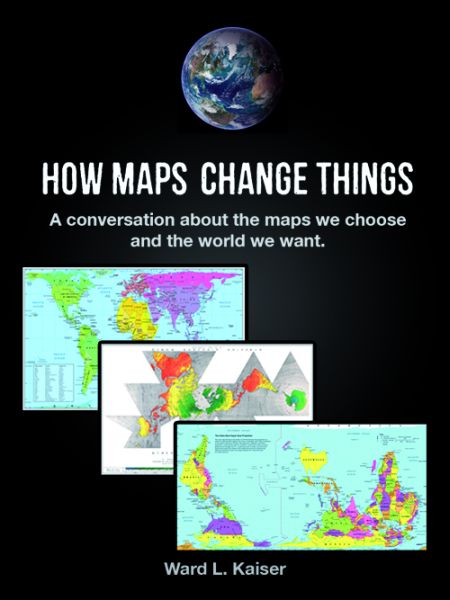
Book Review: How Maps Change Things

by Ward L. Kaiser, published by the New Internationalist and ODT Maps, 2012.
Free download through March 31 for Cultural Detectives

Anyone looking to develop a new class or training program to improve intercultural competence? This just-released book, How Maps Change Things: A conversation about the maps we choose and the world we want, could be the basis of one terrific learning journey! I highlighted something on nearly every one of its 188 pages. I learned so much, on so many different yet related topics, that I now have five or six threads of learning and discovery I want to pursue!

At first glance you might think this is a book about maps. Then you read on page six that it is about

“… how we shape and use maps and how they in turn shape us. It’s about how we see the world and how we therefore understand our place in it.”

So you start to hope that How Maps Change Things could teach us to be careful whether we label a certain body of water the “Arabian Gulf” or the “Persian Gulf,” or color-code parts of Kashmir as Indian or Pakistani, but it goes way beyond that.

“Because such maps encourage the feeling that some areas are home to movers and shakers while others shelter mere pawns.” — page 74

Mr. Kaiser, the author, is a big fan of equal-area projection maps such as the Peters, as most in the global diversity and inclusion field are, and points out how maps such as the Mercator aren’t good for much other than navigation. But in addition to showing us how maps can be used to perpetuate bias, he shows us how maps can also be used to promote perspective shifting, equity, and social justice:

“Through internalizing many ways to see the world we may even develop openness to other people’s points of view and greater self-awareness.”
— page 164

“What if people all over the world threatened by, well, you name it – logging, commercial development, polluting factories, hydrofracking chemicals in drinking water, say – what if they could all see maps as tools of analysis and action? …

How about a map to make clear where the hazardous electronic wastes of the developed world get dumped …

Bring together maps, available technology, human creativity, and people’s willingness to take a stand and you’ve got a powerful recipe for changing events.” — page 176

For these reasons and others this volume will be useful to interculturalists and those interested in diversity, sustainability, and social action.

The author premises that maps are tools that serve a purpose.

“Maps are verbs. They may seem to be tactile objects, documents we can handle or fold – nouns – but don’t be fooled. In persuasively framing questions and selectively supplying answers they act; they initiate; they function as agents.” — page 15

To illustrate this point he shares some terrific stories: one about the role of maps in a territorial dispute between First Nations people and the Canadian government (pages 35-39); another about how a map can skew our view of a country as a source of oil or as a residence of people and families (pages 8-17); and a third showing how a map was used to get one county to pay for a highway interchange that served another county (pages 34-35). There is a chapter about the connection between maps and faith/values (chapter 10 page 141), and how maps are used for disease control and health (page 170), as well as for crime prevention (page 173), a topic of special interest lately with concerns of profiling and ethnic bias.

The book is written in a lively, accessible style, though it gets heavier and slower toward the end; ironically, the final chapters are where Mr. Kaiser’s true passion seems to lie. It contains several embedded learning exercises (e.g., page 121) and interesting conversations such as how indigenous North Americans mapped (page 40). Via this latter conversation, he shows that the “culture” of map-makers is not universal. This, to me, is a hugely important point. Too many people believe their area of professional practice is culture-neutral or universal when, in fact, even science is culturally relative (as well as discipline-relative!).

One of the pleasures of reading How Maps Change Things is that it contains quite a few valuable “hidden” gems. One of my favorites: as the author discusses the huge socio-economic gap in our world, variously referred to by such inadequate (or judgment-laden) terms as North-South, 1st/3rd world, Developed/Developing nations, and Viable/Failed states, he provides in the footnotes a list of experts from diverse political persuasions and walks of life who share a consensus on the absolute need to bridge this gap (pages 138-139).

Through March 31 our friends at ODT Maps, the publisher, are offering this ebook FREE to our Cultural Detective community. I urge you to take advantage of this offer and help the author get this book put to good use!

Maps are tools, and can be purposed to perpetuate bias or to help us to create a better world. Cultural Detective has long been passionate about maps as learning tools. Way back in December of 2005 we dedicated an entire edition of our Cultural Detective e-news to maps (including 3 articles of activities and curricular ideas and a quiz), relying in large part on the expertise and generosity of our friends at ODT Maps.

It included: Using Physical Maps to Transform Mental Maps8 Map Activities for Intercultural Learning; a World Map Detective quizTraining with Map Power; and a free offer (a Mecca-centered Azimuthal map, a Peters Projection map, and a Population Map) from our friends at ODT Maps.

Bob Abramms at ODT has a wealth of books, DVDs, globes, puzzles, games, props, and  world maps for different purposes — terrific training material for intercultural and global diversity and inclusion professionals. If you’re not familiar with his great stuff, be sure to check it out.
Yemen Revolution and the Quest for Patience

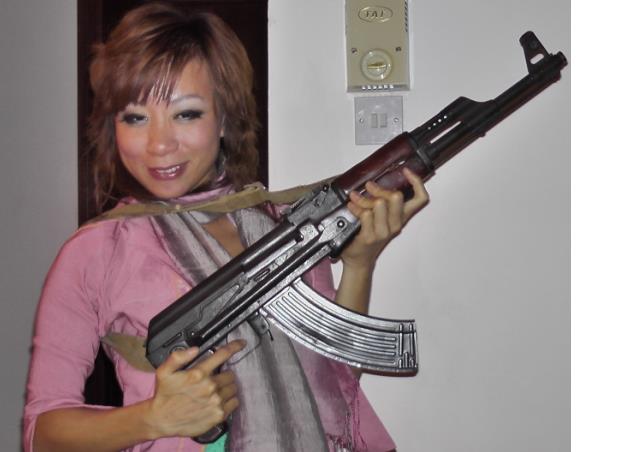
This photo was taken 30 minutes after the voting closed. Not a gunshot was heard in Sanaa. This rifle (though readily placed next to the desk of a media boss in Sanaa) was not needed.

I arrived in Yemen just 12 hours before the election. As a single female traveler, the airport police did not let me out until they could appoint a driver to take me to my friend’s house. Nobody left the airport untraceable.

The election has only one candidate, Mr Hadi, and it is interesting to see that this election aims at non-violence and a peaceful handover of power rather than genuine democracy. Many Yemeni activists told me that 5 other candidates were denied by the government. They were furious, of course.

However, looking at the turmoil that Yemen has been through, I can also see the reasons behind this seemingly undemocratic election. Being a very delicate and fragile country, Yemen needs stability and its people need to know that democracy goes steps by step. The country is like a patient after a big operation. He needs soft food and milk instead of steak.

I am happy for Yemen, that the country has moved one step away from dictatorship, being in a transition of moving forwards to a real democratic election in the near future. Democracy is a process, and it needs a lot of patience and dialogue.

It’s nice to meet all of you here on the Cultural Detective blog! I am a proud member of this team, and co-author of Cultural Detective Vietnam. I am in the midst of a journey that traces the path of Islam, from its origins as it spread outward around our planet. You can follow my journey daily in Facebook or via my blog.

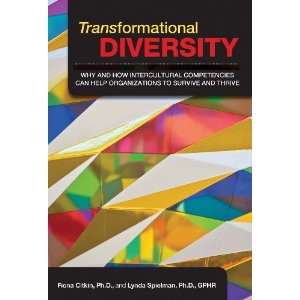
Book Review: Transformational Diversity

Transformational Diversity: Why and how intercultural competencies can help organizations to survive and thrive, by Fiona Citkin and Lynda Spielman, SHRM, 2011. ISBN 978-1-586-44230-9

This book had me at the title. We all work with people different from us in gender, age, function, ethnicity, nationality, intellectual orientation or religious tradition, and many of us have also been involved in mergers and acquisitions that join two or more organizational cultures. We have a wealth of diverse human talent to draw upon to penetrate new markets and creatively solve problems, but how do we do so?

Books like this one, a compendium of the latest thinking along with sample designs and resources, are gifts. Such compendia guide the responsible practitioner through the maze of information available on the topic, sifting through to highlight for the reader what is most accurate or valuable, and ideally teach us where to turn for further learning. They help us take stock of where we are as a field, where we should be going, and the latest best practice for how to get there. This book does that in a no-nonsense, practical, and brief (131 pages before appendices and bibliography) manner.

The “new imperatives” that the authors cite are real and pressing. They include the need to:
  • Compete worldwide for the best talent,
  • Develop global workforce initiatives,
  • Coordinate all domestic efforts with an increasingly multicultural workforce,
  • Have diversity contribute more visibly to performance and the bottom line, and
  • Organize inclusion-oriented systematic education for all populations (p. 6).

Transformational Diversity aims to take diversity programming “beyond race and gender” (p. 1) to “more effectively enhance productivity and performance” (p. 3).  The authors tell us, “Transformational Diversity is a call for change in current diversity and inclusion programs, which in our experience seems [sic] to be struggling from fatigue and from challenges to produce measurable results,” (p. 5).

What does the book have going for it?

What most stood out for me is that they give voice, or, rather, print, to many of the things leading global D&I practitioners have been saying over the past decade. And this is valuable. Just a few examples include:
  1. The fact that organizations hire “diversity” and then proceed to erase it by teaching new hires to fit in (p. 10).
  2. The fact that so much diversity programming is U.S.-centric (p. 13), that U.S. diversity models have “historically been grounded in… government requirements and moral ground to redress past injustices and discrimination patterns” (p. 9), and that these rarely translate well overseas.
  3. That affinity groups have gravitated towards social and celebratory roles, when their real value is in education: “to make known any differences represented by the individuals within the groups so that the differences can be respected, and thus, accepted” (p. 76).
  4. The fact that understanding the dimensions of culture is not enough. “We do not have to choose between individual and group performance but instead make sure that the relationship between them becomes meaningful in the workplace” (p. 91).

The authors share numerous helpful examples and stories. They cite several research studies and reference statistics, another plus. Their approach is always practical, such as their three steps for rolling out Transformational Diversity (pp. 38-42) or their guidance for “Exporting U.S. Diversity Programs” (pp. 68-70). Many readers will find incredible value in the six programming templates (the authors call them “Archetypes”) the authors provide (Chapter 5).

Thus, there is incredible value in this book, and I highly recommend it for all of the above reasons. The authors do a commendable job communicating basic intercultural concepts to the diversity practitioner, with advice such as helping U.S. Americans to learn to see our biases (pp. 112-114).

What would I have liked to see in this book? Adding any of the below would have added volume and complexity, and one of the most terrific things about the book is its brevity and no-nonsense approach. But, with that qualifier, I felt many of the sample solutions were still heavily knowledge-focused rather than competence-building. This would seem to me a sign of the difficulty of breaking through to new paradigms from the old. The designs in the book are excellent, and with a bit more explanation they may center on skill development, but that fact did not show through as much as I would have liked.

Secondly, as an organizational development practitioner, I was very happy to read the authors’ cautions to embed change in the organization itself (p. 73). The importance of building organizational structures and systems to support Transformational Diversity seemed to me under-emphasized, however. The six Archetypes that the authors present, though they include one on coaching, seem to focus primarily on training. What about incorporating these new commitments and capacities into our hiring, promotion, and review processes, as well as into project management and other on-the-job activities? That is my bias, of course, and no book can do it all. This one is definitely worth the read.