Unknown's avatar

About Dianne Hofner Saphiere

There are loads of talented people in this gorgeous world of ours. We all have a unique contribution to make, and if we collaborate, I am confident we have all the pieces we need to solve any problem we face. I have been an intercultural organizational effectiveness consultant since 1979, working primarily with for-profit multinational corporations. I lived and worked in Japan in the late 70s through the 80s, and currently live in and work from México, where with a wonderful partner we've raised a bicultural, global-minded son. I have worked with organizations and people from over 100 nations in my career. What's your story?

Do One Thing for Diversity and Inclusion

Do One Thing logoIn 2001, UNESCO adopted the Universal Declaration on Cultural Diversity and in December 2002, the UN General Assembly, in its resolution 57/249, declared May 21 to be the World Day for Cultural Diversity for Dialogue and Development. The day provides us with an opportunity to deepen our understanding of the values of cultural diversity and to learn to live together better. In 2011, a grassroots campaign ‘Do One Thing For Diversity and Inclusion’, celebrating the annual World Day for Cultural Diversity was launched by UNESCO and the UN Alliance of Civilizations.

Cultural Detective is proud to announce that we have been selected as an ambassador of this global campaign. Goals of the campaign include:

  • Raise awareness worldwide about the importance of intercultural dialogue, diversity and inclusion.
  • Build a world community of individuals committed to support diversity with real and every day-life gestures.
  • Combat polarization and stereotypes to improve understanding and cooperation among people from different cultures.

Won’t you please join us in celebrating diversity and inclusion tomorrow, May 21, 2013? Below we share with you ten ideas from the event’s organizers, and we’re pretty sure that readers of this blog will have more savvy ways to celebrate global diversity and inclusion. We look forward to seeing and hearing what you do!

  1. Visit an art exhibit or a museum dedicated to other cultures.
  2. Invite a family or people in the neighborhood from another culture or religion to share a meal with you and exchange views on life.
  3. Rent a movie or read a book from another country or religion than your own.
  4. Invite people from a different culture to share your customs
  5. Read about the great thinkers of other cultures than yours (e.g. Confucius, Socrates, Avicenna, Ibn Khaldun, Aristotle, Ganesh, Rumi)
  6. Go next week-end to visit a place of worship different than yours and participate in the celebration.
  7. Play the “stereotypes game.” Stick a post-it on your forehead with the name of a country. Ask people to tell you stereotypes associated with people from that country. You win if you find out where you are from.
  8. Learn about traditional celebrations from other cultures; learn more about Hanukkah or Ramadan or about amazing celebrations of New Year’s Eve in Spain or Qingming festival in China.
  9. Spread your own culture around the world through our Facebook page and learn about other cultures
  10. Explore music of a different culture.

The campaign works through a dedicated Facebook page, serving as a platform for people around the world to share their experiences through posts and videos. Following this event, on May 29, 2013, in Baku, Azerbaijan, will be the World Forum on Intercultural Dialogue.

Share With Us Your 6 Second Videos on Crossing Cultures!

VineCDI used to really dislike Twitter — one more social media, and such short messages! We don’t need more information overload in our world, bothering us everywhere we go!

Then I reframed Twitter in my mind. I realized that those tweets (140 characters maximum) are like haiku! Their brevity encourages us to capture the core essence, the deep meaning, in a new and creative way! In that sense, Tweets are perfect for Cultural Detectives or anyone who bridges cultures, whether within the family, neighborhood, or internationally. Now I quite enjoy the medium.

Recently I learned that you can now stream video via Twitter in much the same way as you share photos via Instagram.

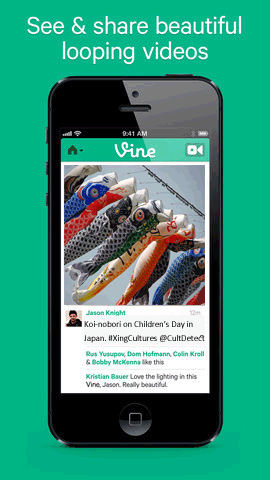
You download a free app called Vine, then use your iPhone, iPod or iPad to record and Tweet 6-second videos. You can also easily post the photos to Facebook. Want to see some samples? Looping videos, short and sweet: multimedia haiku.

So I thought this could be an enjoyable and useful activity for Cultural Detectives: sharing short videos with each other about crossing cultures, from wherever we happen to be based or traveling. Here is the proposal:

I have a fun and exciting challenge for you! Please, capture a short video of your experience crossing cultures: what does bridging cultures effectively, what does cross-cultural competence mean to you?

Then, Tweet it to us at @CulturalDetect using hashtag #XingCultures

And/or, post your video to our Facebook page

I’m sure this could be a whole lot of fun, and provide interesting material that many of you could use. We have followers all over the world, and if you participate and pass this on to your friends and followers, the reach will be even wider.

Looking forward to your insight and creativity!!!!

Crowd-sourcing a New Map for the Buckminster Fuller Institute

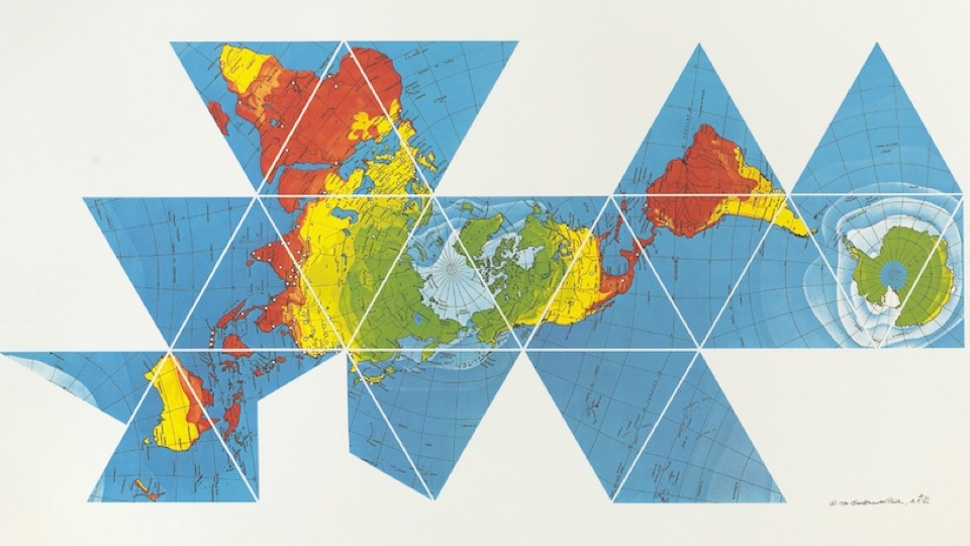
Fuller's Dymaxion Map
I have many times used Buckminster Fuller’s Dymaxion World Map in my global leadership and international management training sessions. I especially like the small, foldable, cardboard versions of this map that I purchased years ago. I often put several in the center of each work table in the training room, and participants enjoy folding and unfolding them. It reminds people how interconnected our world is, and how beneficial it can be to think differently. (I do not find these in their store currently, sorry to say, but there are links below to postcards and magnets.)

Dymaxion_2003_animation_small1

Since I have found this map so useful, I’m pretty confident you all will be interested in this cool contest the Buckminster Fuller Institute and our dear friend Bob Abramms over at ODT Maps have arranged. Below are the details I received this morning. Good luck, Cultural Detectives! Do us proud!

Disclaimer: We do not receive any “kickback” and have no financial involvement in BFI or ODT. We post the below offers because we feel they may interest you.

Famed futurist Buckminster Fuller’s Dymaxion World Map appeared in Life Magazine seventy years ago. With an undistorted projection of the Earth’s surface, ability to be easily reconfigured and transform from a 2-D map to a 3-D globe, the Dymaxion Map (patented in 1946) was a cartographic breakthrough and its iconic design has inspired generations since.

In celebration of the map’s publication anniversary, the Buckminster Fuller Institute (BFI) is calling on today’s graphic designers, visual artists, and citizen cartographers to create a new an inspiring interpretation of the original Dymaxion Map.

BFI will publish accepted entries within an online gallery, feature the selected finalists in a gallery exhibition in New York City and select one winning entry to be produced as a 34″ x 22″ poster. BFI is seeking submissions across the creative spectrum and will be selecting the winner based on originality, aesthetic beauty and informative qualities. The contest is open to all and will provide entrants with a high-res image to use as ‘canvas’.

DETAILS HERE     ENTRY FORM HERE 
Submission Deadline: June 14, 2013   •   Winners Announced: July 12, 2013

All entries will receive a PDF copy of ODT’s new e-book (see below) and the contest winner will receive an autographed copy of the paperback!

Just want to order the map? Click HERE

Dymaxion postcards and magnets are also available.

SPECIAL: Order a Dymaxion wall map before June 1st and get five free Dymaxion postcards

Or order new Dymaxion T-shirts from BFI here.

Fuller’s Dymaxion map is also featured on the cover of (and inside) our forthcoming paperback book: The BFI contest winner will receive an autographed copy.

Stay tuned for our pre-publication special to be announced in the next 5 weeks!

The Best-Kept Secret of Successful Teams

4 Phase ModelAlmost every team and community today is diverse in some way or another: gender, age, spirituality, professional training, ethnicity, nationality… While we respect other styles and cultures, most of us still get stuck at some point where we say, “OK, we’re different; now how do we work (or live) side-by-side? How do we harness our differences as creative assets? At a minimum, how do we simply keep from driving each other crazy?”

We might work with partners who view time as flexible and events as unfolding. This may mean that, to them, deadlines are mutable and subject to change. Meanwhile, we push ourselves and our bodies, working overtime to make sure we honor our commitment to an agreed-upon deadline. While we may respect our colleagues’ view of time management on a theoretical basis, and perhaps envy them their apparently healthy work-life balance, how do we succeed with partners who don’t seem to respect their commitments to deadlines?

Perhaps we have a neighbor or even a waiter at a favorite restaurant who communicates very directly, yet we prefer a bit more indirection, thank you. While we respect their communication style, it can get irritating and try our patience.

Too often we fail to actively seek to bridge differences because we see them as something negative, as something that separates rather than unites us. Yet, by ignoring our differences, by pretending they are not there, we imbue them with great power. Eventually they can get the best of us, surprising us at awkward moments and causing frustration and tension. Our reluctance to address differences may stem from a fear that acknowledging their existence may push us farther apart rather than allowing us to collaborate enjoyably.

So, how do we transform these differences into assets? How do we convert them from something to be denied, hidden, or tamped down, into something to be embraced and used for the good of the organization and the team?

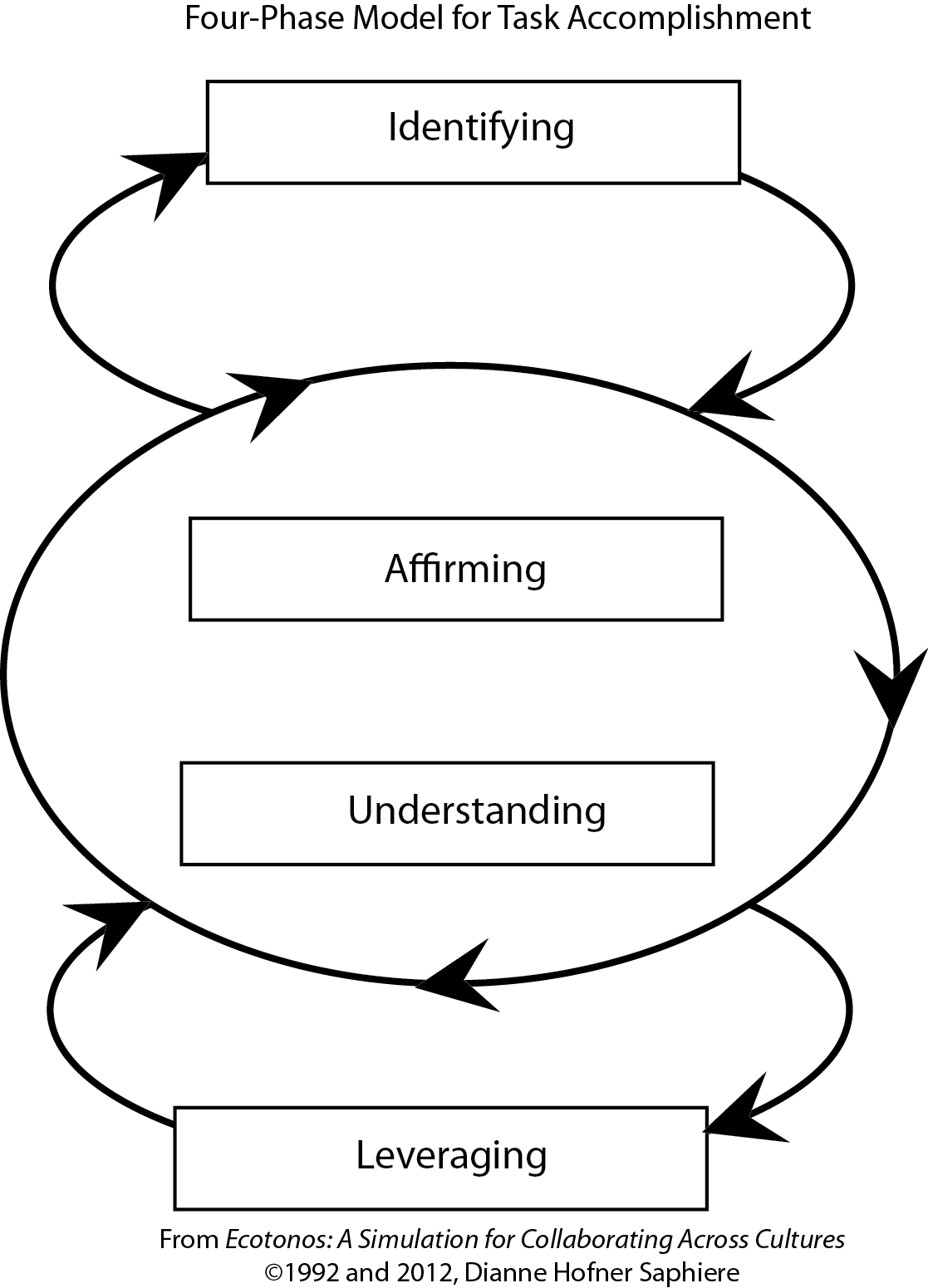
One model that has proven quite useful over the past two decades of use comes from the classic and widely used simulation, Ecotonos: A Simulation for Collaborating Across Cultures. Called the “Four-Phase Model for Task Accomplishment,” this very simple approach guides us to first identify the similarities and differences at play in our interaction, verbally affirm them, spend time understanding them and, finally, explore how to leverage them.

How a specific team leverages similarities and differences will depend on the members of the team and their shared goals and realities. Each team creates its own team culture, ideally based upon and growing out of the first three phases of this Four-Phase Model.

As you can see in the graphic above, the Four-Phase Model is not linear, but rather each phase weaves into and out of the other. For example, understanding may lead to further identifying, or leveraging may lead to added affirmation.

A text description of the Model accompanies Ecotonos and provides further elaboration of the graphic:

Identifying
  • Perceiving similarities and differences
  • Establishing which differences are divisive and which commonalties unite
  • Creating self-awareness of one’s own strengths and styles
  • Appropriate balancing of the tension between sameness and difference
Affirming
  • Confirming individual commonalties and differences
  • Substantiating that difference is desirable
  • Legitimizing difference in the eyes of the group
  • Welcoming conflict and paying attention
Understanding
  • Attempting to understand the other person’s perspective
  • Stepping into the other’s shoes
  • Mirroring/exploring and discovering together
  • Probing for deeper comprehension using various approaches
  • Seeing an issue from several vantage points
Leveraging
  • Defining how team members can contribute to goal accomplishment
  • Agreeing on methods for utilizing team expertise
  • Facilitating the generation of creative solutions
  • Creating a “team” culture
  • Focusing on efficiency and effectiveness

Once people become comfortable with the Identifying Phase, they may perceive the Affirming Phase as something unnecessary, a waste of everyone’s time. “We are all adults. We don’t need to give one another kudos.”

But my extensive experience proves, over and over again, that taking the time and effort to actively engage in the Affirming Phase is well worth the investment. Proceeding more slowly allows the team to accomplish more in less time, so to speak.

Below is one video that illustrates the value of affirmation in our lives. It is pretty long, but you’ll get the idea pretty quickly and I’m confident you’ll enjoy watching it.

The Four-Phase Model is one tool that can powerfully transform conflict into productivity and innovation. And, by the way, don’t forget that you are awesome!


A Living Example of the Funk Model of Personal Development

Rita and Kevin Booker

Rita and Kevin Booker

You know that PRACTICE of intercultural competence, ongoing, sustained practice, has been a theme of this blog. I have likened intercultural competence to physical fitness, to maintaining a workout practice, to symphonic and jazz music, and also to spiritual practice. The theme is ongoing, structured use and honing of skill.

After receiving some news last week, I have realized that perhaps it was Kevin Booker who first implanted several of these analogies in my mind. Until that point I hadn’t connected the two, but with his passing from this life, I revisited his blog posts, and rediscovered this one, which so moved me when he first published it back in 2009. At the time I had just met Kevin—he had participated in a Cultural Detective Facilitator Certification in Granada, Spain. While I repost it here in its entirety, it’s worth clicking through to see the funkalicious colors and design of his original post.

A Bridge Between The Funk Model of Personal Development and Cultural Detective

—By Kevin Booker

I swam everyday this week.

I decided to change my physical training routine this summer by working more often underwater instead of lifting weights, the latter of which I have done on average three times a week for the past decade.

Not that lifting in the gym is stale by any means: I stopped counting reps years ago and learned instead to focus on the tempo and energy of the music in my portable music player.

Since most of my workouts are between 90 minutes and 3-and-a-half hours long, I’ve learned to challenge all my muscle groups by utilizing particular songs to motivate and encourage my movement and breathing, like a dancer uses music to improvise and discover new movement.

For example, I’ve used Janet Jackson’s “If”, not only because of the superlative Jam/Lewis production values, but because the tempo of the song is perfect for ab crunches on a decline bench at various angles. When I mix in Hamilton Bohannon’s “Disco Symphony“, Cameo’s “Word Up”, EWF’s “Can’t Let Go”, or Lyn Collin’s “Think”, I can easily repeat 3 sets of 15, at 3 to 4 different angles, for a continuous minimum of 30 to 45 minutes.

The result of doing this for a few years is that my lower back muscles are significantly stronger than they used to be and I now possess abs of steel.

Same with the shoulder press: I use Parliament Funkadelic’s “Flashlight” for strength training, along with The Gap Band’s “Burn Rubber” or a combination of Roger Troutman’s “Do Wah Ditty” and “So Ruff So Tuff” to hit all the right spots with stanknasty funk, say 3 to 4 sets of 15 reps using 25 to 35 kilo (55 to 77 lb.) weights. Not a lot of weight, but enough strength training in my shoulder and neck muscles to do headstands without using my hands at the end of my yoga stretching routines. No brag, just fact.

What I’ve observed is that most urban dwellers my age lack youthfulness and energy simply because they don’t workout enough to the funk.

Working out to the funk means physical movement expressed through multiple body rhythms, engaging in disciplined rehearsal of physical balance, strength, quickness, improvisation, circular movement and synchronization. When entrainment is achieved by diligent practice, funk becomes it’s own reward.

As Robert Farris Thompson has explained, the word funk is of ki-congo origin and literally means “to work out to achieve one’s aims”. This metaphor signifies an entire value system which Africans brought with them to the new world and represents the idea of achieving any goal by the use of extreme effort.

Thus understood, funk music culture is an excellent opportunity to understand a cultural value system in which highly trained cultural specialists leverage diverse ideas (obscure styles of music, varied costume designs, diverse eras in dance and movement, recombined stories and myths), distill patterns and compare archetypes while leveraging conceptual values, such as key signatures, tempos, mixtures of music theory and dynamic expression.

In sum, to understand, appreciate and utilize funk music organizational principles, one must cultivate a high tolerance for ambiguity, the skill to use diverse concepts and exercise a life-long commitment to uncovering cultural complexity. I am convinced that the people at Cultural Detective understand this.

The Cultural Detective Method provides a language to explain the mental programming with which we perceive, learn about and understand fundamental intercultural communication principles. It provides an innovative, enjoyable, culture-specific, cultural values and real-life situation based training approach which can enable and empower anyone to better understand and work with colleagues who have cultural histories which differ from their own.

It effectively distills and teaches the three necessary intercultural abilities required for global collaboration and cooperation:

  1. The ability to know and explain ourselves as individuals; this is known as subjective culture.
  2. The ability to better understand the intentions of other people; this is known as cultural literacy.
  3. The tools to work mindfully and consciously to leverage cultural difference, regardless of personal cultural history; this is known as cultural bridge building.

This innovative and painstakingly researched training method has been developed by the pioneering work of Dianne Hofner Saphiere and the thought leadership experience of at least 90 credible intercultural researchers, educators and specialists from all over the globe. This method has been tested, tried and proven to improve the intercultural communication abilities of co-workers from more than 96 cultures world-wide. Major corporations such as ABB, BNP Paribas Bank, Cable and Wireless, Handelsbanken, Mitubishi, Rohm and Hass, Royal Dutch/Shell Oil, Samsung and Texas Instruments have successfully used The Cultural Detective Method in Africa, The Americas, Asia, Europe and the Pacific. It is continues to be used as a highly effective method for intercultural team building, expatriate training and collaboration projects in business schools and institutions of higher learning around the world.

What I love about the Cultural Detective training method is that it uses universal teaching approaches, such as storytelling, which are quickly and easily understood by everyone on the planet.

Anybody, anywhere in the world can understand and appreciate a good story. Along with music and pictures, storytelling is the most ancient way we have to transmit and receive culture. Through stories, we pass on our values, beliefs, histories and traditions from generation to generation. This process is what general semantics specialists call time binding.

Cultural Detective uses storytelling and small group discussion to help us understand ourselves and others within the context of the unique and multiple core cultural values which motivate our behaviors, our beliefs and perceptions of our place in the world. This process enables us to see ourselves and others as unique individuals influenced by culture instead of one-dimensional stereotypes. Moreover, by promoting the development of common-sense strategies to improve intercultural collaboration, Cultural Detective helps us to understand cultural values as positive intention and discover new ways to resolve conflict in everyday life.

I personally believe that using the Cultural Detective training method is an excellent way for people to overcome their fear of the other, combat status anxiety and eradicate racism.

But please don’t take my word for it; try it for yourself.

In the meantime, I’m going swimming. For me, swimming provides an effective, low impact cardiovascular work out and I have come to use it as a training metaphor for overcoming fear.

Perhaps I should explain.

As a small child, I had a deathly fear of water. I do not know where this fear came from; perhaps it was because I lived near the ocean which to my young, inexperienced eyes was a vast, violent, unpredictable and unknowable place.

To my good fortune, my mother recognized this and helped me to overcome my fear of water by taking me to swimming classes 5 days-per-week, months at a time, every summer, 4 years in a row. Long story short, after enough training, I eventually entered a local marathon competition and at 13 years old, took first place over 40 competitors.

Of course nowadays, many years later, I no longer swim in marathon competitions, but when I do swim, I am still mindful of how much effort it actually takes to train and condition the body to use different strokes efficiently, how difficult it is to strengthen leg muscle groups for effective kicks and the amount of extra personal effort and determination it takes to build endurance.

As an intercultural education facilitator, I have come to believe that participants in human resource training programs need to understand this principle as well: it does not matter how one is led to water or how nice the pool is: if one does not make the extra effort to learn, one cannot learn to swim.

For this one lesson, I am grateful to my mother.

She was a master teacher who lived and worked as an advocate for cultural literacy for all people.

She was a lyrical soprano, accomplished pianist and an extraordinarily graceful dancer.

In her lifetime, she was able to develop a higher tolerance for ambiguity.

Every time I swim in a foreign swimming pool, be it in Aktau or Sao Paulo, Paris or London, Bucharest or Berlin or anywhere my unquenchable curiosity takes me, I think of her and am mindful of her commitment to life long learning as a method to extinguish ignorance and fear.

This is why I’m not too cool to swim.

Matter of factI can dance underwater and not get wet 🙂

***

Discover more about Cultural Detective®
http://www.culturaldetective.com/welcome.html

Thus concludes Kevin’s post.

Rest in peace, my dear friend and colleague. Thank you for so generously sharing your incredible talent, bottomless joy, support for others, and your never-ending source of creativity and energy. You were a living example of the fruits of discipline and practice: gifted in so many disciplines, other-centered yet always fully you, spontaneous and ready for anything. Our heart goes out to your partner and our teammate, CD Romania co-author Rita Booker-Solymosi, and all Kevin’s family.
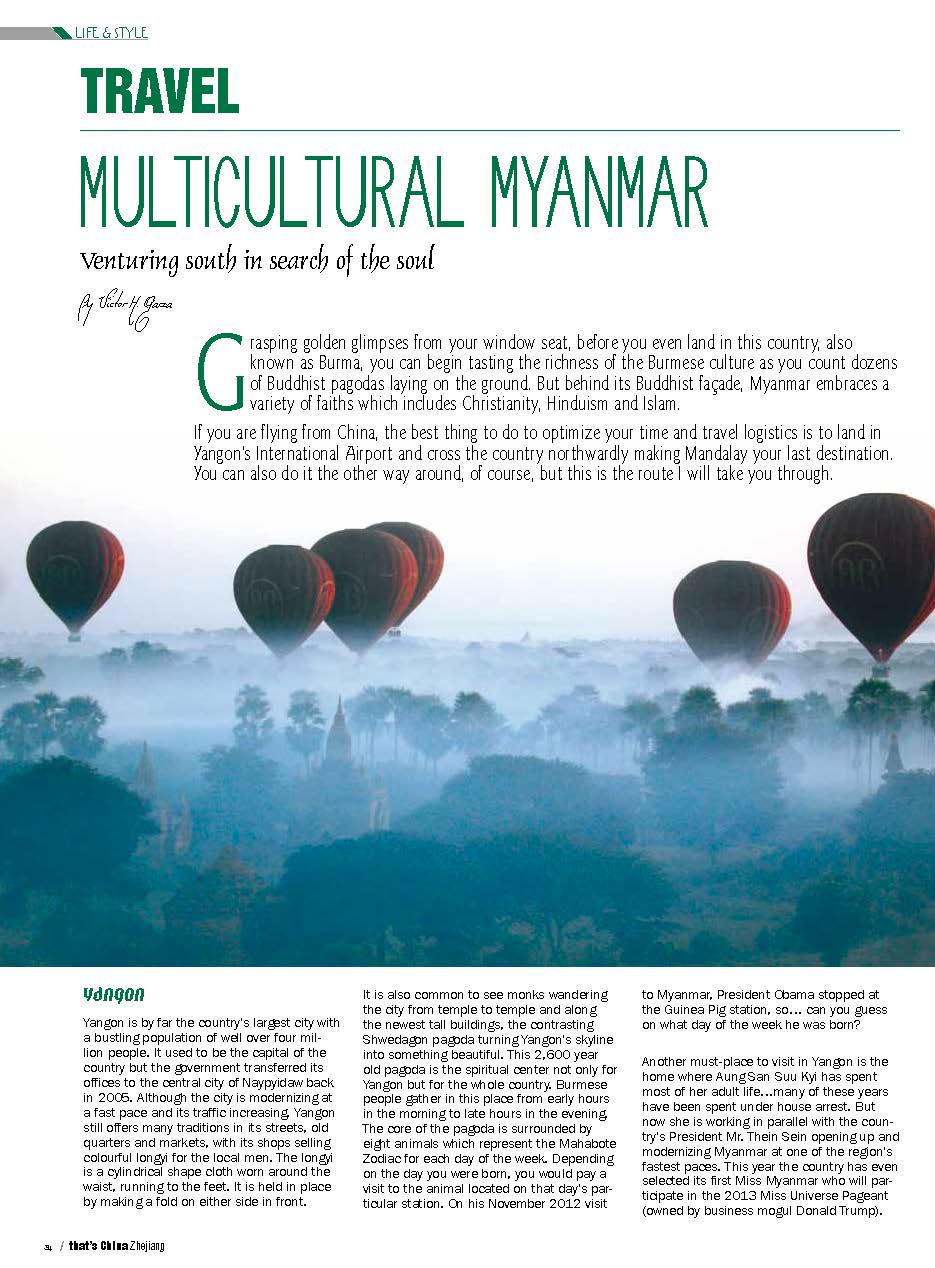
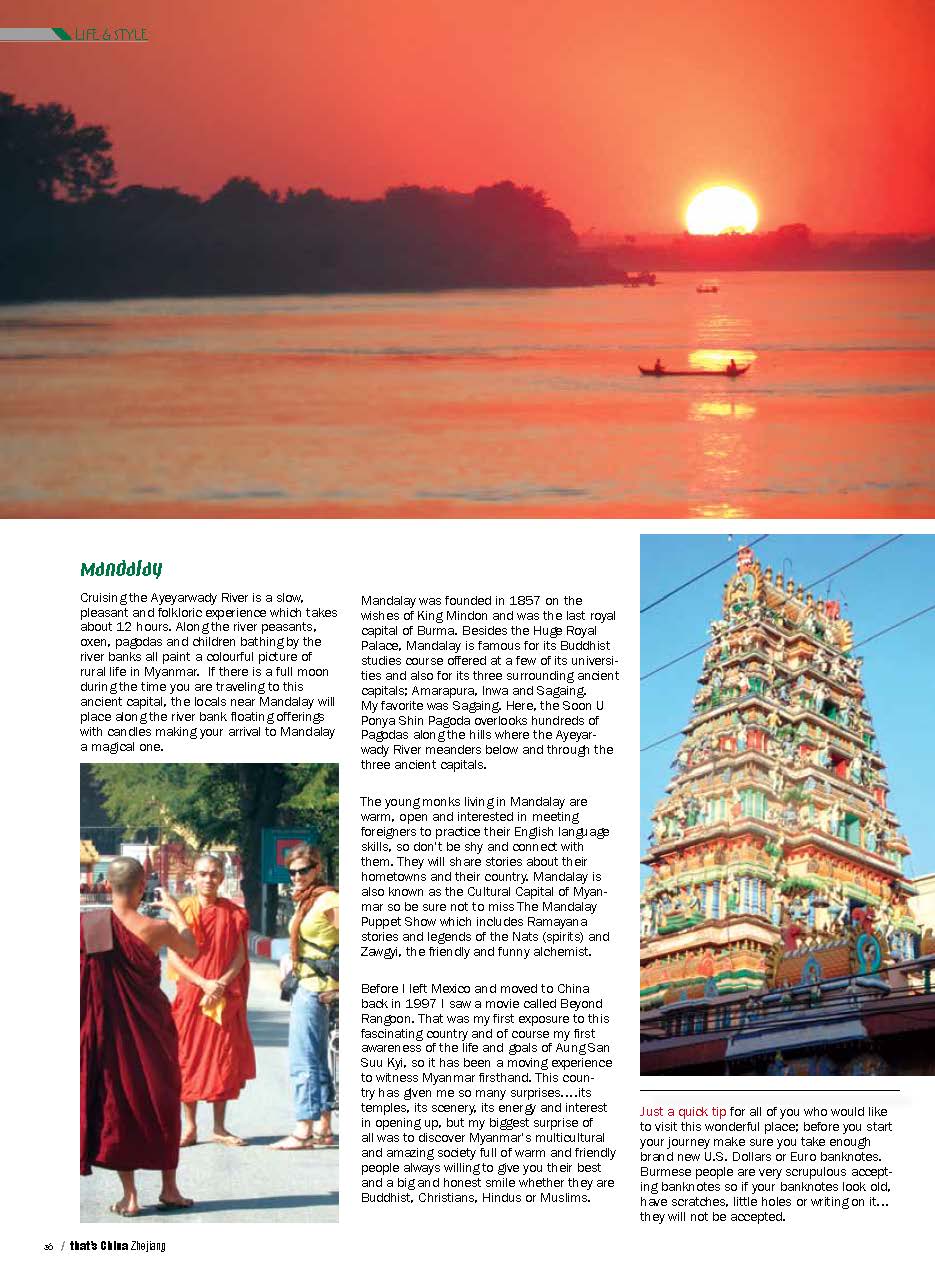
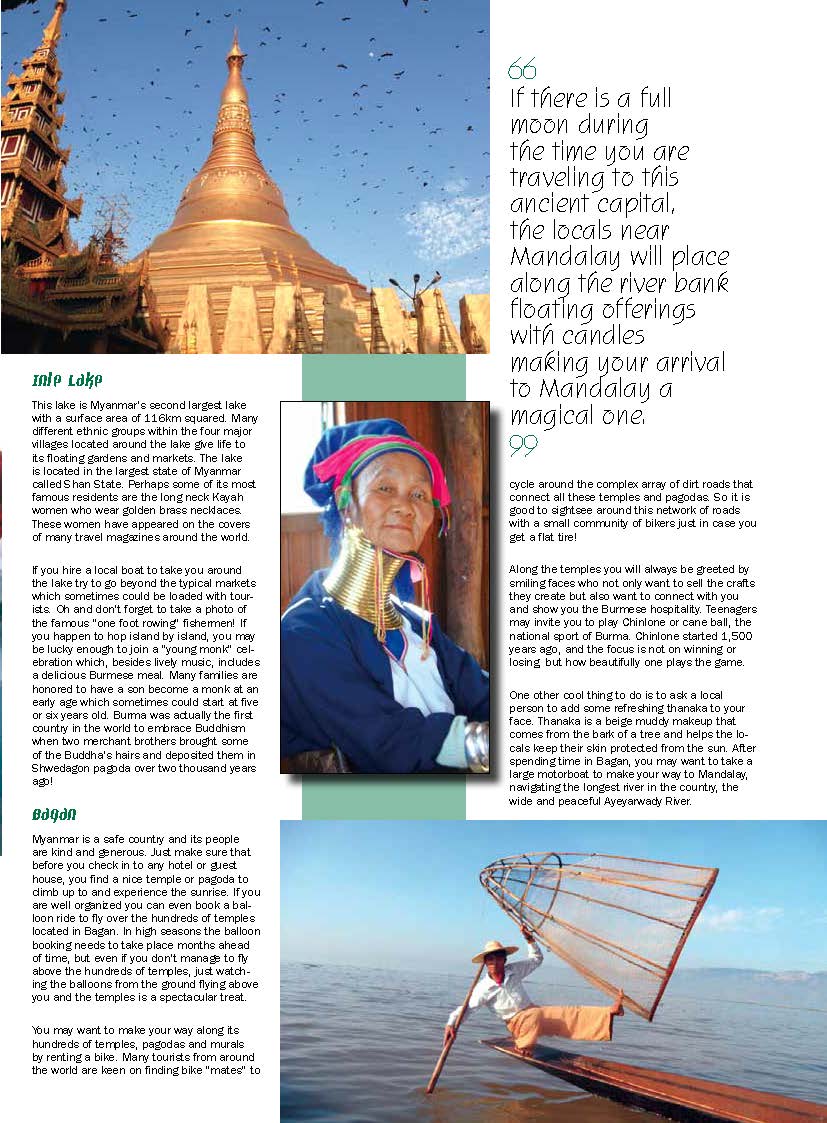
Myanmar, A Guest Blog by Victor Garza

Guest post by Cultural Detective China co-author Victor Garza

Many of you know Victor as an excellent photographer and world adventure traveler. He has just published another travel piece, this one on Myanmar. Despite the heartbreaking news about Buddhist violence in that country, I know many of us would love to travel there. You can click on the images below to enlarge them.

Where have you traveled to lately? Please, share with us your adventures!2013.5 36 2013.5 38 2013.5 37

“Collide-o-culture” or “Kaleid-o-culture”: GPS for Human Beings

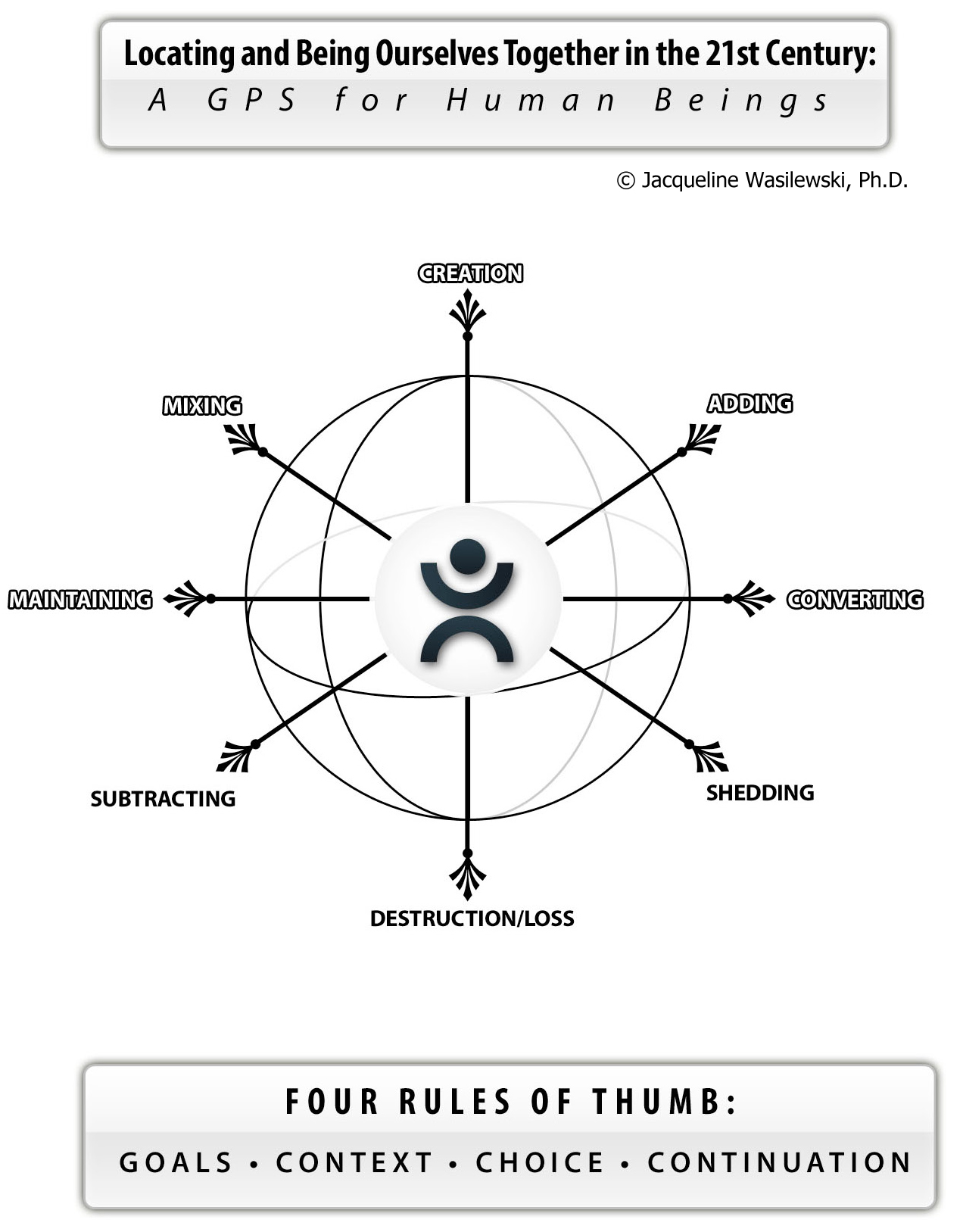
This graphic and the concepts underlying it are the work of Jackie Wasilewski.

“Collide-o-culture” or “Kaleid-o-culture”

I have long been a fan of Jackie Wasilewski’s. She is one of the brightest shining stars in our intercultural field, plus an all-around terrific human being and friend.

Her investigations are motivated by a couple of key objectives that dovetail beautifully with our work at Cultural Detective®:

  • How to include everyone (in her extended family at her holiday dinner table) in their full authenticity?
  • How to reconcile highly contrastive content (how to bridge), when it seems impossible to please everyone simultaneously?

Values ≠ Traditions
One point she makes is that values are not the same as traditions, and the two must not be confused. Values can be held while behavior is changed—a la Cultural Detective. Jackie told us in Spokane that when cultures get threatened, they get reified. That when cultures stop changing, they die. So, our quest needs to be, how to preserve and change, simultaneously?

GPS for Human Beings
Way back when Jackie conducted her Ph.D. research, she analyzed the personal histories of 192 multicultural people. That approach—learning from the inside-out rather than the outside-in, is also the Cultural Detectiveapproach.

One of the outcomes of her research was the graphic shown above, a “GPS” outlining paths to multiculturalism. The negative paths at the bottom of the sphere used to have only one label, subtracting, but over time this label has come to include destruction/loss and shedding, and Jackie tells us that the “choice” of this direction is often the result of oppression. However, this cluster of negative pathways also has a mysterious connection to the creation option at the top of the choice sphere. Sometimes the old has to be wiped away for the new to come into existence. At Cultural Detective we usually aim for mixing, creation, or adding. The final two options in her framework are maintaining and converting/assimilation. Here is a quote from the paper she presented:

To use this “GPS” effectively, each of us has to examine our goals and the characteristics of the context in which we are making the choice. Where do we want to end up? What are the opportunities and constraints of the environment in which we find ourselves? Where are our “degrees of freedom”? What are the costs and benefits of taking each direction? Which “direction” will lead us nearer our goal?

We have to imagine that we are like an aikido master standing in the center of a sphere consisting of the six options or “directions” [maintaining, converting, mixing, adding, creating and the subtractive cluster]. At each choice point, we have to consider all our options, just as if we were considering them for the very first time. None of these directions is better or worse. None is of higher or lower rank. Some are more complex to enact in a given context or set of circumstances. But the best choice is the appropriate one for enabling us to continue towards our goal in that particular context.

To manage these options productively people need a support network; a supra-ordinate goal; the ability to acknowledge their own complexity; the ability to transform negative emotional energy into positive energy; the ability flexibly to use the six options stated above; and at certain key moments, the ability to publicly stand for their full complexity so that new social space can be created.

“Collide-o-culture” or “Kaleid-o-culture”?
One of her definitions of “people power” is the web or sphere of interpersonal relationships we hold. Jackie tells us that if we think in relationships, then when we meet another individual we will realize that we are bringing together two communities. In her words, will it be “Collide-o-culture” or “Kaleid-o-culture”? If we see the relationships, we will be more motivated to try to understand.

Indigeneity and Respect
The concept of “indigeneity” emerged from work conducted by LaDonna Harris, a Comanche woman and political advocate, and Alexander Christakis, a systems scientist. They discovered that indigenous people and 20th century knowledge management specialists had similar approaches to the management of complex problems. The four principles they identified for organizing societies that are both inclusive and just are: Relationship, Responsibility, Reciprocity, and Redistribution. The result of these four R’s is a fifth: Respect. Goals of the ongoing work that has now been taken worldwide include maximum autonomy and maximum choice for the smallest units of society. To again quote Jackie’s SUSA paper:

Physician, therapist and healer, Brenda Davies (2007) says there is “nothing but communication.” Our truth, as we know it, is always what we are communicating. However, we have to be willing to update our truth every second. Our integrity is also a function of our truth as we know it. Each of us has a unique integrity based on our experiences. It constitutes our personal set of rules, but it too is always moving. Understanding another person’s integrity is the best we can do, and it allows us to love them separately from their behavior. The key would seem to be to create discursive spaces like the ones discussed above where we can all update our truth together and enable our mutual integrity to rise exponentially.

This is a VERY brief overview and of course does not do Jackie’s work adequate justice.  I trust it will motivate you to learn more about her work, and to use what she knows in order to use the Cultural Detective method and materials to the highest benefit. You can download a full copy of the paper she presented that this article summarizes.

(This post is taken in major part from an article I wrote in 2010.)

Una Jornada Intercultural con Dianne Hofner Saphiere

Mil gracias a todos los docentes que asistieron, y también a SIETAR Argentina y AFS Argentina y Uruguay. Juntos podemos construir un mundo mejor!


Julia's avatarSIETAR Argentina

483621_450767178324906_1898862114_nEste Abril 2013, tuvimos el agrado de coordinar, presenciar y participar de un evento internacionalmente reconocido ya que Dianne Hofner Saphiere* estuvo visitando la Argentina.

AFS** y SIETAR Argentina coordinaron el evento, junto también a representantes del Ministerio de Educación de la Ciudad de Buenos Aires que promocionó la jornada entre sus docentes.

La jornada tuvo dos partes. Una, por la mañana, dedicada a los docentes de la Ciudad de Buenos Aires y otra, por la tarde, para los profesionales interculturales.

Por la mañana, abrieron la jornada con palabras de bienvenida Juan Medici –Director Ejecutivo de AFS Argentina y Uruguay – y Ana María Ravaglia – subsecretaria de gestión educativa y coordinación  pedagógica del Ministerio de Educación del Gobierno de la Ciudad Autónoma de Buenos Aires.

Acto seguido, Dianne comenzó su presentación refiriéndose a la importancia de la comunicación intercultural como una clave para construir puentes. Con videos y análisis…

View original post 603 more words

El valor de las habilidades interculturales en el trabajo

Video sobre los resultados de un estudio realizado por The British Council, Booz Allen Hamilton e IPSOS Relaciones Públicas, basados en los aportes de un grupo de Gerentes de Recursos Humanos de 367 grandes empleadores en 9 países: Brasil, China, India, Indonesia, Jordania, SudAfrica, Emiratos Árabes Unidos, el Reino Unido y los Estados Unidos. “Los empleadores reconocen la importancia de las habilidades interculturales en el lugar de trabajo.”

Video producido por Cultural Detective, Dianne Hofner Saphiere. Traducido al español por Nathaly Moreno.

Nuestro resumen sobre este estudio, escrito en inglés. Versión del video en inglés. Link al estudio original.

Royal Glitter in the Sober Dutch Egalitarian Culture

(Versión en español sigue el inglés)

In preparation for the exciting inauguration of the new Dutch king and his Argentinian-born queen tomorrow, I am pleased to be able to share with you an article that Cultural Detective The Netherlands co-author Eleonore Breukel has co-written with Marcelo Baudino. It is indeed curious that the Netherlands has a Monarch, and always amazing how current events can so well illustrate the values in a Values Lens. Read on to learn how.

Is there a Dutch identity? Is there respect without titles and formalities? The multicolored Dutch manage to combine royal glitter and soberness. They place their King in the middle of the egalitarian society. Together they guarantee freedom and democracy.

Who are the Dutch?
The Argentinean born Princess Maxima of the Netherlands once said in an official speech “There is no Dutch identity”. That statement was not well received by the Dutch public. What she meant was that the Netherlands is so multicultural that it is hard to label it with one single identity. In large cities in the Netherlands, English is heard more often than Dutch and a range of skin tones can dominate in crowded streets.

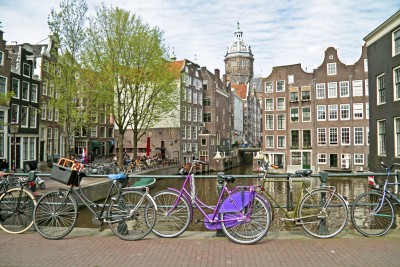
fietsenAMS-sOver the centuries people from all continents have come to the Netherlands in search of jobs, education, freedom of speech, a strong social system, and tolerance of race, religion and sexual orientation. Some came for the cannabis. It is a melting pot of people and languages. Immigration laws have become stringent. However, due to the open labor market of the European Union there is a large influx of European migrants, many come from Eastern Europe. Over time most immigrants adapt to the mainstream culture while changing that mainstream culture at the same time.

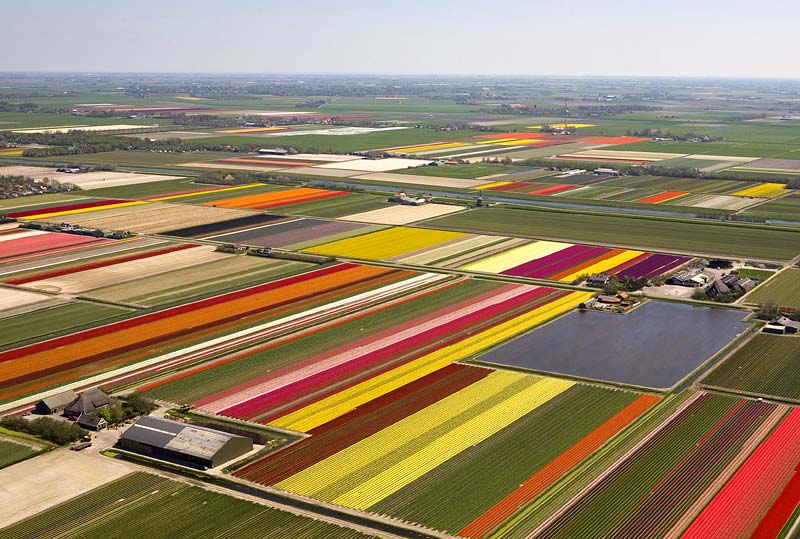
tulipspa0605_800x5391How egalitarian are you?
In the Dutch egalitarian society all people have the same rights and are treated equally under the same circumstances. The CEO of Shell or the Mayor of Amsterdam will be fined if they fail to pay a parking ticket or if they do not clean up after their dog poops on the street. The Dutch believe in equal rights, equal responsibilities and equal treatment – with the law as the authority – no matter who you are.

CEOs get their own coffee at work, the prime minister often commutes on his bicycle, and Princess Maxima’s kids go to a regular public school. A position of great responsibility doesn’t come with expectations of special rights or special treatment. This often confuses foreigners visiting Dutch organizations. Without formalities around status it can be hard to distinguish who the boss is. The Dutch communication style is also very informal and very direct. Respect is earned by training trust rather than through formalities, job titles or academic achievements.

Do Freedom and Trust sleep on the same cushion?
In the Netherlands they do. Freedom of speech, euthanasia, and use of soft drugs, are all permitted, but strictly regulated. There are laws, procedures and permits for just about everything. You even need a permit to cut down a tree in your own garden. All these regulations exist to protect both individuals and businesses. On one hand they slow down business processes but on the other hand it inspires trust. Like other Northern European countries, the Dutch trust the ability of their national institutions and the government to function well. Favoritism or bribing is punished severely. It is this trust which makes the social economic climate of the northern countries pleasant and predictable.

Soberness and glitter boost the economy
There is soberness in the Dutch culture, which contrasts greatly with the glamour and glitter of the Monarch’s annual ride in their golden carriage. Extravagance is often seen as wasteful and is met with disapproval. This has proved to be a positive trait during tough economic times when, but it can be very embarrassing if one brings an unexpected guest for dinner – meals are rarely prepared with the intention of having left overs.

This soberness, or rather disapproval of abundance and excesses, is rooted in history in the various forms of Protestantism of the Northern European countries originating in the 16th century. Each individual had to earn his salvation through soberness, honesty and hard work. The Protestants opposed the Catholic papal supremacy and authority and they condemned the grandeur of the Catholic ceremonies, the lavish and sinful lifestyle of its clergy, and the adornment of gold, precious stones and paintings in their churches. The Protestant houses of worship were large and empty, with simple ceremonies and no adornments that might distract from worshiping God. The Dutch followed the severe Calvinist doctrine within Protestantism.

Of course the Dutch have changed and very few still practice any form of religion. However some of the old values are expressed in new ways. The Dutch will prefer a solid car like a Volkswagen over a show piece such as a Lamborghini and many prefer to have more vacation days than a higher salary. Often couples decide that one of the partners will not work for some years after having children to prioritize time for family life over the luxury of two salaries.

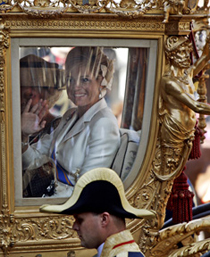
DEN HAAG-PRINSJESDAG-BINNENHOFEven the royal family does not excel in extravagance or spending lavishly. Their expenses are always scrutinized by the public. They are thought of as walking advertisements for the country. Their beautiful clothes are often the work of Dutch fashion designers. Willem Alexander promotes Dutch water management and sports around the world. The royal family plays a large role in the local and global economy. Not only are they related to many wealthy European royal families, they are also part of an enormous network of the most important and powerful people of the world – from Barrack Obama to Nelson Mandela and from Ratan Tata to Bill Gates. Many of these people are not just acquaintances but personal friends.

When making state visits, large trade delegations accompany the royals. Dutch businessmen are introduced to local companies but also have the opportunity to talk to the royal family during their trip. It is always good to be “seen with your queen”.

Who wants to be queen?
Ask any woman in the street if she wants to switch positions with Maxima and the answer will be, “Oh heavens no, the poor girl”. It is hard to find anyone who wants to be king, queen or a member of the royal family. Status, glitter, travels, and money are not seen as attractive compensation for the responsibilities required. Members of the royal family are always in the public eye and must exercise great restraint airing their own opinions or simply being themselves. Even though Willem Alexander and Maxima have taken steps away from protocol to be closer to the people, every move, smile, and sentence is scrutinized. What will happen to the lively, enthusiastic and charming Maxima when she becomes queen? The country is waiting to see how she will balance these national contradictions.

About the authors
Eleonore Breukel
– Director of Intercultural Communication bv in Amsterdam
www.intercultural.nl  • ebreukel@intercultural.nl

Marcelo Baudino
– Socio Consultor Iceberg Intelligencia Cultural in Buenos Aires                              www.icebergci.com  • mbaudino@icebergci.com

Resources

http://en.wikipedia.org/wiki/Prinsjesdag
http://en.wikipedia.org/wiki/Protestantism
http://en.wikipedia.org/wiki/Calvinism

Brillo real en la sobria e igualitaria cultura holandesa
¿Existe una identidad holandesa? Existe respeto pero sin los títulos y las formalidades. Los multicoloridos holandeses lograron combinar al brillo real con la sobriedad. Ubican a su rey en el medio de una sociedad igualitaria. Juntos garantizan libertad y democracia.

¿Quiénes son esos holandeses?
Máxima, la princesa argentina de los Países Bajos, una vez dijo en un discurso oficial: “no existe una identidad holandesa”. Esta afirmación no fue bien recibida. Lo que quiso decir fue que los Países Bajos son tan multiculturales que es difícil identificar una sola identidad. Es un verdadero desafío incluso detectar una persona holandesa blanca en la multitud de colores cuando se camina en las calles de las grandes ciudades holandesas. Con frecuencia, el inglés es  más escuchado que el idioma holandés.

A lo largo de los siglos, personas de todos los continentes han emigrado hacia los Países Bajos en búsqueda de trabajo, estudio, libertad de expresión, tolerancia de razas, religión y orientación sexual, un sistema social sólido y algunos llegaron en búsqueda del cannabis. Un verdadero crisol de personas e idiomas. Las leyes de inmigración son más rigurosas hoy en día, sin embargo, debido al libre mercado laboral de la Unión Europea, la llegada de otros europeos, especialmente del este de Europa, es enorme.

Con el tiempo, todos los inmigrantes se adaptan a la cultura dominante mientras cambian que, al mismo tiempo, cambian a la cultura dominante.

¿Qué tan igualitario eres tú?
En una sociedad igualitaria como la holandesa, todas las personas tienen los mismos derechos y son tratados equitativamente en iguales circunstancias. El CEO de Shell o el alcalde de Ámsterdam serán multados si no pagan el estacionamiento cuando deben o si no limpian la suciedad que deja sus perros en la calle. Iguales derechos, iguales responsabilidades e igual trato, no importa quién eres. La ley es la autoridad.

Un CEO se sirve su propio café en el trabajo. El primer ministro suele ir a trabajar en bicicleta tal como lo hacen muchas otras personas. Los hijos de Máxima asisten a una escuela pública regular. Por más que uno tenga una posición con  mucha responsabilidad, no puede esperar obtener derechos especiales o un trato particular.

Esto puedo confundir a los extranjeros que visitan organizaciones holandesas, ya que es difícil distinguir quienes son los superiores cuando no existen formalidades específicas con respecto a las jerarquías. El estilo de comunicación holandés también es muy informal y directo. El respeto no se obtiene a través de formalidades, del trabajo o de títulos académicos, sino a través de ganarse la confianza.

¿La libertad y la confianza duermen en la misma cama?
En los países bajos sí. La libertad de expresión, eutanasia, drogas suaves, etc. son libertadas aunque estén estrictamente reguladas. Existen regulaciones, procedimientos y permisos para prácticamente todo. Necesitas un permiso hasta para cortar un árbol en tu propio jardín. Todas estas regulaciones buscan proteger a los individuos y a las empresas. Por más que hagan más lentos los procesos de negocios, también inspiran confianza.

Como cualquier otro país del norte de Europa, los holandeses confían en el correcto funcionamiento de sus instituciones y el gobierno. El favoritismo y los sobornos son castigados severamente. Es la confianza en la ley lo que define al clima social y económico como amable y predecible.

La sobriedad y el brillo impulsan la economía
Hay sobriedad en la cultura holandesa. Es un gran contraste con el glamur y el brillo de paseo anual en al carruaje de oro del monarca. Las extravagancias suelen ser vistas como un desperdicio. Los holandeses no son frugales pero no aprueban el derroche, un rasgo positivo en la época de las sustentabilidad de recursos. Si alguien llega con un invitado inesperado a una cena, puede causar mucha incomodidad en los anfitriones holandeses. Cuatro porciones son exactamente cuatro porciones y no cinco.

Esta sobriedad o rechazo de la abundancia y los excesos se retrae a las varias formas de Protestantismo de los países de Europa del norte en el siglo 16. Cada individuo debía ganarse su propia salvación a través de la moderación, la honestidad y el trabajo duro. Los protestantes estaban en contra de la autoridad católica suprema del papa y condenaban la grandeza de las ceremonias católicas, la vida de lujo y pecaminosa de su clero, los adornos de oro, piedras preciosas y pinturas en sus iglesias.

Los lugares de culto de los protestantes eran grandes y vacíos, con ceremonias simples y sin adornos o cualquier otra distracción que no sea la de venerar a su dios. Los holandeses siguieron la severa doctrina calvinista dentro del protestantismo.

Por supuesto que los holandeses han cambiado y las religiones se han desvanecido. Aun así, prefieren un auto sólido como un Volkswagen por encima de una pieza de arte como un Lamborghini. Muchos prefieren tener más días de vacaciones que un salario más alto. A veces las parejas deciden que sólo uno de ellos trabajo durante los primeros años luego de tener un hijo. Una buena vida por encima del lujo de dos salarios.

Incluso la familia real no se destaca por la extravagancia y por gastar profusamente. Sus gastos son siempre escrutados por la gente. Sus hermosos vestidos suelen ser de diseñadores de moda holandeses. Guillermo Alejandro es un promotor global de la gestión de agua holandesa y los deportes. La familia real juega un rol clave en la economía local y global. Además de estar relacionados con muchas realezas europeas, tienen una enorme red global de contactos importantes y poderosos. Desde Barack Obama hasta Nelson Mandela y desde Ratan Tata hasta Bill Gates. Muchas de estas relaciones no solo son conocidos, sino también amigos personales. En sus visitas de estado, los acompañan grandes delegaciones comerciales. Los empresarios holandeses son presentados a las compañías locales, pero también tienen la oportunidad de hablar a sus reyes durante el viaje. Siempre es bueno ser visto con tu reina.

¿Quién quiere ser reina?
Pregúntale a cualquier mujer en las calles de los Países Bajos si les gustaría intercambiar posiciones con Máxima y la respuesta será: “Por dios no, la pobre niña”. Es difícil encontrar a alguien que quisiera ser rey, reina o miembro de la familia real. Estatus, lujos, viajes, dinero no siempre compensan las difíciles tareas que tienen. Siempre en el ojo del público. Nunca poder ventilar tus propias opiniones. Nunca ser tú mismo. ¿Qué le pasará a la entusiasta y encantadora Máxima cuando se convierta en reina? Aun cuando los nuevos reyes decidan prestar menos atención al protocolo y estar más cerca de la gente, cada sonrisa, movimiento y oración serán pesados en una balanza de oro.

This article is a reprint, with permission, of the original. They’ve written a second article as well, entitled “Influence on Dutch Economy of the New King and Queen of Netherlands.”