Dr. Carlos Cortés on Multicultural Identity

ForkhashiMany of you have probably heard of Young SIETAR, one of the most vibrant groups in our professional association. If not, you should—they are a terrific organization of not necessarily young professional from a variety of disciplines who share an interest in intercultural relations, and use virtual communication to interact with members around the world.

Dr. Carlos CortésYoung SIETAR recently offered a webinar with Dr. Carlos Cortés, Professor Emeritus of History at the University of California, Riverside, who is globally esteemed for his work on multiculturalism. He’s the general editor of the newly released Multicultural America: A Multimedia Encyclopedia, and the author of many other excellent books. The webinar was moderated by the very capable and personable Melissa Hahn.

I really respect Carlos. He’s intelligent, he’s funny, and he speaks his truth regardless of context. We’ve shared several wonderful dinners in the home of a mutual friend, and I have enjoyed our collegial relationship as we have both been on the faculty of the Summer Institute for Intercultural Communication for the past two decades. I’ve treasured every moment and learned a great deal.

Carlos said a few things in the public webinar that I was delighted to hear from a man of his experience and expertise. They are key components of the Cultural Detective (CD) Method, yet sometimes I feel that we are a solitary voice on the subject. It felt good to have someone else beating the drum for a change!

Carlos opened his presentation with a slide that Melissa had made, illustrating multicultural identity. A screen shot of that slide is below.

What is MC Identity?

©Melissa Hahn, used in the webinar by Dr. Carlos Cortés

Does the slide remind you of anything? If you are at all familiar with our Cultural Detective Method, I believe you’ll immediately think of two things. First, the image contained on the definitions page in every CD package:CultDiffsMap
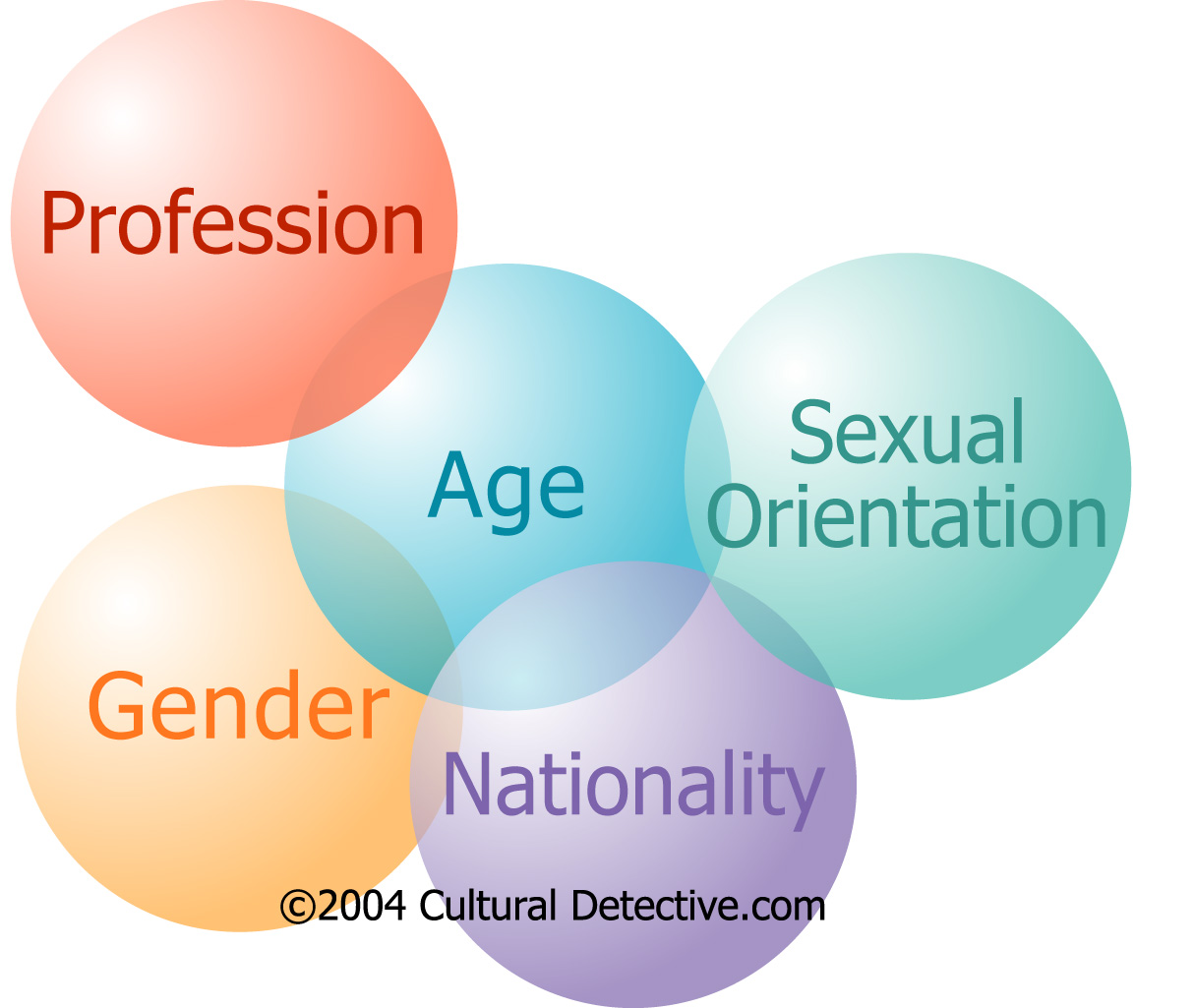
This image that reminds us that none of us are one story. We have multiple layers of identity, we have been influenced by multiple cultural experiences, and we should never diminish ourselves or others by only acknowledging one layer.

Second, the slide may remind you of our graphic illustrating the layering of our Values Lenses, showing how complex we are as individuals. This is an approach we teach over and over again in our webinars and facilitator workshops using the following graphic:

LayeredLensesFinalCarlos explained that most intercultural instruments look primarily at nationality, and he supposes that this is because it’s the easiest: “low-hanging fruit.” He explained that while a multi-layered model is important, it’s also more difficult, and that is perhaps why no one has created one. I realized that we have one such model and process here, in our CD series, and I’ve failed to communicate that to Carlos!

The second point he made was in response to a question: “Is it easier if you have a clear identity for yourself before going overseas?” While most people I know would advocate such a linear development (self before other, or other before self), Carlos didn’t hesitate for a moment before stating, emphatically, “No!” He went on to explain that just understanding others is not enough, however, and that:

“We need a dialectic between understanding others and understanding self. I’m 79 and I’m still developing and understanding my identity.”

What an elegant, concise summary of the Cultural Detective Worksheet and the yin-yang nature of relationships! Many clients use our CD tools to understand others. Many use them to understand themselves. But every client ends up developing a better understanding of both self and others in an organic, dialectic process.

Carlos addressed a question about how can we help people develop their multicultural identities in positive ways. He returned to the topic of instruments, saying that he’s not against using them as long as they open us up to discussion and discovery, and help us to confront and expand our limitations, rather than boxing us in. That is exactly what CD is all about: dialogue, discovery, mutual learning and adaptation, then synergy and innovation.

Carlos talked about the need to discuss concrete things rather than generalities (a good example is the practical, real-life focus of Cultural Detective‘s critical incidents), and the need to hear from the voice of the people themselves (our Values Lenses use native language terms rather than global, externally imposed dimensions).

Some other highlights from Carlos’ talk include:
  1. The challenge of multicultural (or in CD parlance, Blended Culture) identity is that you don’t “slot into a silo”; you don’t seem to fit, and that causes fear in some people. You can start to feel that you give the “wrong” answer on every form, and that you an oddity in any system.
  2. Self-identity negotiation takes a long time. It may sound easy, to pick and choose the “best of” your multiple heritages, but even if you try to push “pieces” aside, they can creep back at the most inopportune times. Your multicultural identity is and will remain part of you. It’s not about reconciling identity; it’s about enjoying being multicultural.
  3. TCKs (third culture/blended culture kids) need two kinds of understanding about the journey they face. They need to feel comfortable with their multiple strands, and to understand that they don’t have to pick and choose among the various parts of their identity. Talking generalizations isn’t enough—specific examples help, e.g., how difficult it can be when you don’t fit a category on an application form.
  4. The only way to truly understand multicultural identity is to listen to people with that identity. They need to share their stories and we need to listen.
  5. There are three distinct yet intersecting concepts that many people confuse:
    • Heritage: Something we all have, the layout of our family tree.
    • Identity: This comes from within, though, of course, there are always others’ perceptions of our identity that help shape us.
    • Culture: You can self-identify with a culture, yet not participate in every aspect of the culture. For example, you can self-identify as Irish, but not speak Gaelic. Therefore, you are part of the culture, but not part of the Gaelic language portion of it.
  6. Carlos recounted his personal story. He was born of a mixed marriage (Catholic and Jew, Mexican and US America). The more his parents pushed him to learn their two differing cultures, to “choose sides,” so to speak, the more they actually pushed him to develop an integrated multicultural identity.
  7. Research on multicultural identity is nearly non-existent. It’s an open topic for young people. The information currently exists in separate disciplines: racial identity, disability, etc. We need people to write their stories, hundreds of them, and study them. Carlos has studied multiculturalism for 40 years, yet he learned more by writing his autobiography (Rose Hill: An Intermarriage Before Its Time, Berkeley, CA: Heyday, 2012).
  8. Every time we enter a new cultural milieu, it’s a growth opportunity in which we can deepen and expand our understanding of who we are in a new context.
  9. Regarding national identity and social fragmentation worldwide, Carlos said that the solution to fragmentation is that a common identity/culture is needed along with space for people to have alternative sub-groups/diversity.
  10. For those looking for good resources on this topic, he highly recommends Bill Cross’ Shades of Black and Stephen Murphy Shigamatsu’s work on Asian-American identity, When Half is Whole.

As you can tell by my enthusiastic review, the webinar was a delight. Young SIETAR has loaded the recording if you’d care to listen to the entire one hour discussion. Carlos tells me he’s also happy to have you write him directly.

What does multicultural identity mean to you? What are its challenges? And its benefits? What strategies have you used to help yourself or others develop constructive Blended Culture identities? Do Carlos’ ideas mesh with your experience?
Names Across Cultures (First in a Series of Video Interviews with Authors!)

Name ChangesThere are many reasons people change their names: some people have a stage name, pen name, nickname, religious name, or an earned title or name. All too frequently, however, a name is involuntarily changed when someone immigrates, or when a teacher or teammates have trouble pronouncing the person’s birth name.

Many of us work with individuals who have been “renamed” by other colleagues, or who have changed their names to make them more palatable and pronounceable in a new location. Other times people adopt a different name due to a change in circumstance, profession, or age. For example, as a kid growing up in a small town, my father was called “Charlie:’ however, as a middle-aged adult living in a different town, he became known as “Chuck.”

Many people’s names have special meaning or significance. An interesting way to learn about a new acquaintance can be to ask the meaning and origin of the person’s name. And, if we wish to build trust with our friends and colleagues, in addition to understanding the meaning of their names, we can learn to pronounce their names correctly. You may recall that in January 2012 we shared a link for a handy-dandy little software that allows YOU to record the pronunciation of your name, and add it to your email signature, website, LinkedIn account, etc. What a great way for those unfamiliar with your name to hear it prior to meeting you!

Perhaps you, like me, are known by several different names bestowed on us by friends and colleagues. Dianne is the name given to me by my parents at birth, while my name in Japan is Dai-an (大安 or “great peace”, also a very auspicious day of the month). My Spanish-speaking friends and colleagues call me Diana María, and close friends and family call me Di. In my case, I’d rather be known as “Diana” or “Dai-an” than have my birth name “Dianne” mispronounced.

In many cultures, such as Mexico where I live, it is a sign of cariño or affection to bestow a nickname on others (click here for a list of some unusual terms of endearment in various languages). However, many people worldwide love their birth names, believe they are imbued with power, and would honestly prefer we not change their names for them.

Yet some people do want to change their name for various reasons, and have done so. Here’s a special little drag-and-drop game for you, to see if you can match some famous people’s birth names with the names they are more commonly known by now.

I recently spoke with Dr. Emmanuel Ngomsi, a diversity consultant originally from Cameroon, about the topic of naming. Emmanuel has a wealth of experience, is very passionate, and a consummate storyteller, as you’ll see in the interview below.

Do you have a story related to naming that you’d be kind enough to share with us? Have you changed your name, or has it been changed for you? How do you feel about that? Do you have any advice for others about names and naming?

See Part 2 of this interview.

I Have a Dream, #DreamDay

Oh how those words, spoken 50 years ago today — August 28, 1963 — have inspired us! The wisdom and passion with which they were spoken!

I Have a DreamSo many have shared their memories on this anniversary of Dr. Martin Luther King Jr.’s famous address. There have been incredibly motivational talks, such as this short one by the Dalai Lama.

Through all of it, however, most of us remain troubled. Are we any closer to that dream? Have each of us done our best, in our lives and in our own ways, to help make that dream a reality?

One thing I know, both from my heart and professional training, is that the Dalai Lama’s message about focusing on the oneness of humanity is based upon a deep recognition of and respect for diversity. Those who know the oneness also respect individual and cultural differences.

I say this because it’s too easy to fall into the superficial “feel good”-ness of “it’s a small world.” Common goals, shared dreams, are necessary to tie us together. And our distinct gifts are necessary to implement those dreams. It’s a converge-diverge dynamic, a yin-yang, in which both commonality and diversity are needed.

Today, let us renew our quest. Inclusion, the oneness of humanity, is not the polar opposite of diversity, as too many believe. A oneness of humanity must be accompanied by a respect for diversity; the two go together hand in glove.

Thank you all, today and always, for being part of our community, for helping us all achieve the dream that justice will roll down like water upon us! That we all will be free at last!

If you haven’t yet rewatched the famous speech, here it is. Sit down, enjoy, and refocus.

Estereotipos: entre el bien y el mal

(English follows Spanish)
La subjetividad es tan inherente al ser humano como lo son sus propias emociones. En el alma mezclamos de manera inseparable la voluntad, el intelecto y la emoción; y según cada una de estas “sea alimentada” podremos actuar de una manera u otra. De hecho es por esto tan famosa la llamada Inteligencia Emocional, que no es otra cosa que alimentar el intelecto y la voluntad para controlar las emociones (y que Daniel Goleman me perdone por hacerlo parecer tan simple).

Por nuestro lado, y digo nuestro porque aquí es lo que nos reune, la Inteligencia Cultural (CQ) busca entonces alimentar “el conocimiento” , la “aprehención mental de las diferencias” y modelar el “comportamiento” entre las culturas.  Obviamente el comportamiento se nutre de nuestras emociones y por ende de alguna manera querámoslo o no se relaciona con nuestra subjetividad.

Sin embargo, como si fuera parte de un círculo vicioso nuestra subjetividad cambia según alimentemos el conocimiento y nos dispongamos a aprender y aprehender. Sí hay que conocer y disponerse a conocer, además de buscar fuentes de información diversas… variadas y paradójicamente, objetivas.

Los estereotipos sin duda alguna son uno de los principales desafíos en nuestra interacción intercultural. Para algunos es el bien… la bendición y el llevar consigo ese pre-juicio (pre: adelantado…inferido…establecido… no cuestionado) que les abre puertas y que les da acceso a una serie de oportunidades negadas para otros.

Ejemplos de esto hay muchos. Podríamos comenzar por las diferencias de género y por ende los pre-juicios alrededor de hombres y mujeres para el desempeño de oficios y responsabilidades. Aún es una realidad latente que hombres y mujeres no recibimos la misma remuneración al realizar/ejecutar la misma tarea y ocupando la misma posición.

Nelson Mandela es tristemente célebre por luchar contra el Apartheid y entregar su vida por demostrar que el color de la piel no interfiere con lo que somos o podemos ofrecer. Los prejuicios sociales se dramatizan entre el amarillismo y el realismo trágico en miles de tragicomedias y novelas reflejando una sociedad estereotipada.  No hay que dar muchos detalles de lo que significa tener un nombre de ascendencia árabe y musulmán en los Estados Unidos luego del 9/11.

Y así hay otras tantas, como la que vivo cuando me discriminan por el lugar donde nací. Entonces los estereotipos se convierten en una especie de estigma, de etiqueta, de prejuicio sin sentido y sin razón. Aunque parezca irreal cuando vivía en Londres a una compañera del college le prohibieron hablar conmigo “peligro es colombiana” y en 1998 buscando un lugar para vivir, llegué a uno de los suburbios a una casa donde lo primero que me dijeron: es usted familiar de Pablo Escobar?

Al final no importa lo bueno que cualquiera nacido en este país pueda tener. Lo malo es la nube negra que nos acompaña, nos limita, nos cierra puertas y lo peor, muchas veces tristemente habla por nosotros y enmudece nuestra voz.

Hay problemas, tal vez más que en otras latitudes… tal vez menos y más publicitadas. Los estereotipos se vuelven peligrosamente en contra de todos, y nos llevan al facilismo de generalizar y el derecho sesgado del absolutismo puro. TODOS los nacidos son, o TODOS los hombres, TODOS los musulmanes, TODOS…. y no! No todos ni todas somos iguales, si bien es cierto tenemos rasgos y características compartidas, el absolutismo es negarnos la posibilidad de nuestro valor como individuos… lo que somos más allá de lo que otros dicen que somos o debemos ser.

(English translation by Dianne Hofner Saphiere)

Stereotypes: Between Good and Evil

Subjectivity is as inherent to humans as are our emotions. In our souls we inextricably mix intellect and emotion, and we behave in one way or another depending on which one we feed. That which is famously called “Emotional Intelligence” (EQ) is, in truth, nothing more than feeding the intellect and controlling emotions (forgive me, Daniel Goleman, for making it seem so simple).

In our field, and I say “our” because it is what brings us together, Cultural Intelligence (CQ) seeks to feed “knowledge,” “mental appreciation of differences,” and to model “behavior” across cultures. Obviously behavior is influenced by our emotions and therefore, like it or not, it relates to our subjectivity.

However, as if it were part of a vicious cycle, our subjectivity changes according to how we nourish knowledge, and we can become better able to learn and comprehend. Yes, it’s necessary to know and to be ready to learn, to search for diverse sources of information — varied and, paradoxically, objective.

Stereotypes without any doubt are one of the major challenges in intercultural interaction. For some it’s the good; the blessing to take with them prejudice (established assumptions and inferences that are not questioned) that opens doors and gives them access to a series of opportunities denied to others.

There are many examples of this. We could start with gender differences and the prejudices surrounding men and women’s abilities to perform jobs and responsibilities. We live with the reality that men and women still do not receive equal pay for equal work or when occupying the same position.

Nelson Mandela is sadly famous for fighting Apartheid and devoting his life to demonstrating that the color of one’s skin does not interfere with who we are or what we have to offer. Social prejudices are dramatized between sensationalism and tragic realism in thousands of tragi-comedies and novels representing a stereotyped society. There is little need to give details surrounding what it means to be a Muslim man of Arab descent in the USA after 9/11.

And there are many more, like those I live with when people discriminate against me due to where I was born. The stereotypes become a type of stigma, a label, of mindless and irrational prejudice. Although it seems surreal, when I lived in London a college friend was prohibited from talking with me because I was “the Colombian danger,” and in 1998 when I was looking for a place to live, I arrived at a suburban house where the first thing they asked me was, “Are you related to Pablo Escobar?”

In the end, it doesn’t matter how good anyone born in this country might be. The evil is the black cloud that accompanies us, limits us, closes doors for us, and worse, that many times sadly speaks for us and mutes our voice.

We in Colombia have problems, perhaps more than in other locations; perhaps fewer but more publicized. Stereotypes come dangerously back against all of us, and they easily take us to generalizations and pure, biased absolutism. ALL OF US are born, ALL OF US are human, ALL OF US are Muslim, ALL … and not!

Not all of us are equal, even though we may share certain traits and characteristics. Absolutism negates the possibility of our value as individuals — it negates who we are, beyond that which others say we are or should be.

The “Veil” in Tunisia

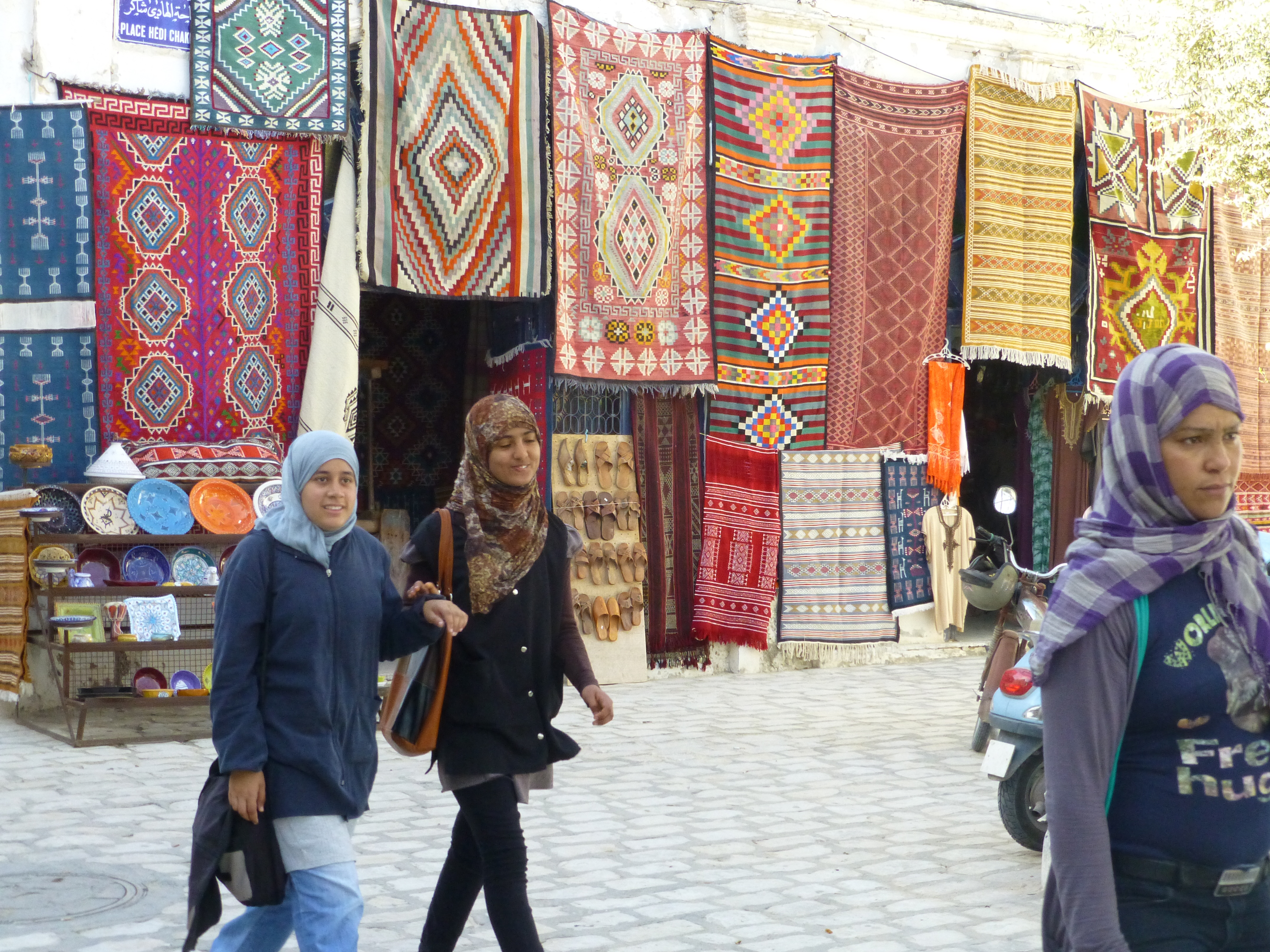
P1020927I am very happy to share this guest blog post, written by a new member of our Cultural Detective community, Dr. Larry Michalak. His story illustrates a topic we’ve posted about before: veiling and how easily people can jump to the (wrong) conclusions about a person’s appearance.

What I particularly appreciate about Larry’s piece is that his list at the end illustrates a vital cross-cultural skill: the ability to generate multiple possible motivations for behavior. This ability is crucially important if we are to get beyond our own biases and expand our worldview, really get to know others, and develop respect, empathy and the ability to collaborate. Here is Larry’s post:

Sit in a café on any street in Tunis (one of the pleasures of life!), and you will notice that the women who pass are covering up more than they used to in years past. There is a new kind of women’s clothing that didn’t exist when I was here in the 1960s—headscarves and smock-like dresses that cover the arms.

This “veiling” phenomenon has become a widespread topic of conversation, journalism, and social and even political analysis. Women began covering up more in the late 1970s, the headscarf was suppressed by the government in schools and public offices until the Tunisian revolution in January 2011, and now women are free to dress as they please.

Some scholars count the percentage of Tunisian women who are veiled, and cite these statistics in articles. This mode of dress (the argument goes) has religious and/or political meaning. It shows an increase in religious conservatism, and/or means that the wearer of the veil is showing sympathy with Islamic politics, opposition to the U.S., etc. When these observations come from secularists they are usually accompanied by expressions of disapproval of the veil.

But there are problems with this argument. One of them is the difficulty of defining what constitutes “veiling.” There is the hijab, which in Tunisia can mean a headscarf or else a headscarf accompanied by a smock-like dress that covers the arms and comes down to the ankles. Sometimes there is just a headscarf, and sometimes the headscarf is worn to cover the woman’s hair—sometimes completely and sometimes not. Full veiling, such as one finds in the Eastern part of the Middle East (e.g., the chador in Iran, the burka in Afghanistan, and the nikab in Saudi Arabia), is very rare in Tunisia. The term “veiling” is used indiscriminately to refer to all these different ways of covering.

Some years ago there was an excellent article in Jeune Afrique by a Tunisian woman journalist who thought that fashion was probably the most important reason for veiling. Some women wear the veil as they would a miniskirt—because it’s the fashion—and the cut and the color are more important than any religious content. Many of these women who veil have never read the Qur’an or performed the prayer. Some go veiled on weekdays and wear bikinis on the beach on the weekend. Some wear the veil to nightclubs with their whisky-drinking boyfriends. And on the boulevards of Tunis, one can see veiled women holding hands with their boyfriends.

My conclusion is: You can’t tell much about people by looking at how they dress. Just as you can’t judge a book by its cover, neither can you judge a woman by her clothing. This goes for men, too. I have known traditionally dressed men with very modern ideas, and men in Western suits who would feel right at home with the Taliban. I once heard a scholar give a paper at a conference, with statistics on what percentage of the women he observed in different places and at different hours were “veiled.” But he was calling lots of things “veils” and assuming that the “veil” reflects religious and/or political opinions.

To make my point, here is a list of ten reasons, other than religious or political, that a Tunisian woman might “veil.”

  1. “I do it to piss off my parents—especially my mother, who doesn’t veil.”
  2. “On TV I saw some women in Egypt who wear it and I think it looks great!”
  3. “I just got married and now I don’t have to advertise my looks.”
  4. “I just washed my hair, and I can’t do a thing with it.”
  5. “So that the guys will leave me alone on the bus.”
  6. “I want people to think that I’m a virgin so that I can find a husband more easily.”
  7. “I’m on my way to have sex with my boyfriend and I don’t want anyone to recognize me.”
  8. “I’m so beautiful that I have to cover up to keep the guys from going crazy.”
  9. “I’m not attractive and I’m self-conscious about it, so I leave my looks to people’s imagination.”
  10. And, finally: “It’s cold out today and I want to keep my head warm.”

In other words, sometimes a headscarf is just a headscarf!

Dr. Larry Michalak is a cultural anthropologist with degrees from Stanford, London and UC/Berkeley. He was Vice Chair of Berkeley’s Center for Middle Eastern Studies for 23 years. His specialty is the Arab World, especially Tunisia, where he was a Peace Corps Volunteer in the 1960s. He has now spent over ten years there. Larry is fluent in Arabic and French. In his retirement he has enjoyed traveling with his wife Karen as an enrichment lecturer for UC/Berkeley and the Smithsonian, and he has also taught on Semester at Sea.  His favorite topics are anthropology of food and anthropology of tourism.

Burka-Clad Super Hero Fights for Girls’ Rights!


ba-cover
This week saw the television launch of an exciting new female superhero, direct from Islamabad, Pakistan: The Burka Avenger!

The star of the animated series of thirteen, 22-minute episodes is a teacher who uses books and pens to fight the evil people who shut down schools and prevent girls from getting an education. The humorous show also teaches kids to protect the environment, and, good news for the Cultural Detective community, to respect diversity and include others.

Each episode features an original song and guest appearances by some of the biggest musical acts in South Asia, including Ali Zafar, Haroon, Ali Azmat, Adil Omar, and Josh. Goals include entertainment and positive messages to youth. The series’ trailer (in English) is below.


The Burka Avenger is the brainchild of Aaron Haroon Rashid, a Pakistan pop star who wanted to create a positive role model to counter the Taliban’s ongoing opposition to girls’ education. In explaining the choice of the burka, which the teacher, Jiya, only wears in superhero mode, Rashid explained, “It’s not a sign of oppression. She is using the burka to hide her identity like other superheroes. Since she is a woman, we could have dressed her up like Catwoman or Wonder Woman, but that probably wouldn’t have worked in Pakistan.”

Of course this may well remind us of the indomitable Malala Yousafzai, whom the Taliban   famously attempted to assassinate last October. On her 16th birthday this past July 12, the amazingly poised and well-spoken Malala delivered the first-ever education policy recommendations written for youth, by youth, to the United Nations (video below). July 12th has now been named Malala Day in her honor.


It is not just Pakistan where girls’ rights to education are in danger. Fortunately, the people at Mighty Girl Books have assembled a terrific list of books for children and teens that explore the challenge of girls’ access to education, worldwide and throughout history.

You may also remember the comic book series “The 99,” in which superheroes inspired by Islam (they are named after the 99 attributes of Allah) fight crime, smash stereotypes and battle extremism. Series creator Naif Al-Mutawa gave a talk at TED Global 2010. A video of his talk is below, and a free online issue is also available.

#nochildforsale

Check out this excellent, simple and clear video from WorldVision, designed to combat child trafficking.

Those of us committed to intercultural competence know that child labor is sadly a matter of family survival in many places on our planet. We work to change this systemic reality and create a more equitable world in which children can study and better their lot. Children who are loved and contribute to their family’s sustenance can indeed feel proud, despite the hardships they face and while we effect change.

Child trafficking, on the other hand, is a reality we need to say no to NOW. Absolutely not. There are many levels of “wrong” in the world. Putting an end to human trafficking has got to be a key focus of our efforts.

The Power of French Food Culture…Even for Selling Men’s Underwear!

underwear omeletteAnother guest blog by the wonderful Joe Lurie—I will say that I’m about ready to get on a plane and enroll in Joe’s next class!

As a follow-up to my blog posts, Bicycling in the Yogurt — the French Food Fixation and Ads as Catalysts for Intercultural Conversations, I’d like to share this French ad for men’s underwear, shared with me by a French student:

The ad shocked my Chinese students — underwear in the kitchen? References to a man’s genitals in a TV ad? Not only does it reflect in an amusing and extraordinary way the seduction of food in French culture, it also reveals a theme of sensuality commonly accepted in the French public square.

While there’s plenty of pornography in North America, a French marketing professional explained to me recently that using a bare breasted mermaid to sell an ordinary product in the United States simply did not work. And so, one understands why many visitors to France are shocked by bare breasted women on public beaches. Everything, in every culture, has its own culturally accepted place.

While discussing the French underwear ad, some of the French students noted that to break one’s eggs would often suggest breaking one’s balls — being a real pain. This occasioned a vigorous, animated debate, some French students insisting that breaking one’s eggs does mean breaking one’s balls, others countering with equal force that this was generally not true, rather at best a gross exaggeration. And so in that conversation emerged other common French values and related behaviors, emerging nearly verbatim as they appear in the Cultural Detective French Values Lens — the importance of debate, of challenging ideas, of being rational, of not exaggerating, of being precise. Listen to French conversation and you will hear, over and over again, the words preciser, “to be precise,” and il faut pas exaggerer— “one must not exaggerate!”

Joe Lurie is Executive Director Emeritus at University of California Berkeley’s International House, a cross-cultural communications trainer, consultant, university lecturer, and certified Cultural Detective facilitator. He is a frequent guest contributor to this blog.

Linked to the My Global Life Link-Up at SmallPlanetStudio.

Update Istanbul

IstFutI would very much like to thank Erika Leuteritz, talented and passionate member of our Cultural Detective community, for sharing this guest post:

Am I competent to write something about Istanbul? I’m German, I live and work in Germany. I love Istanbul, and I have been traveling to Istanbul every year for the past decade. I’ve been taught to be a Cultural Detective in a three-day course — in Istanbul. I have Turkish friends in Istanbul, Ankara, Izmir, Antalya and some smaller towns. Some are real friends, some are Facebook friends — acquaintances would be the old-fashioned word.
 These are normal women and men between 28 and 55. Usually they post photos of their children, their holidays, of flowers, insects, cats, information about books, music, quotations, cartoons, soccer … sometimes a political statement.

Last Friday night, I noticed that something must have happened. 
Nearly ALL of them were posting photos and videos of demonstrations, of drastic police violence. I know the area around Taksim Square. I was shocked. I asked one of my friends what was going on, and I checked German and British media. 
The following day, several of my friends asked me to help spread the news to the world because Turkish media remained silent. Since Saturday, I’ve been looking at videos, photos, information — since I don’t speak Turkish, I had to check German and English media as well.

These are the facts:
 A small group of demonstrators wanted to stop the government from felling over a hundred old trees in a park near Taksim Square for a shopping mall. They were few, they had a small camp, they were peaceful. The police disrupted the camp with tear gas and water canons. I’ve corroborated this with friends, Facebook, German and English media. This triggered, as it would in any country, a huge demonstration against police violence and against the government. These demonstrations have been continuing in Istanbul and have spread to about 50 other cities in Turkey — with police violence. More than 1700 people have been arrested, more than 2000 have been injured, per German and English media.

These demonstrations were triggered by some comments by Turkish Prime Minister Erdogan. He called the demonstrators extremists and looters. In the German and English media, I couldn’t find any reports of looting.
 PM Erdogan has emphasized that he has been elected three times by the majority of the people, and that therefore the demonstrators are just a small minority.

It is true that Erdogan had been reelected several times. His conservative Islam party, AKP, has paved the way for the largely conservative, religious, rural majority to better education and job opportunities.
 The mainly secular and well-educated urban population has always feared that Erdogan wants to create an Islamic state.

Here we have a division along culture lines: Islamic – secular, more rural – more urban. This may be the underlying current of these demonstrations. But usually things don’t tend to be so simple.

Only last week, the AKP majority passed a law forbidding the sale of alcohol between 10 PM and 6 AM.
 In some of the demonstrations people deliberately drank alcohol. The Erdogan administration has in past years put massive pressure on the media: There are more journalists imprisoned in Turkey than in China! 
And there’s also the headscarf issue … German and English commentaries say that people are getting increasingly fed up with Erdogan getting more and more authoritarian. They say that these demonstrations could for the first time pose a serious problem for him.

I perceive that people who formerly nursed their differences are uniting in these demonstrations. There was a photo on Facebook saying that Turks, Kurds, Alevis and Sunnis are uniting
. In the 2007 election, a lot of the (religious) minorities voted for Erdogan. They felt sure that Erdogan and his AKP, sice he had been a political minority in a secular state, would be good for and good to other minorities as well. I was on a study tour in October 2007 and had the chance to meet representatives of some of these minorities. 
One of the main charges the demonstrators hold against Erdogan is that, in the end, he’s not paying any attention to minorities …

On the videos and photos I don’t only see young people, women and men, but people of all ages — though the younger ones are predominant
 — and the three big soccer teams of Istanbul (Besiktas, Fenerbahce and Galatasray) have all united as well!
 THAT really is cross cultural competence!!!

There is support: at least one of the big hotels at Taksim is offering food to demonstrators, as is a cultural center. Not only hospitals and universities but also mosques are looking after the injured. In the night, women clank pots on their balconies in support of the demonstrators.

Now what about Erdogan’s majority? My friends are all secular — though I don’t believe such a condition really exists. Common sense and my training tell me that there is no such thing as black and white, as two granite blocks: “secular” and “religious.” The other day, there was a a photo on Facebook showing women with head-scarves at a demonstration — Devrimci Müslümanlar. I asked a friend about them. She told me that they are a (small) group of Muslim socialists who openly counter rumors of demonstrators attacking women with headscarves and demolishing mosques.

Yes, it is a question of values, but not (only) of secular and religious, but of freedom — freedom of speech, for instance.

Here is a news report that I trust may help explain the situation.

The Turkish Spring

Bosphorous Bridge ProtestI woke up with a message from Istanbul: “Mai! We are having a Turkish Spring!”

Bosphorus Bridge was captured with thousands of protesters flowing across the bridge that links Asia and Europe. My friend is probably among those people who are angrily demanding that Prime Minister Erdogan respect the will of his people instead of silencing dissidents, Islamizing Ataturk’s legacy, and blaming social media as the “the worst menace to society.”

With a population almost 100% Muslim, for me, strangely, Turkey has never felt like an Islamic country. Probably because the bedrock of this nation is firmly Greek and Roman, and because Istanbul used to be the pride of western civilization. Today the country is a meeting point of two powerful flows between East and West, presenting to the world a wonderful concert conducted by the elements of two most terrific symphonies: Asian and European cultures. The Bosphorus Bridge, glamorously lit up with colorful lights every night, connects the two continents and stands as a symbol for that reality.

Of course, living up to expectations is not always easy. A perfect balance is not always the case, especially when contrasts, sometimes radical contrasts, seem to be the very points that make Turkey attractive. For my friend, she is acting to gain back that balance. The protests at the moment are about that momentum as well, balancing ideologies, adding on, taking off, gaining and losing here and there to keep that balance of contrasts to the point that it does not topple the whole system, but rebalances it safely and interestingly enough to sustain itself and continue to attract people.

I dug up a picture of the Bosphorus Bridge in its peaceful times, sending a message to my friend with a quote from none other than Napoleon himself, who put his Parisian pride in the back room and declared to everyone: “if the world was a country, Istanbul would be its capital.”