
The Story of Eva

IMG_0465A guest blog post by Don Rutherford and Ellen James

During our recent Cultural Detective Tenth Anniversary meetings and celebrations in Mazatlán, Mexico, some of those attending used a free hour in the program to walk out into the community to conduct short ethnographic studies—to practice their detective skills. Below is a summary of what interested one group.

Click here for a link to the instructions for this activity; you are most welcome to adapt them for your own purposes! Just think how frequently we travel to very different places for work, and how often we don’t take the time to interact with the local people in ways that help us get to know them as people. The same can be said for the beautiful places we travel as tourists. Let’s make a point of practicing our Cultural Detective skills wherever we are, building cross-cultural respect, understanding, and friendship!

Eva 2

Eva is a candy store manager in Mazatlán, Mexico. Her tidy shop offers an amazing array of candy and treats including freshly roasted and flavored peanuts, almonds, pumpkin seeds and more. Coconut-based treats are also available, as are some sweets imported from other parts of Mexico. Truly a treasure trove of goodies for those of us fond of sugary treats! Although not overly crowded, the store had a steady stream of happy customers during the time we were there.

We met Eva as she was stirring a delicious smelling vat of cacajuatos garapinyatas—peanuts in syrup with sesame seeds—the scent and the lovely old copper kettle drawing us off the street and into the open-front store. She says the production of the sweets is fairly easy, though she showed us a couple of scars on her arm from burns that are “hazards of the job.”

Eva was quite serious when we first met her; however, she was more than happy to give us a tour of her shop and answer our questions. She was also gently patient with our very rudimentary Spanish. When we couldn’t find the right words, she was able to elaborate in English—as her English was much better than our Spanish.

She is 25, confident, pretty and wears really high heels, as do many fashionable women we saw in Mazatlan. The store belongs to her uncle (who lives in Puerto Vallarta, six hours south), and it is located near the cathedral in the Centro Histórico District of Mazatlán, an area that draws many tourists. Eva, herself, is from Guadalajara (five hours into the interior of Mexico), where her immediate family remains. She moved to Mazatlan to run the candy shop four years ago as she felt there were more tourists, and, therefore, more work opportunity. The other employees in the candy store are not family members.

Having recently reviewed the CD Mexico core values with Rossana Johnston, CD Mexico author, we pulled out our Cultural Detective magnifying glass and took a look at our interaction with Eva.

  • Familia y relaciones/Family and relationships: The family gives its members stability, support, and protection in economic, emotional, and social spheres, and also gives a sense of belonging to and a permanent connection with others from the same group. This value was easy to see in action—Eva works long hours for her uncle, who owns the business. He trusts his niece to successfully run his candy store and manage the other employees. Eva understands the importance of relationships in everyday life, and we think this influenced her willingness her take the time to patiently answer our questions and help us when we struggled with our Spanish-language facility (or lack there of).
  • Hay que cuidarse/Self-protectiveness: This common Mexican expression and attitude can be understood as a certain level of doubt about each other’s honesty, reliability, competence, and care. Trust does not normally come easy outside of the family. We noticed that Eva was very formal and reserved when we first started speaking with her. As we chatted a bit more and she understood our purpose, she seemed to become more friendly and open in her manner and conversation.
  • Mañana/Tomorrow: Time in Mexico tends to be perceived as elastic, circular, and flexible—what cannot be done today, will be done some other time. Any moment in life can be impacted by colliding factors, many of which are out of one’s control.
    Candy is a simple pleasure—enjoy life now—eat the sweets—who knows what tomorrow will bring?
  • Cantinflismo/Affable circular communication: Mexican patterns of communication are generally cordial, chatty, and informal. Mexicans are quick to strike a joke to set a harmonious tone. Initially, Eva seemed more serious than some Mexicanas, but once engaged in conversation, the smiles emerged and she was joking about her scars.
  • Sentirse agusto/Feel good about someone or something. One’s sense of feeling accepted, acknowledged, respected, and within a comfortable atmosphere is an important gage of one’s emotional comfort level with someone or something. We found Eva competent and confident in her abilities, and she seemed to be respected as the manager by the ways in which other employees interacted with her. The atmosphere in the candy shop was very comfortable and welcoming. Even though she is on her feet all day, Eva wears high-heeled shoes—she knows who she is and feels good about it!

We thoroughly enjoyed meeting Eva, and certainly bought and ate more candy than we would have without the “assignment.” Turning the Cultural Detective magnifying glass on ourselves, we clearly evidenced the Canadian values of “Task and Project Orientation,” as we sampled a variety of candies and sweets to make sure the quality was maintained throughout the range of products! We took “Individual Initiative” to do this, and used our value of “Informality” to help create a relaxed and comfortable conversation with Eva. As good practitioners of “Global Citizenship,” we wanted to do the right thing and make a positive contribution to the global community. So we bought candy treats to take home to friends. And finally, our value of “Consensus” was in evidence when we couldn’t decide on exactly which kind of candy to get for ourselves. We ended up getting both of our favorite kinds!

Gracias, Eva!


Linked to the My Global Life Link-Up at SmallPlanetStudio.com
42% Fail in Overseas Assignments

As many as two in five managers fail in their overseas assignments, according to a survey released by Right Management. A worldwide average of only 58% of international postings were judged to be successful by their organizations, with little variation across regions.

“This has to be one of the most disappointing findings of our survey,” said Bram Lowsky, Group Executive Vice President Americas at Right Management. “Given the investments being made in bringing along a new generation of leaders and their growing need to be able to think and operate globally, for 42% to fail when they’re sent abroad is hard to fathom. It’s also worth noting that the failure rate is more or less a constant whether it’s Asian, European or North American managers.”

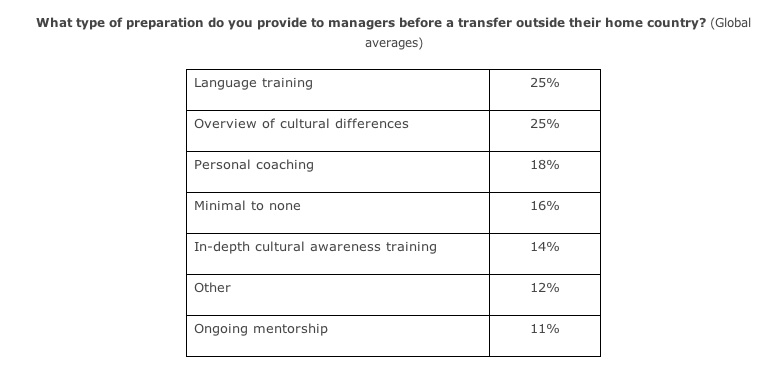
The survey also found disparities in the preparation given expatriates before an assignment, said Lowsky.

Expat Prep

“A global average of 25% of organizations provides language training. However, the average drops to 18% for North American employers, while it’s closer to 33% among European, African and the Middle Eastern companies. Even harder to believe, an average of 16% of companies globally give minimal to no preparation at all, and for North American employers it’s 22% that do virtually nothing. No wonder so many managers don’t perform well outside their home country.”

We know readers of this blog are more savvy than that! There are enough challenges changing jobs within an organization, let alone the additional challenges when transferring to an unfamiliar culture. Smart organizations don’t just invest in training the person going on the international assignment; they invest in building strong relationships among the whole team—domestically and internationally. Learn how Cultural Detective Online can benefit your team by attending one of our free webinars. Or give us a call—we’d be happy to assist you in getting your team subscribed to Cultural Detective Online today!

Virtual Teaming

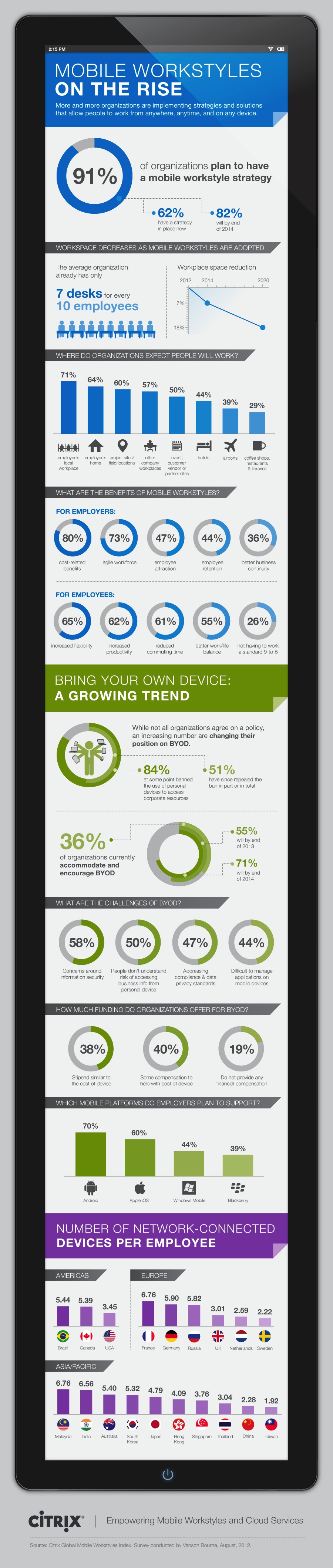
With mobile work styles on the rise, management styles need to change and adjust to the new reality. Along with the obvious benefits to employers and workers, there are significant drawbacks to a mobile work style—policies need to be modified, expectations made clear in different ways, and creating a cohesive work group becomes more difficult.

Any organization has its challenges in trying to shape a random collection of people into a “team” of some sort—whether it’s a small group engaged in a specific project, or the group spirit that often emerges from employees working together to accomplish desired results.

Citrix_Mobile_Infographic_v6_hannah

With a mobile work style, how do we achieve a sense of community, a sense of shared purpose that allows employees to perform at their best to achieve the overall goals of the company?

One answer is found in the Method and tools offered by the Cultural Detective series. Cultural Detective: Self-Discovery is designed to explore one’s own values—what makes each of us “tick.” This self-knowledge is the base upon which to build intercultural competence.

Cultural Detective: Bridging offers a way to look at conflicts and to move beyond a win/lose scenario to “bridge” differences to work more constructively together. Theory and practice are interwoven to provide concrete suggestions for learning to resolve difficult situations.

The Cultural Detective: Global Teamwork package is designed to assist both collocated and remote teams in meeting the five major challenges of teamwork in todays’ global environment. While many companies embracing mobile work styles are located in one geographical location, they wrestle with many of the same challenges as virtual teams working internationally. Cultural Detective: Global Teamwork provides insights, processes, and tools to meet these challenges.

And of course, no mobile work style would be complete without a subscription to Cultural Detective Online, the virtual intercultural coach that is available, anywhere anytime 24/7. So helpful to have a reference available before you email or talk to your new colleague from a culture different than your own! Do they value direct, straight-to-the point communication, or a more nuanced approach? Should you spend some time getting to know them personally, or just get directly to the business discussion?

Did you know you can set up groups within Cultural Detective Online so you can work virtually with employees to enhance their intercultural competence? Let us show you how! Join one of our free webinars to learn about the capacities of CD Online, and ask us how your organization can take advantage of group subscriptions to Cultural Detective Online.

New Year’s Gift: Oldie but Goodie—The STADIApproach

Permission is granted to use this model freely and to circulate it, PROVIDED the © and url are maintained.

Permission is granted to use this model freely and to circulate it, PROVIDED the © and url are maintained.

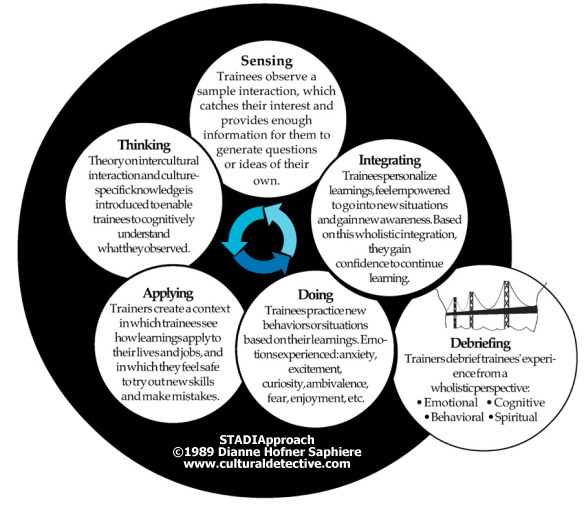
It is said that experience is the best teacher. But learning does not lie in the experience itself; rather, it is our interpretation of the situation—the meaning we give to our experience—that provides our learning.

How might we better enable learners to constructively give meaning to their intercultural experiences? Are you looking for an easy and highly effective way to structure your next intercultural workshop or coaching session? Are you wondering how you might better enable study-abroad students to understand their experience in a way that builds cross-cultural competence? Do you have employees working internationally or multiculturally, and you’d like them to learn to truly harness the potential of diversity?

This “oldie but goodie,” the STADIApproach to Intercultural Learning, has been used in dozens of organizations worldwide with huge success. Click on the link to view a full article on the approach. I first published it for use with my proprietary clients in 1989; it is now even more useful as it can provide a design framework for blended learning approaches that leverage Cultural Detective Online. The CD Online system has STADI embedded into its core. In the hands of a skilled facilitator, teacher or coach, you can assist your learners to Sense, Think, Apply, Do and Integrate by analyzing the experience of others via the critical incidents in CD Online, as well as probing their own real life experiences.

We trust you’ll find the STADIApproach article helpful! Please accept it and use it as my new year’s gift to you, this January of 2014. It is my wish that the new year will enable all of you, dear readers, to better facilitate intercultural understanding, sustainability, respect and equity on this planet of ours.

Please share your experiences with us, and your designs that effectively leverage Cultural Detective Online to supplement your training, teaching or coaching endeavors.


Year-end Gift from diversophy

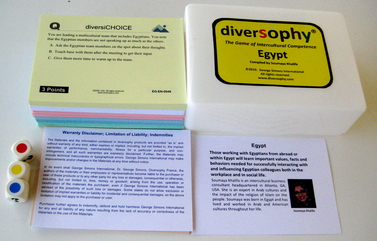
DiversophyMany thanks to Cultural Detective author George Simons and his colleague Wiebke Döscher, who have put together a small diversophy game about holiday food habits across cultures and traditions, and offered it free to their colleagues to play as we slip into the New Year.

Each of the zip files contains the full game of fifty cards, along with printing and playing instructions:
  1. If you are in a place where A4 is the standard size paper, download from this link:
  2. If you use US letter size paper, download from this link:

Terrific Video Clip on “Funny” Names Across Cultures

The clip below is both very funny and a reminder for some of what it feels like to be on the other end of having a “funny name.” It comes from a hugely popular British TV comedy sketch series of the late 1990s —“Goodness Gracious Me”—in which almost the entire cast were British Asians (or “Hounslow Punjabis, to be precise,” as one of the cast members once said). The running gags were about the Asian migrant experience. Many thanks to David Patterson for bringing this clip to our attention.

I share it with you today, Christmas Eve for those of us who celebrate it, in the hopes that it might add some humor to your day, as well as serve as an enjoyable (yet insightful) clip to share with those uncles, cousins or other family members who, despite our love and affection for them, drive us crazy with their stereotypical (racist?) comments during family get-togethers.

This clip is a terrific complement to the video interview I conducted with Dr. Emmanuel Ngomsi on names. Below are the links to those two posts:

New Brain Study Illustrates Gender Differences

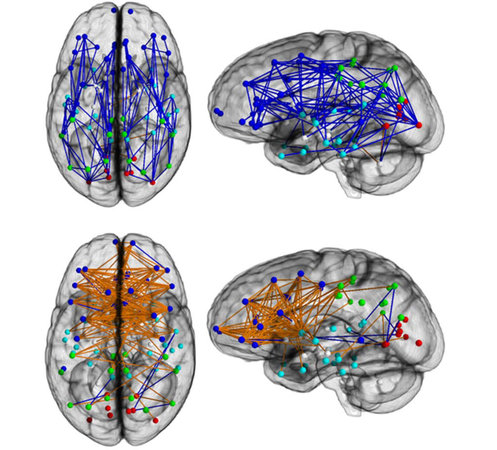
Top: male brain networks Bottom: female brain networks

Top: male brain networks • Bottom: female brain networks
Average findings from the University of Pennsylvania study
Images ©study authors

“At any given moment, a woman is likely to be using her whole brain while a man is using half of his. Men are more likely to be right-brained (more intuitive) or left-brained (more logical) than women.”
—Ruben Gur, neuropsychologist and one of the study authors

A just-published study of the brain functionality of 949 young people shows striking differences in brain wiring between men and women. The authors of the study suggest that male brains are biologically structured to facilitate connectivity between perception and coordinated action (motor and spatial abilities), whereas female brains are designed to facilitate communication between analytical and intuitive processing modes (memory, social adeptness, multi-tasking).

The study of 428 males and 521 females aged 8-22 was conducted by ten colleagues at the University of Pennsylvania and published in the Proceedings of the National Academy of Sciences. They used a technique called “diffusion tensor imaging” (DTI), which scans the paths travelled by water molecules around the brain.

“The maps show us a stark difference in the architecture of the human brain that helps provide a potential neural basis as to why men excel at certain tasks and women at others.”
—Ragini Verma, researcher

The story is making a big splash in the press and in social media. It is a notable study, however, the main interpretation the researchers and the media seem to be taking from the study is that gender differences are biologically determined. I found such a conclusion very puzzling, because the study results themselves show that differences in brain wiring are not congenital!

The study showed that boys and girls are born with similar connectivity, and that differences in brain pathways between the genders begin to manifest at about 13 years of age, and diverge even further at 17. The study authors attribute this to the time sex begins to become important in a person’s life. I suppose that means the time hormones begin to kick in? But, of course I wondered if the differences emerge during the teenage years because that is about the age that gender socialization really begins to manifest.

Then Kathryn Stillings, our editor, found this article by science writer of the year Robin McKie. Robin explains that the study’s findings actually disprove the authors’ interpretations and reinforce the view that gender differences are the result of acculturation.

“Yes, men and women probably do have differently wired brains, but there is little convincing evidence to suggest these variations are caused by anything other than cultural factors. Verma’s results showed that the neuronal connectivity differences between the sexes increased with the age of her subjects. Such a finding is entirely consistent with the idea that cultural factors are driving changes in the brain’s wiring. The longer we live, the more our intellectual biases are exaggerated and intensified by our culture, with cumulative effects on our neurons. In other words, the intellectual differences we observe between the sexes are not the result of different genetic birthrights but are a consequence of what we expect a boy or a girl to be.”
—Robin McKie, The Observer

I trust you’ll read the study and the various interpretations, and draw your own conclusions. Either way, via biological determinism, acculturation/socialization, or a mix of the two, Cultural Detective Women and Men is a terrific package that delves into gender differences in a practical, dynamic way. It combines beautifully with national, religious tradition or generational packages. We trust you will try it out in your work, to help ensure that the broadest spectrum of cognitive skills are accessed for innovation and effectiveness in our organizations and societies.

More on the New Brain Study

The study’s findings show that the dominant connections in the male cerebrum (top left image above) are within either the left or right hemisphere (blue lines), and the dominant connections for females are between hemispheres (bottom left image/orange lines).

In the cerebellum (right-hand images, lower part of brain) it is just the opposite: the average male brain shows connections between hemispheres while the average female brain has dominant connections within hemispheres.

“Forget right-brain or left-brain thinking. What may be more important from a gender standpoint is back-to-front or side-to-side thinking.”
—Stacey Burling, Philly.com

“The strong link with the cerebellum might make men more action oriented, better at tasks that require quick response time or an ‘I-see-and-then-I-do’ attitude. The side-to-side thinking likely boosts women’s memory and social skills and seems designed, the authors said, to combine analytical and intuitive thinking. Communication within the hemisphere facilitates connection between perception and coordinated action,” writes Stacey Burling in her online review of the study in philly.com. Women’s brains “more easily integrate the rational, logical, verbal mode of thinking and the more intuitive, spatial, holistic mode of thinking,” she quotes Gur as saying. “Women’s thinking is likely to be more contextual. Their brains are better connected between their decisions and their memories. For men, memories are memories. Decisions are decisions.”

It is noteworthy that DTI or diffusion tensor imaging provides only indirect measures of structural connectivity and is, therefore, different from the well validated microscopic techniques that show the real anatomy of axonal connections,” says Marco Catani, of London’s Institute of Psychiatry. “Images of the brain derived from diffusion tensor MRI should extreme caution.”

I am curious about the results we’d see of a similar brain study of people older than 22, as I feel we change significantly as we age. This point is echoed by Professor Heidi Johansen-Berg of Oxford University, who attacked the idea that brain connections should be considered as hard-wired. “Connections can change throughout life, in response to experience and learning.” Hopefully the next step of this work will include such a study.

Care to learn more? Click the link above to the abstract of the original study, or read this terrific article from The Atlantic.

Film Review: The Lunchbox (India)

MV5BMjM2ODkxMzA5NV5BMl5BanBnXkFtZTgwOTYwOTYxMDE@._V1_SY317_CR175,0,214,317_Another terrific movie for us to watch, thanks to the generosity of the very talented Sunita Nichani, President of SIETAR India.

The Lunchbox by Ritesh Batra, screened during International Critic’s week at the 2013 Cannes Film Festival

A film set in Mumbai, around the service of the iconic dabbawallahs who ferry thousands of lunchboxes to office-goers in the crowded city without the slightest glitch. The film, however, revolves around one such lunchbox delivered to the wrong person, leading to an epistolary romance between the unintended recipient and the lonely housewife who prepares the gastronomic treats hoping to win her indifferent husband’s heart through his stomach.

What personally facinating me was the contrast between the almost antiquated means of communication showcased in the movie — a basket hanging on a rope to exchange tidbits with the upstairs neighbor, paper notes in the lunchbox instead of the ubiquitous text messages of today—and the modernity of the characters who each broke their cultural shackles to choose freedom and second chances.

Unlike typical Bollywood cinema, the film ends on an ambiguous note, letting the viewer connect the dots as s/he wishes. A wonderful visual resource for exploring some of the facets of contemporary evolving Indian society.

Comment from Dianne: If you are unfamiliar with the dabbawallah system, you owe it to yourself to learn! Please click on this link for a quick intro.

Incredible Offer for USA Law Enforcement and Policy Making Agencies!

Luby Ismael is a colleague I very much respect. I am delighted to be able to pass on her note, below.

If you work in law enforcement or policy making, and are interested in more effectively engaging Muslims in your community, act quickly to take advantage of this opportunity, please.

For the past 12 years, I have conducted trainings on Building Cultural Competency: Understanding American Arabs and Muslims.

Today, I am writing to let you know of a new training opportunity, based on a generous grant from my partners Unity Productions Foundation, that I am offering to law enforcement and policy making agencies.

This training is designed to improve cultural competency and promote more effective engagement with American Muslims. The content and interactive modules have been cleared by the U.S. Attorney General’s special committee.

Beginning immediately, I am able to waive the training fee for the first 10 agencies that email me to schedule a training. Trainings can be scheduled beginning January 2014. 

Please contact me at luby@connecting-cultures.net or (301) 438-3153 to learn more and ask me any questions.

I look forward to working with you,

Luby

Lobna “Luby” Ismail
T. 301-438-3153
luby@connecting-cultures.net
www.connecting-cultures.net

Leading Across Cultures

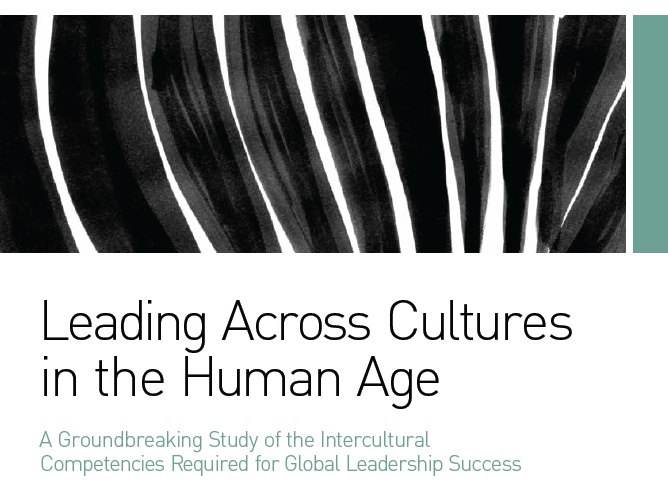
Leading X CulturesBack in February, my friend and respected colleague, Michael Tucker, sent me a white paper on leading across cultures that he had just completed with one of our customers, Right Management. I meant to write about the 24-page report at the time, but, alas, time passes while we are focusing on other exciting things.

This was an interesting study due to its scope: participants included 1867 leaders of 13 nationalities, representing 134 industries.

“As we enter the Human Age, where Talentism is the new Capitalism, no organization can afford to overlook optimizing the performance of leaders who operate globally. … The fact is that cultural issues will dominate the competencies required for global leaders to be successful, now and in the future.”

80% of CEOs and human resource professionals reported Cultural Assimilation as the greatest challenge facing successful expatriates. Study findings showed that global leadership differs from domestic leadership due to the complexity of working with people from different cultures. “The global experience results in leaders developing new worldviews, mindsets, perceptual acumen and perspectives,” the white paper states.

“Leading across cultures is a critical element of leading in the Human Age and unleashing the power of what is humanly possible. It often requires making decisions in complex or ambiguous environments, understanding cultural nuances and adapting one’s style accordingly.”

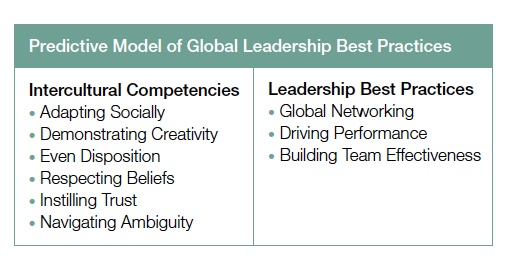
Global Leadership Best PracticesThe study found six competencies required for global leadership success:

  1. Adapting Socially: the ability to socialize comfortably with new people in unfamiliar social situations and to demonstrate genuine interest in other people.
  2. Demonstrating Creativity: the ability to enjoy new challenges, strive for innovative solutions to social and situational issues, and learn from a variety of sources.
  3. Even Disposition: the ability to remain calm, not be critical of self, and learn from mistakes.
  4. Respecting Beliefs: the ability to demonstrate respect for the political and spiritual beliefs of people in other cultures, and the ability to use appropriate humor to diffuse tense situations.
  5. Instilling Trust: the ability to build and maintain trusting relationships. According to the report, trust is the one glue that holds diverse teams together.
  6. Navigating Ambiguity: the ability to work through vagueness and uncertainty, without becoming frustrated, and figure out how things are done in other cultures. Ambiguous situations are the norm in leading across cultures.

“Human Age leaders have the responsibility and opportunity to unleash the potential of all employees who work for them. To effectively unleash this passion and accelerate business success, leaders need new and different skills—managing diverse talent.”

The white paper concludes with four strategies for selecting, developing and retaining leaders who will succeed in a global business environment. An ongoing, structured learning experience such as Cultural Detective Online not only supports, but makes possible, each of the four:

  1. Select Overseas Managers includes assessment processes such as Tucker’s, and developmental tools such as Cultural Detective, used by a competent administrator/facilitator.
  2. Grow International Leadership Bench Strength includes developing and nurturing leaders as well as providing coaching—each of which are greatly aided by the Cultural Detective toolset.
  3. Ensure Success of Leaders in New International Roles includes assigning a coach and meeting for regular reviews, both of which can be significantly enhanced with a subscription to Cultural Detective Online.
  4. Localize Country Management Teams includes the creation of customized leader plans and coaching support. Again, you know what toolset is perfect for this!

This is an excellent report, which I recommend you review in its entirety. We appreciate Tucker International and Right Management making it available. I suspect we can all learn something from this reminder of what it takes to be a competent global leader.