Why Do Kids Study Abroad?

The allure of traveling to exotic places, learning about people, their language and how their lives were shaped differently than our own – these reasons and more attract students globally to explore the opportunities of living and studying abroad.

From my experience, living abroad as a young adult can be one of the first opportunities to see the world through a very different lens. The experience of trying to understand and communicate with a foreign language and adapt to a very different way of daily life can be both eye-opening and a shock to the system.

As an intercultural product development company we have had the unique opportunity to work with several organizations in the study abroad and student exchange industry. I’d like to point out two of them as organizations who not only facilitate the study abroad experience but also enrich the students’ opportunity to have powerfully positive study abroad learning experiences. Both CIEE and AFS International put significant effort into preparing students for their time abroad by teaching about the impact of culture, and how to interpret behavior by getting to what’s underneath – the values that are motivating the behavior.

Enjoy these two different but equally interesting case studies of how enhancing cultural understanding with a core process like Cultural Detective has been successful. I would love to hear your opinion and ideas that have worked for you in this field!

  • Business case for university exchange program by CIEE (Council on International Educational Exchange)
  • Business case for high school exchange program by AFS USA

Cultural Detective Online for Study Abroad

Quite a few of the world’s leading study abroad organizations rely on Cultural Detective. They tell us it’s invaluable to their students’ success. That’s why we are very excited to SOON be able to offer you the Cultural Detective product line as an integrated, online system rather than as stand-alone packages! And, better yet, it’s designed as a personal coach, encouraging your students and staff to track their goals, summarize and apply their learning, and upload, debrief and share with a teacher or counselor their daily life experiences (and the meaning they are making from them).

Be sure to stay tuned for our official launch. Or, enter to win a free subscription for you or your team!

If you are unable to view the video above (if you are on an iPad or other device that doesn’t play Flash), click here to view the video on YouTube. Please feel free to share this video with others who might be seeking a virtual intercultural coach. Thank you!

What also makes people discriminate?

(Tiếng Việt ở dưới cả nhà ạ)

I choked when this picture popped up on my Facebook wall, claiming that Muslims are being oppressed in Vietnam. Within the last few days, almost 4000 people have shared the photo. By now, those who genuinely believe that the Muslims in my country are being rope tied to each other, forced to kneel down, and threatened with knives could be a million. And the number rolls on! Uncontrollably!

There is no doubt that social media is a monstrous tool to promote both goodness and dark deeds. This is an era in which a picture does not just equal 1000 words but can turn 1000 ill-informed innocent people into 1000 martyrs.No time to read, no time to research, no time to cross check, not even time to use our brains to think. All reason can be overwhelmed by the thrilling power and the irresistible waves of emotion that a snapshot or a video clip can deliver.

For your information: This is a picture from the Vietnam war, roughly 40 years ago, capturing an investigation of North-Vietnam solders. The 70,000 Muslims residing in Vietnam are not in danger and often harmoniously mix their lifestyles and rituals with Vietnamese tradition and culture.I can imagine my Vietnamese countrymen would not be happy to see this abuse of history and ignorant act, although it may have originally been posted with good intentions. Yes, note this! It is not only the terrorists with their hideous acts that make people discriminate; it is also those who blindly believe that the whole world is against them and thus turn even a friend into a foe.

Tức ói máu khi nhìn thấy tấm ảnh này trên wall nhà mình với cái tiêu đề to tướng: Người Hồi Giáo bị đàn áp ở Việt Nam. Pót lên mạng ngày 23-8, cho đến nay đã có gần 4000 người share, và có lẽ hàng triệu người trên thế giới này đang đinh ninh rằng người Hồi ở VN bị trói chằng tay vào nhau, bắt quỳ xuống đất với dao găm kề vào cổ.

Mạng xã hội khiến ai cũng cảm thấy như mình là một nhà báo quyền lực vô song. Kể cả khi nhà báo ấy ngu dốt, quan điểm sai lạc, hay như kẻ pót cái ảnh này, thì nhìn gà hóa quốc, chỉ nhăm nhăm muốn gào lên cho cả thế gian này biết mình là kẻ bị hãm hại. Rồi thì trong cơn phẫn uất, bạ ai cũng lên án, vô tình biến cả bạn bè thành kẻ thù. Ai bảo chỉ có mấy thằng khủng bố mới làm cho người ta trở nên dị ứng với đạo Hồi?

Nhiều lúc cảm thấy lo lắng vì mình đang sống trong một thế giới mà tốc độ thông tin phát triển quá nhanh khiến người thường không mấy ai đủ thời gian để thích nghi. Một bức ảnh bây giờ không chỉ còn có sức mạnh hơn 1000 con chữ nữa mà còn có thể biến 1000 kẻ ngu xuẩn thành 1000 kẻ sẵn sàng cảm tử. Ở thế hệ You-tube này, chẳng mấy ai còn có thì giờ để đọc, để cân nhắc, chưa nói đến để suy ngẫm. Đập vào mặt một cái ảnh hay một cái clip thì lập tức tình cảm dồn lên đè bẹp tư duy. Loài người bao nhiêu năm qua đúng là cừu vẫn hòan cừu (câu này ai nói quên xừ mất rồi!)

Tái bút: Gần 70.000 người Hồi ở Việt Nam sống chủ yếu ở vùng của đồng bào Chăm. Họ, cũng như đại đa số những người Hồi trên thế giới chẳng khác quái gì đồng loại xung quanh cả. Từ khi du nhập vào VN, người Hồi thậm chí còn hòa quyện tín ngưỡng tôn giáo Hồi vào các dòng tín ngưỡng khác của dân tộc – một đặc điểm chung của rất nhiều nền văn hóa châu Á.

Endangered Languages Project

Experts estimate that only 50% of the languages that are alive today will be spoken by the year 2100. The disappearance of a language means the loss of valuable scientific and cultural information, comparable to the loss of a species. Tools for collaboration between world communities, scholars, organizations and concerned individuals can make a difference. Such is the raison d’être of the Endangered Languages Project, an online collaborative effort to protect global linguistic diversity.

The first thing I noticed on this site is the incredibly high quantity of red dots on the world map, each indicating a severely endangered language. The site enabled me quickly and easily to look up endangered languages in Mexico, where I live (the closest red dot to my home is the Seri language, one I’d never even heard of!). I also looked up the language that first interested me as a pre-teen in the southwestern USA: Navajo (it is labelled “at risk” and is currently a featured language on the site). Even in my adopted homeland of Japan, as I expected, the Ainu language is ranked “critically endangered.”

The languages included in the project and the information displayed about them are provided by the Catalogue of Endangered Languages (ELCat), produced by the University of Hawai’i at Manoa and The Institute for Language Information and Technology (The Linguist List) at Eastern Michigan University. The list of collaborators in the Alliance for Linguistic Diversity is indeed impressive. The project site is definitely worth using!

Watch Out! What a Values Lens is—and is Not!

Our users love Cultural Detective‘s Values Lenses. Many of them even call our toolset “Cultural Detective Lenses” rather than “the Cultural Detective Series.”

Customers tell us they use Values Lenses to:

  • Quickly build recognition that cultures are, indeed, different.
  • Establish credibility that these tools and their facilitation are effective.
  • Supplement—amplify and deepen—the analysis of a critical incident, or better understand a personal life event.
  • Reflect on ways in which they have become who they are by overlaying national, gender, generational, religious tradition or sexual orientation Lenses with Personal Lenses.
  • Contrast their “home culture” Lens with that of a new culture to predict where there might be synergy and resonance, as well as potential difficulties or challenges.
  • Learn to focus on the things that make a difference, to observe and respect deep culture, rather than becoming preoccupied with dos and don’ts.
  • Empower members of their organization to explain their culture(s) to others. Though they may not individually hold the values on the culture’s Lens, the Lens enables them to explain the larger society’s tendencies in ways that help newcomers to be successful.

All of this is fine and good, except that Values Lenses scare the bejeebers out of me!

Ever since publishing Ecotonos back in the early nineties, I’ve said that publishing a tool is like launching a child out into the world: products, like children, take on lives of their own. They do not always do what their parents or creators might have intended. Tools serve certain purposes and not others. Tools can be used expertly or misused.

Since Values Lenses can be such powerful tools, they can also be dangerous tools when misused. Thus the reason for this post. We want to make sure you understand how to use Values Lenses appropriately, and help us keep them from being used counterproductively.

So, what are Values Lenses? And what are they not?

  • Values Lenses summarize the top five to seven core values or general tendencies of a group of people, a culture. They do not apply to individuals within a culture, and the values have a complex influence on sub-cultures of the Lens culture.
  • They illustrate how members of a culture tend to see the world—looking out through the Lens, and how a culture tends to influence its members—like sun shining in through the colors of the Lens. It is important to remember it is “tend to,” not “always do.” Context is key.
  • They capture the ideal and actual aspects of a culture, intention and perception, positive and negative, yin and yang. A Lens both illustrates the values that members of a culture aspire to, and some ways in which the expression of those values might be negatively perceived by those who don’t share them. A Values Lens is a starting point for inquiry; it does not contain every value held by every member of a culture.
  • Values Lenses are tools for discovery and dialogue, clues that may give us an idea about what makes people tick. They are not yet another “box” into which to stereotype people!

Values Lenses can be extremely effective tools, and they are a key component of the Cultural Detective Method. Remember, however, that it is the process of using the Cultural Detective Worksheet that is fundamental to the Cultural Detective approach.

We’d love to hear your ideas and techniques for helping others learn through the use of Cultural Detective Values Lenses! Let us know how you are creatively applying Values Lenses in your life—personally and/or professionally.

Cultural Detective Online: Virtual Coach for Expats and Business Travelers

You’ve already told us Cultural Detective is fabulous. That it’s helped your team achieve its deliverables. That it’s rocketed your performance to new levels. That’s why we are very excited to SOON be able to offer you the Cultural Detective product line as an integrated, online system rather than as stand-alone packages! And, better yet, it’s designed as a personal coach, encouraging you to track your goals, apply your learning to your business objectives, and upload and debrief your own life experiences.

Be sure to stay tuned for our official launch. Or, enter to win a free subscription for you or your team!

If you are unable to view the video above (if you are on an iPad or other device that doesn’t play Flash), click here to view the video on YouTube. Please feel free to share this video with others who might be seeking a virtual intercultural coach. Thank you!

Appearance Can Be a Life or Death Matter

Immediately when I heard about the attack on the Sikh temple in Wisconsin (USA), the first thought that came to my mind is that the shooter must have confused Sikhs for Muslims because they wear turbans and grow beards. There have been many similar incidents, one of them in 2002 when four teenagers burned down the Sikh temple Gobind Sadan in New York. The teens told authorities that they believed the temple was named “Go Bin Laden” (!!!)

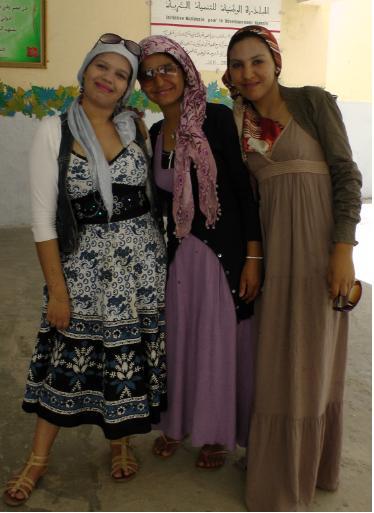
Similarly, Christian figures and nuns may be mistaken for Muslims, with their loose outfits and head coverings. A picture taken in Jerusalem may confuse many, for it can be very unclear who is Jewish, who is Muslim and who is Christian. I have asked lots of my friends and they often think that the three Morrocan Muslim girls in this picture look more like Jewish women because of their headscarf style and their dress.

Almost everwhere I go in the world, people on the streets mostly call me Chinese. I have embraced a business idea of producing millions of T-shirt that say, “Everything is made in China. NOT ME!” and sell them to desperate and angry Japanese, Korean, Singaporean and Vietnamese tourists. I’ll probably be rich and earn enough money to travel more.
When I was in Syria lately, immediately upon stepping into a neighboring house, Abdullah my friend shouted out even before the host could see my face: “She is not Chinese!” Very wise of him, because the man we were visiting belongs to the opposition, who is of course very pissed off with China and Russia for their support towards Assad’s government.
Looks do matter, regardless of how superficial they are. Of course no one should be killed, and most religions have love and respect at their core. It can be detrimental and become a matter of dealth and life in this age of speed, in which people only have time to watch, not to think, and news is more important than knowledge.

Diversity and Attrition in the Global Executive Suite

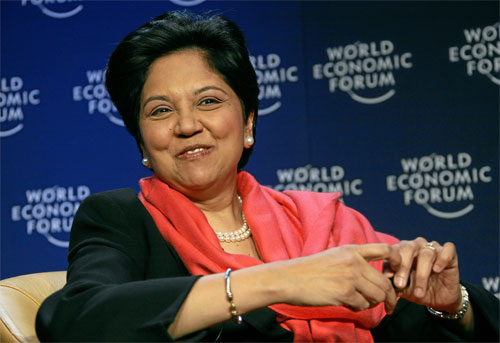
Image of Indra Krishnamoorthi Nooyi, PepsiCo CEO (NOT the subject of this post)

A major global corporation lost a 25-year senior executive at the prime of her career. She explained in her exit interview, “The corporate culture here is too parochial and I am tired of fighting it.”

How did the company lose such a gifted executive, at the point it could have most benefited from her contributions?

I will tell you a story that she shared with me, one that will hopefully provide a taste of how she felt during her career with this company. She shared the story with me at the conclusion of a two-day training course I had conducted, in which she had just participated.

“Dianne, I have so very much enjoyed this global management training you have facilitated for us. These are exactly the cross-cultural skills and mindsets needed in our world today! You are providing us tools and processes for acknowledging and using unique contributions, hearing the voice and perspectives of all involved. This type of training is so very different from diversity training,” she told me.

Well, I happen to be a fan of diversity training. I was troubled by her words, and wanted to understand what this obviously intelligent, wise woman did not like about it.

“Well, Dianne, in my experience diversity trainers go through the motions. They do activities and they often don’t know why. I’ll give you just one example. A year or so ago I was in a senior management diversity training. The facilitator asked us to stand in a line, side by side. He instructed us to take one step back if English was not our first language. A step back if our skin color was not white. He said to take another step back if we were not Christian. A step back if we had not attended a first-tier university. On and on he cited the categories, and I took so many steps back that I was the only person at the far side of the room, alone. There were several others in between, but I was visibly alone.”

“I thought to myself, ‘YES! THIS is what I’ve been trying to tell you all these years! This company forces me to do backbends and jump through hoops in order to succeed! I have to lose who I am to influence decision making. I have to communicate in a way I dislike in order to be heard! Let’s change this corporate culture to be more inclusive!’ Oh, Dianne, I was so excited by this powerful exercise!”

“But, do you know what happened? The President of the company looked at me standing there in the back of the room and said, ‘Look how inclusive we are. A dark-skinned woman, an Indian Jain, can become a senior director!’ I thought to myself, do you know how much harder than a man I have had to try to succeed? How much harder than a white skinned person? How much harder than a European or American? He seemed to have no idea of the price I’d had to pay for my promotions. He didn’t acknowledge my accomplishments or the super-human efforts of other minorities in our organization. Rather, he prided the company on its color-blindness! And worse yet, the trainer didn’t say anything! The exercise concluded, and we went on to the next activity! Rather than a learning moment, the activity only reinforced ignorance and legitimized discrimination! I was absolutely crushed and stunned.”

Such a loss for this corporation. Such a difficult decision for this woman to have had to make. It was also a challenging position for the trainer to have been in; hindsight is 20-20 regarding how the trainer could have handled the President’s comments, and debriefed the activity, more effectively.

Let me close by asking you this: Have we all taken the time today to empathize, to put ourselves in someone else’s shoes? Have we done our part to change dysfunctional systems? What have each of us learned today?

I look forward to your comments on this post. Thanks!

Linked to the My Global Life Link-Up at SmallPlanetStudio.

El “por qué” de Dianne

El pasado mes de mayo tuve la oportunidad de conocer a Dianne Hofner siempre sonriente y con sus ojos azules que irradian simpatía por doquier. Me atrevería a afirmar que todos los departimos con ella en algún momento, tuvimos algo que aprender. El objetivo principal de su primera visita a este país tropical, era el de compartir su conocimientos y experiencias en un tema que aquí vagamente se comenta.  Ella llegó con su lupa, a abrir el ojo y abrirnos los ojos, a hablar de temas interculturales y generar esa sensibilización tan necesaria para que nos preparemos y seamos exitosos en un mundo globalizado que no da marcha atrás.

Como era de esperarse, por lo menos para mí, al aterrizar encontró un sentir común que al unísono le pedía esas fórmulas y recomendaciones que nos ayudaran a cambiar y ser un poco menos colombianos. Es parte de lo que somos, si el término se pudiera extrapolar de campañas de mercadeo, vivimos tratando de emular otras culturas que podríamos denominar aspiracionales.

Tal vez sean rezagos de una historia colonialista de varios siglos atrás, y de los acontecimientos de la historia reciente que por tantos factores socio-políticos nos mantuvieron al margen del escenario internacional. Vivimos por un tiempo cuasi encapsulados. Nadie venía por los motivos que menos nos enorgullecen, y pocos podían salir por restricciones en las fronteras y la misma economía que dejaba en manos de unos cuantos esta posibilidad. Lo triste es que ahora que, para bien de tanta gente emprendedora de esta tierra pujante, nos abrimos al mundo no sabemos cómo integrarnos. A pesar de ser heterogéneos y diversos, podría afirmar que somos mono-culturales, lo que representa que carecemos como sociedad de esas competencias que nos permiten ser realmente globales desde el punto de vista cultural.

De la visita de Dianne yo aprendí algo más. Me ofrecí de voluntaria para ser su guía en La Candelaria, con la certeza casi meridiana de conocer los detalles que podrían ser interesantes a lo largo del recorrido entre el Museo del Oro y la Plaza de Bolívar, lo que los bogotanos llamamos coloquialmente darse un “Septimazo” pues se recorre de norte a sur unas cuantas calles, la Carrera Séptima en el centro de la ciudad.

La Candelaria es una zona pintoresca de marcada herencia española, con casas de bahareque, patios centrales y balcones de madera. Está rodeada de montañas muy verdes que pertenecen a la cordillera oriental y que forma parte de los Andes que se derivan hacia Venezuela. Alberga nuestra plaza central llamada Plaza de Bolívar, lugares emblemáticos como el Museo Botero, Museo del Oro y otros tantos que hacen latente el rastro de nuestra historia como herencia viva de nuestra vida cotidiana. Desde la Plaza de Bolívar se divisa el Museo del 20 de julio, allí mismo donde se gestó nuestro primer grito independentista el 20 de julio de 1810.

Nuestro recorrido comenzó bien y entramos a unas galerías artesanales que reflejan la diversidad de nuestro país. Tenemos cinco países en uno demarcados por el relieve. Diferentes en clima, costumbres, comidas y, expresiones artísticas y culturales. Hasta ahí me iba bien, pude hablar sin problema de culturas precolombinas como Calimas o Taironas, hablar de Muiscas y Chibchas. Tomamos luego la Séptima, y pasamos por plazas, edificios, vimos artistas callejeros y finalmente arribamos a la Plaza de Bolívar, el corazón de Bogotá a 2630 metros más cerca de las estrellas. Pude contarle de los edificios de gobierno, de la Catedral Primada, y de la habitual visita de las palomas que llegan a comer. Iba bien con fechas y personajes de nuestra historia…pero cuando llegamos a uno de los museos mi cara cambió.

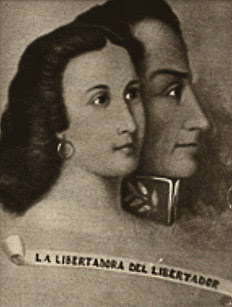
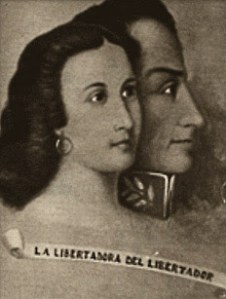
Le dije a Dianne: esta es la casa de Manuelita Sáenz eterna enamorada de Simón Bolívar. Ella era quiteña pero nunca se casaron, proseguí, a lo que Dianne contestó: ¿y por qué? Ahí todo cambió en este recorrido… no sé cuantas veces he caminado La Candelaria en mi vida y nadie hasta ese día me había preguntado un “por qué”. Ninguno de nuestros demás acompañantes tuvo tampoco respuesta.

Pregunta básica y esencial para comprender las cosas. El qué simplemente nos describe los hechos, lo que vemos y el por qué nos descubre la causa. El por qué y el qué se relacionan como la causa y el efecto. Entender su relación es una de las claves para entender lo que nos es diferente, ya sea un idioma, comportamiento, costumbres, creencias y/o valores. Un “por qué” en el momento preciso permite que se generen puentes de entendimiento y también puede ser la puerta mágica que nos permita traspasar la barrera de la “mono-culturalidad” al hacernos visible aquello que no es evidente.

Volvamos a Manuelita. Ese día sólo me dije, tengo que volver a leer porque me enseñaron tanto de Simón Bolívar que la vida de Manuelita fue únicamente un episodio de aquellos con toques novelescos que también se ven en las clases de historia patria. Ese día como hace muchos años no lo hacía, me senté a leer la biografía detallada de Manuela Sáenz. Esta vez con la comodidad de la tecnología a un clic de distancia pude recorrer su vida, sus esfuerzos y el gran amor prodigado a Simón Bolívar el cual la convirtió en una pieza estratégica de la campaña libertadora. También aprendí que Manuelita y Bolívar no se casaron porque ella era casada cuando lo conoció y dejó su esposo por irse tras el Libertador. Por su parte él se había casado muy joven en España y enviudó al poco tiempo, por lo que prometió nunca más volverse a casar. Así supe se juntaron él viudo y ella casada y ¡por fin tuve una respuesta para Dianne!

Ese día también entendí esa etapa del “por qué” en los niños cuando al crecer exploran el mundo y quieren simplemente entender. Los niños tan auténticos y genuinos, con una mezcla maravillosa de inocencia y absoluta falta de timidez, que siempre preguntan y sus por qué los llevan a los qué y de los qué, van formando ideas, conceptos, valores y creencias.

Sería tan simple entonces volvernos niños y como Dianne preguntar ¿por qué? cada vez que sea necesario.

Entonces ¿por qué será nos cuesta tanto hacerlo?

Me tocó la buena suerte de conocer a Maryori Vivas en mayo de este año — una mujer inteligente, interesada en promover la gestión intercultural, además hermosa y de gran corazón. Un día espectacular ella me dió un tour increíble por el centro histórico de Bogotá, lleno de aprendizaje y risa. Desde entonces, ella me ha animado a escribir en español. Le agradezco de corazón por su ayuda, su tiempo, y su amistad. Ella confía en mí, y eso me impulsa a tratar aún más.

Como Bogotá y yo cumplimos años el mismo día — 6 agosto — Maryori me regaló este artículo. Me da muchísimo gusto poder compartir con ustedes aquí un blog escrito en español, con un mensaje tan sabio y palabras tan llenas de poesía. Espero que les guste.
Global Edge: Terrific resource

Are you familiar with GlobalEdge? Funded in part by the USA Department of Education, the project provides free, centrally located international data from a variety of sources.

  • The Global Insights section includes data sortable by country, by 11 trade blocs, or by industry.
  • The Reference Desk includes a resource directory, online course modules, tutorials on international business, and a glossary of international business terms.
  • Their Knowledge Tools, my personal favorite, include tests of knowledge, economic rankings, a terrific “Database of International Business Statistics” to help you generate the custom reports you might need, an index to evaluate emerging markets, diagnostic tools to aid your business decisions, and a country comparison tool.

Many thanks to Cultural Detective facilitator Janet Graham, Baker University professor of international business, for highlighting this resource !