Cultural Differences in Dining Etiquette Again Get a Child in Trouble

Recently another sad story about dining etiquette across cultures has been in the news.* This time it involves cultural differences over how to use a spoon and fork, and involves a Filipino family living in Canada. Fortunately this child, Luc Cagadoc, was not removed from his family, but his mother, Maria-Theresa Gallardo,  explains that the school’s reprimands for Luc eating in a typically Filipino way have negatively affected his self-esteem as well as his performance in school. She won her case before the Quebec Human Rights Tribunal (the judge ordered the school district  to pay the family $17,000 in damages), though the case is now in appeals.

Once again, a terrific Cultural Detective has filmed a video about how Filipinos eat with a fork and spoon in combination. This was evidently the behavior that led Luc’s school lunch monitor to conclude that he “ate like a pig and should learn to eat like other Canadians.”

Thank goodness Luc’s Blended Culture mother responded very constructively. She says, “We’ve been travelling around. I’ve been showing him different ways of eating, and saying there’s nothing wrong with what he’s doing.” Unfortunately, she says, her son can’t shake off the incident. “I think it’s going to last him a lifetime to remember what happened in that experience that he had.”

Have you ever gotten in trouble for “poor” dining etiquette that was due to cultural differences? Come on, share your story!

* Earlier we reported to you about an Indian family living in Norway, whose children were removed from the family home. One of the reasons cited was that the children ate with their hands. In response to that post, one of our authors made a terrific video about how to eat with one’s hands. Eating with one’s hands is, of course, the norm and custom in many cultures.

People To People International Working with Cultural Detective to Diversify Chapter Recruitment

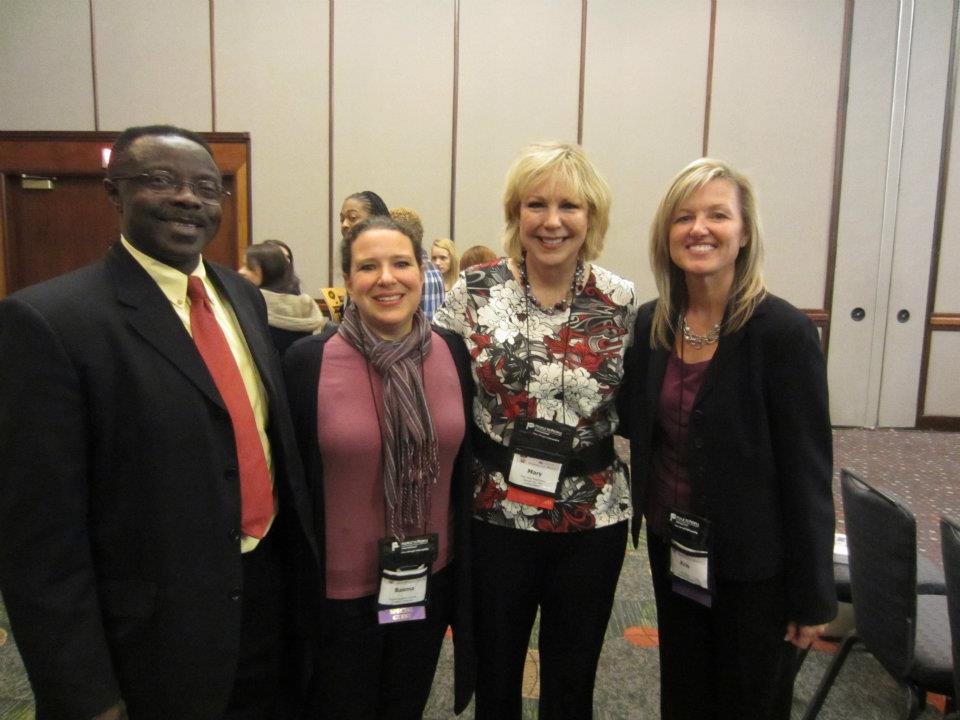
Over the past several years I have enjoyed developing a professional and personally meaningful relationship with the People to People International organization (PTPI). For those of you who are not familiar with PTPI, the organization was founded by President Dwight D. Eisenhower in 1956 and is now run by his granddaughter, Mary Jean Eisenhower. Their mission is “to enhance international understanding and friendship through educational, cultural and humanitarian activities involving the exchange of ideas and experiences directly among peoples of different countries and diverse cultures.” They are a dynamic group of dedicated staff and thousands of volunteers in over 135 countries truly working to promote the benefit of people working and living cooperatively together throughout our world. They are known by their tagline, “Peace Through Understanding.

Last year in November Cultural Detective had the privilege of sponsoring and designing the student curriculum for the PTPI Global Youth Forum 2011 (GYF). We focused on designing curriculum that would readily engage about 130 students and GYF leaders and most importantly inspire them to explore building relationships outside of their perhaps “look and act like me” group of students and friends in their local communities. Based on the testimonials of both students and teachers, we feel we did a pretty good job!

This spring I’ve been asked to present the Cultural Detective Method to PTPI Board Members and the PTPI Community at Large so they can focus their attention on recruitment of diverse leaders and members. In the upcoming session I hope to show how generational differences as well as national cultural differences impact with whom we as individuals may naturally gravitate to, which can limit the growth opportunities possible by confidently reaching out to people of multiple cultures. Stay tuned for more about the event in a future post!

“Belief Holding” as an Intercultural Competence – Religious less motivated by compassion

Frequently and for many years I have cited Milton Rokeach’s The Open and Closed Mind when people ask me about intercultural competence. In this book he talks about the importance of holding beliefs tentatively and situationally instead of imposing them on or expecting them of others.

“A closed way of thinking could be associated with any ideology regardless of content. It includes an authoritarian outlook on life, an intolerance towards those with opposing beliefs, and a sufferance of those with similar beliefs.”

According to this line of thinking, open-minded people may hold their beliefs firmly and strongly, but they also respect others’ rights to believe something different. They believe their path is right for them, but they do not believe it is necessarily the one and only path for everyone on the planet. “It is not so much what you believe that counts, but how you believe,” Rokeach tells us.

In our current age of heightened religious and nationalistic fervor, “belief holding” or “permeability of beliefs” seems more important than ever. As do religious or spiritual beliefs as dimensions of culture and cross-cultural interaction.

In this context, today I read the headline, “Highly Religious Less Motivated by Compassion.” Oh dear. I read on to find out that it is the key finding of social psychologists at the University of California Berkeley, who have conducted three separate studies since 2004 on a largely US American sample.

“Overall, we find that for less religious people, the strength of their emotional connection to another person is critical to whether they will help a person or not. The more religious, on the other hand, may ground their generosity less in emotion, and more in other factors such as doctrine, a communal identity, or reputational concerns.”

Perhaps it is time for all of us who coach, train, or educate on the topic of intercultural communication to remember this important competence, which was first published back in 1960.

The Connection between Creativity and Intercultural Competence

If I were to ask you what it takes to be effective across cultures, what comes to mind? If you are anything like me, then you have probably started to rattle off some of the classics: self-awareness, open-mindedness, curiosity, flexibility—maybe communication skills. All important.

But where is creativity in this picture? And why isn’t it closer to the top of the list when it comes to what it takes to be effective when working across cultures?

You could argue that creativity is an output of some of the above: if you are open-minded, curious, and flexible, you are likely to be able to be more creative, which will help you to be more effective. But I think it’s worth highlighting the importance of creativity as a stand-alone competency for working across cultures—especially when it comes not just to being aware of cultural differences, but being able to develop effective bridging solutions to differences you may experience.

Take Morfie, our newly named CD animal mascot, as an example. Sure, he may be curious as he scuttles across the ocean floor, but what makes him effective is his creative problem-solving in the face of challenging situations: his ability to morph himself into another sea-creature to ward off danger.

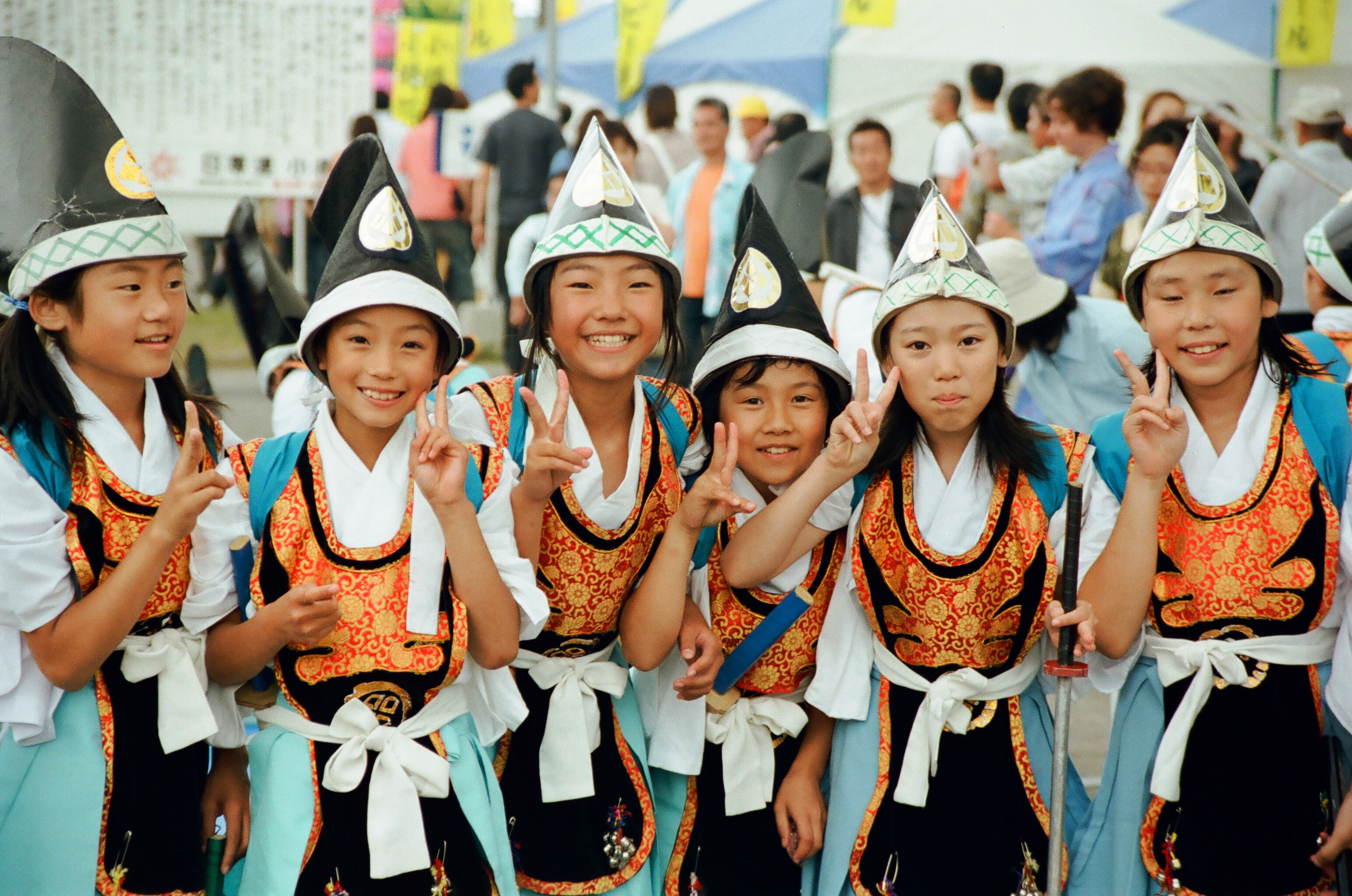
The importance of creativity is something I learned the hard way. When I first moved to Japan, I moved into an apartment subsidized by the company I was working for. There were all kinds of problems with the apartment when I arrived (for example, the heating was broken and it was the middle of winter in Sapporo—yes, the same location as the Winter Olympics in 1972). What would you do in this situation?

My initial instinct was to take a more ‘American’ approach—to take my contract in to my employer, highlight the conditions outlined in the contract that had not been met, and ask for these to be amended. But I wasn’t in the US. I was in Japan, a more relationship-focused and indirect culture. Surely going in and making these kinds of demands and pointing to a contract would not exactly start me off on the right foot with my employer, I thought.

So instead, I tried a more indirect approach. When they asked me how things were in the apartment, I remember trying to be subtle about naming some of the problems. I think at one juncture I might have even said something like, “This is the first time I’ve lived in an apartment where frost and ice forms on the insides of windows.” I kid you not. This raises a whole other topic of the ineffectiveness that can often happen when more direct speakers try to be more indirect.

The point of that story, beyond revealing how much I had to learn about Japanese culture when I arrived, was that I was far from creative in my solving of that situation. In my mind, I had two options: take the American approach, or take the Japanese approach (at least my limited understanding of it at that juncture). Be direct or indirect. It was bifurcated, dichotomized, overly simplified, and therefore ineffective.
  • What if I had invited some of my colleagues over to my apartment for a meal, during which they could have experienced the issues first-hand?
  • What if I had asked a colleague for a recommendation for a repair service? Or even asked them to call a repair company for me, since I had yet to learn the Japanese word for moldy?
  • What if I had written to the American colleague whose role I was taking over and asked him what he would do in this situation?

The point being, I could have and should have considered a lot more creative solutions here, but simply didn’t. And that’s really the point. Often when we are working across cultures, we stop at the first, most obvious answer, and that’s a limitation.

The good news is that my little housing adventure in Japan likely has helped me to become more creative—and it certainly proved the need for me to do so. Interestingly, recent research at Northwestern University in the US and INSEAD in France has highlighted that individuals who have lived abroad often demonstrate higher levels of creativity on classic ‘creative problem solving’ tasks.

That said, waiting until you are stuck in challenging intercultural dilemmas to flex your creativity muscles—or relying solely on living abroad to develop the muscle, doesn’t seem the right answer. It’s the kind of thing that you want to have so ingrained in you, that when you are faced with a tough situation, you naturally think through a number of different possibilities. In essence, it’s about learning to be Morfie-like, to be able to quickly run through a rolodex of possible options as to how to transform yourself effectively in those situations—and to continually be expanding your repertoire of possible options.

Developing your creative problem-solving skills is one of four main competencies we focus on in the newly released Cultural Detective Bridging Cultures for that reason. In the package, we go through a series of exercises that help people to expand their solution space—to really get beyond solutions of the generic, ‘he should get cross-cultural training, she should take the other person out to dinner’ nature. In an earlier post I shared with you an exercise to get started.

One really useful technique that we practice in the package comes from the work of Michael Michalko, a pioneer in creativity. It’s called challenging assumptions. The process is simple. When you are faced with a challenging situation, you name all the assumptions you are making about those situations and challenge those assumptions. The premise is that often the way we frame a problem limits the potential solutions to it.

If we go back to my Japan example, I made a lot of assumptions:
  • that I couldn’t take a typically American approach (yet my colleagues were very accustomed to working with US Americans)
  • that my colleagues were typically Japanese (they may have been attracted to the company I was working with very specifically because it wasn’t typically Japanese)
  • that the solution lied in me adjusting the way I communicated, from a more direct to indirect style (versus, for example, emphasizing another shared value we had), etc.

Challenging even just one of the assumptions would have opened up a lot of other options for me to effectively address this situation.

The experience I had in Japan was ten years ago now, but the lesson it taught me about the importance of creativity is invaluable. I now adopt a number of different creativity techniques regularly in my work. Beyond challenging assumptions, I also regularly change my physical location to prompt me to think about things differently, and I use techniques like thinking through analogies and wearing the hat of the other individual to help me identify more creative and effective solutions.

I would love to hear your experiences with creativity as they relate to intercultural problem solving: whether you’ve experienced situations similar to mine in Japan where it would have served you to be more creative; whether you’ve found other techniques that have helped you to continue to develop truly innovative intercultural solutions; even whether I should challenge the assumption I now have that creativity is a powerful, often overlooked skill in intercultural problem solving.

Syria — The war within and between

Many have asked me to give a briefing on Syria because I am here in person. Well, here is that briefing, in a VERY simple way.

To many people, the war in Syria is just another Arab Awakening. Being in the country myself, I realize that this is not at all the case. There are at least three conflicts going on:

  1. A true Arab Spring involving young liberals regardless of religious backgrounds, demanding regime reform and democracy.
  2. A war between two Islamic sects, the Alawite government and the Sunni opposition.
  3. A political game with hidden agendas among the big boys (US, EU, Iran, Israel and Saudi).

Mainstream media in the West seems more likely to feature war number 1 and manipulate war number 2 to the advantage of war number 3. Those representing the opposition who appear on CNN and BBC look liberal, westernized and almost victimized.

Next, the media backed by (Sunni) Saudi will call for jihad to provoke war number 2. I saw with my own eyes an opposition’s channel broadcasting from Saudi called “Sunni blood as one.” Note that the Syrian president is not a Sunni Muslim; he is from Alawite, a small sect of Islam.

Last, micro media — social media (blogs, Twitter, forums…etc) and word of mouth will keep circulating around zillions of conspiracy theories and guesswork about war number 3. For example, one of them I have heard: “The West does not want to topple the government; they just want to keep Syria in conflict to the point that it would benefit Israel and weaken Iran, who is Syria’s big ally.”

In this age when images and video clips dominate and cloud our thinking, one easily loses the big picture and falls victim to the vivid power of visual effect. As a good Cultural Detective, please pay attention to hidden biases.

As a journalist, I have the power to CHOOSE what to report. Is there something called “complete objective journalism”? I doubt it.

I have seen demonstrations for and against the regime. Which one would I report? Most secret journalists in Syria would choose to capture the opposition because they and their news (sub)consciously support wars number 1 and 3.

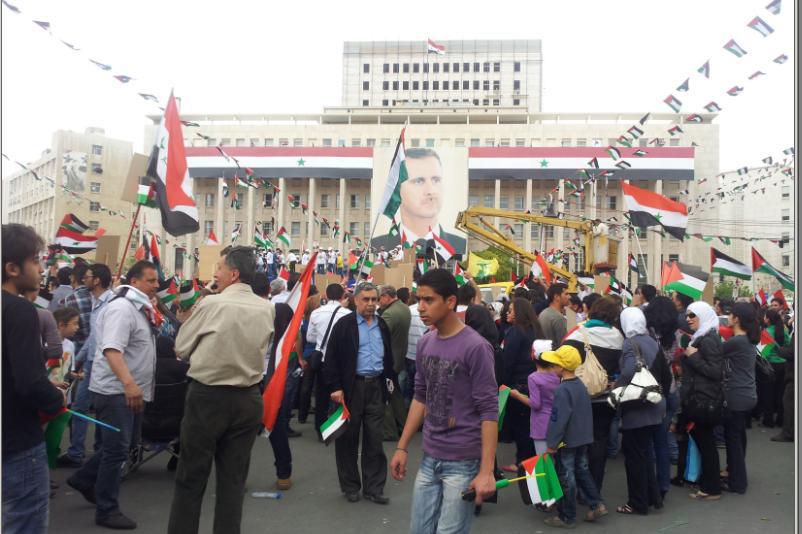
I’ll make a counterbalance here to share with you a view on war number 2. This is the picture of the regime’s supporters who gathered to celebrate with cheerful music and dance. Quoting a local from the crowd: “To be honest, our president is not perfect. But between him and the Sunni extremist opposition, I would go for the lesser of the two evils.”

Culture Eats Strategy For Breakfast!

“Culture eats strategy for breakfast!” — a quote that grabbed me during a recent keynote address by BNI (Business Network International) founder and Chairman Dr. Ivan Misner. He was introducing his new book, Business Networking and Sex (Not What YouThink!).

Those (in the audience of more than 1000 Kansas Citians) with more exposure to culture-related topics probably guessed that the book focuses on networking techniques of the different genders and how to be successful networking with the opposite sex. But to hear so boldly from this networking icon how powerful culture truly is in relationship building and the networking process resonated strongly with this Cultural Detective!

When I heard this statement from Dr. Misner, I wished I could have jumped up on stage and displayed the Cultural Detective Women and Men Values Lenses. It would add to the value of his research by providing clear underpinnings as to what motivates the networking behaviors of men and women, and it would help explain the “whys” behind the stories illustrating their differences which seem to be highlighted throughout the book.

Dr. Misner’s book takes a three-pronged look at business networking across the sexes by offering a surveyed objective look at how men and women think about, approach, and in what ways they are successful at business networking. He then counters that with a “he said” (Frank) and “she said” (Hazel) analysis and interpretation of the survey results.

Over a four-year period they surveyed more than 12,000 businesspeople globally (covering every continent) on 25 questions about business networking. The results and interpreted analysis could bring about some interesting and revolutionary changes to the way in which each sex approaches networking with the other. Communication gaps could be narrowed and connections broadened through Hazel and Frank’s guidance and revealing a bit of the opposite sexes “Lens.”

My only wish was that Dr. Misner would have take the results of the survey to a deeper level by breaking it down to country-specific data. But then again, that’s where Cultural Detective national Values Lenses could shed some light!

NOTE: While the book reviewed in this post references two genders, and we offer an excellent package with this same approach, Cultural Detective Women and Men, there are other ways to look at gender than just a polar division of male/female. Cultural Detective LGBT examines some of these complexities of gender and sexual orientation.

Global Competitiveness Events in Bogotá Colombia

Cultural Detective is very proud to partner in bringing several leading-edge intercultural events to Bogotá, Colombia. We hope you can join us! Please pass this announcement on to your professional and social networks so that we might let everyone know about these unique opportunities.

On Thursday May 10

We will officially launch the Colombia Transfórmate program and the Cultural Detective Colombia package. Cultural Detective President Dianne Hofner Saphiere will facilitate a workshop which will be followed by a cocktail reception. This terrific evening is not to be missed! Cultural Detective is very honored to be part of this incredible project.

On Monday May 14

We will hold a high-energy event designed to ready Colombians to reap the benefits of their recent Free Trade Agreements with Canada and the USA, and upcoming agreements with the European Union and South Korea. Anyone wishing to improve their cross-cultural business acumen will find attendance extremely valuable. We believe this is one of the first-ever public workshops on intercultural communication in Colombia. The workshop will be facilitated by Fernando Parrado of Global Minds, Andrés Forero of the Forero Medina Abogados Asociados, and Dianne Hofner Saphiere of Cultural Detective.

Sponsor These Two Events

Put your organization’s name in the hands of thousands of first-tier Colombians by purchasing a sponsorship. Show your commitment to global effectiveness, and to Colombia! Sponsorship opportunities start at an incredible US$1350, and include two seats at both the Thursday and Monday events, an exhibit table, an introduction of your organization, and your logo on event banners.

Act quickly, as these very affordable sponsorship opportunities will be available for only two weeks.

On Wednesday May 9

Dianne will also present a seminar on intercultural and global business competence for students and staff at Sergio Arboleda University. The seminar will take place on day three of the university’s fifth think tank entitled, Marketing, Sociedad e Interculturalidad: Una Mirada desde la Globalización.

Link

Kevin and Rita Booker, very active Cultural Detective community members and extremely talented professionals, have put together a series of three articles on using film in intercultural education that I think you will find very helpful. If you use movie clips or YouTube videos in your coaching, training or teaching, or if you want to do that more, be sure to take a look. Lots of learning there.

By the way, if you love film, be sure to check out CDTV, our Cultural Detective channel on YouTube, with over 20 playlists. We welcome your recommendations (urls) on videos to add. Together we can build a convenient central repository of films to use to help our world become a more inclusive and collaborative place!

Help End Poverty; Make a $25 MicroLoan for Free!

You’ve heard of micro-lending, and how small loans to the right people can transform poverty and starvation into community-wide collaborative entrepreneurial spirit, leading to clean water, food, light and hope. You all no doubt have many ways in which you help make our world a better place. I’d like to ask you to join us in another terrific and easy way to help alleviate global poverty. Join our Cultural Detective team on Kiva! By clicking on this link, you can make your first US$25 loan for free! Let’s take put this offer to great use!

What do I love about loaning with Kiva?

  • 100% of the money you lend goes to loans, not overhead. Kiva has Charity Navigator’s highest rating.
  • In this case, your first loan is free!
  • You can make your a loan with as little as US$25.
  • You choose who you want to lend to. Kiva allows you to search by gender, country, economic sector, or lending organization to review profiles of people worldwide who are requesting a loan.
  • It is fun to loan with a group of like-minded colleagues. There is strength in numbers! Watching my loans get repaid, and the loans I’ve extended multiply, is even cooler because I can see how much impact all of us together are having! And, I can see how others on the team are loaning, and learn from them. (You can also be perfectly anonymous and private if you choose.)
  • It all happens online. When a loan gets repaid, you get notified. If you want to see what’s going on, you visit the website.
  • You make a loan, the loan gets repaid, you either get your money back, or you get to make another loan! The assistance just keeps echoing out, helping more and more people.
  • I so enjoy looking through all the terrific ways people find to improve the lives of their families and communities. A few minutes spent on Kiva can uplift your soul!

Micro-credit isn’t the only answer to poverty, but it sure seems to have been an answer for millions of people.

Thank you so much for being part of our Cultural Detective community. We are thrilled you have joined us in the quest to make our world a more equitable, sustainable, collaborative place. Joining the CD Kiva team is just one more way of doing that.

With Love, from War-torn Syria

On my second day in Damascus, I moved in with Noura and her family, only to find out that … they themselves have just miraculously escaped from their home town, Homs – the city that is being bombarded and torn apart by civil unrest!

Her brother has gone to school only 30 days this year. They were trapped in their house for two weeks without electricity. Each time they go to the grocery they are uncertain of ever being able to come back. Leaving their only source of income – an internet café – behind, the single mom and her two children have been struggling to avoid falling apart. With very limited resources, this refugee family has been hosting me, feeding me, loving me, giving me a bed, and escorting me to all sorts of sightseeing places that a tourist is supposed to visit. And all that amidst tears, fear, sadness, worries and uncertainty about their future.
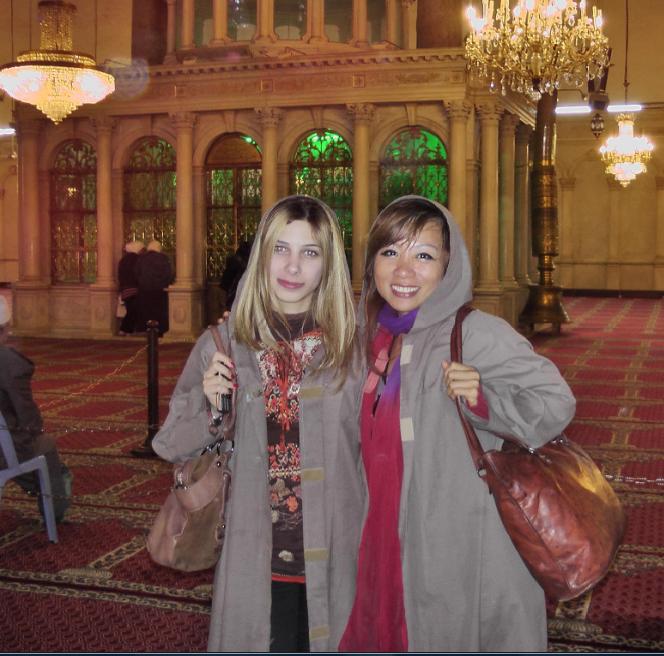
In this picture, Noura and I are under the hooded cloaks, visiting Umayad Mosque, one of the earliest mosques in Islam, built on the 3000 year old remains of an Aramean temple. The worship site was turned into a Roman temple, later converted to a Christian church, and finally was dedicated to Islam in 636 (only four years after the death of Prophet Mohammad). The rich history of this mosque reminds us that holy sites should not be seen as the monopoly of one religion, and that we are the result of an accumulated heritage.

Looking at the chaos in some of the Arab countries right now, I can’t help wishing those various branches of Islam could understand this simple notion. And may the extremely hospitable people of their countries, like Noura’s family, teach them the lesson of co-existence, even in time of harshness.