Get in Intercultural Shape for the New Year!

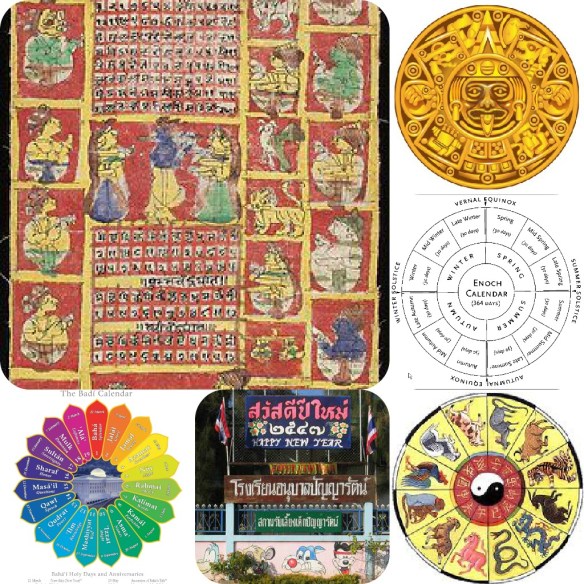
New Year Collage

Welcome to the New Year — at least for those of you following the Gregorian calendar! Are you ready? Is your organization poised and equipped to make significant positive contributions to this planet of ours? Do you have organizational traditions to kick-off the new year and encourage employees to strive towards new goals?

Most cultures of the world have very special traditions for sending out the old year and bringing in the new one. In Mexico where I live women wear special undergarments on New Year’s Eve — either red for love or yellow for gold or money — symbolizing what they most want to receive in the year ahead. Those who would like to travel carry a suitcase out into the street and around the block.

In Japan where I lived previously, the end of the year is a time to clean the house, purging it of things from the past that are no longer needed. We cook osechi foods, the beautiful make-ahead kinds of delicacies that will feed family and visitors through the first few days of the new year, and allow everyone — including the cook — to enjoy a respite.

What are your traditions for saying goodbye to the past year and greeting the future? Do you make resolutions, set goals, or make plans to learn something new?

My absolute favorite New Year’s was spent with good friends nearly two decades ago. On New Year’s Eve, we wrote down the hurts we’d experienced, the negative habits or memories we continued to carry and wanted to get rid of, the qualities about ourselves that no longer served us, the visions of ourselves, others or our businesses that were not constructive. We made a big bonfire, and we had a field day burning these no-longer-wanted items. Oh how liberating it was! We all felt so light, so energized!

On New Year’s morning we woke before sunrise. We had written, on paper we’d folded into origami boats, the qualities we wanted to receive and nurture in the new year. The positive habits and qualities we wanted to cultivate, relationships and moments we wanted to consciously treasure, and healthy visions of ourselves, others and our businesses that we wanted to hold close. We launched these items into the ocean, setting them into motion.

The beginning of a year is a good time to reflect on our cross-cultural successes (Cultural Effectives) as well as to learn from our mistakes and misunderstandings (Cultural Defectives) and decide what kind of year we want in 2013. Back in October we published a post about intercultural fitness. In November we reiterated why such fitness is so important, why organizations need intercultural fitness.

Maybe reading these posts has helped you to decide what to throw in the fire and what to set out into the water? If your fire is full of cultural missteps and your boat contains a desire to expand your intercultural competence, maybe it’s time you took action!

Cultural Detective wants to encourage you to get fit, too — interculturally fit! Much like committing to an exercise plan or a sensible nutrition plan, committing to prioritizing intercultural competence in the coming year will serve us well personally, in our families, as well as in our work lives. Also, just like a gym, it can be fun. We can spend as much time as we like and we might meet some really interesting people.

The new year is full of special offers for gym memberships, exercise classes, and diet programs — ways to encourage you to get fit in 2013. Just as gyms and diet programs offer incentives this time of year, the Cultural Detective Online intercultural competence gym is offering complimentary three-day subscriptions to help get you focused and motivated!

Here is how to get yours:

  1. Log on to http://www.culturaldetective.com/cdonline/orders/trial before January 31, 2013.
  2. Enter your name, email address and the promotional code: NewYearFitness
  3. You will receive a verification email from cdonline@culturaldetective.com. Be sure to clear it in your spam filter! Click the link in the email, follow the instructions, and explore a new way to improve your intercultural fitness 24/7!

We hope you will take advantage of this special offer to learn how Cultural Detective Online can assist you at home and abroad, with colleagues and friends, in your community and in your organization! Feel free to share this offer with those you care about — we think the world could benefit from a little more intercultural competence on everyone’s part!

Best wishes for a peaceful year ahead from the Cultural Detective team!

Happy New Year! New Year’s and Calendars Around the World

WorldCalendars

Happy New Year!!

Our greetings are sincere; we wish the best for our colleagues, partners, and friends. Intent is important. However, even the most sincere greetings, when unaccompanied by a broader mindset of cross-cultural awareness, can come out sounding neocolonialist, disrespectful or just plain ignorant.

Most non-Chinese know that Chinese New Year often happens in February and is based on a lunar calendar. Many non-Jews are aware that Rosh HaShanah is the Jewish new year, and that it usually occurs around September. But what about other nations, cultures and traditions: when do they celebrate their new year? And how can we demonstrate cross-cultural sensitivity when we wish to express appropriate New Year’s greetings?

The first step is to recognize our own Lens, our own cultural filters. A “happy new year” greeting focused on January 1, 2013 is based on the Gregorian calendar, use of which was ordered by Pope Gregory XIII in 1592. Even Protestant Europe was slow to adopt this calendar, but over the centuries it has gained widespread use to become today’s de facto international standard. Most countries in the world now use it as their sole civil calendar, with exceptions including Saudi Arabia, Iran and Afghanistan. Countries that use another official calendar alongside the Gregorian include India and Israel. To detach the Gregorian calendar a bit from its Roman Catholic roots, it is also called the civil calendar or Common Era (CE) calendar.

Having a recognized international standard is a major change. Thirty-five years ago, when I first started working with a telex machine in Japan, I had to convert dynastic dates to CE dates as part of my daily tasks (I also used a HUGE kanji typewriter that provided me a daily physical workout, prior to the advent of word processing). Now, the general acceptance of the CE calendar is a sign of how much cultures that did not traditionally use the Gregorian calendar have adapted in order to more easily collaborate. Of course, another point of view is that this adaptation shows the success of the Christian colonialists imposing their standard on the rest of the world.

Either way, there is a great need for those of us comfortable with the Common Era calendar to learn a bit about other world calendars, to gain a basic knowledge about and be able to communicate respect for them. Thus, the second step in building cross-cultural competence is to develop our curiosity and knowledge about world calendars.

While the CE calendar is in popular use, alongside it and sometimes instead of it people around the world use solar calendars, lunar calendars, lunar-solar calendars, arithmetic and astronomical calendars. You may see dates you don’t recognize in newspapers when you travel, or in official government or religious documents. Non-Gregorian dating is commonly used to determine holy days, holidays and festivals in many of the world’s traditions. These local, regional, and religious calendars are frequently used to report birth and death dates, and major life and world events. It can get confusing for the international traveler or global nomad, not to mention the unwitting blogger or small business person with an Internet site! There are seven billion people on our planet, and according to my quick calculations, fewer than 10% have primarily used a Gregorian calendar for even most of my lifetime.

How can we navigate the multitude of calendars in our world? Surely we can not be expected to understand or be fluent in all of them. How can we show sensitivity, respect, and a bit of knowledge, rather than arrogance, ignorance, or insult? The third step is to bridge the differences — to understand and learn to work with our partner’s or customer’s traditional calendar.

6 Tips for Partnering with People Who Use
Calendars Different from Yours

  1. Remember that the Common Era calendar is not the only calendar in the world.
  2. Realize that it’s origins are in western Christianity. Avoid the use of “BC,” which refers to “before Christ,” and “AD,” the Latin term Anno Domini. Instead, use “BCE” (Before the Common Era) and “CE” (Common Era).
  3. Do a bit of research about your major customers and partners. What are their spiritual practices? Their ethnic backgrounds? Where are they based geographically? Once you’ve done your homework, you’ve acquired a very basic level of cultural literacy regarding possible calendars your colleagues might use.
  4. Ask them. Asking how an organization and a community dates documents, and how they calculate and observe holidays, shows that you know there are many ways of doing things, that your way is not the only way. It demonstrates a respect for other traditions and helps to build relationships based on mutual trust.
  5. Respect your colleagues’ holidays. If you are told that business closes on certain days, don’t try to undo centuries of tradition. I have so often seen this error committed during my career. An executive insists that employees work on a day that is usually a holiday, as the organization is on a deadline. In the short term, this strategy may be successful. But the long-term negative consequences, in terms of lost loyalty and reputation are immeasurable. Better to focus on outcomes: how can we meet this deadline? Brainstorm with your employees and partners to find mutually acceptable rather than unilateral ways forward.
  6. Offer New Year’s and other holiday greetings as appropriate to your colleagues’ traditions. That usually means that a New Year’s greeting on January 1st will be well received, and often means that another greeting, on their calendar’s New Year, will be even more special. Make a note in your calendar to jog your memory. Such a practice is a solid and frequent reminder that our way is not the only way.

While far from a complete list, I did some research to produce a bit of a guide (below) to some of the world’s calendars in current use. Please note any corrections in the “Comments,” and we will edit as needed. Thank you!

  • Bahá’í (Badí‘): The year 170 BE in the Bahá’í calendar will begin on March 21, 2013 (spring equinox), the 1st (or Bahá) of the month of Bahá in the year Abhá. The Baha’i calendar begins with Bab’s declaration in 1844.
  • Chinese (Mainland): The first day of the year of the Snake 4711 will be February 10, 2013. Legend has it that the Emperor Huangdi invented the calendar in 2637 B.C.E.
  • Chinese (Republic, Minguo): January 1st will bring in the year 102 in Taiwan, Kinmen and Matsu. The calendar began in 1912, the year of the founding of the Republic of China.
  • Coptic (Alexandrian): The Feast of Neyrouz or New Year’s 1729 AM (Anno Martyrum or “Year of the Martyrs”) was September 11, 2012.
  • Eastern Orthodox (Julian): The first day of the year 2013 was on December 19, 2012. It may be worthwhile noting that both Coptic and Eastern Orthodox Christians celebrate Christmas on January 7th (not December 25th).
  • Ethiopian (Ge’ez): Enkutatash, or the new year 2005, began September 11, 2012.
  • Hebrew (Jewish): The year 5773 began on the 1st of Tishrei (the 7th month in the Jewish calendar), or September 16, 2012 — Rosh HaShanah, the day Adam and Eve were created. The Jewish calendar has another New Year’s, the 1st of Nisan (the first month). It will be on March 12, 2013, and is used as the new year to order the holidays. It is seen as the anniversary of the founding of the Jewish people.
  • Indian National Calendar (Saka): The 1st of the month of Caitra, year 1935, will fall on March 22, 2013. The current Saka era began in 78 CE.
  • Indian Popular Calendar (Vikram Samvat): The year 2069 will begin the first day after the new moon in the month of Chaitra, April 11, 2013 — Hindi New Year.  In the Gujarati tradition, it began on the day after Diwali, on the 1st of kartak or November 14th. The calendar was created by the Emperor Vikramaditya of Ujjain following his victory over the Shakas in 56 BCE.
  • Indigenous, First Nations, and Native Peoples: There are many communities and much diversity worldwide. A lunar calendar is generally used and the year revolves around the seasons.
  • Islamic (lunar Hijri): The year 1434 AH began on the 1st of Muharram, November 15, 2012. The Islamic calendar begins when Muhammad emigrated from Mecca to Medina in 622 CE.
  • Japanese: January 8th will bring in the 1st of the year Heisei 25, which began when Emperor Akihito took the throne in 1989 (year one).
  • Mayan: A new baktun or cycle begins December 22, 2012.
  • Persian (solar Hijri): March 21st, or the 1st of Farvadin, will greet the year 1392 SH. It is determined by the spring equinox. Norouz or Persian new year has been celebrated for at least 3000 years and is rooted in the Zoroastrian tradition. The calendar marked its beginning in agreement with the Islamic calendar based on Muhammad’s emigration from Mecca to Medina (Hegira). Due to the Persian solar adjustment to the Islamic lunar Hijri calendar, the year count between the two calendars has diverged.
  • Thai (Suriyakhati): January 1st will bring in the Buddhist year 2556 of the Thai solar (legal) calendar.

Additional Resources:

Two handy calendar converters:

Readers, we look forward to hearing you tell us about your New Year’s. What greetings do you prefer, and when? How do you celebrate?

Whichever calendar you prefer, the Cultural Detective team wishes you all success, health, and joy!

Partnerships: 5 Tips for Turning Frustration into Innovation

181461_10151025619791983_1116995086_nI’ve recently heard from several colleagues and client organizations who are engaged in partnerships designed to harness the strength of complementary skills, experience and thinking. Their purpose is to enter new markets, build the business, and create innovative approaches that can only come from an interdisciplinary approach.

The great thing is that they recognize and have committed to the creative power of diversity! They know that research shows that diversity of thought leads to innovation. The trouble is that each of them has encountered frustration and, in some cases, regret: the partnership is not as easy as they’d hoped, they haven’t found their “sweet spot” of collaboration, new customers are not pounding down their doors. They talk over and past each other, they have differing goals and strategies, they feel their partner lacks respect for them. In short, the very reason they are partnering in the first place — to leverage their complementary expertise — is getting in the way of successful collaboration.

What to do? “Come on, Dianne,” they tell me. “You do this collaboration thing for a living. Give us some tips. What are we doing wrong?” Well, instead, how about starting with what you are doing right?

Tip #1: Remind yourself what motivated you to partner in the first place. What skills, experience, contributions or contacts does your partner bring to the table that you want to access? Have you spent focused time listening and learning from your partner, how they do things, how they see things, discovering what about their perspective is unique and can add value to your own? And vice-versa?

Tip #2: Affirm the strengths you see in your partner. Too often we get caught in a blame game, or we get so busy we don’t take the time we should to actually communicate our hopes and appreciation. We take it for granted that our partners know we value them, and why. Speak up purposefully and let them know!

Tip #3: Be honest about the challenges. Collaborating with partners whose worldview is different from our own means that we have to speak a different language, translate our common sense to theirs. Such efforts can get tiring, even irritating. And, when we don’t understand, or worse, misunderstand what our partners are saying or doing, that impatience and frustration show through. Pretending the challenge isn’t there usually is not the answer; it makes the white elephant in the room grow ever more looming. Rather, put your differences out there, on the table for discussion.

Tip #4: Agree on rules for the game. You have partnered precisely because you are different; you are experts in separate arenas, and of course you do things differently. A successful joint effort needs to bring out the best, rather than the worst, in each of its partners. There is a need, therefore, to talk purposefully about HOW you communicate: how you can disagree without offending, how you can make decisions in which all partners feel heard and valued. Such game rules should be revisited and updated regularly. Ten minutes talking about how we communicate can shoot productivity forward. We’ve all been in meetings where we focused on task and drove one another nuts, getting nowhere.

Tip #5: Diverge then converge. And repeat. Diverge by listening to one another. Converge by summarizing what you heard. Diverge by gathering data, doing research, discussing the matters on which you disagree. Get to the point where the convergence emerges: you see the trends in the data, you get to the heart of the matter — exploring the disagreement leads you to a core truth and a path forward. I can not emphasize this last point enough. In thirty plus years leading international teams, team leaders inevitably come to me saying, “we are never going to get agreement. The team is all over the place.” Experience shows, repeatedly, that if you listen to understand, summarize the key points, a path forward that incorporates the diverse perspectives, skills and experience presents itself. It takes a little faith and a bit of letting go. Then the magic begins.

Bonus Tip #6: Know when to get out. Not all matches are made in heaven; not all collaborations are worth the effort. Do your homework before entering a partnership, and be brave enough to make the call when it’s no longer a fit. Of course, filtering out cultural differences to be sure it’s really not a fit is key. But beating your head against the wall and getting yourself into all sorts of contortions trying to make something work is not good for anyone.

Developing Intercultural Competence — Online?

“While other cultural databases do an effective job of providing country overviews, Cultural Detective Online offers unique and complementary capabilities.”
—Joseph K. Lunn, Project Portfolio Manager and Cross-Cultural Trainer, Zurich North America

What makes for a truly useful online learning tool? When I asked intercultural trainers this question they seemed to want to be able to emulate the face-to-face environment as much as possible. Keep the learners’ attention, make it experiential, real and applicable — and make them think! They don’t need “the answers,” they need to know how to come up with real solutions when they find themselves in the midst of cross-cultural conflict. Oh, and you know the old adage, keep it simple!

So, when developing the Cultural Detective Online tool, some key fundamental concepts were kept in mind:

  1. Personal/professional goal setting should be at the entrance to working with the tool — what are the learners’ objectives in using the tool? They should be able to adapt and change these but also keep them in mind in order to stay on track and achieve them.
  2. Culture-general and culture-specific content and process — this is fundamental to working with the Cultural Detective Method (read more by Janet Bennett on this topic if you are up on it), so no challenge here!
  3. Contextually based learning — also core to the Cultural Detective Methodology is working with real-world critical incidents and pushing the learner to develop an understanding of the underlying role and subtle nuances cultural values can play in everyone’s lives.
  4. Links between deep culture and surface culture, between values and behaviors — again innately a part of working with the Cultural Detective tools and richly impactful (where we get the big aha moments) once the learner discovers, develops and really hones this skill.
  5. Prompting for the learners to summarize and apply their learning to their real situations — this is where the work they’ve put in pays the learner back; in other words what’s the bottom line? How can I really use what I just learned to make a value added difference in my work, in my global team, with my international vendors/clients/offices, etc.?
So we’ve heard from some of our early adapters — Cultural Detective Online will take you further in your intercultural competence journey. Joseph Lunn of Zurich NA says,

“In addition to crisp, clear detailed summaries of each country’s cultural values, the nearly 400 cross-cultural incidents provided show users exactly what can go wrong when cultural understanding gaps exist. The tool follows-up by sharing the differences in cultural values that underlie each incident and offers concrete suggestions to build cultural bridges and avoid similar incidents. CD Online is a great hands-on teaching tool that adds value to:

    • Employees beginning overseas assignments
    • Global project team members
    • Mergers and acquisition partners
    • Outsourcing engagements

Thanks for making this tool available to those who need it at a reasonable cost!”

Developing intercultural competence online? Of course! Take a test drive and see for yourself: Cultural Detective Online!

Resource Review: GDI Benchmarks

We tend to get a lot of phone calls asking us to recommend a cross-cultural assessment instrument. Usually I ask what  seems to me a very logical question: “What is it you are trying to assess?” I am then often shocked to hear that the caller is not able to answer my question!

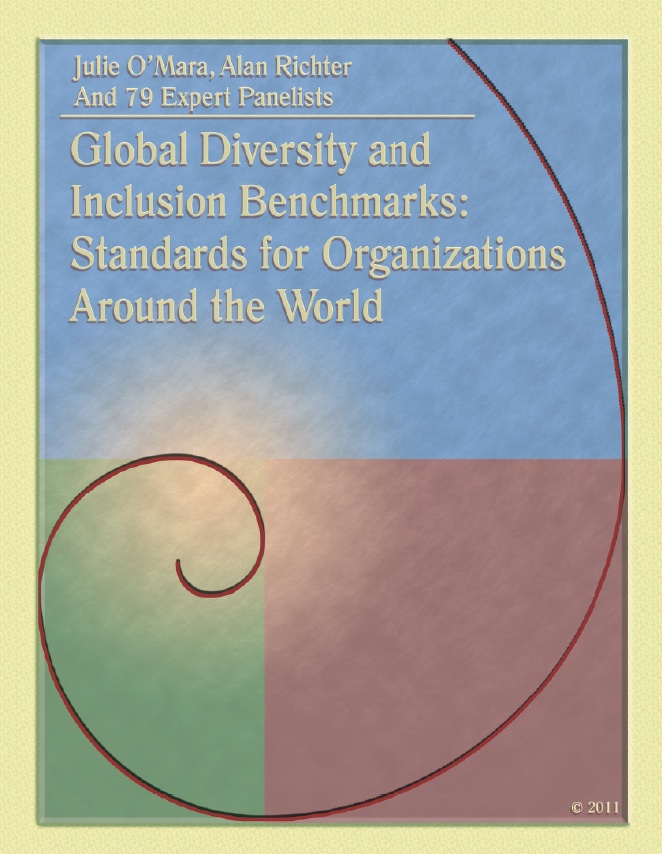
As an organizational effectiveness practitioner I am concerned with individual and interpersonal effectiveness as well as that of the overall organization. We all live and work within systems, and if that system rewards and encourages us NOT to be cross-culturally competent, we are going to nurse burnout if we try to demonstrate and develop that skill. Organizational systems and structures need to support and reinforce individual and interpersonal competence. That is why “Global Diversity and Inclusion Benchmarks: Standards for Organizations Around the World” is one of my favorite assessment tools.

Written by Cultural Detective Global Diversity and Inclusion co-author Alan Richter, along with the very talented Julie O’Mara, the tool is available for use free of charge, though the authors ask that you submit a written request for permission (julie@omaraassoc.com or alanrichter@qedconsulting.com).

Newly updated in 2011, the 32-page booklet is based on a core model of 13 categories arranged into four key areas: Foundational Factors, Internal Abilities, External Benchmarks, and Bridging Competencies (you can already imagine how well this blends with a Cultural Detective approach!). The assessment instrument involves rating the organization at one of five levels for each of the 13 categories. Thus, it is very easy to use and educates as it assesses.

The GDI Benchmarks are based on extensive contributions from 79 experts around the world, and were developed from groundbreaking research in the early 1990s. Please contact Julie or Alan to learn more. And please share with us your organization’s progress with these benchmarks as you use Cultural Detective!

Many Thanks to All of You!

The Cultural Detective team is very grateful to all of you in this community for the terrific work you do to help make our world a more inclusive, respectful, equitable, sustainable and collaborative place.

Today is Thanksgiving Day in the United States, and while our team members are based all over the world and the holiday isn’t celebrated here in Mexico where I live, it seems a good occasion on which to formally thank you all for accompanying us on this journey!

We wish you energy, clarity, wisdom and joy as you pursue our shared yet often challenging goals.

Every Organization Needs Intercultural Competence

Nearly every organization these days, even the smallest and most local, works with diverse customers, team members, vendors, and service providers. A corner grocery store serves people from different age groups, ethnicities, and spiritual traditions. So, which holiday greetings should the grocery store use, if any, so as not to offend or exclude? Why do some of the regular customers talk only to male employees? Could the store increase profits or attract new customers if it started offering halal meats or Latino grocery items?

What about the graphic designer who puts up a website or Facebook page designed to attract local clients, only to find that the first inquiries come in from overseas? The mere fact that you have an online presence can mean you offer your products and services worldwide. And what about the free clinic that finds itself dealing with patient care issues of recent immigrants from places halfway across the planet? Or disaster relief agencies attempting to coordinate aid from around the world, getting it to the places it needs to be, quickly?

Cross-cultural competence, the ability to communicate effectively across cultures, is a mandatory skill in today’s interconnected world. It will help you:
  • Service diverse customers in the ways they expect.
  • Attract, retain and make the most of the talented professionals your organization needs to succeed.
  • Sell more products or services, to the people who need them.
  • Achieve success in your negotiations.
  • Discern the “right” mergers and acquisitions for your purposes.
  • Get more productivity and satisfaction out of your local and virtual teams, projects, and vendors.
  • Jump start the outcomes of study abroad and international education, as well as expatriate assignments.
  • Ensure you get the most out of the time and money you invest in international, cross-country and regional business travel.
  • Develop mutually respectful relationships with clients, employees and other stakeholders.

Cross-cultural competence is a needed skill for all of us, and it helps improve our family and social lives as well as our work lives. But amidst all the competing priorities for our time and attention, how can we develop such competence? To most of us, going back to school or even taking a few days off work for a class isn’t doable. And besides, like physical fitness, cultural fitness requires ongoing, structured practice, not just one trip to a training room.

If only there were an online cross-cultural coach available to us anytime, anywhere, at low cost. One that didn’t make us memorize lists of dos and don’ts, that didn’t promote stereotypes but rather encouraged dialogue and critical thinking. An online coach that would provide a process for recognizing cultural differences, helping us to understand and leverage them as assets rather than as roadblocks. Better yet, an online coach that could help us make sense of our everyday experiences, learning how to transform obstacles into opportunities, and frustration into innovation. A tool we could navigate freely, according to our needs and interests, not some online talking heads or narrated slide show. A tool that would be available on our time — when and where we want it…

I am very excited to be able to share with you just such a solution, yours free for three days, no strings attached. It is a brand new online system based on the proven Cultural Detective Method used by governments, NGOs and for-profit organizations around the world.

Free 3-day trial to Cultural Detective Online!

Cultural Detective is directly responsible for a 30% increase in our customer satisfaction ratings.”

Cultural Detective sped up my learning curve; it allowed me to become a part of the team and have an impact on the business more quickly.”

“I have received kudos from my managers and the Vice President for having chosen the Cultural Detective. But the kudos should really go to you. Cultural Detective is a rock solid methodology.”

Pass this offer around; the 3-day-free trial offer is good from now through December 31, 2012.
To redeem:

  1. Log on to http://www.culturaldetective.com/cdonline/orders/trial
  2. Enter your name, email address and the code: Promo3
  3. You will receive a verification email from cdonline@culturaldetective.com. Click the link in the email, follow the instructions and you will be ready to go!

Enter your learning goals, explore 50+ fully integrated packages including full Values Lenses and 400 Critical Incidents, or upload and debrief your own real-life situations. Your customers, partners and employees, even your family members, will notice the difference!

Improve your ability to understand and collaborate across cultures, and help your friends, family members and colleagues to do the same! Let’s create a more inclusive, creative, collaborative and productive world out there! Get a clue!

A Gift for You from Thorunn and Avrora

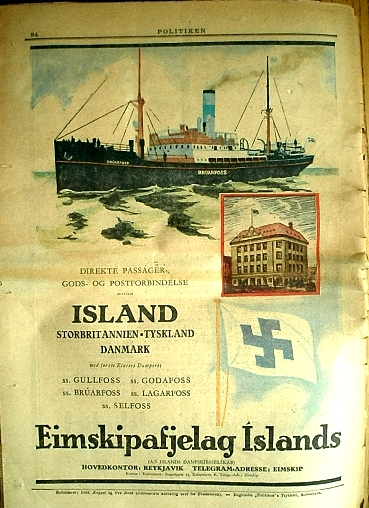
eimskip_1930.jpg

Photo credit to Vilhjálmur Örn Vilhjálmsson, https://fornleifur.blog.is
Used with permission.

The power of social media and online networking just keeps amazing me. Since starting this blog we’ve had soooo many great examples of how you all build on one another’s work and generously share with each other! It is our privilege to hold space here that helps do that.

You will remember our recent post entitled, More Cultural Appropriation: The Swastika? Well, a good friend and respected colleague of mine read it and said, “You know, Dianne, the swastika held a prominent place on a huge building, home to a major Icelandic shipping company, for decades. It’s gone now, though.” As we talked about it, she told me she’d used that story, with quite a few pictures, in a powerpoint slide presentation that she developed with a colleague.

With Thorunn and her co-presenter Avrora’s generosity of spirit, we are privileged to share with you a gift to all Cultural Detectives from them. Their slides summarize the swastika’s history, and include photos of its use in Bulgaria, Greece, Iceland, Native America, and Tibet, as well as the Nazi version. Thorunn and Avrora help you pull learning from these photos with slides explaining culture, judgments, and symbols.

Download their powerpoint slides here. And please let us know how you put them to use!

As an aside, I’d share with you that I recently met an incredibly interesting woman who is Indian and Austrian. Her stories about personal and family conflicts and learning around the swastika were really something to hear! Hopefully I might convince her to share some of them with you in a future guest post.

Empower Leadership to Embrace and Leverage Differences

Your seminar was a beautiful illustration of the effect of the quality of cultural response in an executive’s decision process.  The interactive example was instructive and memorable—not a person in the room hadn’t been in situations precisely like those we experienced in the practical exercise. Yet, we had in this case an opportunity to “unpack” the experience and follow its likely conclusion. You fulfilled every expectation that I had for the seminar—my only regret is that we didn’t have more time!
—Turner White, Executive Professor Helzberg School of Management

What processes and tools do your executives have at their fingertips to make those “game changing” decisions that affect important employee groups? Does culture play into their decision-making process? How do they adapt when working across cultures when we know that common sense is really culturally based?

In business today we almost all concede culture—at a minimum—has an increasing impact on real-world outcomes and ultimately the bottom-line. So developing the key skills necessary to make culturally informed decisions can mean the difference between profitability and losing loyalty of high potential employees.

Wouldn’t it be nice to learn a simple process that once learned can increase your leadership’s effectiveness in working across all cultural lines – from gender, national, ethnic, industry, functional role to even sexual orientation differences? A process so uniquely rich that, once internalized, it can be used for elevating a leader’s communication and decision-making effectiveness on a global scale?

It’s Cultural Detective. And for a special collaborative event we’ve teamed with KMA to offer you a taste of our Methodology and their web-based training focused on the LGBT culture. This facilitated online learning event led by industry expert, Rita Wuebbeler, teaches the core Cultural Detective Method and unveils the LGBT shared values which often motivate behavior—allowing you to focus on the differences that make a difference and promote inclusion and productivity.

Register for this virtual event to be held December 6th from 10am-11:30am Central USA Time, and bring this unique set of cross-cultural tools to your leadership today!

Respect for All Spiritual Traditions

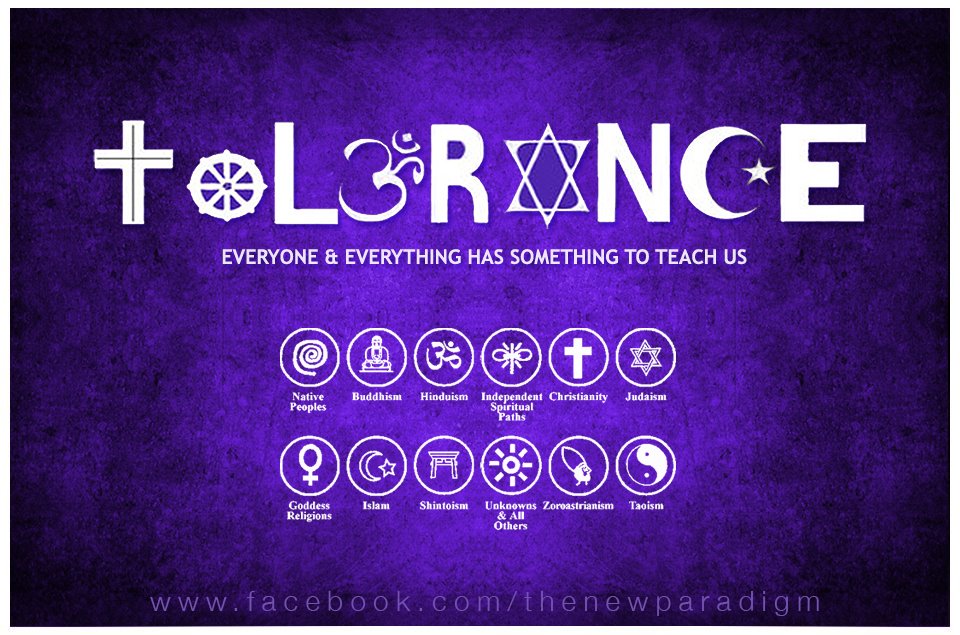
Our belief systems, particularly our spiritual beliefs and traditions, are increasingly important dimensions of culture. We must be able to bridge religious and spiritual differences if we are to live together in a collaborative, inclusive, respectful world. Yet this dimension is far too often overlooked and shortchanged in the intercultural literature.

Today, in this blog post, I offer up a few quotes that speak to me about this topic. It is my hope that taking a few moments to reflect might help each of us better do our part to promote inter-religious understanding.

We are fortunate that so many schools of divinity, congregations, spiritual communities and ecumenical groups use Cultural Detective to promote tolerance, understanding and respect. I’d welcome hearing from any of you about the efforts in which you’re engaged. Please, also, share with us quotes on this topic that speak to you.

“Impiety: Your irreverance toward my deity.”
—Ambrose Bierce

“When political conflict is religionized, it is absolutized.”
—Jonathan Saks

“Once you attempt legislation upon religious grounds, you open the way for every kind of intolerance and religious persecution.”
—William Butler Yeats

“So many Gods, so many creeds; so many paths that wind and wind; when just the art of being kind is all this sad world needs.”
—Ella Wheeler Wilcox

The joke (instead of a proverb) in Cultural Detective Jewish Culture that illustrates the value of “group solidarity” (CLASSIC cross-cultural miscommunication; enjoy!):

Several centuries ago, the Pope decreed that all Jews had to convert to Catholicism or leave Italy. There was a huge outcry from the Jewish community, so the Pope offered a deal. He’d have a religious debate with the leader of the Jewish community. If the Jews won, they could stay in Italy; if the Pope won, they’d have to convert or leave.

The Jewish people met and picked an aged and wise rabbi to represent them in the debate. However, as the Rabbi spoke no Italian, and the Pope spoke no Yiddish, they agreed that it would be a ‘silent’ debate.

On the chosen day the Pope and Rabbi sat opposite each other.

The Pope raised his hand and showed three fingers.
The Rabbi looked back and raised one finger.

Next, the Pope waved his finger around his head.
The Rabbi pointed to the ground where he sat.

The Pope brought out a communion wafer and a chalice of wine.
The Rabbi pulled out an apple.

With that, the Pope stood up and declared himself beaten, saying that the Rabbi was too clever. The Jews could stay in Italy.

Later the cardinals met with the Pope and asked him what had happened. The Pope said, ‘First I held up three fingers to represent the Trinity. He responded by holding up a single finger to remind me there is still only One God common to both our beliefs. Then I waved my finger around my head to show him that God was all around us. He responded by pointing to the ground to show that God was also right here with us. I pulled out the wine and wafer to show that God absolves us of all our sins. He pulled out an apple to remind me of the original sin. He bested me at every move, and I could not continue.’

Meanwhile, the Jewish community gathered to ask the Rabbi how he’d won. ‘I haven’t a clue,’ the Rabbi said. ‘First, he told me that we had three days to get out of Italy, so I gave him the finger. Then he told me that the whole country would be cleared of Jews and I told him that we were staying right here.’
‘And then what?’ asked a woman.
‘Who knows?’ said the Rabbi. ‘He took out his lunch so I took out mine.”