Want to Get Rave Reviews AND Truly Make a Difference?

WowlargeHow would you like to revel in unsolicited, overwhelming praise and gratitude? And, on the job, no less?

We all make fun of “happy sheets,” those “feel good” evaluation forms participants are asked to fill out at the conclusion of a training session. But how sweet it is when a hardworking facilitator or coach receives unsolicited kudos! And Cultural Detective can enable you to do just that.

We help you look better and DO better! Cultural Detective provides a core process for developing intercultural competence, and you facilitators, coaches, team leads, study abroad counselors, professors—you add the bells and whistles, the supplementary activities and simulations, the design and personality that weave it all into a smashing success! You know you’re using a state-of-the-art Method, grounded in developmental and constructivist theories, adding both to your credibility and effectiveness.

Here’s an email one corporate trainer recently received after using Cultural Detective. Thank you for sharing it with us!

“Hi,

I trust you are back home, and preparing for your next Cultural Detective training session. I hope all is well.

I want to thank you for coming and bringing your fabulous Cultural Detective presentation and training. I swear to goodness I have used what I learned no less than five times, within our group, to resolve differences that could have been roadblocks otherwise. You squarely “nailed” the subject matter and how to use it. Your passion, your examples, your group exercises, how you drew people out to share their experiences and expectations and your patience (with at least one of us, who shall remain nameless) was inspiring. It was excellent, and the water-cooler talk I heard echoed the same thoughts as mine. I can truthfully say that I got more out of those short, few hours, than any other training I can think of. I am anxious to use the strategy in a discussion with parties of more diverse cultures than my five encounters so far. I’m confident we both will win.

I hope you can carry Cultural Detective all across the organization, because it applies to everyone; I even used it with my wife to determine where we were going to eat, just like the example you used! How about that for an example of classroom to practice! I don’t think it gets any better than that.

Well, thanks again. I just wanted you to know how much I though of your training and what it had done for me, in, what, a week? It was great. Thanks, and if ever I can be of service to you in someway, please don’t hesitate to ask.

Sincerely,

(signature removed for privacy), a practicing cultural detective

Using Army Recruitment Ads to Develop Cross-Cultural Skills

Terracotta ArmyLooking for exercises and activities for practicing cross-cultural skills? We at Cultural Detective emphasize that intercultural competence takes practice, is a practice, and cross-training with alternative approaches can help develop strong skills. Here is an approach that I personally never would have thought of, but it is really powerful!

Marion Burgheimer, a very active contributor to our Cultural Detective community, recently shared with us a selection of army recruitment ads from around the world. “Army recruitment ads?!” was my initial thought. I’ve used advertising clips, movie clips, but I for one never would have thought of this approach. Yet, Marion is based in Israel, and for me it makes perfect sense that this approach would be born from that experience. Take a look at the ads and you’ll see what I mean. The differences are astounding.

Marion tells us these ads are terrific tools for learning the skills for discerning what is important to the people with whom we live, work, and in other ways collaborate. The videos are embedded below.

Thank you for your generosity, Marion! Together we can enable equitable, sustainable cross-cultural collaboration!

Activity Instructions:

  1. Have students or participants view the films, then complete one side of a Cultural Detective Worksheet, in order to practice discerning the values at play in the ads, and link them with the messages and wording those values stimulate. Both are important skills that require practice.
  2. As a second step, encourage users to reference the corresponding CD Values Lenses, to see if they provide further clues about and depth of insight into the national values at play in the ads. You can find those Values Lenses in the Cultural Detective Online system.

Australia: (embedding is disabled for this one; just click through)

India

Japan

Lebanon

Russia

USA

Please share with us some of the values you see inherent in these various recruitment ads!

A Question of Trust

Doi Suthep Temple, Horizontal Image (500x332)A small US American software company has been contracted to design some specialized broadcast technology software for a radio station in Thailand. This is the first time the company has received a contract in Southeast Asia and their company executive, Tom Bennett, is looking forward to doing business in the region.

The initial meetings and negotiations with the radio station management have been successful, and Tom Bennett senses that he has built up a good rapport with Khun Chai, the radio station manager. Khun Chai himself is delighted with Tom Bennett’s interest in Thailand and the local Thai community, and he is particularly impressed with Tom’s liking for spicy Thai food. Khun Chai is already contemplating the possibility of doing business with the American company again in the future.

The price is settled, the contract is signed and a deposit is paid…

Are you are a business leader, coach, consultant, speaker or teacher?  Do you want to become culturally competent and self-confident in the global arena?  Does the above story sound similar to projects in which you, your colleagues or clients engage? Despite this auspicious start, all does not end well, as you’ll discover in our upcoming webinar: Cross-cultural Coaching: A Creative and Transformative Process. In that webinar we will introduce you to a powerful and transformative coaching process with Cultural Detective Online!

The coaching process combined with Cultural Detective Online provides you with a comprehensive learning experience that is stimulating, supportive and transformative! In addition to exploring key cultural concepts and culture-specific information, the collaborative and creative coaching environment helps you develop new perspectives and skills for bridging the gap between your personal cultural “sense” and the cultural “sense” of your colleagues and clients.

Our facilitator will be Jan O’Brien, IAC-MCC, who will show us how she coaches expatriate executives towards cross-cultural success. Jan is President of Culture-Conscious International, a coaching and consulting company based in Houston, Texas. She is a US/UK dual national and has lived and worked extensively overseas, in particular in the US and the South East Asia region. Jan is a Certified Cultural Detective facilitator and a Master Certified Coach with the International Association of Coaching (IAC). She has worked with clients from many language and cultural backgrounds and has personally experienced the benefits and challenges of living and working in the global arena.

Register now, as only a few seats remain.

Meeting time is Tuesday 23 July, 2013 at 10 am Mazatlán, Sinaloa, México time. Meeting place is online. Please consult a world clock to verify your local time. 
  • Los Angeles: 8 am
  • Houston: 11 am
  • New York & Santiago de Chile: 12 noon
  • Buenos Aires or Rio: 1 pm
  • Brussels, Paris, Rome, Johannesburg: 6 pm
  • Abu Dhabi & St. Petersburg: 8 pm
  • Delhi: 9:30 pm

10 Surefire Ways to Divide into Groups

saltyspicysweetsourAs educators and trainers, we often find ourselves needing to sort class members into small groups for an activity. Tried-and-true ways include having participants “number off” or color-coding their name tags. But even the ways in which we divide our students or trainees into small groups can contribute to learning and enjoyment: it can ground learners in the topic at hand, reinforce key points, provide insight into ourselves and others, and help develop teamwork.

In short, the way we divide into groups can become a subtle yet powerful element of spiral learning. For those of us who teach intercultural communication or diversity and inclusion, it can be helpful to divide into groups in ways that encourage learning about similarities and differences.

In that spirit, here are ten of my favorite “Quick Tips” for dividing a large group into small groups. Whether you want to explicitly debrief the learning or leave it as-is depends on your purposes. As with any activity, it needs to suit your style and that of your students, and be appropriate for the environment.

1. Salty/Spicy/Sweet/Sour
Using food is always fun and low stress for the participants. As individuals we like different tastes, and there are cultural tendencies as well. For me, the “sour” tastes of pickled food unite my German blood and my life experience in Japan, for example.
  • Instructions: Make a small sign with a flavor or taste, using as many flavors as you need groups. Then, ask class members to go to their favorite flavor.
  • Variations: Alternatively you could divide the group by having participants choose their favorite fruit or choose their favorite dish from among several common dishes. Or, try having a real snack at each location, and just see where people gravitate. Depending on the context, this could be a good time to use international and ethnic snack foods.
  • If you want to Debrief: Once you have the small groups, you can ask people to take a look around. Do they see themes in the groupings? Any cultural tendencies? Or, do they see reinforcement that we all have our individual taste preferences? Each time will be different. Ask people to reflect on why they like the taste they chose. What life experiences taught them to value that taste? Might this enhance their cultural self-awareness?
2. Goodies Sort
Again using food, this is one of my favorite methods, and one very popular with students or trainees! In the context of teaching or training, a treat is a good pick-me-up, and it’s easy to “internationalize” or add something new and different given the variety of food.
  • Instructions: Prepare “goodies” (chocolates, candies, pretzels, cheese sticks; I’ve even used dried squid and roasted grasshoppers) in as many varieties as you want groups. Put one item for each of your class members in a basket, and pass the basket. Then ask “pretzel people” to meet over here, “cheese people” over there, etc.
  • Variations: You can also use multicultural snacks! Another simple variation is to use the same kind of candy but in different colors: all the reds meet over here, the blues over there, etc. If you have a group that genuinely embraces informality, have them suck their candy, then stick out their tongues to find their fellow group members.
  • If you want to Debrief: Which snacks attracted you and why? Are your food preferences influenced by your ethnic and cultural heritage? Which rules your snack preference: personality or culture? Did any of the snacks look very unappetizing? If so, why? Perhaps make the point that just as our snack preferences vary according to whom we’re with and how we’re feeling (whether we’re tired, excited), our behavior in multicultural teams depends on the context, too.
3. Pertinent Quotes
Quotations have become quite popular on social media sites, and they are a powerful way to introduce a new topic or to summarize learning. Since this activity involves a bit of walking around, it gets people up and moving as well. It’s one of my favorite ways to get people into pairs.
  • Instructions: Assemble a set of quotations on the topic you are teaching. Choose half as many quotes as you have participants. Type up the quotes, dividing them in the middle: choose a fairly obvious place for breaking the quotation in half. Print them, cut them apart, fold them up, and have participants each choose one out of a basket. Then, ask them to find the person with the other half of their quote.
  • Variations: You can combine this method with the “Goodie Share” by taping the half-quote onto the bottom of a candy or snack, then asking participants to find their partners.
  • If you want to Debrief: To aid in this process, you could post a list of complete quotes on a flip chart. You can have some/each of the couples read their quotes aloud to the class. You might ask participants to speak to how “their” quotes relate to what they want to get out of your class today.
4. In • ter • cul • tur • al
This one’s a simple, quick, and easy way to divide participants into groups using a word that reinforces the theme, topic or key skill of the day’s learning session.
  • Instructions: Choose a word that represents an aspect of the theme you are teaching. That word should have the same number of syllables as the number of small groups you want. Instead of numbering off, have class members recite the word’s syllables. It’s a good way to reinforce key concepts.
  • Variations: You could say the word in another language, thus teaching a bit of a destination language, for example.
  • If you want to Debrief: Really not necessary, but… You could ask participants about different ways of hyphenating words, dividing syllables, in the languages they speak.
5. Playing Cards
This is another very quick way to divide participants into small groups: it can have a cultural component, yet it doesn’t necessarily need to be debriefed. With a unique deck of cards, it can be even more interesting.
  • Instructions: From a deck of playing cards, choose one card for each person in your class. Make sure you have “sets” of cards, one set for each group you want. Put all the cards from the abridged deck facedown on a table, and have participants each choose a card. Then group people as you’ve planned, by number (all 2s, 3s, etc.), or by suit, color, odds/evens, higher/lower than 8, etc.
  • Variations: Use Mexican Lotería cards, Japanese Hanafuda cards, mahjong playing cards, or another culturally appropriate (or new-to-your-participants) card deck to divide your class.
  • If you want to Debrief: Ask if everyone felt comfortable with your instructions. Were they familiar with the words you used (suit, Ace, etc.)? People who play cards have a culture unfamiliar to non-card players: shared “common sense,” vocabulary, customs. Some people associate card playing with gambling, and thus don’t like, or feel religiously forbidden from, playing. As with any educational activity, make sure this one will be comfortable for your learners.
6. What You’re Wearing 
I have learned so much from this simple activity over the years because participants always see something I hadn’t noticed. It can also serve as a wonderful impetus for reflecting on value differences.
  • Instructions: Have class members get into groups of 3 or 4, whatever you choose, based on similarities in what they are wearing. They decide what they have in common.
  • Variations: An alternative is to have learners group according to shoe type. This can be very fun, too, and it’s sometimes surprising the categories people come up with.
  • If you want to Debrief: If you choose to debrief this group-sorting activity, you may find a myriad of perceptions about clothing and shoe styles. Often people group into categories that they themselves might not have thought of on their own. Ask participants to discuss in their small groups how they decided to group themselves. Were they all focused on the same thing, or did they have different understandings of their clothing commonality? Groups can share with one another how they grouped, and compare similarities and differences. Did anyone share a perception of someone else’s clothing that surprised you? That echoed or differed from your own perception? What can this tell us about values and perceptions?
7. Number of Languages You Speak, Countries in Which You’ve Lived
This method also helps everyone learn a bit about each other quickly, that they might not have otherwise known.
  • Instructions: Have people line up according to the number of languages they speak, or the number of countries in which they’ve lived, and then divide them into groups.
  • Variations: Tell participants to assemble in groups of people who speak 1, 2, and someone who speaks 3 (or more) languages. This gives a bit more diversity in each small group. You can do the same thing with the number of countries in which participants have lived.
  • If you want to Debrief: Ask participants if they are surprised at who is in their group—have they learned something new about one or more of their colleagues? Does this change their perception of the other person? How and why? Does this change their perception of themselves? How and why?
8. Animal Sounds or Industry Vocabulary Across Languages
I have always been fascinated by the different sounds that animals make as represented in different languages. Really, in Japanese, mice say “chu”?! Use this interesting trivia to your advantage, and insert a bit of lightheartedness to your session.
  • Instructions: Print cards with an image of an animal and the sound that animal makes in a different language. Then ask people to make the sound on their card in order to find each other. You will need one card for each participant, and the number of animals you use should correspond to the number of groups you want to form.
  • If you want to Debrief: Explain that animal sounds are lighthearted, then shift to the inextricable connection between linguistic and cultural fluency. Ask participants to share with you differences they’ve noticed across languages, words that sound similar but mean different things in different places, or how much vocabulary, even in the same language, varies place-to-place. You could ask participants share other interesting sounds animals make in languages they speak.
  • Variations: You can use the same animal and have participants divide into groups according to the sound it makes in Spanish vs. German vs. Chinese, etc. You could use different animals and the sound they make in a destination language. Alternatively, you could use industry-specific vocabulary in different languages, or words having to do with the subject of your workshop in various languages.
9. Arm Cross/Hand Cross
This is a very easy way to divide the room into two groups, and to illustrate how something that looks similar can really be quite different once you analyze it a bit more.
  • Instructions: Ask your students to cross their arms over their chests. Those people with their left arms on top form one group, and those with their right arms on top form the other.
  • Variations: Asking participants to clasp their hands or cross their legs works just as well.
  • If you want to Debrief: We all have automatic habits that we don’t pay much attention to, things we do without making a conscious choice—like the way we cross our arms, or how we attempt to persuade someone, or apologize or disagree. Another  point you might debrief: ask whether, at first glance, with arms crossed, they all seemed to be doing the same thing? It wasn’t until you called attention to the subtle differences in how people were crossing their arms that they noticed. And so it can be with culture.
10. The Name Game
Many cultures around the world have a variety of traditions around naming their children: a girl may be called “daughter of __,” sons may be named according to birth order, a child may be named after an ancestor, or given a name that indicates a hope the parents have for the child (beauty, peace, etc.). Many people are very, very proud of their names, and others may have no idea how they were named or why. Some may have changed their name or had their names changed for them.
  • Instructions: Ask your students to think about their name, and a short (30 second) story about how they got the name, what their name means, how their name or nickname has varied over the years. Then tell students to walk around sharing their “name stories” with one another, until they find someone with a name story similar to theirs in some way. Participants can form pairs, groups of 3, 4, or 5—whatever is helpful.
  • Variations: An alternative of course is to find partners with very different name stories.
  • If you want to Debrief: This is a wonderful activity through which you can talk about value differences, or strategies for adapting to a new culture (do you change your name, adapt its pronunciation…).

Hey, all you trainers and teachers out there: What’s your favorite way to divide a large group into small groups for activities? Please share your creative approaches and recommendations!

Cross-cultural Competence Enhances Productivity AND Satisfaction

Last week a new brochure, this week a new introductory presentation! Thank you all for the incredible work you do with this process and these materials, to build cross-cultural respect, teamwork, productivity and equity!!!!

Use it, pass it around, and do the good work! Thank you, everyone!

Six Powerful Ways to Build Cross-cultural Effectiveness

numeral button-sixWe have some very exciting news for you! Cultural Detective has teamed up with several of our partners to offer you SIX innovative ways to harness the innovation and power of diversity!

Yes, six upcoming events, several of which are free of charge.

Please take the time to sign up now to secure your seats, as these events will sell out quickly.

Tatyana Webinar FINAL#1: JUNE 3, Online
The Art of Facilitation for a Global World

This free-of-charge webinar will be conducted by Tatyana Fertelmeyster, and will preview three of the many dynamite learning opportunities that will be offered at the Summer Institute for Intercultural Communication in July, each of which will include Cultural Detective. Her unique technique of Spontaneous Facilitation allows her to work with individuals and groups with maximum concentration on the reality of the present moment. Click here to learn more or register.

IMG_9443#2: JUNE 5 & 20, JULY 10 & 18, AUGUST 7 & 22, Online
Enhancing Cross-Cultural Collaboration:
Demonstration of Cultural Detective Online

These events are free-of-charge. Participants learn to leverage similarities and diversity as assets, rather than minimizing or managing around difference. You will experience some of the wealth of content and process available in the Cultural Detective Online system, and see how easily the system can be incorporated into existing courseware. Participants in the webinar receive a free three-day pass to Cultural Detective Online.

Click here to view client testimonials and videos on the Cultural Detective Online system. From that page, click on “Learn More/Subscribe” for details and pricing information. To learn more about this event or sign up click here.

Flyer seminario sin

#3: JUNE 6, Bogotá COLOMBIA
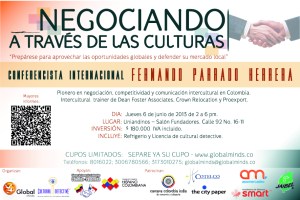
Negociando A Través de las Culturas

Cultural Detective is proud to sponsor this event conducted by Global Minds. Facilitated by Fernando Parrado, it will be held in the Salón Fundadores at the beautiful Uniandinos. The event will focus on joint ventures between Colombia and India.

60772_497965080240721_1862908967_n#4: JUNE 25, Online
Coaching and the Cultural Detective: A Creative and Transformative Process

This is a brand-new, first-time-ever offering! Are you are a business leader, coach, consultant, speaker or teacher? Do you want to become culturally competent and self-confident in the global arena? In our webinar we will introduce you to a powerful and transformative coaching process for cross-cultural competence!

The coaching process leverages the core process and wealth of content in the Cultural Detective Online to provide you with a comprehensive learning experience that is stimulating, supportive and transformative! In addition to exploring key cultural concepts and culture-specific information, the collaborative and creative coaching environment helps you develop new perspectives and skills for bridging the gap between your personal cultural “sense” and the cultural “sense” of your colleagues and clients.

The webinar will be facilitated by Jan O’Brien, IAC-MCC, President of Culture-Conscious International, a coaching and consulting company based in Houston, Texas. Jan is a US/UK dual national and has lived and worked extensively overseas, in particular in the US and the South East Asia region. She is a Certified Cultural Detective® facilitator and a Master Certified Coach with the International Association of Coaching (IAC). Jan has worked with clients from many language and cultural backgrounds and has personally experienced the benefits and challenges of living and working in the global arena. To learn more or register click here.

ici#5: JULY 20-21, Portland Oregon USA
Cultural Detective Facilitator Certification

Live and in person, this two-day facilitator certification program is the ONLY PUBLIC CERTIFICATION we have scheduled this year.

This workshop will be held between Sessions 2 and 3 of the Summer Institute for Intercultural Communication, to make it convenient for you to attend and take advantage of other professional development opportunities in the same trip. Facilitated by Tatyana Fertelmeyster. This workshop will include a one-month subscription to Cultural Detective Online.

Click here to register. Click here for more information.

highroaders_logo#6: SEPTEMBER 24, Online
High-Performing Global Teams: How to Combine Virtual Training and
Cultural Detective for Incredible Results

This event sold out within 26 hours the first time we held it. This will be the second time it’s offered. Global teams have become the norm in most business environments today, but many teams never achieve “high-performance.” Why? Because team members from around the world are expected to achieve consistent results across languages, time zones, cultural values, and more but they are not given all of the skills they need to match this expectation.

Join us for an interactive webinar and learn the latest creative techniques for preparing today’s global teams to excel. Explore how global teams can come together via virtual training platforms and use Cultural Detective to work through scenarios relevant to their business challenges.

In this webinar, Vicki Flier Hudson, Chief Collaboration Officer for Highroad Global Services will walk you through a demonstration of a global team training designed for a large company using a variety of tools including Cultural Detective Online. You will gain ideas, tips, and strategies to help bring your global team together, build solid relationships, and achieve high-performance. To learn more or register click here.

The Best-Kept Secret of Successful Teams

4 Phase ModelAlmost every team and community today is diverse in some way or another: gender, age, spirituality, professional training, ethnicity, nationality… While we respect other styles and cultures, most of us still get stuck at some point where we say, “OK, we’re different; now how do we work (or live) side-by-side? How do we harness our differences as creative assets? At a minimum, how do we simply keep from driving each other crazy?”

We might work with partners who view time as flexible and events as unfolding. This may mean that, to them, deadlines are mutable and subject to change. Meanwhile, we push ourselves and our bodies, working overtime to make sure we honor our commitment to an agreed-upon deadline. While we may respect our colleagues’ view of time management on a theoretical basis, and perhaps envy them their apparently healthy work-life balance, how do we succeed with partners who don’t seem to respect their commitments to deadlines?

Perhaps we have a neighbor or even a waiter at a favorite restaurant who communicates very directly, yet we prefer a bit more indirection, thank you. While we respect their communication style, it can get irritating and try our patience.

Too often we fail to actively seek to bridge differences because we see them as something negative, as something that separates rather than unites us. Yet, by ignoring our differences, by pretending they are not there, we imbue them with great power. Eventually they can get the best of us, surprising us at awkward moments and causing frustration and tension. Our reluctance to address differences may stem from a fear that acknowledging their existence may push us farther apart rather than allowing us to collaborate enjoyably.

So, how do we transform these differences into assets? How do we convert them from something to be denied, hidden, or tamped down, into something to be embraced and used for the good of the organization and the team?

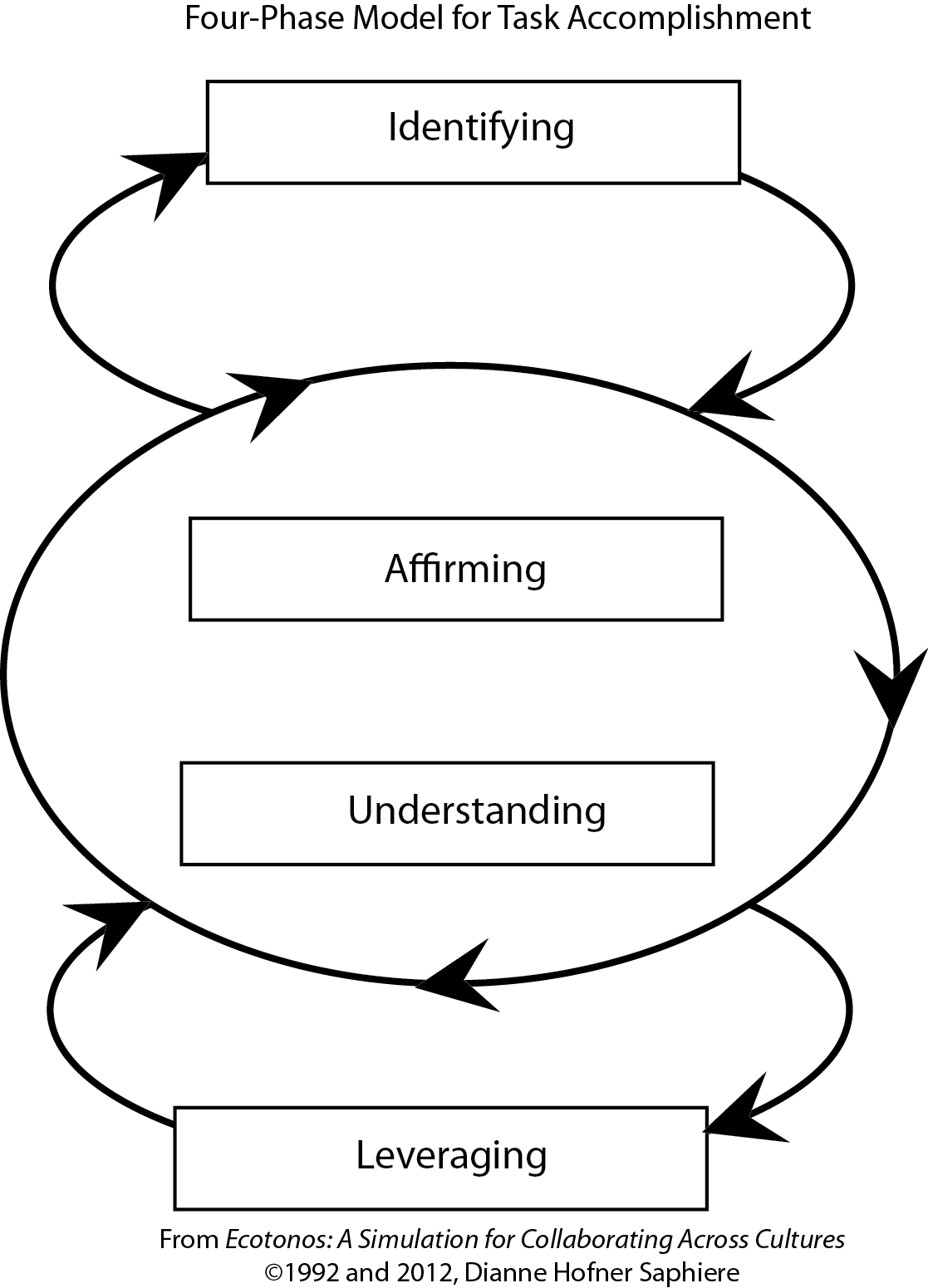
One model that has proven quite useful over the past two decades of use comes from the classic and widely used simulation, Ecotonos: A Simulation for Collaborating Across Cultures. Called the “Four-Phase Model for Task Accomplishment,” this very simple approach guides us to first identify the similarities and differences at play in our interaction, verbally affirm them, spend time understanding them and, finally, explore how to leverage them.

How a specific team leverages similarities and differences will depend on the members of the team and their shared goals and realities. Each team creates its own team culture, ideally based upon and growing out of the first three phases of this Four-Phase Model.

As you can see in the graphic above, the Four-Phase Model is not linear, but rather each phase weaves into and out of the other. For example, understanding may lead to further identifying, or leveraging may lead to added affirmation.

A text description of the Model accompanies Ecotonos and provides further elaboration of the graphic:

Identifying
  • Perceiving similarities and differences
  • Establishing which differences are divisive and which commonalties unite
  • Creating self-awareness of one’s own strengths and styles
  • Appropriate balancing of the tension between sameness and difference
Affirming
  • Confirming individual commonalties and differences
  • Substantiating that difference is desirable
  • Legitimizing difference in the eyes of the group
  • Welcoming conflict and paying attention
Understanding
  • Attempting to understand the other person’s perspective
  • Stepping into the other’s shoes
  • Mirroring/exploring and discovering together
  • Probing for deeper comprehension using various approaches
  • Seeing an issue from several vantage points
Leveraging
  • Defining how team members can contribute to goal accomplishment
  • Agreeing on methods for utilizing team expertise
  • Facilitating the generation of creative solutions
  • Creating a “team” culture
  • Focusing on efficiency and effectiveness

Once people become comfortable with the Identifying Phase, they may perceive the Affirming Phase as something unnecessary, a waste of everyone’s time. “We are all adults. We don’t need to give one another kudos.”

But my extensive experience proves, over and over again, that taking the time and effort to actively engage in the Affirming Phase is well worth the investment. Proceeding more slowly allows the team to accomplish more in less time, so to speak.

Below is one video that illustrates the value of affirmation in our lives. It is pretty long, but you’ll get the idea pretty quickly and I’m confident you’ll enjoy watching it.

The Four-Phase Model is one tool that can powerfully transform conflict into productivity and innovation. And, by the way, don’t forget that you are awesome!


Research Findings: The Value of Intercultural Skills in the Workplace


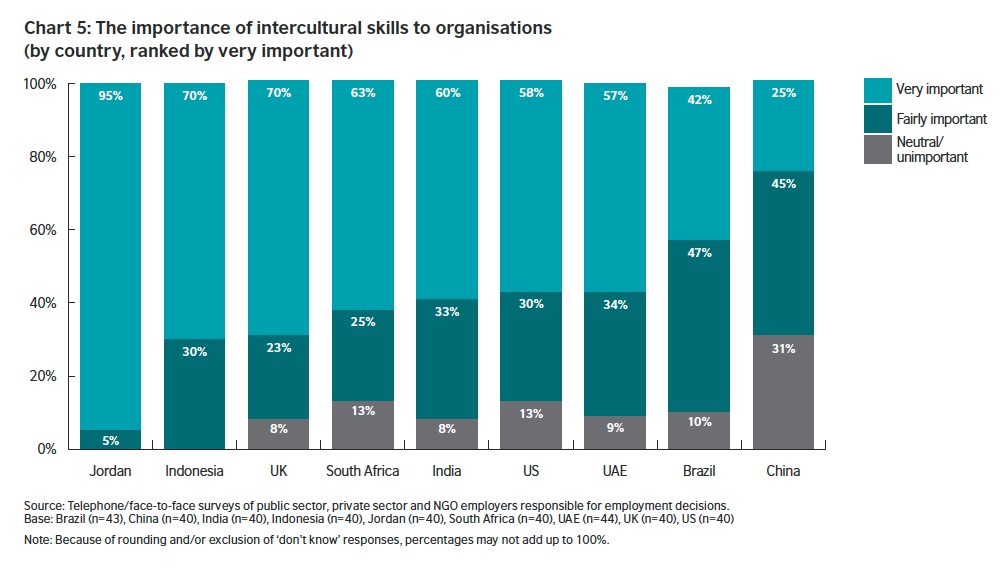
IC Skills importance
Culture at Work: The value of intercultural skills in the workplace
—A survey conducted by the British Council, Booz Allen Hamilton and Ipsos Public Affairs, of HR managers at 367 large employers in nine countries: Brazil, China, India, Indonesia, Jordan, South Africa, the United Arab Emirates (UAE), the United Kingdom (UK), and the United States (US)

The Report’s Conclusions

“Our ability to engage successfully with other countries, organisations and people will depend to a large extent on whether we possess the necessary intercultural and foreign language skills to make fruitful connections, whether in trade and investment, charity/NGO programmes or as government and international organisations. This is fundamentally changing the way in which employers value and seek to develop intercultural skills in the workplace.”

“More and more business leaders are identifying real business value in employing staff with intercultural skills. These skills are vital, not just in smoothing international business transactions, but also in developing long term relationships with customers and suppliers. Increasingly they also play a key role within the workplace, enhancing team working, fostering creativity, improving communication and reducing conflict. All this translates into greater efficiency, stronger brand identity, enhanced reputation and ultimately impact on the bottom line.”

“Employers believe that intercultural skills are integral to the workplace.”

“A common challenge shared by employers around the world is finding employees with adequate intercultural skills. Given that the operating environments of all organisations is increasingly global, it comes as no surprise that employers need employees who can understand and adapt to different cultural contexts.”

What is the international reality in the workplace?

The research shows that employees in most large companies surveyed engage in extensive interaction across international borders.

More than two thirds of employers report that their employees engage frequently with colleagues outside of their country, and over half say that their employees engage frequently with partners and clients outside of their country.

THE BUSINESS VALUE OF INTERCULTURAL SKILLS
Intercultural skills provide business value and help mitigate risk.

The research shows that HR managers associate intercultural skills with significant business benefits. Overall, the organisations surveyed are most interested in intercultural skills for the benefits they bring—benefits that carry significant monetary value to employers:

  • Keeping teams running efficiently
  • Good for reputation
  • Bringing in new clients
  • Building trust with clients
  • Communicating with overseas partners
  • Able to work with diverse colleagues
  • Increased productivity
  • Increased sales

Employers also see significant risk to their organisations when employees lack intercultural skills. Top risks that organisations surveyed are concerned about are:

  • Miscommunication and conflict within teams
  • Global reputational damage
  • Los of clients
  • Cultural insensitivity to clients/partners overseas
  • Project mistakes

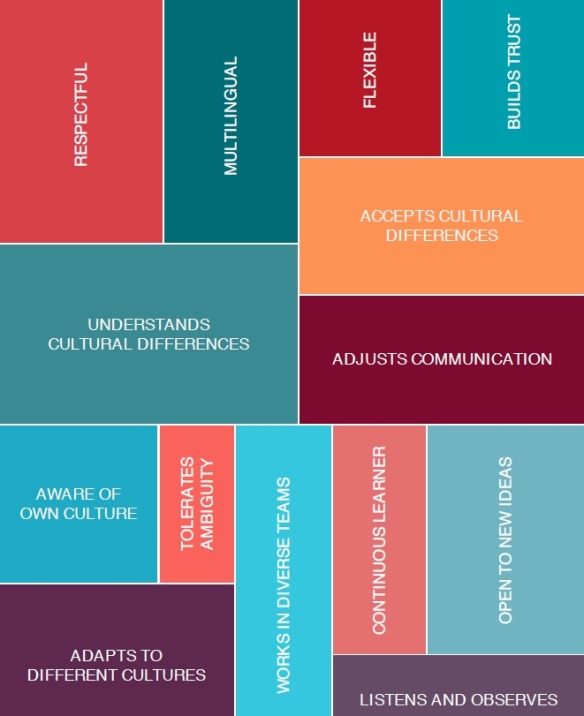
How do the organisations surveyed define “intercultural skills”?

The graphic below shows the words employers used, with size of the block equating to frequency of use.

define%22interculturalskills

The terms employers use to define intercultural skills
Source: Telephone/face-to-face surveys of public sector, private sector and NGO employers responsible for employment decisions. Base: Ipsos Public Affairs, 2012: Global (n=367).

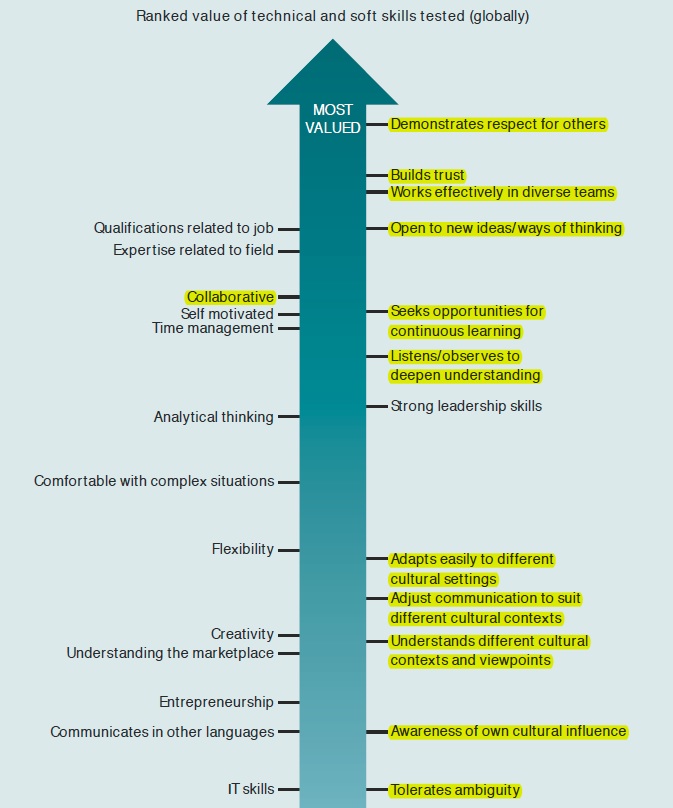
In particular, employers highlight the following as important intercultural skills that they look for in job candidates:

  • the ability to understand different cultural contexts and viewpoints
  • demonstrating respect for others
  • accepting different cultural contexts and viewpoints
  • openness to new ideas and ways of thinking
  • knowledge of a foreign language.

How employers rank different skills in terms of importance

valuedskills

Graphic © the original report, with yellow highlights added by Cultural Detective.

How does the research indicate these skills are developed?

Most employers report encouraging their staff to develop intercultural skills through in-house training, meetings and events. However, employers also say that educational institutions could do more to equip students with intercultural skills.

The findings suggest that policy makers and education providers could do more to contribute to the development of a workforce with the necessary intercultural skills through interventions, such as prioritising:

  • teaching communication skills
  • offering foreign language classes
  • availability of opportunities for students to gain international experience
  • development of international research partnerships.

This research suggests that there is significant opportunity for employers, policy makers and education providers to work together to strengthen the development of intercultural skills to meet the needs of an increasingly global workforce.

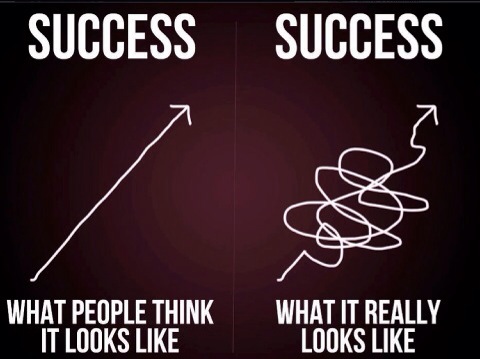
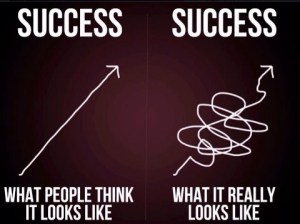
Success? It’s All in How We Gauge It…

711079_3691916951303_1580871364_nThis is a story, or perhaps, more correctly, a cautionary tale, about a very successful expatriate and the highly respected, much-envied western company for which he worked. It is a story that made me think again about how we define success in our lives, and, in particular, how we define success in the global marketplace and success on an expatriate assignment.

The Company: The company is one of the very first to enter the Japanese market after World War II. It holds key patents on several important technologies, and invests decades establishing partnerships with Japan’s leading firms. It prides itself on hiring and promoting Japan’s best and brightest.

By the 1990s, it is the envy of other foreign-capitalized companies in Japan: it has a dominant market presence in its niche industries; long-established, trustworthy partnerships with major local players; and a stellar reputation for consistency, reliability and innovation. The president of the company is Japanese, and its management team is a strong and diverse mix of local and international executives who respect one another and leverage their expertise.

The Japan operation is a huge profit center, as well as the home of research and development breakthroughs leveraged by the company globally. They have strong cross-cultural programs in place for their staff worldwide, as well as for transferees and their receiving organizations.

The Expat: Our expat is intelligent, ambitious, and very capable. He has worked for the company for over 30 years, and is known as an excellent turn-around manager who had saved several manufacturing plants and regional operations, turning their losses into profits. Originally educated as an engineer, he is logical and methodical, and very good with numbers, graphs, and trends. Our expat is married with grown children and grandchildren, speaks a bit of French in addition to his native English, is well-travelled, but has never before lived overseas. This will be his last assignment prior to retirement.

The Situation: The global company, and most particularly home office, is experiencing economic hardship. A few expensive ventures have failed, and it is time to tighten belts, cut back, and save money across the board. Though the Japan operation is one of the most profitable worldwide, it is part of the overall organization and must join in company-wide budget cuts.

The expat is sent to Japan as the new CEO, and is told to cut millions from the annual budget. It is the first time in over a decade that the CEO of the Japan operation is a foreigner. The expat and his wife relocate to Tokyo, and quickly integrate into the local expat social scene. They love their new life in this amazing metropolis.

The Backlash: Local and existing expatriate management “cry foul.” They say it is a short-sighted decision to slash budgets in Japan when the operation is functioning smoothly and keeping others afloat. They say they are being punished for errors they did not cause, in which they were not involved. They warn that budget cuts will have long-lasting negative effects in the Japanese marketplace.

The new CEO explains that change always has its naysayers; people need to “get onboard or get off the ship.” “Tough times call for tough decisions.” “It’s a new day, a new world, a new economy.”

The cross-cultural consultant and existing management explain that the culture is different here, that the new CEO doesn’t yet understand Japan. Drastic changes have long-lasting effects that can’t be undone, can’t be apologized for. They urge him to send this message strongly to the home office, to push the decision back up. They say it’s his duty to make the home office aware of the repercussions of their top-down decision. They tell him that following instructions will mean the death of the Japan operation.

But the CEO has been down this road before. No one likes belt-tightening. No one likes budget cuts. He knows how to turn an operation around. He’s done it before. He doesn’t need people to “like” him. He knows they will respect him once they see the results he achieves. This is an once-in-a-lifetime opportunity, an incredible capstone to his career.

The Outcome: The expat succeeds, in stellar fashion. He fires people. He closes divisions of the company. He retires long-standing partnerships with important local players. He does exactly what he has been charged to do. And he furthers his career: after his two-year assignment he receives a huge bonus. He departs Japan to begin his retirement, riding the accolades of his success.

Home office is proud of their decision to send him; only an expat could have made these kinds of difficult decisions, taken these drastic measures. A local executive wouldn’t have been able to cut such long-standing local partnerships, couldn’t have bit the bullet to fire staff who had worked their whole careers building the company. It was a perfect decision. Money saved. Bottom line improved.

The Longer Term Outcome: Fast forward to four years after the expat’s departure. The highly successful, highly profitable business in Japan, with the enviable stellar reputation, closes down. Plants close. R&D facilities close. Offices throughout the country close.

Leading companies in the industry are no longer interested in partnering; once burned twice shy. After decades of trust building, smart business and shared success, how can they rely on a company that unilaterally decides to throw it all away to improve bottom-line at some far away home office? Why should they do business with a company that so clearly prioritizes home office needs over international success?

The company’s best and brightest have been hired by the competition. They are sour about their previous employer’s lack of loyalty and its short-sightedness. The company is no longer able to attract talented new hires. Who wants to work for a company that focuses on home office success, punishing those who succeed worldwide?

And today? The Japan operation, such an envied and respected company for over sixty years, is no longer. It was “over-milked,” bled dry. Not financially, but culturally, emotionally, trust-depleted.

So, how would you gauge success in this situation? Knowing what you know now, was the CEO successful? At the time everyone thought so. He achieved the immediate goal. What do you think would have happened had he done things differently? Is there a way the expat could have been successful in his goal and maintained trust? Does this mean that every leader needs special tools when completing an overseas assignment? What can we learn from this?

Please ponder those questions while you read the key takeaways from my point of view.

The Lessons:

  1. As expats, we must learn to distinguish between what we know and what we have to learn. We must ask for help. We must be willing to listen. We need to pause and make sure we understand the cultural context in which we are working.
  2. We must ensure that while we use our strengths, we also use “fresh eyes” to see what’s new and different this time. Not every problem can be approached in the same way it was successfully resolved the last time around, in a different country, with different people.
  3. We must be able to discern when to jump at an opportunity, and when to push a decision back up the chain of command. No person is an island. Even a CEO is part of the interconnected web of relationships, responsibilities, and decisions that make up an organization.
  4. As home office executives, we must be able to weigh our priorities, consciously and purposefully. We must think long-term, even when the short-term is jumping up and down in front of us. It is our job to anticipate the multiple impacts of a decision, and shape the process to benefit the organization.
  5. We must be able to hear the truth, from all perspectives, and separate the facts from the complaining. We need to set aside what we want to hear, what we are used to hearing, and be open not only to what is said, but the context and manner in which it is expressed. A cultural informant may help in “translating” the meaning of the message.
  6. As local management, we must learn to discern when we are accurately predicting the future and when we are just resisting change. These are usually questions to explore through dialogue and open-minded discovery. This can be a challenging process, depending on the cultural norms of local management.
  7. As a global team, we must have the tools to enable us to share, hear, and weigh information in order to make the best decisions, for both the short- and long-term. And it is important to remember that the choice and presentation of information is, to some extent culturally influenced. Without a process to truly understand shared information, team members essentially operate in the dark.
  8. A multinational company, it is wise to employ tools like Cultural Detective to help prepare and guide executives on international assignments. Culturally Effective companies recognize the need, and have found Cultural Detective and a trained facilitator can help prevent stories like this from becoming commonplace Cultural Defectives.

Linked to the My Global Life Link-Up at SmallPlanetStudio.com

Developing Intercultural Competence — Online?

“While other cultural databases do an effective job of providing country overviews, Cultural Detective Online offers unique and complementary capabilities.”
—Joseph K. Lunn, Project Portfolio Manager and Cross-Cultural Trainer, Zurich North America

What makes for a truly useful online learning tool? When I asked intercultural trainers this question they seemed to want to be able to emulate the face-to-face environment as much as possible. Keep the learners’ attention, make it experiential, real and applicable — and make them think! They don’t need “the answers,” they need to know how to come up with real solutions when they find themselves in the midst of cross-cultural conflict. Oh, and you know the old adage, keep it simple!

So, when developing the Cultural Detective Online tool, some key fundamental concepts were kept in mind:

  1. Personal/professional goal setting should be at the entrance to working with the tool — what are the learners’ objectives in using the tool? They should be able to adapt and change these but also keep them in mind in order to stay on track and achieve them.
  2. Culture-general and culture-specific content and process — this is fundamental to working with the Cultural Detective Method (read more by Janet Bennett on this topic if you are up on it), so no challenge here!
  3. Contextually based learning — also core to the Cultural Detective Methodology is working with real-world critical incidents and pushing the learner to develop an understanding of the underlying role and subtle nuances cultural values can play in everyone’s lives.
  4. Links between deep culture and surface culture, between values and behaviors — again innately a part of working with the Cultural Detective tools and richly impactful (where we get the big aha moments) once the learner discovers, develops and really hones this skill.
  5. Prompting for the learners to summarize and apply their learning to their real situations — this is where the work they’ve put in pays the learner back; in other words what’s the bottom line? How can I really use what I just learned to make a value added difference in my work, in my global team, with my international vendors/clients/offices, etc.?
So we’ve heard from some of our early adapters — Cultural Detective Online will take you further in your intercultural competence journey. Joseph Lunn of Zurich NA says,

“In addition to crisp, clear detailed summaries of each country’s cultural values, the nearly 400 cross-cultural incidents provided show users exactly what can go wrong when cultural understanding gaps exist. The tool follows-up by sharing the differences in cultural values that underlie each incident and offers concrete suggestions to build cultural bridges and avoid similar incidents. CD Online is a great hands-on teaching tool that adds value to:

    • Employees beginning overseas assignments
    • Global project team members
    • Mergers and acquisition partners
    • Outsourcing engagements

Thanks for making this tool available to those who need it at a reasonable cost!”

Developing intercultural competence online? Of course! Take a test drive and see for yourself: Cultural Detective Online!