Happy New Year! New Year’s and Calendars Around the World

WorldCalendars

Happy New Year!!

Our greetings are sincere; we wish the best for our colleagues, partners, and friends. Intent is important. However, even the most sincere greetings, when unaccompanied by a broader mindset of cross-cultural awareness, can come out sounding neocolonialist, disrespectful or just plain ignorant.

Most non-Chinese know that Chinese New Year often happens in February and is based on a lunar calendar. Many non-Jews are aware that Rosh HaShanah is the Jewish new year, and that it usually occurs around September. But what about other nations, cultures and traditions: when do they celebrate their new year? And how can we demonstrate cross-cultural sensitivity when we wish to express appropriate New Year’s greetings?

The first step is to recognize our own Lens, our own cultural filters. A “happy new year” greeting focused on January 1, 2013 is based on the Gregorian calendar, use of which was ordered by Pope Gregory XIII in 1592. Even Protestant Europe was slow to adopt this calendar, but over the centuries it has gained widespread use to become today’s de facto international standard. Most countries in the world now use it as their sole civil calendar, with exceptions including Saudi Arabia, Iran and Afghanistan. Countries that use another official calendar alongside the Gregorian include India and Israel. To detach the Gregorian calendar a bit from its Roman Catholic roots, it is also called the civil calendar or Common Era (CE) calendar.

Having a recognized international standard is a major change. Thirty-five years ago, when I first started working with a telex machine in Japan, I had to convert dynastic dates to CE dates as part of my daily tasks (I also used a HUGE kanji typewriter that provided me a daily physical workout, prior to the advent of word processing). Now, the general acceptance of the CE calendar is a sign of how much cultures that did not traditionally use the Gregorian calendar have adapted in order to more easily collaborate. Of course, another point of view is that this adaptation shows the success of the Christian colonialists imposing their standard on the rest of the world.

Either way, there is a great need for those of us comfortable with the Common Era calendar to learn a bit about other world calendars, to gain a basic knowledge about and be able to communicate respect for them. Thus, the second step in building cross-cultural competence is to develop our curiosity and knowledge about world calendars.

While the CE calendar is in popular use, alongside it and sometimes instead of it people around the world use solar calendars, lunar calendars, lunar-solar calendars, arithmetic and astronomical calendars. You may see dates you don’t recognize in newspapers when you travel, or in official government or religious documents. Non-Gregorian dating is commonly used to determine holy days, holidays and festivals in many of the world’s traditions. These local, regional, and religious calendars are frequently used to report birth and death dates, and major life and world events. It can get confusing for the international traveler or global nomad, not to mention the unwitting blogger or small business person with an Internet site! There are seven billion people on our planet, and according to my quick calculations, fewer than 10% have primarily used a Gregorian calendar for even most of my lifetime.

How can we navigate the multitude of calendars in our world? Surely we can not be expected to understand or be fluent in all of them. How can we show sensitivity, respect, and a bit of knowledge, rather than arrogance, ignorance, or insult? The third step is to bridge the differences — to understand and learn to work with our partner’s or customer’s traditional calendar.

6 Tips for Partnering with People Who Use
Calendars Different from Yours

  1. Remember that the Common Era calendar is not the only calendar in the world.
  2. Realize that it’s origins are in western Christianity. Avoid the use of “BC,” which refers to “before Christ,” and “AD,” the Latin term Anno Domini. Instead, use “BCE” (Before the Common Era) and “CE” (Common Era).
  3. Do a bit of research about your major customers and partners. What are their spiritual practices? Their ethnic backgrounds? Where are they based geographically? Once you’ve done your homework, you’ve acquired a very basic level of cultural literacy regarding possible calendars your colleagues might use.
  4. Ask them. Asking how an organization and a community dates documents, and how they calculate and observe holidays, shows that you know there are many ways of doing things, that your way is not the only way. It demonstrates a respect for other traditions and helps to build relationships based on mutual trust.
  5. Respect your colleagues’ holidays. If you are told that business closes on certain days, don’t try to undo centuries of tradition. I have so often seen this error committed during my career. An executive insists that employees work on a day that is usually a holiday, as the organization is on a deadline. In the short term, this strategy may be successful. But the long-term negative consequences, in terms of lost loyalty and reputation are immeasurable. Better to focus on outcomes: how can we meet this deadline? Brainstorm with your employees and partners to find mutually acceptable rather than unilateral ways forward.
  6. Offer New Year’s and other holiday greetings as appropriate to your colleagues’ traditions. That usually means that a New Year’s greeting on January 1st will be well received, and often means that another greeting, on their calendar’s New Year, will be even more special. Make a note in your calendar to jog your memory. Such a practice is a solid and frequent reminder that our way is not the only way.

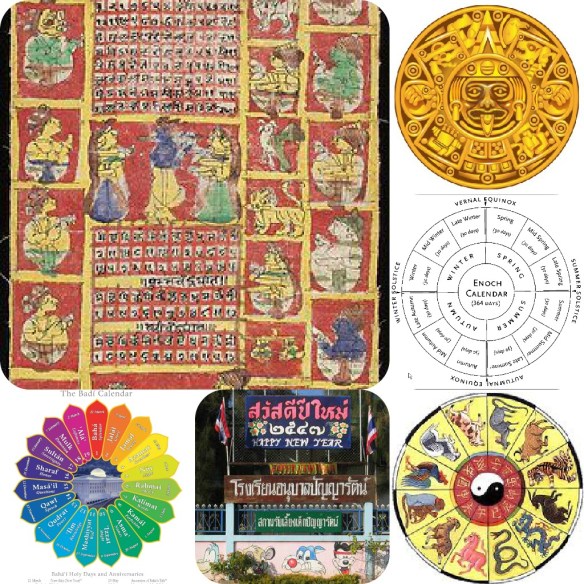
While far from a complete list, I did some research to produce a bit of a guide (below) to some of the world’s calendars in current use. Please note any corrections in the “Comments,” and we will edit as needed. Thank you!

  • Bahá’í (Badí‘): The year 170 BE in the Bahá’í calendar will begin on March 21, 2013 (spring equinox), the 1st (or Bahá) of the month of Bahá in the year Abhá. The Baha’i calendar begins with Bab’s declaration in 1844.
  • Chinese (Mainland): The first day of the year of the Snake 4711 will be February 10, 2013. Legend has it that the Emperor Huangdi invented the calendar in 2637 B.C.E.
  • Chinese (Republic, Minguo): January 1st will bring in the year 102 in Taiwan, Kinmen and Matsu. The calendar began in 1912, the year of the founding of the Republic of China.
  • Coptic (Alexandrian): The Feast of Neyrouz or New Year’s 1729 AM (Anno Martyrum or “Year of the Martyrs”) was September 11, 2012.
  • Eastern Orthodox (Julian): The first day of the year 2013 was on December 19, 2012. It may be worthwhile noting that both Coptic and Eastern Orthodox Christians celebrate Christmas on January 7th (not December 25th).
  • Ethiopian (Ge’ez): Enkutatash, or the new year 2005, began September 11, 2012.
  • Hebrew (Jewish): The year 5773 began on the 1st of Tishrei (the 7th month in the Jewish calendar), or September 16, 2012 — Rosh HaShanah, the day Adam and Eve were created. The Jewish calendar has another New Year’s, the 1st of Nisan (the first month). It will be on March 12, 2013, and is used as the new year to order the holidays. It is seen as the anniversary of the founding of the Jewish people.
  • Indian National Calendar (Saka): The 1st of the month of Caitra, year 1935, will fall on March 22, 2013. The current Saka era began in 78 CE.
  • Indian Popular Calendar (Vikram Samvat): The year 2069 will begin the first day after the new moon in the month of Chaitra, April 11, 2013 — Hindi New Year.  In the Gujarati tradition, it began on the day after Diwali, on the 1st of kartak or November 14th. The calendar was created by the Emperor Vikramaditya of Ujjain following his victory over the Shakas in 56 BCE.
  • Indigenous, First Nations, and Native Peoples: There are many communities and much diversity worldwide. A lunar calendar is generally used and the year revolves around the seasons.
  • Islamic (lunar Hijri): The year 1434 AH began on the 1st of Muharram, November 15, 2012. The Islamic calendar begins when Muhammad emigrated from Mecca to Medina in 622 CE.
  • Japanese: January 8th will bring in the 1st of the year Heisei 25, which began when Emperor Akihito took the throne in 1989 (year one).
  • Mayan: A new baktun or cycle begins December 22, 2012.
  • Persian (solar Hijri): March 21st, or the 1st of Farvadin, will greet the year 1392 SH. It is determined by the spring equinox. Norouz or Persian new year has been celebrated for at least 3000 years and is rooted in the Zoroastrian tradition. The calendar marked its beginning in agreement with the Islamic calendar based on Muhammad’s emigration from Mecca to Medina (Hegira). Due to the Persian solar adjustment to the Islamic lunar Hijri calendar, the year count between the two calendars has diverged.
  • Thai (Suriyakhati): January 1st will bring in the Buddhist year 2556 of the Thai solar (legal) calendar.

Additional Resources:

Two handy calendar converters:

Readers, we look forward to hearing you tell us about your New Year’s. What greetings do you prefer, and when? How do you celebrate?

Whichever calendar you prefer, the Cultural Detective team wishes you all success, health, and joy!
Resource Review: GDI Benchmarks

We tend to get a lot of phone calls asking us to recommend a cross-cultural assessment instrument. Usually I ask what  seems to me a very logical question: “What is it you are trying to assess?” I am then often shocked to hear that the caller is not able to answer my question!

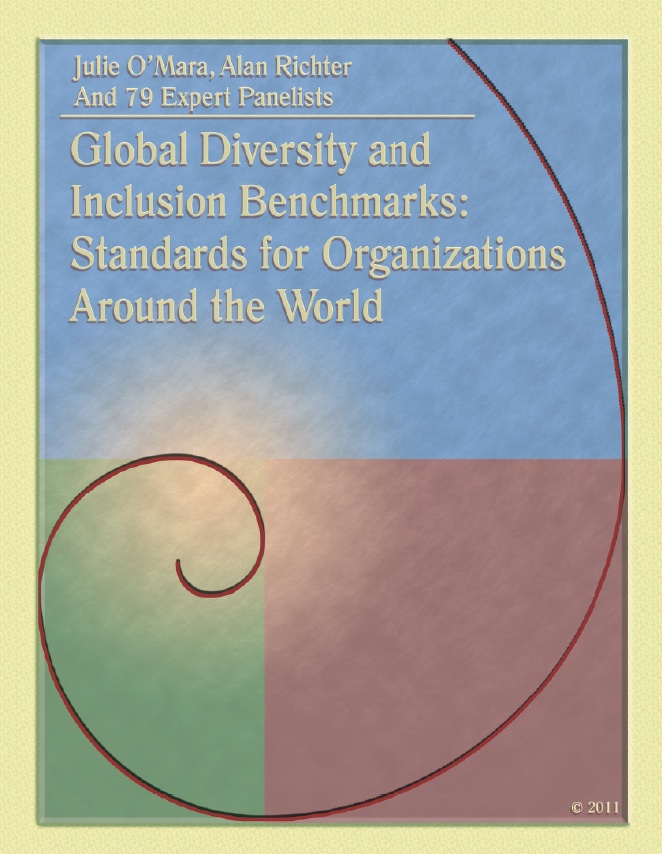
As an organizational effectiveness practitioner I am concerned with individual and interpersonal effectiveness as well as that of the overall organization. We all live and work within systems, and if that system rewards and encourages us NOT to be cross-culturally competent, we are going to nurse burnout if we try to demonstrate and develop that skill. Organizational systems and structures need to support and reinforce individual and interpersonal competence. That is why “Global Diversity and Inclusion Benchmarks: Standards for Organizations Around the World” is one of my favorite assessment tools.

Written by Cultural Detective Global Diversity and Inclusion co-author Alan Richter, along with the very talented Julie O’Mara, the tool is available for use free of charge, though the authors ask that you submit a written request for permission (julie@omaraassoc.com or alanrichter@qedconsulting.com).

Newly updated in 2011, the 32-page booklet is based on a core model of 13 categories arranged into four key areas: Foundational Factors, Internal Abilities, External Benchmarks, and Bridging Competencies (you can already imagine how well this blends with a Cultural Detective approach!). The assessment instrument involves rating the organization at one of five levels for each of the 13 categories. Thus, it is very easy to use and educates as it assesses.

The GDI Benchmarks are based on extensive contributions from 79 experts around the world, and were developed from groundbreaking research in the early 1990s. Please contact Julie or Alan to learn more. And please share with us your organization’s progress with these benchmarks as you use Cultural Detective!

Every Organization Needs Intercultural Competence

Nearly every organization these days, even the smallest and most local, works with diverse customers, team members, vendors, and service providers. A corner grocery store serves people from different age groups, ethnicities, and spiritual traditions. So, which holiday greetings should the grocery store use, if any, so as not to offend or exclude? Why do some of the regular customers talk only to male employees? Could the store increase profits or attract new customers if it started offering halal meats or Latino grocery items?

What about the graphic designer who puts up a website or Facebook page designed to attract local clients, only to find that the first inquiries come in from overseas? The mere fact that you have an online presence can mean you offer your products and services worldwide. And what about the free clinic that finds itself dealing with patient care issues of recent immigrants from places halfway across the planet? Or disaster relief agencies attempting to coordinate aid from around the world, getting it to the places it needs to be, quickly?

Cross-cultural competence, the ability to communicate effectively across cultures, is a mandatory skill in today’s interconnected world. It will help you:
  • Service diverse customers in the ways they expect.
  • Attract, retain and make the most of the talented professionals your organization needs to succeed.
  • Sell more products or services, to the people who need them.
  • Achieve success in your negotiations.
  • Discern the “right” mergers and acquisitions for your purposes.
  • Get more productivity and satisfaction out of your local and virtual teams, projects, and vendors.
  • Jump start the outcomes of study abroad and international education, as well as expatriate assignments.
  • Ensure you get the most out of the time and money you invest in international, cross-country and regional business travel.
  • Develop mutually respectful relationships with clients, employees and other stakeholders.

Cross-cultural competence is a needed skill for all of us, and it helps improve our family and social lives as well as our work lives. But amidst all the competing priorities for our time and attention, how can we develop such competence? To most of us, going back to school or even taking a few days off work for a class isn’t doable. And besides, like physical fitness, cultural fitness requires ongoing, structured practice, not just one trip to a training room.

If only there were an online cross-cultural coach available to us anytime, anywhere, at low cost. One that didn’t make us memorize lists of dos and don’ts, that didn’t promote stereotypes but rather encouraged dialogue and critical thinking. An online coach that would provide a process for recognizing cultural differences, helping us to understand and leverage them as assets rather than as roadblocks. Better yet, an online coach that could help us make sense of our everyday experiences, learning how to transform obstacles into opportunities, and frustration into innovation. A tool we could navigate freely, according to our needs and interests, not some online talking heads or narrated slide show. A tool that would be available on our time — when and where we want it…

I am very excited to be able to share with you just such a solution, yours free for three days, no strings attached. It is a brand new online system based on the proven Cultural Detective Method used by governments, NGOs and for-profit organizations around the world.

Free 3-day trial to Cultural Detective Online!

Cultural Detective is directly responsible for a 30% increase in our customer satisfaction ratings.”

Cultural Detective sped up my learning curve; it allowed me to become a part of the team and have an impact on the business more quickly.”

“I have received kudos from my managers and the Vice President for having chosen the Cultural Detective. But the kudos should really go to you. Cultural Detective is a rock solid methodology.”

Pass this offer around; the 3-day-free trial offer is good from now through December 31, 2012.
To redeem:

  1. Log on to http://www.culturaldetective.com/cdonline/orders/trial
  2. Enter your name, email address and the code: Promo3
  3. You will receive a verification email from cdonline@culturaldetective.com. Click the link in the email, follow the instructions and you will be ready to go!

Enter your learning goals, explore 50+ fully integrated packages including full Values Lenses and 400 Critical Incidents, or upload and debrief your own real-life situations. Your customers, partners and employees, even your family members, will notice the difference!

Improve your ability to understand and collaborate across cultures, and help your friends, family members and colleagues to do the same! Let’s create a more inclusive, creative, collaborative and productive world out there! Get a clue!

A Gift for You from Thorunn and Avrora

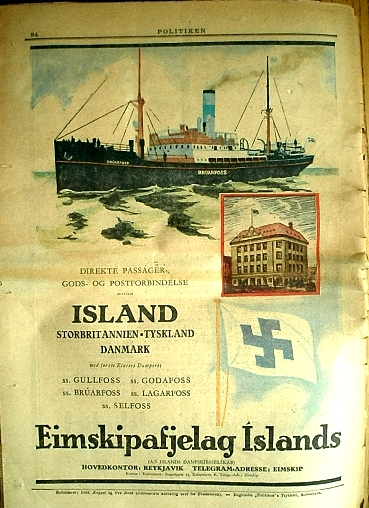
eimskip_1930.jpg

Photo credit to Vilhjálmur Örn Vilhjálmsson, https://fornleifur.blog.is
Used with permission.

The power of social media and online networking just keeps amazing me. Since starting this blog we’ve had soooo many great examples of how you all build on one another’s work and generously share with each other! It is our privilege to hold space here that helps do that.

You will remember our recent post entitled, More Cultural Appropriation: The Swastika? Well, a good friend and respected colleague of mine read it and said, “You know, Dianne, the swastika held a prominent place on a huge building, home to a major Icelandic shipping company, for decades. It’s gone now, though.” As we talked about it, she told me she’d used that story, with quite a few pictures, in a powerpoint slide presentation that she developed with a colleague.

With Thorunn and her co-presenter Avrora’s generosity of spirit, we are privileged to share with you a gift to all Cultural Detectives from them. Their slides summarize the swastika’s history, and include photos of its use in Bulgaria, Greece, Iceland, Native America, and Tibet, as well as the Nazi version. Thorunn and Avrora help you pull learning from these photos with slides explaining culture, judgments, and symbols.

Download their powerpoint slides here. And please let us know how you put them to use!

As an aside, I’d share with you that I recently met an incredibly interesting woman who is Indian and Austrian. Her stories about personal and family conflicts and learning around the swastika were really something to hear! Hopefully I might convince her to share some of them with you in a future guest post.

Cultural Detective Online is LIVE!!!!!!!!

Cultural Detective is proud to announce the new product launch of Cultural Detective Online! This tool is like having a virtual coach in your back pocket, successfully guiding you through the all-too-common missteps of cross-cultural negotiations and communications. Please check out the four videos on the home page. Today only (15-16 October, depending where you are on the planet) there is a 25% launch discount; enter promo code:   CDO-blog25  during checkout.

Huge thanks goes out to each of you who have worked with and incorporated the Cultural Detective Method into work with your clients or employee populations globally, as over the past eight years this tool has become a significant contribution to the intercultural field. Because of our clients and team, Cultural Detective has become globally recognized as one of the premier developmental tools of our time. Now we are on the cusp of very exciting and broader use of the tool through Cultural Detective Online! This new product launch furthers our mission of encouraging communities globally to prosper through intercultural understanding and collaboration.

Cultural Detective Online is useful in a broad range of contexts including global business negotiations and multicultural team effectiveness, international assignments and study abroad, and for successfully communicating within our families and communities, and within and across faith traditions.

A subscription to Cultural Detective Online offers the opportunity to explore the concepts of “culture” and “values” and how they impact communication in everyday life. It provides access to dozens of culture-specific Values Lenses and topic-specific Challenges Lenses, hundreds of real world cross-cultural incidents, and the easy-to-use Cultural Detective process for improving the ability to collaborate successfully across cultures, both on individual and organizational levels.

We are excited to announce that subscriptions are now available for individuals or groups, and we invite you to subscribe to Cultural Detective Online today by visiting http://www.culturaldetective.com/cdonline/ ! Subscriptions start at less than US$100/year, and are less for larger groups of subscribers. You will rarely find more value for your money.

Cultural Detective Online for International Teams

You’ve already told us Cultural Detective is fabulous. That it’s helped your team achieve its deliverables. That it’s rocketed your performance to new levels. That’s why we are very excited to SOON be able to offer you the Cultural Detective product line as an integrated, online system rather than as stand-alone packages! And, better yet, it’s designed as a personal coach, encouraging you and your team members to track your goals, summarize and apply your learning, and upload, debrief and share with a facilitator, team lead or each other your daily life experiences (and make accurate meaning from them).

Be sure to stay tuned for our official launch. Or, enter to win a free subscription for you or your team!

If you are unable to view the video above (if you are on an iPad or other device that doesn’t play Flash), click here to view the video on YouTube.

Please feel free to share this video with others who might be seeking a virtual intercultural coach. Please let us know what you think! Thank you!

Latino Growth in USA Signals Need for Change

Andrés Tapia has written an article for Diversity Executive, in which he outlines the need to adapt US business practices in order to attract, retain and make the most of Latino talent. In the article, he references (and gives you a sneak peak of) our upcoming Cultural Detective Latino/Hispanic.

Un Gringo Chévere! A Cool Gringo!

(English follows the Spanish)

Con el permiso de nuestros lectores gringos, este espacio se lo quiero dedicar a uno en especial. Quiero hablar de un gringo chévere con el que he tenido oportunidad de trabajar para un proyecto de inversión en Colombia. Y quiero resaltar más lo chévere que lo gringo, que dicho sea de paso él no considera ofensivo desde ningún punto de vista.

En mi país un gringo es un forastero que habla enredado. No importa si habla sueco, alemán, italiano, inglés u holandés. Un rubio (o castaño claro) de tez más clara que nuestro promedio, es gringo. Y no lo hacemos por ofender, sino tal vez porque eso quedó en el imaginario colectivo como un sinónimo de “no es de aquí”.

Este gringo chévere vivió veintiún años fuera de su país entre Suráfrica, Bahreim, Francia, Reino Unido y China. Ha dado la vuelta al mundo más de seis veces y, aunque siempre vinculado al sector financiero, ha podido trabajar en diferentes industrias que le dan un vasto conocimiento en muchos temas. Departir con él es sumamente enriquecedor.

Trabajar con este gringo es desafiante. Le admiro sus habilidades y conocimientos en el área financiera, pero él sabe que lo que más admiro es su gran capacidad de entender a los otros, de buscar similitudes y no diferencias, de centrarse en el modo de integrar las partes que se involucran en una negociación y de ver con ojos interculturales su entorno. Es un gran conciliador y excelente negociador. Además posee una gran habilidad para poner en contexto cultural las partes involucradas, casi siempre logra identificar la manera como piensa el otro.

Yo siempre le he dicho, que de lejos me parece el más intercultural de los estadounidenses con los que he trabajado. Tiene una mente global y una carrera profesional que le ha permitido desde cargos directivos confirmar que herramientas gerenciales sin aprehensión cultural no permiten un liderazgo efectivo. La satisfacción de los clientes o la motivación de los empleados se ven impactados directamente por sus expectativas y necesidades, y todos no necesitamos lo mismo.  Cuando comparte muchas de sus experiencias puedo transportarme a muchos escenarios en diferentes latitudes, y logra describir personas y entornos tan diversos sin caer en estereotipos ni prejuicios. Por supuesto que hay situaciones que agradan más que otras, pero es parte de nuestra interacción con cada entorno. Algunos sencillamente nos son más favorables.

Se ganó el título de chévere porque siempre está dispuesto a aprender, no critica sino pregunta, analiza y compara. Este gringo le da la importancia debida al entendimiento de un lugar, una cultura, un pueblo.  Es el que una vez cerrando un negocio en Medio Oriente tuvo que comer ojos de camello y aquí prueba las obleas, las almojábanas y queda encantado con las pitahayas, tanto que llega a buscarlas en su ciudad de residencia, las encuentra en el mercado chino, descubre que su sabor es muy diferente al colombiano y decide ¡comerlas con sal! Jamás he comido pitahaya con sal, aquí son muy dulces…pero esa es la interculturalidad, este gringo es del sur y dice allí comen con sal la sandía y el melón.  Cómo se dan cuenta, es un poco de cada lugar, un poco de aquí y de allá.

A veces centramos nuestros entrenamientos interculturales en aprender teorías y conocer de autores que nos han clasificado de una manera u otra. A veces nos dejamos llevar por la ilusión de pretender cambiar los seres humanos con un discurso y dejamos de lado lo simple, lo básico, como lo es el hecho que ser interculturales comienza en esa disposición misma de aceptar y reconocer.

Aceptar que somos diferentes. Reconocer que pensamos y actuamos diferente a partir del entorno que nos rodea, y de lo que nos ha sido heredado — valores, creencias, etc. Al aceptar y reconocer, se nos hacen fácilmente evidentes también los dilemas a los que nos enfrentamos en medio de las diferencias y que ponen a prueba nuestras habilidades a nivel interpersonal, empresarial y social. Al poner nuestras habilidades a favor de nuestra interacción con nuestro entorno – corporativo, social – podremos construir enlaces y puentes de entendimiento que nos permitan entonces entendernos a nosotros mismos y de esta manera entender a los demás.

Gracias gringo chévere, por permitirme trabajar contigo y aprender tantas cosas a la vez. Gracias por compartir tus aventuras en cada rincón del planeta y tus experiencias laborales y de vida con gente tan diversa. Gracias por permitirme presentarte un poco de mi país, de lo que somos y lo que brindamos.

Gracias y ¡hasta pronto señor!

With the permission of our gringo readers, I’d like to dedicate this space to one in particular. I’d like to talk about a cool gringo I had the opportunity to work with on an investment project in Colombia. And I’d like to emphasize that this cool gringo does not consider the term offensive in any way.

In my country a gringo is an outsider who talks weird. It doesn’t matter if he’s Swedish, German, Italian, English or Dutch. Someone who is blonde or has a lighter complexion than our average is gringo. We don’t say it to offend, but rather because that term has entered our collective imagination as a synonym for “not from here.”

The cool gringo of whom I’m writing lived 21 years outside his country, in South Africa, Bahrain, France, the UK and China. He’s been around the world more than six times, and while he’s always worked in the financial sector, he has been able to work in different industries that have provided him a vast knowledge of diverse subjects. To spend time with him is extremely enriching. He possesses a great ability to put things in cultural context, and is almost always able to identify how the other person thinks.

I have always said that he is by far the most intercultural of the US Americans I’ve worked with. He has a global mind and a professional career that have permitted him to ascertain which management tools permit effective leadership only when used with cultural appropriateness. Customer satisfaction and employee motivation are directly impacted by their expectations and needs; we don’t all need the same thing. When he shares his experiences I’m transported to many scenes in different latitudes, and he is able to describe diverse people and environments without falling into stereotypes or prejudices. Some situations are of course more appealing than others, as it depends on our interaction in each environment. Some situations are simply more favorable.

To work with this gringo is challenging. I admire his abilities and his knowledge in the area of finance, but he knows that what I most admire is his great capacity to understand others, to look for similarities and not differences, to focus on how to integrate the parties involved in a negotiation and watch the context with intercultural eyes. He is a great mediator and excellent negotiator.

He achieved the “cool” title because he is always ready to learn, not to critique but to ask, analyze, and compare. This gringo gives due importance to the understanding of place, culture, and people. He’s the type that, closing a negotiation in the Middle East, had to eat camel’s eyes. Here in Colombia he tried obleas (wafers), almojábanas (crullers), and was delighted with pitahayas (dragon fruit), even going so far as to try to find some where he lives. He finally found them in a Chinese market, but found they tasted very different from the Colombian variety, so he decided to eat them with salt! I’ve never eaten dragon fruit with salt; here they are very sweet. But there’s something about interculturalism. This gringo is from the southern US, where he says they eat watermelon and cantaloupe with salt. As you’ve no doubt noticed, he is a bit of every place he has lived, a bit from here and a bit from there.

At times we focused our intercultural training on learning theory and getting to know authors who have classified us in one manner or another. Sometimes we got carried away with the illusion of trying to change human beings via our conversation, ignoring the basic, simple fact that intercultural beings begin with a predisposition to acceptance and acknowledgement.

To accept that we are different. To acknowledge that we think and act differently depending on the context and on what we’ve inherited — values, beliefs, etc. Accepting and acknowledging make readily apparent the dilemmas we face in the midst of our differences, those that challenge our skills on interpersonal, organizational and social levels. By behaving appropriately to the corporate or social situation we can build links and bridges of understanding that then permit us to understand ourselves and, in this way, to better understand others.

Thank you, cool gringo, for enabling me to work with you and to learn so many things at once. Thank you for sharing your adventures in each corner of our planet, your work and life experiences with such diverse people. Thank you for giving me the opportunity to explain a bit about my country, about who we are, about what we provide.

Thanks, and see you soon, sir!

Endangered Languages Project

Experts estimate that only 50% of the languages that are alive today will be spoken by the year 2100. The disappearance of a language means the loss of valuable scientific and cultural information, comparable to the loss of a species. Tools for collaboration between world communities, scholars, organizations and concerned individuals can make a difference. Such is the raison d’être of the Endangered Languages Project, an online collaborative effort to protect global linguistic diversity.

The first thing I noticed on this site is the incredibly high quantity of red dots on the world map, each indicating a severely endangered language. The site enabled me quickly and easily to look up endangered languages in Mexico, where I live (the closest red dot to my home is the Seri language, one I’d never even heard of!). I also looked up the language that first interested me as a pre-teen in the southwestern USA: Navajo (it is labelled “at risk” and is currently a featured language on the site). Even in my adopted homeland of Japan, as I expected, the Ainu language is ranked “critically endangered.”

The languages included in the project and the information displayed about them are provided by the Catalogue of Endangered Languages (ELCat), produced by the University of Hawai’i at Manoa and The Institute for Language Information and Technology (The Linguist List) at Eastern Michigan University. The list of collaborators in the Alliance for Linguistic Diversity is indeed impressive. The project site is definitely worth using!

Watch Out! What a Values Lens is—and is Not!

Our users love Cultural Detective‘s Values Lenses. Many of them even call our toolset “Cultural Detective Lenses” rather than “the Cultural Detective Series.”

Customers tell us they use Values Lenses to:

  • Quickly build recognition that cultures are, indeed, different.
  • Establish credibility that these tools and their facilitation are effective.
  • Supplement—amplify and deepen—the analysis of a critical incident, or better understand a personal life event.
  • Reflect on ways in which they have become who they are by overlaying national, gender, generational, religious tradition or sexual orientation Lenses with Personal Lenses.
  • Contrast their “home culture” Lens with that of a new culture to predict where there might be synergy and resonance, as well as potential difficulties or challenges.
  • Learn to focus on the things that make a difference, to observe and respect deep culture, rather than becoming preoccupied with dos and don’ts.
  • Empower members of their organization to explain their culture(s) to others. Though they may not individually hold the values on the culture’s Lens, the Lens enables them to explain the larger society’s tendencies in ways that help newcomers to be successful.

All of this is fine and good, except that Values Lenses scare the bejeebers out of me!

Ever since publishing Ecotonos back in the early nineties, I’ve said that publishing a tool is like launching a child out into the world: products, like children, take on lives of their own. They do not always do what their parents or creators might have intended. Tools serve certain purposes and not others. Tools can be used expertly or misused.

Since Values Lenses can be such powerful tools, they can also be dangerous tools when misused. Thus the reason for this post. We want to make sure you understand how to use Values Lenses appropriately, and help us keep them from being used counterproductively.

So, what are Values Lenses? And what are they not?

  • Values Lenses summarize the top five to seven core values or general tendencies of a group of people, a culture. They do not apply to individuals within a culture, and the values have a complex influence on sub-cultures of the Lens culture.
  • They illustrate how members of a culture tend to see the world—looking out through the Lens, and how a culture tends to influence its members—like sun shining in through the colors of the Lens. It is important to remember it is “tend to,” not “always do.” Context is key.
  • They capture the ideal and actual aspects of a culture, intention and perception, positive and negative, yin and yang. A Lens both illustrates the values that members of a culture aspire to, and some ways in which the expression of those values might be negatively perceived by those who don’t share them. A Values Lens is a starting point for inquiry; it does not contain every value held by every member of a culture.
  • Values Lenses are tools for discovery and dialogue, clues that may give us an idea about what makes people tick. They are not yet another “box” into which to stereotype people!

Values Lenses can be extremely effective tools, and they are a key component of the Cultural Detective Method. Remember, however, that it is the process of using the Cultural Detective Worksheet that is fundamental to the Cultural Detective approach.

We’d love to hear your ideas and techniques for helping others learn through the use of Cultural Detective Values Lenses! Let us know how you are creatively applying Values Lenses in your life—personally and/or professionally.