
2014 Year in Review

240_F_71469226_XoKVyVhM4OzQ7CXxB9e3H6myQHfmjOP7The entire Cultural Detective Team would like to thank you most sincerely for being part of our community, and wish you much joy, health and success in the new year!

2014 was a big year for Cultural Detective, as we celebrated our 10th anniversary! We are thrilled to have grown into such a large and talented community of people worldwide, committed to making our world more respectful, collaborative, just and sustainable. Thank you for joining us on this very important journey!

LayeredLensesFinalThis year we were able to achieve another milestone: launching our best-selling Cultural Detective Self Discovery (currently in beta) as part of our Cultural Detective Online platform. This is a huge step forward for our small business.

We are proud that our online tool encourages people to look at themselves and others as beings that are influenced by various cultures, not just nationalities. Now, people are able to explore their individual values as well—their uniqueness—and how they’ve been personally influenced by the cultures around them.

After developing a Personal Values Lens, users can then compare their values with those of any other Values Lens in the online system. This offers a way to investigate aspects of a new culture they might resonate with or find challenging. And it provide a way to strategize about how best to adapt for success cross-culturally, while preserving their sense of self and, also very importantly, their ethics. If you haven’t yet given CD Online a go, you are certainly missing out! Nearly every day I hear a new customer tell me they can’t believe how powerful Cultural Detective Online is, and how affordable. So what are you waiting for?

One additional huge milestone in the CD Online system is the improved group functionality. We are thrilled that users within a group can now collaborate on writing critical incidents and debriefs. Think of the possibilities: your learners working together on cross-cultural stories, told from each person’s perspective! Individual learners can choose to share (or not share) their incidents with the group by submitting it to the group administrator—trainer, coach, professor or team lead. The group administrator can then request the learner to edit the incident and debrief further, or can share the incident and debrief with the entire group. This functionality is transforming the way customers use our system and develop intercultural competence. It is thrilling to witness!

online-learningBecause of these two huge enhancements to our online system, we will be adding a couple of standard webinars to our lineup. As you know, we already conduct monthly complimentary webinars introducing people to this powerful process for cross-cultural collaboration. In 2015, we will add to that lineup by offering a webinar on Cultural Detective Self Discovery, and a second one on Using Group Functionality in CD Online.

The first quarter schedule is live at www.CulturalDetective.EventBrite.com, and additional webinars will be announced throughout the year. One series we are hoping to add will deal with race and power issues, with the intent that by the end of the year we will have some constructive ideas on how to dialogue more effectively with friends, family and colleagues, and how to promote societal change and healing.

Check back frequently and please let your friends and colleagues know about these terrific professional development opportunities. We have people joining our webinars at all hours of the day and night. More importantly and unbelievably, they actually THANK us for keeping them up at 3 am! (We do schedule our webinars at different times to allow for time zone differences, by the way. It’s just that some people are more eager than others.)

In 2014, we added 5000 new readers to our blog, with readers joining us from 167 countries this past year. I find that very encouraging! Our social media reach has grown extensively. Cultural Detective has an active presence on Twitter, LinkedIn (group), Facebook (page), YouTube (channel) and GooglePlus, as well as a Pinterest board of proverbs, several ScoopIt boards, and a weekly Paper.li Intercultural Competence News Feed.

Are you curious what sorts of posts attracted all these new readers? Here is a list of the top ten most popular posts we published this year:

  1. The Nasty (and Noble) Truth about Culture Shock Published in August and already outranking posts published earlier in the year, this post contains a wealth of information, debunks a common myth, and includes free downloadable training materials.
  2. Another Intercultural Research Paper Supports the Cultural Detective Approach Published in January 2014, this post soared to the top of our list and proves you are hungry for research. This study came from Bertelsmann, Stiftung and Fundazione Cariplo.
  3. New Year’s Gift: Oldie but Goodie—The STADIApproach An excellent, tried-and-true design piece, this freebie is still yours for the downloading.
  4. Are You Nice? A guest blog post by Carrie Cameron from May, 2014, recommending to our readers the excellent work of Penelope Brown and Stephen Levinson. Congratulations and thanks, Carrie!
  5. We Are Not (Just) Our Nationalities A very important post from June of this year, we hope each and every one of you will read it and pass it around. None of us has just one story, and Cultural Detective helps us learn about the multiple cultures that influence us, while reminding us we are each unique individuals.
  6. Lack of Diversity Correlates with Religious Hostility This post looks at the powerful results of a Pew Research study and was published in April of this year. If you missed it, be sure to take a look now!
  7. Cultural Detective as a Facilitator’s Magic Tool This guest blog post by facilitator and joke-teller extraordinaire, Tatyana Fertelmeyster, is from June 2014. Congratulations and thank you, Tatyana!
  8. User Tip: Bridging Cultures Offering advice for getting the most out of Cultural Detective, this post was shared with us by long-time expert user Meg Quinn, and just published in October. Congratulations and thank you, Meg!
  9. Clean House and Change the Bedding to Greet the Lava A terrific post that came about because an esteemed colleague, Tim Sullivan, shared the video with us. TERRIFIC training material and an excellent resource on the cultural dynamics of current news! Do not miss this one.
  10. 4 Methods of Learning Culture A short and very powerful excerpt from Cultural Detective Self Discovery, published in early September and quickly gaining in popularity.
  11. Are Emoji the World’s Newest Language A world language quiz and Beyoncé video subtitled in emoji accompanied this post, published in October.

We are thrilled that our blog is now read by over 20,000 people worldwide! We would be proud to showcase the work you are doing to promote intercultural competence, so send your draft article or idea to: blog@culturaldetective.com.

Five of the posts that made it into the top ten list of most-read posts this year were actually written in previous years. Those posts include:

  1. Ten Surefire Ways to Divide into Groups Originally published in June 2013, this post hit its height of popularity in September and October 2014, with over a thousand hits each month—proving that trainers love new ideas!
  2. Five Top (Free and Easy) Virtual Collaboration Tools You May Not (Yet) Be Using Published in November 2013, this post has been a consistent reference tool for our readers ever since.
  3. Can you read this? Originally published in July 2012, this post has slowly but steadily gained popularity every month since. It takes a popular Facebook image created for Spanish readers, accompanied by a similar one created for English readers, and asks you to reflect on the definition of culture and its role in what we perceive. If you haven’t read it, you are overdue.
  4. Research Findings: The Value of Intercultural Skills in the Workplace Published March 2013, this is the post with the most popular video we have ever produced, and presents the findings of the British Council study. Videographers we are not, but even the British Council added our video to their web page.
  5. Want to Feel Ukiuki, Pichipichi and Pinpin? Japanese Food Onomatopoeia One of my personal favorites, this post has gained popularity among our food-related posts, and we know you love food!

From the list above, there are four posts that were not in our top ten for 2014, but still make the blog’s overall top ten list. Those include:

  1. Bicycling in the Yogurt: the French Food Fixation, a terrific guest post by Joe Lurie. If you speak French or enjoy eating, give it a read. Thanks again to Joe for his terrific collaboration in so many ways.
  2. “Belief Holding” as an Intercultural Competence: Religious less motivated by compassion One of my all-time favorite comics and one of my all-time favorite cross-cultural competencies (Michael Rokeach’s Open and Closed Mind), plus the findings of a UC Berkeley study.
  3. Using Film in Intercultural Education I’m very grateful this post is still in our all-time top ten, because it helps me feel our dear colleague and friend Kevin Booker is still with us.
  4. More Cultural Appropriation: The Swastika Also grateful to still see this post up high on the list, because it’s about my all-time favorite critical incident. I shouldn’t play favorites, but I absolutely love this story; it’s just so typical of what happens in Global Diversity work.

Finally, when you write a blog, you love it when someone comments. Otherwise, you can easily get to feeling you are writing in a vacuum. Hearty and heartfelt thanks, therefore, to our most frequent commenters in 2014, each of whom are extraordinary builders of intercultural competence in their own right: George Simons, Vanessa Shaw, Shan McSpadden, Anna Mindess, Jenny Ebermann, and Olivier Marsily.

We look forward to having you join us in a webinar, to reading a guest blog post you might submit, or to dialoguing with you via comments on the blog or social media. Bless you for your commitment to building respect, understanding, collaboration and justice in this world of ours! May 2015 bring you health, joy, love and success!


There is No Such Thing as Common Sense

CDModel&BridgeOrganizations want to hire employees with common sense. Parents want to raise children with good common sense. Universities and schools want to teach our young people to have common sense.

The trouble with the concept is this: my “common sense” is not your “common sense.” What’s common sense to one person is not to another. For example, if a friend stumbles and trips but is obviously unhurt, do you:
  1. Express verbal concern, asking if they are ok?
  2. Pretend you did not notice, to spare any embarrassment?
  3. Make a joke, to lighten the mood and relieve any awkwardness?
  4. Smile or laugh awkwardly, to share the embarrassment with your friend?
Each of these responses can be “common sense” in different circumstances, in different cultures. What if an angry customer calls me? A “common sense” customer service response could include, depending on the corporate culture, national, ethnic or generational culture of the customer service agent:
  1. Doing whatever is within my power, exerting all possible avenues to make the customer happy;
  2. Apologizing and then educating the customer so that they learn how something works and won’t feel frustrated again the next time; or
  3. Telling the customer “no,” as what the customer wants is not part of the contract.

What does the dictionary provide us as the meaning of the term?

Common Sense
noun Sound practical judgment that is independent of specialized knowledge, training, or the like; normal native intelligence.
Origin 1525-35; translation of Latin sēnsus commūnis, itself translation of Greek koinḕ aísthēsis

With such a terrific definition, anyone would want to have common sense. Yet, what is “sound practical judgment” in the tropics (how to stay hydrated and prevent heat and sun stroke) is quite different from “normal native intelligence” in snow country (how to stay warm and find food when it’s cold). Common sense for accountants (income vs. payments needs to balance or be positive) may be quite different than that for sales people (invest now for payoffs later). Sound judgment for women is, fortunately or unfortunately, frequently different than that for men; common sense for a Baby Boomer is often remarkably different than that of a Millennial; and US American society is finally starting to realize that common sense (survival instincts) for a black person is radically different than that for whites.

Common sense depends on where we are, how we’ve been raised, and what knowledge is “common” or shared by members of our communities. Common sense is developed so that we can survive and thrive in the world around us. Thus, common sense is really “cultural sense,” common only to those who share it: those who share a given culture.

Common sense is really “cultural sense,” common only to those who share it: those who share a given culture.

How do we say “common sense” in some major world languages? Might that provide further insight?

     Key: native language, transliteration, “literal meaning”

  • In Arabic: الحِس العام, Al ḥes al ‘aaam, “public sense” or “general sense”
  • In Chinese: 常识, chángshì, or “general knowledge”
  • In French: le bon sense, or “good sense”
  • In German: de gesunder Menschenverstand, “the healthy human sense”
  • In Japanese: 常識, johshiki, or “everyday thinking”
  • In Russian: здравый смысл, zdravyy smysl, or “healthy wit,” meaning you must be crazy not to agree with it
  • In Spanish: sentido común, or “shared sense”

This is why “cultural sense” is a core concept in the Cultural Detective Model. You can see it prominently featured in the graphic at the top of this post, along the bottom edge of the circle. What does “cultural sense” mean, exactly?

Most of us act with the best of intentions on a daily basis. We perform our jobs in ways that we feel they should be done. We treat our co-workers in ways we feel reflect sound judgment. We deal with our neighbors in ways our native intelligence tells us is neighborly. We talk to our children in ways we believe will guide and motivate them, help them become better people. We put our common sense, our cultural sense, to use everyday.

Yet, all too often our actions are misperceived, and our customers, co-workers, neighbors and family members experience negativity in our behavior. They may get angry, frustrated, or disappointed with us. They may be confused about why we do what we do. That is because their common sense, their cultural sense, is different than ours. Their assumptions about appropriate behavior in a given situation are different than our own. Their beliefs about how the world is may differ from ours.

We all aspire to have common sense and to form teams and organizations with common sense. But it is important to remember that establishing shared “common sense” is an ongoing process. Miscommunication and misperception provide opportunities for us to better understand our own values and “native intelligence,” as well as to learn more about the values and native intelligence of those around us.

So, the next time you shake your head at someone’s behavior and wonder if they have any common sense, remember that their cultural sense may just be different than your own! It takes effort, but creating a “shared intelligence” or shared common sense provides a context in which all of us can work, live, and be our best. Regular use of Cultural Detective can help you achieve just that.

Part of the #MyGlobalLife Link-Up.

How Do Universities Develop Students’ Intercultural Competence?

543266_10150772354506354_665823583_nAnd why is Cultural Detective quickly becoming a preferred tool?

University of Southern California is the most international campus in the USA. The Marshall School of Business at USC recognizes the value of intercultural competence and is committed to truly developing it in their students.

They know that the mere experience of study abroad, or working in a multicultural team, does not build competence. Experience is not learning. Learning is the sense that we make of our experience. USC knows that research shows developing competence requires ongoing, structured reflection on the part of students—with faculty guidance. They have been using Cultural Detective for the past two years, in a growing variety of programs, because they realize the tool helps them accomplish their goals.

The video below is of Assistant Dean Gita Govahi, telling us why the Marshall School of Business has chosen Cultural Detective, and how they use it:

At Cultural Detective we are particularly impressed with something USC has done: they have students generate learning material for the following semester. For example, while students are abroad and after they return, they are required to upload stories of intercultural interaction from their own experience into Cultural Detective Online. They are also required to debrief those stories, to make sense from them. Each program and each semester, faculty award prizes for the “best of” these stories and debriefs, and honor the student-authors by using them in the pre-departure orientation for the next cadre of students.

This second video shows Professor Jolanta Aritz, giving her opinion as an instructor:

I often say that launching a book or a tool into the world is much like having a child: you nurture them to the best of your ability, and at some point you just have to pray that they do good in the world. Children become independent, with minds and lives of their own. Books and tools are used by people in ways we, the authors and creators, can not always control, despite our best efforts. It’s people like the talented professionals at USC who make us very, very proud of the tool we have created. They are putting it to excellent use and students are learning lifelong skills.

We know you all are doing some incredible things with our tools. Please, share your story and make sure we know about it!

Bananas!!! Training Activity and Nourishment

images

Click on the audio player above to listen to the “Banana Boat Song” by Harry Belafonte as you read this post.

“Vitamin A deficiency is probably the third largest public health problem in the world,” according to James Dale, Director of the Centre for Tropical Crops and Biocommodities at Queensland University of Technology in Australia. “Somewhere between 600,000 and two million children die every year of Vitamin A deficiency, and another million or so go permanently blind. We’ve relied on supplements for a long time to fight malnutrition,” but supplements can be expensive, and many people don’t want to take them.

Stephen Buah, a researcher at the same institution, chimes in, “Ugandans consume about 1.5 kilograms of banana a day, so we’re talking about 400 to 600 kilograms a year. A recent health survey has actually shown that up to 30% of children in Uganda are Vitamin A deficient, and a similar figure goes for women who are pregnant.”

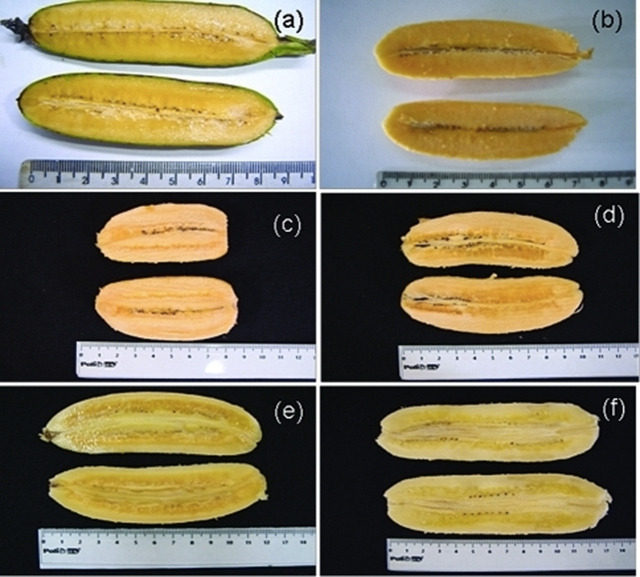
Enter a new project to bio-fortify the East African Highland cooking banana, a staple in the Ugandan diet. Our bodies convert beta-carotene to Vitamin A, so the idea is to increase the naturally occurring beta-carotene in the banana through bio-fortification, using a Papua New Guinean banana. The project has been funded by the Bill and Melinda Gates Foundation since 2005, and the “super-bananas” have just been cleared to begin human trials in the USA.

You may firmly believe that GMO foods are not the answer to world nutritional deficits, or you may applaud this effort. Either way, the project involves cultural twists and ramifications, as such projects always do. This is the interesting part for a Cultural Detective.

Beta-carotene-heavy "super banana" is very orange

Beta-carotene-heavy “super banana” is very orange

Our challenge is that the beta-carotene-heavy “super banana” is bright orange inside. This could prove an impediment to Ugandans and others adopting it into their diets and using it in their traditional dishes. Here are some thoughts from a recent article in Scientific American:

“…bananas are more than just a food staple in Uganda; they are part of the cultural fabric. The Ugandan word for food is actually the same as the word for a traditional meal made of the stewed banana: matooke. Physical attributes of the fruit itself are particularly important to Ugandans, so altering the fruit could have social consequences. For example, when matooke is prepared properly, it obtains a certain yellow color. If you are a woman who prepares matooke of the incorrect color or texture for your husband, you can be beaten.”

“Furthermore, when we asked what trait farmers would like to see most improved about their crops, they consistently selected nearly every other trait before nutrition.”
—Matthew Schnurr, Dalhousie University, Canada

There are many challenges to making sure everyone gets enough nourishment; cross-cultural understanding and communication are one of them. We applaud those who are taking on these challenges and building bridges to enhance access to healthy food and clean water.

Speaking of bananas, I heard about an activity recently that I think might be helpful to you. If anyone knows the original source of the activity, would you please share it with me, for citation here? Thank you. The instructions and debriefing below are my own, based on the idea of exploring how people peel bananas.

bananaActivity: The Banana Peel

Objectives:
Learners will discover that:
  1. Many of us go through life believing that “our way” is “the way” to do something. We often fail to investigate—or even notice—if there are other approaches to performing a task (such as peeling a banana).
  2. “Common sense” (e.g., how to peel a banana) is really “cultural sense,” common only to those who share the same learned patterns of behavior.
  3. “My way” is not the only “right way” and, in fact, may not be the “best way” for the purpose.
  4. Having alternatives, diversity, and knowing more than one way to do something are assets.

Procedure:
This is a terrific activity to conduct prior to a break, or mid-afternoon when learners may be hungry. After making sure your learners have no banana allergies or other restrictions, give each of them a banana.

Ask your learners to peel their bananas and hold onto the peels. Let them know they are welcome to eat the bananas, as well.

That’s it—quick and simple! Remember, the key to experiential learning is the meaning-making that takes place during the debriefing.

Debrief:
The debriefing is the most important part of any learning activity. It is where sense is made of the experience.

  1. Ask learners how they peeled their bananas. Have a few people share.
  2. Ask learners how they learned how to peel a banana. Who taught them? When? Where? Explain to them that this is how culture is learned. Culture is our “common sense,” the template (learned behavior, habits) for how we make decisions and interact with the world.
  3. Ask learners if everyone in the group peeled their bananas in the same way. Encourage learners to look around and discuss. Usually there will be, at minimum, two different ways learners peel their bananas, particularly if you have an international or multi-ethnic group. Many people peel from the stem end, but others peel from the “top,” as illustrated in the video below.
  4. Ask learners if they realized that others were peeling their bananas differently than they were. If they did not, why not? What “blinded” them to seeing the difference? What assumptions did they make?
  5. Ask learners if they think their way of peeling a banana is better than another way. You can ask a couple of learners to speak to this, even setting up a debate if appropriate for your context. You can even make a list of pros and cons of the different methods of peeling. Be sure to note that people tend to be perfectly happy with the way in which they are used to peeling a banana. It’s the same with culture. We think “our” way of doing things is the “right” way or, often, the “only” way. Then, we discover there are other ways of doing things.
  6. Summarize main learning points, e.g., that differences provide us alternatives and add interest to life. Rather than feeling threatened by difference or resisting it, asking people to “fit in,” we can learn from differences and choose the best ways for our team, family, or organization. In a sense, we can create a “third culture.”

I hope you’ve enjoyed the activity, as well as the info on the super-banana. If you have a favorite cross-cultural training activity that you use in conjunction with Cultural Detective, please share it! We’ll be happy to credit you and link to your page. Together, we can build intercultural competence, justice, and respect in this world of ours. Thank you for being with us on this journey!

Remember How We Used To Celebrate? Culture and Holiday Rituals

image002

Photo from Martha Stewart

Below is a guest blog post by Carrie Cameron, co-author of Cultural Detective Russia.

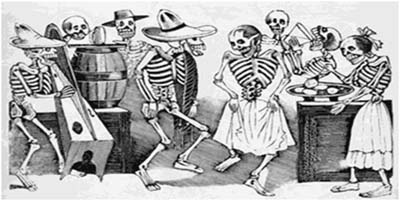
Another year of enjoying Halloween in the USA just passed. Each year, I notice a bit more shifting of the traditions. For example, commercial haunted houses are proliferating; they seem to be a way for teenagers and young adults to express their Halloween fervor. These days, children don’t only go trick-or-treating around their own neighborhoods as when I was a kid, but often their parents will drive them to neighborhoods that are known to celebrate the evening more vivaciously. Many houses and yards are decorated more and more elaborately every year, probably analogous to the Olympic-grade “competitive” Christmas decorating seen in some parts of the US these days. It’s not just a jack-o-lantern on the porch anymore! And, living in Texas, I have noticed that, over the last five years or so, Mexican Day of the Dead-style imagery has become very popular and even somewhat trendy. (Sometimes I want to remind people that Christians already have two days of the dead, forgotten by many: All Saints’ Day on November 1 and All Souls’ Day on November 2.

I look forward to Halloween and all the fall and winter holidays every year. Like most people over the age of, say, 30, I have fond memories of the way holidays were celebrated when I was a child, and contrast these memories with the way the holidays are celebrated today. But I never realized how intensely emotional and culturally bound these personal representations of holiday traditions are until I participated in an intercultural panel discussion of holidays, years ago, at a SIETAR meeting (Society for Intercultural Education, Training and Research).

modernmarketingjapan.blogspot.com

Photo from modernmarketingjapan.com

The discussion began with an Anglo-American woman telling the story of how the practically sacred—for her—ritual of decorating the Christmas tree was misunderstood by her Japanese immigrant husband. He saw it as merely one more task in the holiday preparations, like wrapping gifts or putting lights on the house. She didn’t understand his apparent indifference because the tree-trimming ritual was such a fundamental part of her assumptions about Christmas. This triggered an argument that neither of them really understood. This same woman was shocked to find out, sometime later, that one of her closest friends from a similar background also viewed tree-trimming as a task, rather than a pleasant ritual.

Photo from the Long Beach Post

Photo from the Long Beach Post

Next, an African-American man related how his grown children had begun to insist on celebrating Kwanzaa, which he definitely wasn’t interested in. After a couple of years, he began to accept and enjoy it, and Kwanzaa eventually became an important new part of their family life together.

Photo from dawn.com

Photo from dawn.com

A Pakistani man told of how he felt excluded from the apparent “universal” joy of Christmas. He struggled to understand why small gifts were presented to children in socks—didn’t that seem unhygienic? (This upset some of the Christians in the group.) He also shared his feelings about the “universal” joy of Eid, and how that deep down, he couldn’t really understand the indifference of his US American friends and colleagues when Eid came around.

A Mexican-American woman found it puzzling how many Anglo-Americans celebrated Easter as a seemingly frivolous children’s holiday. To her, it was a solemn occasion. The Asians saw New Year’s as a time to be with family, rather than at the most glamorous or wildest party of the year. (Do any of the US Americans remember having a family New Year’s Day dinner, or do you still celebrate the holiday in that way??)

But for everyone in the room, the most touching moment was when a woman told her story of growing up mainstream Christian in the US, and how her parents converted to another sect when she was about ten years old. The new sect did not permit Christmas to be celebrated with gifts, decorations, feasting, and parties—it was a serious and purely religious event. As she told of how she and her brother had suddenly become walled off from all of the traditions, activities, images, music, and food surrounding their previous understanding of Christmas, she began to cry, having never had the chance to consciously mourn and articulate this loss. All of the hearts in the room were breaking for her: same holiday—different symbolism. At that moment, I realized just how truly profound a part of our being our cultural symbols of the holidays are. They are irrational, deep within us, and sometimes the source of surprisingly intense emotion.

Having the opportunity to verbalize, compare, and process these intimate personal and cultural meanings was a tremendously valuable experience for everyone in the room. Going beyond the “face value” of the symbols to their significance was a powerful bridge-building moment, and I think we all felt the universality and peace of the holidays a little more brightly that year.

Post-script: As I was writing this, I received a text from a friend in Japan about a “peanut bird wreath.” It was accompanied by a photo of a woman wearing a pin that consisted of a silver pine cone, a yellow ribbon, and a cluster of peanuts in their shells. My knee-jerk reaction, seeing the word “wreath” and a silver pine cone, was that this was some kind of Japanese interpretation of a Christmas item. I immediately thought, “The ribbon is not supposed to be yellow, and peanuts have nothing to do with Christmas.” A few moments later I received a follow-up text informing me that they were at the Bird Festival. Gomen nasai. I guess I am a cultural being!

Are Emoji the Newest World Language?

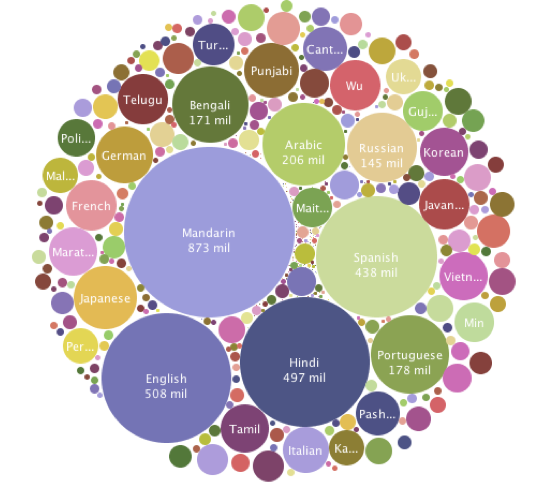
World_Languages_by_Number_of_SpeakersHow many languages are there in the world? Do you know just how many have died off? Or will go extinct soon? How about this: do you know how to rescue those that are endangered? And what about new languages emerging in our world today? Are there any? If so, what are they? Do you know the world’s newest language? We put together this short quiz to get you thinking and test your knowledge.

When a language disappears, it often takes with it a great deal of the history of a community. It limits what scientists can learn about human cognition: fewer languages mean fewer data sets. Loss of a language too often means a loss of social and cultural identity, at least partially.

Much of the cultural, spiritual, and intellectual life of a people is experienced through language. This ranges from prayers, myths, ceremonies, poetry, oratory, and technical vocabulary to everyday greetings, leave- takings, conversational styles, humor, ways of speaking to children, and terms for habits, behaviors, and emotions. When a language is lost, all of this must be refashioned in the new language-with different words, sounds, and grammar- if it is to be kept at all. Frequently traditions are abruptly lost in the process and replaced by the cultural habits of the more powerful group. —The Linguistic Society

We’ve published here on this blog several instances of native peoples in the Americas breathing new life into their languages, cultures, ceremonies and traditions, and we’d very much like to encourage such efforts. If we all do our part, we can preserve, and help thrive, many of the endangered languages in our world. And what about new languages that are emerging? Some of them aren’t really “new,” they are just redefined. Here again from the Linguistic Society:

Consider the language formerly known as Serbo-Croatian, spoken over much of the territory of the former Yugoslavia and generally considered a single language with different local dialects and writing systems. Within this territory, Serbs (who are largely Orthodox) use a Cyrillic alphabet, while Croats (largely Roman Catholic) use the Latin alphabet. Within a period of only a few years after the breakup of Yugoslavia as a political entity, at least three new languages (Serbian, Croatian and Bosnian) had emerged, although the actual linguistic facts had not changed a bit.

Others, however, really are new. My guess is that the newest language in the world just might be emoji (絵文字), or the language of emoticons. “That’s not really a language!” you might be thinking. And, right now, I would agree. But there is a definite trend.

From iConji.com

From iConji.com

  1. Emoji is one of the 260 languages into which Herman Melville’s Moby Dick has been translated.
  2. The iConji project aims to build a successful successor to Esperanto, a language that unites speakers of any language.
  3. The emoji narration of Beyoncé’s Drunk in Love (view video below) has had millions of viewers.
  4. The Unicode Consortium has standardized hundreds of emoticons, and
  5. Members of the Noun Project are working on a visual dictionary—an icon for every object—and they currently have 60,000. You can be part of history and upload your own icon!

History of Emoji Very cool to me is how emoticons came to exist. It’s all due to the low-context, difficult-to-decipher reality of digital communication. Virtual workers in the early 80s found it wise to start labeling jokes with smiles 🙂 so that others wouldn’t misunderstand them. Soon after the smiley face came the sad face 😦 and the wink ;-). Then, in 1999, NTT Docomo’s Kurita Shigetaka figured visual cues would improve the mobile phone experience. His initial efforts were inspired by manga, Japanese comics. These Japanese roots are why this language is called emoji: picture, 絵 (e), plus character, letter, or writing, 文字 (moji). We see Paleolithic cave drawings, Sumerian cuneiforms, and Egyptian hieroglyphics as languages, so hey, maybe emoji are, too. Do you speak emoji? I think this is also a generational culture difference; young people seem to speak it much more fluently than I. Guess I have some learning to do!

How to Get Promoted in 3 Hours

mexican-american flagsI’m going to tell you a real story, of an actual person, who was promoted to a management position from an administrative assistant position because of a three-hour workshop she conducted for her bosses.

How’d it happen? The woman, let’s call her Yolanda, worked for a very large multinational in Texas. The firm, of course, did a lot of business with Mexico. Over the ten years or so Yolanda had been with the company, she’d worked for a succession of bosses, most of whom did not understand Mexican culture and had committed many errors, losing opportunity and revenue, as well as credibility, for themselves and the company. Yolanda is Mexican-American, and her bosses’ actions used to frustrate and embarrass her. She could see that her bosses could be a lot more effective, she wanted to help, but she didn’t know where to begin to explain Mexican culture to her bosses. She was an administrative assistant, not a consultant, executive coach, or trainer.

Enter Cultural Detective. Yolanda looked over the Cultural Detective Mexico package. It made sense to her. She intuitively understood the values in the package’s Mexican Values Lens. She could tell stories from her own organizational experience to illustrate each value and correlating negative perception. Yolanda had so many stories, stories that were real, that had cost her company money and, in some cases, staff.

Yolanda got her four bosses to agree to a three-hour “lunch and learn,” during which she’d teach them about Mexican culture. She was excited, but she was also scared. She wasn’t a facilitator, she’d never studied culture or cross-cultural communication. But, she knew her organization, she knew her bosses, and she knew both US American and Mexican cultures. So, she gave the workshop her best.

At the outset of her seminar, Yolanda told her bosses a story—a story they clearly recognized from their own experience, a story of a time they’d been frustrated, and less than successful. They all knew the details; she had only to remind them of the event she was talking about. Yolanda drew a Cultural Detective Worksheet on the flip chart. She asked her bosses what they had done in that situation. Then, she asked them to think about why they had done what they’d done—what was the underlying “common sense” that motivated their behavior? That wasn’t so easy, but they did it. And it proved pretty insightful. They hadn’t consciously thought about the reasons for their actions, hadn’t spent time thinking about how culture-bound their behavior was. This was Yolanda’s first successful “aha” of the three hours.

Next, she asked them what their Mexican colleagues had done in the given situation. Yolanda encouraged her bosses to quote the words that were said and the actions the Mexicans took. Of course, her bosses said things like, “I couldn’t trust them,” “he wouldn’t tell me the truth,” or “they went behind our backs,” but on the flip chart she recorded the actual words and behavior of the Mexican colleagues. Yolanda then asked her bosses to do the same thing for the Mexicans that they had done for themselves. She said, “Maybe your colleagues really were dishonest, untrustworthy, conniving. But, for the sake of learning, for a few minutes let’s give them the benefit of the doubt. What could have been the positive intentions behind their words and actions? If we look at your side of this Worksheet, you have all positive intent, nothing negative. Let’s see if we can’t fill in their side the same way. Maybe at the end we decide to throw it all out, decide that they were just bad people. But first let’s see.”

Her bosses came up with several guesses—possible motivators of their Mexican counterparts’ behavior. Then Yolanda filled in a couple more, explaining the reasons these colleagues had probably acted and responded the way they had. Her bosses said things like, “That makes sense,” “I’d never considered that before,” and “so I did exactly the wrong thing; I shot myself in the foot!” Her bosses experienced their second “aha” of the workshop.

Next, Yolanda handed out a copy of Cultural Detective Mexico to each of her bosses. She walked them through the Mexican Values Lens, telling stories from her organizational experience. She asked them how they felt about each of the values, and reminded her bosses that each Mexican is unique—that the values in the Lens are societal tendencies. After introducing the Values Lens, she focused her bosses’ attention back on the Worksheet. Now they had lots of ideas about why their Mexican colleagues might have acted the way they did. And even more importantly, her bosses had lots of ideas on how they could have acted in ways more conducive to achieving their business objectives—to bridging cultures. A third round of “aha” learning was achieved.

The three hours sped by quickly. Her bosses learned so much. Their ability to do business in Mexico and with Mexicans was greatly enhanced. They learned about themselves, about their own personal and US cultural values, which enabled them to better explain themselves to any new colleague, whether Mexican, Chinese, or US American. And, very key to me, Yolanda’s bosses learned what a valuable asset she was as a cultural resource. They began using Yolanda as a sounding board, asking her to help them write emails and reports, and also to help plan strategy. Within a couple of months, Yolanda left her job as an administrative assistant because she was promoted to a more prestigious and much better paid management position. She achieved her dream of being able to travel for business, and she loved the kind of work she was able to do. Her company gained an employee who was confident and able to use her bicultural heritage in ways that added value.

Now, I’m not promising that using Cultural Detective will get you a promotion, but if you and your organization work across cultures—and what organization doesn’t these days—you will definitely gain a whole lot of skill and expertise by using Cultural Detective. Add it to your priority list! Start building your intercultural competence by attending one of our free 90-minute webinars, or subscribing to (and using!) Cultural Detective Online today.

Let’s Investigate What Makes Cultural Detective Unique

ICToolsCollage

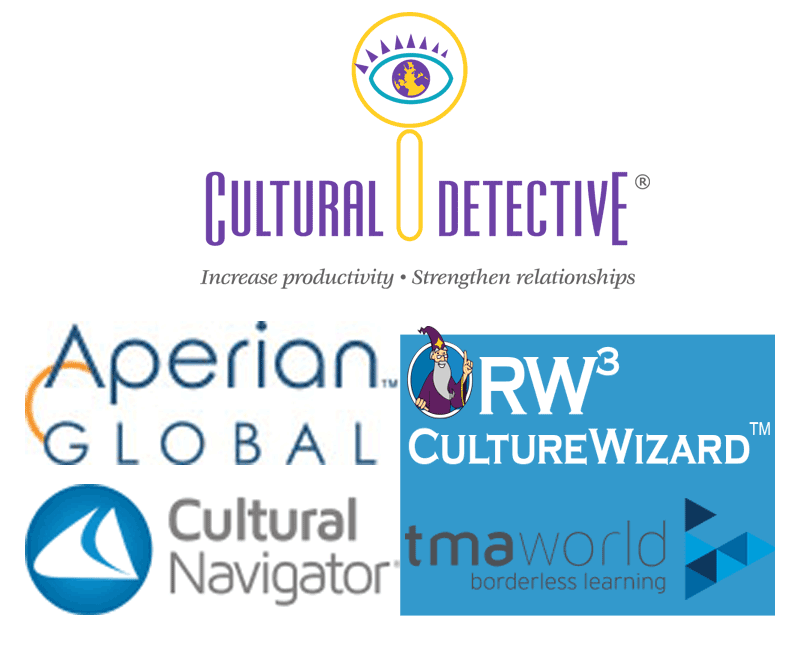
Country Navigator™, GlobeSmart®, CultureWizard™, Cultural Navigator® and their logos are the property of their respective parent companies.

We get calls and emails every day, asking us how Cultural Detective compares with some of the other intercultural tools on the market. Thank goodness people are passionate about developing intercultural knowledge and skills, and that there are so many intercultural tools available! That’s a big change in the last two decades, and a huge step in the direction of building intercultural competence in our organizations, our communities, and ourselves!

Most of the well-known development tools in the field—Cultural Detective®, Country NavigatorTM, GlobeSmart®, CultureWizardTM, and Cultural Navigator®, among others, use a values-based approach to understanding cultural differences. Such a method has proven significantly more effective than a “do’s and don’ts” approach, because behavior depends on context. Thus, do’s-and-don’ts advice is frequently erroneous because it has little or no connection to a specific situation you may find yourself confronting.

In addition to a shared focus on values, these tools share the aim of improving cross-cultural understanding. That, however, is about where the similarity ends. Comparing Cultural Detective and the other tools on the market is difficult because, according to leading intercultural competence researcher Doug Stuart, “it’s like comparing apples and oranges.” Both fruits are tasty, and they go well together in a salad, but they are oh-so-different on nearly every other criterion!

Goals

Cultural Detective (CD) is a process-based tool designed to improve communication and collaboration. The other tools mentioned above are designed to compare and contrast cultures. There are strengths in both of these goals, and they can complement one another very well. But the differing goals make these tools fundamentally different species.

Dimensions

Dimensions-based tools allow users to easily compare whether Chinese are more group-oriented than Japanese or Brazilians, and how we personally compare with the national averages of each of those places. The creators of the best of these tools conduct a lot of research to produce statistically reliable comparison data. According to Doug, the strength and weakness of a dimensional comparison (for example, where a culture or an individual stands on Hierarchy vs. Egalitarianism) is that we get a clear general picture of how different two populations may be, but no specifics on how that difference looks behaviorally. The numbers on the scales produced by these tools are culture-specific, but the categories are universal and broad.

Process

Cultural Detective helps develop skill and strategy, both culture-general and culture-specific. The core method is a process designed for use and practice over time, in specific situations and multiple cultures, so that it becomes second nature. Thus, Cultural Detective provides appropriate stimulation at all stages of intercultural competence development. Users develop critical thinking skills to discern similarities, differences, and how best to leverage them for mutual benefit.

Context

Cultural Detective is contextually grounded—the method centers on stories or critical incidents. This reinforces the need to understand people as complex individuals who are influenced by multiple cultures including gender, generation, professional training, sexual orientation, spiritual tradition, organizational and national culture, and lived multicultural experience—not just passport nationality.

Inside-Out vs. Outside-In

Cultural Detective looks at culture from the inside-out. Values Lenses focus on the core values natives of the culture hold near and dear. These are the same values that often confuse non-members of the culture and get in the way of cross-cultural collaboration. This approach enables a native, or someone very familiar with a culture, to explain the culture in a meaningful way to a newcomer. We might consider these Value Lenses as extremely culture-specific “themes” (internal discourse, logic or “common sense”) that are intimately tied to behaviors, and easily and meaningfully illuminated through stories. A culture is a unique expression of these themes, which are difficult or impossible to capture successfully within broad global dimensions.

The other tools mostly look at culture from the outside-in, comparing national cultures according to well-researched categories such as Power Distance or Achievement/Ascription. A table of cultural dimensions that contrasts China and Japan tells you nothing practical about how people behave. Comparing Cultural Detective Values Lenses for China and Japan offers a completely different, immediately applicable line of inquiry: what are the underlying motivators of people’s behavior? Both approaches have their strengths, and many successful coaches, trainers, and educators use them in combination.

Self-Assessment

Many of the other intercultural tools on the market provide users a self-assessment, which, when completed, statistically compares them with their home society and other cultures. Users love seeing themselves, their values and style, especially when correlated with numbers or illustrated in a chart—it’s interesting and engaging.

Cultural Detective users reflect on their personal values, developing a Personal Values Lens that they can compare and contrast with those of team members, their own or other cultures. One approach is dimensions-based, the other based on qualitative analysis. Used in combination, one enhances the other. But they are two very different animals.

Experiential

Cultural Detective Online encourages learners to upload and analyze real stories from their own lives. Users can easily integrate the system’s Values Lenses and Worksheet into analysis of their personal critical incidents. They can invite team members to help them fine-tune the story and the debriefing. As Doug says, “While the cultural themes of Cultural Detective Value Lenses are very transparent to natives and, thus, easily illustrated by stories, the dimensions-based tools usually require an experienced cultural trainer to create ‘critical incidents’ illustrating universal dimension differences, which are more difficult to specify behaviorally across cultures (unless one is very familiar with both cultures). Simply summarized, universal dimensions are generic; they provide a good ‘first look’ at how different two cultures might be. To actually understand those differences as they play out behaviorally, we need the Cultural Detective’s Value Lenses.”

Cultural Detective is not your father’s intercultural tool, to paraphrase an auto industry advert. It utilizes a “culture-specific” approach, while simultaneously building users’ “culture-general” understanding. It provides not just a knowledge base, but a personal skill base from which to strengthen intercultural competence. Best of all, it can be used in a variety of settings to help facilitate intercultural communication and collaboration. Our global team of 130 continues to work hard to collaboratively build a productivity tool that will deepen your learning and jumpstart your effectiveness. Give it a spin! Join us in one of our upcoming free webinars to learn more, and receive a 3-day pass to Cultural Detective Online!

4 Methods of Learning Culture

cover_selfdiscovery copy

“…the things we take for granted can trip us up and cause untold discomfort and frequently anger.” Edward Hall (“How Cultures Collide,” Psychology Today, July, 1976.)

It is generally acknowledged that it is important to understand one’s own cultural values before we can begin to understand another’s worldview, let alone develop intercultural competence. Cultural Detective Self Discovery offers a way to investigate our own values through a series of guided questions designed to help us discover more about ourselves. Below is an excerpt from Cultural Detective Self Discovery by Dianne Hofner Saphiere, George Simons, and Kate Berardo in which we address various approaches to culture learning.

Why learn about such a complex thing as culture? Certainly no one can learn everything about every other culture or even about one’s own, so why try at all?

At a very practical level, having the ability to work across cultures is a key skill in daily life and the workplace. When we think about “culture” as different organizational departments, communities, regions, companies, nations, genders, or religions, we realize that we cross cultures daily and constantly.

While we can never learn everything about every culture, what we can do is know our own values and how they affect us. We can be determined to go beyond auto-pilot thinking and to question our assumptions. We can approach working across cultures with curiosity and the intent to learn about others. Doing all this helps us to communicate more effectively and to avoid misunderstandings that lead to bad feelings and conflicts. In communities, this translates into greater cohesion. In the workplace, it means higher productivity, creativity, and synergy.

Encountering people who see the world differently, act differently, and speak differently challenges us to understand others and become more open and creative.

As Cultural Detectives, we want to understand what makes people tick. So where do we begin? There are a number of approaches to learning about cultures:

The Etiquette & Customs Approach
First of all, it is useful to know about people’s customs and habits, for example, when and how they greet others. There are many books on this topic, from professional studies to popular travel guides. There are videos and websites that help us know how to behave in everyday encounters with people who are different from us. Knowing what behavior is expected in particular situations can help us enormously—we can more quickly feel comfortable and blend in a bit, and we can prevent some unintentional insults. The downsides to this approach are that it is 1) difficult to memorize a long list of do’s and don’ts; 2) too easy to misunderstand which situations call for which behavior; 3) too easy to act stereotypically—in other words, the rules will not apply in all situations; and, of course, 4) most people do not expect outsiders to behave like insiders. Learning customs and habits is one way of getting to know others, but is not the only—nor necessarily the most effective—strategy.

The Language Learning Approach
We can also learn the language of our colleagues, clients, students, or neighbors. This could mean anything from learning their slang or TLAs (three-letter abbreviations) to mastering Arabic, Mandarin, or Verlan. Language is, of course, a key to understanding how people think, how they see the world, and what is important to them. It is supremely valuable for communicating across cultures. But, learning another tongue takes a long time. Learning their language may not be a step that you have time to take before interacting with people from another culture. Yet, you will certainly benefit from picking up that phrase book and learning at least a few polite words. So what then?

The Cultural Dimensions Approach
Another approach is to learn models of culture that help alert us to those areas where in our differences are likely to show up and where the differences will make a difference. For example, some people have a deep respect for authority and hierarchy—the boss is important and is to be treated accordingly, while other groups are very egalitarian—in meetings it is hard to tell who the boss is or even whether there is one. Or, you find that some people are likely to proceed on their own as individuals while others are inclined to act only when everybody in their group is in agreement.

To catch sight of the broad range of differences within which people think and act, it sometimes helps to use the dozen or so dimensions of difference developed by Western intercultural researchers. These models can help us recognize, classify, and respond appropriately to differences. They are categories of the ways in which people may be different. But they do not necessarily tell us why these differences work the way they do, or how these differences are viewed by our colleagues and neighbors.

Some of these categories of cultural difference ask us to look at ourselves and others to see whether…
  • We feel in control of our lives and our world, or if fate, destiny or other forces outside of us have a decisive impact on our lives.
  • We think deductively or inductively.
  • We focus, when we first work together, on taking action or on forming relationships.
  • We believe that rules and laws apply uniformly to everyone, everywhere, or that rules and laws need to be applied differently in different circumstances.

You can learn more about such categories from the work of Edward Hall and Geert Hofstede, who are among the pioneers of modern intercultural studies.

The Cultural Detective Approach
A powerful way to understand the motives of others and ourselves is by learning about core values. As a Cultural Detective we want to know what lies behind peoples’ many differences and what drives the gestures, words, and preferences of the people with whom we interact. What better way to learn than to have people themselves tell us what they value and how it motivates them to speak and act? The Cultural Detective Method begins by looking at a culture’s core values as they are seen by the people in that culture and by people who have experienced the culture deeply.

We encourage you to learn more about yourself and your core values via the Cultural Detective Self Discovery package. It has been used extensively by educational institutions, businesses, NGOs, and individuals throughout the world, and is currently available in a printable PDF format.

We are pleased to announce that Cultural Detective Self Discovery will soon be available as part of your subscription to Cultural Detective Online. Watch here for details in the coming months!

The Nasty (and Noble) Truth about Culture Shock

—And Ten Tips for Alleviating It (from our “Oldies but Goodies” series)

PolicemanThe Nasty Truth

I’ve behaved badly. It’s true, and I’m admitting it. Very publicly.

There was the time a police officer in Japan told me to move, and I stood my ground, passive-aggressively, staring him down, daring him to remove me.

There was the time at my son’s school here in Mexico, when I refused to go into a private office, insisting on talking (loudly) in the public lobby, because I was so very upset at the runaround the staff was giving me, and tired of being (privately) shut down.

Both of these were very culturally inappropriate. Heck, they were inappropriate by the standards of my birth culture! I behaved badly. I lost face. I upset others. I looked like a fool. I was ineffective. Why?

You could say these experiences reflect a lack of emotional maturity; despite my age I still have loads of growing to do. The case I’d like to make in this post, however, is that the stress of culture shock causes many people to do things we would never do in our home cultures, in a milieu with which we are intimately familiar and generally comfortable.

The Noble Truth

There are good things about this sort of “acting out.” Such meltdowns enable us to define and preserve our sense of self, identify our core values, realize how stressed we really are, so we can take care of ourselves and try to restore our equilibrium. Culture shock is also an indicator that we are indeed growing, stretching, challenging ourselves to get out of our comfort zone, and trying to adapt to new and different ways of being in the world. Thus, it is a highly worthwhile venture!

In the free download that accompanies this post, you will see a page titled, “Level of Acculturation.” This is one of those “Oldies but Goodies” that we occasionally release. Originally written back in 1989, the arrow on the page illustrates two polar extremes: the expat who makes great efforts not to acculturate, living instead much as s/he would at home; and on the other end, the expat who “goes native,” adapting to the local culture in every possible way. The key point of this piece of training material was to advise expats to try to strike a balance, to manage the polarity between the two extremes. It is important to maintain home-country connections for sanity and respite, and to build host-country connections in order to learn, grow, adapt, and fully experience one’s new home.

Please do not misunderstand me; I am most definitely not advocating behaving badly! I am, however, saying that such bad behavior happens all too frequently. The nasty truth is that inappropriate behavior, due at least in part to culture shock, is a fact of expat life that is all too often brushed under the rug. We refuse to talk about it. We may pretend it doesn’t happen, that it only happens to others, or we try to forget it did happen. We blame it on lack of competence. Of course we lack competence—we are learning and adapting to a culture that is new to us. And, it takes super-human levels of self esteem and emotional composure to navigate cultural adaptation without ever going over the edge, at least a bit.

Photo credit: Shelley Xia, USC

Photo credit: Shelley Xia, USC

What Is Culture Shock?

Culture shock is a continual, gnawing sense that things are not quite right. It is more appropriately called “cultural fatigue” or “identity crisis”: we become confused about how to accomplish our goals, and thus we start to feel powerless, to question our abilities, and lose self-esteem.

Culture shock does not result from a specific event or series of events. It does not strike suddenly or have a single principal cause. It comes, instead, from the experience of encountering ways of doing, organizing, perceiving, or valuing things that are different from ours. On some levels, this threatens our basic, unconscious belief that our encultured customs, assumptions, values, and behaviors are “right.” Culture shock is cumulative, building up slowly from a series of small events that may be difficult to identify or recognize.

General fatigue and exhaustion, susceptibility to illness, moodiness, headaches or upset stomach, weight gain or loss, irritability, restlessness, withdrawal, hostility—all of these can be signs of culture shock. A more extensive list of such symptoms is in the free download, which you are most welcome to use as our gift to you. Our only request is that you, of course, maintain the copyright information and url on the materials.

One of my friends and mentors, Bob (L. Robert) Kohls, explained the causes of culture shock in his 1984 book, Survival Kit for Overseas Living:

  • Being cut off from the cultural cues and known patterns with which your are familiar, especially the subtle, indirect ways you normally have of expressing feelings. All the nuance and shades of meaning that you understand instinctively and use to make your life comprehensible are suddenly taken from you.
  • Living and/or working over an extended period of time in a situation that is ambiguous.
  • Having your own values (which you had heretofore considered as absolutes) brought into question—which yanks your moral rug out from under you.
  • Being continually put into positions in which you are expected to function with maximum skill and speed, but where the cultural “rules” have not been adequately explained.

The W-Curve and Stages of Cultural Adjustment

Culture shock has often been introduced over the decades by using a curved line representing experience over time, either a “U-Curve” or a “W-Curve”—a sample graphic entitled “Stages of Cultural Adjustment” is included in the download accompanying this post. The idea of such curves is that our emotions go up and down as we adapt to a new home. First, we adjust superficially: learning our way around town, learning how to shop, cook, socialize, etc. Then, at some point, we are confronted with values differences that challenge us on very deep levels: a new and cherished friend seems to stab us in the back, or a work project we were confident would succeed crashes and burns, and we may have no clue why. At this point many expats return home (often at one year to eighteen months into the sojourn, according to many trainers), while others navigate their way through the challenges of shock to attain some level of ongoing effectiveness and adjustment to their new home. The U-Curve and W-Curve can be helpful learning tools, but research repeatedly shows they do not reflect reality. Actual expat experience is not nearly so neat, nor tidy, nor linear.

Kate Berardo, co-author of Cultural Detective Self Discovery and Cultural Detective Bridging Cultures, did a review of the literature on this topic, and offers a process approach for managing culture shock, which Cultural Detective first published back in 2010. Be sure to check it out if you haven’t read it, and know that these traditional models have been debunked; continuing to use them should be an informed choice.

Factors Influencing the Degree of Culture Shock

Nobody is immune to culture shock. The degree of culture shock that individuals experience varies, and can be influenced by a number of factors such as:

  1. Pre-departure expectations: Are they realistic, or overly positive or negative?
  2. Degree of change in environment, customs, language and values.
  3. Degree of personal commitment to the move.
  4. Amount of knowledge about the host culture.
  5. Flexibility: How adaptable is the individual by nature or experience?
  6. Emotional stability.
  7. Level of emotional support in new environment.
  8. Economic security.
  9. Availability of mental health services and support groups.
  10. Availability of tension relievers: How accessible are recreational facilities? Is it possible to pursue hobbies or other interests?
  11. Availability of worthwhile work.
  12. Acceptance of different values and beliefs.
  13. Ability to tolerate ambiguity: Is the individual able to tolerate situations that are unpredictable, puzzling or frustrating?
  14. Ability to be a learner: Is the individual curious about the new environment and open to learning about it?

As interculturalists, and those who work with international sojourners, I think it’s time we face up to the nasty truth: culture shock is real—it happens. And, despite the toll it takes on our relationships and our dignity, it presents an opportunity for growth and learning that we should take advantage of.

In looking through the incidents in our Cultural Detective series, most of them represent people managing their work in the best way they know how. All parties in the story have good intentions, but due to cultural differences they miscommunicate or work at odds to one another. In a small minority of our critical incidents, however, we see someone who is suffering from culture shock. They do or say something that, most probably, they would never do under more comfortable or familiar circumstances. They are probably tired, due to linguistic and cultural fatigue. They have suffered repeated blows to their self confidence: the educated adult that they are only knows enough to act with a child’s effectiveness in the new culture.

cultureshockTyttiBraysyHow Do We Manage Culture Shock?
And How Do We Deal With Those Going Through It?
(the key that’s never talked about)

Our goal is not to avoid difference and ambiguity, but, rather, to learn to bridge differences and harness them as assets. And, we want to help our colleagues, family members, employees and students while they are experiencing culture shock. How can we best do that? The free download accompanying this post provides you ten “Tips for Alleviating Culture Shock”, including such things as getting sufficient rest, reading in your native language, and cultivating a support network. Subscribing to and regularly using Cultural Detective Online will help you process your emotions and make sense of your experiences, using them as learning and development opportunities.

Another tool included in the download is a set of three worksheets on identity (“The Impact of Cross-Cultural Experience on Identity”). The first urges you to reflect on the identity you hold in various spheres of life and ways of being in your home culture(s). For example, how do you define your competence, what is your communication style, how does your occupation affect your identity, and how do you define and maintain your health? The second worksheet then asks you to reflect on how those same things might change when you relocate. The third sheet is useful for reflection before you finish your sojourn and return home. These worksheets are another tool for thinking about life transitions, differing contexts, workplaces and friendships, and how we and those around us change during our sojourns abroad.

Another key person in my early professional formation was Dr. Dean Barnlund. He taught me so much and, more importantly perhaps, inspired me. Dean focused on intercultural interaction and included art and photography in his approach, which resonated with me on so many levels. One very small piece of his work is a set of values continua that he assembled together with Kluckhohn and Morgan. I honestly can not remember if these were published in a book or shared with me in person, and my internet searches have not pointed me to their origin, either. I do know that I’ve always had their names on the bottom as originators of the tool, so the work comes from them. I see them as the precursors to the many dimensions of culture models in use in the intercultural field today. I used these continua for years to help teach people about basic cultural differences, to help expats reflect on what might be welcome changes for them, and what they might find challenging. I share it with you in the attached download (“Cultural Values Checklist”).

The final piece of material in the free download is “Culture as an Onion Skin.” I no longer use this metaphor, preferring instead the Personal Values Lens from the Cultural Detective Self Discovery. My chief concern with the onion-skin metaphor is that, when you peel back the many layers of an onion, nothing is left inside! If that lack of fit doesn’t bother you so much, the usefulness of the onion-skin worksheet is to help us think about our core values. What are the things that in life that are really important to me? I can note those that are near and dear, guarded closely, never to be negotiated, in the central portion of the onion. Then, I have other values that I still hold tightly, that are very important to me, but that are more amenable to situational variance. Those I can note on the outer layers of the onion.

Come on, be truthful now. Share with us one of your “I behaved badly” stories, and a bit about the journey you were on when it happened! Help us take the nasty truth out of the closet and into the light of day, so we can learn from it. Did the experience make you stronger? A better Cultural Detective? How did you learn to navigate your way through it?

cultureshockThis was reposted in the Velvet Ashes’ Culture Shock link-up. If the topic interests you, be sure to visit some of the other great posts, from other blogs, that are linked-up there.