Media has indeed become the strongest destructive weapon one can dare to imagine. An idiot with next to no ethics or professional knowledge can produce a stupid, laughable, amateuristic film about Islam, put it on the internet, and there you go: one ambassador murdered, hundreds wounded, thousands of others threatened with death, and escalating protests across the whole Middle East.
A silly movie with a quality that deserves to die slowly and peacefully in a mossy corner of the internet suddenly caused waves of unrest around the world.
If anyone has 14 minutes to waste and not regret, watching the trailer of “The Innocence of the Muslim” will help to confirm this and this message only: the movie was made to ignite violence, exactly what we are witnessing at the moment. Producer Sam Bacile has reached his goal, gloriously, to lure easily-agitated Muslims to fall into the trap. Now the whole world is sitting in front of the TV, thinking to themselves: “Oh dear! It is right! Islam is indeed violent.”The core of the conflict is none other than a classic mismatch in cultural understanding. For the West, it is firmly decided that freedom of speech can not be sacrificed, no matter how offensive the content may be. For many others who are religious, freedom of speech does not necessarily mean the freedom to offend others. Also herein lies the dangerous border: to what extent can something be seen as offensive?It is naiveté for protesters to demand that Western governments ban religiously offensive media. Hello? It is 2012, just in case one happens to have short-term memory. We have entered an era where a five year old children can play with their parents’ notebook and share with the whole world everything that their parents would kill to keep secret. With today’s technology, absolute control is simply impossible.Last but not least, let’s delve into that concept called “control.” Demanding protesters in Middle East should understand that governments in some Western countries do not act, and can not possibly act, like parents. They issue laws based on a certain level of democratic process, exactly the sort of democratic system that many Middle Eastern people have been fighting and dying for in the Arab Spring.
—
Chưa bao giờ mạng xã hội lại trở thành một thứ vũ khí lợi hại hơn cả một đạo quân lớn như ngày nay. Một gã đàn ông vô danh tiểu tốt sản xuất một bộ phim không chuyên, nực cười và ngu dốt nhằm vào Hồi Giáo, tung lên mạng, và thế là tằng tằng
tằng, một ông đại sứ bị bắn chết, hàng trăm người khác bị thương, hàng ngàn người bị dọa giết, và liên tu bất tận các cuộc biểu tình không ngưng nghỉ.Nếu ai đó rỗi hơi đến mức có thể vứt đi 14 phút quý báu của đời mình mà không hối tiếc, xin mời ngó thử cái đoạn quảng cáo của phim “Sự vô tội của người Hồi” (The innocence of the Muslim). Kết luận duy nhất chỉ có thể là Sam Bacile làm bộ phim này để kích động người Hồi dùng vũ lực, chính xác là kiểu vũ lực và giết chóc mà chúng ta đang được chứng kiến. Người Hồi mắc bẫy thảm thương. Các lãnh tụ Hồi giáo cực đoan thù ghét phương Tây nhân cơ hội đẩy mạnh thánh chiến. Phần còn lại của thế giới ngồi trước TV, bụm miệng kêu thầm: “Ối trời ơi! Hóa ra bọn đạo Hồi này đúng là ưa bạo lực” . Mục đích của Sam đã đạt được một cách vinh quang, chói lọi.Có 3 điểm cần nhấn mạnh ở đây. Thứ nhất, phương Tây tôn thờ tự do ngôn luận tuyệt đối. Điểm này mẫu thuẫn với văn hóa của rất nhiều đất nước cho rằng tự do ngôn luận không có nghĩa là tự do phỉ báng người khác.Thứ hai, việc những người biểu tình yêu cầu Mỹ và phương Tây phải có luật ngăn cấm các sản phẩm văn hóa xúc phạm tôn giáo là điều không thể. Bây giờ là mấy giờ rồi ạ? Năm 2012 nếu ai đó bị mắc chứng trí nhớ ngắn hạn. Một đứa trẻ con 5 tuổi có thể toáy ngoáy máy tính của bố mẹ và tung lên mạng tất tần tật những bí mật mà bố mẹ nó thà chết chứ không để lộ ra ngoài. Với công nghệ thông tin như hiện nay, cấm văn hóa mạng là một điều không tưởng.Cuối cùng, đó là việc dân biểu tình ngây thơ cho rằng Mỹ và phương Tây có thể hồn nhiên cấm cản điều này điều nọ. Luật pháp phương Tây được xây dựng trên một hệ thống chưa phải là toàn diện nhưng tương đối có tính dân chủ. Trớ trêu thay, đây chẳng phải là điều mà bao nhiêu người ở Trugn Đông đã hy sinh để đạt được trong Mùa Xuân Ả Rập đó sao?Xin gửi các bạn một hình ảnh từ Libya, nơi rất nhiều người Hồi hối hận, buồn bã về việc Đại Sứ Mỹ Steven bị giết.
By now you know that Anna, co-author of Cultural Detective Deaf Culture, writes a food blog called “Bay Area Bites.” Inspired by the aforementioned articles, her latest is called “Food Speaks in Many Tongues.” Specifically she shares with us a few French, English, German, Spanish, Danish, Turkish, Japanese, Russian, Cantonese, Farsi, Arabic, Hebrew, Yiddish, Italian, and American Sign Language food idioms.
Illustrations are by Anna’s daughter, Lila Volkas.
Con el permiso de nuestros lectores gringos, este espacio se lo quiero dedicar a uno en especial. Quiero hablar de un gringo chévere con el que he tenido oportunidad de trabajar para un proyecto de inversión en Colombia. Y quiero resaltar más lo chévere que lo gringo, que dicho sea de paso él no considera ofensivo desde ningún punto de vista.
En mi país un gringo es un forastero que habla enredado. No importa si habla sueco, alemán, italiano, inglés u holandés. Un rubio (o castaño claro) de tez más clara que nuestro promedio, es gringo. Y no lo hacemos por ofender, sino tal vez porque eso quedó en el imaginario colectivo como un sinónimo de “no es de aquí”.
Este gringo chévere vivió veintiún años fuera de su país entre Suráfrica, Bahreim, Francia, Reino Unido y China. Ha dado la vuelta al mundo más de seis veces y, aunque siempre vinculado al sector financiero, ha podido trabajar en diferentes industrias que le dan un vasto conocimiento en muchos temas. Departir con él es sumamente enriquecedor.
Trabajar con este gringo es desafiante. Le admiro sus habilidades y conocimientos en el área financiera, pero él sabe que lo que más admiro es su gran capacidad de entender a los otros, de buscar similitudes y no diferencias, de centrarse en el modo de integrar las partes que se involucran en una negociación y de ver con ojos interculturales su entorno. Es un gran conciliador y excelente negociador. Además posee una gran habilidad para poner en contexto cultural las partes involucradas, casi siempre logra identificar la manera como piensa el otro.
Yo siempre le he dicho, que de lejos me parece el más intercultural de los estadounidenses con los que he trabajado. Tiene una mente global y una carrera profesional que le ha permitido desde cargos directivos confirmar que herramientas gerenciales sin aprehensión cultural no permiten un liderazgo efectivo. La satisfacción de los clientes o la motivación de los empleados se ven impactados directamente por sus expectativas y necesidades, y todos no necesitamos lo mismo. Cuando comparte muchas de sus experiencias puedo transportarme a muchos escenarios en diferentes latitudes, y logra describir personas y entornos tan diversos sin caer en estereotipos ni prejuicios. Por supuesto que hay situaciones que agradan más que otras, pero es parte de nuestra interacción con cada entorno. Algunos sencillamente nos son más favorables.
Se ganó el título de chévere porque siempre está dispuesto a aprender, no critica sino pregunta, analiza y compara. Este gringo le da la importancia debida al entendimiento de un lugar, una cultura, un pueblo. Es el que una vez cerrando un negocio en Medio Oriente tuvo que comer ojos de camello y aquí prueba las obleas, las almojábanas y queda encantado con las pitahayas, tanto que llega a buscarlas en su ciudad de residencia, las encuentra en el mercado chino, descubre que su sabor es muy diferente al colombiano y decide ¡comerlas con sal! Jamás he comido pitahaya con sal, aquí son muy dulces…pero esa es la interculturalidad, este gringo es del sur y dice allí comen con sal la sandía y el melón. Cómo se dan cuenta, es un poco de cada lugar, un poco de aquí y de allá.
A veces centramos nuestros entrenamientos interculturales en aprender teorías y conocer de autores que nos han clasificado de una manera u otra. A veces nos dejamos llevar por la ilusión de pretender cambiar los seres humanos con un discurso y dejamos de lado lo simple, lo básico, como lo es el hecho que ser interculturales comienza en esa disposición misma de aceptar y reconocer.
Aceptar que somos diferentes. Reconocer que pensamos y actuamos diferente a partir del entorno que nos rodea, y de lo que nos ha sido heredado — valores, creencias, etc. Al aceptar y reconocer, se nos hacen fácilmente evidentes también los dilemas a los que nos enfrentamos en medio de las diferencias y que ponen a prueba nuestras habilidades a nivel interpersonal, empresarial y social. Al poner nuestras habilidades a favor de nuestra interacción con nuestro entorno – corporativo, social – podremos construir enlaces y puentes de entendimiento que nos permitan entonces entendernos a nosotros mismos y de esta manera entender a los demás.
Gracias gringo chévere, por permitirme trabajar contigo y aprender tantas cosas a la vez. Gracias por compartir tus aventuras en cada rincón del planeta y tus experiencias laborales y de vida con gente tan diversa. Gracias por permitirme presentarte un poco de mi país, de lo que somos y lo que brindamos.
Gracias y ¡hasta pronto señor!
—
With the permission of our gringo readers, I’d like to dedicate this space to one in particular. I’d like to talk about a cool gringo I had the opportunity to work with on an investment project in Colombia. And I’d like to emphasize that this cool gringo does not consider the term offensive in any way.
In my country a gringo is an outsider who talks weird. It doesn’t matter if he’s Swedish, German, Italian, English or Dutch. Someone who is blonde or has a lighter complexion than our average is gringo. We don’t say it to offend, but rather because that term has entered our collective imagination as a synonym for “not from here.”
The cool gringo of whom I’m writing lived 21 years outside his country, in South Africa, Bahrain, France, the UK and China. He’s been around the world more than six times, and while he’s always worked in the financial sector, he has been able to work in different industries that have provided him a vast knowledge of diverse subjects. To spend time with him is extremely enriching. He possesses a great ability to put things in cultural context, and is almost always able to identify how the other person thinks.
I have always said that he is by far the most intercultural of the US Americans I’ve worked with. He has a global mind and a professional career that have permitted him to ascertain which management tools permit effective leadership only when used with cultural appropriateness. Customer satisfaction and employee motivation are directly impacted by their expectations and needs; we don’t all need the same thing. When he shares his experiences I’m transported to many scenes in different latitudes, and he is able to describe diverse people and environments without falling into stereotypes or prejudices. Some situations are of course more appealing than others, as it depends on our interaction in each environment. Some situations are simply more favorable.
To work with this gringo is challenging. I admire his abilities and his knowledge in the area of finance, but he knows that what I most admire is his great capacity to understand others, to look for similarities and not differences, to focus on how to integrate the parties involved in a negotiation and watch the context with intercultural eyes. He is a great mediator and excellent negotiator.
He achieved the “cool” title because he is always ready to learn, not to critique but to ask, analyze, and compare. This gringo gives due importance to the understanding of place, culture, and people. He’s the type that, closing a negotiation in the Middle East, had to eat camel’s eyes. Here in Colombia he tried obleas (wafers), almojábanas (crullers), and was delighted with pitahayas (dragon fruit), even going so far as to try to find some where he lives. He finally found them in a Chinese market, but found they tasted very different from the Colombian variety, so he decided to eat them with salt! I’ve never eaten dragon fruit with salt; here they are very sweet. But there’s something about interculturalism. This gringo is from the southern US, where he says they eat watermelon and cantaloupe with salt. As you’ve no doubt noticed, he is a bit of every place he has lived, a bit from here and a bit from there.
At times we focused our intercultural training on learning theory and getting to know authors who have classified us in one manner or another. Sometimes we got carried away with the illusion of trying to change human beings via our conversation, ignoring the basic, simple fact that intercultural beings begin with a predisposition to acceptance and acknowledgement.
To accept that we are different. To acknowledge that we think and act differently depending on the context and on what we’ve inherited — values, beliefs, etc. Accepting and acknowledging make readily apparent the dilemmas we face in the midst of our differences, those that challenge our skills on interpersonal, organizational and social levels. By behaving appropriately to the corporate or social situation we can build links and bridges of understanding that then permit us to understand ourselves and, in this way, to better understand others.
Thank you, cool gringo, for enabling me to work with you and to learn so many things at once. Thank you for sharing your adventures in each corner of our planet, your work and life experiences with such diverse people. Thank you for giving me the opportunity to explain a bit about my country, about who we are, about what we provide.
Image of Indra Krishnamoorthi Nooyi, PepsiCo CEO (NOT the subject of this post)
A major global corporation lost a 25-year senior executive at the prime of her career. She explained in her exit interview, “The corporate culture here is too parochial and I am tired of fighting it.”
How did the company lose such a gifted executive, at the point it could have most benefited from her contributions?
I will tell you a story that she shared with me, one that will hopefully provide a taste of how she felt during her career with this company. She shared the story with me at the conclusion of a two-day training course I had conducted, in which she had just participated.
“Dianne, I have so very much enjoyed this global management training you have facilitated for us. These are exactly the cross-cultural skills and mindsets needed in our world today! You are providing us tools and processes for acknowledging and using unique contributions, hearing the voice and perspectives of all involved. This type of training is so very different from diversity training,” she told me.
Well, I happen to be a fan of diversity training. I was troubled by her words, and wanted to understand what this obviously intelligent, wise woman did not like about it.
“Well, Dianne, in my experience diversity trainers go through the motions. They do activities and they often don’t know why. I’ll give you just one example. A year or so ago I was in a senior management diversity training. The facilitator asked us to stand in a line, side by side. He instructed us to take one step back if English was not our first language. A step back if our skin color was not white. He said to take another step back if we were not Christian. A step back if we had not attended a first-tier university. On and on he cited the categories, and I took so many steps back that I was the only person at the far side of the room, alone. There were several others in between, but I was visibly alone.”
“I thought to myself, ‘YES! THIS is what I’ve been trying to tell you all these years! This company forces me to do backbends and jump through hoops in order to succeed! I have to lose who I am to influence decision making. I have to communicate in a way I dislike in order to be heard! Let’s change this corporate culture to be more inclusive!’ Oh, Dianne, I was so excited by this powerful exercise!”
“But, do you know what happened? The President of the company looked at me standing there in the back of the room and said, ‘Look how inclusive we are. A dark-skinned woman, an Indian Jain, can become a senior director!’ I thought to myself, do you know how much harder than a man I have had to try to succeed? How much harder than a white skinned person? How much harder than a European or American? He seemed to have no idea of the price I’d had to pay for my promotions. He didn’t acknowledge my accomplishments or the super-human efforts of other minorities in our organization. Rather, he prided the company on its color-blindness! And worse yet, the trainer didn’t say anything! The exercise concluded, and we went on to the next activity! Rather than a learning moment, the activity only reinforced ignorance and legitimized discrimination! I was absolutely crushed and stunned.”
Such a loss for this corporation. Such a difficult decision for this woman to have had to make. It was also a challenging position for the trainer to have been in; hindsight is 20-20 regarding how the trainer could have handled the President’s comments, and debriefed the activity, more effectively.
Let me close by asking you this: Have we all taken the time today to empathize, to put ourselves in someone else’s shoes? Have we done our part to change dysfunctional systems? What have each of us learned today?
I look forward to your comments on this post. Thanks!
—
Linked to the My Global Life Link-Up at SmallPlanetStudio.
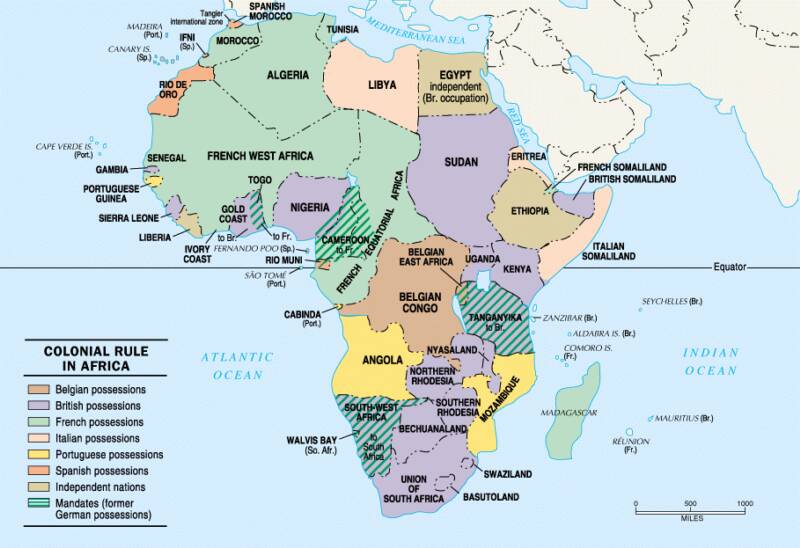
In our last blog post, The Case of Who’s in Charge: Who’s language will we speak, we got a small taste of how African colonialism and slavery have created realities that affect power dynamics and attitudes in our organizations and communities that persist to this day. From the mid-15th century to 1880, roughly twelve million Africans were torn from their homes and families from Senegal to Angola, reaching the Americas as slaves. Other millions died either during the course of enslavement in Africa or en route to the Americas. These are not facts that can or should be forgotten or set aside.
Does post-colonialism exert a negative toll on your organization and people? Is there a way to transform these potentially negative forces into tools for dialogue, understanding and organizational (and societal) transformation?
Our Cultural Detective West Africa (covering Senegal, Côte d’Ivoire, Ghana and Nigeria) authors, Doctors Emmanuel Ngomsi and Seidu Sofo, have very ably written materials that address these questions.
A short quote from their participant materials makes the main point:
“While it is true that current expatriate employees are not responsible for slavery and colonialism, or for problems linked to colonialism in this region of the world, they may nevertheless sometimes be perceived by local workers as part of the system responsible for repeated abuses. It is important to be aware of this fact, and how individual actions are likely to be understood in this historical context.
We encourage you to seize the opportunity presented by Cultural Detective: West Africa to explore the issues of colonialism and modern-day power dynamics with your West African colleagues. While there is a clear attempt on the part of many scholars (African and non-African) to blame past and current African problems on European colonization, the dynamics of colonialism and neocolonialism are complex issues, and it is crucial that business and non-business people be aware of and sensitive to the history that strongly remains in the minds of professional Africans, and often profoundly affects business relationships.
Today, there are limited forums available to openly address these issues. The workplace constitutes one of the few places in which people may discuss how they feel about historical European intervention on the continent, and perceptions of power dynamics and race relations today. Being prepared to handle these issues constructively is smart business.”
Their facilitator manual contains a section entitled “Facilitating a Discussion of Slavery and Postcolonialism,” which adds encouragement as well as how-to:
“Within the Participant Materials we have included a supplement addressing the issues of slavery and colonialism as they relate to West Africa. People are curious and want to talk about these issues, and while they can be difficult and sensitive issues to discuss, they create an important dynamic in relationships and should not be ignored. The Cultural Detective Model provides a way to explore these issues in a non-evaluative manner that can promote mutual understanding. Remember that no one point of view is ‘the truth,’ and it is rare that a discussion will result in consensus or agreement.
West Africans, Europeans, African Americans, Caucasian Americans, Latin Americans and people in the Caribbean, among others, all have different and sometimes opposing points of view on the causes and outcomes of slavery.
Contrary to a common belief among foreigners, West Africans generally are not uncomfortable talking about slavery and are willing to engage in conversations with people who sincerely and genuinely want to explore and learn about slavery and its effects.
Today throughout Africa, Europeans, Americans and other ‘White People’ may still be perceived as exploiters and neo-colonizers. Resentment remains because some believe that the best minds and bodies of the African continent were transported to the Americas. And while many agree that slavery is wrong, many West Africans also feel that if ‘Whites’ could have their way politically and socially, slavery would still be practiced.
Given the sensitivity toward these issues, foreign business owners need to be particularly mindful of their words and actions. Derogatory acts or sayings by expatriate employers directed toward West African employees are not only unkind but unwise. While private individuals react strongly to such acts, governments may also take swift and decisive action, and some have deported expatriate employers for such misconduct.
Regardless of the economic benefit that a foreign investment might bring to a West African nation, dehumanizing conduct, utterances, or work conditions are not tolerated.”
We eagerly urge you to look through these materials, and put them to good use. We would love to have those of you who work in spaces where you deal with post- and neocolonialism issues to share with us some of your experiences and learnings, so that we might all transform our practices and do our bit to heal this world of ours.
Long suspecting that Chinese languages, like French, reflect a heightened preoccupation with food, I immediately focused on the chapter, “Food as Metaphor.” There I learned that China’s classics contain many examples of how food metaphors illustrate political, social and philosophical principles. The philosopher Laozi, for instance, observed that “one should govern a large country as one would cook a small fish — very gently.”
Yanzi, another famous Chinese philosopher, noted that “harmonious government, like cooking a fish, requires a proper blend of policy, just as cooking a fish requires the proper blend of vinegar, soy sauce, salt and plum.” If ministers were blindly to follow their ruler’s behavior, it would be like boiling a fish in plain water; who would want to eat it?
Hearing this, a Chinese friend reminded me that fish frequently are associated with prosperity in Chinese culture, though “climbing up a tree in search of fish,” is to do the impossible.
Chinese philosophers, according to Food in Chinese Culture, also used food imagery to explain literary creation. “It was said that a writer’s ideas are like grains of uncooked rice. When the grains are boiled into porridge, that is prose; when they are fermented into wine, that is poetry.”
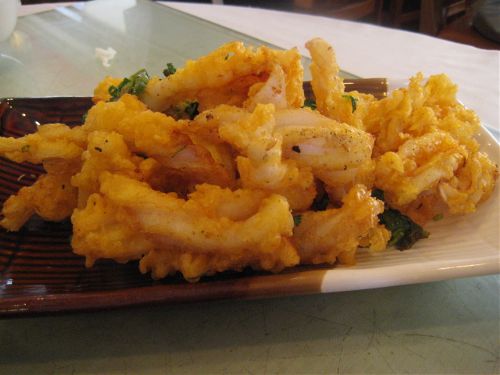
In business, “being handed a rice bowl” is to be hired, while “having your rice bowl broken,” is to be fired. A Shanghai-born MBA student explained that if you protest being fired, the boss’ response might be: “the rice is cooked,” meaning it’s too late to do anything about it (my decision is final). Perhaps you should have just performed your duties as “talk does not cook rice.” Still, a Chinese employee might counter with, “I won’t bow for five measures of rice,” suggesting he refuses to do anything demeaning for money. Bottom line: “the squid had been fried,” or he was fired. Because the fried squid is shriveled, there is a serious loss of face.
Some of my other Chinese-speaking students remind me that in business and other activities, one should remember that “if you pick up a sesame seed, you may drop a watermelon,” or lose sight of important issues because you focus on trivial matters. And certainly one should avoid “stale grain and uncooked sesame” — boring unimportant gossip.
According to Gong Wenxiang, author of Food in Chinese Culture, the Chinese word shi means “to eat” as well as “to earn a living.” So perhaps it’s not surprising that “to eat land” means to get income by renting out farm land, while “to eat salary” means to work for wages, and “to eat strength” means to survive via physical labor.
A Mandarin-speaking foodie friend described other “eating” expressions that reflect consuming, digesting, or absorbing. “Stuffing a duck,” to prepare a fine meal, also can refer to studying hard or cramming to ensure excellent test results. Winning the lottery is to “eat delicious,” prompting jealous lottery losers to “eat vinegar.” And beating mahjong or chess opponents is often expressed as “eating their pieces,” the loser expected “to eat bitter” – to be able to withstand difficulty. Perhaps this is why the plum blossom is a national Chinese symbol. Flowering in winter, it overcomes cold, just as the Chinese people survive and thrive despite hardship.
I remember a US American graduate student telling me his new Chinese roommate at UC Berkeley’s International House asked him, “Have you eaten?” The US American responded, “Not yet. Will you join me for lunch?”
The Chinese student said, “No thanks, I’ve already eaten.” The US American was confused, until someone explained that “Have you eaten?” is a common Chinese greeting which means “How are you?” or “Are you OK?” And, of course, if you haven’t eaten, you’re probably hungry and not ok.
I suspect that the examples here are but a bland reflection of the rich banquet of Chinese eating and food metaphors that are yet to be savored by non-Chinese speakers. After all, according to a Chinese proverb “eating is even more important than the emperor.”
So, an invitation to Chinese-speaking interculturalists, linguists, and anthropologists: please bring on the next course!
—
Joe Lurie is Executive Director Emeritus at University of California Berkeley’s International House, a cross-cultural communications trainer, consultant, university lecturer, and certified Cultural Detective facilitator. Another terrific article he wrote for Cultural Detective, also full of metaphor, was called “Language Under the Gun.”
I have been quite ujiuji (melancholy) in recent weeks, feeling uzu-uzu (a burning desire) to hear and speak Japanese. Living in a small city in Mexico, zenzen (almost never) can(‘t) I hear Japanese, and my heart gets shoboshobo (sad).
Joe’s recent blog post on the French food fixation only fueled more tsukuzuku (heartfelt thinking) on my part. As you may have already figured out from my wazawaza (purposeful) language, I’ve been thinking about Japanese sound symbolism, particularly in the context of food.
Whether you eat gatsugatsu (gobble or devour) or potsupotsu (little by little), if you want to talk about food in Japanese you will be using words that mimetically represent feelings and senses. As the originators of the concept of umami (pleasant savory taste — one of the five basic tastes), Japanese tend to mokumoku (munch) the way they listen: with all their senses. Taste, texture, and temperature, sound, smell and sensation… all are important elements that combine to keep people ukiuki (cheerful), pichipichi (young and vigorous) and pinpin (in good health).
While many people think of Japanese food as the tastes and textures of sashimi or sushi, a typical meal may also contain iroriro–na (a variety of) food including boiled, broiled, fried or pickled dishes, a soup and hokahoka (warm) steamed white rice. Is your stomach starting to guuguu (growl hungrily)?
For the fresh or raw component of your meal, would you like something shakishaki — crisp as in veggies or fruits, e.g., lettuce washed in cold water? Or would you prefer something more korikori — crunchy and crisp, as in fresh raw abalone? Be sure to rinse the abalone well, so it doesn’t taste jarijari (gritty) or zarazara (coarse). Maybe you want something sharishari — tangy and juicy, like an Asian nashi pear or sherbet? Or is your tongue like mine, and craves the piripiri (sting) of wasabi or fugu (blowfish)? Any of these dishes will require chokichoki (cutting with a knife) preparation.
A boiled dish in our meal might include pumpkin nimono, stewed hokuhoku (steamy and dense but not soggy), or something more furufuru (soft and jiggly) like boiled eggs. Maybe we should make some chikuwa (fish paste roll) for oden till it’s buyobuyo (swollen and soft) and fuwafuwa (fluffy)? Oh that sounds good! There are just so many possibilities! So many tastes and textures!
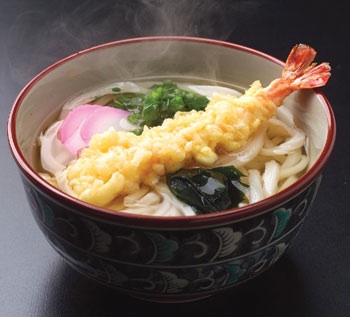
There are madamada (still) ippai-ippai (lots) more onomatopoeia to consider. What about a main dish? Shall we eat something sakusaku (freshly cooked crisp and light) like tempura shrimp? I could fry it till the shrimp inside are puripuri (plump with a nice resistance) and the breading is poripori (quietly crunchy). Perhaps you are really craving the shikoshiko (chewy, elastic firmness) of some udon noodles? Never over-boil the pasta so it becomes betobeto (sticky and gummy); rather, you’ll probably be wakuwaku (trembling with excitement) to eat your tsurutsuru (shiny and slurpy) noodles and gabugabu (drink heartily) a beer!
Instead of your normal bowl of rice you might enjoy something a bit more mochimochi (soft, sticky and chewy) or netoneto (glutinous and gummy) like sticky rice. Maybe rice that’s a bit more pasapasa (dry), like jasmine rice, sounds appetizing? The kunkun (smell) is so nice! Tabitabi (once in a while), though, I like the parapara (moist but loose) of fried rice.
Even though by now you are panpan (full), pukupuku (swollen), and maybe even kokkurikokkuri (nodding off), a karikari (hard and crispy) biscotti, a fukafuka (soft and fluffy) cream puff, or even some purupuru (wiggly, jiggly) kanten (gelatin) for dessert might refresh your soul. Maybe just a handful of something punyupunyu, like some gummis?
After such a big meal your throat may feel karakara (thirsty). I’d definitely recommend a chibichibi (sip) of a kachikachi (ice cold) shuwashuwa (sparkling) beverage over a betabeta (sticky) dessert wine. It can help settle any mukamuka (queasiness) you might have.
What if you’re not really that hungry, and you just want to mushamusha (munch)? You might want the paripari (thin and crispy) of nori (toasted seaweed) or chips. Sometimes, though, we crave a louder pachipachi (crispy snapping sound), like the baribari (loud crunchiness) of sembei (rice crackers) or the kachikachi (crisp firmness) of arare (another kind of rice cracker).
There are several categories of onomatopoeia in Japanese. They are:
Giongo (擬音語): These are the words that mimic the sounds of life around us, such as the sound of sprinkling vs. heavy rain, a door creaking or glasses clinking. Most of the food onomatapoeia above are giongo.
Giseigo (擬声語): Sounds made by people or animals, such as a cat’s meow or a dog’s woof.
Gitaigo (擬態語): Words that describe actions, such as smiling or grumbling, or psychological states, such as cheerful or irritated. Sometimes these latter are also called gijogo. Technically these are not onomatopoeia, since they don’t mimic sounds; they are mimetic words that mimic actions or emotions. However, since we don’t use these types of words often in English, and they are very important to speaking and understanding Japanese, I include them here.
I also found several online dictionaries of Japanese onomatopoeia. The first is Giongo Dictionary, where you can sign up for a daily email to keep learning. A second, if you read Japanese, is Onomatopedia. The third is a cool little resource with sounds you can listen to. Finally, though it only works sporadically, is Nihongo Resources, where you can search in English or Japanese. I hope you’ll enjoy them.
Japanese speakers: Please share some more of your favorite 擬音語 (giongo) and insights with us! There are of course regional (and personal!) variations of many of these!
Speakers of other languages: We’ll be happy to publish it if you send us your post about unique features in your language. Thanks!
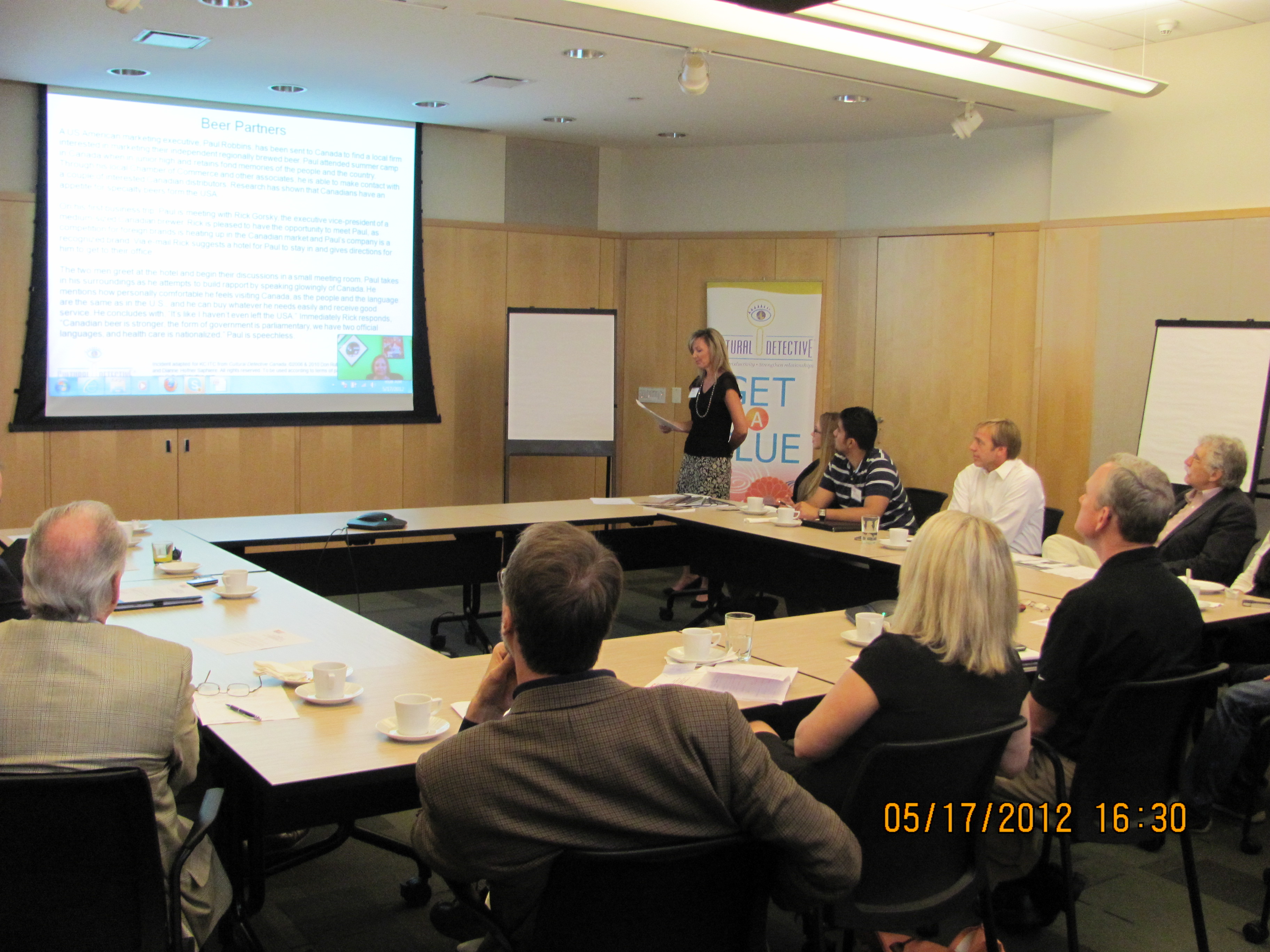
I recently had the opportunity to co-facilitate a Kansas City International Trade Council workshop focused on global expansion with Dianne Hofner Saphiere (via Skype from Mexico) and Janet Graham, who is currently a Baker University adjunct professor of International Business, Marketing, and Economics. We had a diverse group of business professionals, university professors, independent consultants and college students who actively participated in the workshop held at the beautiful Kauffman Foundation facilities.
Janet Graham brought a wealth of knowledge, discussing the various entry strategies when considering expanding globally. Some key decisions organizations must make in order to form a clear market entry strategy that she referenced include: which market to enter, when to enter the market and on what scale, and which entry mode to use? Great questions to which she provided some resources (such as globaltrade.net, globalEDGE, and WorldoMeters) to help direct the decision-making process. She quoted a local business leader from Hill’s Pet Foods who said the countries in which they have been most successful they’ve had a dedicated local distributor who markets and sells their products – and the relationship is key!
We then got to have fun bringing culture into the picture! Dianne pointed out that culture touches all parts of the strategy – communication, negotiation, competitiveness – and will ultimately affect how successful your business can be at expanding globally. I had the opportunity to showcase the Cultural Detective Method with the group by working through a global expansion incident involving a local specialty beer manufacturer exporting to Canada. We ended with an activity that tied the learning together by incorporating Values Lenses into developing strategies for expansion. The workshop was quick and to the point but brought together some true experts in the field and real world application of the Cultural Detective tools to meet local business needs.
The International Trade Council of Greater Kansas City was a gracious host and sponsor for the global expansion workshop – have you checked within your local community to partner with such organizations? It’s a great way to link the cross-cultural skill development to relevant community and business needs!
Communicating in the Language of Food, by Joe Lurie
Dear readers, I am very pleased to share with you another guest blog post by the talented Joe Lurie (though Joe, I’d prefer to “swim in the chocolate” rather than “bicycle in the yogurt”). You’ll remember that Joe previously shared with us the very popular article, “Language Under the Gun.”
—
Noting that French President Francois Hollande has been referred to by his political opponents as a fragile strawberry, a wobbly flan , a marshmallow, and “gauche caviar,” with the charisma of a smelly sausage, I was reminded of how a culture’s preoccupations shape the way language is used.
I was first introduced to the pleasures of French cuisine and its influence on the French language as a university student hitchhiking through Normandy, sampling butter, cream and apple brandy-suffused dishes.
Struggling to express myself in village bistros, I realized the truth behind Mark Twain’s observation that Intermediate French is not spoken in France. A friendly waiter, noting my frustration, reassured me saying, I know, it’s not pie, “Je sais, c’est pas de la tarte,” which means it’s difficult. He went on to add, butit’s not the end of the string beans, “maisc’est pas la fin des haricots” – a strikingly French way of saying, it’s not the end of the world.
A decade later, my French was much improved. While directing a US American study abroad program in Toulouse, my understanding of food’s influence on the language deepened. Before taking a French cooking class with my 20 students, we stopped at an open-air market. Because the line to buy cheese was not moving, our impatient guide complained: “on ne veut pas faire le poireau,” we don’t want to be like a leek. Later, we learned the translation: to wait like a motionless leek in the ground. Now late for cooking class, our guide urged the van driver to press on the mushroom! “appuyez sur le champignon!” – meaning step on the gas! Keeping a chef waiting simply would not do.
The students and I were struck by how carefully the chef conducted the lesson – artfully presenting and discussing the ingredients. The meal is serious business, not to be treated like a joke or, as the French say, like custard – c’était pas du flan ce cours de cuisine! As we prepared a fruit salad, the chef mumbled “oh purée!” mashed potatoes! – or damn it! and disdainfully discarded a blemished peach to preserve an aesthetically pleasing fruit plate.
During almost four years living in Strasbourg, Toulouse and the island of Corsica, I saw how the French passion for eating and discussing food flavored the language in tasty and unusual ways, though some expressions are unique to different regions or generations.
It began to make sense that endearing French metaphors are often rooted in the pleasures of taste. “What a nice person” is served up in French as “c’est une crème!” – what cream, while “lacrème de la crème,”the cream of creams is the best of all. And “you are so energetic” takes on a carb boost in French: you have the French fry (tu as la frite). To be in high spirits also can come from the fruit family, as in you have the peach (tu as la pêche), while having a banana (avoir la banane) is to have a big smile. And, of course, there’s the affectionate “mon petit chou,” my little cabbage.
Allusions to food also season the language of love. A broken-hearted UC Berkeley student of mine from Marseille described her flirtatious boyfriend as a Don Juan with the heart of an artichoke,“quelqu’un qui a un cœur d’artichaut,” offering each of his lovers a leaf from his heart. He was skilled at making romantic advances or as my student put it: serving up a dish, “faire du plat à quelqu’un,” a prelude to going off to the strawberries,“aller aux fraises,” to enjoy an erotic interlude.
Even insults and put-downs easily spring from the tongue as if from a farmers’ market. An idiot or jerk, for example, can be described in French as what a pickle! (quel cornichon!); an utter squash (une vraie courge); such a noodle! (quelle nouille!); or as having a green pea in the brain! (avoir un petit pois à la place du cerveau!). When struggling to drive in France, I’ve heard irate, gesturing French men speed past, yelling “espèce d’andouille!” – piece of sausage!– or, you imbecile!
I remember a heated debate in a Paris café about a Gerard Depardieu film. A friend dismissed it as a turnip, “un navet,”a startling vegetable metaphorfor atrashy film. When he called the actor a horrible drunk, an indignant Depardieu fan interrupted with: shut yoursmelly Camembert mouth! “ferme ta boîte à Camembert!”
Just as food evokes passion in France, its metaphorical expressions enliven debate. Butting in on a conversation is to bring your strawberry, ramener ta fraise.Being overly inquisitive about someone’s private life could provoke an acerbic “occupe-toi de tes oignons!” mind your own onions! the French version of mind your own business. But perhaps the classic French way of ending an argument is go cook yourself an egg, “va te faire cuire un œuf,” or go to hell.
Traveling through the Pyrénées with a French couple, my wife and I enjoyed great food and spirited conversations, especially about politics. When the husband praised Sarkozy, his wife sneered that the former President is overly dramatic – making a big cheese out of nothing, “il fait tout un fromage de rien du tout.” She added, you can’t tell if he’s talking about pork fat or pork meat, “on ne sait pas si c’est du lard ou du cochon,” you can’t tell if he’s lying or telling the truth. And she believed Sarkozy had casseroles hanging on his butt – “des casseroles au cul” – a scandalous past.
While serving as Dean of Students at an international college in Strasbourg, I was struck by how much my French colleagues valued using words precisely, reflected in the pervasive use of the verb “préciser.” I chuckled when I heard some professors describe student papers that lacked clarity. They complained that these students were lost, bicycling in the sauerkraut, pédalant dans la choucroute. In other regions, one might say bicycling in the yogurt or couscous. And then there’s swimming in chocolate, nageant dans le chocolat, or skating in the mayonnaise, patinant dans la mayonnaise – getting nowhere. Outside the college, I heard other vivid ways of describing confusion such as being in the soup, the pate or the cabbages (être dansle potage, le pâté or les choux).
Recently, I saw an exasperated French TV commentator despair over the French economy by throwing up his hands exclaiming what a salad! “quelle salade!” what a mess! And then he finished with the carrots are cooked! “les carottes sont cuites!” meaning it’s all over.
If one is unemployed and grouchy or as the French say, “pasdans son assiette,” not on your plate, landing a job would help to putbutter on the spinach “mettre du beurre dans les épinards,” to make things better. And then it’s time to put your hand in the dough, “mettre la main a la pate” – get down to business. After all, you’ve got to defend your steak, “défendre ton bifteck,” as in look out for your interests.
Speaking of steak, making a living is gagner son bifteck, to earn one’s steak; while making a profit is to prepare one’s butter, faire son beurre. And to have a pancakeavoir de la galette, is to be rich. Assuming pancakes are your goal, you’ll have to go all out, put on the sauce, mettre la sauce, and be prepared to make a strong sales pitch, vendre ta salade, by selling your salad.
A UC Berkeley graduate student in computer science from Tours told me he was building a start-up company – “une jeune pousse,” a young sprout and didn’t know what to expect or what sauce he would eat, “ne pas savoir à quelle sauce on va être mangé.” He knew he had bread on the board, avoir du pain sur la planche, a lot of work to do, but realized that while dealing with potential investors he had to avoid being rolled in the flour, être roulé dans la farine – duped. Otherwise, he risked eating the frog, manger la grenouille – going bankrupt. He didn’t want to end up without a radish, ne plus avoir un radis, or as we would say, without a cent. All his dreams for nothing – “pourdes prunes.” Still, if he becomes successful like a Bill Gates, he’s apt to be called a large vegetable, une grosse légume, and be among the grated cheese, le gratin – the elite.
The versatility of the cheese metaphor in a country with hundreds of cheeses is not surprising. “A dessert without a cheese is like a beautiful woman with only one eye,” observed Jean Brillat-Savarin in his Physiology of Taste. His famous 19th century book, exploring the nuances of cuisine – still is sold in France. And no wonder, with a line like: “He who invents a new dish will have rendered humanity a greater service than the scientist who discovers a planet.”
Today, as French supermarkets and fast food restaurants continue to proliferate, gourmands refuse to compromise or cut the pear in two, couper la poire en deux, in defending their culinary heritage. For more than twenty years, during “La semaine du goût,” Taste Week, thousands of chefs visit schools across the country. They teach children to appreciate fine food; make a baguette, a mousse au chocolat; appreciate a bouillabaisse; and learn the anatomy of the tongue. Restaurants with Michelin stars develop special meals for young children. And chefs are invited to daycare centers to prepare gourmet menus.
Will this unique early training insure the survival of the refined French palate and the nourishment of its language? A master chef is likely to respond, of course, “mais oui, c’est du tout cuit” – it’s completely cooked – it’s in the bag.
—
Joe Lurie is Executive Director Emeritus at University of California Berkeley’s International House, a cross-cultural communications trainer, consultant, university lecturer, and certified Cultural Detective facilitator. Another terrific article he wrote for Cultural Detective, also full of metaphor, was called “Language Under the Gun.”
You could say my Mama was a modern-day pioneer. She packed up one suitcase for the three of us — for herself and her two young daughters — and traveled West for the opportunity to reinvent herself, escaping totalitarianism through the seemingly impenetrable Iron Curtain. That was a quarter of a century ago. Still, after so many years, a mother myself, I have yet to truly commune with the place where I live, feeling no tangible connection to the land here.
Why so disconnected? This land seems foreign and not yet part of my “cellular memory” shaped by centuries of Central European living. It is not where my ancestors are buried. In my life, I’ve moved too many times to count, skirting the land, speeding along its slippery surface as if it were ice. Like the original pioneers, and a great many modern-day transplants and migrants, I have internalized the frontier as a state of mind, to paraphrase Native American activist Winona LaDuke. She faults our society’s culture of transience, our belief that a greener pasture lies somewhere else, calling it a psychosis, for disconnecting us from our responsibility to place.
Writer and Mayan shaman Martin Prechtel explains the underlying cause of the westward migration and transient nature of our society as the modern culture’s inability to feed the spirit world from which we come, and our failure to mourn our ancestors which includes acknowledging the damage they have done to this world. He says:
“If this world were a tree, then the other world would be the roots — the part of the plant we can’t see, but that puts the sap into the tree’s veins. The other world feeds this tangible world — the world that can feel pain, that can eat and drink, that can fail; the world that goes around in cycles; the world where we die. The other world is what makes this world work. And the way we help the other world continue is by feeding it with our beauty. All human beings come from the other world, but we forget it a few months after we’re born. This amnesia occurs because we are dazzled by the beauty and physicality of this world. We spend the rest of our lives putting back together our memories of the other world, enough to serve the greater good and to teach the new amnesiacs — the children — how to remember.”
This rings so deeply true for me I weep when I think about it. I live in a new country, a land where I’ve inherited other ancestors’ pain, and I struggle with how to honor it so that I can develop a personal connection and a sense of responsibility to this place. From studying history, I know the magnitude of pain my current life is built on is unfathomable. Between 1774, the year Europeans first arrived on the Northwest Coast, and 1874, an estimated 80 percent of the indigenous population had been decimated by European diseases, including smallpox and measles. According to University of Washington’s Centerfor the Study of the Pacific Northwest, across the US, “a rough estimate holds that Old World diseases depopulated native societies by about 90% within the first century of contact.”
And the assault on native tribes and the earth continues. In the Pacific Northwest, for instance, as little as three percent of old growth forest is what may be left.
“The question is: how do we respond to that destruction?” Prechtel says. “If we respond as we do in modern culture, by ignoring the spiritual debt that we create just by living, then that debt will come back to bite us, hard.”
In fact, we will literally be — and already have been — haunted by the ghosts of our ancestors if we continue not paying homage to them. “Ghosts will actually chase you,” is how Prechtel describes our predicament. “And they always chase you toward the setting sun. That’s why all the great migrations of the past several thousand years have been to the west: because people are running away from the ghosts. The people stop and try to live in a new place for a while, but the ghosts always catch up with them and create enormous wars and pain and problems, which feed the hungry hordes of ghosts. Then the people continue on, always moving, never truly at home. Now we have an entire culture based on our fleeing or being devoured by ghosts.”
He suggests that one way to honor our predecessors and repay the spiritual debt “is simply by missing the dead. . . as (expressed by) a loud, beautiful wail, a song, or a piece of art that’s given as a gift to the spirits.” If we don’t do this, we are “poisoning the future
with violence” against other beings and the earth itself because we then have no understanding of home.
Prechtel’s insight, I believe, is the answer to healing and to reconnecting us to our past and the earth. In order to “be at home in a place, to live in a place well,” we must do the following, he says. “We first have to understand where we are; we’ve got to look at our surroundings. Second, we’ve got to know our own histories. Third, we’ve got to feed our ancestors’ ghosts” by grieving. We do this by using the gifts we have been given by the spirits to make beauty.”
As global nomads, globetrotters or migrants with no deep commitment to one place we inhabit and its history, we could be doomed. As LaDuke urges, our mantra should be “the Holy Land is here, not somewhere else.”

 Media has indeed become the strongest destructive weapon one can dare to imagine. An idiot with next to no ethics or professional knowledge can produce a stupid, laughable, amateuristic film about Islam, put it on the internet, and there you go: one ambassador murdered, hundreds wounded, thousands of others threatened with death, and escalating protests across the whole Middle East.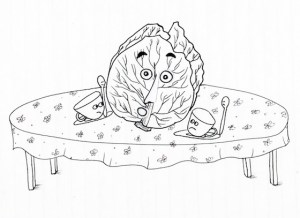







 Communicating in the Language of Food, by
 Cultural Detective Blog