Benchmark Statement on Intercultural Competence: AEA

AEA statement coverDo you want to promote intercultural competence in your organization or industry? Are you looking for some guidance? A blueprint? A success story? If so, do I have a “Cultural Effective” for you!

Just over a year ago, friend and colleague Stella Ting Toomey and I had the distinct pleasure of attending the American Evaluation Association‘s annual conference as invited speakers. There I was pleased to witness a commitment to responsible inclusiveness that was truly state of the art.

Six years of diligent work by a task force and other concerned individuals had resulted in a theoretically sound and practical Public Statement on Cultural Competence in Evaluation (AEA 2011, Fairhaven, MA USA).

There is so much about this public statement that stands out for me, not least of which is a definition of culture that is at least on a par with the best of what I’ve seen come out of the intercultural communication field!

Culture can be defined as the shared experiences of people, including their languages, values, customs, beliefs, and mores. It also includes worldviews, ways of knowing, and ways of communicating. Culturally significant factors encompass, but are not limited to, race/ethnicity, religion, social class, language, disability, sexual orientation, age, and gender. Contextual dimensions such as geographic region and socioeconomic circumstances are also essential to shaping culture.

Culture is dynamic, fluid, and reciprocal. That is, culture shapes the behaviors and worldviews of its members and, in turn, culture is shaped by the behavior, attitudes, and worldview of its members. Elements of culture are passed on from generation to generation, but culture also changes from one generation to the next.

Culture not only influences members of groups, it also delineates boundaries and influences patterns of interaction among them. Evaluators frequently work across these boundaries.

I remember my excitement the last couple of times a book has been published with “intercultural competence” in the title. If I am truly honest, I will admit to you that I’ve been disappointed. Amidst good work and steps forward, the books I’ve reviewed rehash a lot of what I feel is old and tired or, even, counter-productive to good practice. But this AEA statement! How do they define intercultural competence? For me it’s spot on — both theoretically sound and skillfully applied!

Cultural competence is not a state at which one arrives; rather, it is a process of learning, unlearning, and relearning. It is a sensibility cultivated throughout a lifetime. Cultural competence requires awareness of self, reflection on one’s own cultural position, awareness of others’ positions, and the ability to interact genuinely and respectfully with others. Culturally competent evaluators refrain from assuming they fully understand the perspectives of stakeholders whose backgrounds differ from their own.

Cultural competence is defined in relation to a specific context or location, such as geography, nationality, and history. Competence in one context is no assurance of competence in another. The culturally competent evaluator (or evaluation team) must have specific knowledge of the people and place in which the evaluation is being conducted—including local history and culturally determined mores, values, and ways of knowing.

The culturally competent evaluator draws upon a wide range of evaluation theories and methods to design and carry out an evaluation that is optimally matched to the context. In constructing a model or theory of how the evaluand operates, the evaluator reflects the diverse values and perspectives of key stakeholder groups.

It is tailor-made for a Cultural Detective: process-based lifelong learning (CD Worksheet); knowledge of self and others and the ability to bridge (3 fundamental CD capacities); situation-specific, contextually grounded effectiveness (CD Critical Incidents); grounding practice in theory (pulling salient theoretical teaching from practical experience); and acknowledging people as complex amalgams of the influences of multiple cultural influences (layering Lenses).

The AEA statement includes the following content:

The Role of Culture and Cultural Competence in Quality Evaluation

  1. What is culture?
  2. Evaluations reflect culture.
  3. What is cultural competence?

Why Cultural Competence in Evaluation Is Important

  1. It is an ethical imperative.
  2. Validity demands it.
  3. Theories are inherently cultural.

Essential Practices for Cultural Competence

  1. Acknowledge the complexity of cultural identity.
  2. Recognize the dynamics of power.
  3. Recognize and eliminate bias in language.
  4. Employ culturally appropriate methods.

The AEA’s blog and their annual conference include lots of project examples and discussions about how to conduct culturally responsible evaluation, through which I’ve witnessed honest dialogue about successes and difficulties. Intercultural competence in evaluation has definitely become an organization-wide effort and an ongoing process for the AEA membership.

The work of the task force continues through today, as they do their best to develop cultural competence in evaluation via education and training, within and outside the AEA, as well as by sharing the public statement and what they have learned via the process they’ve engaged. I am proud to have had a very small role in their extensive process, and pleased to be able to help share it so that others can leverage their work.

Kudos to Dr. Melvin Hall, Cindy Crusto, the American Evaluation Association, and all of those involved in this terrific effort! I know they join me in hoping that their efforts might help you further yours. I will close with an excerpt from their closing:

Evaluators have the power to make a difference, not only directly to program stakeholders but also indirectly to the general public. This is consistent with the Guiding Principle that obliges evaluators to consider the public interest and good in the work they do. In a diverse and complex society, cultural competence is central to making a difference.

Cultural competence connects with and complements existing knowledge and skills in the field. It offers both opportunities and challenges for evaluators. Cultural competence presents evaluators with new horizons for learning, opportunities for renewal, and the potential to deepen understanding of one’s own work in all contexts. Cultural competence challenges evaluators to deepen their self awareness and sensitivity in terms of their own cultures and those of others.

Many evaluators are actively exploring the terrain of cultural competence. They are expanding the boundaries of what it means to respond to cultural diversity in authentic and respectful ways. This statement invites new conversations and connections to advance this sensitive and exciting work.

Happy New Year! New Year’s and Calendars Around the World

WorldCalendars

Happy New Year!!

Our greetings are sincere; we wish the best for our colleagues, partners, and friends. Intent is important. However, even the most sincere greetings, when unaccompanied by a broader mindset of cross-cultural awareness, can come out sounding neocolonialist, disrespectful or just plain ignorant.

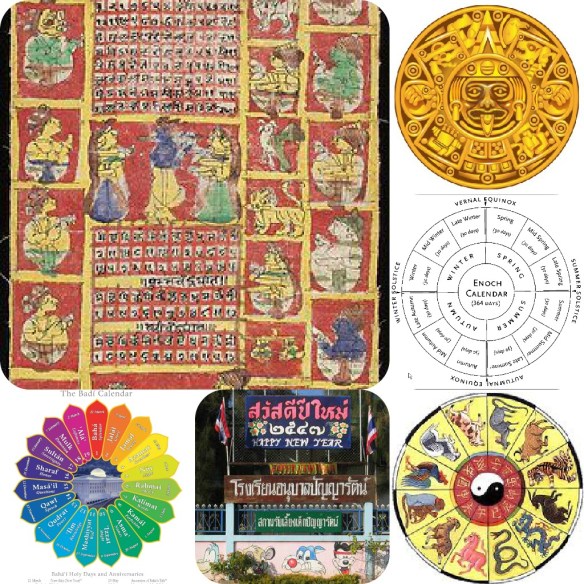
Most non-Chinese know that Chinese New Year often happens in February and is based on a lunar calendar. Many non-Jews are aware that Rosh HaShanah is the Jewish new year, and that it usually occurs around September. But what about other nations, cultures and traditions: when do they celebrate their new year? And how can we demonstrate cross-cultural sensitivity when we wish to express appropriate New Year’s greetings?

The first step is to recognize our own Lens, our own cultural filters. A “happy new year” greeting focused on January 1, 2013 is based on the Gregorian calendar, use of which was ordered by Pope Gregory XIII in 1592. Even Protestant Europe was slow to adopt this calendar, but over the centuries it has gained widespread use to become today’s de facto international standard. Most countries in the world now use it as their sole civil calendar, with exceptions including Saudi Arabia, Iran and Afghanistan. Countries that use another official calendar alongside the Gregorian include India and Israel. To detach the Gregorian calendar a bit from its Roman Catholic roots, it is also called the civil calendar or Common Era (CE) calendar.

Having a recognized international standard is a major change. Thirty-five years ago, when I first started working with a telex machine in Japan, I had to convert dynastic dates to CE dates as part of my daily tasks (I also used a HUGE kanji typewriter that provided me a daily physical workout, prior to the advent of word processing). Now, the general acceptance of the CE calendar is a sign of how much cultures that did not traditionally use the Gregorian calendar have adapted in order to more easily collaborate. Of course, another point of view is that this adaptation shows the success of the Christian colonialists imposing their standard on the rest of the world.

Either way, there is a great need for those of us comfortable with the Common Era calendar to learn a bit about other world calendars, to gain a basic knowledge about and be able to communicate respect for them. Thus, the second step in building cross-cultural competence is to develop our curiosity and knowledge about world calendars.

While the CE calendar is in popular use, alongside it and sometimes instead of it people around the world use solar calendars, lunar calendars, lunar-solar calendars, arithmetic and astronomical calendars. You may see dates you don’t recognize in newspapers when you travel, or in official government or religious documents. Non-Gregorian dating is commonly used to determine holy days, holidays and festivals in many of the world’s traditions. These local, regional, and religious calendars are frequently used to report birth and death dates, and major life and world events. It can get confusing for the international traveler or global nomad, not to mention the unwitting blogger or small business person with an Internet site! There are seven billion people on our planet, and according to my quick calculations, fewer than 10% have primarily used a Gregorian calendar for even most of my lifetime.

How can we navigate the multitude of calendars in our world? Surely we can not be expected to understand or be fluent in all of them. How can we show sensitivity, respect, and a bit of knowledge, rather than arrogance, ignorance, or insult? The third step is to bridge the differences — to understand and learn to work with our partner’s or customer’s traditional calendar.

6 Tips for Partnering with People Who Use
Calendars Different from Yours

  1. Remember that the Common Era calendar is not the only calendar in the world.
  2. Realize that it’s origins are in western Christianity. Avoid the use of “BC,” which refers to “before Christ,” and “AD,” the Latin term Anno Domini. Instead, use “BCE” (Before the Common Era) and “CE” (Common Era).
  3. Do a bit of research about your major customers and partners. What are their spiritual practices? Their ethnic backgrounds? Where are they based geographically? Once you’ve done your homework, you’ve acquired a very basic level of cultural literacy regarding possible calendars your colleagues might use.
  4. Ask them. Asking how an organization and a community dates documents, and how they calculate and observe holidays, shows that you know there are many ways of doing things, that your way is not the only way. It demonstrates a respect for other traditions and helps to build relationships based on mutual trust.
  5. Respect your colleagues’ holidays. If you are told that business closes on certain days, don’t try to undo centuries of tradition. I have so often seen this error committed during my career. An executive insists that employees work on a day that is usually a holiday, as the organization is on a deadline. In the short term, this strategy may be successful. But the long-term negative consequences, in terms of lost loyalty and reputation are immeasurable. Better to focus on outcomes: how can we meet this deadline? Brainstorm with your employees and partners to find mutually acceptable rather than unilateral ways forward.
  6. Offer New Year’s and other holiday greetings as appropriate to your colleagues’ traditions. That usually means that a New Year’s greeting on January 1st will be well received, and often means that another greeting, on their calendar’s New Year, will be even more special. Make a note in your calendar to jog your memory. Such a practice is a solid and frequent reminder that our way is not the only way.

While far from a complete list, I did some research to produce a bit of a guide (below) to some of the world’s calendars in current use. Please note any corrections in the “Comments,” and we will edit as needed. Thank you!

  • Bahá’í (Badí‘): The year 170 BE in the Bahá’í calendar will begin on March 21, 2013 (spring equinox), the 1st (or Bahá) of the month of Bahá in the year Abhá. The Baha’i calendar begins with Bab’s declaration in 1844.
  • Chinese (Mainland): The first day of the year of the Snake 4711 will be February 10, 2013. Legend has it that the Emperor Huangdi invented the calendar in 2637 B.C.E.
  • Chinese (Republic, Minguo): January 1st will bring in the year 102 in Taiwan, Kinmen and Matsu. The calendar began in 1912, the year of the founding of the Republic of China.
  • Coptic (Alexandrian): The Feast of Neyrouz or New Year’s 1729 AM (Anno Martyrum or “Year of the Martyrs”) was September 11, 2012.
  • Eastern Orthodox (Julian): The first day of the year 2013 was on December 19, 2012. It may be worthwhile noting that both Coptic and Eastern Orthodox Christians celebrate Christmas on January 7th (not December 25th).
  • Ethiopian (Ge’ez): Enkutatash, or the new year 2005, began September 11, 2012.
  • Hebrew (Jewish): The year 5773 began on the 1st of Tishrei (the 7th month in the Jewish calendar), or September 16, 2012 — Rosh HaShanah, the day Adam and Eve were created. The Jewish calendar has another New Year’s, the 1st of Nisan (the first month). It will be on March 12, 2013, and is used as the new year to order the holidays. It is seen as the anniversary of the founding of the Jewish people.
  • Indian National Calendar (Saka): The 1st of the month of Caitra, year 1935, will fall on March 22, 2013. The current Saka era began in 78 CE.
  • Indian Popular Calendar (Vikram Samvat): The year 2069 will begin the first day after the new moon in the month of Chaitra, April 11, 2013 — Hindi New Year.  In the Gujarati tradition, it began on the day after Diwali, on the 1st of kartak or November 14th. The calendar was created by the Emperor Vikramaditya of Ujjain following his victory over the Shakas in 56 BCE.
  • Indigenous, First Nations, and Native Peoples: There are many communities and much diversity worldwide. A lunar calendar is generally used and the year revolves around the seasons.
  • Islamic (lunar Hijri): The year 1434 AH began on the 1st of Muharram, November 15, 2012. The Islamic calendar begins when Muhammad emigrated from Mecca to Medina in 622 CE.
  • Japanese: January 8th will bring in the 1st of the year Heisei 25, which began when Emperor Akihito took the throne in 1989 (year one).
  • Mayan: A new baktun or cycle begins December 22, 2012.
  • Persian (solar Hijri): March 21st, or the 1st of Farvadin, will greet the year 1392 SH. It is determined by the spring equinox. Norouz or Persian new year has been celebrated for at least 3000 years and is rooted in the Zoroastrian tradition. The calendar marked its beginning in agreement with the Islamic calendar based on Muhammad’s emigration from Mecca to Medina (Hegira). Due to the Persian solar adjustment to the Islamic lunar Hijri calendar, the year count between the two calendars has diverged.
  • Thai (Suriyakhati): January 1st will bring in the Buddhist year 2556 of the Thai solar (legal) calendar.

Additional Resources:

Two handy calendar converters:

Readers, we look forward to hearing you tell us about your New Year’s. What greetings do you prefer, and when? How do you celebrate?

Whichever calendar you prefer, the Cultural Detective team wishes you all success, health, and joy!

What Do You Mean?! I’ve Worked Abroad 20 Years and Score Low?!

Image from The Vegetarian Athlete

So many of you seemed to resonate with my blog post about intercultural fitness, Tweeting it, Scooping it and passing it around the social media networks, that I thought you might be interested in a short article I originally drafted back in 2005 that uses the metaphor of an athlete to explain intercultural competence.

Developmental Intercultural Competence and the Analogy of an Athlete

Milton Bennett’s Developmental Model of Intercultural Sensitivity (DMIS), first published in 1986, provides a well-regarded theory about the process people go through as they learn to make sense of the complexity of cross-cultural communication. In the late 1990s after much research, an assessment for measuring intercultural sensitivity based on the DMIS was developed. Version 3 of the Intercultural Development Inventory (IDI) is currently in use by qualified practitioners. Owners and users of the IDI have in turn used their results to revamp the DMIS into the Intercultural Development Continuum (IDC).

While such tools can be useful for measuring program effectiveness when used for pre- and post-testing, and can be hugely beneficial for individuals who want to improve their cross-cultural communication and collaboration, there are downsides. I’ve worked with career expatriates and global nomads, for example, who score quite low on the IDI. What this means is that the low-scorer may have a lot of experience, but has not yet engaged in systematic, structured sense-making of those decades of complex intercultural experience. I’ve also worked with quite a few individuals who value harmony as fitting in, and thus, on a scale that measures celebrating differences, they score comparatively low. Predictably, low scores can cause people to become focused on discrediting the instrument or rationalizing the assessment process, rather than on gaining benefit from what the results have to say.

To help learners focus on the guidance these tools can provide, I often use the analogy of an athlete. Just as athletes need multiple abilities to perform well, so do intercultural communicators. Both athletes and intercultural collaborators can use assessments to guide their performance improvement training.

Let’s say that the data on my athletic performance shows that I need increased flexibility. I dedicate several months to becoming more flexible, and then my coach tells me that I now need to shift my focus to building strength — of course while maintaining my flexibility. Months later, I may find that I need to refine my technique in order to make the most of my superior strength and flexibility. Or, I get injured, and I decide to add to my training a focus on my mental game: overcoming adversity, learning from mistakes, being fully present in the moment. Athletes thus focus on multiple abilities at different points throughout their careers in order to perform at their best.

In a similar way, the DMIS, IDI and IDC can be used to show us which issues we should focus on at a given point in time in order to maximally improve our intercultural performance. While developmental models and assessments are designed as measuring sticks or standards of comparison, their value for personal competence development is to highlight to us what competencies we should focus on building at each point in our careers in order to improve our overall performance.

Each of us has to balance the dynamic between comfort and stretch, challenge and support, growth and rest, in our own ways. Knowing what we are good at, as well as where we can improve, can help ensure we continue to develop. Using an assessment tool to gauge and target our intercultural development, in combination with a competence development tool such as Cultural Detective Online for ongoing, structured learning, is a powerful combination.

Want to Get Interculturally “Fit”?


The image above is part of the “Got Milk?” ad campaign; the copyrights belong to their owners. We reproduce the image here to equate the ideas “Got milk?” and “Got intercultural competence?”

Got intercultural competence? Want to get interculturally “fit”?

Do you want to improve the success of your international negotiations? Mergers and acquisitions? Want to get more productivity and even joy out of your virtual teams and projects? How about jump starting the outcomes of study abroad and international education?

Intercultural competence is not something you attend a workshop about and then check it off your list. Just as physical fitness requires ongoing activity, practice, commitment and discipline, so does the development of intercultural competence. You do not become physically fit by exercising and eating right one week out of 52. Nor do you become interculturally competent merely by having lived abroad or having earned road warrior status or flight rewards. Intercultural competence requires that we take the time and focused reflection to make meaning of our experience, to apply it, and then to keep refining and upgrading it.

Physical and intercultural fitness both require ongoing, structured practice. Discipline. We can’t be physically fit if we don’t exercise and move our bodies regularly. We can’t be interculturally fit if we don’t regularly reflect on our own values and behavior, that of others, and on our skills and strategies for bridging similarities and differences and making the most of diversity by creating inclusive spaces.

Terrific. So you’re committed to the journey. You want to get started. How? Well, to become physically fit you might start monitoring what you eat. You might join a gym, or commit to an exercise program. Similarly, to develop intercultural competence you could subscribe to Cultural Detective Online. You start a structured exercise program or join a gym of intercultural competence. At less than $100/year, a subscription is definitely cheaper than most gyms!

But, as we all know, joining the gym does not give us physical fitness. We have to actually GO TO the gym! We have to actually get out of the lounge chair and move our bodies, regularly and repeatedly!  So, we promise ourselves to spend an hour or two a week for the next three to six months, going into Cultural Detective Online to reflect on our experiences, dialogue with our teammates, learn about ourselves and others, upload and debrief stories from our daily lives. Perhaps we form a group of like-minded friends and colleagues, to support and encourage one another. And, as we practice, we find we enjoy it! We come to crave it! We start to look forward to the learning and insight! The cycle feeds itself, propels itself forward; each step towards intercultural fitness encourages us on to the next.

Finally, just as on our journey to improved physical fitness we might consult a nutritionist, dietician, personal trainer or coach, once we are committed to developing intercultural competence we may find it helpful to hire a personal trainer or coach. You have access to many talented professionals via the Cultural Detective authoring team, the list of certified facilitators, and the SIETAR (Society for Intercultural Education, Training and Research) chapters worldwide (list of chapters with links is at lower left of the linked page), as well as various coaching associations. There are more and more classes taught worldwide that incorporate the Cultural Detective Method and CD Online. We very much encourage you to take advantage of these resources.

We would love to hear from you about your intercultural fitness regime! Please share with us so that we might learn from and be encouraged by your progress!

Cultural Appropriation — A Cultural “EF”ective Story

I want to share with you a very exciting “Cultural Effective” that has just come to my attention. It is a wonderful story that shows the power of saying our truth, listening with heart, and taking action on what feels right.

It seems a southern California-based fashion house, Paul Frank, hosted a huge party/event with a Native American theme. They seem to sell (or to have sold) quite a few products that include adaptations of native designs (the designer, Paul Frank, is also a cartoonist).

The people at Native Appropriations, among others, complained about cultural appropriation of native designs, and the Paul Frank company reached out to them to ask, learn and take action! They have not only issued an apology but yanked photos of the event and removed all native designs from their product line!

I don’t know the people over at “Native Appropriations,” but the work they are doing indeed looks wonderful! And kudos to Paul Frank for their openness and even eagerness to learn and develop!

There are so many ways we can inadvertently offend one another. Refusing to take offense but rather to tell one’s truth without blame or judgment, and then to be greeted by someone fully listening and wanting to hear and learn from that truth… What a great example they have set for us!

Appropriation is a slippery slope. I can think of several times in my life when a colleague or friend kindly and generously gifted me with traditional dress from their home. I wanted to wear it, to demonstrate my thanks and to show respect. And, in others’ eyes, wearing such dress, when I am not from that place, can insult. So many times appropriation begins as a compliment, as admiration. And so much is in the eye of the beholder.

While I have no direct knowledge or involvement in this story, it appears to be a good example of going beyond “political correctness” to really listening to and collaborating with one another.

Why Do Kids Study Abroad?

The allure of traveling to exotic places, learning about people, their language and how their lives were shaped differently than our own – these reasons and more attract students globally to explore the opportunities of living and studying abroad.

From my experience, living abroad as a young adult can be one of the first opportunities to see the world through a very different lens. The experience of trying to understand and communicate with a foreign language and adapt to a very different way of daily life can be both eye-opening and a shock to the system.

As an intercultural product development company we have had the unique opportunity to work with several organizations in the study abroad and student exchange industry. I’d like to point out two of them as organizations who not only facilitate the study abroad experience but also enrich the students’ opportunity to have powerfully positive study abroad learning experiences. Both CIEE and AFS International put significant effort into preparing students for their time abroad by teaching about the impact of culture, and how to interpret behavior by getting to what’s underneath – the values that are motivating the behavior.

Enjoy these two different but equally interesting case studies of how enhancing cultural understanding with a core process like Cultural Detective has been successful. I would love to hear your opinion and ideas that have worked for you in this field!

  • Business case for university exchange program by CIEE (Council on International Educational Exchange)
  • Business case for high school exchange program by AFS USA

Cultural Detective Online for Study Abroad

Quite a few of the world’s leading study abroad organizations rely on Cultural Detective. They tell us it’s invaluable to their students’ success. That’s why we are very excited to SOON be able to offer you the Cultural Detective product line as an integrated, online system rather than as stand-alone packages! And, better yet, it’s designed as a personal coach, encouraging your students and staff to track their goals, summarize and apply their learning, and upload, debrief and share with a teacher or counselor their daily life experiences (and the meaning they are making from them).

Be sure to stay tuned for our official launch. Or, enter to win a free subscription for you or your team!

If you are unable to view the video above (if you are on an iPad or other device that doesn’t play Flash), click here to view the video on YouTube. Please feel free to share this video with others who might be seeking a virtual intercultural coach. Thank you!

Cultural Detective Online: Virtual Coach for Expats and Business Travelers

You’ve already told us Cultural Detective is fabulous. That it’s helped your team achieve its deliverables. That it’s rocketed your performance to new levels. That’s why we are very excited to SOON be able to offer you the Cultural Detective product line as an integrated, online system rather than as stand-alone packages! And, better yet, it’s designed as a personal coach, encouraging you to track your goals, apply your learning to your business objectives, and upload and debrief your own life experiences.

Be sure to stay tuned for our official launch. Or, enter to win a free subscription for you or your team!

If you are unable to view the video above (if you are on an iPad or other device that doesn’t play Flash), click here to view the video on YouTube. Please feel free to share this video with others who might be seeking a virtual intercultural coach. Thank you!

El “por qué” de Dianne

El pasado mes de mayo tuve la oportunidad de conocer a Dianne Hofner siempre sonriente y con sus ojos azules que irradian simpatía por doquier. Me atrevería a afirmar que todos los departimos con ella en algún momento, tuvimos algo que aprender. El objetivo principal de su primera visita a este país tropical, era el de compartir su conocimientos y experiencias en un tema que aquí vagamente se comenta.  Ella llegó con su lupa, a abrir el ojo y abrirnos los ojos, a hablar de temas interculturales y generar esa sensibilización tan necesaria para que nos preparemos y seamos exitosos en un mundo globalizado que no da marcha atrás.

Como era de esperarse, por lo menos para mí, al aterrizar encontró un sentir común que al unísono le pedía esas fórmulas y recomendaciones que nos ayudaran a cambiar y ser un poco menos colombianos. Es parte de lo que somos, si el término se pudiera extrapolar de campañas de mercadeo, vivimos tratando de emular otras culturas que podríamos denominar aspiracionales.

Tal vez sean rezagos de una historia colonialista de varios siglos atrás, y de los acontecimientos de la historia reciente que por tantos factores socio-políticos nos mantuvieron al margen del escenario internacional. Vivimos por un tiempo cuasi encapsulados. Nadie venía por los motivos que menos nos enorgullecen, y pocos podían salir por restricciones en las fronteras y la misma economía que dejaba en manos de unos cuantos esta posibilidad. Lo triste es que ahora que, para bien de tanta gente emprendedora de esta tierra pujante, nos abrimos al mundo no sabemos cómo integrarnos. A pesar de ser heterogéneos y diversos, podría afirmar que somos mono-culturales, lo que representa que carecemos como sociedad de esas competencias que nos permiten ser realmente globales desde el punto de vista cultural.

De la visita de Dianne yo aprendí algo más. Me ofrecí de voluntaria para ser su guía en La Candelaria, con la certeza casi meridiana de conocer los detalles que podrían ser interesantes a lo largo del recorrido entre el Museo del Oro y la Plaza de Bolívar, lo que los bogotanos llamamos coloquialmente darse un “Septimazo” pues se recorre de norte a sur unas cuantas calles, la Carrera Séptima en el centro de la ciudad.

La Candelaria es una zona pintoresca de marcada herencia española, con casas de bahareque, patios centrales y balcones de madera. Está rodeada de montañas muy verdes que pertenecen a la cordillera oriental y que forma parte de los Andes que se derivan hacia Venezuela. Alberga nuestra plaza central llamada Plaza de Bolívar, lugares emblemáticos como el Museo Botero, Museo del Oro y otros tantos que hacen latente el rastro de nuestra historia como herencia viva de nuestra vida cotidiana. Desde la Plaza de Bolívar se divisa el Museo del 20 de julio, allí mismo donde se gestó nuestro primer grito independentista el 20 de julio de 1810.

Nuestro recorrido comenzó bien y entramos a unas galerías artesanales que reflejan la diversidad de nuestro país. Tenemos cinco países en uno demarcados por el relieve. Diferentes en clima, costumbres, comidas y, expresiones artísticas y culturales. Hasta ahí me iba bien, pude hablar sin problema de culturas precolombinas como Calimas o Taironas, hablar de Muiscas y Chibchas. Tomamos luego la Séptima, y pasamos por plazas, edificios, vimos artistas callejeros y finalmente arribamos a la Plaza de Bolívar, el corazón de Bogotá a 2630 metros más cerca de las estrellas. Pude contarle de los edificios de gobierno, de la Catedral Primada, y de la habitual visita de las palomas que llegan a comer. Iba bien con fechas y personajes de nuestra historia…pero cuando llegamos a uno de los museos mi cara cambió.

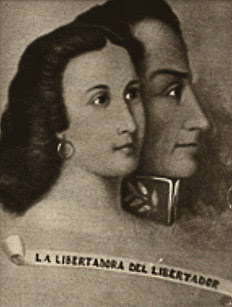
Le dije a Dianne: esta es la casa de Manuelita Sáenz eterna enamorada de Simón Bolívar. Ella era quiteña pero nunca se casaron, proseguí, a lo que Dianne contestó: ¿y por qué? Ahí todo cambió en este recorrido… no sé cuantas veces he caminado La Candelaria en mi vida y nadie hasta ese día me había preguntado un “por qué”. Ninguno de nuestros demás acompañantes tuvo tampoco respuesta.

Pregunta básica y esencial para comprender las cosas. El qué simplemente nos describe los hechos, lo que vemos y el por qué nos descubre la causa. El por qué y el qué se relacionan como la causa y el efecto. Entender su relación es una de las claves para entender lo que nos es diferente, ya sea un idioma, comportamiento, costumbres, creencias y/o valores. Un “por qué” en el momento preciso permite que se generen puentes de entendimiento y también puede ser la puerta mágica que nos permita traspasar la barrera de la “mono-culturalidad” al hacernos visible aquello que no es evidente.

Volvamos a Manuelita. Ese día sólo me dije, tengo que volver a leer porque me enseñaron tanto de Simón Bolívar que la vida de Manuelita fue únicamente un episodio de aquellos con toques novelescos que también se ven en las clases de historia patria. Ese día como hace muchos años no lo hacía, me senté a leer la biografía detallada de Manuela Sáenz. Esta vez con la comodidad de la tecnología a un clic de distancia pude recorrer su vida, sus esfuerzos y el gran amor prodigado a Simón Bolívar el cual la convirtió en una pieza estratégica de la campaña libertadora. También aprendí que Manuelita y Bolívar no se casaron porque ella era casada cuando lo conoció y dejó su esposo por irse tras el Libertador. Por su parte él se había casado muy joven en España y enviudó al poco tiempo, por lo que prometió nunca más volverse a casar. Así supe se juntaron él viudo y ella casada y ¡por fin tuve una respuesta para Dianne!

Ese día también entendí esa etapa del “por qué” en los niños cuando al crecer exploran el mundo y quieren simplemente entender. Los niños tan auténticos y genuinos, con una mezcla maravillosa de inocencia y absoluta falta de timidez, que siempre preguntan y sus por qué los llevan a los qué y de los qué, van formando ideas, conceptos, valores y creencias.

Sería tan simple entonces volvernos niños y como Dianne preguntar ¿por qué? cada vez que sea necesario.

Entonces ¿por qué será nos cuesta tanto hacerlo?

Me tocó la buena suerte de conocer a Maryori Vivas en mayo de este año — una mujer inteligente, interesada en promover la gestión intercultural, además hermosa y de gran corazón. Un día espectacular ella me dió un tour increíble por el centro histórico de Bogotá, lleno de aprendizaje y risa. Desde entonces, ella me ha animado a escribir en español. Le agradezco de corazón por su ayuda, su tiempo, y su amistad. Ella confía en mí, y eso me impulsa a tratar aún más.

Como Bogotá y yo cumplimos años el mismo día — 6 agosto — Maryori me regaló este artículo. Me da muchísimo gusto poder compartir con ustedes aquí un blog escrito en español, con un mensaje tan sabio y palabras tan llenas de poesía. Espero que les guste.

Link

For those of you who just love our Cultural Detective Deaf Culture co-author Anna Mindess‘ food blog, here’s another delightful post….