Our Culture on the Firing Line

UN gun sculptureWe are very pleased to be able to share with you another guest post by the insightful and talented Joe Lurie, Executive Director Emeritus, University of California Berkeley’s International House. Sadly, the topic is again, or still, timely. We published his first post on this subject, “Language Under the Gun,” in February of 2011. Let us work to change the culture of anger and violence by this time next year!

As introduction to the piece, allow me to share with you Joe’s message, urging me to publish his post sooner rather than later: “If it can be published earlier, given the ‘heat people  are packing’ now in the current ‘ballistic’ and ‘explosive’ reactions to Obama’s proposals, that would be more likely to ‘hit the bull’s-eye’ in the current environment.”

With only 5% of the world’s population, US Americans now possess about 50% of the world’s guns. Is it any wonder then that mass shootings in the US have skyrocketed in the last decade? And in the wake of the grotesque massacre in Sandy Hook, gun sales have spiked dramatically. No wonder that sales of kids’ bullet-proof backpacks have soared, or that our culture more than ever is drenched in the language of guns!

As I watch left and right wing politicians and pundits “up in arms” on TV, battling in a “cross-fire” of blame, each side looking for a “smoking gun” to explain or cast blame for horrifying gun-related catastrophes, I’ve become increasingly aware of how our culture’s preoccupations with guns are reflected even during innocent “shooting the breeze” conversations.

We often value the “straight shooter,” yet we are wary of those who “shoot their mouths off,” and those who “shoot from the hip” or glibly end an argument with a “parting shot.” We caution colleagues to avoid “shooting themselves in the foot,” and counsel them not to “shoot the messenger.”

Without suspecting what drives our language, we are “blown away” by adorable photos of loved ones. At the movies, many audiences are thrilled by “shoot- em-up,”  “double barreled action” scenes, or are excited by car chases where actors “gun” their engines.

I often ask friends to “shoot me” an email and I’ve encouraged job seekers to give an interview their “best shot” and “stick to their guns” during salary discussions. And if a job is offered, I might congratulate them for doing a “bang up” job.

In sensitive business negotiations, I’ve advised patience, urging clients to “trouble shoot” solutions, but to avoid “jumping the gun” and to be aware of “loaded” questions. To get the biggest “bang for the buck,” I’ve recommended bringing the “big guns” to the table. We look for “silver bullet” solutions, hoping for “bulletproof” results. And when success is in sight, we say: “You’re on target,” or “you’re going great guns!”

We encourage entrepreneurial risk taking, even if the project doesn’t have a “shot in hell.” Just “fire away” when you make that “killer” presentation, and if your idea is “shot down,” don’t be “gun shy.” Just “bite the bullet” and go at it again, with “guns blazing.” Don’t be afraid to “shoot for the moon,” even if it looks like a “shot in the dark.”

Having worked as a university executive with students from more than 80 countries, I’ve noticed that students from abroad are struck by the violent language in our songs and films, and they hear it bleeding into our political discourse. Many have asked me in amazement why it is even necessary to state that guns and ammunition are banned from university residence halls. Yet, “son of a gun,” 26 colleges in three states permit guns on college campuses. And gun liberalization legislation for colleges is in the “cross hairs” in at least nine more states.

I’ve heard staff and students alike stressed by an approaching deadline, instinctively describing themselves as being “under the gun.” Sometimes my colleagues have described emotional co-workers as “loose cannons” or having “hair trigger” personalities. And when a student has gone off “half cocked,” psychologists have advised employees to “keep their powders dry” and to review “bullet point” guidelines for handling volatile personalities.

In the same way that the US is flooded with millions of guns (there are 90 guns per one hundred Americans), so our newscasts — “sure as shootin’ ” — are exploding almost nightly with murder stories, reflecting the newsroom mantra: “If it bleeds, it leads.”

When the local story becomes a national tragedy, there is “new ammunition” for both gun control supporters and opponents of fire arm bans in such places as elementary schools, day care centers, churches, or even the neighborhood bar!

The world of guns has had our rhetoric in its sights for a very long time. And our wounded language — now more than ever with a gun to its head — is telling us that our culture is on the firing line.

Joe Lurie, Executive Director Emeritus at the University of California’s International House, is currently a cross-cultural communications consultant, university instructor and Cultural Detective certified facilitator. Contact Joe via email or LinkedIn.

This post builds on Joe’s February 2011 piece, “Language Under the Gun.”

Link

words-of-the-year_0Eight Words of the Year from Other Countries

Great, short, fun, informative re-post. Thank you, Mental Floss!

Which words do you know? Which ones would you add?

Benchmark Statement on Intercultural Competence: AEA

AEA statement coverDo you want to promote intercultural competence in your organization or industry? Are you looking for some guidance? A blueprint? A success story? If so, do I have a “Cultural Effective” for you!

Just over a year ago, friend and colleague Stella Ting Toomey and I had the distinct pleasure of attending the American Evaluation Association‘s annual conference as invited speakers. There I was pleased to witness a commitment to responsible inclusiveness that was truly state of the art.

Six years of diligent work by a task force and other concerned individuals had resulted in a theoretically sound and practical Public Statement on Cultural Competence in Evaluation (AEA 2011, Fairhaven, MA USA).

There is so much about this public statement that stands out for me, not least of which is a definition of culture that is at least on a par with the best of what I’ve seen come out of the intercultural communication field!

Culture can be defined as the shared experiences of people, including their languages, values, customs, beliefs, and mores. It also includes worldviews, ways of knowing, and ways of communicating. Culturally significant factors encompass, but are not limited to, race/ethnicity, religion, social class, language, disability, sexual orientation, age, and gender. Contextual dimensions such as geographic region and socioeconomic circumstances are also essential to shaping culture.

Culture is dynamic, fluid, and reciprocal. That is, culture shapes the behaviors and worldviews of its members and, in turn, culture is shaped by the behavior, attitudes, and worldview of its members. Elements of culture are passed on from generation to generation, but culture also changes from one generation to the next.

Culture not only influences members of groups, it also delineates boundaries and influences patterns of interaction among them. Evaluators frequently work across these boundaries.

I remember my excitement the last couple of times a book has been published with “intercultural competence” in the title. If I am truly honest, I will admit to you that I’ve been disappointed. Amidst good work and steps forward, the books I’ve reviewed rehash a lot of what I feel is old and tired or, even, counter-productive to good practice. But this AEA statement! How do they define intercultural competence? For me it’s spot on — both theoretically sound and skillfully applied!

Cultural competence is not a state at which one arrives; rather, it is a process of learning, unlearning, and relearning. It is a sensibility cultivated throughout a lifetime. Cultural competence requires awareness of self, reflection on one’s own cultural position, awareness of others’ positions, and the ability to interact genuinely and respectfully with others. Culturally competent evaluators refrain from assuming they fully understand the perspectives of stakeholders whose backgrounds differ from their own.

Cultural competence is defined in relation to a specific context or location, such as geography, nationality, and history. Competence in one context is no assurance of competence in another. The culturally competent evaluator (or evaluation team) must have specific knowledge of the people and place in which the evaluation is being conducted—including local history and culturally determined mores, values, and ways of knowing.

The culturally competent evaluator draws upon a wide range of evaluation theories and methods to design and carry out an evaluation that is optimally matched to the context. In constructing a model or theory of how the evaluand operates, the evaluator reflects the diverse values and perspectives of key stakeholder groups.

It is tailor-made for a Cultural Detective: process-based lifelong learning (CD Worksheet); knowledge of self and others and the ability to bridge (3 fundamental CD capacities); situation-specific, contextually grounded effectiveness (CD Critical Incidents); grounding practice in theory (pulling salient theoretical teaching from practical experience); and acknowledging people as complex amalgams of the influences of multiple cultural influences (layering Lenses).

The AEA statement includes the following content:

The Role of Culture and Cultural Competence in Quality Evaluation

  1. What is culture?
  2. Evaluations reflect culture.
  3. What is cultural competence?

Why Cultural Competence in Evaluation Is Important

  1. It is an ethical imperative.
  2. Validity demands it.
  3. Theories are inherently cultural.

Essential Practices for Cultural Competence

  1. Acknowledge the complexity of cultural identity.
  2. Recognize the dynamics of power.
  3. Recognize and eliminate bias in language.
  4. Employ culturally appropriate methods.

The AEA’s blog and their annual conference include lots of project examples and discussions about how to conduct culturally responsible evaluation, through which I’ve witnessed honest dialogue about successes and difficulties. Intercultural competence in evaluation has definitely become an organization-wide effort and an ongoing process for the AEA membership.

The work of the task force continues through today, as they do their best to develop cultural competence in evaluation via education and training, within and outside the AEA, as well as by sharing the public statement and what they have learned via the process they’ve engaged. I am proud to have had a very small role in their extensive process, and pleased to be able to help share it so that others can leverage their work.

Kudos to Dr. Melvin Hall, Cindy Crusto, the American Evaluation Association, and all of those involved in this terrific effort! I know they join me in hoping that their efforts might help you further yours. I will close with an excerpt from their closing:

Evaluators have the power to make a difference, not only directly to program stakeholders but also indirectly to the general public. This is consistent with the Guiding Principle that obliges evaluators to consider the public interest and good in the work they do. In a diverse and complex society, cultural competence is central to making a difference.

Cultural competence connects with and complements existing knowledge and skills in the field. It offers both opportunities and challenges for evaluators. Cultural competence presents evaluators with new horizons for learning, opportunities for renewal, and the potential to deepen understanding of one’s own work in all contexts. Cultural competence challenges evaluators to deepen their self awareness and sensitivity in terms of their own cultures and those of others.

Many evaluators are actively exploring the terrain of cultural competence. They are expanding the boundaries of what it means to respond to cultural diversity in authentic and respectful ways. This statement invites new conversations and connections to advance this sensitive and exciting work.

Get in Intercultural Shape for the New Year!

New Year Collage

Welcome to the New Year — at least for those of you following the Gregorian calendar! Are you ready? Is your organization poised and equipped to make significant positive contributions to this planet of ours? Do you have organizational traditions to kick-off the new year and encourage employees to strive towards new goals?

Most cultures of the world have very special traditions for sending out the old year and bringing in the new one. In Mexico where I live women wear special undergarments on New Year’s Eve — either red for love or yellow for gold or money — symbolizing what they most want to receive in the year ahead. Those who would like to travel carry a suitcase out into the street and around the block.

In Japan where I lived previously, the end of the year is a time to clean the house, purging it of things from the past that are no longer needed. We cook osechi foods, the beautiful make-ahead kinds of delicacies that will feed family and visitors through the first few days of the new year, and allow everyone — including the cook — to enjoy a respite.

What are your traditions for saying goodbye to the past year and greeting the future? Do you make resolutions, set goals, or make plans to learn something new?

My absolute favorite New Year’s was spent with good friends nearly two decades ago. On New Year’s Eve, we wrote down the hurts we’d experienced, the negative habits or memories we continued to carry and wanted to get rid of, the qualities about ourselves that no longer served us, the visions of ourselves, others or our businesses that were not constructive. We made a big bonfire, and we had a field day burning these no-longer-wanted items. Oh how liberating it was! We all felt so light, so energized!

On New Year’s morning we woke before sunrise. We had written, on paper we’d folded into origami boats, the qualities we wanted to receive and nurture in the new year. The positive habits and qualities we wanted to cultivate, relationships and moments we wanted to consciously treasure, and healthy visions of ourselves, others and our businesses that we wanted to hold close. We launched these items into the ocean, setting them into motion.

The beginning of a year is a good time to reflect on our cross-cultural successes (Cultural Effectives) as well as to learn from our mistakes and misunderstandings (Cultural Defectives) and decide what kind of year we want in 2013. Back in October we published a post about intercultural fitness. In November we reiterated why such fitness is so important, why organizations need intercultural fitness.

Maybe reading these posts has helped you to decide what to throw in the fire and what to set out into the water? If your fire is full of cultural missteps and your boat contains a desire to expand your intercultural competence, maybe it’s time you took action!

Cultural Detective wants to encourage you to get fit, too — interculturally fit! Much like committing to an exercise plan or a sensible nutrition plan, committing to prioritizing intercultural competence in the coming year will serve us well personally, in our families, as well as in our work lives. Also, just like a gym, it can be fun. We can spend as much time as we like and we might meet some really interesting people.

The new year is full of special offers for gym memberships, exercise classes, and diet programs — ways to encourage you to get fit in 2013. Just as gyms and diet programs offer incentives this time of year, the Cultural Detective Online intercultural competence gym is offering complimentary three-day subscriptions to help get you focused and motivated!

Here is how to get yours:

  1. Log on to http://www.culturaldetective.com/cdonline/orders/trial before January 31, 2013.
  2. Enter your name, email address and the promotional code: NewYearFitness
  3. You will receive a verification email from cdonline@culturaldetective.com. Be sure to clear it in your spam filter! Click the link in the email, follow the instructions, and explore a new way to improve your intercultural fitness 24/7!

We hope you will take advantage of this special offer to learn how Cultural Detective Online can assist you at home and abroad, with colleagues and friends, in your community and in your organization! Feel free to share this offer with those you care about — we think the world could benefit from a little more intercultural competence on everyone’s part!

Best wishes for a peaceful year ahead from the Cultural Detective team!

Cómo perder su puntualidad en quince días

3191265-mujer-abrazar-un-reloj(English follows the Spanish)

Estas fiestas de fin de año me han dejado la nostalgia de los ausentes a quienes no pude abrazar con el anhelo del reencuentro. En contraste, me han dado la oportunidad de gozarme lo simple de nuestras tradiciones más sentidas. Una de ellas sin duda para mí es la cocina. Debo confesar soy de las que cocina escuchando música de diciembre, desde villancicos como tutaina o mi burrito sabanero, hasta los infaltables temas de la Billos Caraca’s Boys, Los Melódicos o Los Hispanos. Crecí con esta música y a falta de estaciones, en Colombia es Navidad desde que las emisoras comienzan a emitir estas melodías y las vitrinas de tiendas presentan sus decoraciones. El gran inicio es nuestra fiesta de las velitas el 7 de diciembre, cuando todos los alumbrados oficialmente se encienden y  las casas se visten de luz con velas de colores y faroles que se extinguen al amanecer. Es nuestra fiesta de luz.

El ritmo cambia y el tiempo se hace aún más amigo. Contrasta el agite de las calles y sus trancones — embotellamientos — con el ritmo al que se llevan muchas tareas. Esta singular amistad con el tiempo se torna evidente para quienes nos visitan.

Tuvimos con mi familia la gran oportunidad de acoger a quienes estaban solos de paso por nuestra ciudad. Para Navidad, nuestra invitada de California se ganó la membresía en el club de los “gringos chéveres”. La citamos a las 10:00pm, llegó a las 10:15pm pues el taxista la buscó un poco más tarde en el hotel. Brindamos, cenamos y mis padres sin hablar más que yes or hello, le transmitieron nuestras tradiciones — bueno sí, mis hermanos y yo asistimos en la traducción — pero las sonrisas y la música son parte de un idioma universal.  La despedimos de madrugada el 25, luego de tres días en Bogotá se preparaba a disfrutar San Andrés y Cartagena. Su periplo apenas comenzaba.

Para fin de año, nuestros invitados esta vez fueron de Alemania y Francia. Los dos invitados de Alemania ya llevan varias semanas en el país. Su periplo ya los había llevado por Cartagena, la zona cafetera, Boyacá y alrededores del Cañón del Chicamocha. En resumen, se han recorrido casi la mitad del país. La cita a cenar era la misma 10:00pm, y mi razonamiento fue, como son alemanes les decimos a las 10:00pm para que cenemos juntos.

Pasaron las 10:15pm, las 10:30pm y nada. Estos invitados se hicieron amigos del tiempo. Llegaron unos 50min tarde luego de varias llamadas al celular disponible. Uno llega a preocuparse si fue que se perdieron o pararon en la cena equivocada. Cuando llegaron ya habíamos iniciado, simplemente pensamos algo se presentó y no iban a venir, !son alemanes! Llegaron, cenaron, brindamos… y hasta bailamos. Uno de ellos ha dicho que es la mejor Nochevieja de su vida.  Los tres hablan español muy bien, así que pudieron compartir sus experiencias con todos en casa, y fue así como pidieron mil excusas pues en uno de sus recorridos un simpático colombiano los citó “en diez minutos” que se volvieron tal vez cuatro horas.

Su lógica fue, nos dicen a las 10:00pm así que podemos llegar tarde. Al final les dije de este blog y que les contaría a todos como se puede perder la puntualidad en quince días de paso por Colombia. Ahora uno de ellos está de regreso en Alemania, y un alemán y un francés amigos del tiempo están en las playas de San Andrés.

Mis padres han sido los más alegres con estas visitas. Poco saben de sociedades policrónicas o monocrónicas, de alto o bajo contexto, ni tienen idea que el trabajo de Cultural Detective le muestra al mundo que el tiempo es un amigo en este país. Sin embargo ellos saben lo que nos hace auténticos y algo que siempre han enseñado en casa es el valor de querer lo nuestro, nuestras tradiciones y lo que somos — por supuesto, abiertos a aprender de los demás. Mis padres fueron sin duda los grandes anfitriones, hasta mi madre sacó a bailar a uno de los chicos y dió clases de música tropical. Sin duda para todos unas fiestas inolvidables. Como diría mi padre “my home is your home, welcome”.

Si quiere hacerse amigo del tiempo… visite Colombia.

Felicidades y un muy fructífero 2013.spanishfriday

How to Lose Your Punctuality in 15 Days, Written by Maryori Vivas
Translated by Dianne Hofner Saphiere

These end-of-the-year holidays have filled me with nostalgia for those I am unable to hug despite the desire for a reunion. In contrast, they have given me the opportunity to enjoy the simplicity of some of our deepest traditions. One of these for me is without doubt that of the kitchen. I must confess that I am one of those who cooks while listening to holiday music, everything from carols such as Tutaina or Mi Burrito Sabanero, to infallible tunes such as those of the Billos Caracas Boys, Los Melódicos, or Los Hispanos. I grew up with this music; in Colombia Christmas begins when the radio stations start playing such melodies and the shop windows display their holiday decorations. The great beginning of the festivities is the Festival of Lights on December 7th, when holiday lights are officially turned on and the houses are filled with the light of colorful candles and lanterns that aren’t turned off until dawn. This is our Festival of Lights.

The rhythm changes at this time of year, and time becomes even more of a friend than usual. Contrast the excitement of the streets and their traffic jams — traffic stops really — with the rhythm with which we complete the many tasks of the season. This unique friendship with time gradually becomes evident to our guests.

Our family had the wonderful opportunity this year of welcoming into our home those who were traveling alone in our city. For Christmas, our guest from California won membership in the “cool gringos” club. We invited her for 10 pm. She arrived at 10:15, because the taxi had picked her up late at her hotel. We toasted, dined, and my parents, who can’t speak more than “yes” or “hello” in English, communicated our traditions to her — ok, my sister, my brother and I assisted with the translation — but smiles and music are universal languages. We bade her goodbye at dawn on the 25th. After three days in Bogotá she was preparing to enjoy San Andrés and Cartagena. Her journey was just beginning.

On New Year’s Eve, this time our guests were from Germany and France. Our two guests from Germany had already been in our country for several weeks. Their journey had already taken them to Cartagena, the coffee region, Boyacá and the area around the Canyon of Chicamocha. They had travelled over half the country. I told them the same 10 pm for dinner, and my reasoning was that as they are Germans they’d arrive right around 10 pm so we could dine together.

10:15 pm passed, 10:30 pm, and nothing. Our guests had become friends with time. They arrived about 50 minutes later, after various cell phone calls. One starts to worry whether guests have gotten lost or have ended up at the wrong dinner. When they arrived we had already begun, simply imagining that something had come up and they weren’t going to be able to come. After all, they’re German. But they arrived, we ate, we toasted, and we even danced. One of them told us it was the best New Year’s Eve of his life.

All three speak Spanish very well, so they were able to share their experiences with everyone in the house. It was in this way that they asked a thousand pardons for their late arrival, explaining that in one of their travels a kind Colombian had told them “in ten minutes,” which had turned into perhaps four hours. Their logic had been that we’d told them 10 pm, so they could arrive late. In the end I told them about this blog, and that I would tell everyone the story about how to lose punctuality in 15 days of travel in Colombia. Now one of them is back in Germany, and the other German and the French friends of time are enjoying the beaches of San Andrés.

My parents have been the happiest with these visits. They know little about polychronic or monochronic societies, of high or low context, and they have no idea that the work of the Cultural Detective demonstrates to the world that time is a friend in our country. However, they know what makes us authentic and what has always been taught at home: the value of loving what’s ours, our traditions and who we are — of course with an openness to learning about others. My parents were without doubt wonderful hosts; my mother even got one of the young men to dance with her and gave a class on tropical music. These were definitely holidays to remember. As my father would say, “my home is your home; welcome!”

If you would like to be friends with time, visit Colombia.

Happy New Year! I wish you a very successful 2013.

Happy New Year! New Year’s and Calendars Around the World

WorldCalendars

Happy New Year!!

Our greetings are sincere; we wish the best for our colleagues, partners, and friends. Intent is important. However, even the most sincere greetings, when unaccompanied by a broader mindset of cross-cultural awareness, can come out sounding neocolonialist, disrespectful or just plain ignorant.

Most non-Chinese know that Chinese New Year often happens in February and is based on a lunar calendar. Many non-Jews are aware that Rosh HaShanah is the Jewish new year, and that it usually occurs around September. But what about other nations, cultures and traditions: when do they celebrate their new year? And how can we demonstrate cross-cultural sensitivity when we wish to express appropriate New Year’s greetings?

The first step is to recognize our own Lens, our own cultural filters. A “happy new year” greeting focused on January 1, 2013 is based on the Gregorian calendar, use of which was ordered by Pope Gregory XIII in 1592. Even Protestant Europe was slow to adopt this calendar, but over the centuries it has gained widespread use to become today’s de facto international standard. Most countries in the world now use it as their sole civil calendar, with exceptions including Saudi Arabia, Iran and Afghanistan. Countries that use another official calendar alongside the Gregorian include India and Israel. To detach the Gregorian calendar a bit from its Roman Catholic roots, it is also called the civil calendar or Common Era (CE) calendar.

Having a recognized international standard is a major change. Thirty-five years ago, when I first started working with a telex machine in Japan, I had to convert dynastic dates to CE dates as part of my daily tasks (I also used a HUGE kanji typewriter that provided me a daily physical workout, prior to the advent of word processing). Now, the general acceptance of the CE calendar is a sign of how much cultures that did not traditionally use the Gregorian calendar have adapted in order to more easily collaborate. Of course, another point of view is that this adaptation shows the success of the Christian colonialists imposing their standard on the rest of the world.

Either way, there is a great need for those of us comfortable with the Common Era calendar to learn a bit about other world calendars, to gain a basic knowledge about and be able to communicate respect for them. Thus, the second step in building cross-cultural competence is to develop our curiosity and knowledge about world calendars.

While the CE calendar is in popular use, alongside it and sometimes instead of it people around the world use solar calendars, lunar calendars, lunar-solar calendars, arithmetic and astronomical calendars. You may see dates you don’t recognize in newspapers when you travel, or in official government or religious documents. Non-Gregorian dating is commonly used to determine holy days, holidays and festivals in many of the world’s traditions. These local, regional, and religious calendars are frequently used to report birth and death dates, and major life and world events. It can get confusing for the international traveler or global nomad, not to mention the unwitting blogger or small business person with an Internet site! There are seven billion people on our planet, and according to my quick calculations, fewer than 10% have primarily used a Gregorian calendar for even most of my lifetime.

How can we navigate the multitude of calendars in our world? Surely we can not be expected to understand or be fluent in all of them. How can we show sensitivity, respect, and a bit of knowledge, rather than arrogance, ignorance, or insult? The third step is to bridge the differences — to understand and learn to work with our partner’s or customer’s traditional calendar.

6 Tips for Partnering with People Who Use
Calendars Different from Yours

  1. Remember that the Common Era calendar is not the only calendar in the world.
  2. Realize that it’s origins are in western Christianity. Avoid the use of “BC,” which refers to “before Christ,” and “AD,” the Latin term Anno Domini. Instead, use “BCE” (Before the Common Era) and “CE” (Common Era).
  3. Do a bit of research about your major customers and partners. What are their spiritual practices? Their ethnic backgrounds? Where are they based geographically? Once you’ve done your homework, you’ve acquired a very basic level of cultural literacy regarding possible calendars your colleagues might use.
  4. Ask them. Asking how an organization and a community dates documents, and how they calculate and observe holidays, shows that you know there are many ways of doing things, that your way is not the only way. It demonstrates a respect for other traditions and helps to build relationships based on mutual trust.
  5. Respect your colleagues’ holidays. If you are told that business closes on certain days, don’t try to undo centuries of tradition. I have so often seen this error committed during my career. An executive insists that employees work on a day that is usually a holiday, as the organization is on a deadline. In the short term, this strategy may be successful. But the long-term negative consequences, in terms of lost loyalty and reputation are immeasurable. Better to focus on outcomes: how can we meet this deadline? Brainstorm with your employees and partners to find mutually acceptable rather than unilateral ways forward.
  6. Offer New Year’s and other holiday greetings as appropriate to your colleagues’ traditions. That usually means that a New Year’s greeting on January 1st will be well received, and often means that another greeting, on their calendar’s New Year, will be even more special. Make a note in your calendar to jog your memory. Such a practice is a solid and frequent reminder that our way is not the only way.

While far from a complete list, I did some research to produce a bit of a guide (below) to some of the world’s calendars in current use. Please note any corrections in the “Comments,” and we will edit as needed. Thank you!

  • Bahá’í (Badí‘): The year 170 BE in the Bahá’í calendar will begin on March 21, 2013 (spring equinox), the 1st (or Bahá) of the month of Bahá in the year Abhá. The Baha’i calendar begins with Bab’s declaration in 1844.
  • Chinese (Mainland): The first day of the year of the Snake 4711 will be February 10, 2013. Legend has it that the Emperor Huangdi invented the calendar in 2637 B.C.E.
  • Chinese (Republic, Minguo): January 1st will bring in the year 102 in Taiwan, Kinmen and Matsu. The calendar began in 1912, the year of the founding of the Republic of China.
  • Coptic (Alexandrian): The Feast of Neyrouz or New Year’s 1729 AM (Anno Martyrum or “Year of the Martyrs”) was September 11, 2012.
  • Eastern Orthodox (Julian): The first day of the year 2013 was on December 19, 2012. It may be worthwhile noting that both Coptic and Eastern Orthodox Christians celebrate Christmas on January 7th (not December 25th).
  • Ethiopian (Ge’ez): Enkutatash, or the new year 2005, began September 11, 2012.
  • Hebrew (Jewish): The year 5773 began on the 1st of Tishrei (the 7th month in the Jewish calendar), or September 16, 2012 — Rosh HaShanah, the day Adam and Eve were created. The Jewish calendar has another New Year’s, the 1st of Nisan (the first month). It will be on March 12, 2013, and is used as the new year to order the holidays. It is seen as the anniversary of the founding of the Jewish people.
  • Indian National Calendar (Saka): The 1st of the month of Caitra, year 1935, will fall on March 22, 2013. The current Saka era began in 78 CE.
  • Indian Popular Calendar (Vikram Samvat): The year 2069 will begin the first day after the new moon in the month of Chaitra, April 11, 2013 — Hindi New Year.  In the Gujarati tradition, it began on the day after Diwali, on the 1st of kartak or November 14th. The calendar was created by the Emperor Vikramaditya of Ujjain following his victory over the Shakas in 56 BCE.
  • Indigenous, First Nations, and Native Peoples: There are many communities and much diversity worldwide. A lunar calendar is generally used and the year revolves around the seasons.
  • Islamic (lunar Hijri): The year 1434 AH began on the 1st of Muharram, November 15, 2012. The Islamic calendar begins when Muhammad emigrated from Mecca to Medina in 622 CE.
  • Japanese: January 8th will bring in the 1st of the year Heisei 25, which began when Emperor Akihito took the throne in 1989 (year one).
  • Mayan: A new baktun or cycle begins December 22, 2012.
  • Persian (solar Hijri): March 21st, or the 1st of Farvadin, will greet the year 1392 SH. It is determined by the spring equinox. Norouz or Persian new year has been celebrated for at least 3000 years and is rooted in the Zoroastrian tradition. The calendar marked its beginning in agreement with the Islamic calendar based on Muhammad’s emigration from Mecca to Medina (Hegira). Due to the Persian solar adjustment to the Islamic lunar Hijri calendar, the year count between the two calendars has diverged.
  • Thai (Suriyakhati): January 1st will bring in the Buddhist year 2556 of the Thai solar (legal) calendar.

Additional Resources:

Two handy calendar converters:

Readers, we look forward to hearing you tell us about your New Year’s. What greetings do you prefer, and when? How do you celebrate?

Whichever calendar you prefer, the Cultural Detective team wishes you all success, health, and joy!

Partnerships: 5 Tips for Turning Frustration into Innovation

181461_10151025619791983_1116995086_nI’ve recently heard from several colleagues and client organizations who are engaged in partnerships designed to harness the strength of complementary skills, experience and thinking. Their purpose is to enter new markets, build the business, and create innovative approaches that can only come from an interdisciplinary approach.

The great thing is that they recognize and have committed to the creative power of diversity! They know that research shows that diversity of thought leads to innovation. The trouble is that each of them has encountered frustration and, in some cases, regret: the partnership is not as easy as they’d hoped, they haven’t found their “sweet spot” of collaboration, new customers are not pounding down their doors. They talk over and past each other, they have differing goals and strategies, they feel their partner lacks respect for them. In short, the very reason they are partnering in the first place — to leverage their complementary expertise — is getting in the way of successful collaboration.

What to do? “Come on, Dianne,” they tell me. “You do this collaboration thing for a living. Give us some tips. What are we doing wrong?” Well, instead, how about starting with what you are doing right?

Tip #1: Remind yourself what motivated you to partner in the first place. What skills, experience, contributions or contacts does your partner bring to the table that you want to access? Have you spent focused time listening and learning from your partner, how they do things, how they see things, discovering what about their perspective is unique and can add value to your own? And vice-versa?

Tip #2: Affirm the strengths you see in your partner. Too often we get caught in a blame game, or we get so busy we don’t take the time we should to actually communicate our hopes and appreciation. We take it for granted that our partners know we value them, and why. Speak up purposefully and let them know!

Tip #3: Be honest about the challenges. Collaborating with partners whose worldview is different from our own means that we have to speak a different language, translate our common sense to theirs. Such efforts can get tiring, even irritating. And, when we don’t understand, or worse, misunderstand what our partners are saying or doing, that impatience and frustration show through. Pretending the challenge isn’t there usually is not the answer; it makes the white elephant in the room grow ever more looming. Rather, put your differences out there, on the table for discussion.

Tip #4: Agree on rules for the game. You have partnered precisely because you are different; you are experts in separate arenas, and of course you do things differently. A successful joint effort needs to bring out the best, rather than the worst, in each of its partners. There is a need, therefore, to talk purposefully about HOW you communicate: how you can disagree without offending, how you can make decisions in which all partners feel heard and valued. Such game rules should be revisited and updated regularly. Ten minutes talking about how we communicate can shoot productivity forward. We’ve all been in meetings where we focused on task and drove one another nuts, getting nowhere.

Tip #5: Diverge then converge. And repeat. Diverge by listening to one another. Converge by summarizing what you heard. Diverge by gathering data, doing research, discussing the matters on which you disagree. Get to the point where the convergence emerges: you see the trends in the data, you get to the heart of the matter — exploring the disagreement leads you to a core truth and a path forward. I can not emphasize this last point enough. In thirty plus years leading international teams, team leaders inevitably come to me saying, “we are never going to get agreement. The team is all over the place.” Experience shows, repeatedly, that if you listen to understand, summarize the key points, a path forward that incorporates the diverse perspectives, skills and experience presents itself. It takes a little faith and a bit of letting go. Then the magic begins.

Bonus Tip #6: Know when to get out. Not all matches are made in heaven; not all collaborations are worth the effort. Do your homework before entering a partnership, and be brave enough to make the call when it’s no longer a fit. Of course, filtering out cultural differences to be sure it’s really not a fit is key. But beating your head against the wall and getting yourself into all sorts of contortions trying to make something work is not good for anyone.

El candidato ideal

(English follows the Spanish)

En un mundo cada vez más interconectado y globalizado, las asignaciones internacionales suelen ser más frecuentes para empleados de empresas multinacionales. Dado lo anterior las empresas han dispuesto de grandes esfuerzos y recursos para optimizar su selección del candidato ideal para las vacantes que surjan y poder iniciar el proceso de expatriación (traslado laboral a otro país con beneficios para el empleado y su familia).

Los llamados departamentos de personal o recursos humanos han alineado sus procesos de reclutamiento y selección con el fin de optimizar la búsqueda y el tan ahnelado hallazgo de quien cumple con los requisitos del cargo y adicionalmente sea capaz adaptarse a un entorno que puede ser similar y muy distante del actual.

A priori se consideran el dominio de los idiomas o experiencias previas en otros países y culturas, lo que podríamos denominar un bagaje intercultural. Sin embargo esto no siempre resulta, ni para la empresa ni para el expatriado.

Conozco dos casos contrastantes de primera mano. Los dos llegaron aquí a Bogotá, de dos países diferentes y para dos asignaciones igualmente diferentes.

El primero venía de Europa, de uno de esos países con cultura monosincrónica, bastante rígido con el tiempo y de los que la puntualidad es un tema que no tiene discusión. Había vivido en Estados Unidos y varios lugares de Europa, incluyendo España por lo cual domina el castellano (con el ceceo que decimos los latinos, yo digo que los españoles hablan siempre con ortografía), soltero, sin hijos y sin pareja. Cambiaba de industria, pero su trabajo vincularía a partir del área comercial su país natal y Colombia como puerta de entrada a América Latina. Llegó con lo que los locales consideramos un muy buen salario, un apartamento en una zona lujosa de la ciudad (cerca a su nueva oficina) y todo el apoyo de su empresa para comenzar una nueva sucursal en mi país. Su tiempo estimado de dos a tres años inicialmente.

Por otro lado, tenemos a un hombre que venía de Israel sin hablar una sílaba de español, casado (llegó con dos hijos, hoy ya tiene tres ) quien vino por una asignación puntual de seis meses. Llegó solo y solamente a dirigir un proyecto de infraestructura en la ciudad. Se enfrentó a dirigir cien operarios y, si podemos decir, a golpes comprender por qué la cerveza es parte del presupuesto de muchas familias de estos empleados a su cargo. Tuvo que lidiar temas familiares, de rendimiento del trabajo individual y de grupo. Aprendió de primera fuente cómo era la contratación pública en Colombia.

Dos escenarios totalmente opuestos y con resultados igualmente contrastantes.

El primero a pesar de su buena voluntad, su dominio del idioma… no logró adaptarse a nuestro entorno, cultura e impuntualidad. Cuando hablaba con él recordaba mi propia vivencia cuando en el Caribe me era tan complicado sentirme fluir. Tuve amigos, pasé momentos muy especiales… pero siempre había algo que me decía, no es tu lugar. En fin, así le pasó a este ejecutivo que no completó el primer año de contrato y se regresó a su país. La última vez que nos comunicamos estaba de paso en Singapur, volvió a su anterior industria y por Facebook me entero de sus movimientos alrededor del planeta (Australia, Alemania, Francia, Estados Unidos…) no ha regresado a Colombia, espero que nos podamos volver a encontrar y disfrutar una buena copa juntos.

El segundo ya habla muy bien español, lleva siete años en el país y ahora ha fundado su propia empresa con talento en un 90% colombiano. Su familia vive con él, y su hijo menor nació aquí. A pesar de tantas diferencias entre su cultura y la nuestra, aprendió a nadar en nuestro rio y podría afirmar que se mueve como pez en el agua. Se proyecta como representante de varias empresas de su país en América Latina, y como dijo uno de nuestros políticos alguna vez… es como si dijera “aquí estoy y aquí me quedo”.

A primera vista el primero de los candidatos se perfilaba como el candidato ideal para quedarse (conozco por cierto muchos solteros que llegan, se casan y se quedan en mi país gracias a la buena fama de las mujeres), pero no fue así y el que parecía que no se quedaría más allá de su asignación regresó a su país por su familia para traerla consigo y quedarse indefinidamente.

No dudo que los departamentos de personal o recursos humanos asociados a cada uno de estos casos y sus esferzos de “relocation” fueron minuciosos, estudiados y abordados con profunda seriedad y profesionalismo. Pienso que a veces, el paso adicional nos corresponde a los que aplicamos y ser muy honestos con nosotros mismos y en la evaluación previa de las nuevas condiciones de vida.

Nuestro desafío desde el punto de vista intercultural es brindar las herramientas adicionales que permitan tomar la decisión más acertada según las condiciones disponibles y hacer el acompañamiento de entrenamiento para su nuevo destino desde el punto de vista de la vida diaria, cultura de negocios, la vida para el empleado y su familia, entre muchos otros.

Debemos entender que no es ni bueno ni malo sentirnos o no a gusto en otro lugar (país, región, entorno). Sin embargo sí debemos conocer lo que más nos impacta (a nosotros y cuando aplique nuestras familias) y por ende identificar en qué lugar nos podemos trasladar para cumplir con el trabajo y además llevar una vida a gusto con nuestra familia.

The Ideal Candidate

By Maryori Vivas, translated by Dianne Hofner Saphiere

In a world that is increasingly interconnected and globalized, international assignments seem ever more frequent for employees of multinational companies. Given the above, firms have invested great efforts and resources to optimize their selection of ideal candidates to fill job vacancies and to be able to initiate the expatriation process (job transfer to another country with benefits for the employee and family).

Personnel and human resource departments have aligned their recruitment and selection processes to optimize the search for those who meet the requirements of the position and who are also capable of adapting to an environment that can be at the same time very similar and very different from their home environment.

It’s considered logical that a successful candidate would have mastery of the new language or previous experience living abroad, but that is not always the case.

I have firsthand knowledge of two contrasting cases. Both transferees arrived here in Bogotá from different countries and for two very different job assignments.

The first person came from Europe, from one of those countries with a monochronic culture, fairly rigid about time, with the belief that punctuality is not a matter for debate. He had lived in North America and various places around Europe, including Spain, and for that reason spoke Castilian well (with the lisp about which Latinos say, “Spaniards always speak with good spelling”). He was single, had no children and no partner. He had changed industries, and his new job involved commercially linking his birth country with Colombia as a gateway to Latin America. The position came with what locals would consider a very good salary, an apartment in an upscale area of the city (near his new office), and the full support of the company to start a new branch in my country. His assignment was estimated to be two to three years, initially.

The contrasting case was a man from Israel, who arrived without speaking even a syllable of Spanish, married (when he arrived he had two children, and today has three), who came for a short-term, six-month assignment. He arrived alone with the single objective of directing an infrastructure project in the city. He needed to manage one hundred operators and, if I might say so, via the school of hard knocks he learned to understand why beer is part of the family budgets of so many of those he supervised. He was thrown into managing employee family issues, individual performance issues, as well as group dynamics. He learned firsthand about public contracting in Colombia.

These were two scenarios that were totally opposite and with results that were equally different.

The first gentleman, despite his goodwill and language skills, failed to adapt himself to our environment, the culture and the tardiness. When I spoke with him I was reminded of my own experience living in the Caribbean, where I found it so complicated to get in the flow of things. I had friends, I had some very special moments, but always there was something telling me, “this is not your place.” In the end, what happened is that this executive returned home before even completing the first year of his multi-year contract. The last time I was in touch with him he was passing through Singapore. He had returned to the previous industry in which he had worked, and I found out via Facebook about his travels all over the world (Australia, Germany, France, USA). He has not returned to Colombia, though I hope we can meet up again some day and enjoy a good drink together.

The second gentleman now speaks Spanish very well. He has spent seven years in country and has now founded his own company with 90% Colombian talent. His family lives with him, and his youngest son was born here. Despite so many differences between his culture and ours, he learned to swim in our river and I can affirm that he moves here like a fish in water. He acts as a Latin American representative for several companies from his country, and as one of our politicians once said, it’s as if he said, “I am here and here I’ll remain.”

At initial glance the first candidate seemed to have the ideal profile for a long-term stay (I definitely know many bachelors who arrive, marry and stay in my country thanks to the good fame of our women), but it was not to be. The one who it would have seemed would not remain beyond a short initial assignment ended up returning to his country to collect his family and bring them back with him to stay here indefinitely.

I have no doubt that the personnel and human resource departments associated with each of these cases engaged in thorough and studied relocation efforts, discussing them with deep seriousness and professionalism. I think that at times, however, the extra step needed is for those of us who apply for overseas assignment to be very honest with ourselves about our life conditions, needs and desires.

Our challenge from an intercultural perspective is to provide additional tools that allow people to make the right decisions according to current realities, and to accompany that with training on daily life, business culture, and personal and social life for the employee and family in the new destination.

We must understand that feeling at home or not in another place (country, region, environment) is not in and of itself good or bad. The key is that we need to know ourselves and our families, what most affects us, and thus be able to discern where we can move in order to conduct our work and maintain a comfortable life with our families.


 

Developing Intercultural Competence — Online?

“While other cultural databases do an effective job of providing country overviews, Cultural Detective Online offers unique and complementary capabilities.”
—Joseph K. Lunn, Project Portfolio Manager and Cross-Cultural Trainer, Zurich North America

What makes for a truly useful online learning tool? When I asked intercultural trainers this question they seemed to want to be able to emulate the face-to-face environment as much as possible. Keep the learners’ attention, make it experiential, real and applicable — and make them think! They don’t need “the answers,” they need to know how to come up with real solutions when they find themselves in the midst of cross-cultural conflict. Oh, and you know the old adage, keep it simple!

So, when developing the Cultural Detective Online tool, some key fundamental concepts were kept in mind:

  1. Personal/professional goal setting should be at the entrance to working with the tool — what are the learners’ objectives in using the tool? They should be able to adapt and change these but also keep them in mind in order to stay on track and achieve them.
  2. Culture-general and culture-specific content and process — this is fundamental to working with the Cultural Detective Method (read more by Janet Bennett on this topic if you are up on it), so no challenge here!
  3. Contextually based learning — also core to the Cultural Detective Methodology is working with real-world critical incidents and pushing the learner to develop an understanding of the underlying role and subtle nuances cultural values can play in everyone’s lives.
  4. Links between deep culture and surface culture, between values and behaviors — again innately a part of working with the Cultural Detective tools and richly impactful (where we get the big aha moments) once the learner discovers, develops and really hones this skill.
  5. Prompting for the learners to summarize and apply their learning to their real situations — this is where the work they’ve put in pays the learner back; in other words what’s the bottom line? How can I really use what I just learned to make a value added difference in my work, in my global team, with my international vendors/clients/offices, etc.?
So we’ve heard from some of our early adapters — Cultural Detective Online will take you further in your intercultural competence journey. Joseph Lunn of Zurich NA says,

“In addition to crisp, clear detailed summaries of each country’s cultural values, the nearly 400 cross-cultural incidents provided show users exactly what can go wrong when cultural understanding gaps exist. The tool follows-up by sharing the differences in cultural values that underlie each incident and offers concrete suggestions to build cultural bridges and avoid similar incidents. CD Online is a great hands-on teaching tool that adds value to:

    • Employees beginning overseas assignments
    • Global project team members
    • Mergers and acquisition partners
    • Outsourcing engagements

Thanks for making this tool available to those who need it at a reasonable cost!”

Developing intercultural competence online? Of course! Take a test drive and see for yourself: Cultural Detective Online!

Resource Review: GDI Benchmarks

We tend to get a lot of phone calls asking us to recommend a cross-cultural assessment instrument. Usually I ask what  seems to me a very logical question: “What is it you are trying to assess?” I am then often shocked to hear that the caller is not able to answer my question!

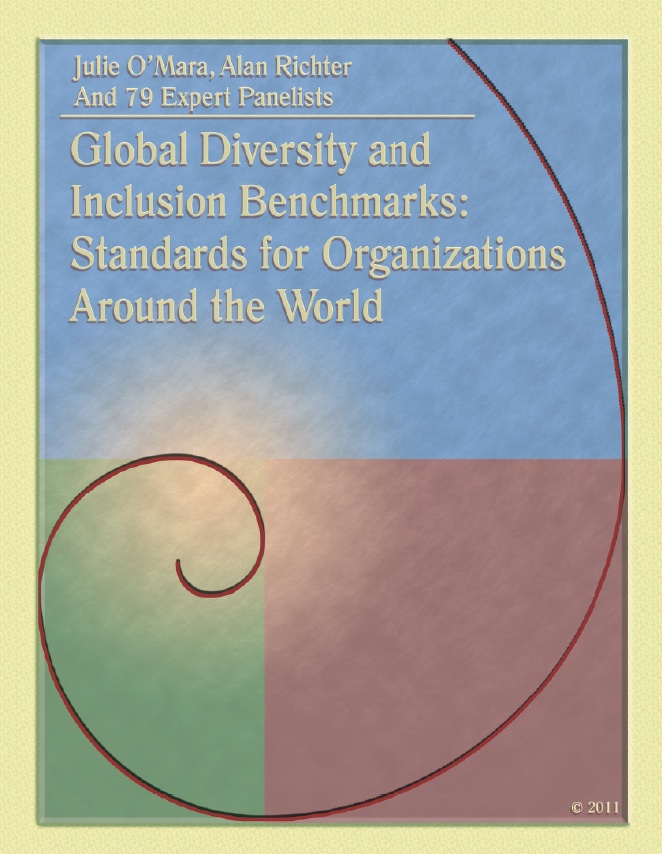
As an organizational effectiveness practitioner I am concerned with individual and interpersonal effectiveness as well as that of the overall organization. We all live and work within systems, and if that system rewards and encourages us NOT to be cross-culturally competent, we are going to nurse burnout if we try to demonstrate and develop that skill. Organizational systems and structures need to support and reinforce individual and interpersonal competence. That is why “Global Diversity and Inclusion Benchmarks: Standards for Organizations Around the World” is one of my favorite assessment tools.

Written by Cultural Detective Global Diversity and Inclusion co-author Alan Richter, along with the very talented Julie O’Mara, the tool is available for use free of charge, though the authors ask that you submit a written request for permission (julie@omaraassoc.com or alanrichter@qedconsulting.com).

Newly updated in 2011, the 32-page booklet is based on a core model of 13 categories arranged into four key areas: Foundational Factors, Internal Abilities, External Benchmarks, and Bridging Competencies (you can already imagine how well this blends with a Cultural Detective approach!). The assessment instrument involves rating the organization at one of five levels for each of the 13 categories. Thus, it is very easy to use and educates as it assesses.

The GDI Benchmarks are based on extensive contributions from 79 experts around the world, and were developed from groundbreaking research in the early 1990s. Please contact Julie or Alan to learn more. And please share with us your organization’s progress with these benchmarks as you use Cultural Detective!