Can you read this?

No? Yes? If you can read the above, quick, tell me what it has to do with culture. If not….

Can you read the next one?

Yes? Perhaps this second one was easier for you? Why? Why is it we can read the above?

Our minds interpret a lot of things every day, constantly. They make sense of the world around us. They do this by recognizing patterns, putting information into templates that are familiar to us.

Obviously when we enter a new culture, the rules are different. The patterns are different, the templates unfamiliar. Our inability to make sense of what’s happening around us can cause us to feel disconcerted, maybe to lose confidence. Our past knowledge, from another place, can cause confusion. It can lead us to think we understand what we really don’t, to fail to see what is really there, or to miss important information.

There are so many interesting photos and images floating around social media networks. How many of them are you able to use to promote cross-cultural understanding, like the two above? Come on, share your favorites!

Reading key to the above images is below:

Este mensaje es para demostrar las
cosas tan increibles que puede
hacer nuestro cerebro. si logras
leer esto puedes sentirte
orgulloso de tu inteligencia, ya
que solo ciertas personas lo
logran. esto se debe a que el
hemisferio derecho del cerebro
asocia los simbolos parecidos a las
letras que conocemos normalmente
y asi logramos leer con facilidad.

This message
serves to prove how our minds
can do amazing things!
Impressive things!
In the beginning it was hard but now,
on this line your mind is reading
automatically without even
thinking about it. Be proud!
Only certain people can read this.

Grains of Sand and Cross-cultural Adjustment

Ever look at something and find it so beautiful or fascinating that it just sort of sticks with you? Perhaps it gives you a gut feeling that it speaks to something you’re working on? Then, maybe in the shower the next day, it hits you?

That’s what happened to me a while ago when our Intercultural Competence News Feed curated Dr. Gary Greenberg’s photos, taken through a microscope, of grains of sand.

While most of us normally think of grains of sand as looking fairly similar — tan or brown, some crystals, shiny — Gary’s photos show us that deep down, once we “get to know” the grains of sand, so to speak, each of them is quite unique! Now if that isn’t a metaphor for diversity, inclusion and cultural differences, what is?

We hope you’ll be pleased with the train of thought Dr. Greenberg’s gorgeous photos produced. We put together a PowerPoint on cross-cultural dynamics that you are most welcome to download and use. It hasn’t been polished and perfected like the grains of sand, but if you read the presenter notes, we are confident you’ll have fun customizing the ppt for your programs.

We all have favorite photos, metaphors, comics, and stories, or even video clips, that we love to use in teaching, training and coaching. If you have something you would be willing to share, please pass it on. We’ll be happy to get it out there for you and link through to your website or contact information. Together we can build a more respectful, understanding and collaborative world!

Incredible Cross-cultural Professional Development Opportunity in Cannes

October 11-14, three full days of training in intercultural competence Friday-Sunday, and a welcome dinner on Thursday evening. Your fees are amazingly affordable, especially considering they can include lodging and three meals/day at the beautiful Cannes Mandelieu Holiday Village in Côte d’Azur, Mandelieu, France!

I think I might be joining you, George!

Your participation in this workshop also benefits SIETAR France, and if you wish to join the organization and don’t already, they are extending to you a discount on membership as well.

Download or view detailed information, or download registration and payment details. Should you desire more information please contact the facilitator, the inimitable George Simons.

By the way, any of you attending the Summer Institute for Intercultural Communication, there are still two seats available for the Cultural Detective Facilitator Certification workshop on July 21-22 at Reed College in Portland, OR. See details here.

Our final certification of 2012 will be held after the SIETAR USA conference, in Minneapolis, MN USA in late October. We look forward to having you join us!

If you’ve already attended, please share your experience with others in the Comments below.

Fortune 500 Client Prepares to Support Global Clients

“We have achieved, for the first time in my five years working on the Learning and Development team, a 100% satisfaction rating from our learners. This is quite an achievement, considering that learners spent 12 hours over three days in the classroom. They typically are resistant to being in the classroom for more than two hours at any given time!”

Such feedback from one of our Fortune 500 Learning & Development Managers is so wonderful to hear and just as powerful is what led to these results — it is a great story to repeat. Take a read!

“Our initial plan was to offer strict localization training that would concentrate on such basic details about Australia as spelling, unique business terminology, time zones, and the fact that they use the metric system. We also planned to train basic Australian etiquette: the do’s and don’ts.

In my search for training that we could purchase and customize to our specific needs, I came across Cultural Detective and discovered that we could, using your materials and methodology, offer our learners much more than the basics. In fact, what I found in Cultural Detective was an approach to cross-cultural communication that would leverage and greatly enhance the communication skills that our team already puts to use every day to achieve shared understanding with our U.S. business-to-business customers.

Clearly, Cultural Detective was a natural fit for us—a fact that was driven home when I attended the FOLE (facilitated online learning event) sessions and saw a great example of how the training could be delivered online (something I very much appreciated, since most all of our training will be virtual by next year!). The FOLE sessions put all the pieces of the puzzle together for me and gave me plenty of ideas for conducting the training in a fun and engaging way.

After attending the FOLE sessions, I worked closely with an Australian SME who works on our Customer Services team. His willingness and enthusiasm to share his culture made adapting Cultural Detective to our purposes a real joy. As your methodology strongly suggests, having someone who grew up in the culture directly participate in the development process helped breathed life into the content, and it also added a level of credibility to the training that made it even more engaging and effective.

But what really made the Australian training effective was the fact that we prefaced it with your Self-Discovery course. Learners who may have been a bit skeptical about having to take part in a course on “culture,” when they typically receive “nuts-and-bolts” training on how to meet their customers’ technical and marketing needs, were plainly won over to the idea, at times in moving ways. Members of our team whom I have known and trained for a number of years, and who rarely participate in the classroom, shared powerful childhood stories that demonstrated their ability to connect the personal and the cultural in deep and meaningful ways.

The Self-Discovery course cleared the way for us to dig into the Australian Cultural Detective course and make what in some cases were startling discoveries. One such discovery emerged when my Australian SME, who was in the training session (not only because he is my SME, but because he will be part of this new Australian program), shared his cultural core values with the rest of the group, all of whom are native-born Americans. His values were not only quite different from the rest of the group, but they meshed perfectly with the Australian core values, once I revealed that lens to everyone. The impact on the class, including on my SME, was clear and immediate: they were startled by concrete evidence of fundamental cultural differences.

Because of this discovery, as well as their very personal engagement with their own cultural makeup, learners were able to engage with the Critical Incidents deeply, perceptively, and energetically. We were able to pull out and analyze many “clues” from the incidents, while having a lot of fun doing so!

The other discovery came when I was working with another trainer on my team whose focus was on our new client company’s marketing strategy and how it evolved over many years in Australia. When he shared his extensive research on that strategy, it was immediately clear that the Australian core values I was covering were at the heart of our client’s branding. Based on that finding, we were able to weave our courses together into a powerful and cohesive curriculum.

To ensure that the lessons learned in the classroom stick and continue to grow, our coaching team (who participated in both beta sessions and live training) are now making connections back to the Cultural Detective method, concepts, and terminology as they guide learners through the initial relationship-building process with our customers. And the anecdotal evidence of the overwhelming effectiveness of this coaching is pouring in already.

I have received kudos from my managers and the Vice President of Services for having chosen and successfully delivered the Cultural Detective training. But the kudos should really go to you and your company, Kris. Cultural Detective is a rock solid methodology.

Thanks again for all your help making this training possible. When we take our next step into the global market, we know who we will turn to for training solutions.”

When you take your next step into the global marketplace, who will you turn to?

Dealing with Postcolonialism

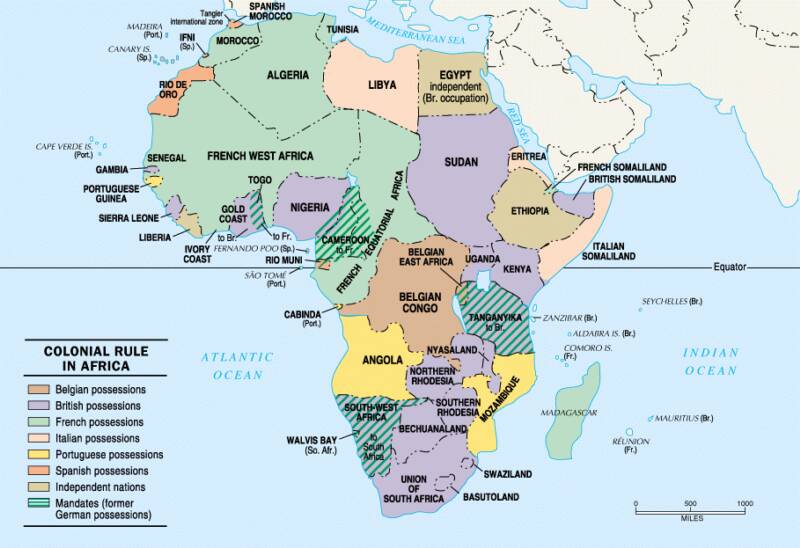
In our last blog post, The Case of Who’s in Charge: Who’s language will we speak, we got a small taste of how African colonialism and slavery have created realities that affect power dynamics and attitudes in our organizations and communities that persist to this day. From the mid-15th century to 1880, roughly twelve million Africans were torn from their homes and families from Senegal to Angola, reaching the Americas as slaves. Other millions died either during the course of enslavement in Africa or en route to the Americas. These are not facts that can or should be forgotten or set aside.

Does post-colonialism exert a negative toll on your organization and people? Is there a way to transform these potentially negative forces into tools for dialogue, understanding and organizational (and societal) transformation?

Our Cultural Detective West Africa (covering Senegal, Côte d’Ivoire, Ghana and Nigeria) authors, Doctors Emmanuel Ngomsi and Seidu Sofo, have very ably written materials that address these questions.

A short quote from their participant materials makes the main point:

“While it is true that current expatriate employees are not responsible for slavery and colonialism, or for problems linked to colonialism in this region of the world, they may nevertheless sometimes be perceived by local workers as part of the system responsible for repeated abuses. It is important to be aware of this fact, and how individual actions are likely to be understood in this historical context.

We encourage you to seize the opportunity presented by Cultural Detective: West Africa to explore the issues of colonialism and modern-day power dynamics with your West African colleagues. While there is a clear attempt on the part of many scholars (African and non-African) to blame past and current African problems on European colonization, the dynamics of colonialism and neocolonialism are complex issues, and it is crucial that business and non-business people be aware of and sensitive to the history that strongly remains in the minds of professional Africans, and often profoundly affects business relationships.

Today, there are limited forums available to openly address these issues. The workplace constitutes one of the few places in which people may discuss how they feel about historical European intervention on the continent, and perceptions of power dynamics and race relations today. Being prepared to handle these issues constructively is smart business.”

Their facilitator manual contains a section entitled “Facilitating a Discussion of Slavery and Postcolonialism,” which adds encouragement as well as how-to:

“Within the Participant Materials we have included a supplement addressing the issues of slavery and colonialism as they relate to West Africa. People are curious and want to talk about these issues, and while they can be difficult and sensitive issues to discuss, they create an important dynamic in relationships and should not be ignored. The Cultural Detective Model provides a way to explore these issues in a non-evaluative manner that can promote mutual understanding. Remember that no one point of view is ‘the truth,’ and it is rare that a discussion will result in consensus or agreement.

West Africans, Europeans, African Americans, Caucasian Americans, Latin Americans and people in the Caribbean, among others, all have different and sometimes opposing points of view on the causes and outcomes of slavery.

Contrary to a common belief among foreigners, West Africans generally are not uncomfortable talking about slavery and are willing to engage in conversations with people who sincerely and genuinely want to explore and learn about slavery and its effects.

Today throughout Africa, Europeans, Americans and other ‘White People’ may still be perceived as exploiters and neo-colonizers. Resentment remains because some believe that the best minds and bodies of the African continent were transported to the Americas. And while many agree that slavery is wrong, many West Africans also feel that if ‘Whites’ could have their way politically and socially, slavery would still be practiced.

Given the sensitivity toward these issues, foreign business owners need to be particularly mindful of their words and actions. Derogatory acts or sayings by expatriate employers directed toward West African employees are not only unkind but unwise. While private individuals react strongly to such acts, governments may also take swift and decisive action, and some have deported expatriate employers for such misconduct.

Regardless of the economic benefit that a foreign investment might bring to a West African nation, dehumanizing conduct, utterances, or work conditions are not tolerated.”

We eagerly urge you to look through these materials, and put them to good use. We would love to have those of you who work in spaces where you deal with post- and neocolonialism issues to share with us some of your experiences and learnings, so that we might all transform our practices and do our bit to heal this world of ours.

The Case of Who’s in Charge: Whose language will we speak?

Or: “How to lose a US$1 million investment in less than an hour.”

Cultural Detective and the Case of Who’s in Charge

This case takes place in one of the world’s largest companies. The company has recruited, at much expense, a leading Nigerian scientist to head up a project; he is perhaps the only person in the world with the unique knowledge base, experience and connections needed to see this major project through to fruition.

The company has gone to great expense to relocate the Nigerian project manager to western Europe, and to assemble a cross-functional team of the company’s leading professionals to aid with the project. The project is of huge significance for the company. The plan is that it will break new ground and shift the way such projects are implemented worldwide. There is much hope and excitement, as well as huge investment and anticipated return, riding on it.

The project manager, the Nigerian scientist, calls a meeting with three of his team members. All four people greet one another in English, shake hands, and sit at a table for the meeting. The project manager introduces the agenda, in English. After a few minutes the discussion seems to naturally shift from English into the local language, and continues for about 45 minutes.

At the conclusion of the meeting, the four gentlemen stand up, again shake hands, and shift back to English to congratulate one another. One of them says, “I think we have devised an excellent plan.”

The project manager replies, “Oh, yes? And what would that plan be?”

The three others appear puzzled. “The plan we just agreed to,” they say. “The plan we’ve been discussing.”

The Nigerian responds, “I didn’t understand a word you were saying. I don’t speak that language.”

“Why didn’t you say so?! We could have switched to English!!” The others’ mouths drop open in disbelief at this waste of time, and the scientist’s failure to speak up.

“I am the project manager. I called this meeting, and I started it in English. All our correspondence has been in English. You all changed the language. It is a power play. Your colonialist ways never seem to change.”

After this meeting, the project manager requested his removal from the project. It appeared this hugely anticipated effort was dead before it had even gotten going!

An orientation to cross-cultural collaboration, including work on understanding and learning to deal with issues of post-colonialism, may have prevented this rocky start. There are times when, once mistakes have been made, there is no rescue or remedy. Convincing these team members to give it another go, to get past their doubts and discuss ways of respectfully and productively working together, required skilled facilitation. The project manager was convinced that his team members were racist, and the team members were convinced the project manager was overly sensitive. Both thought the other arrogant.

What are some of the techniques you might use in such a scenario? How might you help the team members gain empathy for what the project manager was feeling? How might you equip them with the skills they need to demonstrate respect in such an environment? How might you help the project manager develop the skills he needs to manage team members effectively, given post-colonialist realities?

The Squid Has Been Fried: Language, Culture and the Chinese Food Fixation

Another terrific guest blog post by Joe Lurie. Thanks, Joe!

What does it say about intercultural and diversity professionals that we seem to just LOVE the food blogs? 😉

After “Bicycling in the Yogurt: The French Food Fixation” appeared (and then Dianne’s Ukiuki Pichipichi article on Japanese food onomatopoeia), a colleague gave me the book, Food in Chinese Culture, published by The Ministry of Culture of the People’s Republic of China.

Long suspecting that Chinese languages, like French, reflect a heightened preoccupation with food, I immediately focused on the chapter, “Food as Metaphor.” There I learned that China’s classics contain many examples of how food metaphors illustrate political, social and philosophical principles. The philosopher Laozi, for instance, observed that “one should govern a large country as one would cook a small fish — very gently.”

Yanzi, another famous Chinese philosopher, noted that “harmonious government, like cooking a fish, requires a proper blend of policy, just as cooking a fish requires the proper blend of vinegar, soy sauce, salt and plum.”  If ministers were blindly to follow their ruler’s behavior, it would be like boiling a fish in plain water; who would want to eat it?

Hearing this, a Chinese friend reminded me that fish frequently are associated with prosperity in Chinese culture, though “climbing up a tree in search of fish,” is to do the impossible.

Chinese philosophers, according to Food in Chinese Culture, also used food imagery to explain literary creation. “It was said that a writer’s ideas are like grains of uncooked rice. When the grains are boiled into porridge, that is prose; when they are fermented into wine, that is poetry.”

In business, “being handed a rice bowl” is to be hired, while “having your rice bowl broken,” is to be fired. A Shanghai-born MBA student explained that if you protest being fired, the boss’ response might be: “the rice is cooked,” meaning it’s too late to do anything about it (my decision is final). Perhaps you should have just performed your duties as “talk does not cook rice.” Still, a Chinese employee might counter with, “I won’t bow for five measures of rice,” suggesting he refuses to do anything demeaning for money. Bottom line: “the squid had been fried,” or he was fired. Because the fried squid is shriveled, there is a serious loss of face.

Some of my other Chinese-speaking students remind me that in business and other activities, one should remember that “if you pick up a sesame seed, you may drop a watermelon,” or lose sight of important issues because you focus on trivial matters. And certainly one should avoid “stale grain and uncooked sesame” — boring unimportant gossip.

According to Gong Wenxiang, author of Food in Chinese Culture, the Chinese word shi means “to eat” as well as “to earn a living.” So perhaps it’s not surprising that “to eat land” means to get income by renting out farm land, while “to eat salary” means to work for wages, and “to eat strength” means to survive via physical labor.

A Mandarin-speaking foodie friend described other “eating” expressions that reflect consuming, digesting, or absorbing. “Stuffing a duck,” to prepare a fine meal, also can refer to studying hard or cramming to ensure excellent test results.  Winning the lottery is to “eat delicious,” prompting jealous lottery losers to “eat vinegar.” And beating mahjong or chess opponents is often expressed as “eating their pieces,” the loser expected “to eat bitter” – to be able to withstand difficulty. Perhaps this is why the plum blossom is a national Chinese symbol. Flowering in winter, it overcomes cold, just as the Chinese people survive and thrive despite hardship.

I remember a US American graduate student telling me his new Chinese roommate at UC Berkeley’s International House asked him, “Have you eaten?” The US American responded, “Not yet. Will you join me for lunch?”
The Chinese student said, “No thanks, I’ve already eaten.” The US American was confused, until someone explained that “Have you eaten?” is a common Chinese greeting which means “How are you?” or “Are you OK?” And, of course, if you haven’t eaten, you’re probably hungry and not ok.

I suspect that the examples here are but a bland reflection of the rich banquet of Chinese eating and food metaphors that are yet to be savored by non-Chinese speakers. After all, according to a Chinese proverb “eating is even more important than the emperor.”

So, an invitation to Chinese-speaking interculturalists, linguists, and anthropologists: please bring on the next course!

Joe Lurie is Executive Director Emeritus at University of California Berkeley’s International House, a cross-cultural communications trainer, consultant, university lecturer, and certified Cultural Detective facilitator. Another terrific article he wrote for Cultural Detective, also full of metaphor, was called “Language Under the Gun.”

Book Review: Communication Highwire

by Dianne Hofner Saphiere, Barbara Kappler Mikk, and Basma Ibrahim DeVries
Intercultural Press, ©2005

Communication Highwire: Leveraging the Power of Diverse Communication Styles

Review written by Piper McNulty
Originally published in the The CATESOL Journal vol. 20.1

Communication Highwire, as the circus metaphor implies, explores the balancing act inherent in any intercultural interaction: how to remain true to oneself while exploring aspects of other styles, with a goal of achieving more effective communication.

After decades of teaching and training across, and about, cultural differences, these three authors have found that labels such as “direct,” “low context,” or “polychronic,” while providing initial insights, are not sufficient for their purposes, and that a more “robust, and dynamic” (p. xi) analysis framework is needed. In addition, unlike most books on intercultural interactions, Communication Highwire moves beyond appreciation of cultural difference to suggest ways to leverage diverse styles for improved communication across cultures.

Their model is additive, with a goal of expanding each individual’s communication-style repertoire. The book is divided into four sections: an introduction, five factors affecting communication style, a detailed breakdown of 16 specific styles, and an extensive collection of activities. The authors return throughout the book to the ongoing, often contentious relationship between two businessmen, Mike and Tanaka-san, who struggle to understand each other’s behaviors, articulate their own goals and preferences, try each other’s styles, and ultimately work together productively. Examples from many other cultures and contexts are also used to illustrate the concepts and strategies throughout the book, drawing on the authors’ extensive intercultural experience, both professional and personal.

Saphiere, Mikk, and DeVries explore communication across cultures from different client needs and perspectives, and they argue persuasively that successful communication requires a combination of styles. The best coauthored books present a mixture of ideas, experiences, and analysis and we are the richer for these authors’ extensive collaboration. Each chapter, and the themes that carry throughout the text, appear to be the result of extensive discussion, reflection, and collaboration. The book is full of engaging, highly readable examples, discussion prompts, and skills activities, which take the reader well beyond the obvious and the “common sense” of communication theory. Occasionally the sentences get a bit wordy, but the writing is clear and cogent throughout, and the authors do an excellent job of selectively substituting everyday terms where field-specific jargon could simply distract and frustrate the reader.

The book also stands out for its gentle reminders to consider multiple perspectives, to “hold…individual goals loosely enough to hear, accept and more fully understand each other’s goals” (p. 79). In addition, the analysis checklists are exceptionally thorough. For example, most intercultural communication (IC) texts simply state that in some cultures one should avoid eye contact with authority figures, yet we all know that eye-contact rules are not that simple.

These authors list four different descriptors of eye contact, and while such detailed analyses might seem more than the average ESL/EFL student needs, or can handle, adults in a second-culture context often struggle to adjust their communication behaviors to be more effective with their new interlocutors, and they are often very aware of fine nuances of style. Such students are usually more than ready to embrace this depth of analysis, because they want to understand why their interactions across cultures do not always go as intended.

Of particular interest to TESOL members will be the detailed analyses of functional language. Students trained to analyze miscommunication as these authors suggest will be at a significant advantage when discussing, negotiating, persuading, critiquing, or receiving feedback, skills that can come into play in academic contexts, the workplace, when renting an apartment, or opening a bank account. Also addressed are idea presentation, turn taking, expectations of communication process, use of emotion, permeability of new ideas, apologies, requests, praise and disagreement, feedback, and humor, among others. Language for describing details of both vocal characteristics and nonverbal behaviors are also provided. Making this global range of styles explicit is of great benefit to instructors and students alike.

The authors also emphasize that no individual will be predictably direct, or emotionally expressive, or quick to touch others in all contexts (to name just a few), but that communication styles are a situational tendency, providing a link between behavior and underlying intentions. To leverage our understanding of others’ styles, they present a four-step method: (a) reflecting, (b) analyzing, (c) discussing, and (d) deciding. While these steps might seem easy to carry out, discussing and deciding are not found in most IC literature, and the authors’ engaging analysis of the ongoing relationship between Mike and Tanaka-san helps instructors and clients develop their own version of the suggested analysis strategies.

The book is such a rich source of information and analysis tools to seem, at times, overwhelming, but the outline format and use of charts allow the reader to skim the chapters’ subtopics, selecting the specific communication styles or functions that are most applicable to their client/student population.

As for the activities, we have all read step-by-step instructions of skill-building activities and wondered whether we could achieve the outcomes promised by the author. Intercultural and diversity training can be particularly idiosyncratic and context specific, making it difficult for others to duplicate their success. However, the activities presented here are easy to envision, and the tips and suggested adaptations allay concerns that the exercises are too dependent on the original facilitator’s approach. In addition, the relatively large font, line spacing, and the wide margins leave plenty of room for underlining and notes.

Communication Highwire is an excellent resource for ESL/EFL instructors whether or not they use the activities in their own classrooms, as the tools provided may help them recognize where, and why, their own interactions with their clients, of any age or level, have gone awry, and what may be causing disconnects in their classrooms. The authors explore culturally different communication styles with depth, clarity, and insight.

Communication Highwire would be a useful supplement for teacher-training programs and a valuable addition to any ESL/EFL instructor or trainer’s library, no matter what the level or context of instruction.

Communication Highwire: Leveraging the Power of Diverse Communication Styles is a gem!

Link

The latest update on my Middle Eastern travels has been published in the Jerusalem Post. I hope you’ll let me know what you think!

Link

This article by Vijay Nagaswami, “Culture vs. culture,” was sent to us via the marvelous Cultural Detective certified facilitator and current SIETAR India President, Sunita Nichani. She says, “Here is an interesting article published this Sunday in one of India’s leading newspapers, The Hindu. With the slow erosion of the custom of marrying within similar communities in India, intercultural competence will be vital for making marriages work.”

Lots of work to do in this world, in so many ways and places. Let’s get started, everyone!